Leaders Who Have Skills to Scale in Crypto: Charles Hoskinson and his leadership of Cardano
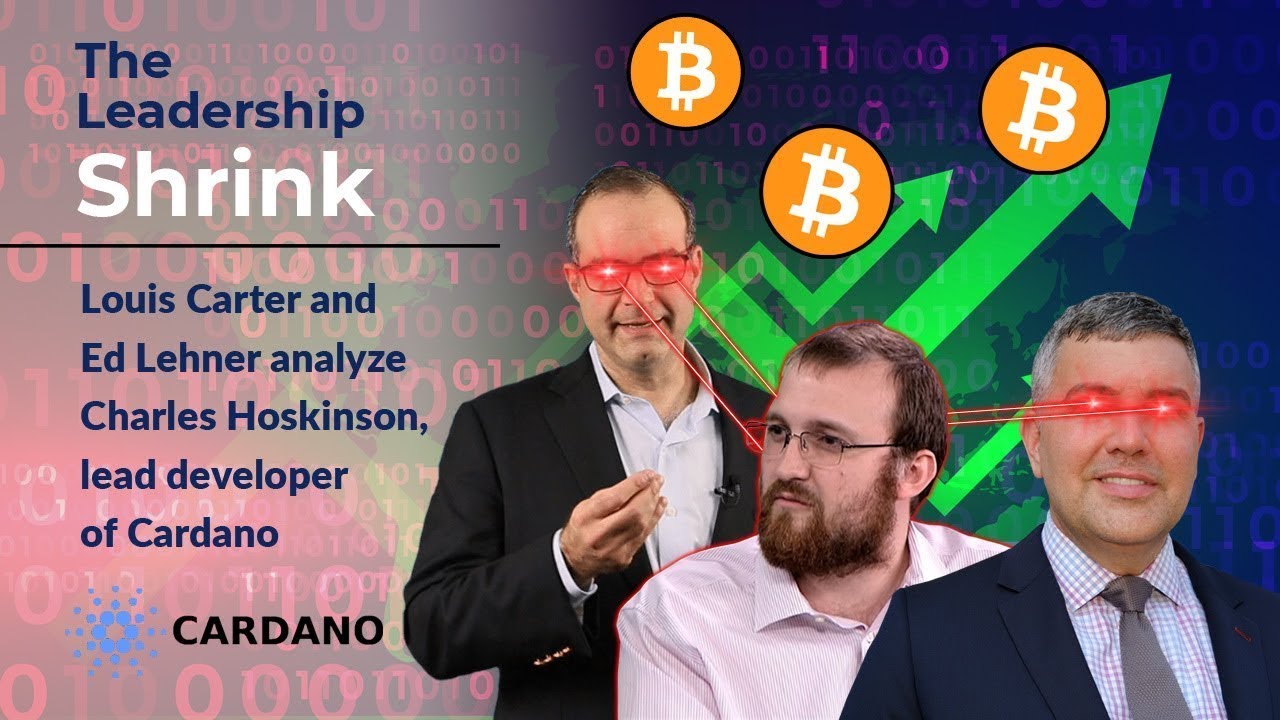
In this interview, host Louis Carter talks with cryptocurrency researcher and CUNY professor Ed Lehner about Charles Hoskinson, the lead architect and developer of Cardano (ADA). The conversation explores Hoskinson’s background, his role in the evolution from first‑generation (Bitcoin) to second‑generation (Ethereum) and third‑generation (Cardano) cryptocurrencies, and the technical choices he made—particularly the shift from proof‑of‑work to the proof‑of‑stake consensus protocol Ouroboros. They discuss how Hoskinson’s leadership style—building on academic peer‑review, fostering a developer community, and maintaining a consistent vision despite market volatility—has helped Cardano scale. The dialogue also covers community dynamics (faithful vs speculative participants), code security metrics (developer activity reports, Git commits), fundraising constraints (Howey test, institutional interest), branding and public persona, and broader market context such as price cycles, relationships with other blockchain founders, and the macro‑economic perception of crypto. Throughout, Carter and Lehner assess Hoskinson’s effectiveness as a leader, compare him to other tech founders, and consider what he could improve, concluding that his commitment to decentralization and community building positions Cardano as a strong contender in the crypto ecosystem.
Chapters
Everybody, welcome to— is gonna be today, Skills to Scale Crypto Coins. And we're gonna be talking about Charles Hoskinson, who's the lead architect, lead designer, developer for Cardano. And we have a guest with us today who's going to be helping with that. His name is Ed Lehner. He's a professor at CUNY. He's an expert in cryptocurrency. He's brilliant at this. And there's so many things that we've learned— I've learned so much from, from Ed. And I'm really excited to bring him on today. It's Mr. Ed Lehner. Hey Ed, how are you today?
Lou, I'm so well. It's so good to see you. And it's funny, we were going over the technology. You are always ahead of things, always ahead of the curve. So I'm so glad that you're here. We're here, we're talking about crypto.
Well, the cool part about this is that the show today is about Charles Hoskinson and his leadership skills to scale, right? Can he scale this coin even more? Than what it is. And, you know, can it, can it become the next Bitcoin, right? Um, and looking at him as a leader, because my, my life is assessing leadership, right? That's what I do. I'm like known as the leadership shrink. That's what I think of all the time. And can, can a leader, uh, or a lead architect, lead developer become the next— create the next Bitcoin? We've already had massive success, you know, for Cardano. We want to find out though is let's look at the man The man, the leader. So tell me about Charles, his leadership, where he came from. I know that he— does he have a PhD? Does he not have a PhD? You know, tell me about his background a little bit first so I can understand that from a leadership perspective.
Yes, I've seen no PhD. He's often described as a mathematician. In fact, in his TED Talk, he has a 2003 TED Talk where he's highlighting really the key points of decentralization. He doesn't talk necessarily about cryptocurrency or Bitcoin, but he does talk about how a technology like that could help people, especially with records. So he always refers to himself as a mathematician. As related to being a leader, he surrounded himself around— and by the way, cryptocurrency was such a small, small community in those days— but he aligned himself with Gavin Wood, with Vitalik Buterin, with Joe Lubin, all major people in cryptocurrency today. And that early on, he's always continued to build in this really authentic way.
Now, what's cool about this is, you know, Ed, you and I both— you, you lead developer on it— created a second-generation cryptocurrency paper for, for CUNY. We had several other ways of looking at volatility analysis and how to develop a coin. So, you know, develop a coin into a hyperbolic state, we'd say, or to become, you know, to have that network effect Effect, right? And we talked about how to create that community and the different ways that are needed. We had an algorithm for it too. So it's not, you know, not your first rodeo in this. Certainly, I've learned a lot from you, and we've created papers, and we're going to give that away to people here today as well. So in the summary, so you'll know a little bit about that. So what I want to do is think about the leadership of Charles in terms of creating that community, right? That part of our algorithm, really, and how he, in different stages of the growth of Cardano enabled the growth, right? And what were the leadership aspects that he did to get there? So let's look at the stages of Cardano right now. Let's go to, you know, its first stage when it actually had one of the first jumps. Let's talk about that.
Yeah, no, no, sure, Lou. So you talked about second-generation crypto. That's actually something that Charles Hoskinson wanted to address, which he talks about the difficulty with stage one, or basically first-generation cryptos and second-generation cryptos. What he meant by that is Bitcoin was simply a network. By the way, I love Bitcoin. You know I love Bitcoin. And I'm not sure if there will ever be another Bitcoin as a store of value. But Charles Hoskinson noted that if you're going to use blockchain for more sophisticated problems other than a store of value— so for example, if you want to create smart contracts. And Alice and Bob are the classic examples in the cryptography papers of publicly private key from the '70s. So he always uses Alice and Bob. Everyone uses Alice and Bob. So if Bob wants to pay Alice because, you know, the lawn was mowed, but only if the lawn is mowed, or only if she agrees to, I don't know, let somebody use the car— basically a smart contract on a blockchain. That's what he partnered with, you know, Hoskinson partnered with Joe Lubin, Vitalik Buterin, Gavin Wood, to create Ethereum. Very quickly, he realized by using the consensus mechanism of proof-of-work for Ethereum that it couldn't scale. So he left that project relatively early on, back in 2014, and then decided to create a third-generation cryptocurrency which is called Cardano, and the token itself is called ADA.
Let's stop because we don't get too far because I want it— well, let's talk first of all about proof-of-work because this speaks to his leadership. And, you know, leadership is about understanding the values and needs of its— of your followers and stakeholders. And, you know, what better to think than if somebody finishes work, then I'll pay them, right? So this concept of proof-of-work coin is incredibly advanced. Um, you know, these days, regular, you know, sort of Tether or regular currency, right? Um, we literally, we create contracts on and we sign them sometimes in person or an EchoSign in Adobe, and all of a sudden we have to wait and see if somebody does it and does it to our you know, liking. So you can go to Upwork, or you can go to Fiverr, and you can, you can decide whether it's done and, and, and share, you know, fiat, right? Or you can have proof-of-work coin that is far more of a contract, right, of a real contract, where you— and which is the next level, second generation, right, than, than what fiat is. So right there, boom, gets the checkbox in understanding stakeholders, right? Checkbox and understanding consumers.
No, well said, Lou. Well said. Now, see, Hodgkinson noted that first generation was compared to fiat. Bitcoin was this first generation crypto so they can store value somewhere else. And then the second generation crypto is, I'm only going to give you my crypto based on a smart contract. And that's what Hodgkinson set out to do with Ethereum. And then later, as we see with Cardano.
Let me ask you another question about second generation, then we'll go to third generation that, that Hodgkins talks about, and it'll go there, which is, is, is there a benefit to proof-of-work coin where it gives kind of that understanding that I won't be harmed if I say you didn't do it right, right? Or you won't give me a demerit because I don't think you did it right. So there's a, there's a real understanding, kind of a democracy behind, hey, look, you did a lousy job and I'm not going to pay you. You know, it's someone— you did my roof, but it's leaking, right? So how does that work with second generation, where, you know, I'm not harmed for saying you did a lousy job, as well as the worker is not harmed, right? How does that create equanimity?
Yeah, so I think this is still being worked out with Ethereum. Will still be worked out with EOS, which is another smart contract platform, and Cardano. That is the nuances that happen between wet code and dry code, right? So this is a big developer idea. Dry code is what is on the command line. Wet code is what humans do, right? And so I think we're still figuring out the dry code and wet code as it relates to smart contracts. What I think is relatively secure or is almost immutable is the Bitcoin blockchain, the generation 1. So if you send me a Bitcoin, um, unless I agree, it's not coming back to you, right? It's a censorship-resistant network. Conversely, you can't stop me. Let's say you're the US Bank of, uh, uh, let's say Citibank or any other bank. Because of bank secrecy laws, you can't send me a dollar because I'm in Estonia or I'm in Belarus, right? Because it's, um, but on the Bitcoin network, which is immutable You can send me as much as you'd like. And if you're smart enough with, you know, basically mixing your private and public keys, it won't get detected. Now, obviously Bitcoin is pseudonymous, but that is, I think, the first-generation immutability. But to your question about second generation, the white code is still being figured out, but it's not long before that will be figured out, right? Think about when we first started with web browsers and all of a sudden you're able to use JavaScript., right? So you go from a static page to something that actually works. Um, and that was a monumental move. Similar, I think we're still figuring out second generation and third generation smart contracts.
Let's go to third. Okay. Because Hodgson obviously created this community with, um, this really great concept of proof of work, which is just alone, that's incredible. So third generation, proof of work, wet versus— wet code was us, right? Uh, it's hard code. So tell us this third generation Hodgson introduced.
Yeah. So first of all, I think when it comes to leadership skills, he deploys and uses systems that are already there. So for example, the consensus mechanism of his proof-of-stake coin is called Ouroboros. And Ouroboros, he presents this at a peer-reviewed conference. In other words, this is what you do at the university. This is what you do in science. You come up with an idea, Lou. You say you tested it. I take your idea because you published it in the public work. I take that idea and test it on my own, and lo and behold, my goodness, Louis Carter's idea works, and I cite you and I try to scale your idea. That's what Hodgkinson has done with proof of stake. This is our consensus mechanism. This is why we think we'll be more energy efficient. This is why we think it will be immutable on the transaction layer. And then there's a second layer where the information resides based on the smart contract. So he split the layers into a transactional layer as it relates to the sending of the coin and also the layer as it relates to the information on the smart contract. Very interesting and very different than what Ethereum has done with the use of gas when you use that network. So it's a much more efficient way of thinking through. But also, you know, Hodgkin's had more time. Ethereum launched, you know, very seriously, let's say in 2016 after the DAO hack. And they had, you know, Ethereum— Ethereum really 2.0 is there, right, where it breaks from Ethereum Classic. But, you know, Hodgkinson had a full, let's say, 2 years to think through some of the difficulties and how we would correct them, which is another leadership skill.
So great segue to the coin itself and the runway that it needed, right? So it came out in— what year did Cardano come out in?
Roughly 2017, I would say summer 2017.
So 2017, it stayed at about— what was it at for how long?
Yeah, you know, so it went along with Bitcoin. If you remember 2017, there are lots of what they call ICOs, initial coin offerings, and many went to the moon. And ADA actually went through the moon. Cardano went to the moon, starting at roughly 2 cents, went all the way up to roughly a dollar, uh, back in 2017. And then it traced back, um, in terms of its price. But what's interesting is that as its price crashed, Hodgkinson continued to build as if the price wasn't even changing.
So, so what— let's talk about the retrace. I mean, there's a— there's retrace of every coin, and we all know it, right? There's halvenings, and we under— we get that. Um, what can a leader do? What, what could have Charles done? We'll call him Charles right now. And, uh, hey Charles, if you're listening to this, we're talking about you. Uh, Charles, what could Charles have done during that halvening? What could any leader do during the halvening that could not— it would perhaps lessen it, um, or, you know, you know, make it more palatable for investors to continue either hodling or increasing their investments? What can they really do?
I think Coxington did a great job. He continued to build, continued to address the community. If you look at his YouTube channel, you'll see videos in the middle of the bear market when everybody was chucking their Bitcoin. I'm thinking like fall of 2018 when Bitcoin, you know, crashes to like $3,000 around Thanksgiving. He's out there still posting videos as if nothing has happened. And that is really a testament to, this is my vision, this is where I stand. ADA, my coin, is a penny, it's a dollar, it's $100, I'm still gonna do the same thing. That's really interesting way of approaching it, and it really strikes me.
I like that. I like what you're saying right now. So there's kind of this, this continuity and emotional intelligence and regulation that he had, and also his— the way that I'm hearing it is his belief in his coin, no matter what the valuation is, right? It's like, this is what it is, you can use it at any, at anywhere, any place. You can use it as a, uh, as a commodity, right? As a stock. You can, you can use it, or as its, its original intention of proof of stake, second, third generation. So he's saying, look, you know, everybody, we're here to stay. I'm going to keep developing this. I'm cool, things are cool, take it easy. Things go up and down. Is that kind of Charles? Does that sound like how Charles is?
Yeah, and I think that comes from a disposition of a developer. Right, like back office, front office people. He's a developer, tested the code, continued to work on it. He's confident based on the science and based on the science of testing, right, which is quite different. For example, if you see The Big Short, there's that great scene at the end where they're basically talking to one of the bank heads. And basically the conversation is, would you continue to buy your stock at $30 even though it's, you know, halved? He's like, of course I'll believe in it. And I would say that's a relatively naive confidence. It's a naive confidence based on, let's say, positive thinking.
Or hubris, even.
Or hubris. Well said, Lou. Absolutely. Based on hubris or positive thinking, which is different than a developer. Developer is going to test and retest, take the code, put it in his own development, put it in his own repository, test it in his own environment. And make sure that it works, which is a Bitcoin ethos. Bitcoin is always verify, always verify, never trust, always verify.
That's interesting. So, so there's— so what Charles also did then was, as a developer, he's able to constantly reinvent and re-engineer what he's doing. So he sees there's an agility to the coin and has confidence that no matter what, if it goes up and down, or his community perhaps is in a halvening period, that it's going to continue to go up. Let's talk about when it did happen, or it did retrace. Talk about the retrace. What happened? What was Charles doing at the time besides just being cool about it? You know, what was the community doing? How did they react, right? You know, what was happening behaviorally during that time?
Yeah, though I think that's really interesting what the community does, because I would say there's two different types of communities. When you look at 2017, everybody got interested in crypto as 2017 came around. And many people joined the communities, let's say, only for 3 or 4 months. They got onto people's Telegram groups, or Slack channels were really big in crypto back in 2017. And they were just there to see if it went up, which is very different than, let's say, the ADA or the Cardano followers who were interested in what code, what changes are being made to the code, you know, when are we rolling things out more, what's the vision of the dev team. So you really have your, your faithful, right? Those those faithful wanted to know. And, you know, you would see people who would ask questions about, well, when, when is Cardano going back up? When is it gonna make money again? Which is almost a secondary question, right? It's like if you ask a Bitcoin developer, let's say somebody from Blockstream, when Bitcoin is going back up, that seems like a moot question because the question is, how secure is the code? And if the code is secure, and you can trust it, then it's only a matter of time then value is going to accrue to that network.
So let's talk about that because we're really now talking about code security, right? So the, the coin itself is only as secure as its code and the developers who believe in its security. So how can an investor really get in on the know about that kind of, uh, strength of code? Is there a way for an investor to get there?, and has Charles made it easier to do that?
Yeah, I believe it's Electric Capital, and we can test this and put it in the show notes, Lou, but every year Electric Capital comes out with a developer, a state of the ecosphere report, and you'll see how, I mean, look how much crypto is financializing. You have primarily, um, a financial investment report telling you the state of crypto ecosphere developers. So that's really interesting to me, right? So Electric Capital does this once a year, and it tells you how many developers are on each coin and how many changes are pushed to their Git or whatever other repository hosting that they're using.
Okay, so really we're looking at number— so there's a couple of, uh, things really here. Number of times that it is placed on the Git again, so number of times— so the amount of code that's actually pushed, right? Uh, the quality of the code, um, you know, the amount of people who are kind of looking at the code and enabling it to be like perfected, right? So there's, there's things that you can, you can look at. Where would you say Cardano is now? Let's look at Cardano now in terms of the chart. Where is it now?
It's at its highest ever. It's at $1.05 at time of recording, which is today's the 24th of February, roughly 4:00 PM. So it's never been higher, it's never done better, and the community just continues to go. And I think part of it is, is this idea, and you know Who wants to second-guess Satoshi Nakamoto, right? Because Bitcoin was the first cryptocurrency ever. But primarily proof of work, only a few people in the world and primarily only major companies that have hundreds and hundreds of machines can ever mine cryptocurrency. This is something that Hoskinson did, which is he decided, let's create proof of work, a proof of stake coin, where if you hold the coin, you're very likely to receive a reward., and it incentivizes people to hold the coin.
Okay, let's talk about, uh, fundraising and talk about, you know, what Charles did really to bring in more— maybe institutional, just large-scale investors. It's one thing Bitcoin has done very well, right? Um, where, where is he on that spectrum, on the scale of large investments that are being made, and his ability to attract that kind of large investment?
Yeah, so this is a big question within crypto because somebody like Cardano, they can't exactly solicit funds, right? Because based on the Howey test, whether it will be viewed as a security. But what they can do is provide really strong code so that people will be interested in the coin. Now the question then becomes, what are they interested in? So for example, I was a big believer, and still am to a degree, on the Dash coin. Right, and so Dash, um, and you know, it's been a very really interesting community, interesting group. Let's say through the time that I became aware of them in 2015 through, let's say, the end of 2017, investment bankers got involved. They put in billions of dollars with the goal of just taking it out. And so this idea that— and by the way, people did the same thing with Bitcoin.
Right, would you say that, that, that's what Charles did too with Cardano? Would you say that people began to see it in the same way that they did? I mean, did that actually happen with, with his, his development community or, or in beyond? Because the thesis here that we're looking at for this kind of next checkbox, right, is ability to attract large-scale money. Right? Ability to track large-scale money. And can Charles do that? You know, that's really a question. Is Charles the kind of leader that attracts large-scale money?
Yeah, and I would say yes. And by the way, I don't want to sound too much like an academic and like start to spitball it, but it retraced all the way back to 3 cents and now it's at $1.05. So not only has it, has it, you know, basically lost all of its wind it was able to resurrect itself primarily not on raising money, not on doing a stock split or buying back stock or some type of, you know, smart financial loans, which, you know, every company is now doing with the relatively, you know, since money is so cheap. He did it with real people buying the coin on exchanges, whether it be institutional investors or retail. People are buying it because they believe in it, even though it retraced back to 3 cents.
So I think we could easily say that Charles is almost like a Zuckerberg of, of, of coin, right, of Cardano, because he has large-scale influence, volume influence. And we look at some of the, the, the coins that went crazy hyperbolic, a Bitcoin, that really is because of— when you look at it, I would venture to say that people took enormous positions in Bitcoin. Huge positions, which just skyrocketed it. You know, Elon Musk takes it on, right? Or, I mean, or it becomes a, you know, a currency for, you know, for Tesla, right? So, or the, you know, people take it on and they become sort of spokespeople for it, kind of like, you know, how the old, you know, sort of Pepsi had a spokesperson, or, you know, or large-scale companies did. Cardano though, and Charles, is much— are much more grassroots, it sounds like. He, he's much more of a larger play, volume, millions of people. He's going to attract much, many more millions in the cryptosphere, right, crypto ecosystem, and then be able to keep going because it quite honestly is a, it's a very simple and understandable concept. Proof proof, right? So proof of stake. So I think, um, so it's proof of work. So is, is he more like a Zuckerberg, or, you know, or is he right? Is that what he is? What, mass appeal? Go ahead.
Yeah, let me make a statement, then I have a question for you, Lou. Sure. I think there's something to be said about tech, um, tech-driven and technical founders. Technical founders have a different vision and they're very different than front office people, which where it's all about the handshake and the politics. And so I would think that Hoskinson and many, and obviously Vitalik Buterin, right? Not only, maybe Vitalik Buterin isn't the best developer in the room, but he inspires such confidence in other developers. And there's no ecosphere like Ethereum. So my question to you, Lou, is in crypto, you see this big shift between front office people who really are non-existent in crypto other than in hedge funds, you know, or, um, in back office people who are writing the code and changing the world. Is there some type of leadership framework you might view that based on a technical founder and then a front office founder?
So I think about Tom Morello. Do you know who Tom Morello is, you know, from Rage Against the Machine? Uh, he was, you know, he's great. You know, Tom worked for, uh, a politician for years, um, and he hated it, you know, because he went to Harvard and he— brilliant guy, also one of the best, arguably one of the best musicians, you know, of all time, you know, should be in the, you know, Harvard Rock and Roll Hall of Fame, right? So Tom, Tom said he listened every single day to the, the congressman, uh, raise money from really, really rich people all day. And then this one person called up said, there's a lot of Mexicans coming into my neighborhood, said to him. And he was, he was working with them. He says, you know, you're a fucking racist. So Tom said, uh, Tom thought, oh, I'll be the talk and love of the, of the office. They'll all love me here after I told her she's a fucking racist. So guess what happened to Tom?
He was fired.
Get the hell out of here, Tom. So now here's the— Tom did say— Tom became one of the best rock musicians of all time, you know. So I mean, life is good, right? I mean, the guy is brilliant. So he went and he's also an activist now. So, you know, he, he did— he worked his passion and he wasn't going to just live this life of, uh, other people's values, okay? Perhaps that's Charles. Charles is a Tom, right? And, you know, if I were to look at 2 different value, leader values, you know, Patagonia leader, same way. Now that works out well for him, though, right, for Patagonia. He and she, they, he, she, it, they, we, you, me, they. That's really— Don't get me into that one, though! There is that there, though, too. So That is a subculture, right? And that's okay. That brings money too, okay? So, you know, whether you're bringing money through advertisements that tell others not to buy your product because it's conspicuous consumption, right? Or you're actually going out and being very literal about asking for money and saying, would you be the spokesperson and purchase and do this or that, you're still asking.
Yeah, that's a great point though. And, and I can see the different roles, right, that, that you have to play. And sometimes one might have to play the game, right? And I think that's definitely the case within corporate. And I think there's lots of parables— parallels between corporate and crypto. And I would say the financialization of crypto, right? So for example, the creation of, uh, trusts, or the vacation— or the creation of companies. Whereas the protocols themselves are trying to disrupt one thing, which is monetary policy. The protocols themselves have their own business plan. In other words, they're performing against the US dollar, and whether it be Bitcoin, and although Ethereum wasn't designed to do it, Bitcoin is performing, Ethereum is fighting against the US dollar, and all of them are doing well, primarily by design of the business plan, and I'm speaking very broadly, business plan, that they're going to have the opportunity to disrupt the monetary system.
So that's what I'm talking about, is that's the creation of, uh, of the, the brand itself, right? And, you know, it's just Charles today, so the, the leadership brand. And, you know, you have, you have somebody like, you know, someone like Tom Morello, uh, and, or Ted Nugent, you know. Ted Nugent is, you know, you got NRA, he's right-wing, uh, you know. You have Tom Morello's left-wing. Guess what? They're good friends, okay? So, and they hang out and they talk a lot. So you can't, you know, a lot of people say, oh, are you in the Illuminati? You know, are you, are you, you just hanging out and you make all these life decisions? And we all know that you're just FOS creating your brand, right? Because you really don't care about leftist stuff or right stuff. You just are in the game for brand, right? So, you know, I, I, the playing the brand, playing the name is important, which brings us to another part of the leadership aspect for Charles, which is leadership brand. You know, how did we define his leadership brand? Has he matured enough to define his leadership brand? Sounds like he has based upon a lot of his TED Talks and his YouTube videos. And, you know, while you have a Tom Morello who's obvious about his left thinking and Ted Nugent who's talking about the NRA, they're still buddies. You know, what is Charles's gig, his thinking?, you know, his way of expressing.
Yeah, no, it's interesting. I never really thought about crypto as a brand, and you really brought up some really important points. And I'd be curious to hear what you think about it, but I think he built the brand in this way. One, going to academic conferences. I'm gonna put my work out there and let every professor look at it and tear it apart. Two, if that— if my work withstands that, then I'm going to present it at a conference so people can tear it apart again. So there's something about this idea of building with such quality that the strongest people in cryptography, you know, Amir Gunzir from Cornell, Ari Juels from Cornell, that whole Cornell team, which is so amazing, will rip it apart. Right. And there's hundreds of— it's obviously it's just not Cornell. There's hundreds of conferences like that. So one part of his brand is I'm going to put it out there to be because I think it's the strongest it can be, but maybe it can get better. And once it's peer-reviewed in that way, there's that much strength to it. And then secondly, he went after his— he has a career of building partnerships and being visible with smart people, whether it be helping talking about identity as it relates to decentralization with this TED Talk, or co-founding Ethereum with Gavin Wood and Joe Lubin and Vitalik Buterin. I think those are two parts of his brand, the science and building with smart people. It seems to me that's the way that he's And no small way, if we use that term branding, it seems like you did it.
It's interesting because the physicians do that, that concept too of, uh, you know, breaking apart one's ideas, you know, and it happens once a year and it's, you know, and, and academics do it as well. And how you're describing it is it seems like that's how the top people in, in crypto do it, right? They're together, they, they tear each other apart, they, they get to the top because they are the best developers and they are the best outfits, they have the best brand for doing so. Um, you know, is there a framework too? So I mean, it sounds like— because you've talked a lot about just the concept of alternate currency, right? Just that concept alone, you know, is, is his widespread— does he kind of— for Charles, is he saying, you know, I'm running the revolution along with you, the top 5? Would he say that? Would that— or would he say that's ridiculous? Of course I'm not one of the top 5. Where is his, where is his sense of self on that continuum? That's the other one, sense of self, a continuum of leaders in the, in the crypto ethosphere.
I think he would take on the position that he's just trying to live out his own ethos, you know, the ethos of decentralization, ethos of basically having a counter-narrative to the dollar. And I think like many developers, he would eschew the idea of being in the limelight. And that's why I think there's two different— there's two different types of people in crypto. There's people at the base layer of the technology who doesn't care, who don't care about how you feel. They don't— in a good way, right? I'm not saying that they're callous, but they're looking at the protocol and seeing the strength of it, and they're focused on it. There's lots of front office people who are shaking hands. They're selling. I saw this firsthand in New York City in 2017. Every person who had a suit brought it out that summer to sell their ICO. A year later, they're all zero. So, you know, it's a really complicated space. To answer your question, I think he would deflect any attention to himself.
Okay. And last thing, have you seen that for the coins that really are going up to that— what is it at now, Ed, by the way?
Yeah, it's at $1.05. I'm looking at CoinMarketCap as we speak.
Is it staying— it's staying the same?
Yeah, it's not many exchanges, right? So that's kind of like the, the beauty of, of Cardano and, and how, how they, you know, the ADA token is that it's so widely held. And in fact, when they did their ICO, 95% of it came from Japan, right?
Now, because you had, you had identified number of exchanges in the algorithm that— remember the number of exchanges? So how many exchanges are they on? I know there's, there's— I think there's over— how many now exchanges? And there's over 100, but how— he must be— Cardano must be in, I mean, a large share of them. I know they're on Coinbase, right? I mean, Bittrex, and I mean, there's got to be—
I don't know, certainly on Bittrex. Give me a second, I'm just looking at the markets under— so, right, you know, as you follow this, you go to CoinMarketCap, you go to markets. I mean, it's not everything, right? Binance, VCC Exchange, Upbit, Coinbit, Bitthumb. So there's at least— how many more? There's at least 100. Let's— I'm hitting load more on CoinMarketCap.
Yeah, so, you know, I think, I think that's really— here, let's look just real quick.
At least 217, though, in different pairs. BTC pairs, Ether pairs. USDT pairs.
Yeah, so it looks like we're $1.01 right now. You know, we'll look at the 1-year. Can you see the screen, Ed?
I can.
So the 1-year, we've had a huge— here is a cliff here, you know, and then we have some retracing. This July, October, January, boom. So it kind of— it runs with Bitcoin, doesn't it?
It does, it does. And with the whole market. And that's, that's what they say, that the whole market runs with Bitcoin. What you see though in 2017 is Bitcoin dramatically went down, let's say from June till, let's say, October. It didn't go down, it continued to go up in value, but the altcoins outperformed Bitcoin for a good portion of 2017 until the end. And I think that some of these altcoins like Cardano, may decouple from other coins. I don't know if they're going to decouple from Bitcoin because I think Bitcoin's just going to continue to grow.
Are there relationships that he has with other coin, coin founders that enables coins to continue to go up? So he has understanding of the way those coins work, not in a bad way, because there's Howie Test, right? We have an understanding, uh, and so you can Is it true that founders and coin developers who know the community can in essence work with each other to help, help the coin grow? Is that possible?
Yeah. No, I mean, I think that's exactly what has happened. Let's just go with the— let's go with Bitcoin, Ethereum, and Cardano. Bitcoin attracted the best developers very early, and they might not have been the best developers in 2010 or 2011, right? But it developed, it really attracted a very strong group of developers who helped the protocol grow. And now I think that's embodied in Blockstream. And one could argue how strong Gavin Andresen was as, as a developer, but he certainly led the coin and he led Bitcoin. So that would be one to your question. If you're close to developers, you can grow Bitcoin. If you're, if you're close, if you're If you're, if you're close to, um, if you're close to developers, you also can grow Ethereum. You know, when we looked at what ended up happening with, uh, Vitalik Buterin, he's— that's the most exciting ecosphere in the crypto world. The most exciting ecosystem in the crypto world is Ethereum. And Charles Hoskinson did something very similar. He's got a lot of developers, a lot of people who are very technically oriented who's into this coin.
Yeah, and that's what we're saying is that they're saying that there's so many new users that have come into the, to the Cardano community. They say, remind us, remind all of our community to stay safe from bad actors. We never give away funds. Find out how you can stay safe in this Reddit thread. So, you know, this safety issue, you know, holding on to the safety of the coin and getting rid of bad actors. Would you say they're kind of ahead of the curve on the bad actor— in the bad actor community?
No, well said, Lou. I think that they're one of the few that's out there describing, hey, be careful, be careful, because there's so many people who are— who don't have good intentions in crypto. And the higher the Bitcoin price goes, the more of those people cycle it.
Okay, all right, good. Well, we— this has been great, Ed. Um, you know, we've really, uh, brought a lot to, to about, uh, Charles, I think, today. And, you know, we'll, we'll definitely bring Charles on. I think having him on and listening to him and hearing his, uh, his side of the story about how we've, we've waxed pretty philosophical and we've also given him a lot of appreciation today, uh, for what he— all that he's done for for crypto, the crypto community, for his own coin, and really to as a pioneer in this field.
Yeah, Lou, before we close out, I have a question for you. As you look at the crypto ecosphere and you see these various leaders, you are much more in touch with the macro business environment than I am. How is the macro business environment reacting to, let's say, the price swings or, or the growth of this asset class?
There's still a lot of distrust in the assets class, especially because of the large swings. I think as long as, as Bitcoin begins to go up and stay around that $10,000 plus or minus and not move, there's gonna be a lot more belief in the Bitcoin system. Bitcoin is still the center of the entire coin community for anyone in the fortune or large corporation community. Very few look to altcoins at all, even Ethereum or any of the top 10. For instance, Coinbase has made enormous strides in being able to connect into with through ACH, other bank accounts like Citibank and Bank of America, other people who have given up to and begin the API to transfer monies in fiat currency. So there is an opening, there's openings, and the Fortune 500 and even other CEOs have shown that they're very open to doing this by their investments in Bitcoin and being very vocal about it. I think that will be the, the next level to crypto is really the making things simple inside of the large sector, as well as showing belief in it and how it can become really the next currency and how it truly is the next internet. And nobody— I think nobody is saying it enough right now. Guess what, Guy, everybody out there? You are— if you even put $10 into any of the altcoins, in my opinion, you know, $10 is, you know, what is it? It's a beer these days, or maybe it's a, you know, 2 burgers at, you know, McDonald's, right? So you could probably— I'm not saying do it, I'm not recommending you do anything right now— if you put $10 into something, right, one of the top altcoins or BTC, you know, BTC could ostensibly go to $500,000, right? Even if you have 0.001% of Bitcoin, you're still gonna have maybe $100, right? You have, you have a third of it, you're gonna have $150,000, right? So I mean, the math works, and people like Charles, who is a mathematician, gets it, right? So, you know, in my mind, the simpler we did, we present it, the more CEOs and leaders actually come out and explain it and become part of it. The better this is going to just take off, as the internet did. Because, you know, Al Gore created it, and, you know, he— so why don't we all— yeah, we were in for some great stuff, uh, and, and I can't wait to see more. Charles is our first. Charles, we love you. Wow, what you've done for us is incredible. Ed and I can't wait to see you on a show. We'll be calling you soon. So, Ed, wonderful. You are the crypto genius You really are.
I always say what Andreas Antonopoulos— he's probably the best known educator in Bitcoin— he always says he's not an expert. And I am certainly not an expert, but I love this stuff, Lou. I can't get enough of it. It's like the first time I met you when you were going back and forth between all of these hundreds of people, leaders, leaders related to Peter Sengage or others. You loved leadership. And so I try to do the same thing with crypto.
Yeah, it's, it's really true. You know, it is about leadership. Crypto is about leadership because the community, like you just identified it, is very similar to corporations, to social structures, to government, and it's going to develop in that same way. And having knowledge of it and sharing it with others is exactly what you and I are doing now here today. Ed, thanks for coming on with us. We're going to have another one, everybody. We'll have Ed Lehner with us on for another one tomorrow. Charles gets a big 100% as a leader of Cardano. I think you got— would you say 100%, Ed, or would you give him less? I'd say 100%. Maybe there's some areas he could get better. Maybe he should be a little bit more, uh, tell me, he should be something more. What should he do better? What can Charles do better? Please.
I certainly give him— if this is a 0 to 100, I give him 100, primarily because one, he lives by the ethos of decentralization. He doesn't want to be in control of all the coins, but he does want to be at the top if he can be, or whoever's the best developer, he wants them to develop. And so one, he's focused on decentralization, and secondly, he's really built a community. I'm not sure if you can get higher than that.
Well, I guess there's no advice for you then, Charles. I, you know, this is great, we both don't have advice for it for Charles. He's, he's gonna want to have something to come on, right?
Lou, you're so smart. I mean, right now crypto, its only use case is speculation. If you look on Cardano, I don't know how many apps are running on Cardano. We'd have to research that. I'm sure it's under 500. So nobody is building the decentralized web, which is, you know, what smart contracts are supposed to are supposed to do. No one is really using this. Um, so we're really early, early stages, right? This is, this is the internet using the Mosaic browser. Um, if we're talking about crypto being the next internet, please download your Mosaic browser, right? And, uh, you know, so, uh, this idea of where we are, it's a world Yeah, exactly. You have mail.
Yeah, yeah, yeah. I mean, it's the truth. Um, you've got mail, right? Um, and, and we're using Pong at this point. So we— are we really on the Apple II Plus right now?
Do you think it's very early? It might even be the Newton.
Yeah, I do. Yeah, that's the thing. I mean, Apple split a thousand times. Since like, you know, in the '90s or, you know, in '80s, right? I mean, think about how many times in the next 20, 30 years, you know, Bitcoin.
Yeah, I mean, it's a whole other world. And that's why I'm so excited about doing this with you, Lou, because we get to talk about the leaders and also all the interesting things that intersect with this. Government. India has this huge proposal to ban all cryptocurrency, right? At the same time that they're gonna— they took out a lot of the currency 4 years ago under Modi, right? This is so exciting because it intersects intersection of politics, international politics, monetary theory, and now leadership though. So this could not be a more exciting, uh, game.
Well, it was great having you today. We'll see you tomorrow during the other times when we can invite other people to come and actually come on and give some comments.
All right, be well.
Thank you.
More from Louis



How to Get Found in ChatGPT, Perplexity, Gemini, Claude & Grok | Visipage AI Visibility Audit

Your Competitors Just Got Certified. Now What? | Most Loved Workplace® Demo & Hiring Advantage



Visual Thinkers: The Hidden Genius Behind Skilled Trades & Innovation! #shorts

Car Mechanics: The Secret to Engaging Autistic Adults Over Video Games! #shorts


