Life as a Mother and CEO in Kyiv, Ukraine: Sex Crimes, Missile Attacks, Stress and Renewal
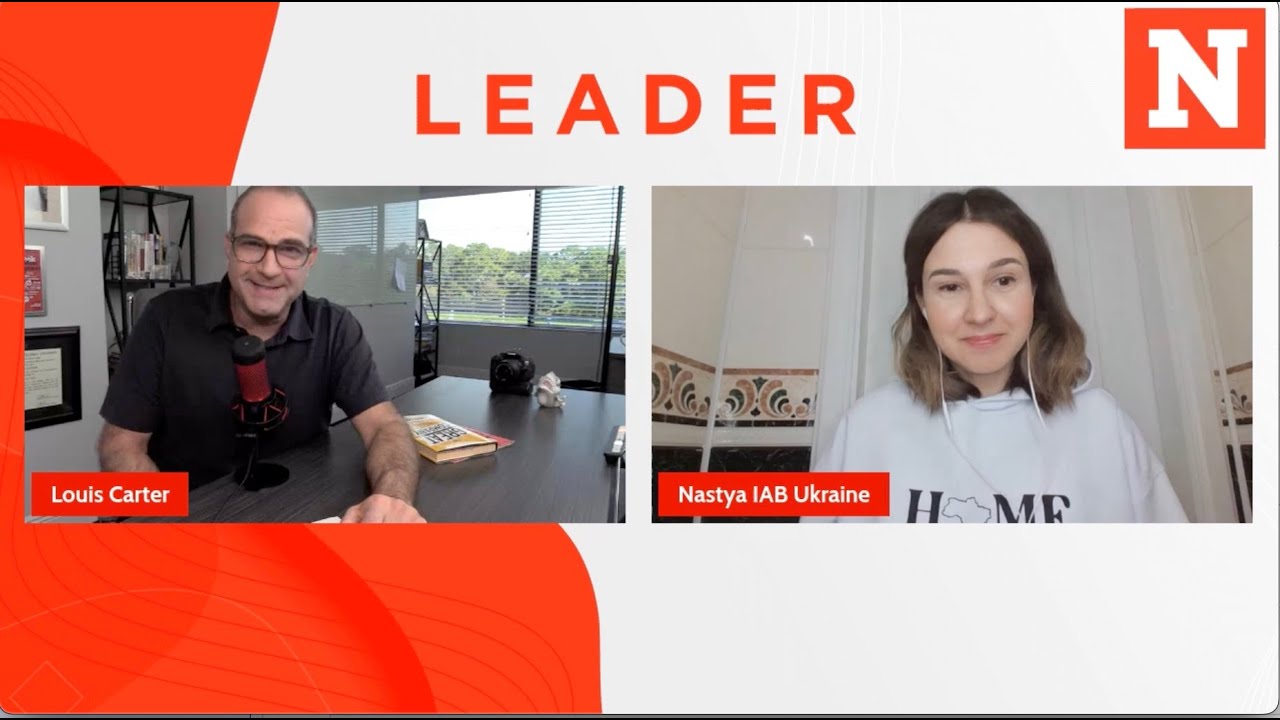
Anastasia Baryshchenko, a Kyiv NGO leader and mother of three, describes how the city has stabilized since March, with air defenses working and residents returning. She documents war crimes in nearby towns using a government app and pushes for ICC prosecution, while preparing for possible Russian attacks around May 9th and heavier fighting in the south and east.
Chapters
It's great to be back with Anastasia Baryshchenko, and this is great, Anastasia. Welcome back to the program.
Hi, Louis, and thank you so much for this interview. It's very important for us and for Ukraine to be heard.
Well, that's what we'll do here today is hear you and listen closely, because that's what we in the world must do every day. We must not stop listening closely. So let's begin that and talk about Kyiv. What's happening now in Kyiv? I heard that there is some relative calm. Tell me more about the current situation in Kyiv.
Okay, I'm and my family still in Kyiv. Now I'm in shelter, not because we are having air attack, but in case we will have during the interview, I sit in shelter. To make all this in safe mode. We comparing to the March situation in April in Kyiv and Kyiv region is much better, much better in terms of risks. And we have heavy artillery attacks to the suburbs of Kyiv, to some districts of Kyiv. Kyiv, and actually it was very noisy and I was stressed because it's very heavy and fearful noise. But now Kyiv, Kyiv region is free of occupants, is free of Russian soldiers, and we have almost zero risk of heavy artillery attack, uh, because all these, uh, machines, uh, should be, uh, about 30 or 40 kilometers, uh, in order to attack effectively. Uh, that is why, uh, Kyiv and region, and, um, I could say almost all territory of Ukraine still is the object of, uh, air attack. They use rockets, they use military plane to attack us. Uh, but, uh, in Kyiv we have, uh, quite good air defense system. And it's not very automated, but it depends on skills of our armed force. And I'm proud that they are very good in air defense in Kyiv, at least. I think from the beginning of April, when the towns near Kyiv were freed of Russian soldiers, we We feel ourselves much better. And also it was understandable of small and middle businesses in Kyiv. Every— everything like restaurants, coffee shops, cafes, barbershops, nail services, some— a lot of small businesses relaunched their work, and it became much better with food supply, with some medicines delivery. It was not completely catastrophic in Kyiv in March, but in April everything become in a more normal way. We should see it in normal, our peaceful life. Also, there is a good situation with city municipal transport. Our main transport artery is underground, and our underground is almost in working mode. We have some long pauses between trains' arrivals, but it's, I could say, in almost normal working mode, and it is possible for all city population, for all people to move, to go to their jobs and do their works. And also one of the signals that things become better in Kyiv was that Kyiv citizens— Kyiv is a city with population more than 4 or by some estimation even 5 million people, and at least half of them fled during the March. And now almost 1 million people come back and we see even some traffic jam. There were no traffic jam in March. It's not difficult situation for Kyiv. We have a transported city and we have, as usual, a lot of traffic jams. And in April we have already some traffic jams. From the one hand, I as a woman, as a Ukrainian citizen, should feel myself better. But every time I think about my city, my Kyiv, I think about the price. What price we pay as nation, as Ukraine, to have Kyiv, to to keep Kyiv in peace because a lot of small villages near Kyiv and Kyiv region, a lot of small towns like Bucha, like Irpin, like Hostomel, they were destroyed completely. Yes, they stopped our enemies, but what was the price? Actually, when in the beginning of April our armed force goes to, uh, Bucha, to Irpin, to Hostomel, as they find out, uh, actually a lot of military crimes, uh, crimes against civil people, uh, crime against, uh, civil men, civil women, and even civil children. Uh, it was murders, uh, it was a lot of, uh, sexual crimes, uh, it was a lot of looping and murder, and, um Actually, it's not a story of a kind of fifth handshake. Olena, it's our industrial project manager. She lived in Bucha and she successfully escaped in the beginning of March, I could say. And now when she come back to her home, her city almost destroyed, and her houses were subject of artillery attack. Some apartments were destroyed. A lot of windows lost their glasses and destroyed. Almost every apartment was robbed. And it is typical situation. It is the price Kiev and Ukraine paid for keeping Kiev as capital safe. And it causes a lot of questions and tasks for us and for our government because our defense line should also include not only Kyiv and borders but also borders of small towns. We should reestablish defense line of our villages because a lot of villages were destroyed by tanks, by artillery, and also robbed. And we actually as country were not prepared so good for the war. But I couldn't say that any country except Israel is always ready for such kind of war. So it's like a kind of spoon of my maybe not very happy thoughts in terms that in Kyiv things are much better and in Northern Ukraine, Kyiv region, Chernihiv region, Sumy region, situation is much, much better in terms of safety, in terms of food supply, in terms of water supply, electricity, and so on. But I couldn't help thinking about all this, all these victims, all that price we paid as a country for the Kyiv stability and safety.
You know, I know that you've mentioned the crimes, sexual crimes, murdering. You know, this is just incredible, and it's such an awful atrocity, and the war crimes are currently being held even in the international tribunals, and going through several loopholes and bureaucracy to get there. What do you say to the International Criminal Court, you yourself and other Ukrainian women and and citizens. What should happen after these war crimes? What do you expect to happen? What do you call for?
I think we should have a court or a tribunal, military tribunal, because a lot of Ukrainian people became victims of military crimes. Actually, our government is, is good with procedures of documenting all these crimes. Also, we invite foreign experts and specialists with the task to well document and well record all this all these crimes. We also have our application, it's a government application, DIA, and any, any person who lost his home or his car or any, uh, received any damages from Russian army, uh, like, not like they, they could use this application to make photos and appeal for, for material support. And this also a possibility to have mass, mass recording because people go to their— come back to their homes and record all the things and upload the photos to the application. And government and our Ministry of Digital Transformation could manage this data massive arrival and could also make a recording of crimes. It is very useful in terms of houses destruction, in terms of robbery, in terms of looping and something like that. But when we speak about, for example, murders or sexual crimes, we need support and expertise of, of doctors, of medical experts. And in terms of, for example, sexual crimes, there is very low and not optimistic statistic because in Ukraine less than 30% of, for example, rape victims victims go to the police and report, because it's a very sensitive, sensitive issues. And, um, we even couldn't estimate the full number of victims of such crimes. But as our ombudsman Denisova reported yesterday, almost 400 cases of sexual assaults were recorded. So, uh, there is, uh, actually a lot of materials for Ukrainian courts, and it could be materials and arguments even for military tribunal, because sexual crimes during war, it's the military crimes. That is why me and my colleagues, people I speak, my friends, we are believe that one day all responsible people will be under a military tribunal. Maybe it was a case like, it was similar to the Nuremberg process. But we trust and we believe that one day it became possible. What is— what makes me more optimistic is that we could prove, for example, sexual crimes much easier than it was possible 20 years ago because of DNA analysis. And it could almost with 30% guarantee name the criminal. That is why our key task now is to fix and to record and keep all the materials concerning the crimes issues, military crimes, And the level of digitalization of Ukraine help us to do it in a full scope and to do it effectively. And I hope, and I believe it's not only my position, but it's position of also our president, our government, one day all criminals will be under the tribunal.
That's a, a great commentary, great explanation of what is to come and what you as a Ukrainian and all Ukrainians desire. You know, I do believe that the International Criminal Court is one way, like they did in the Nuremberg Trials. The issue though is bringing them to Ukraine, so bringing Russian soldiers to Ukraine to be tried in Ukrainian courts. For their crimes. And we'll need both, wouldn't you say? Because back, we look at World War II and see that, well, International Criminal Court didn't quite work well with German troops. They needed to bring them to Israel in order to be tried properly and justly, to hear from the victims themselves. Do you have similar thoughts in Ukraine about Russian soldiers being tried in Ukraine rather than in the International Criminal Court?
You see, I'm not an expert of international law. I think there are some international procedures. I'm not aware of them, but I'm afraid in case any Russian soldiers identified as a war criminal will be back in Ukraine. We, we unfortunately could face some, uh, some attempts, uh, to, uh, to kill them by Ukrainian people because, uh, they have a lot of hate in their hearts. And I could understand why, and they just want to revenge. And our task as, as normal society, uh, to bring them to court, not to, to give them to the— our people, uh, not to give, uh, to allow, uh, to Raven— to revenge, uh, as, uh, as barbarians. We should act, um, as, uh, um, as people of, uh, of normal society, and, uh, I I'm afraid that it is possible, or high possibility, if these soldiers will be bring to Ukraine, they could not be alive till the court because they bring a lot of death, a lot of crimes, a lot of, a lot of tears to our people. It will be better to use international procedures, use international law, because I think it— we have— the world have already rules what we should do in such situation. Our task is to, of course, to win, to end this war, and to record all the materials that that could concern military crimes and that could be useful for any tribunal or any court process.
It's very centered and balanced of you to say that about International Criminal Court. In the event that International Criminal Court does not try and prosecute these war crimes after the war. Do you foresee any uprising happening by Ukrainians to bring them to justice in Ukraine?
Yes, if it will be impossible to bring them to any responsibility under the International Court, I think it our people, family, victims' families, they would demand to bring them to Ukrainian court. And actually, I'm not sure that our criminal code even have a position of military war, but also I'm sure that have punishment for murders, for rape, and so on. But even I'm not sure there is any articles for and punishment for military crimes because it's— I think it was impossible just to imagine such situation 10, 15, or even 30 years ago. Ukraine as an independent country is 30 years old. It was impossible. To predict and forecast all this situation and put all these articles and punishment for military crimes in our criminal codex, for example.
Perhaps it's time for a change to come to the criminal courts with something much different in terms of rules of engagement in our criminal courts. I have a— in Ukraine's criminal courts. I wanted to talk about the relative calm that you're feeling now in Kyiv and, uh, Kyiv and the movement toward May 9th, uh, and which is, uh, sort of the day that, uh, Russia celebrates victory against Germans in World War II. A lot of people are predicting that there will be more war and bloodshed up until that date. Do you feel a sense of security is consistent or will be, will continue in Kyiv, or do you expect things to change a bit in the next weeks or months to come?
First of all, I believe that Putin and Russians, they are symbolists and they have their May 9th like a national icon, and I could forecast that they may, uh, strengthen their activity and air attacks during this day. For example, we have Easter this Sunday, but following Monday, which is which is in Ukraine, in Ukrainian culture, in Orthodox culture, is also Easter, Easter Day. We have Sunday, Monday, and Tuesday, is 3 days of Easter celebration. But on the following Monday, uh, Russian made a lot of air attacks, uh, beside its Orthodox country, and they They put a lot of priests in their army, and their patriarch speak about, about this war that it's a good, good thing. They attack Ukraine heavily the following Monday after Easter, and they attack Odessa and killed a family with 3-month baby on the following Monday after Easter. And, uh, I, I wonder why they could not start on Easter, but they do all this dark, uh, their attacks on Monday. That is why I believe they will, uh, make, uh, I, I think air attack heavy air attack in the beginning of May and closer to the May 9th, to the Victory Day. And I'm not sure that they could attack the whole territory of Ukraine because they spent a lot of their missiles already. Some of our experts think that they have less than 40% of their missiles resource. It means that every day, because they attack every day, they have less and less possibilities to attack Ukraine. And also in March, Ukrainian Armed Forces destroyed a lot of military planes and killed or surrounded, uh, military— I don't know, uh, how to say it in English— military aviators, um, I don't know how to call the, the man who, uh, manages their military plane.
Yeah, the commander, or the commander. Yes.
And, and Kilt surrounded a lot of, uh, commanders with, um, with great experience. And now they lack of experienced commanders, uh, to manage military planes. It also the factor that, uh, decrease their possibility to attack heavily. But, uh, situation in southern Ukraine and, uh, eastern Ukraine, it's Donetsk-Lugansk region, it's Kherson, partly Mykolaiv, and they attack Odessa, uh, by missiles. The situation is extremely risky and dangerous, I could say. And I think the field of battle for the nearest 2 weeks will be southern and eastern Ukraine. Also, they tried to surround Kharkiv, but I feel here that they couldn't do it effectively because Kharkiv is a very large city, almost as large as Kyiv, and it is physically almost impossible to surround it. You need so much troops to do it. And they couldn't stop food supply and humanitarian support. That is why Kharkiv stay strong, stay strong and keep fighting. And I believe they, in the nearest time, they leave Kharkiv district and concentrate and focused all their, all their resources to southern Ukraine. Now they almost take Mariupol, but Mariupol has, I could say, its heart, its Azovstal, its metallurgical plant, one of the biggest in Ukraine and in Europe. And our very brave Battalion Azov, extremely experienced warriors, still keep Azovstal. And they— Russian couldn't fight and couldn't take Mariupol as a whole city despite the Mariupol buildings almost destroyed. But in Azovstal, there is almost 1,000 civilians, and they, they are under in shelters, and there is Battalion Azov who defend them. And that is why Russians still try to fight Mariupol, because it helps them to, to build, uh, corridor to the Crimea. And I could forecast that in the nearest 2 weeks, so it will be almost till May 9th, the main battle will be in Donetsk region, Mariupol and Kherson. Kherson is now occupied, but people of Kherson, they are not stop fighting and they do not stop resistance. They every day come to the center of the city with Ukrainian flags and they ask occupants go away because Kherson is a Ukrainian city. And I think that they, that Russians will keep attack Odessa. Uh, maybe also this 1-2 weeks, and they are not successful and effective in overtaking Mykolaiv. It's also South Ukraine, uh, because they're strong city, uh, city authorities and military authorities and military administration. Mykolaiv is very strong, but they terrorize people by air attacks. When it is artillery, it is almost impossible to, to protect themselves. When it is air attack, we can use air defense, and our air defense is, is good. So I think that situation in Kyiv, in western and northern Ukraine, uh, will keep almost on the same level, but with the moments of are attacking using rockets from Belarus, for example, or from Belgorod. It's a border between Russia and Ukraine. But the hottest battle using heavy artillery will be in the field of southern Ukraine.
So it seems the general understanding in Ukraine and your understanding really is that the the areas that will sustain the most battle are really in the south, and, uh, it seems that central part of Ukraine, the heart of Ukraine, Kyiv, is— it will remain. Now let me ask you a question. What are people thinking? I know things seem to be back to business as usual with massive destruction around you, so the requirements for more infrastructure investment is imminent, may take years to rebuild. And what are people thinking about the end of the war? Are they thinking it will go on indefinitely? Are they thinking there will be a definitive stop to it? What's the general consensus, the general opinion from you and your fellow citizens?
In my opinion, we could face a kind of stages of war. For example, now we are on the stage of direct hit, of direct battle, and it is possible after a month or two to become— to go to the stage 2. When we will have almost zero artillery attack, almost zero battles, but we have still, still will have risks, risk of air attacks, risks of new, new war. But it will be the second stage, in my opinion, will be much easier for people to come back to their homes and, and start rebuilding infrastructure, building their, their houses, to, to make things more similar they have in normal peaceful life. But speaking in long-term perspective, having such a neighbor, we should be every time ready for their attack, It is very similar, as for me, like Israeli hat. We just, from the very beginning, from kindergarten, from school, every Ukrainian should understand that we have and always have a very dangerous neighbor. And this neighbor could attack every possible moment. That is why from very early age, every Ukrainian kid should understand What is a danger signal? What is air attack? What is algorithm of his action? What should every, every kid do when he saw— when he hear, for example, air attack sirens? What should do teacher when, when kids have a lesson? And we understand that we have air attack or rocket attack. We should replan our infrastructure in order to have shelters in every houses. For example, experiences of Israeli when they, uh, from the, uh, I, I could, um, uh, exactly remember the, uh, the year, but from a certain year every houses, every house built in Israeli should have a protected room. They called mamat, and there are certain rules for building this room. And in case of air attack or any danger, the family should gather in this room and keep safe. And I think it could be a rule for new buildings in Ukraine too. Also, we should revise our school, any children concerning infrastructure. We should revise shelter because a lot of Soviet buildings, they have shelters. Our underground is a great shelter. But for example, in Kyiv, there is— we have much more population than it was in the time where this infrastructure was planned and built. That is why water supply, toilets, and so on is not enough for the demand we have. So on the stage of relatively stability, we should replan our defense infrastructure. And also we should be ready, every time ready, and and understand this, uh, so the statement— not thought, it's statement— that we have a neighbor that could attack every time and just live with it and have procedures and algorithm, uh, what we do in case of attack, how we protect our kids, handicaps people, elderly people, uh, how our armed force, uh, act, um, and how critical infrastructure, uh, people should act in, but we should be ready. For example, we as NGO, we are— we, we were not ready to any war. And when, for example, communication and advertising industry start their resistance campaign, informational campaign, we act very chaotically. It was badly planned because We are not, uh, we are not ready for such scenario. And also a task for, for us as NGO and for a lot of non-government organizations, including Red Cross in Ukraine, for example, and United Nations-related organization in Ukraine, to be more practical in their procedures because they had a lot text, they had a lot of printed materials. But for example, when we need to save people, women with children from Mariupol, Red Cross just raise their hands and do almost nothing. And it's a task for government and for our country to do maybe another organization, another NGOs another funds to do these functions. Because if Red Cross, International Red Cross does not help us to help civil people from Mariupol, it means that we as a country, as Ukraine, should have kind of state organization or additional NGO to solve this problem. And The general idea that we should revise all infrastructures and to have rules and procedures for case of attack. And everyone should know that in case of, uh, war start, we should act like this because we have all this planned.
And your company IAB is helping in that as well. Tell me more about how that works, how you, how you will help to create this new entity as well, and doing it now in preparation not just for perhaps next attacks, in preparation for the creation of a new life for all Ukrainians.
As an NGO, we keep working since February, and in February and March it was mostly a resistance campaign. We tried to unite agencies, advertising platforms, advertisers raise money and make communication, make informational campaign to Russia audience, to Belarusian audience, to Europe and United States with different communication messages. And in April, when the situation became much better in Kyiv, for example, we restart our routine activity. I think it's, uh, now it's level of 50% of our normal life. We restarted our committees, restarted our projects, despite the fact that me and one of our projects are in Kyiv. Our coordinator is in Poland, and one more project is in Germany, but Our COVID experience helped us, and we work remotely, distantly, and it's okay, it's quite effective. Also, we tried to support our national businesses because a lot of both international and Ukrainian advertisers stopped their campaigns because of war, and we launched some projects to help our industry to find new clients and to find international clients, for example. Also, we make barometers to understand situation and impact of war to our industry. And I could say that I have March results and now we are in process of analyzing April. And I, I, I could finger cross my fingers, uh, April situation show us that It is recovery, slow recovery of our industry, and our industry is also a taxpayer, and it makes their contribution to our domestic national product. So recovery in this field means that we made our contribution to total Ukrainian economic recovery. Also, we as NGO, we deeply understand that when the war will end, we— this experience, this situation raised a lot of tasks for us. Task to form, to build effective communication system for informational campaign, for informational resistance, which could be properly planned and with all functions and all roles planned beforehand. And in just— we see the red bottom, we understand that we have war, crisis situation, ecological situation, COVID or something like that. We have planned infrastructure and every person in this structure understands his role, his responsibility zones, we could act and actually it will be more effective than we do in March because it was a lot of chaos and it is understandable. And also, it is experience of for us to plan, to have scenarios, scenario of pandemias, scenario of war, scenario of ecological catastrophe, and a lot of scenarios and a lot of algorithms to do. Also, we as NGO could raise this question to our cabinet of ministers, to our government, and Also, we could propose our help and industry support just to fulfill this function, because I'm not sure that on government level, on country level, we have a function or any person responsible for informational resistance. Also, it's a kind of vacancy, and we as as an NGO, we could fill this vacancy and do all, all this functionality good because we are industry of advertising communication experts. And what we do perfectly for advertisers, for clients, we also could do perfectly for our country.
And that's what fascinates me, of the many things that fascinate me about you, Anastasia, is that you have remained in Kyiv. I know that others did too, and you said in another interview that you had no choice. That's what you did. You stayed while other friends and Ukrainians were fleeing. You stayed. Tell me more about that choice for you and your children.
What—
yeah, tell me about that, that choice to stay while others were fleeing. What, what were you thinking, uh, kind of psychologically, uh, thought-wise, scenario-planning-wise? What, what were you— what was going through your head and your thinking process to bring you to that conclusion to stay to do well for your country, to, and to be there as and continue as a citizen of Ukraine?
Uh, okay, uh, it was not easy decision, uh, but, um, it is very difficult to me, uh, for me to name any rational arguments because, uh, for me it was more emotional. I just feel safe in my apartment, in my house. It's very difficult to share this feeling, but I have it, feeling that staying in Kyiv in my apartment for me and 3 of my kids will be safe. For some days in March, we have— we as Ukrainians have had a general illusion that Kiev is under air attack, but Western Ukraine, for example, Lviv, Ternopil, Ivano-Frankivsk, they could not be subject of air attacking. But it was mistake, and one day Ukrainians understand that every big city or every city with important infrastructure, both military or airports or metallurgical plants and something like that could be a subject of air attack. And here I understand also— or not understand, but receive some rational arguments. Uh, in Kyiv there is the strongest air defense, uh, comparing to, to all Ukraine. Yes, they attack, they could attack every city in Ukraine, but when they attack Kyiv, it will have the lowest efficiency rate just because in Kyiv we have the best air defense. And also, I, I don't remember if I mentioned that fact. I'm not military expert, but I'm a medievalist and I'm expert of military history. And for me, from my knowledge, is I understand that it is very difficult to surround such a large city as Kyiv because Kyiv is a large city with population between 4 or 5 million people. And, uh, Dnieper, uh, it's a river, uh, one of the largest rivers in Europe, divided Kyiv into two parts. And, uh, to, to go from the left bank to the right, uh, it's a transport task, not, not easy transport task, because we have not so much, uh, a way to do it effectively. It means that even in case, uh, uh, our enemy could, uh, for example, um, surround a left bank of Kyiv, uh, it is easily to keep, um, and keep defense on the right bank of, uh, River Dnieper and, uh, uh, right bank Kyiv. I understand that, uh, if they want to surround Kyiv, they should use almost all their resources. As I remember, Russians use about 100,000 soldiers to attack Ukraine, but they, they made a classical mistake. Instead of attack one point, for example Kyiv, they try to attack a lot of directions. For example, they attack, um, Chernihiv, Sumy, Kharkiv. It's the largest, um, region's, uh, capital, uh, nearby Kyiv region. And also they started, uh, their attack on, uh, south and western Ukraine. And, uh, it means they just dispersed their resource. And, uh, for me, uh, It was understandable. I'm not military expert, but I, I know military history well. It, it was almost impossible to, to take Kyiv quickly. And they also have strategical mistake because they think our people will, will invite them and will be very happy to see Russian tanks and will not resist. But, uh, it was definitely a mistake because every village, every small village made great efforts and great resistance reports. It means that every— this step on resistance slowed down, uh, slowed down their ability to surround and take Kiev. And, uh, here once more, I every time I remember the price of stability and safety in Kiev. It's a price of a thousand killed, uh, raped, murdered, tortured people, uh, in Chernihiv, Kharkiv, Sumy, uh, a lot of villages, uh, in Kiev regions. And of course it's our cities its, um, heroes, its small satellites, uh, like Bucha, like Irpin, like Hostomel. Uh, it, it our price and price of our understanding, uh, how to build lines of defense of such cities, uh, like, um, region capitals, like, like country capital. And, um, uh, here I have not pleasant emotions when I see, when I think about the price we as Ukraine pay for keep and still paying this price in Kharkiv, still paying this price in Poltava region because they are object of heavy air attacks. But they could destroy, they could still make a lot of destruction and air attack But we are small country in terms of territory comparing to Russia, but we are a large country in terms of territory comparing to European country. And Russians need a lot of soldiers to occupy and to keep because there is two different task to attack, to surround, to take capital, and another task, and it is more resource demanding, to keep occupied territory under control because population is not support occupation. Population resists, population is full of hate, and we will resist in any case. Yes. So I, I remember that your question is, was, um, uh, why I stay. And I stay because I have emotional feeling that it will be safer for me. Uh, and also later I have a, some rational understandings that, uh, it is impossible for them to, to take Kyiv as they take small cities. They couldn't even take Chernihiv, which is region capital, but Chernihiv is much smaller than Kyiv, but they couldn't take even Chernihiv, for example.
Well, their reign of terror has been unconscionable, and it must have a stop, and they have not been triumphant in those regions, nor nor will they because of these, uh, the, these kinds of resistance troops, resistance from your citizens, your volunteer army, your, uh, your troops in the second force line, the first force line. You have three lines of defenses and many different forces above that. And largely Russia has, and I'm understanding here, has, has has miscalculated, uh, the Ukrainian effort and defense, uh, to stop their reign of terror. And, uh, the price that Ukraine has paid certainly, um, is incalculable, um, and the, uh, the tariffs and, uh, and, um, amazing amount of, uh, sort of reparations that should happen after whether it be Russian oligarchs coming to justice and Russian soldiers coming to justice must happen. Really incredible, Nastasya, what you've done, who you are as a person, as a patriot of Ukraine, as a leader of IAB and an NGO, your government, I would think, I know, will be grateful for the help that you've done and will do to repair the communications infrastructure and prepare it really for the future with such knowledge and understanding of the algorithms, situations, stages of war, and other types of ecological and environmental disasters that may occur. You are at the forefront of not only understanding but also of creating these kinds of initiative responses. You are an integral part of that resistance movement and an amazing citizen of Ukraine, as an— and just incredible person to know, for me to know, and such a pleasure to have you on the show and to hear your wisdom and your responses to these questions about this unconscionable war against Ukraine.
Thank you.
More from Louis



How to Get Found in ChatGPT, Perplexity, Gemini, Claude & Grok | Visipage AI Visibility Audit

Your Competitors Just Got Certified. Now What? | Most Loved Workplace® Demo & Hiring Advantage



Visual Thinkers: The Hidden Genius Behind Skilled Trades & Innovation! #shorts

Car Mechanics: The Secret to Engaging Autistic Adults Over Video Games! #shorts


