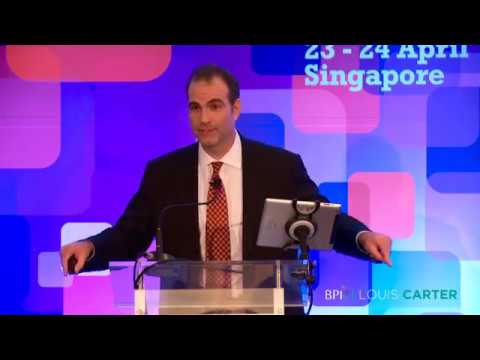
In this talk, Louis Carter argues that society is entering a new era where individuals seek meaning through purpose rather than material gain. He proposes a career development community built around three core elements—purpose, process, and practice—and describes an experiment comparing a control group to a group that received the SERPA emotional connectedness intervention. The intervention emphasized open transparency, collaboration, ethical alignment, positivity, reciprocity, and civility. Carter stresses that ethical consistency, respectful treatment of others, and a culture of giving back create a positive feedback loop that benefits both individuals and organizations. He concludes by urging listeners to adopt the purpose‑process‑practice framework in their own workplaces to foster purpose, ethical behavior, and effective communication.
Chapters
I strongly believe that we are on the verge of a new era. The way we work, the way we live our adult lives is changing dramatically. Isn't it true that all of us, at least at some point in our lives, ask the question, why are we here? Why are all of us here? Here on this planet? What is the reason for our existence? My work is where I find meaning. Today, more and more, the finest talents start not by asking how much or what. They start by asking what's What's my purpose? I believe we all need a purpose. So today we're going to be forming a career development community. I found there's 3 core elements: purpose, process, and practice. Here it is. So we had 2 groups. I had a control group and another group where we treated them, and we gave them the SERPA emotional connectedness ideology, helped them come to conclusion and facilitated actively so they could make a decision. When you clear and do not withhold, what you end up doing is creating an open and transparent environment. Collaboration speaks to the functional, caring, positive environment. Ethical alignment speaks to, did I say and do the same things? Is my company in alignment ethically? Did I give and receive respect in the same way within my teams, in my coaching environments, with myself? Positivity— did I do my best today to be positive? Did I do my best today to let go of the things I know so the greater good can come to me. Everything we do on a daily basis defines us. Everything we do to become better defines us. When I change, I connect with you, and you tell me how I can get better. Then I'm gonna wanna get better. When you give to others and pay it forward, it always comes back to you. This reciprocity, this currency of respect and giving. When you treat a person like a problem, you may win and you may lose. But if you treat a person like a human being, being, you will always win. As you can see, when we practice civility and kindness and appreciation and respect, great things happen. And today you all experienced that respect, that appreciation, the espousal of ethics and integrity. For your organizations, bring it with you. Take this process with you to your organization. When we take the circle of purpose and we lay it out—practice, process, purpose—we end up saying, this is why I'm here, this is what I'm doing, this is how I'm doing it, and this is what happened as a result of what I've done.