Newsweek Leader Show: MedLeaders Spotlight: Ray Williams and Springfield's Rise
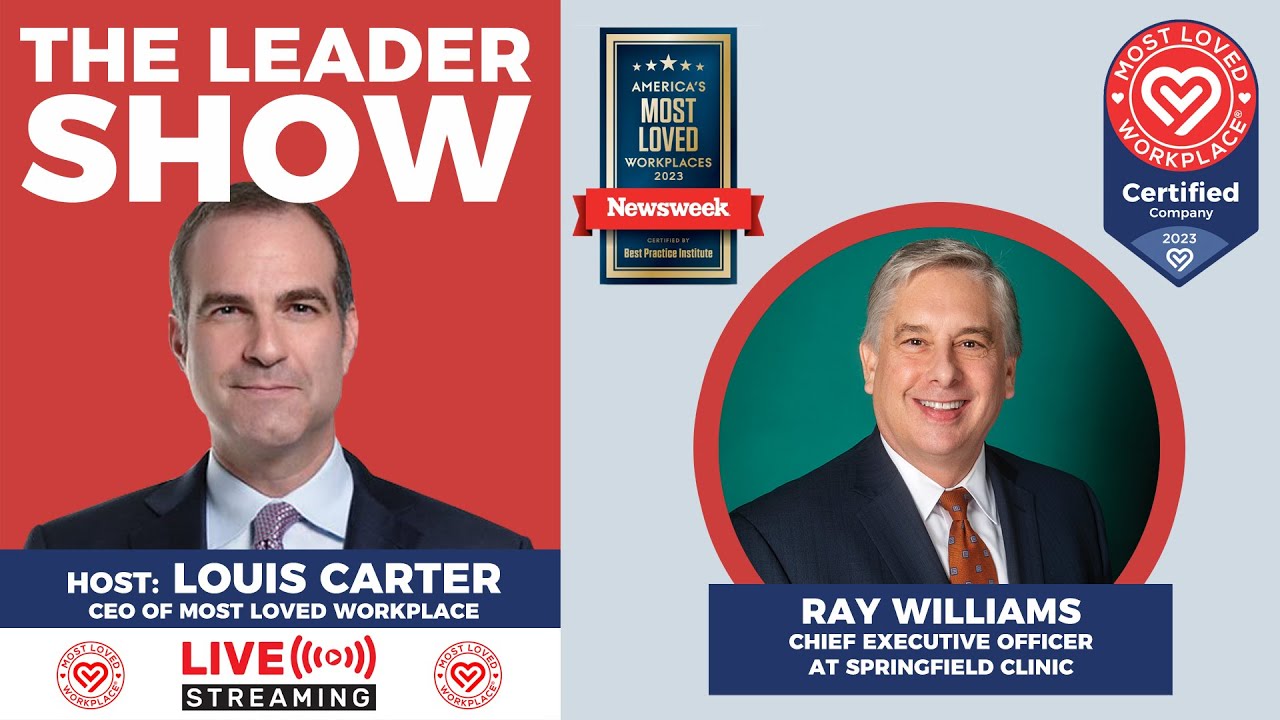
In this Newsweek Leader Show interview, host Louis Carter talks with Ray Williams, senior leader at Springfield Clinic, about his transformative approach to healthcare leadership. Williams describes how he re‑oriented the executive team around a single vision and introduced the concept of “strategic speed” to accelerate change to match physicians’ fast decision‑making cycles. He shares the co‑creation practice of spending an entire day shadowing physicians to uncover daily barriers, a method learned from consultants Greg Korniluk and Brita Hess, and how he institutionalized this practice across his leadership team. Personal experiences navigating poor care for his wife and aging parents sparked his passion for improving patient and provider experiences. Williams details cross‑functional empathy experiments, such as swapping billing staff with front‑desk staff for a day, to build mutual respect. He emphasizes building trust through small, quick wins with competing health systems, fostering collaboration over competition. His leadership style relies on “management by walking around,” direct patient interaction, and insisting that every leader talks to a patient, a physician, and an employee daily. Hiring is focused on caring as a core trait, and he promotes a growth‑mindset that embraces risk and rapid problem‑solving rather than fearing failure. The interview paints a picture of a culture where empathy, rapid execution, and collaborative trust drive a superior patient experience at Springfield Clinic.
Chapters
.
He's made physicians' lives better, patients' lives better, and he's created an enterprise that is all around loving employees, loving physicians, loving patients, a community of caring. And we're going to unpack all of this today and learn the brilliance behind Ray and the things that make him successful as a leader and as a human being as well. Ray, welcome.
Thank you, Lou. It's great to have you. It's great to be with you.
Let's go into this. Let's dive in, 'cause we have a lot of grounds to cover. So when you, tell us, when you joined Springfield Clinic, what did you see, the current state, and what did you immediately know needed to happen? What did it look like for you?
Well, I think, you know, the clinic has had a long and prestigious history, so I felt like, you know, this is a great organization and I'm really proud to have joined it. When I started, it was clear that there were, you know, talented people, but they were oriented around individual achievement. And so one of the first things I had to do was really reorient the executive team around, you know, we need really a single vision for what we're trying to achieve. And how do we do that together? How do we do it more effectively? And so I did introduce this idea of strategic speed and how do you get there and how do you work more effectively as a team and co-create solutions, to use one of your terms. And that process has been, I think, very successful.
Let's go to the co-creation because one of the coolest stories and things that I know you did at the beginning of your career was you would go to physicians meet them at their cars and follow them through their day to figure out how you could make their days better.
How did you come up with this?
And what was that those days like? Tell me more about it.
Well, I actually worked with a consulting firm, Greg Korniluk and Brita Hess, early in my career, and they were champions of this idea that I think physicians have a natural skepticism about suits. And so they said, they helped me with this strategy, which is really a great way to overcome that. So I would call a physician and say, "Hey, I wanna spend the day with you. I wanna understand what your, what's a day in the life like for you as a physician?" a general surgeon or a rheumatologist or an oncologist or whatever. And they would say, "Oh, yeah, yeah, you know, gonna show up for a few minutes at my office or something." I said, "No, no, no, you know, I wanna spend the day." And they said, "Well, okay." They didn't believe it mostly. And, you know, I would find out where they parked and I'd meet them at their car and they'd be shocked. You know, they couldn't believe I was there when they were there. I would spend the whole day with them and I didn't, you know, I never went with an agenda other than listening and learning from them. And wow, did I, you know, I mean, you just, it's amazing how many obstacles and barriers a physician actually faces day to day. And so I wouldn't necessarily talk about it, I would try to understand it. And then I'd stay with them the whole day, see patients with them, just follow them wherever they went, whatever they did. And then at the end of the day, I'd walk them to their car. And at the end of that, wow, just an amazing— Brita and Greg were brilliant in helping me with this strategy because there physician, invariably I'd have a relationship with them from that point forward like you couldn't believe. They would have a different level of respect for me entirely. And I ended up with a list of things, you know, look, I can certainly prioritize and help with many of those barriers and things that they would face. And so when they would see I would fix some of those things, they were like, wow, that really worked. And so I can't tell you how many times I've done it, many dozens, and worked with every specialty and done it for many years. And I required of my executive team, so they all are required to round and spend the day really with physicians. And it's, we have them report out at our team meetings about what did they learn and What were the challenges that they observed? And we try to keep those things in front of us so that we're constantly looking at, you know, how do we continuously improve what we're doing?
And you do this with strategic speed, that you find out what's really happening and you do it quickly in the prioritization. And what I found very interesting and very powerful about your story, your leadership story, is that you You do it quickly for a reason. You've had situations you've seen in your life, you're with your family, others that are close to you where they require strategic speed. You've examined the situations and said, you know what, I need to change that. I want healthcare to be different. I want physicians' lives to be different so they can serve patients even better. Tell me more about that personal passion of yours and how that does drive some of your beliefs and philosophies around time to value and strategic speed?
Sure. Well, I think, you know, having been in healthcare a long time, I think the business cycle in healthcare historically, I would say, was very slow. You know, if you were to track changes at many health systems and hospitals, I would say that's a pretty slow business cycle compared to many other industries. And so the question is, you know, well, what could you do if you could speed it up to match some of the tech companies or something that have a very, very short cycle time? Well, it's that time-to-value question, right? And I think that physicians are— they're a very highly frustrated group often because they know the right thing to do But getting all of the people involved and all the systems that they have to work with and actually making the change happen, it happens at a much different pace than they're used to, right? I mean, if a physician sees you, right, in minutes they have to decide what is it that you need, what's the right plan to do, and then they're off doing it. And so their orientation is strategic speed, right? I mean, they wouldn't call it that. But that's what they're doing every day. And so when they see, you know, a business or an administration or individual executive that's moving much slower, that's very frustrating to them. And so when we're able to sort of, you know, pick it up and keep pace with them better, well, they like that a lot, you know. And so it's been— really successful in helping them understand that, look, we're here to help them be successful and improve their environment and their life. And the same for patients. That's what we're all about.
And this is a passion of yours as well. I know that you don't just drop into this and do this work that you're doing. There's always— there's reasons for it. There's something behind it that that drives you to do it. What are some of your drivers that really push this time to value, the strategic speed, knowing and wanting to help physicians so much and really caring about their work to help patients even get even better? Yeah, what's your—
Well, when I started, you know, my parents were older and my wife had some health challenges, and so I found myself trying to navigate the care that my wife was getting and that my parents were getting. And wow, it was just terrible. I mean, it was just super frustrating. And, you know, in the older doctor's office, you know, they'd often have glass, you know, across the reception desk, right? And the first thing you'd walk up and eventually you'd get somebody's attention and they'd slide the glass back and You know, yes, you know, and I'm like, wow, this is awful, right? I mean, you know, this is terrible service. And, you know, trying to get an appointment, how do you get your appointment? You know, how long do you have to wait? You know, and, um, you know, healthcare is so— it's, it's so personal, and it tends to happen, you know, when people are the most vulnerable. Healthcare can simply be callous. It's just often not attuned to how intimidating it is to the typical patient. It can be humiliating, honestly. It's just— what other environments do people have to take all their clothes off and you're being weighed? You know, a whole list of things that nobody wants, you know, uh, to go through or do. And, um, so, you know, I was impressed the wrong way, right? That there has to be, you know, we have to be able to treat people better than what I saw, um, you know, for my wife and for my parents. And, and so that started a journey, right, to say I I want to make a difference. I think can make a difference. And, uh, so I, I think it came from a personal place.
Absolutely. And there's— and, and from that personal place, what I've seen is the ability to see the other side, the other side, what somebody else is going through. It's so intensely personal what patients go through. They are on that other side of this sort of glass door experiencing a completely different world than we are. And you've done that not just with patients, done that with physicians, with your executives, with partners, thinking about how they think, how they feel at all moments so that you can fully immerse yourself in that experience and create something that's best for everybody. How is that showing up?
Go ahead. I'm sorry, I was just going to tell you one of the things I learned early on was that the the front desk staff, you know, where they're trying to deal personally with the patient, I was always really frustrated with the billing department, right? The billing department was always messing up. And for the billing department, the front desk was always messing up, you know, they weren't registering the patient right, they weren't doing this right. And so both groups were intensely at odds with each other. I'm like, hmm, that doesn't— that isn't good, that isn't going to work. So I started making them flip-flop So I make the biller come and work as a receptionist for a day and make the receptionist go to billing and work as a biller for a day. Wow, uh, what an eye-opening experience that was, right? For the biller who always worked behind the scenes, having the patient actually in your face, uh, was a new thing, right? And they're like, wow, I didn't realize how challenging that can be. And, uh, you know, for that front desk person to be in billing and deal with one angry call after another, you know, where the bill's not right or something. Well, that was really intimidating. And so both groups emerged having a healthy respect for each other and how they could really work more together and help each other out. And I think the more we can do that kind of thing, the more we've been able to transform how that experience works.
It's such a great example because there's examples in the military as well of different factions bullying each other. So I have one of my friends, Tom Kolditz, he was a brigadier general of a— he had Korean augmentee soldiers and US soldiers, and the US soldiers would make fun of the Korean augmentee soldiers to the point where they were getting depressed and there were some serious health issues, mental illness issues. And it just so happened that the Korean augmentee soldiers had awesome martial arts skills, and the US soldiers had great shooting skills, right? So Tom said, all right, that's it, I'm gonna give the Korean augmentee soldier the best role on my, on my Jeep, which is the driver. It's a coveted role, and I'm gonna make all the US soldiers take martial arts lessons and go, go, and go to get Korean food, eat the food, go to their family events, and it shifted. They became—
That's awesome.
They learned each other's trades, you know, and similar to what you did with front desk staff and billing world, they're getting to know each other. They now work with each other. They care about each other. They fill the shoes. It's like, oh my goodness. And I'm in the front desk with these people getting mad at me. Oh, I'm in the back. Look at how many bills come in and how quickly they come in. Now we can work together more as a basketball team.
Absolutely.
That's cool stuff that you do that. So now, let's talk about collaborations and how they work for you. You've done an outstanding job of bringing Springfield Clinic into collaborations externally. And really enabling Springfield Clinic and others to work cooperatively in a way that serves a much greater population in a deeper and more patient-centric way. What do you expect in a good collaboration and partnership with, with others externally, and how do you create such things?
Well, I think, you know, in healthcare, I think often competition seems to get in the way of people thinking more creatively about how they can actually work together. I mean, when I think of, you know, our environment here in Springfield, Illinois, you know, we need each other to have a healthy, vibrant health system here, you know. So there are two health systems here, and, you know, they competed. I think they competed with the clinic largely. I think there was some collaboration. But what I've tried to do is, is say, look, it's, it's not about me winning all the time. It's not about you winning all the time. It's not about us running each other out of business. That's not going to work. Um, let's decide that, you know, we're all better together, uh, than, than we are at odds with each other. And I think that just too often competition in business prevents us from thinking like that. So I think there was, uh, quite a bit of skepticism initially, you know, at that thought, because I think the competition had been going on for so long, they're like, well, who is this guy? You know, what planet is he from? But, you know, there's a logic and reasoning behind it that's very hard to argue, right? I mean, I think that there's certainly there's a place for competition, and I think it probably makes us all play a little better, right? You know, so I think there's a place for that. But in terms of taking care of patients, you know, we need to work together in providing a health system that's really high functioning. Because I think it's many times it's the disconnects between a hospital or a doctor group, or, you know, where the care is being provided or how the care is being provided, is often where it breaks down. And so, you know, if we really put the patient first, then we, we can think about it, think about it differently. I mean, look, we still do compete on many fronts, but it's, you know, how do we continue to really look for more areas where we can collaborate and make things better? And there's always many of them. 'Cause there's just so many disconnects in healthcare. So much more we can do better.
And there's true norths, aren't there? Where you have a definitive foundation, foundational values, and you say, if it does harm the patient, we need to reassess the relationship. So, and regardless of competition or politics or, egos or social loafing, people who don't want to do work, all these things that go into being human and working inside of an environment. And you transcend that and you say, let's— in every situation I've seen this, you say, let's focus on the patient and the work at hand to give time to value. And you're uncompromising in that.
Well, I think, you know, to your point, I think we— if we can keep that focus right, then we can sort of get over the organizational egos a little bit and keep focused on the right things. You know, we're often distracted by things that don't add any value, right? So I mean, one of the, the tough challenges is, is keeping focused on the right things because there's a lot of noise in our world. But again, I think if we really focus on, on the patient, how do we improve care? And, you know, there's some things that you simply can't, uh, can't give on, right? I mean, every patient deserves is, you know, high-quality care from a qualified physician and team. And it's— that includes a hospital and it includes the staff at a hospital and includes, you know, everyone from the emergency room to the operating room to the floors. And that's not our business at all, but we influence that very dramatically. And hospitals are not used to I think looking to the independent physician to help them figure that out. I think they see that as that's their role and their thing. And I'm like, no, no, no, it is, but we can do it better together. You know, we can come up with better solutions together. We can solve some of the economic challenges we have better together. And there are a lot of economic challenges in healthcare right now. So we need to get smarter together.
We talk about this with getting smarter together and doing the hard work no matter what. And often people are uncompromising on the wrong things and not on the right things. So, and you have different, many different factions that you work with in that way. What have you seen that, and I know you've done this very effectively, is most effective for you in showing that that uncompromising values work? Because I've seen for you, it's time. Time always heals and shows success with— and people are naysayers, but yet with strong values and vision, time shows that success comes. With regard to this very simple value, which is time to value, strategic speed for physicians and patients to become even better and feel even better and become even healthier.
You know, for me, I came into, uh, uh, you know, a setting where most of the leadership around me had been here forever. Uh, I mean, decades, honestly. And so I was the new guy. And so obviously they looked at me with a healthy skepticism. So my approach was, look, let's reason together. Let's start small and let's ring up some successes together and then we'll build trust through that. So I've worked really hard to be a trustworthy partner. And I would hope that, you know, my colleague— competing colleagues may not always agree with me, but I would hope that they would say I've been a trustworthy partner. And, you know, and hopefully the same for them, right? You know, I think trust breeds trust. And so my hope was that, you know, starting small and working up would work. And I think it really has. I mean, I think that's been, you know, we've accomplished things together with both health systems here that I would say is, you know, I've never seen in any other market in my 40 years in healthcare. And I think it was because, you know, they were willing to take a risk also. And we started small and grew from there, but we did it quickly. To your point. So it has moved along, and I think it really has made a difference. I mean, I think for a fairly small, you know, community here in central Illinois, the care is exceptional. I mean, I think we're providing a really high-quality product that is— would be unexpected here. In many regards.
You need it. You have a very capable team to do that and philosophy around that team. And what I want to get at here is what is it that you do expect from your team and how they work with you and how they lead as well? What are your expectations?
Well, it's going to sound old school because in some regards, I guess it is old school, but I learned as a young executive, right? There's no replacement for management by walking around. So, I do it, I teach them to do it, and the managers that work for them, it's an expectation, right? So, I tell all of my team, talk to at least a patient today, you know, you've got to talk to your employees and you've got to talk to every physician today. And when we do that well, uh, you know, it, it, it just works exceptionally well. Uh, so that, you know, there, I don't know, there's a tendency for people to be in their office and, uh, you know, to be busy doing something, busy doing email or busy doing some process. And so, you know, I tell them, No, all of that is secondary. You know, you have to do that another time when you can, but you need to make sure that you know what's going on for the areas that you're responsible for. So that management by walking around is a big piece. And then, you know, I explained that you really have to inspect what you expect. You know, so there's a personal engagement and involvement And are the systems that we have in place, are they working the way we expect them to? And the only way to really know that is to deeply understand it and to be looking at it. You know, that balance of delegation and being hands-on is something that I think is often not the right balance, right? You know, I think a lot of people miss read it as, well, it's micromanagement or something to, you know, to really understand. And I'm like, no, I mean, you know, we can understand everybody's job very, very well. And the people that do, well, that just makes all the difference. I mean, you know, I know how to register a patient. I don't do it every day, but I could walk up to the front desk if there was a line and I could register a patient. And I tell the team, that's what you need to do, right? 'Cause the team, if they see you do that, if they see you walk up and help out and register a patient when there's a line, they'll never forget that. I mean, that will make a lasting impression. And so it's, sure, you know, we need to delegate and we need to be able to count on people, but, you know, we need to be able to be personally involved enough to really understand are we delivering what we're expecting that we're delivering?
And I also see a lot around the strategic speed for you. So when you see an issue, you see a problem, right? You don't come with a problem, you come with a solution that you're executing on quickly and you can iterate it, yet you need to have a solution. These are important life threatening critical issues that need to be dealt with quickly, not waited on for the weekend or after vacation or something of that sort, right? So you do have expectations around that. Healthcare is critical and we have to have strategic speed around it.
For sure. I don't know if it's, you know, I don't know, not to blame anything, right? I don't know if it's social media or what, but there's an ADHD about about the world, right? And I think that what I observe often is that somebody is trying to explain what their issue or concern is, and we're just talking all over top of them before we even really listen to them to understand what the issue is. And so, you know, in my coaching, I try to say, hey, look, you really need to be a good listener. You know, fight that urge to, uh, overtalk them and, um, and, and deeply listen and, and try to understand what's going on. And then, you know, uh, make a difference today, right? You know, make a difference today. We don't need weeks or months, you know, to solve most of the problems that face us. We just don't. And I think that much of our success has been, you know, I don't want a list of 100 things. You know, I want to understand, you know, what are the couple of things that are not working right today and fix them and then keep that system going, right? You know, because people don't deal with a list of 100 very effectively. Um, and you know, with physicians, and it's— they're, they're absolutely right. I mean, that healthcare has been terrible about that. They can meet with a hospital and go over things, and, and the next month they're going over the same things, and the next month they're going over the same things. And you can pull an agenda and I've done this, which is incredible, you can pull an agenda for 5 years ago and a department is talking about the same thing with the same hospital department. I mean, it's incredible. I mean, you couldn't move any slower or be any more effective than what some of these things demonstrate.
And I've seen so many presidents, political presidents in the United States, Every time when they're asked the question, what is it that you find most valuable of your staff? They say, people who come to me who have gotten things done. That's it. That's the number one thing. People who don't come to me with problems, they say, I have that. I'll do that. Regardless of the conflict that they'll go through or the challenges they go through with various factions or the amount of time it might take. They'd get it done.
Well, I certainly see that pressure, right? I mean, I think there are a lot of people that think, if I don't do anything, well, I'll keep my job, right? I mean, it's in doing things that people associate risk. And I think doing nothing is a fast track to failure.
Right on.
You know, I mean, when I talk to my board, I'm like, look, you want me to keep batting, right? You know, I may not be 100%, right? But you want me to keep batting. And if I'm 90% or better, you want to encourage that. So, you know, I think the world has a tendency to focus on failure instead of focusing on success. And, you know, I think that that's a problem, right? And it will paralyze a company, a family, an individual. I mean, I think, you know, it, you just, that's a terrible way of thinking, but I think it's everywhere. You know, it's everywhere. I mean, when I talk to an executive in another organization, half the battle is just getting them to be willing to take a stand. You know, and do something.
And it's fear-based. We fear failure, right? Rather than saying, I fear not doing more than I do failure. And the fact that failure allows us to learn so we can get to success later. Those are— that's a mind shift. Fixed mindset, growth mindset. Let's all move to a growth mindset where we can actually make those decisions on a more consistent basis. That's how you've led at Springfield Clinic. And I want to go— yeah, please.
I was just going to say, you know, I mean, look, there is a human nature that you have to accept to a certain extent, right? I mean, and this is a conversation I had with my board too. 100% of everyone with thousands of stakeholders isn't going to be happy with anything I do. And so you have to accept a little bit of noise because there's always going to be a little bit of noise, and you can't let that paralyze you. But it does. I mean, it can, you know. I mean, I have to work out, uh, you know, physicians on our board are going to get noise from partners, right, about things that are going on. We have to say, look, now we have to keep moving forward, doing the right things. And yes, there is going to be a little bit of noise, and you just don't— you have to tune that part out. I'm not saying we don't co-create solutions or that we haven't been thorough, you know, in involving people, but it doesn't matter. You know, there will be some noise kind of no matter, and instead of letting that paralyze us, You know, we've— the board's been very supportive, and I think we've been able to forge ahead, and that's made all the difference.
It's the, it's the absence of noise that we should fear, not the noise itself. And you hear, you hear what's around the corner because people are open and honest and communicative with you, which means that they trust you as a leader, and they do. We've seen that time and again. Being honest and open and letting them know how you feel is what creates trust and gets those feelings out, which are there.
I think being genuine in what we're trying to accomplish really matters, right? I mean, I think the physicians would say there's no action I've led that had something to do with my self-interest. It's all been about either improving things for them as a physician or for our patients or our employees. And I think there's a consistency to that that is, that they wouldn't argue with.
Well, let's, I want to shift it from physicians now to all the way to your frontline. Go all the way down, if you will, if you look at hierarchies, to your frontline. And what would you say to them to keep that vision alive and get their fires going, you know, in what they're doing every day? What would you say to them that your expectations are, your inspections are of them with this great purpose that you have at Springfield Clinic and for the community? What would you say to them?
Sure. Well, you know, And this comes up often, you know, I'm frequently asked, well, if you could say one thing, you know, to them, you know, what is that? Well, they've heard it enough from me. I think they probably know the answer to that by now. But look, fundamentally, we're a caring industry, right? Or we should be, you know. And so, you know, I tell people, if you care, about our physicians, about your teammates, and about our patients, then you're going to do the right thing, you know. And so you have to, you know, if you care, you're going to listen. If you care, you're going to be polite, you're going to be supportive, you're going to be empathetic, right? If you don't care, then none of those things are going to happen. And that's unfortunately the reality in too much healthcare, is that You know, there's not enough emphasis put on, you know, how do we actually want to do business? Well, I want to do business as a deeply caring group. And so, you know, and even in our recruiting, right? You know, if to the extent we can determine that, right, we want to make sure that we're hiring people that are going to be caring people, because if you don't care, we're not going to be able to teach you to care. We can teach other skills, we can teach other things, but we can't teach you to be a caring person. If you're not a caring person, then you don't have any place here and you're not going to have a long career here because we're going to be looking for that because that's fundamental to really everything else working.
And you've always said, "People don't do what you expect, they do what you inspect." And your inspection is caring.
Well, that's exactly right. You know, I mean, if I go to a front desk, and I often do, you know, and they're looking down and they're not acknowledging me and/or a patient, and, um, you know, then like, look, you're not understanding. I don't know what you're doing, but you're not doing what we want you to be doing, uh, you know, because your first obligation is, is paying attention to any patient that walks up to you and asking how you can help and what you can do for them and, you know, being friendly and caring. I mean, again, you know, I said earlier, right, you know, patients are often in a place of deep concern. You know, they've just gotten a bad diagnosis or they're hurting or they're feeling bad. I mean, they're in a vulnerable place. They're often not in the best mental state, right? You know, rightly, you know, concerned about one thing or another. And so we have to step up our game really because they may not be at their best, likely, or often not at their best. And, you know, how do we step up our game to the point that we can you know, uh, help them through what they're facing. And when you make a difference like that, you've got a customer for life, right? And that's what we're looking for, is a differentially better experience here than anywhere else. I, I want patients to say, when I go to Springfield Clinic, I have a better healthcare experience than I've seen anywhere else. That's what we're aiming for. And I think we're making good progress.
It goes back to what you'd said before about having empathy and understanding physicians. It goes the same to patients. And this very practice, to people who perhaps maybe don't care, right? Or they don't strategize, they don't think about the impact of caring. They're not doing systemic thinking around it. What does caring mean to me? Being empathetic about somebody who perhaps may have a cancer diagnosis, or they may need— they're waiting anxiously for their blood test results, and they're thinking their lives are in the balance. You know, what would it feel like for them? People who perhaps don't care immediately, and having that care actually biologically gives us good oxytocin It lessens our cortisol levels. Caring is good for your health and is better for healthcare.
It's rewarding, right? I mean, I, you know, I think, you know, the difference between working, you know, at a convenience store and working here is, is in that rewarding nature of it, right? And, you know, part of it is you know, we've really focused on the, the team. So that starts often with the physician. If we put them in an environment that doesn't work and we frustrate them, you know, it's hard for them to be caring, right? And the same thing with the staff, you know, if we give them a computer system that doesn't work, or, you know, they can't take a payment when they're supposed to, or, you know, then we frustrate them, and then You know, if the physician's frustrated, if the nurse is frustrated, if the front desk is frustrated, then there's no way we're going to come across as a caring group, right? So we work hard at making sure that all of those things work so that we're not— people aren't coming in frustrated every day, because then they can't really— they can't be that caring person that we expect.. And I think doing that has allowed us to be more focused on the patient and less focused on ourselves.
Outstanding. Ray Williams has transformed this industry and this clinic and done the right thing on every level for Springfield Clinic and created this culture that is just fantastic and just made amazing strides. It's a, it's a case study for excellence in healthcare in America and around the world. Ray Williams, thank you so much for joining us today on the Newsweek Leader Show.
Thank you, Lou.
More from Louis



How to Get Found in ChatGPT, Perplexity, Gemini, Claude & Grok | Visipage AI Visibility Audit

Your Competitors Just Got Certified. Now What? | Most Loved Workplace® Demo & Hiring Advantage



Visual Thinkers: The Hidden Genius Behind Skilled Trades & Innovation! #shorts

Car Mechanics: The Secret to Engaging Autistic Adults Over Video Games! #shorts


