Secrets You Must Know About to Be Happy with Tia Graham and Lou Carter
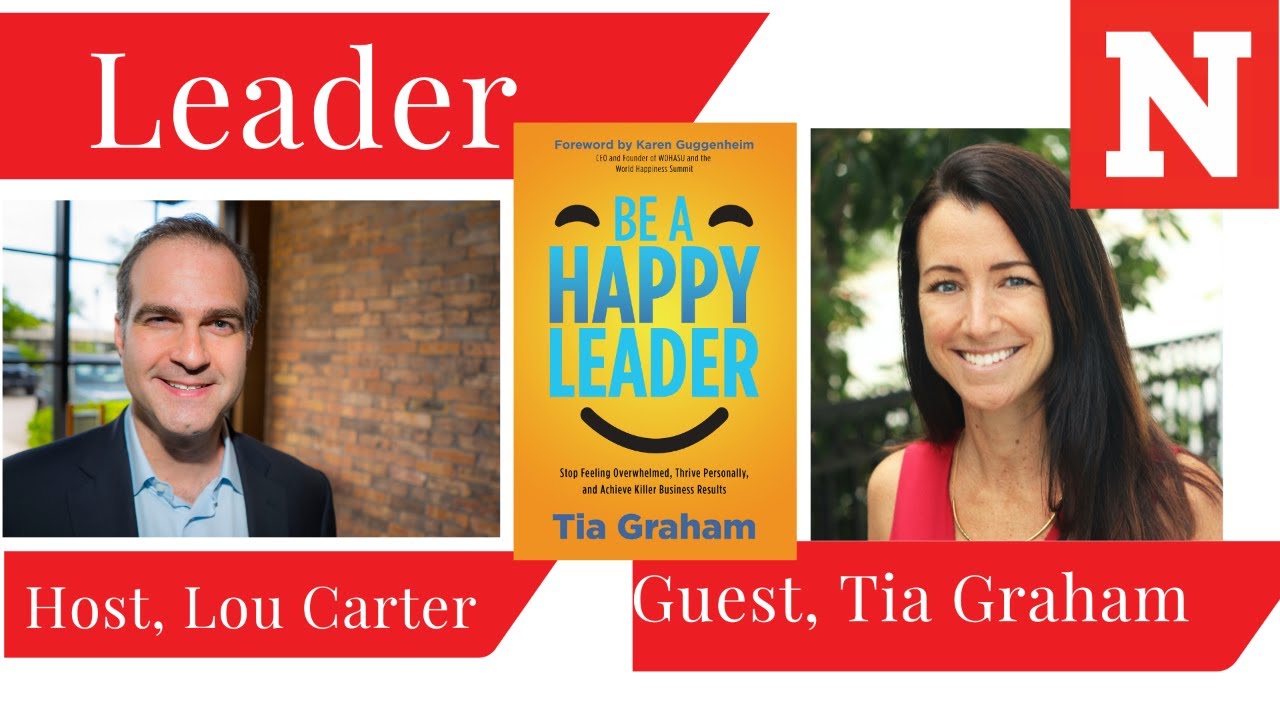
Tia Graham, Chief Happiness Officer, explains how leaders can deliberately build happiness at work through science-backed practices. Reset tools for tough moments include mindfulness and short walks; deeper habits require REM sleep, outdoor time, and meditation. Strong relationships, built on self-compassion and distraction-free presence, are the top predictor of happiness and drive productivity.
Chapters
Hey, we're here today with Tia Graham. Well, this is going to be fun because Tia is the Chief Happiness Officer. She is— now I've dubbed her this— she is the Happiness Guru. We have the Happiness Guru, Tia Graham, with us today to talk about her book, The Happy Leader, which is out on Amazon. You can check it out. And she's going to talk to us all about happiness and how we can become more happy, the importance of happiness at work. Tia, Welcome to the Newsweek Leaders Show!
Thank you. I'm very excited to be here with you.
I really was, I was very excited about this in particular because I wanted to know the effects of happiness at work and being a happy leader. And, you know, what it takes not just to, you know, perhaps get in the role of happy, right? But also, you know, what leaders need to do to shift to that mindset. Tell me more.
Yes, yes. So You know, for a very long time, work— and, and still a lot of places are like this— you don't necessarily think of work and happiness. You might think of happiness more when you're on vacation in Florida, where you live, or on the weekends. But there is a huge shift happening where work and happiness are, are coming together. And so for leaders, what this means is really taking their— your own well-being and happiness seriously, both while you're working and in your personal life. And what is incredible is that all of the research coming from neuroscience as well as positive psychology, organizational psychology, etc., we now know what makes us happy and what can help us to increase our well-being. And so it's, you know, my— the first step is you have to start with you and, and to take care of yourself, whether it be your physical health, your relationships, your emotional well-being, your intellectual well-being, learning and growing and so on. And there's all of this research that supports it. And then, it's about bringing that energy. And it's not about being positive all the time. No one is. And even happy leaders are not. But it's about being more positive than negative or pessimistic at work, right? It's about creating positive work climates. And, and there's so much that leaders can do to create a positive ripple effect to their employees and to their teams.
Let's go there, right? You know what they can do? Because a lot of people want to know that. What can I do? You know, and the other thing I believe, I know is important to people is you had a bad day. You've gone to the shopping place, market, and people are angry, upset at you. You didn't take the stop sign right. You're getting— people are beeping at you, right? Or some— there's someone rude to you, perhaps in customer service somewhere. And if things are just a terrible day, how do you shift? How do you shift? And we know it's important to— how do you do it?
Yeah. So, right. Something could happen in the morning with your spouse, your kids, like you said, when you're driving to work and you all of a sudden are in a negative headspace that you're about to go be, you know, leading a team. So the first step is to recognize that you're in that headspace of being present. That's why having a mindfulness practice is so important to notice, okay, I'm feeling really angry and frustrated right now, and to just honor that feeling. And then it's really about choice. So much of my messaging is about choosing, you know, how do you want to show up and how do you want to be as a leader? And if you haven't left the house yet, because a lot of people ask me, I wake up and I'm just in a bad mood. What do I do? I haven't even started working. I haven't even started my day. There's a lot of quick activities you can do. So, one could be a 5 or 10-minute meditation. You can do a quick— sometimes I just do a 7-minute workout. I'm also a busy, you know, Louise Carter said, young kids and working. Very, very quick exercise. I tell leaders, to get outside in the morning. Just walk outside, even if it's for a few minutes, and, you know, get that fresh air on your face. And then we are— oh, what's the right word? We— there is information and content coming at us because of our smartphones, because of just 24/7 news. So I teach leaders to be very cognizant and intentional about the content they're consuming. So, on your way to work, you could listen to news the whole way. Or you might choose to listen to an uplifting inspirational podcast about what an incredible business leader is doing. You might choose to read a little chapter of a book, listen to music, etc. So, to be very intentional about the content that you're consuming as well.
Do you mean read while you're driving?
No, no, audio, of course. You can listen to Be a Happy Leader.
So, uh, so yeah, I do that sometimes. It's hard to see.
Yes.
So anyhow, yeah, that's my good humor for the day. This— I'm glad there's no audience because I really would wonder if this thing's on. So, so the thing is, I'm, I'm, you know, you could also listen to music. There's musicology, right? Musicology is important. It's how we, we, uh, translate our, our— into our emotions, you know, our favorite music. Is that a part of it? Is musicology a part Yeah, no, absolutely.
Music has— there's a lot of great research behind music, especially music that you like, that can shift your mood. And, you know, one thing that I failed to mention, which is extremely important, is sleep. You know, the majority of people today in Western cultures are sleep deprived, and we should be getting a minimum of 7 hours, more like 8 a night. And so even though you feel too busy or you could just answer those few more emails, Your brain operates very differently when you're feeling positive than if you're feeling negative. And so that's a lot of what I teach is the science that connects the happiness and your productivity, creativity, et cetera.
I have had so many people say to me, they say, I haven't had enough sleep. I say, you realize you haven't gone through the 4 stages. You have to go through them. The 4 stages of sleep, there's 4 of them. You have to have at least 2 or 3 of those a night. Isn't that right? The 7 hours or so means you need 3.
Yes, and you need to make sure— yeah, if you don't get enough sleep, then you don't get that REM deep sleep, which is where you process your emotions from the day. So yeah, it's, it's, um, really, really valuable.
Yeah, and there's so much brain activity that happens in that third and fourth sleep level of REM, um, that we don't realize that most of the day is being kind of washed, if you will. It's being improperly compartmentalized in a way that we sometimes can't even do and reflect with ourselves or others.
Yeah, absolutely. And the neuroscientist that I studied with in the sleep module, it was very interesting. She said that humans overestimate their cognitive ability when they're sleep deprived. So we think that we're operating more successfully than we actually are. But when you get tested and you're sleep deprived, you're actually not doing that well. So definitely sleep.
It's true. We, we end up retraining ourselves to think that we're okay, but we're not. And you can't catch up on it. It's something you have to do frequently and consistently. So sleep is important. Exercise— that whole idea about getting outside. People think we have to— a lot of people say, if I— as long as I exercise inside, I'm fine. Tell me more about the physiology around that, how— why going outside is so important.
Yes. So there is so much research on the benefits of nature. And I know a lot of— I know a lot of your listeners live in big cities, and I've lived in big cities too, where it's not just outside your door. But whether you are going— you know, the difference of going for a run on a treadmill versus going for a run outside is the, the benefits to your well-being of going outside are significantly higher. And especially when we have a lot of stress and we might be feeling overwhelmed, might be feeling burnt out, and just, you know, feeling like there's too much to do. Taking 10 or 15 minutes and going outside, even if you're sitting to read a book, even if you're eating your lunch outside, or ideally if you can go for a walk, it instantly allows us to decompress and process, similar to sleep actually. Um, and There's so much research on spending time in nature and our happiness. And so, yeah, there's just numerous benefits. So I encourage people to get outside at least once a day, you know, if you can play with your, with your kid or just go outside on your own, but to really try and do that every day.
And you had talked about some of the elements around relationship with yourself. You know, people may say, oh, it's so fluffy. It's not actually. It's putting your head in the right place. You know, it's not, it's not fluffy at all. And so let's go there. So it's the relationship with yourself, and a lot of it you said is meditation. Yeah. What is it? What would it be like? What would someone need to do? What does a meditation look like for oneself to become, well, happy?
Yeah, so I'll answer, I'll answer both questions. So in terms of meditation, again, there is so much research on if you have a regular meditation practice, it actually decreases the gray matter in our brain, you know, which and it decreases, um, stress, anxiety, depression, you name it. So ideally what I encourage my clients to do is when they wake up to spend 10 minutes meditating. And you could do it just by sitting quietly, or you can use an app like Calm or Headspace, Insight Timer, etc., and just getting quiet and noticing your thoughts. And there's all different types, whether it be breathing meditation or body scan or and so on. But the more that we do that, the more that we notice our thoughts and when our brain is distracted throughout our day. And there's also informal mindfulness where, you know, you might be sitting down to eat dinner with your family and you're noticing that your brain is thinking about the meeting that you have tomorrow, yet your child is talking at the dinner table. So with having a mindfulness practice, you're going to tune in and go, Oh, I'm actually thinking about the meeting. I'm going to tune back into what's happening at my family dinner table. So you're more present. And the more present we are, the happier we are. So really, really valuable. And then the second part about having a healthy relationship with yourself. So the number one predictor of happiness— and there's a great Harvard study about this and many others— but the number one predictor of happiness is having healthy connected relationships. So whether that be your spouse, friends and family, you know, co-workers, but connected relationships are, you know, cross-culture, cross-demographics, the number one predictor of happiness. And so, the number one relationship that we have is the relationship we have with ourselves. So, taking care of your mind, taking care of your body, practicing Things like self-compassion, as an example, are proven to increase your well-being and then also benefit the relationships you have, you know, outside of yourself. But everything's interconnected. So I always tell people you need to start there.
There's so much information you gave us. There's amazing— in terms of, you know, I said the two big things that popped out for me is connection with others. So I reflect on it is actually a meditative practice. And in order to have those really good connections, you have to have that self-love, or if you may, if you will. And so you get better at those connections. So tell me about the, the connection first. It actually helps our health to be mindful and present with others.
Yes, absolutely. So in, um, I learned— I studied with Dr. Tal Ben-Shahar, who taught positive psychology at Harvard for many years before leaving, and I learned from him how pervasive our dualistic mindset is in the West, where, you know, if we're having chronic lower back pain, we will go maybe see a chiropractor. And if we're feeling, uh, or, you know, you might do other things to try and go help your physical back. And if we are feeling really anxious or depressed, we might seek therapy. Yet, you know, really everything is interconnected. Nothing is separate. And so when we are present in the question that you asked, when we're present with our friends and with our family, the physiology benefits too. You know, our— you have more oxytocin, you'll have a decrease in cortisol, your, your heart will be healthier. And, um, people who are optimistic and who have healthy relationships, the research shows that they're not only healthier, but they live longer as well. And so, um, it's in our— I really think, you know, in our modern life with these all the time, with technology all the time, it is more difficult to, to be present and to just focus. But, you know, I tell people, put your phones in another room, you know, if you're, if you're doing that board game with your kid, or If you're having a meeting with one of your direct reports, you know, don't have your email open. Just try and be there with, with that other human being so that you can be present. And then the relationship will be richer, whether it's personal or, or on your team.
Because you're talking about self-compassion there too. Because if you, if you truly have compassion for yourself and you truly respect yourself, you're going to respect your time.
Yes.
—time with others, right? So it's— absolutely, you have all these people texting you and taking up your time and kind of invading you, right? And what's the use? You can't give time to that social connection, the emotional connection that actually gives you all these wonderful chemicals after you've slept, taken a walk outside, meditated, to be able to enable yourself really to become happier. Yes, absolutely.
And, you know, of course there's been this huge reset over the past 2 and a half years, and people are looking at work differently and looking at what they want to do differently. And the number one strategy philosophy that leaders need to have is relationships over results. Like, if you are investing in relationships with people, truly getting to know them, investing in their professional growth, the results will follow. The numbers will follow. And so, taking that time to really Be present for people will definitely pay dividends, you know, on the business side as well.
And then, you know, there is strategy, right? I mean, we could connect to the strategy. We're better able to connect to the strategy when we're happier, when we enable happiness inside our companies. And it's showtime, right? It's showtime. You know, it's, it's, it's not really acceptable not to be ready. You have to always be ready. And, you know, you have the meditation yet. You get on that stage or you're in even a meeting, a Zoom meeting, or you're with someone, showtime, you're on. You're a leader. You have to keep this thing going. Yes, yes.
And you have to motivate and inspire people. There's a lot of options out there for people. And so, over the phone, over text, over Zoom, Microsoft Teams, in person, the leader's emotions are contagious. Just like a virus, actually, like, you know, coming out of pandemic, how you feel. You know, we have mirror neurons in our brain and it's, it's transferred person to person. And so people want to work for people that make them feel good. You know, I, I teach people how to increase those positive emotions while they're working because that's what drives productivity and creativity and engagement and loyalty, etc. You know, emotions are what drive behavior. And so I tell leaders, whether you like it or not, you're in charge of people's emotions at work in a lot of ways.
Like, who's in charge here? It's you. You're in charge. You create this environment that, well, you want. If you want a really horrid environment, you can act that way. Ted— I don't know if you know Ted Lasso. Do you know Ted Lasso? Oh my gosh, yes, of course. So I love Ted Lasso because he creates that wonderful environment, right?
Huge fan. Yes, everyone should watch that show.
So what Ted has is he has a— he has Lasso, uh, he has, uh, sorry, Tasso Lead. So Tasso Lead is his antithesis. Ah, and he brings him out when he wants others to basically come together toward a common goal, right? And to see the duality, like you said, of, of what happens when you're not happy and you're angry and you're yelling at people and they, and they recede and they get upset, right? And so it brings people together, yet they want that Ted back. They yearn for that Ted and they see the difference between Ted Lasso and led TASO. Yes. And so there's a tremendous amount of difference between those two. And Ted creates this awesome environment where people feel understood, and he's hyper-honest about his positivity. Mm-hmm. Mm-hmm. No, yeah, he's—
there's so much, you know, negative information if you're, if you're watching the news all the time. And he— it's such a feel-good. I hope, I hope the streaming channels make more shows like that because Yeah, it's a, it's a great show just about that positive human spirit and what it can do to a team.
Absolutely. You got to stay curious, as he said, because you never know what somebody is capable of doing. Yes. You've no idea. You look at, you see people as one thing, and in reality, they could be doing incredible things, or they could have an amazing set of competencies, and you may not see it at all.
Yeah, I'm so glad you brought that. I'm so glad you brought that up. There's tremendous research around strengths-based leadership. So of course, there's very famous book like CliftonStrengths or Discover Your Strengths, VIA Character Strengths. There's all these tools out there. But when people know their strengths at work and when the leader knows everyone's strengths and then everyone gets to use what they're really good at, I mean, talk about the results. Just, just, you know, grow tremendously. So for anyone listening that doesn't know everyone's strengths, I would definitely do that right away.
And to add to that, know your strengths and share them, because people may not know it unless you're playing darts with somebody. And right, you don't want that other person to know how good you are with darts, and then you share it only in the end when they know, when, you know, when, uh, you're— when the bets are high, right? This is more about sharing who you are so you can succeed at work for yourself and others.
Yes, yes, absolutely. And, you know, I went over and studied in Denmark to become a Chief Happiness Officer, and I specifically wanted to go to Scandinavia because they are significantly happier while working than people in North America. So, I wanted to go over and go, 'Okay, what are these CEOs doing? What's happening in Scandinavia?'. And it really showed me what's possible. You know, 50% of Danes say that they're really happy while they're working. And, you know, yes, there's cultural differences. It's a smaller country. You know, there are differences in how the country is run, of course. But a lot of it is just the culture of work. And, you know, a couple examples are they give a lot of autonomy. You know, I always say fast track to unhappiness at work is micromanagement. There's a lot of autonomy. There's a lot of trust. And several of the CEOs said, when we're going to go make a big decision, we actually go to the frontline. We go to the people. They don't really look at it as bottom of the organization, but the people interacting with guests, the people, that's who we go talk to whenever we're thinking of making a big change, as opposed to this, you know, well, here's the change and it gets communicated down, which I thought was really, really cool. And they just try to have flattened structures where it's less of a, you know, less of this tall triangle that goes down. And they also really, really encourage time with friends and family after work. So, you know, they're saying, you know, it's very cold there for the most of you, right? Are you going to go ice skating? Are you going to go? And the leaders are doing that too, where it's not just on weekends you socialize. People are socializing on Monday, Tuesday, Wednesday after work too, which was, which is another, um, just great idea that I try to, to tell people.
I mean, what, what better advice than to go to the people who actually do the work? Who are you going to ask about and improve things? Go to the front lines. How are you going to help people to see each other more? Find out when they go out. You know, all these incredible, uh, answers are within if we just ask the right questions.
Yes, absolutely. Yeah, absolutely. And to— I think just the, the belief that work, while you're working, whether you're working from home or you're working in an office or you're working, you know, in a hotel, wherever you're working, is that work can be a place where you are having or feeling joy, excitement, connectedness. You're having fun, you know, there's amusement. And yes, you also— there might be stress, there might be frustration There might be anger sometimes when someone does something. But just believing that work can be a really, really great environment where people can flourish. And that this one Chief Wellbeing Officer said it really beautifully, is that when people are finished working, they feel as energized as they did when they started their day. They're not depleted and like giving their crumbs to their family or to themselves that they actually have a lot of energy at the end of the day too, which I thought was really a really great concept.
What do they say about how that recursive effect happens, that effect toward the end? How does that happen? How do they— Yeah, yeah.
So people need to be able to— need to have breaks during the day. So if you're sitting in meetings, which one of my friends is a VP of HR in New York City, and she showed me her meeting schedule and I was like, you know, and she's depleted at the end of the day because it's just meeting, meeting, meeting. So you need to have white space throughout the day. You need to be— people need to be able to actually have a lunch break where you're not sitting and just eating in 5 minutes, where you actually stop to nourish your body, maybe go outside or, you know, again, going back to that white space and breaks. There needs to be time where you are collaborating and working with people, but then there also needs to be time where you are working alone as well. I'm talking about knowledge workers, right? People that are in meetings. And the latest research shows that the hybrid work model is the most productive and where people are the happiest, where they have a few days in the office and then they have some days at home to be able to execute. And ideally there's some, at least one meetingless day. And for people that are not knowledge workers that are more frontline working with guests or working with each other, again, encouraging that time for break space and also time where people can connect and hang out and talk with colleagues, with people they work with. And they're not necessarily talking about work. They're actually getting to know each other, building friendships, et cetera. So, it's not this nonstop productivity, go, go, go, go, go, go, go, that actually when there's space in between, that's when people can give their best work.
I love it, Tia. Tia Graham, the world's number one happiness guru. Thank you so much for being here today, Tia.
Absolutely. Thank you for having me. It was a
More from Louis



How to Get Found in ChatGPT, Perplexity, Gemini, Claude & Grok | Visipage AI Visibility Audit

Your Competitors Just Got Certified. Now What? | Most Loved Workplace® Demo & Hiring Advantage



Visual Thinkers: The Hidden Genius Behind Skilled Trades & Innovation! #shorts

Car Mechanics: The Secret to Engaging Autistic Adults Over Video Games! #shorts


