Steven Beauchamp, CEO Paylocity on the Louis Carter Show
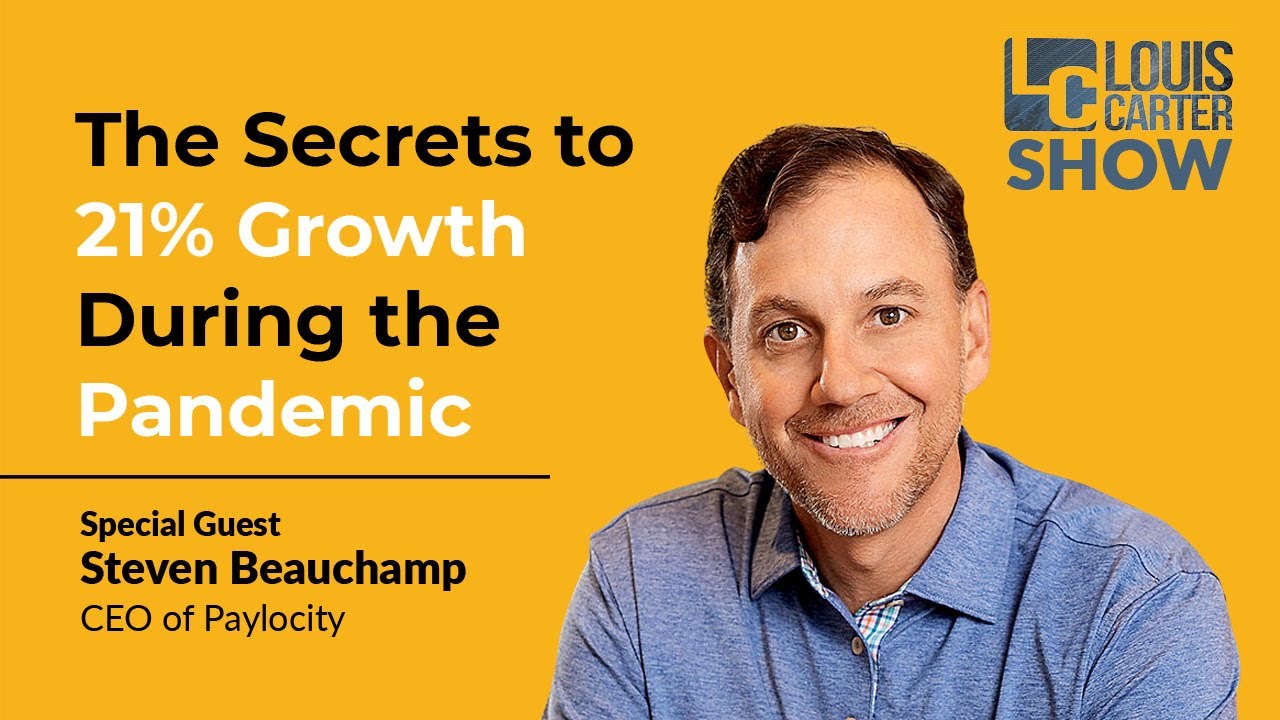
In this interview, Louis Carter talks with Steven (Steve) Beauchamp, the chief executive officer of Paylocity, about how the company achieved 21% revenue growth during the COVID‑19 pandemic and earned top rankings on Glassdoor. Beauchamp explains how Paylocity quickly pivoted its sales and product strategy to address remote‑work challenges, using video, rapid iterative releases, and data‑driven insights from internal town‑hall meetings and platform usage. He describes the company’s approach to anticipating customer needs by living the product internally, conducting frequent employee surveys, and empowering managers to create highly flexible work arrangements for staff with diverse personal circumstances. The conversation also covers the importance of transparent, frequent communication—using asynchronous video, micro‑surveys, and bi‑weekly town halls—to maintain engagement and reduce Zoom fatigue. Beauchamp stresses the need for CEOs to avoid simply reverting to pre‑pandemic office norms, instead adopting hybrid models informed by employee feedback. He highlights Paylocity’s agile product development, including the rapid launch of COVID‑centric features and the acquisition of a video platform that gave the firm a unique HCM‑plus‑video offering. Throughout, he emphasizes a culture of empathy, “loving” employees, and treating work‑life as a blended experience, positioning culture as a competitive differentiator. The interview concludes with Beauchamp’s advice on leveraging customer data, iterating quickly, and planting long‑term technology bets to stay ahead of market trends.
Chapters
It's great to have Steve Beauchamp here today on the Louis Carter Show. Steve, thanks for joining us.
Yeah, thank you for having me.
Steve, tell people about you, CEO of Paylocity. Go ahead.
Yeah, so I'm the CEO of Paylocity, and we provide, you know, human capital management and payroll services to over 25,000 clients across the United States. I've been in the job now for more than 13 years and started with a pretty small company with about 100 employees, and now we've got over 3,500 employees and publicly traded on the NASDAQ. So it's been a lot of fun.
Not bad. And also, you're, you're one of the top Glassdoor CEOs. And that's interesting. I'm sure a lot of CEOs will want to know how you did that, certainly today, and learn more about how you increase this to 21% growth during this fiscal year, even during the pandemic. So those are two things I want to talk about today is, you know, we can kind of— why don't we, why don't we start with growth? Because growth has been a big question lately of how do you achieve growth especially during a downturn or a pandemic. And so financial growth, what did you focus on? What are some of your, if you will, success factors?
Yeah, so obviously, you know, the economy as a whole has been significantly impacted during the pandemic. And so one of the things that we did early on in the pandemic is we started to look at, okay, it's a big market for us, everybody needs, you know, payroll and human capital management services. And so some of the industries are definitely negatively impacted. So how do we maybe redirect our activities in places that are either less affected, or in some maybe more rare circumstances, there might be some growth companies. Our sales force was really resilient that way, really looked at their pipeline of activity, really tried to virtualize a lot of the processes so that, you know, you can talk to people digitally, you can use video to be able to communicate. And I think that I'm really proud of what the team has done. And on the flip side, they also look for things in our product that actually really help customers during these times. So it wasn't just your standard sale, it was very much, We know that you're kind of struggling to connect with employees, and our product not only can help you with things like payroll, but it'll actually help you keep your employees connected while they're trying to work remotely and you're trying to manage your business through the crisis. And so we had to pivot relatively quickly so that we can continue to grow.
There's this whole concept of anticipating the customer's needs and then also getting into their mindset and thinking, what do they want as a result of where they're at right now? How did you do that? What were some of your methods for sort of anticipating and also getting into the customer mindset?
So there's two things. So one of the things that we always really focus on is, you know, all of the products that we create, we use internally ourselves first. So we looked at our own experience in terms of our 3,500+ employees in the pandemic and what they were struggling with and what questions we were getting from them. So we immediately started weekly town hall meetings where we would get 60 to 80% of our employees that would join every week. They would submit questions, sometimes live, ahead of time, a mix of both. And myself and my top kind of 6 people in the company company, we would just be online with our employees and answering questions. And we did that every week, and we thought we were going to end up doing that for a week or two. Well, to this day, we switched it to biweekly a couple months ago, but we still do that. Um, that really informed us with some of the stresses and challenges that not only we were having but our clients and their employees were having. And so we started to then drive content back to our customers to say, here's how your employees are feeling, here's, um, different surveys that you might want to be able to use to be able to connect with them and understand the challenges of whether it's, you know, school online and having kids at home and trying to have your job done, the financial pressures that people were feeling. And I think that was really helpful. We then— the second thing we did is we started looking at what our customers were doing. So we look at the data in our platform, we look at how often are people using surveys, are they surveying more frequently, what are people— we have a social collaboration tool in our platform where people can make posts and comments and react, and we start to see, well, what are the those conversations that are happening with our clients. And we use that data then to be able to inform our customers how their employees might be feeling and give them ideas of things that they could do to keep people calm, keep them productive, and then obviously connect with them in a way that drives their culture.
You know, this is all great examples because I think of this example of an elevator company where customers were really thinking to themselves, well, what— why is this elevator so slow? Right? So they put together a focus group and they came together. They said, well, it's actually not about being slow. This elevator being slow is that they couldn't pass the time. So they put mirrors up in the elevator and all of a sudden people were staring at themselves. So what were some of those awareness times for you that you learned in the chats that informed new features for yourself?
Yeah, I know you read a lot online in terms of what you can do for employees. And one of the big challenges about this pandemic is everyone's circumstances were so different. So you We couldn't just like roll out a program that says, hey, we're gonna change our work hours and it's gonna be the same for everybody. We're gonna maybe go to a mix of part-time for some folks. So we actually had to empower our leaders to have conversations with their employees and understand their individual situation. So, we had employees who have young kids and online school and they wanted a block of time in the middle of the day where they couldn't work, they didn't wanna work and they can help their kids. And, or they, we had situations where we actually had some people with financial hardships and their partner or spouse had lost their job they were looking for more hours and they wanted more opportunity to be able to earn income. And so we would then give them overtime opportunities, or we even had people who would, you know, wanna work 4 days a week instead of 5 days a week. And so we obviously had to match that with what our clients need and what the business can do, but we really had to empower our leaders to come up with these very flexible work engagements that allowed us to, it really benefits us too, because the employees can be more productive in that type of setting. They can also be more resilient, they can be happier, but there was no one fit, all program that we could launch during the pandemic. And I think initially we started doing programmatic changes that we offered people and they weren't having the impact that we wanted. And we learned that you had to get really granular about understanding an employee's particular situation to really help them, which ultimately, you know, would help us and helps our customers.
So this is amazing that you had so much success with people at home. And I realize it's a software company, SaaS company. So there's some differences, obviously, that it would be for a financial services company, insurance or some other, where they require people really to be there sometimes, right, and in healthcare. What would you say to folks out there who want people to come back, right? And they, and, because I heard you say that some people would in fact want to go back to work, some want to be at home. So how would you give advice to a CEO who says, "I want people to come back." Is that, you know, is that such a bad thing, really?
Yeah, I think we sometimes get caught in looking at our history for for how we're gonna be successful in the future. And so I'm used to a model where a significant part of our workforce was in the office every single day, and you'd be able to kind of see them in meetings, and you had all your routines were developed around having those connection points in person. And then all of a sudden you get flipped in this environment where you can't do that, and you're reinventing your processes kind of on the fly. And so kind of my advice is not to revert back to exactly where you were. Look at what, what has worked over the last 6 months, 8 months, and then look at what you did before and then have conversations with people about what they need on a go-forward basis. 'Cause in some ways the genie's out of the bottle here. You're not necessarily gonna be able to go back the same way 'cause people understand maybe they can't work at home all the time, but there's parts of their job that they can be just as effective at home. And so maybe this ends up being a hybrid. Someone might be in the office 3 days a week and might be working at home or flexible schedules that you need to create. But I think generally speaking, my advice is, Talk to the employees and your leaders, figure out what's worked and what hasn't. And then come out when we get to the other side of this, which obviously is still going to take a little while, then think about a world that requires much more flexibility than it did pre-pandemic.
That's great advice. You know, and what I'm seeing too is that when you co-create with employees and say, well, how is the best way for you to do this? It in fact creates more of a dialogue between you and employees. And there's always this other question of, kind of the objectives and key results, right? What, what, you know, what was done back at Google when they had the first cloud-based email system, they said, well, we have one huge goal, it's to create one, the first cloud-based email system. So how are we going to do that? There's about a million things. So they had different ways of, of, um, of, uh, creating those objectives and key results and volunteers of who would do it and how they could track it. How do you see, uh, tracking tools like that and transparency tools with, with, uh, teams, uh, in helping them to stay on track, really, when, especially when they're in a remote environment?
Yeah. So transparency, I think, is the key word I would focus in on there. You know, when you're working from home all day and you were used to being in the office, you had a lot of, you know, water cooler conversations, you know, personal connections you could make, and it can be a little bit isolating at home. And so from a learning and development perspective, how do I make sure that I have all the information and perspective I need to do a great job for my customers and maybe for my fellow employees? I think that is really a challenge. And so what I would say is communicate, communicate, communicate, and it can't just be Zoom meetings. It can't just be town halls. So find other creative ways to be able to communicate. I'll give you a real example. One of the things that we do a lot is asynchronous video. And so you try to avoid some of the Zoom fatigue. And so what I'll do is I'll create messages for our entire employee about what's happening with the company, 'cause they're nervous. They might wanna make sure that we're still doing well. They feel good about their job. What's happening with our customers. And I'll just create asynchronous videos and I'll send those out to all employees. And then our platform, I'll be able to see how many people read it. They can comment, they react with emojis. It's just one example of a creative way. And the great thing is a 2 or 3-minute video. So somebody can do that on their own time and they don't feel like, oh my God, I got another meeting, which is another hour. And so you've got to be more creative at these ways. And then you've got to encourage your leaders across the organization to be able to do that because this micro content and these small opportunities to touch people is really important because one town hall meeting a quarter or a month or whatever you're going to do is just not going to be enough because you're not getting enough interaction with other people. And then collect what's on their mind. So use surveys to understand what's on their mind. And when we do our biweekly meetings with all employees, we collect all their questions ahead of time and we look for those common threads of topics. And if we don't hit them in that meeting because we run out of time, then we'll use that for videos or we'll do training sessions on, you know, resilience, which is certainly, you know, a big topic just in terms of being resilient with everything going on in people's lives. And so, yeah, it's— there's no perfect silver bullet solution. It's hard work, but you've got to reinvent the way you communicate with employees.
Absolutely. And then, because that consistency word is so important, because you look at research, and we've shown this research as well that we've done, is you could do follow-up on a 1-year basis, like you're talking about, having that one big meeting, right? And it would have less change, negative 1, than if you did it once, which is zero change, right? Then 2 times, 3 times, 4 times, you have maybe 0.05. And then consistent weekly, you get to like 0.2. Then the— and making it part of the muscle memory of the company is point— is plus 3.
Yeah, no, I learned that in some ways the hard way. We used to do quarterly meetings with all employees, and I don't know why we did them quarterly, to be honest with you. It's just kind of the way we've always done them. And so then we get into the pandemic and all of a sudden we see more angst in our employee base and we start having these, you know, half-hour quick sessions and they're all video recorded so people can watch them on their own time. And the feedback we got from our employees was fantastic. Now, in some cases, we're getting the same question frequently and our ability to answer that same question repetitively. Sometimes it was about concerns they had about the company, about their own safety. Sometimes it was like big goals that the company has and how we're actually tracking towards a success, and are we going to be OK in terms of absorbing the impact of the pandemic? And what I've learned through that process is the frequency and the routine associated with that is really, really important. And let me tell you, it's more frequent than I think I would have ever thought before is required.
That's interesting. You didn't think before it would happen, but now that we're in this kind of distant situation, frequency becomes even more pronounced. Where before it was just as important. It's just now it's sort of, it's magnifying. And, you know, that's one of the things too. I get the question from people a lot, from clients. They say, "Well, we send out this survey that you want monthly. They're gonna get fatigue." I say, "Well, first of all," I said, "Well, we say stop. It's only 3 minutes they have to do this because it's a micro survey." And then you follow up to talk to them. So I say, "Okay, let's think about this for a second." We— you could do it once a month, or you could do it once a year, and you'll get a lot of surprises. Or you can go one-on-one every single week and ask them questions. Which one's going to be— so we talked about it. More we talked about, talked about, we said it isn't about the time they have to take, it's about what they see happening and the changes they see happening, right?
Yeah.
So it's really about—
the other thing I would say is, you know, we would spend a lot of time putting plans together. So, you know, an issue comes up in your company, or you're, you're not on track to goal or whatever that initiative is, and maybe it's just not going exactly as you would expect. And so you put these plans together, you put these giant PowerPoints, you get in front of the team and you kind of reorganize and reenergize. And sometimes you have to do that. But the reality is sometimes being able to react real time in the moment and providing your thoughts and perspectives of why maybe this is off track and how we might be able to take a different approach, that speed is really, really important. And we saw that with the pandemic and we still see that today. And we've kind of shifted a little bit to be sometimes a little bit less formal around there and then let's quickly talk about the problem. Let's let people know what we're thinking. We may not have all the plans, all the i's might not be dotted and the t's crossed, but we start to get engagement early in the process around understanding what that challenge might be. And ultimately we can get better results to that. So we've become a little bit less formal in many ways around some of our communications and how we drive initiatives and involve more people.
And that informality actually is part of who you are, your DNA. And people say, well, it's informal. Actually, it's, it's quite ingrained. In the very nature of who you are and what your company is. We have a, we have a list called Most Loved Workplace. It's based upon my research on loving your workplace. And this whole question that Alan Mulally brought it up at Ford Motor Company. Alan Mulally is CEO of Ford— was a former CEO of Ford Motor Company, had the greatest amount of growth in the history of Ford, including any of the actual Ford family. And he did it for a reason. He had, he had a mandate basically said for everybody, says, we want 15% compound annual growth rate. So, okay, it's there. Boom. And he said, here's the behaviors, 3 of them for Ford. It was very, you know, actually was 4, F-O-R-D. There's 4 behaviors. And he said, these are the goals. And it was on a one-page plan. And there was one statement that said, love them up. So he really believed that loving his people and loving them up and caring about people, making sure they feel psychologically safe, was an important contributing factor to his In fact, it was. People demanded that. I want to ask of you is, how do you feel about that word, "love 'em up," and its contribution to what people do financially or want to do financially for you and the company, really the company, and each other?
Well, one of the things that I think has been happening prior to the pandemic and I think has accelerated is this conversion of work and life and this idea that there's a blended work-life. So the work-life balance isn't you do work and then you have your life and they stay completely separate all the time, right? These things are much more blended. Blended. And I think they've become even much more blended. And I think lots of times CEOs like myself would, would have issues that employees would have personally, whether it's I can't, you know, manage my kids, I'm having financial hardship, I want to, I want to know what the company's position in social justice conversations are. And this, our whole world has started to blend as well. And so I think leaders have to be much more comfortable having those conversations with employees. It doesn't mean we have to take positions on everything. But I think we have to talk much more openly about how that might impact our work how employees' feeling about different situations that are going on in the world certainly impacts them. And then in some cases, maybe giving them a voice to be able to participate in, in change that might happen. And so I think that way it's become much more complicated. And when you do that, this idea of caring for your employees goes beyond just caring for them in the 8 to 5 that they're working. It's caring for them in their whole life. And I think that has was happening before, but in the pandemic it accelerated because the level of care required was much higher. I mean, you had people that were getting sick, you had loved ones of our employees getting sick, you had people struggling with financial hardship, you had people with daycare and school issues and so on and so forth. And so I just found like our conversations with employees got broader, got more personal, got more integrated into their whole life. And the more that we did that, I think the more You know, it felt human and real. And that's to me, ultimately what it's about is making sure the employees feel comfortable, they feel safe, and then they're motivated and energized and give you all their passion. And so I think I've learned over the last 6 months that that's probably even more important than I thought before. And I'm obviously a big believer in our culture being a differentiator.
That's awesome, Steve. I mean, this is exactly everything that defines a top-rated Glassdoor leader. And also, I wanted to know about this 21% last fiscal year growth. How would you attribute it? What investments did you make? Was it resiliency and finances? Were there things that you did specifically for that kind of growth? What would you say on a sort of more financial growth level, a major CEO decision-making to enable that happen? Tell me, what did that look like for you?
So I would tell you that we looked at our product portfolio. We looked at all the different benefits that our clients would have in terms of being a Paylocity customer. And then we really tried to zone in on sometimes it was modules in our product or features in our product that would absolutely benefit our customers. And then we tried to drive conversation back to them in terms of, here's some things that you might want to consider taking advantage of. Some of it was free, some of it they might purchase from us. And the idea of connecting with remote employees, the idea of handling some of these challenges in this world. And then we really tried to focus on pivoting our sales organization so that we would incorporate that message as we're talking to potential customers. And that pivot has to happen relatively quickly. You know, you have to do that within a short number of weeks to be able to impact that. And I was really proud of how our team got involved and we started listening to customers and having that cycle of, oh, prospects are now asking a lot about this. Oh, we actually made a— we shifted our product roadmap quickly. And in the first 90 days, I would tell you probably half of the things that we launched and released in our product were very COVID-centric and were never on our roadmap originally. And then that really propels our sales organization to have a differentiated message in the marketplace. And so really being agile and shifting the organization quickly to react to client feedback and then build and launch and build and launch in an agile fashion, I think is what really contributed to our ability to, to be fairly resilient and continue to grow through the pandemic.
You nailed it there, Steve.
That was—
you nailed it. That was really the key is that resiliency, the rapidity, the sense of urgency. The ability to create your product roadmap in a way that can test and see what they actually do as a result of implementation. I mean, it gives you a very unique perspective that a lot of people can use, and not enough people really see it from that perspective, that it's really a software perspective where you get into the user's mindset and it becomes more of a, you know, a relationship really with customers themselves.
And I think the other thing is you, you Agility is important and you have to do things relatively quickly. And I think people aim for this perfect solution, you know, when they do something new. And sometimes you've got to start small and you get early adopter clients or you solve a smaller part of the problem and you learn from that and you iterate faster. And we were able to do that in COVID. We were releasing software at that point, you know, daily for, for some period of time. And we would go to the customer and say, listen, we got half of this done. It can really help you this way. Do you want to use that now? And many of our customers said, yeah, actually, I do. Do. And then we would tell them, this is what our plans are. Do you— does that make sense? Do you agree with that? And that allowed us to be first to market, which is often really important when you're in a transition stage, with a really powerful message to our customers and, and to prospects, but yet still have some time to be able to build towards what we think would be the ultimate solution.
And what would you say that powerful message— if you were to say the powerful message to your customers now and, and to people out there, what would that powerful message for you and Paylocity customers?
Well, I think in many ways, I think one of the things that is unique about us is we get a lot of data and information from our customers, and we use that information to empower the ideas that we come up with. And then at the same time, we mix in some forward-leaning thoughts around trends that they're seeing. So I'll give you a real example. So we had always felt like video was gonna be an important part of how people communicate in the workplace. Obviously had no idea, you know, this is pre-pandemic and we were in the process of— we had embedded video in part of our product. We were talking about maybe how this might play out. So the idea of looking at these long-term trends and we— I thought maybe 3 to 5 years from now video was going to be really important. We actually bought a video company in March, right at the start of the pandemic, because we had been working on it pre-pandemic. And so it's this idea of listening to customers' needs today and building iteratively, but looking at these bigger trends and planting some of those seeds that are going to take effect long term. And so because we were doing that, we ended up buying this video platform. We've embedded it into our product and we have video capabilities. We're the only company in the industry with video capabilities in our HCM suite, which clearly video now resonates, you know, very much with all of our prospects and customers. And it's now taken a trend that might have been a 3 to 5 year trend that's probably going to happen in 6 to 18 months, right? It's going to be important forever now. And so that's the balance. Listen to your customers, iterate, and at the same time work on these leapfrog ideas and plant these seeds And when it becomes obvious that you can accelerate, you'll benefit with first to market for those solutions.
I like that. I like that a lot. You know, this leapfrogging concept and being ready and when you need it the most, because we often, you know, think of the military or skeet shooting as well. I don't know if you're a skeet shooter, but when— probably different people, different things, right? But in skeet shooting, you actually have— or in riflery, you actually have to this is sport or in military, you have to squeeze the trigger very slowly and accurately. It's not just about kind of doing it in a rapid fashion, right?
It's just—
or without thinking. It's about having knowledge of the speed, of the velocity, of the wind, of the actual movement. This kind of art as well as science, this analytics plus this art to it is really essential for you, Steve, it sounds like, and for your customers and really moving forward in that way. Well, this is great. Best Practice Institute certainly is HR-centric. We have with CHROs and CTOs around the world. And you have an HCM suite also. And everybody, Steve Beauchamp, this is wonderful to have you, CEO of Paylocity. Great success. I could tell the reasons for your success absolutely are the agility, the resilience, the understanding, the emotional connectedness and the empathy that you have with your employees and their situations to be able to create that kind of consensus and collaboration at a time when they need it the most and the world needs it the most. Thank you, Steve, for joining us very much.
Thank you very much for the opportunity. I really appreciate it.
More from Louis



How to Get Found in ChatGPT, Perplexity, Gemini, Claude & Grok | Visipage AI Visibility Audit

Your Competitors Just Got Certified. Now What? | Most Loved Workplace® Demo & Hiring Advantage



Visual Thinkers: The Hidden Genius Behind Skilled Trades & Innovation! #shorts

Car Mechanics: The Secret to Engaging Autistic Adults Over Video Games! #shorts


