Stop "Quiet Quitting" and Get Your Career in Shape!
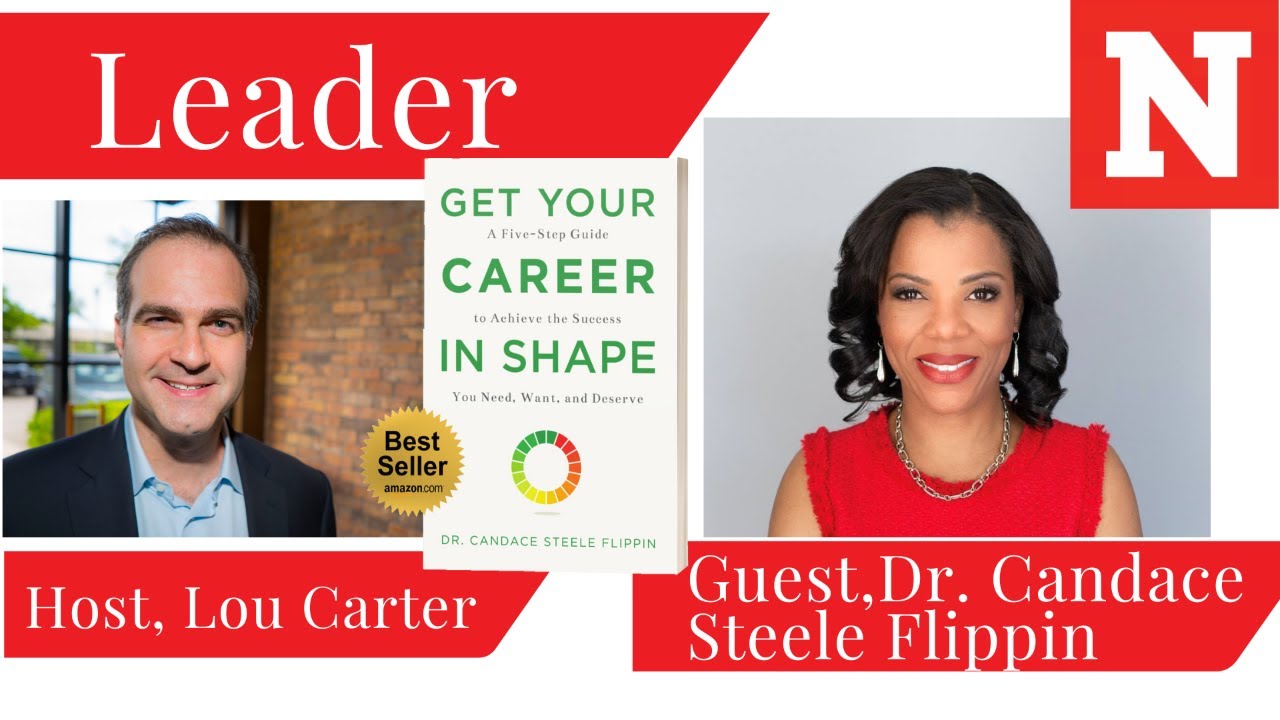
Dr. Candice Steele-Flippin explains quiet quitting as misaligned expectations between employees and organizations. She offers a three-question framework: Do you have the career you need, want, and deserve? The fix requires courageous conversations between managers and staff about expectations, purpose, and fairness.
Chapters
We're here today with Dr. Candice Steele-Flippin. It's great to have you here with us today on The Leader's Show, Dr. Candice.
Thank you, Louis. It's so great to be here today.
Candice, one, one piece of advice for employers, executive committee, right, the executive committee, the top of the house, about this so important topic of quiet quitting, of, of getting people's career in shape so they really become part of the fabric of the company and volunteer to do even more for the company?
So my, my advice is most companies do great jobs with listening sessions, you know, strategies to understand what's happening with their culture and putting great steps in place. What also ends up happening is that individuals are responsible for their own career development. And so any programs that you can put in place to strengthen an individual's ability to be able to do that is helpful. The other thing I'll say is just because there's a new label, quiet quitting, which we know is discretionary effort, is out there now, it doesn't mean that workers won't put in discretionary effort. The key needs to be a dialogue in terms of what the expectations are and having paths in place to make sure that organization policies and practices and individuals know what those are. And managers are able to have an environment and a conversation so that they can connect the dots.
Outstanding. And the relationships are a two-way street, right? So let's go to the other side of the equation, the other conversation. Now, our advice to employees who are thinking in this way.
Yeah. Yes. You know, ask yourself those three questions. You know, do you have the career role you need? Do you have the career role you want and do you have the career or role that you deserve? If the answer to any of those questions that you ask yourself is no, it's really time to really focus on how you can get your career in shape.
One more because I forgot this one of the candidates.
That's a great one. For candidates, what you really want to understand is when you are researching organizations or having those conversations is understanding what their culture is like. And not only their culture, what programs that they have that are important to you that resonate so that you find yourself in a situation where you are connecting what you want, what your passion, your purpose, and your skill sets are to what that organization's value systems are so that you feel that you can connect and feel engaged the entire time you're there.
Let's just dive right in. What is quiet quitting?
Well, you know, quiet quitting is not new, but essentially it's people who are doing what's expected what's expected of them, but not going further. And a lot of people refer to it as discretionary effort. So that's the amount of effort that you put in, but then what do you do above that? And so quiet quitting is the new term that everyone's talking about right now.
And why should we volunteer any more discretionary effort when we don't love, right? Why should we? Why should we do that?
Well, there's a lot of work that shows that employees who are highly engaged You know, they feel a connection to the mission and their work. They feel a connection to their work and their purpose, enjoy what they do. And so they're going to want to do their best work always and then put in a little more. And companies that have highly engaged workers who are high performing do well. And so we want to care about that because if you have associates who are disengaged, then they're not maybe performing optimally for you. And then if they're disengaged, ultimately, maybe they'll leave. And that's also an expensive value proposition.
I always look at 3 types of employees, and I bet out there right now, you may be in one of these buckets of people. So number— the first bucket is people who want to, have to continue. They feel like they have to continue in their job because they'll lose, obviously, for financial reasons, you have to continue. The economy isn't doing so great. We have to bring food on our tables. We have to maintain our level of investments.
Right? The other one's normative.
We've got to continue on, or we're, you know, we have to keep our norm, or something bad may happen, which is things people might think. The other one, the third, is so important, which is effective. We love where we work, who we work for, the people with— we're working with, and we want to do more. We want to get, you know, more involved, and we want to give more than what's expected of us.
Right. So that's, though, that, that last group, the effective, are people who want to put more in, that's a more discretionary effort. Maybe they're you're not quietly quitting. I actually frame it a little bit differently in my book, and I talk about 3 questions that people want to ask themselves as they think about their careers or their roles. The first is, do you have the career you need? Does your career or your role provide you with the income, the time, the resources to be able to get the things that you actually need? Do you have the career you need? And as it relates to quiet quitting, quitters, you know, people who may not feel that they have what they need right now, whether it's income or resources or the time for work-life balance, may not feel that they want to put in additional discretionary effort. They're just going to do what's asked and then they go home. The other thing around needs is since the pandemic and a lot of the conversations that we've seen around equality in our country and even in the world, a lot of people are thinking about connecting their work to their purpose, which takes me to my next question. Do you have the career you want? Does your career or role that you have connect to your passion, your purpose, your interest, maybe what you trained for, what you went to school for, something you're curious about? Do you have the career or role that you want? And as that relates to quiet quitting, if people don't feel like they're really doing what they want to do, like they're kind of, to your point, just kind of getting up, doing the status quo, then it's going to be really hard to feel really engaged because you're not doing what you want. On the other hand, if you're in a role that you love, it's something that you're interested in, then you may want to put in more effort because you're doing something that you actually want to do. Now, I'm sure there are people watching thinking, well, we can't all get what we want, Dr. Candice. That's true. However, if you find ways to engage your workforce, so that you're helping them connect their value system or the values of the organization to the values that are shared with your employee population, then people are more close to the things that they want moving towards that effectiveness. And then the third question I always ask individuals to consider is, do you have the career you deserve? Now, do you have the career that aligned to the effort that you put in, or the role that you put in, the training, the background, the years of experience, the access, the network, based on things that you've actually earned. Do you have the career you deserve? And how that relates to quiet quitters: if you feel that maybe you've had a conversation and someone said, you know, Louis Carter, we need you to do X, Y, and Z, and And then Louis, you like go do X, Y, and Z, and you don't get the whatever that is, the raise, the promotion, the bonus, the new assignment, greater opportunity, then that could be demotivating. People feel like they've earned something. The whole idea of fairness comes up. And so people feel that they may not have the career role they deserve. And so oftentimes with a quiet quitter, maybe discretionary effort was there all along. However, something happened where that social contract that you had with your employer, your boss, got disrupted. And so a worker who may have been effective or had an effective mindset now feels disengaged because they feel like there's a fairness issue and they haven't gotten what they deserve. And so I frame it that way because a lot of times people think about their own self-interest, and those are map to behaviors around expectations around what they need, what they want, and the whole issue around what they feel they've earned or deserved.
I love that. It's such a great reframing. And to look at the individual and what they want and need and their sense of belonging, really, isn't it? And how, and how they're included in this structure of, "Hey, I am, I'm worthy of this promotion, this raise. I've done this. I've, I've gotten, I've gotten the experience, the technical expertise." And we often overlook that. There's other, another area too that it's been interesting to me that people have said to me lately. They said, well, this, this quiet quitting, it's great. I understand it exists. This is from an employee center, okay, from the employer, because employer completely understands this happening. It's completely, it's very prevalent. And so, so employee side says, well, what does that mean I'm quietly quitting? I, can I literally chill out and relax? Some people, it's in the military, slow rolling and bureaucracy, right? Isn't it OK for me to take a step back? Haven't I earned the step back? So tell me about that. What do we, how do we address that?
So the first, we have to step back and just think about what's happened in the last 2.5, almost 3 years. Productivity for most workers went up during the pandemic. And what ended up happening is a lot of workers then started to suffer burnout. How many people, if you're thinking about what your life was like since March of 2020 through now, for those first years, people weren't taking vacations. They weren't doing the things that they normally did to relax or enjoy themselves. So they said, well, I'm at home anyway, or there's nothing else to do. I can't go. I'll just work. And so, so much productivity took place, which was great. Then workers started to now feel like, okay, how do I normalize myself again? And what is now starting to happen is there's this conflict of this spike in productivity that became a new normal and workers saying, well, actually the new normal is here. And workers are feeling like perhaps they don't want to keep operating at that level, even though maybe a firm needs that increased operational activity. And so what the worker needs to do is have a conversation and get aligned with their boss. That's right. Because it's just any type of behavior, when you change it and you do it for 21 days, it becomes a habit. Right? And so then all expectations shift. We just now need to renormalize. But I think what's missing is the expectations are misaligned and that conversation needs to take place so that individuals get more aligned with their manager. You have an honest conversation. During the pandemic, yes, I was working 10 hours, 12, 14-hour days. I was working on the weekends and in the evenings because basically there was nothing else to do. Now the world is opening back up. I want to go live my life again. Let's talk about what the new expectations are.
And they do change. And it sometimes is challenging to go to your boss and say, "I want to have an alignment conversation. I want to feel like I can say these things without fear of, you know, retribution and, you know, being harmed for my, for what I want in life." And perhaps, and that's probably a part of the quiet quitting equation.
Yeah, if you don't feel that you can have that conversation— well, let me just say this. If you don't, if there is an expectation of performance at a certain level and you're making a conscious decision not to meet that expectation and a conversation doesn't take place so that your employer knows that that decision is made, then that's ripe for conflict. What we want to do is be able to know that we're in an environment where we can have that conversation, where you can have that conversation with your boss and say, listen, I don't think we're on the same page with expectations about my performance. Can we talk about it. Or if you are in a situation where you cannot have that conversation, most likely there's going to be risk to employment. And so what I say to employers whenever I'm talking to groups or I'm speaking to employment resource organizations or groups, you have to find those ways where you have those courageous conversations.
Yeah, absolutely. Yeah. Be brave, be bold, fierce in who we are and what we want. You know, and, and because that's the way we'll want to continue. And, right? I mean—
Yeah, and if you've made the decision with your behavior, it's important to just be able to have a conversation to back it up.
You know, and one of the things I'm also seeing is that it's almost becoming allowable to slow-roll. It's, it's OK that you're 2 weeks late. It's OK that, you know, we're 1, 1 week behind. Oh, let's just relax about it. And it's, it's, it's sort of— it's, uh, taking over the entire stream up to this— well, it stops at the CEO, so, and it stops right there, right? And the executive committee team, definitely the board's not having— they're demanding it of the CEO. This is this whole mass of people who are saying, I'm quietly checking out here. And then the CEO's upset. How do we help the CEO to get everything back?
Well, you always want to align any conversation with your mission and your values, your values as an organization. What I sense has happened is what we've learned in recent history is the importance of giving grace. And we're seeing more empathy rise in the workplace. And so whereas in the past you may have worked all night and walked through a storm to get that report in by time, people are now saying, well, it's actually okay to bring your whole self. And if you weren't feeling well, okay, maybe it's okay. I'll give you some more grace. But what's happened is there that accountability that needs to be there. Perhaps there needs to be a conversation or some type of dialogue so that accountability expectations are now aligned as we are giving people more grace and having more empathy enter into workplaces.
That's a tough shift for a lot of CEOs to have that empathy and grace. Yeah, go ahead.
Well, I've worked with a lot of CEOs, including now, and I can say that I've had great experience with people who are very empathetic. Very empathetic leaders and leaders who need and expect accountability. What needs to happen now is just great conversations around expectations and understanding that value systems are shifting. Then how do you do both? I don't believe it's an either/or, it's really a conversation around how we do it and how we can align. Then what are the right conversations that need to happen so that expectations are delivered on?
It takes kind of a shift in the moment, doesn't it? And saying, you know, I could continue the way I'm going as a leader. I could continue doing what I'm doing and expecting, you know, different results. Or I could change, take a step back, and shift to a place of empathy and less response, less reactivity. And have these kinds of open dialogues, these kinds of talks that are, that hear them, put them first, the other first, rather than always the board. And all of a sudden, the cycle or the system, the human system starts reinforcing up rather than down. So that one little leverage variable of empathy, right, of stepping back, can be— make all the difference.
So as you know, I study generational values, and I did a study 2 years ago looking at all the different ways that we express interpersonal communications. And there are 12 different ways, and a scholar out of the UK actually framed them for us. But I did a study of 1,500 individuals, and I wanted to understand out of all the 12s, which ones resonated by generation group. And here's what we learned. Baby boomers really align to active listening. So that means like if you're talking to someone who's a baby boomer, you are fully engaged. You're not interrupting, you're not like looking at your device, like you are— like you're paraphrasing back what you heard. Even if they ask for an opinion, that's really validating what they said to you. Active listening. For, for Gen X, which is my generation, we gravitate towards collaboration. That's working in teams, feedback, recognition. Some people say we may be over-recognized millennials, but the point is we like team-based building because when we came into the workplace, cross-functional teams and technology to allow that to happen. For millennials and Gen Z, so these are individuals who are in the workplace who are about 42 and younger. They resonate towards empathy. When you talk about this shift, what we're starting to see is that these are individuals who want to bring their whole selves to their experience in their career and in their roles. The shift has already started to take place, conversations around work-life balance, certain types of benefits that do that. The shift has already happened. It's just that we now need to understand that that crucial part of communicating and interacting with individuals has now started to elevate as it relates to as it relates to workers.
Those generations are so much better than I'll ever be.
Everyone has something to offer. Everyone has something to offer.
And, uh, you know what's, what's good? What I— what we're seeing is, is the people who are applying to, you know, our most loved workplaces, America's Most Loved Workplaces on, on both Newsweek as well as just to get certified, all have programs that focus on empathy and dialogue, all of them. And there's a concerted effort at the top of the house to engage in open talks, dialogues. They brand them. They, they're part of the efforts in terms of providing everybody with the opportunity to take part in the business strategy or new product development. Like, everybody gets a say, up and down across the organization. And so Anyone really can have the opportunity to develop their careers, succeed in the organization. And that's the new, that's the new way. It's the, and it's become more pervasive. We, we talked about this, I'm sure, Dr. Candace, that, you know, I, I'm, I'm, of course, I'm only 25 or 26 years old. You're, you're, you're 20 or so. You're probably younger than me.
So every time I get to that age, it's better the next time around.
I like that. Every time I get to the age. So in our, in our generation, though, we, you know, there's differences in that, isn't there? Right? There's differences. So to create those programs and practices that are necessary and appropriate to be most loved, to be top, is sometimes a stretch. Sometimes a stretch.
It is. And, you know, think back to when you started working just, you know, a decade ago or so. You know, the expectation is you walked into your organization, your company, your firm, and you left yourself at the the door. You came on and you became the company man or company woman and with the company's value systems and time schedule, like that was what was expected. And any other identity, whatever it was, was not allowed. You know, you kind of assimilated. Today, what's great is now companies are being much more inclusive, allowing people to bring their whole selves in to the experience. And that's why we're seeing these wonderful type programs that are emerging. And now that they exist, and newer workers who are coming in are experiencing them, you don't want to go back. And so I often say making more room at a table doesn't mean you have to push anyone away. You're just building this bigger table so everyone can come together and enjoy what's on that table.
And it's manifesting in employee resource groups and the different types of— yeah, the ways that we recognize identities, the way that we, you know, include and bring everyone part of the process. Because if we don't do that, we run the risk not just of quiet quitting, we run a lot of other risks. We run risk— it's risk management. There's legal, there's compliance, there's, there's a possibility that you're also not attending to your customer needs. And also, also, you're not going to show up well in the media.
Win-win, right?
It's a win-win for everyone, you know, on so many levels. And I love how you brought it to a generation because it shows that I, I do believe like you do, Dr. Candace, that there are differences and each generation does get better and better and bring us toward a better place. Because there's people who really do need help in getting to this place. And it's, you know, you can't lie about, you know, the, about numbers, equity numbers. You can't lie about inclusion numbers. You just can't. And so, so it's not possible. Statistics speak loudly, you know, then you have reasonability to come to a specific conclusion with numbers.
Absolutely. The other thing I would just, just add on to that is there's always an opportunity to grow. And what has really helped us grow is conversations around mental health and wellness, which were really not allowed in the past. And so now so many more things are on the table. So you have an opportunity to have workers who are better equipped to manage everything that happens in life where they show up at work if they know they can bring their whole selves to the experience. And then they can be more engaged. Oftentimes when I'm speaking with groups, and they're talking about, the individuals in those groups are talking about their companies, the things that they are talking about is what that culture looks like. All the things you're talking about are things you're doing to strengthen your corporate culture, your organizational culture. Then you end up with highly engaged workers. The notion of quiet quitting isn't even on the table because they are enjoying the culture, they feel supported, what they're doing is connected to their purpose. They wanted to do a little bit more than what maybe was asked of them, because it doesn't even feel like work. They're just enjoying what they do and contributing.
So last two questions. You said a lot. You've done wonderful, wonderful information from Dr. Candace, and recommend to get her book, Quiet Quitting. Is that the right— I wanted to get— put the book up. Go ahead.
Oh, so Get Your Career in Shape.
Get Your Career in Shape. I thought it was quiet. I thought you were the quiet— okay, it's Get Your Career in Shape.
Get Your Career in Shape.
So look up Get Your Career in Shape, and we're going to put that in the bottom there on the comment. Dr. Candace Steele Flippin, author of Get Your Career in Shape, has been wonderful today. What a wealth of information that you provided everybody. Thank you for joining.
Thank you. You're welcome. Bye.
More from Louis



How to Get Found in ChatGPT, Perplexity, Gemini, Claude & Grok | Visipage AI Visibility Audit

Your Competitors Just Got Certified. Now What? | Most Loved Workplace® Demo & Hiring Advantage



Visual Thinkers: The Hidden Genius Behind Skilled Trades & Innovation! #shorts

Car Mechanics: The Secret to Engaging Autistic Adults Over Video Games! #shorts


