Venture Visionaries: Conversations with Neal Hansch on Tech, Leadership, and Innovation
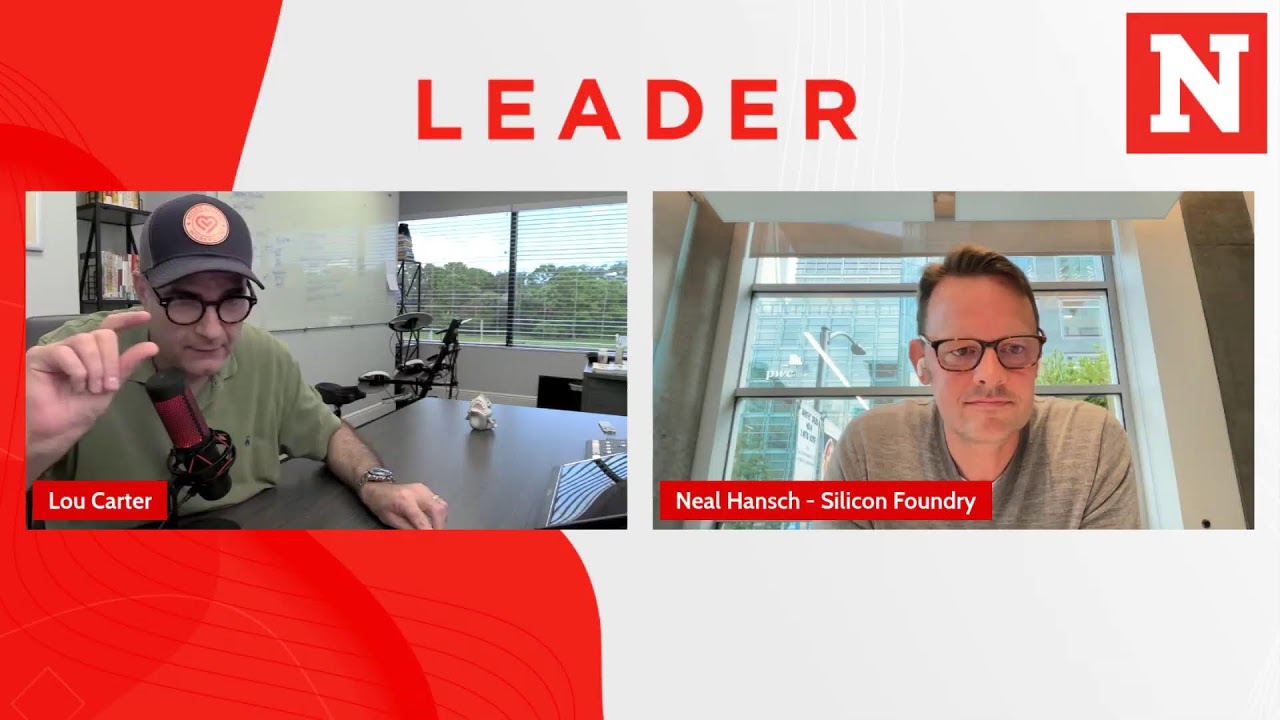
In this Newsweek Leader Show interview, host Louis Carter talks with Neal Hansch of Silicon Foundry (now part of A.T. Kearney) about how large Fortune 2000 companies identify, evaluate, and work with emerging startups. Hansch explains that corporations mainly target mid‑stage, fast‑growing firms that have demonstrated product‑market fit, scalable operations, and a solid team. The key selection pillars are the founding team, go‑to‑market strategy, product‑market fit, intellectual property (especially in deep‑tech sectors), and financial backing (typically $25‑$250 million in venture capital). He outlines four possible engagement outcomes: becoming a corporate customer, forming a partnership, receiving a strategic corporate‑venture‑capital (CVC) investment, or being acquired. The conversation also covers cross‑industry innovation trends—artificial intelligence, sustainability/climate tech, the future of work, and mobility solutions such as eVTOL and EV charging—highlighting that these trends cut across sectors like telecom, finance, automotive, semiconductors, and cosmetics. Hansch describes Silicon Foundry’s role as a global “meta‑search engine” that filters the noise of thousands of startups worldwide and connects them with corporate decision‑makers, now operating under the A.T. Kearney umbrella to leverage its C‑suite advisory reach. He touches on the challenges of evaluating IP, especially in software versus hardware domains, and the regulatory complexities of emerging mobility. The interview ends with practical advice for entrepreneurs: it is a historic time to start a company, global markets are accessible, and partnering with corporates can provide a step‑function boost if the right match is found. Contact information (sifoundry.com and kearney.com) is provided for listeners.
Chapters
Hey, it's great to have Neil Hanch here with us today from Silicon Foundry, AT Kearney's main company who works with Silicon Foundry, who collaborates with them and owns them, right? We'll go into that though, right? So Neil works with Fortune 2000 companies, right, who develop and work with people who are in the venture capital field. We'll get into that though. Neil will actually describe it more. So if you're going to learn more about venture capital, how to get in it, what to do inside of it, if you're at your startup now, you want to learn more, you want to learn more what AT Kearney is about, you're a large Fortune 2000 executive, you want to know more about how to get involved in this very field itself, this is the place to be. So, Neal, nice to have you with us today at The Leader's Show on Newsweek.
Likewise. Thanks. Thank you for having me. It's great to be here.
So, Neil, let's dive in because I know a lot of people will probably really want to learn about this. You know, especially want to know, I have like, so a person just saying right out there, I have a startup, right? And it's, you know, there's a, you know, let's say they've been around a year or two, right? Or is that, are you working with people a year or two kind of thing? Or tell me the makeup of the perfect startup that your Fortune 2000s and AT Kearney want to work with. What's the perfect person? Yeah, go ahead, please.
Yeah, yeah, absolutely. Yeah, and startup can mean a lot of different things, as you're referencing here, right? We can think about it as 3 people in a garage and an idea, to, you know, we still would, you know, call Uber a startup in many respects, right? So it's fast-growing private companies. The ones, to your question specifically, that we will over-index on to work with these big multinational corporations, it's really those who have started to break out from the pack, we know they've got the proof points, the resources, the ability to scale. Because they may, if they meet with that corporate and the corporate says, you know, fantastic, love the solution, now can you roll out to 5,000 of my stores next year? That startup needs to be able to have the capability to do so. So I would say with some of our work with the corporates, they want to see really early things, in part because they want to know what's coming. They want to know what's coming, you know, 1, 2, 3 years from now. But those that are ready to actually service and deliver and collaborate with and have customers that are the Fortune 500 to the Fortune 2000. It's probably those mid-stage startups most often that we'd be spending time with and recommending.
Got it. So mid-stage startups are really the, not the Ubers, but close to it, I would say.
Right.
Right. They're going in that trajectory, right?
On that trajectory, we know they've got product that works. That's probably, again, starting to define the category. They have the ability to scale and roll out. And perhaps last but not least, they'll be around 2, 3, 4, 5, 6 years from now, 'cause we know most startups don't make it. And so, you know, if you're a senior executive at a large company, you wanna make sure if you're making a bet on an emerging company as opposed to an incumbent company, they're gonna have the staying power and you're gonna get the value, you know, out of that work with them.
So tell me more about this. Does that mean that it has to be cash positive? How much cash positive? Is it a margin-based? Like, is there a certain margin? Is there a certain amount of revenues? What's the financial—
yeah, yeah, that's fair. You know, cash positive— if it had to be cash positive, it'd probably rule out most startups even at those stages. So, you know, I think it's really, uh, do— in that case, do they have the financial wherewithal? Do they have the backing? You know, so often these companies will have raised somewhere between, between $25 or $250 million in venture capital. So we got to believe that even though they're not cash positive, they will be of course someday. That's what all the investors are believing. So it is— this is where I think what you're lighting is it's art, not science, in choosing which companies to work with, which companies in our case to recommend and help facilitate an engagement. And it really is just that the biggest challenge these corporates have, and that's where we fit and why we were created in the first place, is there's so much noise out there, right? If you think about the startup ecosystems globally, now I'm sitting here in Silicon Valley, which is where our headquarters are. My team is spread throughout the US and Europe and Middle East. The corporates we work with are all over the world. Asia, South Africa, you know, tons in the US. But the biggest challenge is there's thousands and thousands and thousands of startups, uh, out there. And, and every, every day, you know, another few hundred are being created. And so how to figure out, you know, with all of that noise, which are the ones that are really the ones that you should be working with?
Um, and yeah, I've studied, uh, slide decks. Um, you know, the, the infamous LinkedIn Reid Hoffman slide deck, uh, Netflix slide decks. I mean, so many slide decks out there that, that people have used for rounds of funding. Um, in my understanding, your second round, you're not first round, correct? You're, you're second round funding, just so I know before I— and I'll go on my thought before that.
So sure, you mean, you mean our firm, uh, where we are? Oh, so we were actually bootstrapped through our history, and then as you referenced at the start of the call, earlier this summer we became a part of Carni. Leading.
But you serve— and I'll go back to who you are— but you serve round 2, correct? Company? Or do you serve round 1? I just want to get an understanding.
Sure. So actually, our business is we work for the corporates and that's who we work for. Now, the startups— and we will tend to more, you know, spend our time with those mid-stage startups. For the startups, we don't charge them anything. We're really coming to them and, you know, offering opportunities to say, would you like to connect with this C-suite decision maker? At one of these corporates that are, we call members, our clients.
Got it. So those, so let's talk about the clients. That's the perspective we want to look at, which is the clients, what they look for. So where I was going, you know, how will you get a tap on your shoulder, they say, in the Yale Whippin' Poof Club, right? So, you know, so taps on the shoulder. So read the whole LinkedIn slide decks that biggest slide decks that I've learned are they look, they look to a couple things. And correct me if I'm wrong, because you're going to have your own thinking, uh, more than a couple. But, you know, uh, the, the first is product market fit, right? Very important. Uh, the, the second, as I've seen, is who do you have in your team who's going to make this work? And do they have the experience to make it work? Are they— there's who your rock stars, right? Um, and, um, And, you know, and then of course, um, how are you going to market this, right? They, right, so, you know, product market fit and marketing are the, you know, well, 3 is sales if you're SaaS-based, but you get there. But so product market fit, marketing, rock star team, are these some of the things that you look for, your, your members, Fortune 2000 members look for, or are there more?
Yep, no, excellent question. And, um, uh, and this is kind of the classic, like, what are the elements you you assess, you make a judgment on. And of course they are harder the earlier stage that the startup is, 'cause there's less proof points, less data points. I think you hit on 3 or 4 of the key ones. I would order it people, people, people, or team, team, team. You know, there's the old adage in real estate, it's all about location, location, location. And, you know, I think if you take an incredible product and a mediocre, you know, senior leadership team, founder team, versus the other way around, They'll bet on the team every day of the week, right? Because the journey will be long. It will zigzag. Things will change. They'll need to read the market. So especially in the seed and earliest of stages, it's all about the team. But life is all about the team. The go-to-market, which is, okay, how are you going to go to market? How are you going to sell? What's your distribution? You know, a critical element. The product-market fit. I mean, interestingly enough, in the corporates we work with, They represent the product-market fit, right? If they're interested in it, they are the customer. They are the proof point that there is a market fit because they're there to buy or partner or strategically invest or acquire these companies. And then if we're touching product, you know, depending on the nature of it, maybe there's IP, you know, especially in deep tech, climate tech, and those types of categories, they will tend to be very IP-rich. Consumer services and some others, there may not be a lot of IP, right? And in all cases, it's all about execution. But, you know, these would be probably the 4 or 5 key, you know, if you have your first order of filter, these are the big picture categories that you're thinking on.
Yeah, let's talk about that because I love what you said before. You said they are the product market fit, which is really funny. So, you know, it's not funny, it's, it's a haha. But so it's funny because for me, you know, a great way to know, right, as, as, as a, as a, as a startup, as you call them. It could be mid-stage, um, in the way we're calling them. If you are a good, a good investment, is would that company want to acquire you? You know, it's a— the, the A-word is scary to some, but you know, it's more like, uh, you know, would I be a customer? Would I utilize your services, be an alliance to you, collaborate with you, you know, and want you in such a way, you need you such a way that you'd be part of our ecosystem or value chain.
Yeah, that's exactly right. I mean, we, for what we do, and it's exactly as you're touching upon, you know, the first step is understanding the landscape, filtering it, identifying the key players relevant for you as that corporate leader. What you just touched upon are the different outcomes, right? And right down the middle for everybody is generally they're trying to find these next-gen, best-of-breed solutions to use in their shopping mall, their telco network, their bank branch, their manufacturing facility. So as a customer, Second is partnerships, which is a deeper relationship where that makes sense. I say strategic investments, you know, the rise in corporate venture capital. So we started with some references to venture capital, you know, CVCs as the acronym, you know, they are more active than ever before, you know, even in the somewhat turbulent times of the last year or two. And they bring a lot of strategic value when they invest in a company, it's usually because they're going to be a customer and/or partner. And then the investment brings capital, but also a, I'll call it a seal of approval. Right, if they're making a bet on that company. Then lastly, as you referenced, acquisitions. You know, at times that might be the outcome. And that's just— those 4 different potential outcomes are kind of like turning up the dial from, you know, dating, uh, at the start to engagement and marriage, if you will, if an acquisition becomes the ultimate outcome.
And I've seen this more and more again, which is basically if that individual company can make profit or drive revenue through that, that, that potential investment property— we'll call investment property just, just for the sake of this, this talk— then they're— they know that it will be a great investment. And I, I've seen a lot of companies do that pre-investment, which is I'm going to try to drive traffic or try to drive my customers to them. If it does work, then it's a great investment. And it will be a matter— it'll be only a matter of time before they, you know, do invest. So yes, there is an opportunity to ask questions here. We're here with Neil Hanch from Silicon Foundry, uh, part of AT Kearney. So just to let everybody know, yes, you can ask questions of Neil. So just put them in the comments section and we will address all of your questions right here, here with Neil Hanch, Silicon Foundry, here on the Newsweek Leader Show talking about venture capital and what it takes to get acquired or get invested in by large Fortune 2000 companies. And we'll go to the Fortune 2000 companies to let them know about, you know, what's in it for them here and, you know, why we should be looking at this from their perspective. I think from this perspective, though, today, I know there's lots and lots of entrepreneurs and there's lots and lots of people who have companies and probably, you know, who would like to be acquired or invested in order to get to that next stage. Industries. Which industry do you focus on? Do you, do you, or do you have one particular? Do you focus on many verticals? What do you, what are you seeing more of people investing in lately?
Yes, we love that question. Um, so, you know, for us, so that, that challenge, the core reason we exist, navigating the startup ecosystems and sifting through all the noise to find the right signal, that's a universal challenge, right? You need a meta search engine across all those ecosystems. It's not unique to any one industry. And so for our business, We're serving telcos, financial services companies, cosmetics companies, semiconductors, automotive. It is very much cross-industry. And we also look at the world that the traditional lines between industries is more blurred than ever before. Telco may be a financial services provider, as an example. And so that traditional look at, here's my competitive set. You can imagine the retailers, X number of years ago, they were looking at the other major big box retailers and here came Amazon. Out of left field. And so also across industries, you know, we're never surprised where we may be working with a cosmetics, an oil and gas company, and a logistics company, but they're all looking at the same topical areas like 3D printing because it has impact on all of them. Certainly there's some things like sustainability and climate tech or artificial intelligence. Every single industry is trying to figure out what does this mean, what's real, what's, you know, that hype versus reality curve, where does it stand with AI, how's How is this going to impact my business, from my manufacturing to my marketing to my legal? And so back to your question, we serve all those different industries because the challenge, the pain point, the opportunity, it's really horizontal, not vertical.
Are you seeing in that horizontal sort of framework one particular innovation or practice that is being desired across industries? So what came to my mind was AI, of course, but you know, so you mentioned 3. Are you seeing a trend in that?
Yes, I will have to just say AI, and it's, you know, a little bit past 9 AM Pacific here, and it took the first hour before I said the words AI today, and it won't be the last time I say the word AI today. Exactly. So I think that is one that is just— and of course it it is not a new topical area, but boy, you know, as of, we'll call it January this year, it's around the dinner conversation table, it feels like, for most households in some way, shape, or form. So I think that's one, also because of the belief that it is going to have such transformative, you know, impact in so many different ways. So I think that's a universal common topic right now. I might also say future of work, You know, which is one that with the pandemic, and then of course, you know, now as we're, dare I say, calling it coming out of the backside, you know, companies big and small are all trying to figure out what does that mean in terms of how we work on-prem, you know, hybrid, remote, and, you know, no right answer, but that's one that, you know, everyone's looking to the left and right and what are my, you know, relevant comparable companies doing? And figuring out and establishing best practices and policies. And obviously it's a vibrant, you know, should I say debate? And but I'd say that's probably two that are omnipresent at the moment.
So there's some questions that came up and I could talk to you forever about this because I have— there's questions in the comments and I'll apply them. What you know about AI, about across industry, especially because you'd mentioned automotive, oil and gas, You mentioned future of work, you know, so there's like, you're right, you know, there's verticals and there's horizontals, you know, with the intellectual property that's presented, right? How do you really evaluate a startup based upon the intellectual property itself?
Yeah, this is also an age-old question, and I think it really depends on the nature of the business. So let's just take IP and software. Yeah, historically enterprise software. The reality is by the time you've patented it, The market is moving so fast that it can be a competitive differentiator, but it's probably not the core driver of success. Now, in some other areas like semiconductors and quantum computing, of course, IP is the very heart of it. And so I think VCs, depending on the stages, will have different— they'll factor it in in different ways. There are groups even today of how do you value IP. Very much an art, not science. How do you apply an asset value to it? So, but I think, you know, in most cases, the success of the startup, or in all cases, will be about execution. The impact or the weighting of the IP, you know, if and where it exists, will be highly variable. You know, ultimately, from the corporate viewpoint, it's really just looking for the companies that have the best solutions, right? They're not looking at lines of software code or patent filings. They're figuring out who's got the best solution that fits my needs, that can deliver against my needs and the timeline I need. And so that's all of the elements, the data points that go into the soup to ultimately come out with the decision. And again, where to make a bet.
It is so difficult to get an IP on software code. It's almost impossible. I can see it happening and I have seen it happening with, you know, self-driving features and various components that have more engineering functionality to them that are particularly unique than other systems. Software though, uh, it's because of the open source nature of the world and really what we've also provided to AI and OpenAI and, uh, and what Elon has done for us in the world. And that word Elon, why is it a bad word in Silicon Valley?
Oh, that was a presumptive, uh, question, right?
Yes. Uh, tell me more though, what's the perspective?
Yeah, I, so I, I I would probably start with I don't think it's a bad word per se. I think what he's done with Twitter or X, which I'm sitting 5 blocks from the headquarters, I think he's blazed a lot of trails on the Earth and off the Earth as well. And I think there's a lot of views. But I think actually, as we see with X, also how he came in and made a ton of changes. And I think there's a lot who would say, well, time will tell, of course, if those changes were good changes, necessary changes, and whatnot. So I have to ask the next question is, are we talking about Tesla? Are we talking about SpaceX? Which part of it, which of his assets, which of his holdings, which of the companies that he founded and remains the the lead driver, the lead pilot, to make a couple of bad puns.
You know, this wouldn't be— this would be probably unpopular in Silicon Valley, what I'm about to say, but he's— what he's— we've done— he's done more with SpaceX in that amount of employees than Twitter did with 10 times the amount of employees in social media. So like, there's this just a kind of amazement factor for what I see in the rest of the world. And, you know, uh, that, you know, whether it be SpaceX, The Boring Company, Tesla, um, or, uh, OpenAI, um, he drives for, uh, the best and expects the best from his teams, whether it's, you know, his exact engineering or the way in which he expects excellence from others. And I've always admired it, and I know a lot of people do. And I did make a presumption. I thought it would be funny to do Silicon Valley. It was— no, I didn't. So, hey, okay, so, um, I don't know why somebody just said Don Elmore. I don't know who that is even, but someone put that out. Okay, uh, and so let's kind of— interesting comments that come through. Um, so the, the, the, the other thing that I kind of wanted to touch on now that I took a complete detour on our, on our, um, journey, on our hike today, um, was, was what are, what are some of these new companies that are coming out? Like, give me some examples that, that, uh, that, that you would say— well, the— and even Fortune 2000s that are doing the right thing, showing some real results, and purchasing or investing in specific companies, and you're seeing, you're seeing some good, good, uh, results by doing so with you.
Yeah, yeah, the, uh I mean, there's so many, I think about where to start, but maybe to pick a category, broadly speaking, and drill down without naming specific names, but sustainability, right? ESG, climate tech, right? Most, if not all, of the Fortune 2000 have established carbon, you know, net zero goals. And we have a pretty strong belief that in order to reach those goals, they're going to need to be partnering with, working with, leveraging the solutions coming from companies that have started in the last 5 or 10 years, much less the incumbents from the last 100 years. But when you say sustainability and how to get to carbon net neutrality, there's probably 72 subcategories of that. And are you talking about carbon capture technologies, carbon marketplaces, hydrogen? Then in mobility, yes, EV, electric vehicles, but EV charging, you need that infrastructure. It's a chicken and egg, or at least a peanut butter and jelly symbiotic relationship. EV tolls, This is the flying taxis. And I'm just rattling off a few categories, but I think this is an area where we've seen an incredible surgence. I think some of the categories is still a wide— many of the categories is still a wide open field of which startups and which incumbents' solutions will have the most impact. And so again, while I realize I didn't name specific names, I think there's a whole category there, and it's highly fragmented. I'll reinforce our headquarters may be in Silicon Valley, but this innovation is happening, of course, the world over. And depending on which technology, you know, maybe it's coming from London, Singapore, Taipei, Seoul, Tel Aviv. And so, and I think that's also an area that we highlight because we're all in it together. Yes, these companies will be competing, but I think as much as anything as the innovations are materializing and truly coming to life, we know it's not a zero-sum game on the market size, right? There's plenty of room for endless winners.
Are you finding that people are entering into sort of the carbon capture, EV charging in a deeper, more innovative way? Or are you seeing sort of like close comparisons between innovations? Or do you see, in other words, are there any deeply different startups, right, that really are interrupting the industry in a much different way? Or is it more just of the same in the lane?
Yeah, yeah, I would say it's an area generally where disruption is probably the de facto rather than incremental innovation, although incremental innovation at scale can be really powerful as well. I would say also, this is a different lens, but I would say a lot of the folks who are entering into the space, if we call it widely defined, there's a lot of passion because they know its impact. So it marries technology with impact and passion. So you'll see folks come from the software world, and maybe they were doing accounting software before, but now they're jumping over to a climate tech startup.. And so I think there's a lot of energy. Okay, there was another bad pun, but a lot of energy in the folks that are, you know, starting, you know, leading, building, scaling, you know, ventures and all things sustainability related.
So I like what you said, it's disruption rather than the incremental nature of advancement. And I, so, you know, I've seen things ranging from, you know, flying cars getting closer, right? We talk about taxis, uh, you know, um, I've seen, you know, drone, drone cars, and, and, uh, which are phenomenal, uh, trying to take impact. And there's a lot that is out there that are just out in, uh, trying to be, you know, uh, that are out in crowd, crowdfunding, uh, sources. Uh, what are your favorites? Like, what are your— where you say, where you get excited and you say, wow, that's just incredible, I'm excited to represent you or to get, you know, get a company out to you. What would that look like for you? Where's your excitement?
Yeah, yeah, and I just, just to riff off of one of the categories that you mentioned that I had referenced, the eVTOL, uh, the, uh, it was for the, for the layman's terms, the flying taxis. And what they're ferrying could be people or cargo or otherwise, but, you know, one company, Joby, which is, you could say it's a startup, it's publicly listed, headquartered here in California. But, you know, I think they're an example where this is very real, this is coming. And I won't put a timeline to it, but we know this is coming in the very near-term horizon. And it has, you know, back to mapping it back to the sustainability and the clean tech story, that's a core part. Of Joby's overall profile. And so I think there's areas like that where they go from what would've felt like a Popular Science article years ago to we will be flying in these vehicles in the next few years to come.
I believe— Go ahead, please. No, please go ahead.
Oh yeah, no, I'm sorry. Yeah, I think just that point of like, here's a category, here's a category we've seen a ton of advancement, and here's a category, you know, that we all will experience in the near term.
Yep. They are— I'm just asking right now, that's why I'm doing the chatting, because I just asked. I believe Joby is a Most Loved Workplace. They are. Yeah. So they're— do you see my hat? So, so I do. Yeah, there.
Yes, sir.
So yeah, so, uh, he said, he said yes. What's the name? Okay, yeah. So which is interesting. So, you know, they basically— the— what we do is we, we measure sentiment and emotion through AI of, of, of corporations. So this Joby Aviation. Okay, so it's not Jobot. Got it. So that, that, that's interesting. So Joby— so what, what, uh, Hans is talking about here is jobyaviation.com. And this is the company. He's showing it right now. You could find them on the web. And how incredible, just unbelievable. And you're— I mean, right? I mean, this is, this is the future, flying taxis. So this— so you're obviously addressing regulation, FAA, you have this multiple— and environmental and So there just must be incredible amounts of red tape, am I right, to this project? Tell me more about how you're kind of working through all of that so that you can ensure that they have a clear path to innovation and success in the market.
Yeah, I mean, I'll just comment, a company like that in general, I think you highlighted it, right? This is the type of area, and I can say mobility more broadly, where it is, it's technology at the heart, at the core, its business model, and then something like this, right? You've got government regulation and FAA, so you have to bring all those things together, which is also why when you become a, you know, a leader, a winner, one of the winners in the category, there's a lot of, you know, competitive moats that that creates. And I would say, you know, mobility more broadly is probably the the poster child of a category, right, where you are— the startups are bringing all those things together and you've got the incumbents. You know, I think you, uh, and we referenced an Uber or, you know, an autonomous driving Cruise, Waymo. And so, um, these are incredibly complex areas, but, you know, what no one questions is the market size, right? Uh, the market size is the world's is the consumer base, are the enterprises, and maybe back to my other comment, not a zero-sum game, there will be lots of winners.
Got it. And so there is another question, this is just kind of interesting, and is there any thoughts on advanced packaging and heterogeneous chiplets integration? Wow, wow, wea. Do you know what that is? I don't.
I don't. Yeah, I love the question.
And heterogeneous chiplets integration, maybe put it together, put the Latin in part of it. So it's okay though.
I would need to— you need to pull in someone smarter than me.
I know, right? It's a— I'm assuming, Arun, you have an advanced packaging and heterogeneous chiplets integration company. Happy to check it out. So, all right, good. So how do— so, Neil, we've said a lot. We said it all, right? Said a lot today. What haven't we said? Tell me more. Where is it? What else do you want to say today to everybody? What do you want? You know, where is your website? You know, you're A.T. Kearney. What do you want to tell people today on the Leader Show?
Yeah, well, I think I would say, you know, fundamentally, the amount of innovation happening right now is at all-time historic highs. And I'll probably say the same thing next year. It just keeps going up and up and up. I think, as you referenced early on, there's an audience of perhaps entrepreneurs, founders here, startups, or those who want to be doing it. There's also never a better time, which is also a comment that we generally make. But the amount of opportunity, the globality, like the borders have fallen away. Right? And start a company in New York and your first customer is in Dubai. So I'm championing, and of course it's self-serving for me to do so, but I fundamentally do believe that it's as good a time as ever to start a company. I think also for entrepreneurs working with corporates and serving them, we would just reinforce, it can be incredibly impactful. You know, and most startups are looking to partner or have them as customers. Some startups are looking to disrupt them, but you know, the power of those collaborations done successfully is such a step function for so many startups. And, but we know it's not easy to identify the right decision makers, engage them, you know, get to one of those outcomes. And that's why we exist for Foundry. And we couldn't be more excited to be now part of the Kearney family, you know, one of the world's leading strategy consulting firms, thousands of employees around the world, dozens and dozens of offices, and just a brain trust, which is why we are now Silicon Foundry, a Kearney company.
That's interesting. So when did that happen? How did that happen with AT Kearney? Tell me more about that collaboration, that work that you do with AT Kearney. Yep.
Yeah. So we became official earlier this summer. Although we've known many of the leaders there for, in some cases, the last 20 years. And the natural synergy, if you will, to use that term, is trusted advisors, right? Who are trusted advisors to the C-suite across industries and across the world? It is firms like Kearney. And the lens we bring, of course, is what's coming. We are knee or chest deep in the startup ecosystem, the global tech ecosystems. And so to be able to bring that lens to be able to bring that, that guidance, to bring that access, that network, and those relationships. That was the, the natural marriage, uh, in joining forces.
Well, I like your perspective, your passion around your work, and I really see you doing great work in the world and bringing more innovation and thinking that we all need now. And people say we don't, we just stop progress. A lot of people, we stop this progress, it's scary, AI is going to take over my job. What are we doing in this workforce and the next steps? It's just not true. We have so much innovation in the world, so many amazing things that are happening in the world. And companies, like you said, which is really important, that care about the environment, the climate change, sustainability, social responsibility, ethical business practices. That's— those are the ones you want. To be working with. Like you said, the ones who commit themselves to these extremely important global practices. We actually, with Newsweek— someone just wrote it out— they're doing, uh, you could check this out, doing a new, um, a new index with them called the Excellence Index with Best Practice Institute. And what that does is it looks at the the top 1,000 companies in the world who are, uh, socially responsible, sustainable, with outstanding stakeholder, uh, sentiment, and have real, uh, very clean and clear ethical policies towards consumers and employees. Um, and which is hard to do, by the way. There's a lot out there. So you— we look at— we're very careful because we look at the whole component of the company, right? We don't want to just see, we don't want to just see, you know, the lawsuits that may or may not work, right? Because we're talking large companies. We want to see what's behind it, what's really happening. Are they individuals in the company, employees that do certain things that just are left and they shouldn't be doing them, right? Or is it company systemic? Those are very different. And I'm sure you, you, you look into that as well. In organizations, the future of work is really about looking at What is it are we, we are doing inside of our company from an employee level where we practice these things? Not just what the company does for the employee, this sort of employee experience; it's what are we doing to practice them as from an individual leader level? And it's very different than what most people say, where they're placing people into this position of, "Do good for me. I'm an employee. Please do my— I deserve it. I deserve it." No, it's your responsibility to develop yourself, so that you fit to help the world, help your stakeholders, help your consumers, advance good business practices, advance good innovative business so the world succeeds. And not just for you, for the world. It sounds like you're doing that too, Neil, with AT Kearney and your Silicon Foundry, is you find people who work like this, think like this, develop like this, and help them to acquire, to invest in other companies. Where can we find that online in Silicon Foundry? Do we go to Silicon foundry.com. Where do we go? Thank you.
And by the way, very well said. Uh, I, I, uh, you can find more about ourselves at www. The letter S, the letter I, foundry, F-O-U-N-D-R-Y.com. And I'll put it in the chat field here as well. Uh, and you can also find information at www.kerney.com.
Okay, I'm putting that up too so everybody can see it. Uh, sifoundry.com. Uh, where am I? Is it A-T-C-A-R-N-E? It's carney.com and sifoundry.com. So we have it right there on the, on the, uh, the screen for everybody to see and check out. Neil, great seeing you today. Great meeting you. I hope this is the first of many conversations. Great to see you.
Thank you again, Louis Carter. Thoroughly enjoyed it. Have a great day.
More from Louis



How to Get Found in ChatGPT, Perplexity, Gemini, Claude & Grok | Visipage AI Visibility Audit

Your Competitors Just Got Certified. Now What? | Most Loved Workplace® Demo & Hiring Advantage



Visual Thinkers: The Hidden Genius Behind Skilled Trades & Innovation! #shorts

Car Mechanics: The Secret to Engaging Autistic Adults Over Video Games! #shorts


