8,642$ Winning trade top down analysis (80% IFVG STRATERGY)
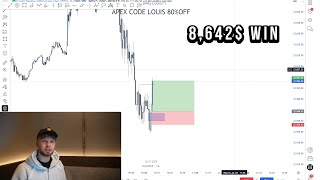
Kai Davis breaks down an $8,642 winning trade using his Inversion Fair Value Gap strategy, which he says has an 80% win rate. He enters long at a bearish gap inversion, moves his stop to breakeven at internal liquidity, takes 80% profit at the first target, and holds the rest for a 1:6 risk-reward ratio.
Chapters
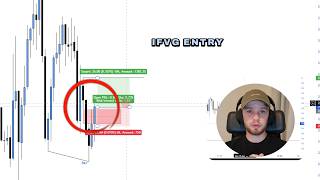
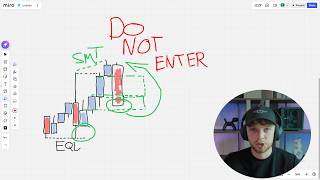
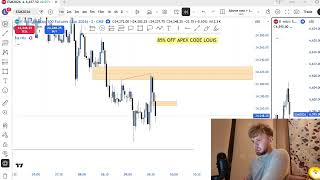
This is my full top-down analysis on this amazing winning trade that happened in the market on Wednesday. This strategy has over an 80% win rate if you use it correctly, and there is no way that you won't be consistently profitable if you learn the correct steps. And in this video, I'm going to be giving you the, giving you the analysis on this specific trade. Okay, this model has a stupidly high win rate. It is very simple and And that is what I'm going to be explaining to you. But before we start, I have been trading for over 4 years, so I make the strategy and I make trading look a lot simple. If you're a newer trader or if you are just newer to trading in general, then you must know that trading is not easy. I'm making it look simple because I've been doing it for so long. If you want to get to my level of trading, you're going to have to look and practice in the market for years, and that is the reality of it. I'm not one of these fake traders online who's going to say, yes, you can copy what I do and in a few weeks you'll be making hundreds and thousands of dollars, because that's not the reality— reality of it. If you want to become profitable, then you learn this strategy properly and your life will completely change, like so many people in my Discord community. I have over 38,000 members, okay? So this is the most realistic channel that you're going to find on YouTube that is seriously going to teach you how to trade and not lie to you and show you stuff that you want to hear. Starting with the daily bias. Daily bias just means where we think price action is going to go on the day and why. If we look at the daily time frame, we are chopping at all-time highs. Whenever we're at all-time highs, you have to be bullish. You should only be bearish if there is a reason to be bearish. And look at these charts, there is absolutely no reason to be bearish. We are at all-time highs. Just because we have swept buy-side liquidity does not mean that you should be bearish, okay? That is a very common misconception. Just because we have sucked buy-side liquidity, you shouldn't be bearish. If we sweep sell-side liquidity, that doesn't mean we have to come up, okay? So keep that in mind. So boom, daily bias is bullish, which means we most likely want to look for long positions, um, and that's all that's really interesting on the higher time frame. Now we drop to the lower time frames, and let's go before we actually get this trade entry. So today at market open, we kind of just drop, okay? This is 9:30. You should be trading from 9:30 New York time to 11:00 AM New York time if you want the best chances to become profitable. Or if you can't trade those times, you can trade 2:00 PM to 4:00 PM New York time, okay? The two best times of the day to trade, that is not questionable. So boom, at open, what do we do? We sweep buy side liquidity instantly open. We sweep buy side liquidity and then we come down going for sell side. Now remember, my daily bias is bullish throughout this whole move. Just because I see price action come down and take out lots of sell side liquidity right here, this doesn't mean that my bias is now bearish, okay? You'll see a lot of inexperienced traders do that. You'll see a lot of inexperienced traders see that price is moving down, down, down— oh no, I must have been right about— wrong about my bias, and now I must look for short positions. That's not how the market moves. Just because we're coming down on the 1-minute time frame does not mean that the daily time frame is not bullish, okay? Come, you can't compare the two. You have to give your daily bias time and look at it on the higher time frames. Um, yes, your drawing liquidity might change, you might want to target shorts, but just because we drop, you can't really. And another thing that will happen a lot of the times whenever we get the faster moves going down— ah, the, the fact that I'm giving some of this information out for free is stupid, but You know, you guys can see the value here. And if you want to learn even more, then all of the links are in my bio— my training course and my one-on-one mentorship. Of course, I livestream daily. But a lot of the time when we drop down like this, you're going to struggle to catch long positions. That is the reality of it, especially if we come down very fast. So the way that you're going to be able to catch long positions when we're moving down so much is by creating internal liquidity points like this. And then longing, and then stop loss to breakeven at those internal liquidity points because then they come after fair value gaps. So as you know, I trade an inversion fair value gap model, my own model. Um, what we're basically waiting for is a fair value gap to be inversed because if an average trader is looking at the markets right here, they are seeing that we have a market structure shift or break of structure to the downside, whatever you want to call it, because I As you can see, we've got this bearish candle close below this recent low. So most traders would call this a break of structure or a market structure shift. And what would they do? They would wait for price action to come into this bearish fair value gap. And then what would they do? They would look for short positions, and they would short and short, and they would lose. Okay, so what we do differently is we wait for a bearish fair value gap to be embossed and then go for buy side liquidity. I see this as a sweep on sell side liquidity, but of course If you're just trading and you're just entering into every single inversion fair value gap you see, you are never going to make it and you're never going to be profitable. That is the relative reality of it. So what we need is context, okay? Context is the most important part about trading and how you're really going to make it in trading. Context and liquidity. Now, what is the context to this trade, you may ask? The context to this trade is what I like to call an LFVG. So all an LFVG is, is if we go to the lower time frames— let's start off with the 5-minute time frame— from the swing high to the swing low, the last fair value gap of the leg is such an amazing and such a strong point where price action can respect and react from. For example, we have the swing high up here, we have the swing low here, the last fair value gap of the leg being this bullish fair value gap right here. If we mark out this bullish fair value gap, as you can see, there is no other bullish fair value gaps below or to the left of this point right here. So this is the LFVG. And what a lot of traders would, would do, um, right, normally is again they'll see price action displacing down here, they would notice that we have this swing low in the market. So instead of even considering a reaction out of this fair value gap right here, traders are just going to wait for price action to come down and sweep sell-side liquidity. But what is even better than just sweeping sell-side liquidity and coming up is respecting this LFVG and then coming up, okay? That is 100 times better than just in— but in taking sell-side liquidity. So boom, we get that reaction out of the LFVG. It's not random, by the way. A lot of people say, oh, it's just a It's just random. This happens so, so often. Don't just take my word for this as well. Don't— especially if this is the first time you're watching me and you're watching me for free on YouTube, I livestream every single day in my Discord. Don't just take my word for this stuff. Go and look, and go and look at the charts by yourself and see this happening. So remember, boom, we're getting this 5-minute LFVG reaction. We've swept sell-side liquidity. My daily bias is still bullish. We have a 1-minute bearish fair value gap. It is not on the 2-minute time frame, it is only on the 1-minute time frame. And boom, what do we do? We displace up. What is displacement? A strong, fast candle in one direction. As well, ES is also very correlated because of course if you're not trading with two charts, then you're gambling. So ES is also correlated, and ES inverses this bearish fair value gap on this candle right here. Sorry, the candle that you can see. This candle right here is where ES inverses fair value gap. So boom, you could have entered right here. Targeted this high. Now this is actually quite important. Why do we target this high and why is this one of my take profits? And in my opinion, this has to be a take profit because remember, price action is targeting liquidity or unmitigated fair value gaps. Once we take this liquidity level right here— and by the way, this is where you should move your stop loss to break even as well— but once you take liquidity in the market, price action no longer has to go up. Price no longer has to go down. Nobody knows what price is going to do when we are respecting a fair value gap, okay? We could— I don't know, you don't know, nobody knows. Price could come up, respect this fair value gap, and then end up carrying on coming down. Or price could just completely ignore these fair value gaps and break straight through it. The reality is nobody knows. But when you're trading, you're not trying to predict the market, okay? You're just reacting to what the market is telling you it wants to do. And why am I just drawing lines here? And what we want to do is wait for that inversion of our value gap. So boom, we enter into a long position, we take our profits right here, or you can take partials. Of course you take partials. What I would recommend in a trade like this is taking around 80% off of— 80% of your profits here and then holding the rest up at this high here for an amazing risk-reward. That's a 1:6 risk-reward. Or if you entered here, waiting for ES to inverse instead of 1:3. That's amazing. Um, and yeah, as you can see, if we play price action out, boom, we instantly come to this high again. Something to note, don't wait for the price to come back into the inversion fair value gap. I've uploaded 3 trade recaps this week, I think, and on every single trade recap, you can fact-check this for yourself, we never retrace back into the fair value gap. Okay, so something very important to note, we shoot up, take the highs, and Bob's your uncle. This is an amazing winning trade. If you want to watch me trade live, all of the links are in my bio. If you want to learn this strategy properly, links are in my bio. Everything's in my bio. If you did find this video useful and you want me to keep uploading trade recaps, then comment below and comment a nice message in the comments and put a smiley face, and I'll be giving away a funded account to one of you guys. I will see you all in the next video.
More from Louis
I lost 4,000$ Today Trading and would do it again next week... (FULL TRADE BREAKDOWN)
Losing 4,354 and i would do it again tomorrow... (80% win rate model trade breakdown)