80% IFVG winrate strategy - Full trade recap top down analysis
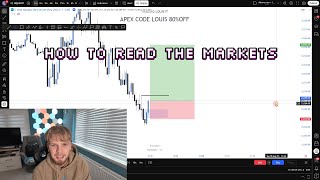
Louis breaks down his 80% win-rate day-trading strategy using internal fair value gaps and multi-timeframe analysis. He walks through live NASDAQ and ES trades, showing entry rules, stop-loss placement, and 1:1 to 1:1.5 risk-reward targets. The approach relies on daily bias, liquidity zones, and strict entry quality over chasing outcomes.
Chapters
Welcome back to another YouTube video on this channel. And in this channel and on this video, I'm going to be showing you exactly what I would do on today's market when I went into the market, what I would look for to enter into a trade, show you the trades that I took, and show you the trades that I would avoid. Now, I've been trading for close— for over 4 years now. I have a private Discord community with over 38,000 members and I teach people how to become profitable every single day. And the reason I'm telling you this is because I'm about to show you a video on how you can make a lot of money trading if you are consistent, you use proper risk management, and you're using the right analysis. Because believe it or not, trading is actually extremely simple. You don't need 100 indicators on your charts to become extremely profitable. You just need to be consistent with a simple strategy. So let's jump straight into it using literally fair value gaps and liquidity and what I look for on a day-to-day basis to make loads and a stupid amount of money. So starting with the daily time frame, every single time you want to look at the charts, you want to look at the daily time frame. The reason why you're looking at the daily time frame is to look for your daily bias. Now, the average trader would look at the price action exactly like this. They would see that we're in an uptrend and only be looking for long positions. But if you want to become a serious trader, you need to get rid of using trend lines and trends in the market. If we are in an uptrend, that doesn't mean you can't take shorts. And if we are in a downtrend, that doesn't mean that you can't take longs. Now this is key, and this will come into later in the video. So if we're looking at this daily time frame, as you can see, there's not really a whole lot going on. We're slowly pumped up before this, we're at all-time highs before we get these two big down candles with strong displacement. Displacement, displacement is simply when we have two large candles moving in either direction. And as you can see, these are quite large candles. One is a bearish displacement candle and the other is a bullish candle. So yeah, there's not really much going on on the daily time frame with MRC's bullish fair value gaps. We swept some sell-side liquidity. We're not really respecting any other fair value gaps. Same with the— well, the 4-hour actually looks a lot more interesting. The reason being we have this 4-hour unmitigated fair value gap. So what I do when I go to the higher time frames is I actually look for fair value gaps and look for liquidity. I look for unmitigated fair value gaps and I look for strong liquidity points. As you can see, we've got a nice 4-hour unmitigated fair value gap. We actually had a nice 4-hour unmitigated bullish fair value gap right here. I know that you can see this big down candle right now, but you can't currently see this at 9:30 AM New York time, but just the TradingView replay mode is a bit laggy. Okay, so that's what I would notice. Again, not a whole lot going on on the higher time frames. I would be open to nice long positions if we got them, and I would also be open to nice short positions if we got them as well. So dropping down straight to the lower time frames, let's look at exactly what I would do here. So So let's go to open right now. And at open, we actually had something that was quite interesting because we got this nice big bearish candle down. And what happened when we got this nice big bearish candle down is we created equal highs. Now, equal highs are a very strong draw on liquidity. Liquidity is simply where other people's stop losses are resting in the market. What is also even nicer about these equal highs is we also have some nice internal liquidity above. It looks like we even might have some trendline liquidity. Yeah, so we also have some trendline liquidity. Trendline liquidity is simply when you can draw a trendline, there is buy side liquidity resting above that point in the market. So this really doesn't mean anything right now if you can't get a setup. But as you can see, we create this 1-minute bearish fair value gap. This 1-minute bearish fair value gap is a very decent size fair value gap candle, and also we had the same candle on No, sorry, on ES we didn't actually have a candle because the big thing that I miss out on these trade recap videos that is hard to show in the replay mode is, of course, when I'm trading in live time, I'm looking at the NASDAQ and I'm looking at the ES chart. The reason being, I look for SMTs, I look for correlation, and without trading with SMT divergences and correlation, your win rate simply won't be high enough. So, and sadly with replay mode, I can't replay both charts at the same time. So I will just tell you what happens on the ES chart. And right here, ES did not have a fair value gap, so that's completely fine. And as you can see, we get a nice bullish candle on NASDAQ, um, soon. We do get a nice bullish candle, I believe. So if we just patient, we get a bit of choppiness here, that doesn't matter. But then boom, right here, very nice displacement candle. This was actually a 3-minute fair value gap. The reason why I wasn't interested in the 3-minute fair value gap is because this 1-minute fair value gap is a very nice size. We have extremely nice displacement and we have equal highs above. So we should at least go for this equal high because of the displacement, and we have a very strong draw on liquidity. So this is where I entered. Your stop loss to break— your stop loss is only if we get a candle close back below this inversion fair value gap. Your take profit would be at this high here, or anything ideally above a 1:1 risk to reward A lot of people said in my chat today, Louis, why would you not take profits right at the equal highs? The reason why you would not take profits at the equal highs is because it's not a good risk-to-reward ratio. When you enter into a trade, you want at least a 1:1 risk-to-reward ratio. So that would be your take profit, a nice 1:1.5. If we play the price action out, we take out these equal highs. This is where your stop loss would go to break even because we are now also respecting this bearish fair value gap to the left. and this just happened to be a break-even trade in the market. And if we play the price action out, we actually end up going to the targets that we would have hit our take profit. But this is the reality of trading, which most trading gurus online will not show you. I was right about the direction of the trade, I was right about my entry, I was right about my break-even point, as annoying as it is. But this just happened to be one of those break-even trades, and it did not hit my take profit. And this is real trading. Not every single day you're going to take a nice winning beautiful trade. This was a break-even trade for me, and actually a lot more stuff interestingly happened later in the session. So yeah, this was one break-even trade for me. You have to move your stop loss to break even here, equal highs, and with a fair value gap above. And yeah, on another day this could easily stop us out. And the way that you got to think about trades like this is, are you happy with the entry? Not about the result. You should be happy with the entry. Whether this trade hit my stop loss, whether this trade hit my take profit, whether this trade hit my breakeven point, you should always still feel the same. And I know 100 times out of 100 times, if I move my stop loss to breakeven at this exact point on the market, it is going to save me in the long run. And that's what it is all about. When just because you see your trade hit take profit after you've been stopped to breakeven, you can't think about, oh, I shouldn't move my— I shouldn't have moved my stop loss to breakeven. Because if the price did come down and then stop you out and you didn't move your stop loss to break even, you'd be thinking, oh damn it, of course I should have moved my stop loss to break even. Okay, so don't get in bad habits about your psychology side of trading and make sure that you're always thinking about taking the right entry. Now boom, what did we actually create? We create equal lows of unmitigated fair value gap, a very nice draw on liquidity, and we also actually tapped into the 4-hour unmitigated fair value Did we? No, we didn't. My bad. Okay, yeah, no, we didn't. I thought we did. So yeah, we didn't tap into that 4-hour unmitigated value gap, but we did take those highs right— highs out right there. And then what happens after that? We actually start to get a move down. Now sadly, there just wasn't any short entries to take here. We started chop— to chop a bit. We had Red Folder news at 10:00 AM. Oh, this is actually a very important point. I missed out on another trade that you could have potentially taken here. Now right here, this is a trade that on another day I would 100% enter into, okay? Look at this trade right here. We have a bullish fair value gap that we've came down, respected. We have two 1-minute fair value gaps. So when we have— this is a bit more of an advanced technique, but when we have a fair value gap like this and have a smaller fair value gap directly below it, what you should be doing is just marking out as one big fair value gap. Because you don't want one fair value gap to be disrespected and then the other one still being respected. So when they're just directly right next to each other, just mark them out. So yeah, right here we tapped into this fair value gap, we inverse this 1-minute bearish fair value gap, we have a nice strong liquidity above, we have the 4-hour unmitigated above. So you might be wondering, Louis, why was this not a good trade to enter into? Now, 2 very simple reasons. Reason number 1, we had red folder news at 10 AM New York time. That is literally 5 minutes after you would have got your entry. Whenever you're taking trades close to 10 AM New York time, this simply means that this trade is less likely going to work, okay? Simple fact. Whenever we have red folder news at, let's say, 10 AM New York time, this time right here, if you take a trade just before that, that trade is less likely going to work, okay? Another reason why this wasn't a good trade to take is If we were to look at the ES chart, the S&P 500, the correlating pair to NASDAQ, the S&P chart did not inverse, okay? Something that is very important that as well you need to use as context. That is why I didn't enter into the trade, and that is ultimately why the trade failed. Then boom, at 10 AM we get the news candle, news high, news lows created, but sadly there just wasn't any trades here or anytime soon. But something very interesting did happen. Another potential trade that I know some people would have taken unnecessary losses at. The reason why this entry wasn't very good and why we actually get a better version of this exact same entry is, in my opinion, right here there's just not a whole lot of context. And if I was going to enter into this trade, I would do exactly what I said on my live stream. By the way, I live stream every single day, Monday to Friday, in front of my live viewers. Over 230 people watch me trade live today. All of those links are in my bio. You don't want to miss out. So yeah, right here we get this fair value gap inverse with some decent displacement. Your stop loss to break even would have been right here on this candle. Now the reason why this wouldn't have been that good of an entry to take is simply because there's just not a whole lot of context. If we go to the higher time frames, it's so hard to see right now because of the replay tool But we really wasn't respecting anything to the left. We were in some fair value gaps, nothing special on the higher time frames, and we literally just inverse the fair value gap. Um, we haven't— well, we have swept sell side liquidity, but we're just dropping down with string displacement on the higher time frames. There is just literally no other reason to enter. We've inverse the fair value gap with displacement. We have a nice breakeven point. At most, you're going to enter the shade very, very lightly and targeting the highs up here. But again, there is just not enough context for me to enter into a long position here. Let's— but we do actually get a very, very identical trade later into the session, which I'll show you in a second. That is a better version of this trade. Now, something that is a lot more advanced I'm going to explain about this trade right now, but again, this is a lot more advanced, and ideally you would need a lot more screen time to notice something like this. But a lot of the time when we come down right like with strong displacement or speed, or just come down in general without really coming up on the higher time frames, we will normally create a lot of unmitigated fair value gaps along the way. And as you can see right here, we haven't really created many unmitigated fair value gaps. We have kind of just been going down and yeah, not creating any unmitigated fair value gaps. And that comes back to my point— we inverse this 1-minute fair value gap. Usually on a play like this, we would inverse a 1-minute fair value gap and we would have a nice 3 or 4 or 5 minutes unmitigated fair value gap to target, and that would be where your stop loss goes to break even. And on this trade right here, we simply just do not have that. We don't have a 1-minute, a 3-minute, a 4-minute, or a 5-minute unmitigated fair value gap. Another reason on why this wasn't a very good trade to take. Whereas if we play the charts out, we actually get a better version and a trade that you could have taken, and it was this position right here. Well, you nearly could have taken it. So you might be wondering, why is this a better trade to take? This looks very identical to this trade, but it actually is completely different. And again, please don't watch these videos like Netflix. The amount of information that I'm giving out in this free YouTube video is actually insane. Look at what I'm about to show you. You might be wondering, this is such a random point that we've rejected from. This is CE, or 50% of this fair value gap. Um, so let's mark out 50% of the 1-hour fair value gap and 50% out of the 4-hour fair value gap. You might be wondering, why do we mark out 50% of the fair value gaps? The reason why we mark out 50% of the fair value gap is simply because if we respect that point on in the market, it is a very nice rejection point. And as you can see, we come down, we directly tap 50% of this, um 50% of the fair value gap, literally less than a tick away from this fair value gap. I'm pretty sure I might have drawn that wrong. Uh, let me check, let me check, let me check. That's a 4-hour, 1-hour, 1-hour from there, and the 1-hour to that. Yeah, it is literally exactly— so yeah, it is literally exactly 50% of the 1-hour, um, fair value gap. And whenever we tap 50% of our fair value gap, it is just more of a reason on why you're going to get a rejection from that zone in the market. And as you can see, we've rejected 50% of this fair value gap. We have a bearish fair value gap right here, and sadly we just do not get the entry. And remember what I said on this trade above, we check the higher time frames. What do we have? We have an unmitigated fair value gap. So this is exactly where I would have liked to target if we inverse this 1-minute candle. So if we inverse this 1-minute right here, I would have entered here, my stop loss would have been a candle close below, I would have targeted a lot higher in the markets, and I would move my stop loss to break even right there. Sadly, we didn't get a candle close above the 1-minute, and on the next candle, we tapped into the unmitigated fair value gap. Therefore, we just couldn't have got an entry. Okay, that's the reality of trading. Not every single day we're going to catch a very, very clean trade, but what is most important is you stay out of the bad trades in the market. You stay consistent. I will turn up tomorrow and I will catch a winning trade. If not, I'll catch one the next day. If not, I'll catch one the next day. I don't care. I know by the end of the month I'm going to have made a stupid amount of money from trading because I just stick to my strategy. And that is as simple as that. If you want to watch me trade live All of the links are in my bio. Please take trading seriously. Don't just watch all these other YouTube videos that are highly entertaining but don't really teach you a lot. This is— I've just gave you so much information on this video about real, real trading. And if you have any questions, please leave it in the comments below. If you enjoyed this video, write a nice comment with a thumbs up. I read 100% of the comments and I really appreciate it. We hit 1,000 subscribers on this YouTube channel. So let's go, and I will see you all on the next YouTube video. See you guys tomorrow.
More from Louis
I lost 4,000$ Today Trading and would do it again next week... (FULL TRADE BREAKDOWN)
Losing 4,354 and i would do it again tomorrow... (80% win rate model trade breakdown)