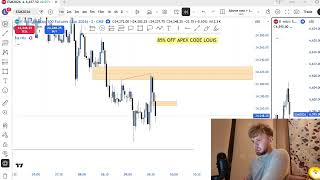
Day Trading Making $13,739 With Just IFVG's & Liquidity (THIS STRATEGY DOESN'T LOSE)
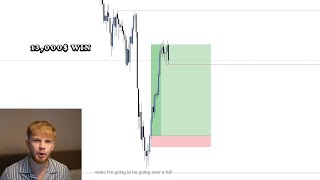
Kai Davis breaks down a day trade that made $13,739 using fair-value gaps and liquidity sweeps on the 1, 2, and 15-minute charts. He enters during the 11 am to 12 pm New York window, places his stop at an internal liquidity point, and manages the position by moving stops to break-even or trailing them for larger profits.
Chapters
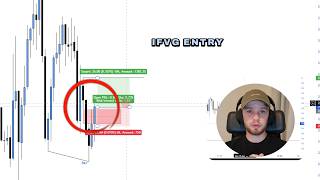
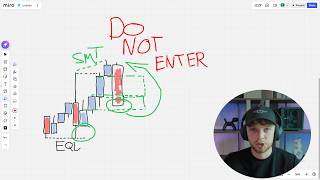
Welcome back to another video, and in this video I'm going to be going over a full trade recap of my 80%+ day trading win rate strategy, the Inversion 5-IGAT model. Now this was an extremely, extremely good trade to take in my opinion, but I will just warn you, this trade is a bit more advanced. So if you are completely new to trading, this video might be a bit too much for you, but you can always learn some stuff. So make sure you do watch, and if you have any questions whatsoever, make sure you leave it in the comments below and I'll keep bringing you these trade recaps because you're going to find a lot of valuable information about this unedited, straight-to-the-point content, okay? I'm not doing loads of salesy video editing to get you to buy anything. This is just straight video, straight education for most people who actually are serious about trading and want to make it, okay? So first of all, what I'm going to do is show you the start of the day. So obviously, as you know, I trade mainly from 9:30 AM New York time to 11 AM New York time. This from New York open, that starts at 9:30 AM, and then 11 AM is normally when the volume starts to drop off. But a very important piece of information now, the fact that I'm just dropping this type of information at the start of the video, because I know I see the viewer retention rate by the end of the video, that's normally when I like to drop some of the gems because that's when I know the real traders are watching the videos. But from 9:30 to 11 AM, this is New York open, as you all know. From 11 AM till 12 PM this is where you can catch some incredible trades. One, if your daily bias is bullish, and two, if we haven't really swept out any buy side liquidity, and three, we have a nice buy side liquidity draw from 11 to 12, you can catch some of the best trades that you will ever see. And that is actually what happened today. But first of all, let's take a look at open right here. So as you can see, this right here is just choppy price action. We're going sideways on a 1-minute time frame. We have equal highs, we have, have equal lows. So when price action does this You just have to be patient, okay? You can't trade this chop. Look, we just came up, taking out the highs, now we're coming back down. It's just choppy. You cannot trade this price action. And what you need to do is wait for us to come out the range, exactly like we have here. Now, as you can clearly just see, we just dropped. We dropped quite a bit. We came out of the range. Now, what the problem we have now is, because we have dropped so much, it is usually harder to catch long position. So in this instance, my daily bias is bullish. Let me quickly go over my daily bias. Boom. I mean, on a day like this, it's very, very easy to find your daily bias because of course we look at the daily time frame. As you can see, we just swept out all-time highs, and wherever— whenever we are at all-time highs, your daily bias has to be bullish unless you have a reason to be bearish. And when we're at all-time highs, there is absolutely no reason to be bearish because we haven't inversed anything single for our value gaps and Yeah, a common misconception that a lot of traders make is just because we sweep buy-side liquidity— so for example, right here, just because we swept this buy-side liquidity, that means that we now have to come for sell-side liquidity. And you couldn't be more wrong if you think like this. So I know a lot of traders do, so get that out of your mind. Just because we sweep buy-side liquidity does not mean we have to come for sell-side liquidity. We can easily keep coming up. So in an instance like this because we've set buy side liquidity and we're coming down a bit, my daily bias is still bullish because we haven't inversed any fair value gaps. So like I was saying, because we've came down so much here, and ideally I want to enter into long positions, best case scenario, price action comes up, respects— price action comes up, we're respecting a higher time frame fair value gap to the left, price comes up, comes back down, creates an internal liquidity point, we inverse that liquidity point, and then we enter into long positions, and your stop to break even at this high right here. That is always going to be your best case scenario. Of course, with extra context being your SMTs, your LFEGs, everything like that, okay? But a lot of the time what can also happen is we can get a small bearish fair value gap, and this is kind of the situation that we got, and I will show you guys. So moving on, let's see. So yeah, this is still— so this is 10:45. So at this point in the market, there have just been absolutely no trades to take. We're just dropping Another thing that traders will think is because we've moved down so much here, a lot of traders think, oh, I've missed the move, I'm— I've not caught anything. And you can't think like this, okay? Just because we move down so much in a certain direction— and by the way, you might also be thinking we just inverse the bearish fair value gap. I said on my live stream that we're not interested in this trade. It just was not enough context. Um, we literally only swept the liquidity level. We're not respecting any higher time frame fair value gaps. and this candle close also wasn't very strong displacement. That is also something that you will find doesn't work a lot when we don't displace above the inversion. Um, so as you can see right now, it is 11 AM, and this is where I actually took my first trade, I believe. Let me find it. So yeah, right here. You might be wondering, why on earth did I enter into a long position right here? Now, like I said at the start of the video, this video is going to be a bit more for the advanced people, okay? A lot of the newbies won't— I don't want— I don't expect the newer traders or a lot of traders to enter in this type of trade. It's more of an advanced play. So why on earth did I enter into a long position here? You can't even see a fair value gap. So first of all, let's check the 2-minute time frame. As you can see, well, I didn't enter it just yet, but I do enter in a second. We have this 2-minute bearish fair value gap. Let me mark out this 2-minute bearish fair value gap. So we got a 2-minute bearish 5-hour U-GAP. We've swept sell-side liquidity. Now you might be thinking, this still isn't enough context to enter into long positions. Now what made me enter into these long positions? We check the 15-minute timeframe and we look to the left. What do we have here? We have right here, if you can see it, it's very, very small, but it is an LFVG. The LFVG is from the swing high to the swing low. You mark out this fair value gap, and it is an extremely, extremely strong draw on liquidity, and extremely— not necessarily a strong draw on liquidity, but somewhere where we can get an amazing reaction out of. So if we draw that 15-minute LFVG out, and then we go back to the 1-minute time frame, have a look what happens right here. We have perfectly tapped around 50% of the range in the LFVG. We have rejected from this point. We've swept sell-side liquidity. And then as you can see on the next candle, we get this 2-minute candle close above it. So this is actually where I entered into the long position. My stop loss to break even was at this internal liquidity problem right here. So I had a very, very aggressive stop loss to break even point just in case the price wanted to keep going down and take sell side liquidity, which actually ended up did doing. I did also record my live executions for this trade, and as you can see Boom, we hit this point straight away, straight displacement. Again, we didn't come back into the 2-minute, so this is where I went stop loss to break even. And then this was— ended up being a break-even trade. So this was actually my first trade of the day, um, was the break-even trade. Now you might be wondering, okay, so what winning trade did you catch? And remember what I said at the start of the video, from 11 till 12, if we don't take out any buy side liquidity, the daily bias is bullish, you can catch an incredible trade. And that is exactly what we did. Another thing to note— I'm giving out so much information in this video— but another thing to note is when we drop down, there's mainly two things that you want to see a respect— see price being respected. You want either an LFVG to be respected, or you want a nice liquidity sweep. In my opinion, they are the best two confluences. Of course, we can respect a normal fair value gap, that's fine, but ideally you want that LFVG to be respected. And again, if we check the higher time frames look at what we've just did. We've perfectly swept this south side liquidity. Now what I mean by perfectly sweep, we've had a wick below this point in the market and then instantly rejected. This just shows a strong move up, and normally when this happens on the lower time frame, we will get some sort of displacement. So yeah, as you can see, we come down perfectly, we come down perfectly, take out those lows. So right there, as you can see, that's the 1-hour low I've just drawn. Um, let me go back before I actually entered into— before the entry. So yeah, we perfectly swept these 1-hour lows. Then what do we have? We have this 1-minute bearish fair value gap. Now what did I say earlier? Ideally what you want to see, what would have been the best case scenario, is we either come up, then come down, then get a fair value gap, then inverse that, and then get the long position, stop loss to break even at internal. The reason why we don't have to do that here is because if we check the higher time frames this is only a 1-minute fair value gap. So because this is only a 1-minute fair value gap, price should at least come to the next internal liquidity point or the next unmitigated fair value gap. So if we check the higher time frames, as you can see, the next unmitigated fair value gap isn't till up here in the market around that candle at 11 to 12. So because we're not respecting another fair value gap, you can actually enter into long positions once we get this bullish candle close, as long as you are instantly moving your stop loss to breakeven once we tap into one of those unmitigated fair value gaps. Okay, now it's not too, too common that we'll get a setup like this where we won't be respecting an unmitigated fair value gap, but once we do, the risk to reward that you can get on these types of plays and the win rate is incredible. So look, this is already a 1:2 risk to reward to this point right here. Let alone if we were to target the equal highs that we have above in the market. So boom, this would be where you enter into long position. Your first take profit would be this high right here. We have a very nice internal— we have a very nice internal liquidity point, and we have close to 1:2 risk to reward. Your stop loss is only if we get a candle close below. And look at this reaction, instantly straight displacement up. And again, look at this candle close, a very nice candle close, not a lot of wick. And then we go straight to this first take profit. So right here, of course, you'll be stop loss to break even at this point. You would have took your first profits. Now what I would do in this situation is I would let the trade run a bit, and as soon as I get a big move up, I would cover my profit. So what I would do straight away is boom. So right here, as you can see right now, we're at an amazing risk reward. So at this point in the market, there's two things that you can do, to be honest. But there's actually 3 things that you can do. The first thing is move your stop loss to break even, take your partials, take a lot of partials, and then just hold for next liquidity point. You've already took some partials. If it runs up, then you get loads of money. If it doesn't, then you've already taken some partials. The second thing that you can do is, um, move your stop loss to your take profit. So again, so instead of moving your stop loss to break even once we displace above this zone in the market, you actually move your stop loss all the way up to where your first take profit was and then leave, um, the rest of your position up to the highs. So what this allows you to do is this allows you to have a lot more of your position in because you did not take partials. You're now risk-free in the trade because your take profit point is where your original take profit does. So worst case scenario, price action now comes down and taps your at a 1:2 risk to reward, which is obviously amazing. Um, or of course, best case scenario, price runs up all the way for these highs and you make even more money. Or the third thing that you can do is you can trail your stop loss. So when price action comes up a bit, you can move your stop loss to the take profit point here, which is— of course, I say stop loss, but of course it is your take profit. Then you can move your take profit up even more. So once price comes up to here you can trail your stop loss even more. So maybe this low right here. So now if price action hits this low, then you get taken— then you get taken out the position, um, and then just keep doing that. So there's multiple things that you can do in that position, but either way, you've made at least around a 1:2 risk reward in this situation. And then, yeah, I mean, you would, in my opinion, if you did move your stop loss to breakeven, you should hold for these equal highs right here, just because equal highs are very, very strong draw on liquidity. But price ends up actually coming down and hitting, tapping us, um, the rest out to break even. But of course you would have taken profits at this point. So yeah, I hope you did find this video useful. The first link in my bio is actually the pre-launch to a new private mentorship that I'm releasing. The stuff that is in this private mentorship is crazy. So if you are interested in learning how to trade, make sure you click that first link in my bio and sign up. It is incredible what I'm going to do for the people that join. And secondly, if you did like this video, comment below a message and simply at the end of the message put a smiley face so I know you've watched this video all the way through, and I'll give a funded account to somebody who does that. And just write a nice message about the video, what you found useful, or what you want me to upload in my next video. And yeah, I hope you did find this useful. I went in a bit more detail about how you can use your take profit and of course why this was a decent trade take. So if you want to see me keep uploading, subscribe with notifications on. We're nearly at 1,000 subscribers on this channel already, which is amazing, and I will see you all in the next YouTube video.
More from Louis
I lost 4,000$ Today Trading and would do it again next week... (FULL TRADE BREAKDOWN)
Losing 4,354 and i would do it again tomorrow... (80% win rate model trade breakdown)