if you can understand this then you WILL become successful trading
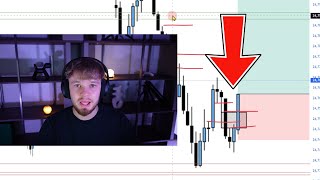
A trader explains three core traits for profitability: patience, discipline, and risk management. He teaches the Inversion 5-hour EGAT model to identify high-probability setups using fair-value gaps and displacement, with optimal trading windows at 9:30-11:00, 11:00-12:00, and 14:00-16:00 New York time.
Chapters
I will tell you absolutely everything of what it is going to take for you to really become a profitable trader, and I need to break it to you right now, it is not what you probably think. Now, if you want to become the best trader possible— and I will be going into a live chart example later in the video— but if you want to become a true and consistent profitable trader where you look at the markets every single week and by the end of the month or by the end of the week you know that you're going to be profitable, you need to do and have these certain traits on which all profitable traders have. Now, starting with the most important, you need to be patient. If you come into trading, and you probably do come into trading, you want to take so many trades a day, you want to look for 50 trades a day, you want to see everything, and you just want to enter, enter, enter, win or lose, you don't really mind. You need to get rid of this habit as soon as humanly possible, okay? You will never, and I mean never, become a profitable trader if you cannot be patient. Okay, now patience is luckily something that you can learn to do better. So if you're not very patient right now, don't worry, you can learn to do it. Now, something that a lot of mentors and a lot of traders will not tell you is patience also aligns with confidence. So I understand if you are not confident with a strategy right now, you are of course less likely to want to become patient because you're probably thinking to yourself, what on earth am I going to be patient for if I don't know by the end of the week that I'm going to be profitable and I'm going to be green. And of course, I fully understand that, and that is why I always urge you to join a trading group and join a trading community. Just join my free Discord if you want somewhere to start. The link is in my bio. There's over 38,000 traders all in my Discord. Just join my free Discord. You don't have to join my paid mentorship. You don't have to join my paid daily live streams. If you are a more serious trader, then of course I recommend you going for the paid option because then you get to that next level of traders who you all know are 100% serious, okay? So learn to be patient by understanding a bit of a strategy and getting used to it in a community. That is your first step. Then you want to learn discipline, okay? Now this, of course, is with patience, but what I mean by discipline is you need to make sure you have the right risk management and you are trading at the right times and you are overall sticking to your strategy. If you do these 3 things and you do it every single day, consistently in the market whilst you are also in a trading community, it is only a matter of time until you become extremely successful. And I promise you that it will only be a matter of time until you become profitable if you can master those 3 things. Okay, discipline— only trade certain times of the day. Now let's load up the charts and I will tell you what times of the day that you should be trading. Okay, the first time, 9:30 Why have I drawn my 3 like that? 9:30 to 11 AM. 11 AM New York time, okay? This is all in New York time. We always speak in New York time. 9:30 till 11 AM New York time, this is the New York AM session. This is the best time of the day to trade where the most amount of volume will be, specifically for futures NASDAQ. The second best time of the day, or joint second let's say, is 11 AM til 12. Okay, so, and from 11 AM, trade after for 1 hour until 12 PM. Do not trade after 12 as that is the lunchtime macro. This is joint second of times of day to trade. And then you have the PM session, which in my opinion is extremely good as well. The PM session is from 2 PM till 4 PM. Very simple, from 2 PM till 4 PM. This is another time to trade. Now the reason why I'm telling you this so early in this video is because When I started trading specifically, I would never trade certain times of the day. So I would start trading when I woke up, I would look at the charts until basically I fell asleep. And I never understood the importance of looking at different time frames and looking at different times of the day and understanding that, okay, if I trade from 9:30 till 11 AM every single day, the chances that I become a profitable trader are so, so stupidly high because as long as I'm being consistent and being disciplined because that's when the most volume is. And of course, volume most likely means where you're going to get the most amount of trades. Now let's jump into the live chart example, and let's not talk about anything that happened years ago. Let's look at Friday's price action, because like I just said, if you want to become a profitable trader, one lesson that you need to learn is to not enter into trades, okay? You've heard me say this before if you've seen any of my content. Absolutely anybody can catch a winning trade, okay? Anybody can. You can load up the chart and enter into position and it can be a winning trade. That is easy, okay? That just takes zero skill. What takes skill in trading, and what most people cannot understand and cannot do, is avoid the bad winning trades and the bad losing trades. I empathize on the bad winning trades, okay? Because anybody can enter, and just because a trade might hit your take profit does not mean that it was a good trade to take. Now let's look on Friday. If you're unfamiliar with my model, I trade the Inversion 5-hour EGAT model. If you want to learn more about that, then all of my links are in my bio. The first thing that you're going to want to notice is what price action you want to avoid, okay? So the first example of this is when price action is wicky and we're not creating fair value gaps. This is a sign that price action is simply lower probable, okay? Don't overthink it. If price action is very, very wicky— so as you can see here, look at all these candles creating lots of wicks, lots of wicks— another sign to tell if it is good price action or not is by checking and seeing if we are creating fair value gaps. So as you can see, ever since open— so remember, open starts at 9:30 AM New York time, so this candle was open after open— we've not had a singular fair value gap. We had our first fair value gap right here, it's not very interesting, we're still chopping. So whenever we're not really creating fair value gaps, that is price action that you ideally want to avoid, okay? As simple as that. Let me show you an example. Actually, I'll pull up an example right now of two charts side by side. Let's hope I pick a good example right here, and I will show you the difference between good price action and bad price action. Okay, perfect. If you have a look at this right here, as you can see, the— well, these are actually two amazing trades. So if you look to the left, this is good price action. Okay, you can clearly see that we're creating fair value gaps. Let me take a screenshot of this and put it on the chart so we can compare. All right, so let's look at it on the chart compared to the price action that we see right now. So as you can see with this price action that I'm showing to the right, what is the difference in price action that we can see right now? On the right, we're creating fair value gaps. We have a fair value gap here, we have a fair value gap here, we have a fair value gap here, we have fair value gaps up there, fair value gaps there. As you can see, we are creating a lot of fair value gaps, which is ultimately giving us opportunity to enter into the market. If you're unfamiliar with what a fair value gap is, I have videos on this channel. It's simply a 3-candle pattern formation where the first candle here and the third candle don't touch, connect, or overlap. Okay, it's very simple. It's just where imbalances are in the market. So that's one example of how you're going to see if price action is good or not so good. Now, another thing to notice if price action— you should be trading it or not— is the range. Okay, so when price action— now, this is also a misconception in my opinion. There is a difference between trading in a range and being choppy. Okay, now there's a very fine line between it. So sometimes price action can look like this where we're moving a bit, you know, we might even be getting some fair value gaps. But as you can see, if we were to zoom out of the price a bit, and of course imagine that these lines are all candles, if you actually take a look, we're inside of a range. So we mark out the high and we mark out a low, and all price action is trading inside of this range. Now when we have a small range and the range isn't a lot of points— and points is simply the number of the that you might have heard pips of your trading forex, it's called points on futures. So if we have a small range of points and we're not really going outside of that range, this is also lower probable market conditions. Or if we're consolidating— now it's much easier to spot consolidation. Consolidation is simply just when we're going sideways like this, when we're going sideways for a long amount of time. I'll show you a live example right here. So boom, here's, here's a, some consolidation that you don't want to be trading. If we look to the left, there's more consolidation. So whenever price is doing this, simply avoid trading, okay? Because again, that means that, that trades are less likely going to work. And of course, when we are looking at Friday's price action, for example, you are always going to get potential trades. Now what I mean by that is, let's play at the price action. We have this fair value gap, for example. Now what I said at the start of the video, you're always going to get potential trades where some traders my— okay, right here, let's say, look, we've embossed this bullish bearish fair value gap, right? So as you know, for my strategy, I'm waiting for a bearish candle close right here to be embossed. So simply having a bullish candle close above a bearish fair value gap targeting the highs. You might be wondering, okay, Louis, we've had this bullish candle close above this bearish fair value gap, surely this means you want price action to go for the highs, right? No, that is incorrect. So you might not be wondering, okay, why would I not be interested in taking this trade? What did I just teach you? Look at this choppy price action. Look at how we're trading inside of this range. Whenever we have a fair value gap— okay, let's say that these are two examples of two different fair value gaps. Just say we get the same exact price action, but here, as you can see with this fair value gap, price has slowly inversed the candle like this. When price does this, slowly chops and then inverses the candle, this is lower probability. What is a higher probability trade is when price action comes down and then it might consolidate a tiny bit. You know, consolidation doesn't necessarily mean a problem, but then we want to see displacement through the candle. Okay, let's look at this example really quickly again. As you can see with this good trade example, we don't— we get one or two candles below the fair value gap and then we come straight through. Do you see the difference? One, two candles, straight through, string displacement. Whereas in this example to the left, look at all these candles. It doesn't necessarily matter matter how many times we tap into the fair value gap, but you just don't want to see these candles. You want to see a fast, quick up— sorry, you want to see a fast down move, fast up move, getting the displacement. This will be your break-even point on this trade. That's an amazing trade to take, okay? Just keep looking for that and keep looking for the displacement above, okay? This was a very, very quick and simple video. I know I didn't go too, too in-depth. I want to keep this quite quite quick and quite snappy. So hopefully you just remember this. Now in next week's trading, you can take advantage of it. Let me know if you want me to go more in depth of these type of concepts, or let me know what you want me to talk about more in general. And of course, if you want to join my mentorship, you want to watch me trade live every single day completely for free, the first link on my bio. Do not miss out on this opportunity, and let's have an amazing winning week next week. If you did enjoy this video and made it to the end, Leave a comment so I know who the real people watching these videos are. I hope you enjoyed. I will see you on the next video.
More from Louis
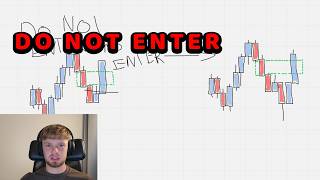
I lost 4,000$ Today Trading and would do it again next week... (FULL TRADE BREAKDOWN)
Losing 4,354 and i would do it again tomorrow... (80% win rate model trade breakdown)