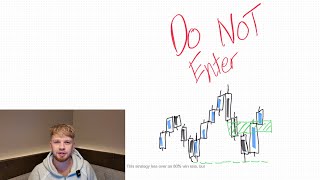
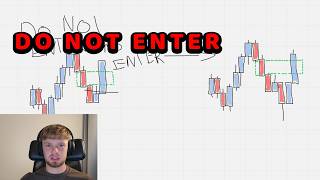
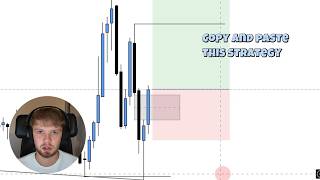
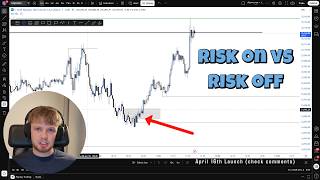
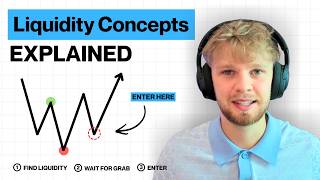
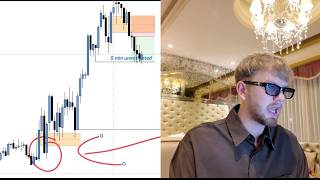
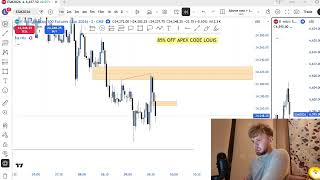
In this instructional video, the presenter explains that achieving a high win rate (over 80%) with his Inverse Fair Value Gap (IFVG) trading system depends more on avoiding losing trades than on finding winners. He outlines the core components of his strategy—fair value gaps, liquidity draws, liquidity sweeps, and daily bias—and stresses the need for contextual confirmation before entering a trade. Through three detailed chart examples, he demonstrates common pitfalls: (1) entering when opposing liquidity draws (equal lows) exist, (2) entering while still respecting a bearish fair value gap, and (3) entering on the candle that sweeps liquidity, which reduces the probability of a successful move and compromises risk‑reward. He explains the mechanics behind each mistake, how price action is likely to behave, and the correct conditions for a valid entry (unmitigated fair value gap or fresh liquidity draw, bullish candle close, alignment with bias). The video concludes with risk‑management advice (stop‑loss to break‑even) and a call to action for viewers to follow his live trading, subscribe, and engage in a giveaway.
Chapters
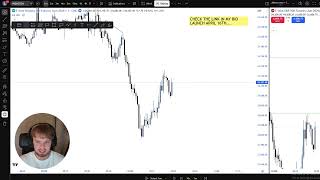
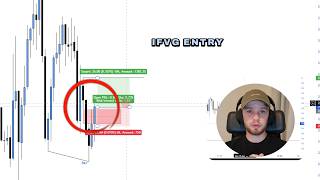
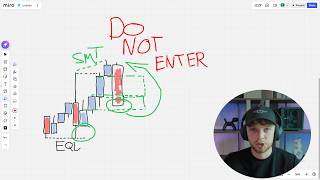
This strategy has over an 80% win rate, but if you want to be able to do that and make hundreds and millions of dollars, then you need to understand on what trades not to take. Absolutely anybody can take a winning trade in the market, but not what everybody can do is avoid taking the losers. Okay, everybody can see a fair value gap being imbalanced and then enter into a long position. That's simple. So first of all, I'm going to show you and really tell you what a decent trade is when you're looking to enter into the market. Now, first of all, what I must tell you is trading— you can't be a robot. There is no mechanical strategy that will make you profitable, because if there was, then there would simply be a robot for it, and that robot will sell for hundreds of millions of dollars, a stupid amount of money, if you can find a good robot. So starting off, my strategy— I use fair value gaps and I use liquidity. It has made me, and it has made my students, a a stupid amount of money. But again, like I said, you need to know what trades not to enter into. So basically, to put a long story short, of course you need context. But with my strategy, we wait for a fair value gap, and we wait for a fair value gap to be disrespected, and then that is when we enter into a long position. But we need context, we need reasons to enter into the position. We need a liquidity sweep, we could need an SMT, we need our daily bias to align. So we need context, okay? But if you're watching this video, I already kind of assume that you roughly know how to use my strategy when we inverse a fair value gap. For example, right here, as you can see, we might have— we've inverses fair value gap. People might think, okay, this is a good time to enter into a long position. One example. But like I said, this video we're focusing on trades not to take. So let's start off with this example right here. As you can see, we have a chart, we have a nice looking trade. Let's say that our daily bias is also bullish in the scenario. So let's say we have a nice bullish bias. So that means on the daily time frame we think that price action is going to go up, and we're looking at this trade. What do you notice? We have a bearish fair value gap being right here, being inverse. So all inverse means is having a bullish candle close, a above a bearish candle, above a bearish fair value gap. Right here we have that bullish candle close above this bearish fair value gap. So what does this mean? Price action is most likely going to go to either one, the next draw on liquidity, which is right here, the next draw on liquidity, or two, an unmitigated fair value gap that we have in the market. As you can see, we don't have an unmitigated fair value gap anywhere. So what is price action most likely going to do? Price price should most likely come to this next draw on liquidity. But what is the problem with this trade? The problem with this trade is we have an extremely strong draw on liquidity below. Right here we have equal lows. Now equal lows are simply when the price action comes to the exact same point in the market more than once. And as you can see here, and as you can see here, price action has tapped into this exact same point, meaning that we have lots of stop losses resting below. So all liquidity is, is when we have lots of other people's stop losses resting, and it's a good sense that price action wants to be drawn to this point in the market. So even though it looks like we have a nice entry here, we have a nice strong liquidity above, our daily bias might also be bullish, the reason why you would not enter into this trade is because we have equal lows below. Okay, so keep that in mind. This is one reason on why the trade might not be good enough to enter, is because we have opposing draws on liquidity. Now let's move on to the next trade. So right here we have a very, very common mistake on why traders make this mistake. This is something that is so easily being able to fix, and when you do fix it, it will increase your win rate by a stupid amount. I promise you that. Okay, so again, a trade that you should not be entering to. If we're looking at this chart right here, you might be wondering why is this a bad trade. We have a sweep on liquidity. So a sweep on liquidity is when price simply breaks the previous low or the previous high. In this instance, we have this low prices came below this point right here, meaning that we have swept this liquidity. What does this mean? This is a bullish confluence. When we sweep sell-side liquidity and then get a potential entry in the market, this is very good for potential long positions. Again, in this example, we have a nice draw on liquidity above, and let's also say that our daily bias is bullish, so we think that price action is most likely going to go up. And this right here It's also a— this is also a bullish candle right here. So yeah, let's say that price action wants to go up. Everything is looking like price wants to go up here. The daily bias is bullish. We've had the sweep on liquidity. What do you think the problem is with this trade? The problem is with this trade, we are still respecting a bearish fair value gap. So yes, although we have inversed this bearish fair value gap right there, the reason why you will not enter into this trade is because we have this bearish fair value gap right here that we are still respecting. And remember what I said on the last trade. What price action should do when we inverse a fair value gap is one, either come to the next unmitigated fair value gap or come to the next draw on liquidity. Because we have inverses fair value gap means that we should go to the next fair value gap or liquidity. Because we are respecting the next fair value gap right here, price action now has nowhere to go. Price is respecting this fair value gap, and because price is respecting this fair value gap, nobody knows if price is going to go up or if price is going to come down. Okay, you're not trying to predict the market, you're going to react to what the market is telling you it wants to do. And once a fair value gap is being respected, nobody knows— I don't know, you don't know— if the next candle will come up and inverse this fair value gap, or if the next candle will respect this fair value gap and end on coming down. So the only way that you should enter into this trade right here is if we get this bearish fair value gap and we get a bullish candle close above this bearish fair value gap. Whilst we're respecting this fair value gap, even though we have inversed this fair value gap here, you should not enter into a long position there, okay? The only way you would enter into a long is if we get a bullish candle close. We close this bullish— this, imagine this red candle is a bullish candle. Then where price action should go is price should then be drawn to that high right there, okay? Very, very simple. And moving on to the final example that I have. Now this is also a very common mistake when people are using inversion fair value gap model. So in this instance, we have actually embarrassed the fair value gap. We don't have any other fair value gaps. We have a singular fair value gap that has been embarrassed. We also have a liquidity sweep. Again, let's say that our daily bias is also bullish. So every single reason that I just listed is a good potential reason on why the price action might want to come up. But let's keep this very, very simple. The reason why you can never enter into this type of trade is because you would enter right here, right? You've got the bullish candle close right here above this bearish fair value gap that we've got marked out in green. We've had the liquidity sweep. The reason why this is a bad trade specifically is because we've already taken out the liquidity point. Again, it comes back to the point we should either go to an unmitigated fair value gap or liquidity. We don't have any fair value gaps that are unmitigated here. We only have a draw on liquidity. Right here. But because this draw on liquidity has already been swept, price action has very low chance that if we enter here where the candle is— because we enter on the candle close— there's a very low chance that price will want to come up and retake this liquidity. Of course it will happen, now of course it can happen, but again, there is really not an 80% win rate in this happening. Excuse me. Sometimes you can enter once we've taken the liquidity. But the risk to reward is not worth it because this would also not only be your potential first take profit point— it doesn't have to be your first take profit point here— this is most likely where your stop loss to break even is going to be. So as soon as we take this high in the market, you will move— you enter here, we take this high, this is where you go stop loss to break even. So now you are risk-free, and then you simply target the higher highs in the market, okay? So when we sweep liquidity on the candle that you are going to enter from, do not enter into the trade. It will lower your win rate significantly. If you found this video useful, if you want to watch me trade live every single day, then all of the links are in my bio. And make sure you subscribe with notifications on to this YouTube channel. And I'll be doing another funded account giveaway for this video, so comment below and write a nice message and just put 2 exclamation marks at the end of your message so I know that you've watched all the way to the end of this video. I hope you found it useful. If you do have any questions whatsoever, I read 100% of the comments, so just simply leave it below. And yeah, I hope that you found this video useful. Trades not to take— it is much more important to stay out of losers than it is to catch winning trades, okay? Of course you need to win a trade, but you need to know what bad trades to stay out of. I hope you found this video useful. I'll see you all tomorrow for the next video.