Full Guide to Fixing Chronic Stress in 11 Minutes
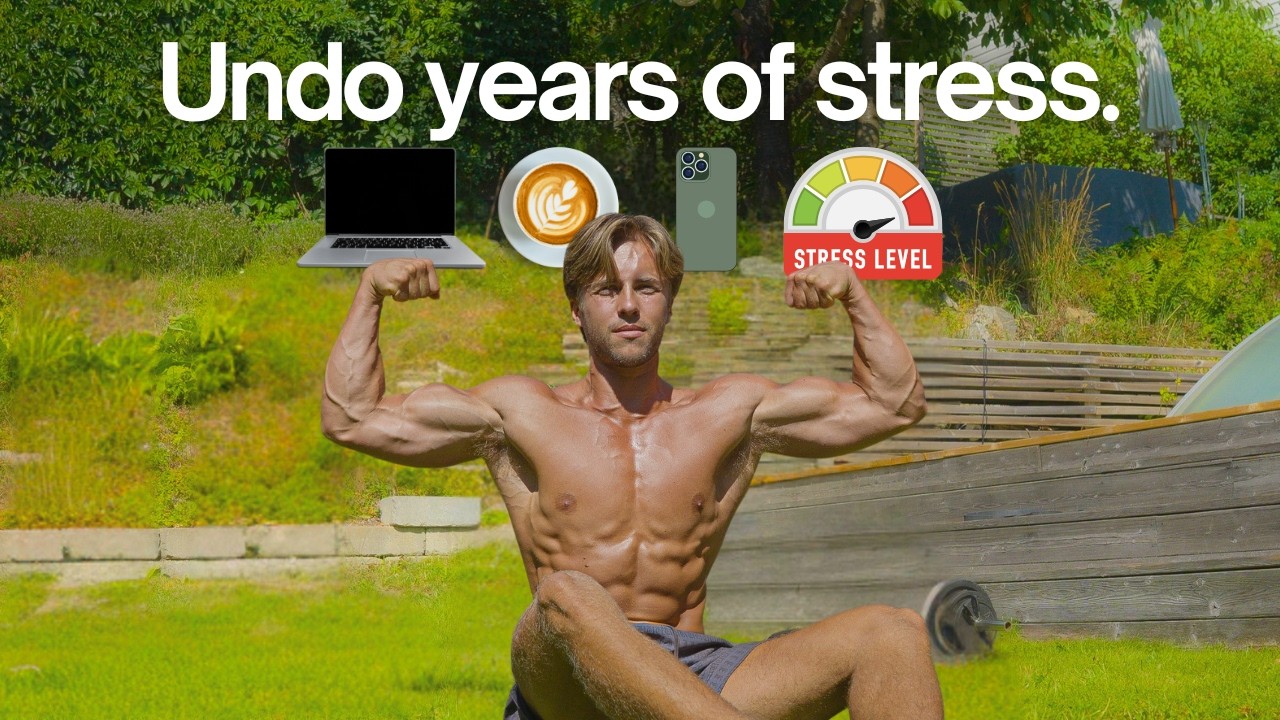
Lucas Wilhelm Hedenbäck explains how chronic stress, not poor diet or training, kept him bloated and low-energy. He outlines a three-step fix: eliminate stress habits like constant caffeine and blue light, restore practices like morning sun and breathwork, and regulate sleep and training. Clients saw rapid improvements in gut health and energy after applying the protocol.
Chapters
Okay, so this was me 3 years ago. Bloated, inflamed, holding on to water, looking soft despite training consistently and eating clean on paper. And this is me now. Sharp, lean, and running at full capacity from the moment that I wake up to the moment I go to sleep. And the difference wasn't training harder. It wasn't eating less. It wasn't doing more cardio. And it definitely wasn't adding more supplements. It was fixing one thing almost nobody talks about. Chronic Stressed. And in the next few minutes, I'm going to show you exactly how to fix it for good without adding even more things to your already full plate. Here's what nobody tells you: training and nutrition is maybe 20% of the whole equation. The other 80% comes from stress, gut health, sleep, hormones, and lifestyle. And that's the stuff most high performers completely ignore. I was doing everything right on paper a few years ago— 5 to 6 gym sessions, tracking my food to a tee, eating the best quality food I could find— and I still looked and felt average. I still got bloated after eating. I still I barely had any libido. My energy levels were so bad I had to drown myself in coffee to get through the day. And that messed everything up even more. And then the spiral continued. And I started questioning myself, how can I be doing all of this work but barely getting results out of it? And the second I stopped obsessing over training harder, always doing more, more effort, more everything, and actually started asking, what is it that is actually working against me here? Everything changed. And the physique that I had always wanted showed up as a side effect. But it was never the goal. The goal for me had completely shifted. I didn't even care about how I looked. I just wanted to feel good, have all-day energy, eat without getting bloated, go to a restaurant without having to stress about what on this menu will mess me up the least, and just enjoy my everyday life. That was the goal. And understanding this concept I'm about to break down for you is exactly what changed everything for me. Here's the part that changes everything once you understand it. Chronic stress isn't just one factor among many. It's the first domino in a long spiral of dominoes, which creates a massive domino effect. And the second your body goes into a chronically stressed state, it drops into fight or flight. And in fight or flight, nothing else gets prioritized. And one of the most important variables of your health, which is your gut, takes one of the biggest hits here. Your stomach acid production will drop, digestive enzymes drop, blood flow to your gut drops. Your body decides digestion is a luxury it can't afford right now because as far as it's concerned, you're under threat. Even if you're eating the best of the best— grass-fed steak, organic everything, locally sourced, the highest quality food that money can buy, your gut cannot properly break it down or absorb it if you're eating it stressed. So the same perfect meal can still cause dysbiosis, leaky gut, SIFO, which tells us something very, very important, and that is that the system receiving the food matters more than the food itself. So that is the first thing. Then comes the food. And this is why people can eat perfectly and still feel like they don't have a single brain cell left after a meal, why they can train hard and still still not recover properly, why the results never show up no matter how disciplined they are. And it's not that what they're doing is wrong, it's that their body isn't in a state where it can actually even utilize the inputs it's giving. If that's you, training hard, eating clean, doing everything right, and still not getting anywhere, this is most likely why. And one of the biggest mistakes I made, and that I see all the time in most high performers, is that they wear stress like it's a badge of honor. Pushing through, skipping sleep, grinding. They think that the price of success But the hard truth is that that's the opposite, because chronic stress makes effort return less, makes discipline feel harder. It makes results disappear even when you're doing everything right. And it doesn't stop at your gut, because when you're chronically stressed, cortisol will stay elevated, and that itself suppresses your testosterone. It makes your body store visceral fat easier. It breaks down your muscle. Your mitochondrial output drops, which means less energy. You accumulate more oxidative stress. Recovery pauses completely because your body will not build muscle, burn fat, or repair any tissue while it thinks you're under threat. So you cannot grow in fight or flight. This is something you have to understand. So now we know the importance of stress. Let's break down exactly how to fix it for good. And I use a simple 3-step process. It looks like this: pillar number 1, elimination. Pillar number 2, restoration. Pillar number 3, regulation. So let's start with the first one, elimination. We have to remove what's keeping our nervous system switched on because we can't calm a system that we keep on overstimulating. So here's some of the things that needs to go from our life. Chronic caffeine. Especially fasted or later in the day. This is adding more fuel to the fire. You're stimulating a nervous system that's already overloaded. Late-night blue light. Every hour in front of a screen at night adds more oxidative stress. This will affect your melatonin and cortisol cycle, which will impact your sleep, which will then make you less recovered, which will then make you even more sensitive to the stress the next day. And then the spiral just continues. Constant multitasking is a massive one I see all the time as well. Eating whilst you're working in front of screens between meetings, always being efficient, you know, no real breaks. Your nervous system needs windows to reset during the day, or the stress you build up never comes back down to the baseline. And I like to think of this as a chart. If you're never getting any stress resets in, your chart will go straight up. That's an amazing view if we're trading or investing, right? But it's not so good when it comes to your health. So what we want to create is a wavy chart, which looks something like this. Stress, Reset, stress, reset, stress, reset, and so on. And I go more in depth on exact protocols and how this should be applied with all of my clients inside my coaching program. So if you want to learn more about that, you can check the first link below. Undereating is another massive one. One of the biggest mistakes I see. A chronic calorie deficit, especially during a high stress period, is going to completely wreck your hormones. This is the standard for all entrepreneurs trying to get in shape, right? You've listened to a PT saying that you should be in a caloric deficit and do cardio and then you'll lose some weight. And the problem here is that this might work for for someone whose only stressor in life is how much protein he should be hitting every single day and how many reps he got on the bench press today. You, on the other side, have a family, business, real responsibilities, and that advice doesn't work for you because you're playing 2 completely different games. Overtraining— 5 or 6 intense sessions a week with no deload— is a stress load your body simply cannot recover from. 2 to 3 structured sessions is enough for almost every single person that I coach because it's not about the effort It's about the direction. I like to think of this analogy: you can drive fast with no destination, or walk slowly with the exact route mapped out. Obviously, the second person gets there first. You can think of your stress as a daily budget. Everything in your life—training, work, life—draws from the same account. Fill it past capacity, and then we're in stress debt. And here's the tricky part: nothing recovers until you actually pay it down. So once you've removed what's attacking the system, it's time to add back what regulates it. Some of the best things you can do here is, first of all, morning sunlight within 30 minutes of waking. This will anchor your cortisol rhythm and set your sleep up for success that night. Doing breathwork, slow nasal breathing, box breathing, a few minutes throughout the day, a few times throughout the day to manually shift out of that stressed state is a fantastic tool to utilize. Grounding in nature even once a week properly moves the needle on the inflammation and nervous system tone. I have clients in New York, works at a big VC firm, who drives an hour out of the city every single weekend just to walk dogs at a shelter. So there's no excuse for you not to do it, even if you're living in the city. At least one time per week, get out in nature. Parasympathetic meals. This is arguably one of the most important things. Sit down, chew slowly, no screen, no rushing. Chugging a protein shake the second you finish training because of some anabolic window is literally pointless. You're not absorbing anything properly in a stressed state. So sit down, take it easy, and eat calm. Strategic supplementation. L-theanine, taurine, black acid oil, magnesium glycinate, only as support. They don't replace fixing the actual lifestyle problem. So that's the thing we have to understand. Now to the 3rd pillar, and here's the part almost nobody talks about, and this is the one that decides whether any of this actually sticks long-term. Before we move further, I go deep on the exact protocols for all of this inside my coaching program— timing, dosing, the specifics for people with generally busy schedules. So if you want that level of detail, there's a link in the description. But for now, here's the part that makes or breaks this long-term, and that is regulation. Because stress Stress becomes chronic when people never fully switch off. That means a consistent sleep and wake schedule every day, actual wind-down routine at night, at least one low stimulation day a week, walking instead of defaulting to intensity every single session and just being stressed and rushed, and having real structure when it comes to your training with real deloads instead of constant just output, more, more, more, more, more. So one important distinction here is stress itself isn't the enemy. Unmanaged chronic stress is. Acute stress, like a cold plunge for example, can actually train our nervous system to handle stress better. So the goal here is never to eliminate stress completely, it's to build our capacity to be able to recover from it. That is the secret. Get this right, and within a few weeks you'll notice deeper sleep, more stable energy, less bloating, better mood, and training starts to actually feel easier with less caffeine needed to go through the day. And within a few months, your body composition will completely change. Your hormones regulate properly, inflammation drops, your focus sharpens without the training or the diet changing at all. Joel came to me as a startup founder, no structure, stress compounding on stress, working nonstop with zero attention on sleep or recovery, bloated and inflamed after every meal he was eating. And then 4 months after actually fixing this, he's a completely different person. And it wasn't just physical, his sleep, hormones, gut health, stress were finally under control for the first time in years, which means more energy for his business and finally absorbing the nutrients he was eating. Landon, business owner, same pattern— deprioritizing sleep, using caffeine to push through the day. 4 months later, completely different person inside and out. And this is the pattern I see constantly with clients who already tried fixing training and diet and hit a wall. The missing piece was never in the gym. Because when you shift your focus and optimize the system— stress, gut health, nervous system, hormones, mitochondria— everything changes. And the physique that you've always chased actually comes as a byproduct of you being truly healthy from the inside. And this is exactly what happened to me and hundreds of others just like you that follow the same approach. And this is also exactly why the Superhuman Protocol isn't just a fitness program. It's a full performance and health protocol for people with real jobs and real stressors who don't have time to be in the gym 6 days a week and are done taking advice from people who've never had a real job, never had a business in their entire life. In my coaching program, we build everything around you and your life and your bottlenecks. I do the thinking, take away all the decision-making from your plate, and the only thing that you have to do is to show up and execute. So if that sounds like you and you're sick and tired of all these roided-up bodybuilders that are giving you advice that doesn't apply to your life, and you want someone to come in and just tell you exactly what to do to fix your shit, then book a call. There's a link in the description. But fixing your stress is one of the highest leverage things you'll ever do for your health. But it's only one piece of the full picture, and that is what we have to understand. So if you want to see how this connects to everything else that's quietly capping your performance, check out this next video.







