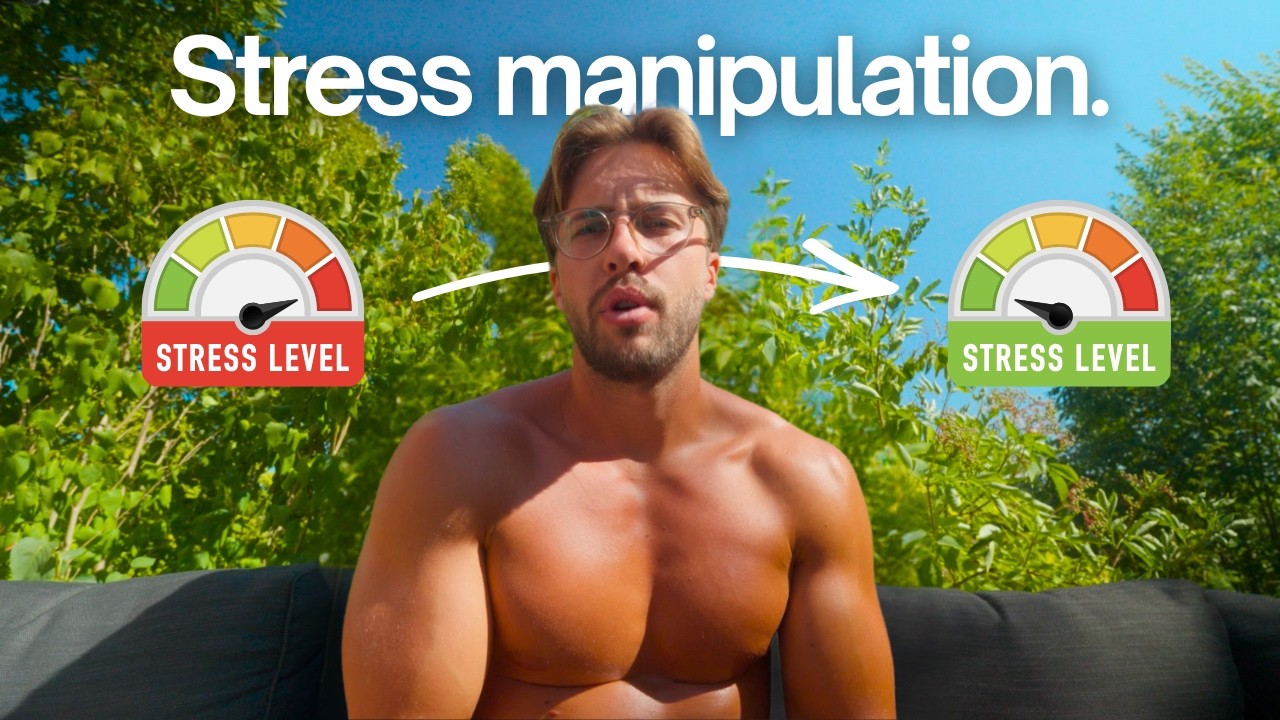
In this YouTube monologue, Lucas Wilhelm Hedenbäck shares how he transformed chronic stress, low energy, brain fog, and gut issues into a thriving 7‑figure business by leveraging purely psychological techniques. He explains that stress hormones are produced by "hormonal factories" (glands) under the direction of the brain, and that the brain’s perception of a situation dictates the hormonal response. By reframing mental narratives—such as viewing a flight as safe rather than threatening—one can dramatically reduce cortisol output, improve digestion, gut health, and overall energy. He links this process to neuroplasticity, arguing that the brain can be trained to generate beneficial hormonal profiles (e.g., higher testosterone, better gut function) through intentional self‑talk. A client case (Pierre) illustrates how a simple mindset shift restored normal bowel movements despite unchanged physical inputs. Lucas concludes with actionable steps: adopt positive self‑talk about stressors, request a deeper neuroplasticity call via Instagram, or engage in one‑to‑one coaching through a free assessment with his associate Anton. The video blends physiological explanation, personal anecdote, client testimony, and promotional calls to action.
Chapters
Because understanding this concept I'm about to break down for you is exactly what helped me fix my stress for good. And it's also what helped me go from looking like a blown-up balloon like this, struggling with my energy, struggling with brain fog, struggling with bloating after every single meal, and just having to force myself to push through the day, having to rely on caffeine, to now looking like this year-round, running a 7-figure business and actually enjoying my day-to-day life. And the funny thing with this is I'm actually, from an outside perspective, more stressed right now than I was back then. And what actually helped me understand and sort of fix and make sure that my stress levels came down is purely psychological. And what do I mean with that? Well, that's exactly what I'm gonna break down for you so that you can do the same and apply the same thing and hopefully get the same results. Okay, first of all, the thing we have to understand here is that stress and cortisol is, or the stress hormones, will keep your body in a switched-on state, which is where the problem starts and where the problem happens. Because now your digestion will get affected, your nervous system will get affected, every single internal process in your body will get affected by you being switched on all the time. And that is where the problem comes, because now you can't digest and absorb the food as well as you potentially could, which means that you won't have as much building blocks available to support recovery, to support hormones, to support energy, to support all these things, and you might even start to damage your gut, which will mean that, you know, you potentially get some gut permeability or a leaky gut, which means that some of these nutrients will also start to leak out to your bloodstream, and that will cause the brain fog and cause all these issues, right? But where does these stress hormones get produced then is the first question we should be asking ourselves. And that is in your, what I call hormonal factories, your glands, right? And those are where hormones are getting produced. What signals to the factories what they should be producing and should be working on is your brain, right? This is also how the thing goes. So your brain sends a signal to the factories, sends a sort of work Task or whatever, they send a signal or a question or whatever, you get the point. And then the factories are what then produces the hormones after that. So if we know that the brain, and then obviously you need the resources to be able to produce the hormones, which is sort of the nutrients and whatnot, you have those You have to have those available in your bloodstream as well in order to actually produce the hormones. But it's the brain that sends the signals, and then it's the DNA, and then it's the resources and building blocks that you have available in your bloodstream that is the sort of material that the factories use, and then they produce it. So when we know this, we also then know that once again, where did the signal come from? Well, it came from our brain. That means that your brain is the thing that will dictate what hormones you're producing and how much of something that you're producing. And with that being said, this sounds a lot more simple than it actually is, of course, but you can literally sort of gaslight yourself into being less stressed. Because— and I like to think of this example of Let's say the first time you went on an airplane, you know, the first time you went, you took a flight, you're probably a bit, if you remember, but you can just imagine, you know, you're a bit scared, you're a bit, you're doing something that you haven't done before, you know, what if we crash, what if anything happens, you know, am I gonna die, whatever. And what happens as a response of these things is obviously that your body is gonna produce stress hormones and cortisol based on that sort of that, that fear or that those sort of internal dialogues that you have with your, with your mind. Right. And then you compare that to if you've caught 100 flights right now, right now in your life, it's like whatever, right? You just, you jump on a flight. This is safe. It's safer than driving a car. As a response, you're not going to produce and not even close to as many stress responses. Right. Because that is how what you What your mind believes about the situation. And if we look at these 2 examples now again, what is the difference? Zero practical difference. It's exactly the same airplane, whatever. You're taking a flight from one destination to another. There's no difference at all except your brain and what you believe and think about the situation. But you get 2 completely different hormonal responses. based on what you actually believe about the situation. And this is where everything sort of clicked for me when I understood that my brain is what decides how much of specific things that I will actually start to produce. And when you understand this concept, you can absolutely make this and take it to your own or use it to your own advantage in every single area of your life because it's exactly the same thing with sort of with hormones and thyroid hormones and all these things. If I'm telling myself that I'm high testosterone That this workout made me put on so much muscles and this food will help me recover so much. This is exactly what I need right now. This food will go directly into my muscles. Your body will produce hormones accordingly. And this is a key that a lot of people don't understand and that a lot of people don't capitalize on. And it's called also neuroplasticity, right? It's very correlated. So your brain, it's exactly the same thing. Let's say you have gut issues and you have this sort of, or whatever it might be, you have gut issues and you think that, you think that your food is causing your— you're sensitive to different foods or different food causes different problems for you. And now you're facing a plate and maybe you're eating out and you're like, oh shit, what if there's seed oils in this? What if it's this and that, right? Your body will respond with stress signals and sort of Just fear signals because you're searching for this sort of negative and the danger, right? And as a byproduct, that meal will do a lot of damage to you because now you're in a stressed state, which means that your stomach acid is not where it needs to be and your bile flow is not where it needs to be, which means that you can't absorb the nutrients, which means that you can't break down the food enough, which means that that now is going to lead to unprocessed food going through your system, which can lead to To gut permeability, leaky gut, SIBO, SIFO, parasite overgrowth. All these things can come as a byproduct of you being stressed when you're eating. And that was also just to give an example, right? But hopefully you understand this concept. So once again, if I think about myself when I was working a corporate job, I was probably working a tenth, if we think effort and input, compared to what I'm doing right now. But I was also probably getting 10 times the stress response from a tenth of the work, which should never make sense, right? How can this make sense? And once again, it's purely mental. It's purely my brain. Because now I'm doing something that I truly enjoy and my mindset towards my work is completely different. Like, I enjoy it. I want to do it compared to having this sort of negative framing. towards the work, which is what I had back in the days. Knowing what I know now, obviously I would have framed that completely different. And I wish I could go back and tell old Lucas that, you know, we don't have to be this sort of— not negative towards the work, but you get what I mean. Because the only thing I'm doing is shooting myself in the foot and damaging myself when I could be the dictator. My brain could be the thing that dictates exactly what I or how I responded from some sort of a hormonal level and stress level to the situation. So the one takeaway I want you to have from this is literally what I told you, right? You're getting a stress response based on your brain's, or how you perceive the situation in front of you. So you can tell yourself that this is not a stressful situation and this is just whatever. And this is the thing with a lot of people. I have examples of clients that Pierre, as an example, he— I'll see if I can show something, but he did everything right from a sort of input perspective, and, you know, we started to fix his gut health, but then like his constipation came back, and we were looking at all the inputs, and it's like, we're doing everything right, but he just has a bit of a more hectic, stressed period in his work life right now. And we talked through this, and we talked through nervousness, And the thing that Pierre changed was like literally just his mindset towards the stressors he was facing. It was like finding himself in the stressors and just accepting it and, you know, telling himself that I'd rather be stressed like this than having no work to do at all, as an example, right? And as a byproduct, just a few days later, his bowel movements were back to absolutely normal, right? Same stress, same everything. The only thing that we changed was his mindset about the situation he's facing. And this is exactly what I want you to do as well. No matter what sort whatever problem you have or whatever, like you can decide how your body will respond from a hormonal perspective based on your mindset and your brain. And that is the crazy thing. And once again, with that said, you can also utilize this to massive advantage because now you can start to utilize this with other hormonal responses such as testosterone and all these sort of beneficial things and talking yourself into thinking that you're high testosterone and whatnot instead of— Thinking to yourself that I'm low energy, I have problems, I have brain fog. There goes Penny. Because if those are the stories that you're telling yourself, that will be exactly what's the response that your body will get. So how you talk to yourself is the key here, and this will absolutely change your life. I actually have a call that I went over with our clients where I go through this in depth. So what I'll do for you, if you watched this far, I have a call going through neuroplasticity in depth. Shoot me a message on Instagram, say, hey Lucas, can I get the neuroplasticity call? And I'll shoot it over for you as a little thank you. But yeah, it's a game changer. Your mind dictates absolutely everything. So go apply this, go think to yourself that, you know, the food you're eating is the best of the best, it's the most healing food. It's all these things. It's gonna change your life. And think about the airplane, you know, same, same situation. It's just how your brain perceives the situation will leave you with 2 different, completely different hormonal responses. So use that to your advantage. And if you're interested in working with me one-to-one to fix all your issues and have someone to just come in and practically tell you exactly what to do so you don't have to think yourself, like outsourcing the the decision-making process, just, hey Lucas, I wanna fix my things, I wanna fix my stress, I wanna fix my gut health, whatever it might be. You wanna fix your hormones, you wanna fix your sleep, whatever, right? Check the first link in the description. It's to have a, just a free first assessment call with my right-hand man Anton. We will map out your situation just to get an understanding for where you're at, what you're struggling with, and see if I can even help you, because the truth is that I can't help everyone. And just to be very clear, this is absolutely not for you if you just want a training and nutrition plan and whatnot. No, this is if you have some serious issues that you're— that you've been dealing with and you're a busy guy. You just want to have someone tell you exactly what to do and you'll do it to fix your shit. Right. Check the first link in the description and I'll see you in the next one. Penny's here to say bye-bye as well. Bye-bye, Penny. Send me a message if you want the video. Ciao. Ciao, bella.