How to Use Coffee for Peak Performance (The Right Way)
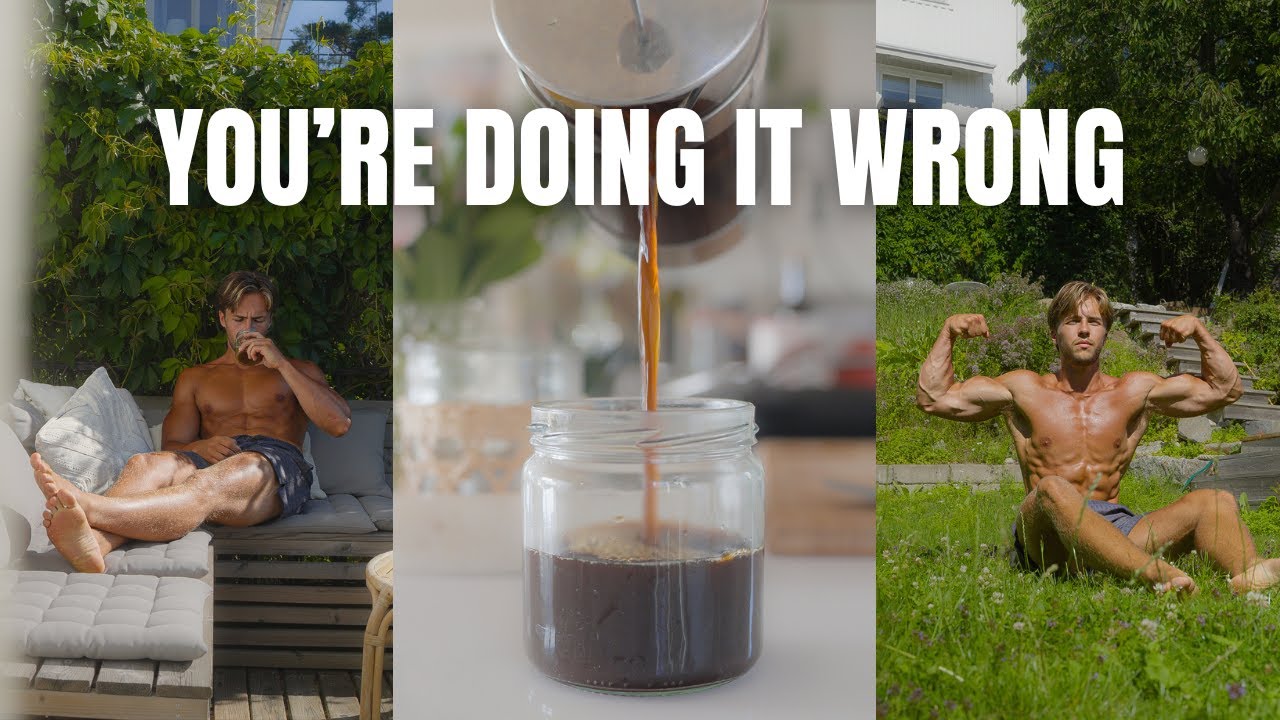
Lucas Wilhelm Hedenbäck breaks down how to brew coffee without microplastics or mold toxins, then add butter, honey, collagen, and electrolytes to buffer caffeine's stress response. Use a French press or moka pot with fresh organic beans, steep five minutes twice, and drink it fasted after hydrating first.
Chapters
Okay, so you pressed on this video because you, just like me, enjoy your coffee. It's one of the finest things in life, I'm not gonna lie. We have to understand one thing though: coffee can both be one of the best things for our productivity, for our energy levels, for our performance, and, and for our health, and one of the worst things. Coffee done wrong, like most people do, is gonna leave you with a toxic concoction of microplastics, heavy metals, and even mold. Slamming down 4 to 5 cups of that every single day is gonna completely mess up your health, and that's something that we don't want. So we have to do this correctly. In this video, I'm breaking down exactly how I do my superhuman coffee, how we should create a coffee and limit all the negatives that can come with it, as well as provide or still keep all of the positives, right? And this is a video from inside my program. This is something that I send to my clients. I can— it's funny, I had a client come in 2 days ago or something. He's been implementing this from day one. He sent me a voice note this morning. I'll probably pause and put it here or here or somewhere.
It's like noon, but I had that Superhuman coffee today for the first time and I've literally been so dialed. I literally, I just got so much work done. I was dialed. And yeah, now I'm eating. So yeah, I feel really good. I was focused. I was like so locked in. I haven't felt that good in a while. I don't know. I think it was the L-theanine. I don't know, but I'm gonna eat this, have my second one before noon.
So what I'm gonna want you to do as well is I'm gonna want you to not just click off this video. I'm gonna want you to implement this. Try this out. Then for a couple of days you try it out, you apply it, then you come back when you've seen the value, when you've seen the impact this small little thing has, just fixing your coffee. Then you come back and you book in a call and you apply for one-to-one coaching with me. But only then, only when you've seen the value and, um, yeah, from, from this simple coffee trick. Then you come back, then you book in a call.
Enjoy.
Cheers for coffee. If I'm being completely honest, I never thought I'd sit here and make a video explaining how to make a coffee a couple years ago. But hey, here we are. I guess what's a life without coffee? I was about to say no, but. Yeah, it's one of the finer things in life, in my opinion. If I'm being completely honest, I like coffee. Saying something else would be a complete lie. But is the coffee that we're drinking adding, amplifying our life, increasing our productivity, increasing our health, increasing our performance? Or is it fucking nuking our health, nuking our performance, and nuking our gains, and nuking our Life. That is the question that we have to ask ourselves. So today here, I'm going to show you exactly how I make my superhuman coffee and how I want you to make your coffee as well. So I do my coffee in a glass French press. It could be a French press. It could also be a stainless steel French press, or it could be like a. I think they're called mocha pot. I think. These are the these are our best options for for creating our coffee. Let's start with the step by step because people always argue that it's it gets it's terrible when you do it like this. So I'm going to explain exactly how to make the perfect coffee in a French press. We start with putting surprise surprise coffee in the French press. I do usually do four scoops a day. I don't want to do more than that, so that's what I kind of limit myself to four scoops. Boil water when the water is starting to boil. You pour it into the French press like this, and then it's going to look like this. Here now is when the brewing happens.
Cheers.
You gotta let it sit for around 5 minutes. The one thing that people always say to me, like, oh, or they always go for convenience. Convenience is our enemy now, right? That's why we're not gonna want to do the Nespresso capsules and everything. Like, this is literally our worst nightmare. We gotta have a bit of patience to make this good. It's not gonna be as quick as an espresso machine, but it's It's gonna be 100 times healthier for you. 5 minutes-ish is usually what I let it sit like this. After 5 minutes, what you should be doing is you should be starting to scrape the surface. And this is super important. This is super important because when you do this, you're gonna see that also the, the last bit of coffee is gonna start to drop down to, to the bottom and start to like continue to brew because there's like this layer of of coffee at the top. So, you scrape the surface, then you're going to get this foam at the top of the surface. What you want to do with that is you want to take that foam away. So, I just take the same spoon and I throw the foam that is on top here just in the sink. Why we want to do this is because, as you see here, in this foam, it's hidden Coffee, basically that doesn't drop down to the surface. If we don't scrape away this foam, this is what's going to cause this this thing like at at the bottom when it becomes all black and and nasty at the bottom. So for skipping this step, you're going to have a like a pretty un nice unsatisfying coffee. And this is where most people oh I don't like French press. It becomes all like. Shit in the bottom and whatnot. Yeah, that's because you're missing this step. So scrape all the all the foam off, just slightly take it off, throw it in the sink. Perfect. Then you gotta let it sit for a couple more minutes. So when it looks like this, I let it sit for maybe five more minutes. Why is because we want to let those last bits of coffee like brew and get down to the bottom. So it's it's like a ten minute. Thing. This, it's not convenient. Well, I guess that depends on what you compare to, right? But this is how to make it perfectly. Yeah, you could just throw in the water, let it sit, and just press down this thing, and then it's going to be done in a second. But you're not going to get a good coffee out of that, and you're never going to want to do a French press again. And after 5 more minutes, what you do is you press down the thingy, But just to the surface. I never press it down all the way. Super, super important as well to get make it make it good. So you leave it like this, like just underneath the surface. You leave the the pressing thing or the filter filter thing, and in the jar or in your cup, you obviously have the little superhuman portion. This is what I do. I'll put in the description of the video exactly what I do as well. Butter, raw honey, chelate, and now I don't have this in the picture, but sometimes collagen peptides as well. That's my superhuman coffee stack. Why we want to do this is usually I drink this like fasted in the morning. You never want to drink fasted coffee or coffee on an empty stomach. It's going to cause massive stress for your body. It's going to spike your cortisol, and it's not good. It's not good for our hormones. It's not good for nothing. So when we provide the building blocks with it, when we provide some nutrients with it, it smoothens out the, the hit, the stress hit on your body. It smoothens out the caffeine and it provides you with those nutrients that your body needs and craves in the morning to be healthy and to upregulate your hormones. So fats, some sugar, and some nutrients from the chelate is exactly what we want with the coffee. To make it good, to make it healthy, and to limit the negatives that comes with it. If you're drinking the coffee after you've had a meal, I don't think it's as important to add all of these things to it. We still want to approach it the same way and do a good coffee, but I'd still put a bit of raw honey and a bit of butter in it. I'd put a bit of chile in it, to be honest, but maybe not as much. You don't need as much because then you still have some some. Some building blocks in your system. But to simplify this and to explain is when we're drinking it fasted in the morning, because I like to wake up, I want to get my coffee in, and I want to work. I don't want to have a lot of food in my system when I do this. Then this is how we want to do it to limit the downside. What I always do as well, which I haven't— don't have a picture in here, is I always have— now in the winter, it's different in the summers than it's usually fruit, but Depending on where you're at, you can snack on a piece of fruit as well. So summers, it would probably be maybe a bit of watermelon, something in in the or by the side, or even you know some orange juice or or something along these lines, like superset superset coffee with the orange juice. But now in the winter, I snack on some raw roccis Parmigiano Reggiano. So I always before starting to drink the coffee as well, also just to smoothen out and to give my body some some raw. Building blocks, some nutrients in the morning. I just take like a bite or 2 of a parm cheese. That's what I do. Main thing we want to do here, once again, I've said it like 3 times now, we don't want to go completely fasted. We want to provide our body with some nutrients, some building blocks in the morning because that's when we've been going for a long time without them and that's when our hormones are the most active. That's when we want to upregulate that. And we want to provide the building blocks. We can view this as our shield to stress, our armor. If we skip this, you're not going to have any armor. You're going to be broken down. But if we have this, we have a good armor that is going to keep us protected. One more thing to note here: coffee is very dehydrating. So what I always do in the a.m.s. Besides my salt, that is a non-negotiable. I wake up, I obviously drink my plasma the first thing I do before any coffee. I wait, you know, to be honest, I don't wait 90 minutes. I've tried this. It's not affecting my life. I usually wait like maybe 30 to 45 minutes before drinking the coffee. I see no difference in energy levels, productivity, drop in whatever later on in the day. By not pushing it, you know, as everyone says, 90 minutes. But this is obviously going to be up to you. We're going to have to kind of experiment and see. For me, no problem. But plasma, coffee, then the second bottle I fill up with water, I always throw in some additional electrolytes with the salt. So Trace Mineral Drops and Electrolyte Concentrate here from Trace. Highly recommend. Why? Because we want to compensate from the dehydration that happens when we're drinking the coffee, right? So, oh, it's the same principle as with stress. If we, if we Stress hard, we got to recover hard. If we dehydrate hard, we got to hydrate harder, right? So that's kind of the philosophy that we always want to balance out this weight or whatever the— you get what I mean, this thing. If we do one thing harder in order so it doesn't look like this, we always want to— going to bring down or up the other one as well. So dehydrate hard, hydrate harder is the kind of the philosophy and name of the game we want to achieve here. So I add these to my water to compensate for the dehydration that happens and occurs with the coffee. Highly recommend. Obviously you've heard me like shit on electrolytes, I guess, but these are actually pretty decent and I've been trying out a bunch of ones and it's not just like the electrolytes. These are actually trace minerals. It's not just magnesium, sodium, magnesium, potassium, and sodium. It's more than that. So it gives you— it's like all trace minerals. This with the salt, spot on. Products. This is exactly what I'm using myself. So ideally you want to grind your own beans and get organic beans. Why we want to grind them ourselves is because if they're pre-grounded, it can cause— it can start to be moldy and it can be, yeah, It's not the ideal. In general, Sweden is pretty good. It's pretty regulated, and there's usually not that much problem. These are usually tested. So this is the one that I'm getting if I'm getting in from my store. Although if you're from Sweden, one of my clients actually is a coffee supplier. So shoot me a message and I'll send you Sebastian's products as well. They have really, really good coffee. And that's what I would recommend the most. But just an organic, ideally mold-free coffee is the best. The best is beans so you can grind them yourself. Second best is pre-grinded, organic, ideally mold-tested. Chilate, I do Sebastian's, which is also another of my clients. Best chilate in Sweden on the market. You can order this throughout the whole of Europe, I guess. If you're in US, Asia, or Australia will have to look for different options, but there's I have some some good, so just ask. As for collagen peptides, this is what I do: just vital proteins, unflavored collagen peptides, butter ideally raw, but this is the one that I usually get in the store here in Sweden if I don't have raw, which is just yeah good quality butter. And then we want to have raw. Honey or raw maple syrup. So ideally local, ideally raw. So this is kind of the setup. What we don't want to see is some bullshit shit honey like this, a bullshit Nespresso machine, or some bullshit brewer like this. The problem with this is that this is plastic, and you're also going to have this filter thing that is plastic and bleached. So when you make coffee in this, it's going to heat up water, it's going to run through all of this plastic, and then it's going to run through this bleach filter, And it's going to leave you with a coffee full of microplastics and BPAs and shit. No bueno. Then espresso, we shouldn't even talk about this. The pods are aluminum, the machine is plastic, and on top of that, you're not just getting plastic and heavy metals in your coffee with this, you're also getting mold. They use mold In order to create this foam at the top of the Nespresso shot. So capsuled coffee is literally the unhealthiest thing you can put in your body. Heavy metals, microplastics, and mold. Big no-no on this. This is what we want to see. This is what we want to do. Getting coffee from a good barista as well, where they have a proper good machine, is also the second best option to this, I guess. So if we're drinking coffee out, make sure we go to a place where they have not just a petrol station or whatever, where they have this plastic machine. We want to go to a good place where they have a proper Italian, expensive, good stainless steel machine. That's the second best thing there as well. The problem there is that with the cups, they always have a plastic lining. So if we're drinking coffee out every single day, we're also going to accumulate a lot of microplastics from that. So ideally, I don't see that. Ideally, this is what I see: French press or moka pot, something along these lines. Let me know if you have any questions about it, but this should be everything we need to know and how to make the best coffee of our lives and how to make coffee actually be something that benefits us, not and supports our health and supports our productivity, not fucks it up. Cheers.







