This Simple Framework Will Fix Your Stress for Good
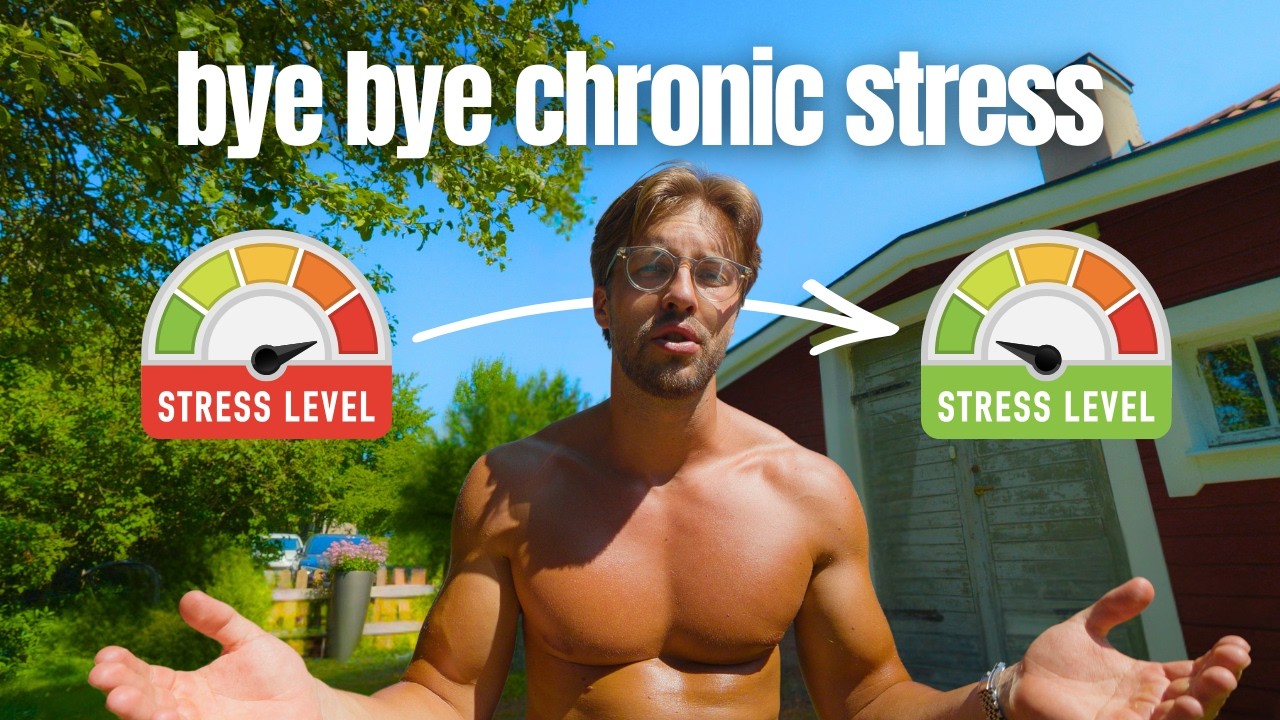
Lucas Wilhelm Hedenbäck explains how stress creates debt that must be repaid with recovery credits. Mental stressors need physical resets like training; physical ones need mental resets like meditation. Balancing stress and recovery this way improves energy, hormones, and sleep without changing diet or exercise.
Chapters
If you're getting bloated after you're eating, your energy levels is not really where they used to be, your libido is not really where it used to be, and the amount of work you're getting done every single day is not really where it used to be a couple years ago, then chances are chronic stress is one of the most important variables that is actively working against you right now. And how do I know this? Well, because this used to be me a couple years ago, working a corporate job, working at one of the biggest banks here in Sweden. And also trying to start my company at the same time. At the same time, I was training 5 to 6 days a week, dieting super hard in order to try to get lean and get in good shape, because this, this is the thing that everyone online said I was going to do— calorie deficit, train hard, more cardio, and you'll get into good shape. But little did I know, stress was one of the things that was working in the background for me. And at this point, I've worked with more than 100 entrepreneurs just like you and, and me to actually fix this and to And through doing that, I've developed a stupid simple framework that works every single time to fix your chronic stress for good. So in this video, I'm gonna break down exactly how that looks for you. And in order for you to understand this framework, I'm gonna use an analogy that I've brought with me from my banking days. And it's the concept of charts, right? So here we have a chart that is going straight up. In an investment scenario, this is a fantastic view. This is exactly what we wanna see, right? In health, this is not really a positive thing. And this chart represents your stress. So the average person wakes up, they don't really think about their stress, they're not managing it at all. They're drinking coffee, they're going to work, they're working without getting any resets in, then they're training, then they're doing cardio, then they're— Working out. Eating in a calorie deficit because they wanna get in shape. They're doing all these things that is just more stress, more stress, more stress, more stress. And what ends up happening is you create this chart that I just showed you, right? It goes straight up, and this is your stress levels. And this is what becomes problematic. How we should go about things is a wavy chart, which looks like this. If your stress chart looks wavy like this, we have fixed the whole thing. And once again, in investment, this is not what you wanna see, right? You wanna see the first one. In health, this is exactly what you wanna see. You can also think about this as the classic debt versus credits kind of plus and minus. So stress is debt, recovery is credits. If you create debt, it's not a massive issue. As long as you pay it back with credits. So this is how we have to think about stress and recovery. We create some debt through stressor, whether that's training, whether that's a hectic work call, whether it's a meeting with some investors, whatever it might be, right? And an argument with your spouse or whatever, a bunch of things that causes stress, right? If that goes unpaid, that is when it becomes problematic. So the framework and the analogy and how I want you to think about this is every time we do or get a stressor, create some debt, we have to load back up with credits. This is literally the secret because this is gonna mean that your nervous system never goes into complete overdrive. Because if you just tap into the stressor, go into sympathetic, but then you get yourself back to parasympathetic, it's all good. And then you repeat that cycle up. Down, up, down. Debt, credits, debt, credits, debt, credits. Unpaid debt, unpaid stress is what creates the problem. And second layer to this equation is that there's 2 forms of stresses— stressors as well. We have mental stressors and we have physical stressors. And how you pair your stress and recovery is very, very important as well. I like to think of this as a simple framework. If you have a physical stressor, you want a mental reset. If you have a mental stressor, you want a physical reset. What do I mean with that? Well, a physical stressor might be training, right? That's a physical stressor. I want to pair that with a mental reset, i.e., meditation, breathwork, grounding, doing something calm, right? Doing something calm and chill. On the flip side of things, if we have a mental stressor such as a hectic call, an argument, work in general, right? Sitting in front of the screens. This is a mental stressor, not really a physical. That is something we want to pair with a physical recovery such as going for a quick walk, going outside and playing around and bouncing around and Maybe whatever, you get the point. So this is how you need to go about it in your day-to-day, in today-to-day. Mental stressor, physical recover. Physical stressor, mental recover. And if you apply this framework, it will absolutely change your life because once again, stress is not the enemy, unpaid stress is the problem. Debt is not the enemy, unpaid debt is the problem. Is what creates a problem because you're gonna get interest and then you're gonna create this massive more and more debt and eventually it goes to the point where you can't even do anything about it, right? And then you run into the wall if we talk real life, right? That's when you literally burn out because you have so much debt that you can't pay off. That's how you completely fry your nervous system. So stress, recover, stress, recover. Wavy chart. That is how you should go about your day. So never, ever, ever Sit in front of the screen all day long without getting any resets in. This is the secret. Every time we have a sufficient or a big stressor, we need to pair it with recovery. If you apply this, it's going to absolutely change your life. Once again, this this exact framework is what I'm using with all clients, and it works every single time. This is not a I'm not sitting here selling you a L-theanine or a bullshit supplement that will fix your stress because that's not the case. If the foundation is not dialed, none of those surface-level things is gonna work. So if you fix this, apply this framework, your life is gonna change. Most people are gonna click off and they're gonna do completely nothing without or with this information. They're just gonna think of this as, oh, I was expecting a pill, right? I was expecting something easy. This is not easy. This is a framework that you have to apply into your own life. But if you do so, you will come back in a few weeks even, because it goes very quick. When you understand this, you will thank me because this is a game changer. So that is it. This is the framework: charts, debt, credit. Think of your stresses as this: unpaid, problematic. If you pay it off, you're fine, and your life will change. Your physique will change. If you do this, your energy is going to get better within weeks. Your physique is going to improve without you changing any training or changing any nutrition. Your hormones is going to get better. Your sleep is going to get better. everything in your life will get better. So do this. Don't be like all the times before where you just clicked off and not implemented the things that you see. Promise me. If you have any questions about it, let me know. If you want a written explanation of this, I have an SOP for this. Shoot me a message on Instagram. I'll send it over to you as well as a thank you for, for taking a look at this. Now, Go do some banking. Go do some financing with your stress. I'll see you in the next one.







