Financing Environmental Assets Onchain | Real-World Asset Summit
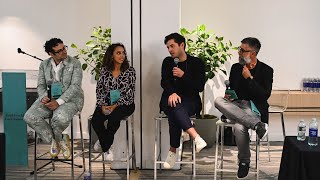
Maex Ament, Adam, Nicole Pesrice, and Phil Fogel discuss tokenizing environmental assets like solar and wind on blockchain. Plural Energy aims to compress loan origination from months to days. The voluntary carbon market could grow from $2 B today to $100 B.
Chapters
Okay, thanks. Yeah, hello, my name is Maex Ament, one of the co-founders of Centrifuge, and I think I'm moderating this panel because I'm investing right now in what's called refi, regenerative finance. I would have hoped that a few more people— hopefully that's not indicative how many people care about climate and environment, but it's okay, we'll make the best out of it. I just want to start here with everybody here in the panel, just a quick intro about yourself and about your project, obviously, and then keep a little bit of a focus on what real-world assets you're actually thinking about tokenizing. What's—
why are you here? Awesome. Hi everyone. Good to see so many familiar faces out there. I'm Adam, the founder of Plural Energy. And what we're building is an on-chain financial operating system for renewable energy assets. So what that means is batteries, solar fields, wind farms, energy efficiency projects can come to us to form capital.
Great. Hi, I'm Nicole Pesrice. I'm the head of climate and impact at Alma. Alma is a global debt platform that invests in sustainable development assets. So within those assets that we invest in that have social and environmental benefits, of course, a lot of environmental assets such as such as replanting trees, such as clean cooking, such as EVs. And we have capital from different types of institutional investors, family offices, and also DeFi capital as well. So we see on-chain capital as a great potential source of increasing our investments in this space, which we can go into.
Hi, I'm Phil Fogel. I'm one of the co-founders of Flow Carbon. Flow Carbon was founded to help scale the carbon markets using technology and specifically blockchain technology. One of the things that we were pioneering is the ability to tokenize existing carbon credits. And we've also been working on building out financial structures on-chain to help finance carbon projects.
I heard, I think at least from Nicole, but maybe from the others as well, the term sustainable finance. One of you, what do you mean with that? What is sustainable finance?
Yeah, for us, sustainable finance is any kind of project or company that has some kind of social or environmental benefit of its business. So for example, if we think about social outcomes, We finance a lot of fintechs and microfinance, trade finance, for example, in emerging markets. So access to finance for individuals or businesses like small businesses who couldn't really get it is the social outcome. When it comes to environmental assets, there we are investing in projects that have climate outcomes. So they're creating carbon credits. So they're generating improved environmental outcomes. Something like clean cooking is an environmental asset. It's reducing people's use of You know, there's like almost 3 billion people in the world that cook using firewood. And so there's a huge environmental degradation as well as human health impacts. So if we can finance the purchase of improved cooking stoves, then there's a great environmental benefit. So for us, sustainable finance or assets like that, EVs are a great example. Like, you know, we have lots of demand for EV finance, whether it's working capital for operators or, you know, expansion capital, like Just e-bikes alone, just forget cars, e-bikes is $150 billion total addressable market. So we don't have that level of assets yet in our portfolio, and we need more investors who are interested in this environmental asset class, which really just means regular assets that have environmental benefits and is where a lot of markets are going anyways, like EVs.
Okay.
And just on a sustainable finance or the impact one. What are the returns? I mean, are the returns comparable with what we hear on the other side of the room, on the other side of the hall, or—
Yeah, I'll say amongst our portfolio, which has different types of assets between the social and environmental, the environmental assets are the ones that have the higher return right now. Why? Because kind of like crypto, carbon is also a new market. Environmental assets are also a new market. Not a lot of people know how to finance. Not a lot of people know how to structure transactions in that space and how to de-risk them. Them. And so that means that the risk is higher. That means that the return potential is also going to be higher, right? So right now there are assets in this space that do have a higher return profile than a normal, maybe less risky asset. But at the same time, if you're an investor who doesn't want a super high risk profile, there are assets in there as well that are lower risk, that have hard collateral, that are not so dependent on markets that where the policy is being worked out. It could be a regulated market, for example, for an EV or, or for a carbon credit. So there's less risk. So for me, it's like there's something for everyone, really.
Yeah. And looking at carbon markets specifically in the tradfi world, when they look at the project finance around these, they often mark the carbon credits to zero because the history in the market and the size of the market is so small that it's hard for someone in a traditional finance role to actually say, okay, here's how I can project the price of what this is going to be. And if that's the only asset that— or the only cash flow stream that's coming out of the project, that project can't get financed. Whereas if you have a real understanding and deep understanding of how the market works and where the market's going, you actually can find really great returns.
And why on-chain? I mean, you hinted on it, but let's, let's go there since you started with the carbon markets. Let's, let's, let's stay with them.
Why?
Yeah. So the second piece of it is that a lot of these projects, the average project size is $3 to $5 million. And if you think about your traditional trad-fi project finance operation, they're not getting out of bed for less than $50 or $100 million. So the idea that there is these opportunities that are smaller that need financing lends itself to being done on-chain to begin with. That's one. Second, there's a massive— especially as you're pooling these assets, right, there's massive efficiencies to be gained in back-office operations by doing this on-chain and letting the smart contracts run all the cash flow payments and running the tracking and repricing of all the assets. And then lastly, there is an opportunity to just bring these assets and bring this market from scratch into a Web3 ecosystem so that you can build the core building blocks of this new capital market on-chain and then build out the derivative stack and all of the related products on top of that.
If I just can double-click on that or follow up on that one. Does this mean in, I don't know, in a few years from now, we bootstrap everything, we have the small facilities, then they come, like interest in the space comes big enough, money flows in, we don't need on-chain anymore. So TradFi takes over, we're fucked.
So TradFi is coming for the space, right? But it's taking them a long time to do it. And there's an opportunity now to actually build the infrastructure for this and the primitives on-chain. I mean, if so, everyone always talks about— it's my favorite example— is 2008 never would have happened if we just had blockchain at the time, right? Not really true. But everyone talks about securitizations as if you can build a good securitization on-chain, it can be auto-tracing, auto-tracking, and auto-executing all on-chain. But in order to make that happen in the mortgage market, you have to bring all of the underlying and the primitives on-chain as well. And that's a monumental task. The carbon markets are so new and so small and so lacking in infrastructure that the opportunity to build these primitives first in a Web3 context as a tokenized asset allows you to build out the securitization so that when tradfi does come, this is just what they're going to use.
I agree.
Yeah, I think— sorry. Yeah, so I think for us, on-chain is just core to the vision of what we're trying to build. Ultimately, I'm still working on this framework. So there's a work in progress. But I think there's essentially 3 broad types of real-world asset companies. There's the circle of, there's the instruments like financial instruments, and then there's the direct investment opportunities. And what we're building is in that third category, which is less about how can we just tokenize and drop these assets on-chain, but rather how can we use the primitives that have been so successful in DeFi to create a new financial operating system for renewable energy. So, our first product are security tokens of equity and renewable energy projects, but eventually, we'll be able to allow renewable energy projects to borrow against those tokens, post them as collateral, and have smart contracts automate the liquidation process. And the effect of this, you know, I believe that by the time we're operating with the debt market and the equity market together, that we will take what is a 6-month loan origination underwriting process for you know, putting a down payment down on solar panels and we can compress that into under a day because the collateral's on chain and they can access debt markets. That's the type of thing that you just can never do in a TradFi world. And that's one of the major inefficiencies of the industries that we're working in.
And I'm, uh, pulling, copying a little bit what Milton did in the main room before, um, where she, where she asked, uh, how long it will take, uh, until a meaningful portion of whatever the real world asset is that, or the asset is that we talk about is on chain. I mean, that's carbon and the solar equity. Is it a 5-year horizon until we are double-digit percentage of the space or what is it?
Well, one of the benefits of operating in big markets is there's a ton of selling opportunities. One of the challenges is that having a percentage market share takes a lot of work. So our service addressable market in the US is $160 billion worth of solar assets. I would say our pilot, we're targeting $100 million on-chain in the next 2 years. And then from there, we'll be going to $1 billion, which will be around these other financial instruments that support it. At that point, I think what the company starts looking like at that stage is how can we make it so that these tools are automated so the renewable energy company can just use what we're building to create security tokens, offer equity, access debt, and so forth. So I think to hit, you know, double-digit percentages of the renewable energy industry is going to take a long time. But I think having meaningful percentages of the RWA on-chain market will be pretty quick for us because of the size of the assets we're working with and the needs we're solving.
What about the carbon markets in that context? I mean, the voluntary ones, like it's— what is it, $2 billion right now? $3 billion?
I don't know.
Yeah, it depends on which study you look at, but it's $2 billion growing to $100 billion very quickly is sort of where the market size is going. And the opportunity to capture a small amount of that market share today, call it single-digit percentages, and that single-digit percentage actually leaning towards, you know, double digits very quickly as the market scales because the infrastructure is being built out to make it more scalable. I think it happens very quickly. And I think the other big tipping point is once these capitals that— remember, institutional capital doesn't get out of bed for less than $50 or $100 million, right? So until these deal sizes that are being done on-chain or the pools that are being financed are starting to get into the $100 million size, the institutional capital the big institutional capital, the pension funds, the endowments, the insurance companies, they're not going to come in until these things start to be really big. And then all of a sudden they're going to come in droves. And so it's— you're going to hit that tipping point and all of a sudden it's going to be great. We're here because it's just the way that things get financed. It's no longer a conversation about on-chain versus off-chain.
I think though, right now there's, there's no need to wait. You know, like for us, we're the largest borrower on the Goldfinch protocol. A third of our capital comes from DeFi money and we're putting it into these kinds of assets So it's not that everything is perfectly tokenized, but it is the fact that money that is on-chain can come into these types of projects and earn different kinds of return. And the, the track record of the payments is all available. And that's actually creating a lot of value for our borrowers because them as small businesses or them as growing projects in this space, which is a new space, they can actually point to this type of track record that they've earned, you know, from this connection with the on-chain community. So, you know, while the other pieces of the puzzle are being built, built out, there's nothing preventing us from continuing to make those connections between on-chain capital and off-chain environmental assets in the meantime.
Can you— I think I recall it's $50 million is the number that you put in several transactions into pools. Can you just share a little bit numbers details over the last few months?
On the assets that we have already? Yeah. Yeah. I mean, environmental assets, probably about $10 million in transactions. The rest would be in other sort of social and fintech, and in those, everything repaid. Oftentimes, our borrowers come back for more capital, so they'll take one loan and then oftentimes they'll need to scale up. They'll want more capital, so repeat borrowing or scale-up of their facility, which is very helpful for them. And so far, all assets repaid or still outstanding but on time. So, for the Goldfinch lender, whomever is participating in that pool, I don't know the people, but from their perspective, their yield has been very stable and it's interest payments coming in. The terms can be flexible also. If you're looking for something long-term, there's let's plant a forest. If you want something short-term, let's finance a cook stove. There's a lot of options in terms of depending on what the on-chain capital is looking for, for their yield and for their term.
Got you. Maybe a little bit self-serving, but I still care. So we had a fund, a pool about 6 or 9 months ago to get a flow carbon. I think one of the first ones for Carbon Forward. So how did it go? How was the experience? What worked? What was shit?
Yeah, I mean, it's an interesting question because Centrifuge wasn't necessarily built for purpose for investing in carbon projects. And it's been a great process learning together and improving together because I truly believe that the carbon markets will scale on the back of securitization. Right? The carbon markets have to look a lot like the mortgage markets in order to fill the multi-trillion-dollar funding gap that exists in climate, climate tech today and climate restoration today. And so, you know, thinking about initially Centrifuge was built for short-term lending, we looked at a forward contract as a kind of a short-term loan, but it's not exactly a short-term loan because it doesn't have a fixed interest rate. It doesn't— the price can fluctuate. You're taking on price risk of the underlying asset at the end of the day. And so the repricing that took place and looking at how you calculate senior sorry, Junior APY was not built for purpose. And so in sort of the new relaunch of Centrifuge on Polkadot, we've helped make improvements to make that a better use case and a better way to do this. But I think there's still a long way to go in looking at creating securitizations meant for illiquid assets that are— that can change in price and can change in value and are tied to an underlying. So that's part of the goal of all of this is how do we build this market together and get this to go forward? And we're pretty excited to now push this to the next, to our next launch and bring in our next pool, working together with Alma to actually bring in really good underwriting for carbon projects, really good pipeline of carbon projects, and to try and scale the amount of capital, you know, going from a few million dollars to $10 million to hundreds of millions of dollars with institutional capital inside of ongoing vehicles built on the platform.
From all the three of you, I mean, do you see institutional interest in those assets or is this a retail play?
Yeah. Well, so I don't know if there are any allocators in the room, but I'm sure that most institutional allocators would admit that their ESG investing is the worst investments in their portfolio financially, and that oftentimes it's, you know, scratching an itch of some kind. We can break the rules on that. We, we have the yield of direct investing in renewable assets, but the liquidity and the accessibility of ESG ETFs, green bonds, and so forth that currently have either negative or like 1% top yields. So we're getting a lot of interest on the institutional side in the sense that, oh wait, we can invest in ESG and not lose money. It's almost like a shock. And so that's where we're getting a lot of institutional interest. But at the same time, this— we've just always been of the belief that we're not going to be able to build a successful product or protocol or company if the only why buy is, you know, climate guilt. And so we focus a lot on yield and then climate guilt is the cherry on top rather than the driving the why buy factor. Same for you guys.
Yeah, I mean, I think there's depends on the specific type of asset class. So I think an asset class like carbon is very new for institutional investors and they might not have the authorization yet from their shareholders or investment committee to take bets on those types of assets. So that is one where we do a lot of education explaining to them. And because we are a debt lender, we're very focused on structuring transactions that focus on downside protection. So what, when we structure the transaction, we're focusing on if something goes wrong with the project, how do we get our money back? What is this? What is the collateral for this project? What is the security? And we don't just rely on the carbon market for that. We take other types of collateral so that we're protected. So there's ways I think, to de-risk sort of like scary new markets, to make them look more like traditional markets, to bring the institutional investor in. Now, if you're an institutional investor and you still don't have the mandate for something like carbon, that's okay. Why not talk about something like EVs? Why not talk about something like solar? Like, those are becoming very mainstream asset classes. I don't know what you're going to finance if you don't want to finance EVs in the future, because there's not going to be another option, right? So if you want to be in the energy space or whatever, so So I think that those ones might be a little bit easier as a first play because of the type of asset class to get in institutional investors. And then while you scale up and have a track record for the carbon ones that they can become more comfortable with.
At the end of the day, institutional investors tend to be pretty rational. And so not always, but they often tend to be pretty rational. And so at the end of the day, what you're really trying to do is to turn this asset class and across these asset classes into risk-adjusted returns that they can understand and want to invest in. And that's the biggest thing here. It's not— it can't be, as Adam said, it can't be about like, oh, I'm doing this to do good, right? There is concessional capital that that's meant for, and there's a place for that in the world. But that's not going to scale this. That has to date not been actually that effective in scaling climate finance. And so we need to get to a place where we're offering the right return with the right risk profile.
Okay, maybe a few more minutes, but any questions from the audience? Anything?
How many people here have environmental assets already? Have they invested in or thinking about it? Just curious. Anybody? What kind of environmental assets are you looking at? Any, anything in particular?
Wind and solar. Okay.
Yeah. Awesome.
Anything else? Not yet. Solar, but mainly for tax purposes.
Okay.
Yeah.
Talk to us. Yeah.
Okay.
My question goes to Adam. You said that you will have $100 million on chain, but you didn't mention which chain and how, because I know about FlowKarma and Centrifuge, but how is your— what's your product?
We're going to announce it in a couple of weeks where, which chain we're launching on. But we're talking to a lot of different ecosystems about where the institutional demand is, where the retail interest is. And then also, I mean, we didn't really talk about— this is probably the wrong panel for this part of our business, but regulatory support in an ecosystem is huge. So not every ecosystem has a robust network of broker-dealers, ATSs, KYC providers, transfer agents, and so forth. So we have a lot more factors to consider, but we're pretty close to making an announcement on where we'll be launching. Okay. Good question.
There's a question over there.
Hi, thanks. This is a question for Nicole. You mentioned electric vehicles. What exactly are they tokenizing for an EV company, or how does that work? Yeah, so on the backend, tokenization doesn't have to be done. So for us, we use blockchain in a couple of ways. One is the on-chain capital comes to us and then we redeploy it into the, the real world asset, I guess it's called at this conference. We redeploy it into the company. So we take it off-chain, give it to them, they need money, dollars, then we get it back, put it back on-chain. So that's kind of the flow. And then one thing we do in our portfolio, but we do it more on the lender side. So when we lend to a finance company, so they make loans and then the loans sit on their portfolio and that's our collateral. And so they make a loan to like a small business or a microfinance and then a microenterprise. And then we collateral, we tokenize the collateral so that we can track it as, as our collateral. So in theory, I mean, that's what could be done with carbon. That's what could be done with, um, even the EV itself. Like if we lend to an EV company, the collateral is going to be the EV. It's going to be the technology. So if you wanted to put that on the blockchain, you could. I mean, we don't right now, but it's possible, like it could be done if it was important to an on-chain investor to be able to see how many EVs were deployed and what year they were deployed and how many kilometers they had and where exactly they were in Mumbai. And, you know, you could have all that data because in fact the company is a digital platform and they know a lot of things about their asset. It's just that they don't necessarily use a blockchain for it. And so you're mostly dealing with like an SMB in that case. Doing something with EVs rather than like necessarily doing something with a larger auto manufacturer. Is that right? For this kind of capital, yeah, definitely. Okay.
Awesome.
Thanks.
Thanks. Hey guys, thanks for the panel. Good. I, it's Climate Week in New York, and I'm curious what if you were to go to a more traditional climate room like this and pose the question of how they're viewing the blockchain industry and its involvement in climate assets? Like, what is— are they like, what do you mean? Like, what's— how serious do they take this industry being involved in their industry? And, um, yeah.
Yeah. So there's an interesting history of that, um, that we've been a large part of, right? About 18 months, we basically made this— or between 2 years and 18 months ago, we started to make the entire voluntary carbon market pay attention to blockchain. And it was first done by bringing some assets on-chain without really asking permission and asking for forgiveness afterwards. And then working with them as they sort of said, hey, what is going on here? Why is this happening? How is this happening? And the first attempt at it was maybe not the best attempt. And then they woke up, paid attention to it. And we've been spending the last— we spent a ton of time over the last 2 years educating them and getting them up to speed where, you know, the standards bodies that issue carbon credits, every one of them talks about blockchain now on a daily basis. And the broader industry around climate finance, the number of green bonds that just get issued, small green bonds that will get issued on-chain, is increasing rapidly. There is one that was done a couple of weeks ago that was in the— I think it was in Sweden. And there was another one that was done in Hong Kong a little while before that. And so they're being done. And I think everyone is paying attention. I think across the entire TradFi universe, people are paying attention to blockchain and in the climate space, they're specifically really interested in how you can add traceability, transparency, and auditability to carbon credits in the entire value chain of carbon credits, not just the end trading of it.
I'm pretty excited for this question. So yeah, I agree with a lot of what Phil's saying, but we have like a very active example. So like I said, we're in that direct category. We are focused on helping renewable energies energy companies finance their projects. So last week we were in Vegas at the biggest renewable energy conference in the country. It's 30,000 people from the industry. And we did a little bit of like A/B testing within our team where when we would meet with asset allocators or asset owners of renewable projects on some pitches, we would say, you know, blockchain, smart contract enabled, DeFi even. And in others, we would say, you know, digital shares or a new financial operating system, be a little bit more vague. Ultimately, the feedback was no different in either case, that if we were actually solving a real problem for the industry, that's what they cared about. They didn't really care about how. So we had 100% success rate of adding our ICPs to our pipeline, mainly because we understood their problems and they trust us that we could solve them with our technology, whether it's crypto-forward or not. So I think there's in the industry, I think that there's in the industry being like the crypto industry, I think there's this assumption that like everyone out there hates us, which is definitely true if you ask my in-laws about my career. But I think what ends up happening is if you're living in the actual real industries that we're serving, you'll find that there's a ton of openness to blockchain-based solutions.
Yeah, I think that's true also because like there's so many use cases and different stakeholders, right? So this is a use case where the stakeholder really needed that without even knowing they needed it. But in carbon markets in general, there's other types of stakeholders like corporates who have their own agenda of why or why not they want information about what they did to be on a blockchain. Like maybe they don't want people to know what offsets they bought. Do you see what I'm saying? Or there's government, government is involved on policy. Does maybe that government want everybody to know what kind of credits they produce and what quality they were? I'm not saying they don't, I'm just saying we don't know for sure what they want. So going to them with these types of technologies which can do many amazing things, but again has to be adapted to the problem because their problem might not be our problem. So I think that's a little bit of the mismatch right now.
No, for sure. We saw that in the carbon markets, right? These are opaque markets with mile-wide spreads. And so you coming in and being like, we're going to have transparency and true price discovery and we're going to take spreads down. Some people were not really happy about that.
Last question. We're good. Okay, cool.
Yes. You mentioned the challenge with writing off carbon on the project finance and the challenges with institutions.
What do you think about the trend of corporates directly investing in decarbonization?
And I think, you know, short-circuiting the entire market altogether. Microsoft, Amazon, and direct air capture comes to mind, buying 10 years' worth of emissions reductions at once.
Yeah, so there's a couple different ways that this is going to work out. But at the end of the day, it's a great thing. If corporations are going and making those capital investments up front, it's driving capital to these projects and they're doing it because they're realizing that they're going to need the offsets in the future and they don't want to buy them on the open market. Right. And so it's— I think it's great all around. I also think that there's a real opportunity for companies to actually get involved in project finance around these projects that is not even being seen. Like, so the frontier companies, right, the Microsofts and the, you know, Metas of the world, they're doing it, but their footprint isn't that big. Right, in the scale of what needs to be decarbonized. They are the tip of the iceberg and they just need— and we need to get all of the hard-to-decarbonize businesses to start thinking about how they can decarbonize. And the name of the game is always decarbonize first, offset the remainder.
Yeah, sorry to piggyback. I want to just add something to that. We're working on a concept internally which working name only is Sustainable Sustainable Finance. And what the thesis there is that a lot of corporates today are essentially, you know, chasing climate guilt and burning up dollars to offset or to do whatever by renewable energy credits. And so our idea for sustainable, sustainable finance— working title— is that if they are investing directly in yield-generating assets on the principal, then the yield from that asset can be used to purchase the environmental attributes that they're interested in. So we're currently working on a financial product for corporates that will basically take, you know, $100,000 of principal invested in our yield-bearing assets, and then the 15-20% yield every year is to purchase RECs or carbon credits and so forth. So I think that in general, when it's like corporate offsetting, it's just also so early and there's so much opportunity to expand. And like the more composability and use cases you can have around that, the the more interesting it'll be.
And to be honest, like, even corporates who are buying offsets or making commitments towards them, it doesn't mean they're financing the project. Even if they issue a purchase agreement for a contract even for 10 years, it doesn't mean they're giving even $1 today. So the finance is still needed. And actually, for the operator, it is oftentimes more beneficial that they have the purchase agreement but not the finance. Why? From the buyer. Because then the buyer is going to put the price way down on the credits, and they're going to control the sale of them. Whereas if the trader says, okay, I'll sell partially, or I'll— our forward sale, but with, um, sort of like a waterfall that's like, if the credits sell for more, we share it. Or, you know, it gives them a lot more flexibility than locking in a price for the next 10 years. So that's why— that's where we come in. And if you have an agreement with a buyer, that's great, but the buyer is probably not giving you any money today, and we can give you that money off the back of the agreement that you have with the buyer. So it's really great if they come in, but on the finance side, I'm not sure if they're always going to be the right the right player.
Yeah, it's, it's, it's amazing how important the purchase agreements are for financing a renewable project.
It's just like renewable energy. Yeah, it's so important.
Like, if you don't have a 20-year purchase agreement, it's going to be really, really hard to build, you know, capital for your project. And so to me, it's just kind of interesting that that's like the most important thing. But it's also—
and it's also the most difficult to get.
Yeah.
And potentially detrimental to the project because the only way they can get the financing is if they get the purchase order. So they sell the credits at the lowest possible price and they don't have capital to plow back into expanding facilities.
But I mean, it's not dissimilar to energy where the PPA is not necessarily who's financing the project, right? The PPA is used by the financial institution to finance. So that's exactly how it should be done here. It should look similar. Yeah.
Yeah. See, I think— well, yeah, I think— yeah, no, I think it could be. I don't know enough about carbon, frankly, but I think that in general, the PPA market for renewables is definitely the long pole in the tent when it comes to project finance. And more and more corporates are getting involved, but it's also like a business model that's not going to make sense in long term as the overall cost of it— as more renewables come on the grid, the marginal price of energy comes closer and closer to zero. Like, why would anyone commit to a fixed price? And so I think there has to be another avenue for corporates to be involved in the space beyond these purchase agreements. And so we're hoping that, you know, if we can create things like, you know, renewable energy asset-backed stablecoins or actual, you know, investing directly in these assets themselves and build financial products, then they can start allocating their treasuries directly into these assets and not— and be able to move in and out of those positions as they need to, you know, expand their working capital.
Yeah, you have to talk to their CFOs in that case and not their ESG people because— Yeah, yeah.
I mean, like, that's our whole thing. Yield talks.
All right. Good. Thanks, panelists.
Thank you, guys.
More from Maex

#cnight 2017: Talk "Wirtschaft 4.0 – Deutschlands Innovationskraft und Wettbewerbsfähigkeit stärken“