They Built 2 Unicorns - Now They’re Backing Climate Startups
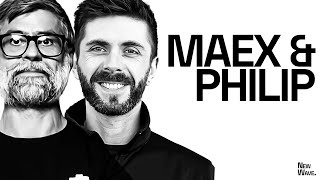
Maex Ament and Philipp Stelig built two European unicorns over 20 years and now run Earth, a climate fund betting on industrial supply chains. They back companies that are better, cheaper, or faster for customers and happen to cut emissions, not ones chasing green subsidies. Their edge: they launch products before markets exist and know how to survive the gap.
Chapters
There's not a lot of people in Europe that build a supply chain unicorn. So knowing a thing or two how supply chains work is certainly something that is powerful.
If you have an amazing founder and they had an exit already and now they're thinking about the next thing and then they do a delivery thing. Come on, you have so much skill and talent and you don't have to worry about money anymore. There's no excuse to put your talent into something that is not more meaningful.
I need to sell this company, and I do believe I want to be in venture capital. I want to use that money then to invest in the greatest entrepreneurs on this planet in climate. There's obviously the capitalist in me. I want to win as well. I want to make money. And I do believe the companies in this industrial stack, or call it climate, I don't care, those will be the next unicorns, decacorns.
Max, Philippe, thank you so much for coming on the podcast and thank you to Humphreys and The Drop for having us. So today I'd love to talk about a lot of different things, but Max, I think you wrote a memo about 10 years ago that kind of kicked off the climate investing idea for you. You guys have built two unicorns together, so there's also a lot to uncover there. I'd love to explore a bit of your relationship. How do we work together for 20+ years and build great companies? Climate dynamism as well, a term that you invented, I guess. Does that sound like a good agenda to you guys?
Sounds pretty perfect. Yeah, sounds like fun.
Let's kick it off in the early 2000s, I guess. You guys worked on the first company. That company became quite successful. You ended up building 4 additional companies later. What is the secret sauce of a great founder relationship?
I mean, the first thing I'd say, it's like a normal relationship, like your wife or your partner. You go through phases, and so did Philipp and myself as well at the beginning. So we had adjustments to make, but once you're through them, once you really sorted that out, it becomes pretty powerful to found a company again with the same business partner that then becomes your best friend as well, or was your best friend, depends on the situation. So I'm not sure there's a, it's like a marriage. I think at the beginning you got to work on your issues. You got to adjust a little bit. And once you're through them, it becomes pretty magical. That's at least how it worked for us.
Do you agree on that?
I agree on, it's been 20 years since we know each other and been working together. And I was just going through kind of the phases because the very first company, I was a very early employee at Max's company. I was straight out of high school. And then we moved to San Francisco pretty much at the same time, established the US business, became really good friends and founded and built. And I think what is now, what I see now different, if I would say what's important for a good founder relationship is that they go more, like as you said, more conscious on working on the relationship. Like it was kind of a byproduct of us working on it. And then at some point we had some coaches supporting us as a founder.
Marriage counselors.
Yeah.
Oh my God. That was, I mean, that on us, there were also other co-founders involved. There was a lot going on. I think what's really magical in this case, and also if I think about other founder relationships, if you are different, but not too different, if you can talk and be honest with each other, I mean, I think that is just something that became more, we became more truthful and more honest with each other over time. And Also, the founder relationship for us, or for me anyways, is I'm more interested that he's doing well rather than he's killing himself just to achieve something, something, something. And maybe that's not what investors might want to hear, but maybe also it is because if you have a strong co-founding team who really care also for each other, I think that is so important because you're going to be on a years and years long journey if it works out.
Yeah, I think one of the main reasons why startups fail early is just because the relationship doesn't work, right? So you have to make sure the other person is also in a good situation to deliver performance. And what do you think made you so successful? I mean, let's be honest, you guys don't have to be humble there. You've built two unicorns. This is quite unique, right? I don't see many other people that have the same track record. What is in, do you think, in maybe your relationship or your approach to building startups, what do you think helped you achieve two massive exits, right?
I mean, a few things I'll throw in. So we have that talent, I guess, that we always early. Some people say a little bit too early at times. So one of the startups that we did together was definitely too early. It was 2006. We built a QR code company called Snapper where, well, it was about QR codes. Problem was there was not a freaking iPhone that could actually read QR codes. So Stupid idea, way too early. But the other ideas, we were as well super early. We built 2009 a company called Caltalia, which is a fintech. The term didn't even exist back then.
Especially not enterprise fintech SaaS. Like just AWS was just becoming a thing. And enterprise was like, you're going to install this on-premise, right? I was like, nope.
Yeah, so really early cloud stuff, really early with the term fintech or just building something that combines technology with finance. And it took a while to get to success, right? And I think to answer your question, what is the secret here? Well, to be set up in a way that you know this is for the long term. It will take 5, 6, 7, 10, 12 years till you see success. The same with Centrifuge, a tokenization company, crypto company, although we're not talking here crazy meme coin crypto. It was just financial infrastructure. When we came up with the idea 2016 and then incorporated 2017, I mean, putting real-world assets on a blockchain, combining the two things was like crazy, you idiots. It took like 8 years. Now it's the biggest theme in crypto, is real-world assets, RWAs, and tokenization. And we were part of actually, we invented the term RWAs, real-world assets. Again, being early is probably a little bit of our superpower, like sensing something that, yeah, it's a few years away, but being one of the first ones that defines that market. And it's a little bit applicable as well to our investments right now through Earth.
I think that's something we will explore later. But maybe on the idea of being too early, how do you bridge the gap? Because when you're too early, there's a period of time which is difficult when no one believes in you. The idea is called crazy and people call you idiots. How do you also convince yourself that you're on the right track? Because I think it's the case for a lot of founders these days. They are building the next big climate tech companies, but no one understands them because first of all, it's super technical and scientific, but also because they are a bit too early in the market.
Raising a boatload of money and then being able to do it for 3 or 4 years. No, I'm kidding. Although that's probably a strategy as well. No, what is it? I mean, you've got to be honest to yourself. You see something, you believe in something, and If you have the stamina to get through the tough times, through the hard times, if it's a good idea, it mostly is just a matter of time. So for Talia, I knew this will work. For supply chain finance, dynamic discounting, we knew this will work. The time will come, it's just enterprise sales, it was a financial crisis 2008-9, but it will change. Absolute belief, the knowledge that this will happen helped us to survive for 2, 3 years until we then raised the Series A. And Centrifuge, a little bit the same. Yeah, there was not always a favor for crypto or for this real-world asset thing, but we knew that it's the right thing. So don't think it's— I don't have better wisdom here that I can share with someone that they have to stick to it, but that worked for us, I guess.
Yeah, and I think to add to this is You need, I mean, that's quite obvious in a sense, you need a sense of naivete and audacity and like you said, the stamina or like just keeping at it, pairing this with a lot of times where you're just like, what the fuck am I doing this? Like, this is crazy. And just keeping on going this, I think you need a good support system. And I mean, for you, like you have kids also. I remember actually when we started Taulia, the first daughter just came or was coming or like, it was, it was just crazy. Like Max has a super supportive home, home life as well that he could actually do this. So there's a whole ecosystem around that somehow supports as well. And in some sense you just have to go for it. This is something I know for myself. So I never, I never went to university and I just somehow figured stuff out. And I see that as a founder journey. Of course, there's a very highly sophisticated people like who have like a plan and da da da da, but I think Mike Tyson's quote, like, it's great to have a plan until you get punched in the face or something like this. I'm paraphrasing a little bit, but startup life is like that also, right? So somehow the naivete of just, okay, let's do this. Okay, let's figure this out. And I know this will work somehow. And then keeping at it for long enough.
And I think what helps as well, and that doesn't help again for a first-time founder, but whatever we did is like a, not trying to use the word pivot too much, I didn't— Yeah, exactly. I think a pivot originally comes from basketball where you keep one foot on the ground and just move one foot. And I think that's what we did as well in our— So we always kept some things from the previous startup as a learning and experience or a domain valid and then just moved with the other foot into the new one. So there was always some grounding where you knew the space or you knew the team or whatever it was from the 5 startups. And that helped a lot.
I think this is actually an important one, because if I look, or if we look at teams right now, the big question is, what's the right to play? Like, you're building this whatever biotech something, or this new materials for industrial processes, da da da. So, and why you, and why your founding team? And so we had the right to play in the areas where we played, and we also had a complete founding team. Like, where Maex Ament is also technical, And by like the very first jobs were then like a super go-to-market, like talking to people, getting people excited. I was building stuff and then our co-founders were supplementing. So we had a complete team, which is also super, super, super important.
And you hit it all the time, right? As a founder, you got to be obsessed with what you solve. And so one of our first companies, Taulia, it's a little bit hard to be obsessed about payments or payment terms. But as a matter of fact, Is it fucking possible? And I'm really obsessed about it and really passionate about it. So in 2008, when we started this company, it was again the financial crisis. And there were like little small medium businesses waiting like 60, 90, what do I know, 180 days for their money, just starving because nobody paid them. So I waited for my money from the big corporations. And the big corporations had billions on their balance sheet sitting around and it was a zero interest environment soon. So it was just unfair on so many levels. And that finding or that observation, this is unfair, we can do something about it, that drove us over 12 years. Like, we can solve this. And we did.
Yeah, for sure. I know two other people from Ireland that also did well being obsessed with payments as well. So, you know, you are not the only one, I guess. I guess if we transition into what you're doing today with Earth, Maybe one of the first things that is very interesting for me is you've lived through, I guess, the happiness and the hell of building startups, all of the ups and downs. Do you think that changes your approach to investing? Do you look at founders differently from people that have not had that operator experience?
First off, I don't know exactly how they look at them, so I don't know how we're different. Just anecdotally, I think I speak for myself, but I relate differently to them in the sense that I have been in that chair. And so if I look at founders, I don't want to say I have compassion, but I do have compassion also for the entrepreneurial journey. And one thing I really suss out very early on is why are they doing this? Why are they building this company? And why do they think they need venture money for this? Because there's so many ways how you can build a company and build an impactful company, whatever impactful means. It might be like nature impact, social impact, but financial impact or whatever. And venture is one specific track. And I really want to understand if they are— of course, the business model has to work for this and all of that, but then also if they as people are ready to do that because it comes with it comes with the drive that you're building this thing and either you're going to run against the wall at some end, like, or it's going to take off. But it's not a slow kind of let's figure this out kind of process. And it needs really the person to be all in and like being obsessed basically about what they're doing. And just, I think our colleagues, if they don't come in from entrepreneurial background, they also look for this. But my imagination is that because we lived through it, it's another way of really figuring that out.
And also because you've had both of the experiences as well. You've been bootstrapped and also you've gone through venture. So you really know what the difference is, right? And do you think that also changes your approach to a bit of the more technical terms in VC when we think about valuation, ownership, For example, if I'm thinking about ownership, you were probably quite cautious when you had investors in trying to minimize as much as possible their ownership so that you maximize yours, right? Which is a game that you obviously play as an entrepreneur. Do you somehow relate also to that when you're investing or now you're on the other side and you have to play your game as well?
So a little bit more on our backstory, right? So we were entrepreneurs, we had liquidity at some point, then we also started angel investing at some point. So we built a sizable angel portfolio over the years. So we have about 150 portfolio companies. We invested in around 25 funds as LPs. So we have kind of seen the whole spectrum. And to your question of how much we would push for ownership as angels with our own money, we can do whatever we want, right? From our angel funds there, we have a little bit more flexibility. Of course, building a VC fund, we have also a different mandate towards our LPs. So they're like, it's definitely tighter. And I would look at things even in a different way. And yet, I think we just recently did an investment where we actually sat the founder down as we're going through the process and saying, the round that you're raising, you're giving away too much equity. Like, consider actually taking a little bit less money because you will have a harder time as you go along to incentivize the non-existent co-founder yet, or they had, he had a complete team, but elevating somebody. So there's a lot to think about where we actually made mistakes early on in some of our companies as well. We actually gave away too much equity and we know the pain there. So I would add that additional piece to it.
Yeah, and it's not a completely selfless thing. I mean, we invest in a company and we need the founding team to be incentivized enough. And so it's a, it's a marathon. It will take years. There will be more rounds. So yes, we're— we have a promise to our, to our investors about ownership or strategy as well, but we're not pushing it to the maximum if it's at the expense for the founding team, the founder, the CEO. We need to compromise somewhere in the middle because otherwise it doesn't help me to have 99% of a company that goes out of business because the CEO it doesn't care anymore.
Yeah, that's for sure. I mean, 99% of zero is still zero.
Very much zero.
And to add to that as well, what Max said, it is in the interest of the company, of course, and the people, especially the founders, are so tightly linked to the company. So I also, when I'm telling people, hey, you should work with a coach, for example, as you're going through these different phases of your company, it's of course because I want to support the founder and because I really think she or he are amazing and they're going to be better, but also it serves the company and the outcome for us as investors. So They are super linked.
For sure. Well, if we talk a little bit, I guess, about climate investing. First of all, how do we go from being angel investors to building a fund? It's not the same game, right? Like, as you said, as an angel investor, you can do whatever you do. The worst-case scenario, you lose your money and that's your problem, right? Now you're playing with other people's money. When did the idea of starting a fund emerge for you guys? And also, why climate? I mean, you, you know, you have an experience in fintech and blockchain, right? SaaS businesses, B2B, and all of a sudden we go to climate. Where did that transition happen?
When we think about the space we invest in, I think more about we invest in different layers of the industrial stack. And that starts— part of the industrial stack is a payment layer. There's obviously the energy, the new materials layer. There's a supply chain layer, and there's even an operational excellence layer, if you want. And in fact, the companies that we build are in those layers, right? Taulia is a supply chain company, if you want. Yeah, there's a fintech angle, which makes it actually part of the payment stack as well. Centrifuge is a real-world asset tokenization layer. The first company we built was actually in the more, actually, manufacturing software. So these are all relevant experiences that actually help us to make informed decisions in this industrial stack. So this is, I think, important to point out. And then as an angel, again, why are we— why do we have the right to invest right now in that space? As angels, we invested quite a lot in energy production, energy flexibility, like investments like Renaissance Fusion and others quite successfully. They inform as well our, yeah, how we invest now in this industrial stack. So I don't think that there is a huge step between our past As a matter of fact, I think it's a natural progression and it's a super important ingredient what we did in the past. Besides the fact that obviously company building, like how to create companies, is a skill that is very transferable to our founders as well.
So yeah. I want to add to that is that the companies that we invest in, they mostly sell to enterprises. I think it's a B2B play. And that's also my conviction. I think that there's a new kind of a new generation of enterprise business being built today. Like we talk about AI and talk about automation and all of that. But also then with the new materials, with cheaper renewable energy becoming cheaper than traditional energy generation, with grids needing to be upgraded, et cetera, et cetera, et cetera. So there's a whole new wave. And you said climate investing. For me, that's an outcome of that. Really, the starting point for us is how can we leverage our experience selling to these large enterprises? I think so EBITDA was the first company at 1,000 enterprise customers, like really the largest of the largest.
The Apples, the Intels of the world, those were our customers.
So we know how these tick and we know how they procure and all of that. So that's something where we've been talking about the right to play, where we say, hey, if you're building in this space, With our background, I'm not a physicist, I'm not a chemist, I'm whatever, but we have this other background, this other piece of the puzzle, which is super important, and we're here to support you with that.
And is there maybe also a personal story aspect to investing in this type of companies that are trying to— let's maybe not call them climate, but I think it's trying to impact positively the planet for the better, or at least make the world more resilience to climate stresses and shocks. Is there maybe a personal story behind it? I know, Max, you have kids. I don't know, Philipp, if you do, but I'm 25. I'm scared of having kids because I don't know if the planet's going to look good in 25 years from now.
Yeah, for me, there's for sure a personal motivator. I'm going to say climate one more time at least. But when I talk to founders and other peers and investors and ask them about their story, so why do you work on this? Like, yeah, of course it's a great business, but why? And very often there is this, I call it the climate awakening point, where there is, maybe it is the kids, maybe they were really sick, or maybe they went and first time went to somewhere in India. Like there's all kinds of different stories how people all of a sudden realized, oh, it's not just about me and my little bubble, but there's a whole other thing, which is the planet. And there's for sure, like we made this decision at some point, we said, hey, we could do a crypto fund. We were 2016, '17, deep in crypto, coined the term decentralized finance, real-world assets. I don't want to do that. I don't want to spend time there. I want to build something that is really shaping the world in a quite physical sense to a better place. And I think one big lever is what we're investing in and who we work with. And as a very selfish thing, also, I like the people hanging out at the drop. Where we are right now, much better than at some random crypto conference talking about the next blah, blah, blah coin.
So there's some fun at Token2049, but I think in general, this is the nicer crowd, that's for sure.
Yeah.
And look, that might be a little bit awkward, but there's obviously the capitalist in me. I want to win as well. I want to make money. And I do believe the companies that we find in that space, in this industrial stack, or call it climate, I don't care. Those will be the next unicorns, decacorns. I see them, I see those founders. Obviously, there's an AI play as well for some. For others, we don't play there. Well, as a technology, we do, but not as investors. So yes, I have kids, and yes, I want to see this planet in a better shape when I leave it. But this is the place as well where those two things go together. I can make a lot of money here. For myself, for my LPs, for the founders I support, and upgrade to Blendon at the same time.
It's awesome. Yeah, it's sometimes, you know, maybe I'm too deep into the climate ecosystem to realize it, but sometimes I wonder why other people are doing what they do, because I'm like, this is the largest opportunity that you have in the world right now. Every single, like, it's basically the industry we've built from the 1850s through today needs to change entirely. And we're talking trillions of dollars of every single industry and everything needs to change. So the opportunity is just so big. I just wonder why sometimes some people don't play in that game and would rather do something else.
But I understand because people have also different education. Like when we talk about our backgrounds, it lends itself quite naturally. But there's also all the other stuff is needed also. If you talk about education, if you talk about health and so on, So I get it. I really get it. What I get really upset about, if I have an amazing founder and they had an exit already, or they had some success, or they were an early employee at some whatever, like an Airbnb or an Uber, and now they're thinking about the next thing, and then they do a delivery thing, or they do whatever. And I'm like, come on, you have so much skill and talent, and you don't have to subsistently worry about money anymore. Just like, there's no excuse to put your talent into something that is not more meaningful. And so that's the part where I get upset. Yeah.
If we go back to the story of Hearth, so that's an insight from Max, the other Max, Max Bray. I was talking to him yesterday and I was like, okay, what type of questions should I ask? And he was talking about a memo, which I couldn't find online, a memo that you wrote about 10 years ago, I think, that you probably remember. I'm curious, what was in it and why do you think that, you know, started and sparked something in you in terms of climate investing?
Interesting. So it's true. So it was 10, 8, 9 years ago, 2016. I did a sabbatical. It was one of my 12 midlife crises. So, and at the end of the summer of 2016, I had to get back to work, so I needed to fucking figure out what I do with my life. So I thought, okay, let's write it down. And I spare you all the details. Some of them are really embarrassing, but I think the last 2 bullets were, or the last 3 bullets were maybe important. So I decided at this point that I want to sell my company, which obviously you cannot just decide. You got to work on that, which started then. It was a longer journey to actually sell the company, but I made the decision there, okay, this needs to happen. I need to sell this company, Talia, the name. The second to last bullet was, and I do believe I want to be in venture capital. I want to use that money then to invest in the greatest entrepreneurs on this planet in climate.
I called it that way.
So like, it makes sense to me to do it in the climate space. It was 2016. Probably, I don't remember, in 2016 some shit happened again in television or some climate disaster, but something triggered me besides the normal desire to do something good. And the last bullet was, and I'm pretty proud of that one, because I wanted to support and find and support companies that put shit into the atmosphere to darken the sunlight. That was my, for whatever reason I thought, and I think I'm right, that we need a little bit more time to cool down the planet, to cool down the planet to get a little more time, excuse me. So I wrote that down and I'm pretty happy that now of the last 12 months at least, and in our angel investment much longer, we do exactly that. We find those entrepreneurs that get us out of this mess and upgrade the planet.
And is that part of the thesis? If we switch to the thesis at Earth, is that part of the thesis to invest in adaptation as much as mitigation scenarios as well?
It is, it is. So I'll start maybe with it. So again, if we think about industrials stack of a couple of layers. One of the layers is supply chain logistic, and part of that is resilience, uh, to actually get ready for the next, uh, 5, 10, 15 years. And what I just described, like finding ways of giving us more time to adapt, um, potentially cooling down the, the, the climate if we can, absolutely part of our thesis, yes.
Interesting.
Is that a contrarian opinion, you think? Is that too early?
And actually, I think it's still a little bit early, but people are coming around to that. Just judging by the amount of attendees at the ripples today, the small sessions that we had, Max held one on geoengineering, way less participants than on some other topics. I don't know what the other competing topics were. Maybe they were just really much cooler. I don't know. But I think it is a conversation also. Yeah, actually. It is early. Like we talked about, we talked with the folks from ARIA and the research grant that they have, I think was $60 million over 5 years that they're spending on geoengineering topics and how to model all of this and so on. $60 million over 5 years, it's nothing.
That's a drop in the bucket. I mean, definitely early. Look, and again, 2016 when maybe some thoughts happened around it, it was too, too, too early when we started thinking like investing in some of those companies a few years ago. And then accelerated more. Still too early. Now, I maybe scratched the word too. It's still, it's early, but not too early. I think we are right there where it makes sense to dive deeper, identify the companies that are worth investing.
For sure. And I think also, I mean, if we take a step back, I think we live in Europe where for now we don't feel the effect. So we do feel the effect, but it's not as bad as the Global South, where I think they are really struggling due to climate change. And as such, climate adaptation is necessary to keep the life of the people, as opposed to for us right now, it's a nice to have, good for the long term. For them, it's right now we need this because otherwise people are just dying, right, of climate change.
I hate that it is that way, but in the next 3-5 years, this will become a major topic. And even, I mean, we don't feel it in Europe. I forgot how many degrees it was, but this summer there was a heat dome over Italy, Greece, I think that was, and it was like 5 or 6 degrees hotter than, or 4 or 5 degrees, but something substantial for some time. Just extrapolate that a couple of years.
A few thousand people died more on heat in those regions. Doesn't sound a lot. Exactly. Well, every life matters. A few thousand is a lot. And it is just the beginning. So we get to other numbers very soon, unfortunately.
Yeah. And I mean, there's the adaptation, there's the mitigation, and there is also, of course, removal. And that is all part of the thesis in a way, as long as it touches, as like we say, the industrial stacks or enterprise kind of vertical in the broadest sense.
Do you play in the three layer of the stack?
Less in the carbon removal right now. We, as angels, we did, we experimented, we looked at it. Right now, more on the mitigation side of the, like decarbonization, electrification, materials, energy production, all that good stuff. And more in the adaptation geoengineering bucket. Yeah.
Maybe there are some, I'm just going through some things that I've seen in the last months. Maybe there are some carbon negative materials that are going into some manufacturing processes. Which also would be carbon removal in that sense, but less so like direct air capture or nature-based solutions for removing carbon out of the air. That wouldn't be part of the fund.
Which is still needed, but I do understand reasons for it. If we talk about the term you invented, which is climate dynamism, what does that mean?
I mean, we shamelessly stole it obviously from Andreessen Horowitz from a16z's American dynamism. And we just put a little bit less eagles and yoo-ha. I stole that line from Max, from Max Bray. What does it mean? Look, for us, it means we invest in companies, or we're looking for companies that are planet positive, that build things in the climate space, but they're not putting the green premium, the carbon capture, they're doing good for the planet first. Because I think that's a mistake. I think what the world wants, consumers, corporates, enterprises, is something that, hate or love it, it's just the reality, that's better, that's cheaper, that's faster, that's safer, that's onshore, and happens to be better for the environment. Because all the shit I just mentioned pretty much implicitly is better for the environment. So let's just turn it around, like have those capabilities first and invest in something that automatically is better for the environment. I think that is the essence of climate dynamism, not relying on green premiums, not relying on subsidies. Yeah, don't get me wrong, we take a fucking subsidy. Yeah, I mean, in a startup to accelerate the growth. But if the business model is clear that it only will work with subsidies for the next 150 years, that's not a company for us.
Anything to say on climate dynamism?
You can see it has been transmitted.
No, for sure. And I think it's very interesting because History has told us, I guess, through the first wave of cleantech startups that you need to stand on your two feet because if you just rely on green premium, you basically at some point either face customers that just say it's too expensive, we're not going to buy it. And if you don't have customers, right, like you're not going to rely on equity money or subsidies or regulation to help you.
I have actually something I want to add is because I was in a conversation this morning about dual use, right? So something that you can use for normal business and for defense or whatever. And it was an interesting point that somebody brought up. If it works only in war times and then war is over and your business is over, that sucks. Like then you don't have a business. But if it's actually something that can be a viable business even beyond war times, and I'm not promoting war or like putting a lot of money in that, but it was an interesting analogy also when we talk about this. Same here. If it only works on green premiums and then You have a new government voted into the US and they cut everything and then you're screwed.
I wonder when that happens. Oh wait.
Yeah.
And we're not far. It is a reality now. You don't have to look for businesses that just survive on green premiums and subsidies. Solar is better, cheaper. Electric cars are just more fun. And there's a million things that are just better. And you've got to find them. Invest in those.
For sure, that makes sense. And I think to your point on dual use, I think that there are quite a few examples and the one that comes to mind is GPS, right? That used to be for the army only and then became one of the greatest technologies to move people around. So I think that also might apply to the climate topic. So you really spend a lot of time looking at the commercial viability of those technologies. Um, you guys are not scientists yourselves. Um, how do you look at that?
I mean, obviously when we assess a deal, we gotta understand, like, let's, let's make something up. We look at a fusion deal, we gotta bring experts in that know a thing or two about fusion. Some physicists, maybe some founders that we know in the fusion space. We do know a few, uh, that help us assess that deal. Well, first of all, they help us finding those deals as well, uh, or be found, uh, but then as well helping assess those deals. What those founders not need once we decide to invest, and again, I stick with fusion, they don't need our freaking fusion knowledge because that's in their brain. That's the team that they built. What they need from us, and that's why they come to us and why they want to work with us, is, okay, how do we make this a company? How do we hire? How do we fire? How do we build a board? How do we raise more money? How do we sell this to other utility companies? Whatever it is, that's where we shine. It's not the fusion knowledge that they come for us. We augment that in the due diligence process with our experts. But on the ongoing relationship, and that's what matters, it's our company building experience.
That's what matters. And also just to really be clear how we position ourselves is that as angels, over the years, as angels, people brought us exactly for this on board. They don't care too much about a small, whatever, €50,000 check or €100,000. Maybe they do care, but what they really care about is what Maex just mentioned. And also as we position ourselves as a fund, it is that we're not going to go in and lead a fusion deal to stick with this example, or, you know, or like a hardcore material science deal. We want to understand, of course, what is— and we bring people in the diligence process, but there is always a co-investor who covers that part and we bring in the other part. So we have all the things covered that the founder might need on the journey. Well, we hope it is.
And very often, let's again stick to the, to the fusion example. Very often then the experienced fusion investor, pick one of your favorite tier 1, they bring us in as a follower because, well, they cover fusion, they know fusion, they can help the founders on that if the founder still needs that expertise. But again, we check that other box, that company building box, that founder to founder, that like we built 2 unicorns, how can we help you get this baby there?
Yeah. And also you could argue that if someone needs help with the technology, they're probably not playing in the right market or the right technology, right? Like you would be a bit worried that if they ask you thousands of questions on how do we build a fusion reactor, right?
I mean, it's still helpful to have one of the investors that knows that space for networking, for connections, for whatever, to find the scientists that fit. So yes, but you're absolutely right. The founding team should know a thing or two about what they do.
That's helpful. I heard this cool quote. I don't know. I actually don't. I heard it from another angel investor about another angel investor, but about how he assesses part of his assessment of investments is that he was an operator before as well. And he said, if I'm meeting a founding team, I'm checking myself and asking if I would compete with them, if I would build the same company, would I be shit scared basically? Or not. I mean, if I wouldn't be super scared of this team competing in my same turf, I wouldn't invest because they need to have a lot of the things covered and then like we come and supplement, but they need to know their stuff. That's key.
And to go back to the point you said on like people come to you for specific support, I guess, have you observed that, you know, if I'm a founder, I would want to look up to the rock star in the game that are the famous guys that build great startups. That's the guy I want to have on the cap table. Do you feel that in founders? Because you're the same somehow, you have the same background. Do you feel like founders are coming to you first?
We speak founder. So there's this saying, and I didn't invent it, but we speak the language. Yes, so founders come to us. Sometimes they come to us first. That's true. So because What do I know? An angel recommends them, or they come from our network. We hired thousands of people over the years, so many of them become entrepreneurs, or they come to us first, and then we help them figuring out what's the right strategy, and we bring in lead investors or other investors. And other VCs, as I said before, bring us in. So yeah, they come to us very often because we do understand them, speak their language. They want someone on the cap table, sometimes in the board, definitely as an advisor that had been through that stuff. And not just a VC that says, why are you not selling more? Like, the two—
or faster, sell faster.
Maybe the solution is to sell faster. Yeah, no shit.
Like, why does it take 9 months for an enterprise deal? Exactly. But I think there's one thing about speaking founder is like, as we're coming in, but then also the ongoing relationship. And I mean, you're even better or more sought after, but people write us, you know, well, just take a compliment. But really, they write us on the weekend or Friday or whatever and say, hey, I have this thing, this presentation on Monday, like, could you get your feedback on that? Because they know we've been through that. And I just want to add is that for some part, we actually did something we called copiloting. So we copiloted with some founders and just also that was, they really loved to have us on board and they're building amazing companies now and they're really off to the races. It is a different type of relationship that we have. And actually in this case, I like that we're not like the lead fund, the main da-da-da, but we're coming in and— It's true. It's true.
Yeah.
And there's plenty of examples. I'm pretty proud that they called us in really extreme situations. I mean, we love if they call us about unicorn exit, great. But the reality is there's like 100 shit shows before that call happens, and they call us. They call us on the weekend. They call us on a Friday night whenever, when shit hits the fan, and that makes me happy and proud. And yeah, we can help them.
Of course. And if we think about the construction of the fund right now, is that something you want to see as part of the team as well? Is that a DNA of, you know, because funds need to be different from one to another. I was speaking to an LP this morning. If you come and say, we want to do climate, generalist, agnostic, seed and series A in Europe right now, and you're a first-time fund manager, they're like, well, basically we have that 10 times in the portfolio already. What is, do you think is different about you? How would you sell it to me?
I mean, sorry, I'm a broken record and it's boring, but get those unicorn founders on your cap table and that's us. So there is, There's others as well. I'm not pretending to be the only one, Philipp and myself, but I think this is a huge ingredient to get those two brains that, well, built companies, exited companies, and I think it helps as well that the three of us actually, Maex as well, that we invest in almost 200 companies, that is a knowledge, and supported them on their journey as advisors. That's an ingredient as well that we bring to the table. So it's this unicorn founder, combined with the experience as really supportive investors, that's a skill set that many have, but the combo makes it.
Of course. They also talk about track record, which I think in your case is quite obvious.
Yeah.
I think there's not a lot of people in Europe that build a supply chain unicorn. So knowing a thing or two how supply chains work, the physical one as well as the financial one in the other direction, is certainly something that is powerful. That founders in the supply chain space, as one example, where we build a company value. Yes.
For sure.
Yeah, and also I thought about the Angel investment portfolio as well, right? Like you probably have a significant amount of data in terms of we've invested in companies that were successful. I mean, you've been investing since 2015, is that correct? A bit earlier than that?
'16, yeah.
'16? So you probably have already a few exits, some great returns. That you can show and say, hey guys, like we actually have data to back up that we actually are good investors, right?
Yeah, I know we have, I don't think I can share the details on the podcast, but we do have, we grouped our angel investments into vintages and they look pretty good. The 2016-17 starting vintage and the '22, they look better than most funds. So yeah, I'm pretty happy about that.
Do you think that also comes from the fact that, I thought about that yesterday, the job of an angel is also, maybe easier because you have less constraints. You can also take more risk and maybe get more returns. Do you think the fact that the angel portfolio is probably performing over most of the climate VC funds comes from the fact that it was indeed an angel portfolio as opposed to a fund?
I wouldn't say we would take more risks in that sense, like that's what I would take from a fund, because it's still a pre-seed fund. So it will be the same type of stage of investments?
No, I don't have a good answer. I think, uh, I think it's very similar from a, from a selection perspective. I mean, even we did a lot of investments, but we were diligent as well how we selected them and how we support those founders. So there's not a huge difference. There's a difference always in building the fund. Like, there's LPs, right? You got to raise the fund first. Uh, that, uh, that, uh, that part we didn't have to do as angels.
That's, I think, yeah. So in that sense, it's more flexibility, I would say. But other than that, I don't, I don't see in terms of the rewards, of course, like we want to see the same or better rewards as we continue hopefully getting better.
I mean, there are some limitations, right? The fund will invest in industrial stack. As angels, okay, there's a company that a friend found, created in, I'm making shit up here. EdTech. Yeah, we could invest in that one as angels, which I did and failed, by the way, which was a stupid idea. But as a fund, obviously we wouldn't do that because we have a mandate to invest in industrial stack. So that, I don't know if that makes a better Moik or a worse Moik, but it makes it very different.
I guess the only thing if I think about our kind of path as angels is that we made investments early on I would never do again. That just, it was so like really an expensive learning curve. So that is, I would say, is different. If I would have had the responsibility to somebody else's money back then, maybe it would have been different. I don't know. But there was a lot of, in Germany you say Lehrgeld, so like learning tuition.
We paid tuition almost.
Yeah, we paid our tuition into what we were doing.
Sometimes we made investments as well where we knew this will never be more than a $50, $100 million outcome purposely. We still like the company. We still would make some money. We still like the founder. We like the space. We learn something. It's great as an angel, fine. As a fund, no. Every single one needs to be a returner. So there is very different selection criteria to be, to correct myself from what I said before on that part, obviously.
I guess one last question for you. So where can we find you guys online? If I'm an entrepreneur, I want to get a check from you. If I'm an LP, I want to give you a check. What's the best way to reach out?
So you can find us, of course, on LinkedIn, Maex Ament and Philipp Stelig.
I'm spelled the wrong way, Maex Ament, so you find me super easily.
But maybe you can just put the links also in the show notes. You can find us also currently under earth.now, but spoiler alert, we're going through a rebranding. So very soon you'll find us also under another URL. And that has a variety of reasons, but I'm actually quite excited about the new name because it has been quite a process. But earth.now will also forward to there and all of All of the other things will forward.
Well, one last thing is listeners, if you like this episode and if you like the show, don't forget to like, comment, and subscribe if you're on YouTube or to give us a follow and a 5-star review on Apple Podcasts and Spotify. This really helps the show and getting super cool founders and investors on the show. So thank you for all those that do it. And thank you guys for taking the time.
Thank you.
Thank you.
Thank you guys.
More from Maex
#cnight 2017: Talk "Wirtschaft 4.0 – Deutschlands Innovationskraft und Wettbewerbsfähigkeit stärken“