In this first episode of a four‑part CEO interview series, Susie West talks with Maex Ament, co‑founder and Chief Product Officer of Taulia, about the evolution of accounts‑payable automation, the birth of e‑invoicing, and how those technologies set the stage for dynamic discounting and supply‑chain finance. Maex recounts his early work at SAP and the founding of Avidos, which combined OCR and e‑invoicing to bring invoices into ERP systems. He explains that while these solutions sped up invoice approval, companies still paid on the original due dates, leaving untapped cash on the balance sheet. This insight led to Taulia’s founding in 2009: a platform that connects cash‑rich buyers with suppliers needing early payment, offering cheaper financing than traditional factoring. The discussion then moves to the 2008 credit crisis, which highlighted the need for supplier finance and accelerated market adoption. Maex outlines the key drivers for both dynamic discounting (buyers deploying idle cash for higher returns, suppliers gaining low‑cost liquidity) and traditional supply‑chain finance (working‑capital optimisation for buyers, cheaper bank‑backed funding for suppliers). He provides concrete financial metrics – roughly $1 million of additional discounts per $1 billion of spend for buyers, and a reduction of supplier financing costs from 30‑40% APR (factoring) to around 10% via Taulia’s solutions. The interview closes with a preview of part 2, which will explore future trends.
Chapters
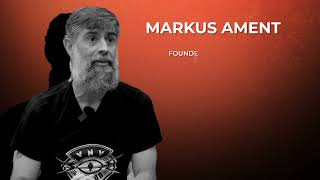
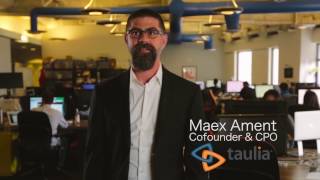
Hello, ladies and gentlemen, and a very warm welcome to our CEO interview program. My name is Susie West, and today I'm interviewing Maex Ament, who is the co-founder and chief product officer at Taulia. Maex was very much involved in working with SAP in the 1990s, and developments there compelled him and a few others to set up a company that many of us will be familiar with, Ebbidos, which it ran as a very successful organization in its own right, and then was acquired by Reedsoft in 2006. But that wasn't enough for Maex Ament, and he went on to co-found with 3 others Taulia, which was set up in 2009. It's a company that's going from strength to strength, and they have, and can boast as clients, companies such as John Deere, Hallmark, Coca-Cola, Pacific Gas and Electric, and Bell Canada. I'm very pleased that we have Maex with us today talking about e-invoicing, dynamic discounting, supply chain financing, and how these three themes are really impacting the corporate world and really having an impact on business process today. So welcome, Maex.
Thank you, Susie.
So let's kick off with part one of a four-part series. Let's have a look at the history and current activity as far as the invoice world is concerned. How do you read developments in the invoice market over the past 10 years and up until what's happening now?
So, if I go back 10, 15 years, when I came out of SAP, this is my personal opinion here, but when I came out of SAP and we founded Avidos, it was all about making a manual process of just keying in invoices into ERP systems making this manual problem of getting invoices in a little bit more automated. And this is when first solutions popped up, like OCR, taking an existing process, the paper invoicing, and making it electronic, doing the data capture and bringing that stuff into the ERP backend. This was pretty much the same time when the first e-invoicing solutions appeared as well. It was still very manual. So what we then did, and what we realized is, so you had that OCR that sometimes worked, sometimes didn't. You had e-invoicing in its infancy, obviously. But the fact that we realized there that actually it didn't stop at the capturing of the invoices, you had to get those invoices actually into the ERP and get them approved, get them posted, get them eventually paid. And this was then, I think, the beginning of the 2000s, the birth and the idea for many companies like Avidos that started popping up, where we combined e-invoicing and OCR and then brought those invoices into the ERP backends. In the case of Avidos, it was SAP that we focused on. And yeah, we were quite successful until we sold to Reedsoft in 2006. There was one eye-opening moment I want to mention. It was, I'm not sure, probably 2002, 2003 when I actually met the first time OB10. It was eye-opening because to that point actually like 99% was still paper and everything was some EDI obviously, but let's forget about that. And that was actually a neat concept and immediately me and my team, we realized the benefits of getting rid of the paper in the first place, right? Still, even with OPDAN and with other e-invoicing solutions, still the problem persisted of getting those invoices approved in a timely manner. So yeah, that's what we saw in the mid-2000s, I guess, in the AP automation space.
So if you can probably talk a little bit about how that potted history compelled you and 3 of your colleagues, the other 3 co-founders, to set up Talya. What was the main intent there?
Sure. So I mean, with all those solutions that I just mentioned, again, OCR, workflow, invoicing, all that together, what that did was there was operational benefits, right? You could reassign people, there were less storage costs, all great stuff. But there was one little side effect, I want to call it, was that with all those great solutions, invoices got approved faster. It didn't take 20, 30, 40 days to push paper around in an organization. It took 5 days. It took 7 days. It took 3 days to approve invoices and get them ready to be paid. So that was great. So in 2005, '06, we realized that this is an awesome thing. Invoices can be paid now earlier. But let's face it, no company actually paid those invoices earlier. So it was a net 60 invoice, a net 30 invoice, ready for payment on day 5 after receipt. But companies, their ERP system, their treasury, their cash management, their CFO, They waited to pay those invoices. Why would you pay a supplier early? We're all not paying our credit card early. We pay the credit card at the date that's on the credit card statement. So the same for invoices. They are paid on the day when they are due. And this was a little bit of an eye-opener for us again, where we realized that, well, I guess there is something here. We actually made it possible to pay suppliers early. Suppliers need the money, but nobody does it. That was the founding idea for Taulia, actually. To connect those two parties, the ones with cash that hold on to their cash and do nothing with it, connect them actually to the suppliers that would love to be paid early, love to get the cash early, and pay horrendous amounts for credit card borrowing, for factoring, if they even get to factoring. So yeah, that was the idea here, to basically take that to the next level. Take the AP automation initiatives that have been around for 5, 6, 7 years, take them to the next level, and actually harvest for buyers and suppliers. Those achievements.
So the timing of this is obviously very pertinent, Max, because it's sounding like the creation of Talia as a concept came at a time when other activities were almost essential to occur beforehand, before Talia could come into play. So it sounds like from what you're saying there that people needed to kind of tidy up their invoicing process, be able to pay day 5, and and therefore process an invoice by, say, day 5, rather than take a couple of weeks to process an invoice. And therein we welcome the concept of Taulia. Another question, or a question, around timing, because the timing of the founding of the company obviously kind of clashed pretty much with when the world was going into the beginnings of global recession and the credit crisis hit. Obviously customers' relationship with cash around that time started to change. Can you talk to us a little bit about that piece, please?
Absolutely. The first time we actually thought about the concept of dynamic discounting, of supplier finance, to get a little bit broader, was already right when EBITDAS got acquired by Reedsoft, about 2006, 2007. We strategized as well within Reedsoft if this is a concept that we should pursue. By the way, this inspiration is credited mostly to Tom Viasanos, the founder of Zain, on a side note, who was part of our eCustomer conference last week. So he actually came up in 2004 or 2005 with the concept of dynamic discounting, and in those years, 2004, 2005, 2006, he had very, very successful dynamic discounting projects, saved their buyers millions of dollars a year, long before the credit crisis. So what the crisis in 2008 did is I think it put supplier finance working capital management onto the spotlight. I think that is what happened in 2008 and 2009. It made it actually possible for companies like ours to actually get out there and people listened. So this is what actually changed. I don't necessarily think that the climate got dramatically better because there were great projects already that Tom Glazanos' design team did in the mid-2000s, 2004, '05, just they were not mainstream. It was really, really a hard sales process and convince people and actually get their attention. What 2008, '09 did, it put it on the spotlight actually. And made it something that is visible and necessary as well because of the credit crunch, because suppliers couldn't get money anymore, and because the politicians as well took that as an initiative. David Cameron did it a couple of years ago, I trust, and others followed as well, put it actually as an initiative on the agenda. So while I think the climate is now better, I don't think it's the main driver for dynamic discounting or supplier finance. There are supply chain finance bank projects for the last 10 years already, very successful ones.
Whilst we're on that subject then, Maex, maybe you could clarify what the key drivers are for A, dynamic discounting, and B, for supply chain financing to the buyer and also to the supplier.
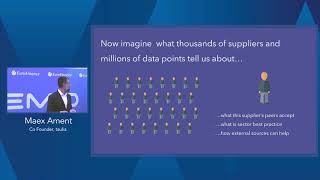
Sure. So let's start with the supplier because he's one of the most important players in that game, if not the most important one. So for the supplier, it's access to cash, access to liquidity in a timely manner. So earlier than the initial invoice and in a reasonable finance manner. So not like 30%, 40%, 50% APR that the factoring companies or others charge. No, but in a reasonable amount. And supply chain finance, the traditional supply chain finance for suppliers, is even much cheaper than traditional dynamic discounting because it's bank money, bank money backed by the buying organization. And we can talk more about that, but in essence, for the supplier, it's access to cheap money, either with dynamic discounting or with supply chain finance. And for the buyer, it's two things. It's putting excess liquidity to work in a dynamic discounting world, so using their own cash. Think about Apple, 100 and whatever, what do I know, billion lying around idle and producing 0.7% annually. Well, taking a few of those billions and putting it into their supply chain, paying suppliers early, and get returns like 8% annually, 12% annually, 15% annually, whatever the buyer feels is appropriate. So, making better return on the cash that they have in excess. That's the reason for dynamic discounting. The reason for supply chain finance is typically a working capital gain. So in a traditional, and I say traditional because there are many initiatives out there that marry the two concepts and get creative, but in a traditional supply chain finance world, it's a working capital gain by pushing out payment terms. So instead of net 60, you pay net 90, as one example. In return to those suppliers that qualify and are eligible for a traditional supply chain finance model, you offer early payments for extremely attractive rates of LIBOR plus a little bit, LIBOR plus a couple of basis points. So in that case, supply chain finance is a pure working capital play. Sometimes there are rebates back to the buying organizations.
Okay, and looking at the financial benefits, could you just draw on examples of what either scenario does to impact financially, I don't know, one of the clients that you've been talking of, John Deere or Hallmark, but on the buyer side and also on the supplier side?
Yeah, sure. I mean, out of the almost 40 clients that we have right now that use our mainly dynamic discounting solution, Biofunded, in average we see roughly $1 million per billion US in spend. So if a company has $4 or $5 billion in invoice spend annually, the returns, the discounts— yeah, let's name it, that's what it is— additional discounts that those buying organizations achieve are around $4 to $5 million annually. and we are in this industry quite a while— like $4 to $5 million a year, this is substantially better business case than any invoicing OCR workflow initiative. As a matter of fact, I think the climate changed dramatically that now dynamic discounting projects actually enable invoicing OCR and workflow initiatives, because the money that you save with those dynamic discounting projects, they can pay for those other initiatives, which is a little bit turning things around, because as we discussed before, e-invoicing, OCR, and workflow actually builds the baseline for successful dynamic discounting projects in the first place. And now things slightly turn around, and actually dynamic discounting projects enable those initiatives as well.
And on the supplier side, what kind of hard benefits are you seeing there?
On the supplier side, one number that I like to throw out here is there's this big factoring market, right? And factoring is— it's okay that it's there, I think. It's good for suppliers that there's something, but it's not fair. It's not balanced factoring. So factoring can be as cheap as 20-25% annually, and this is on the lower end, but it can be really expensive. So numbers vary, and the factoring industry is not super transparent, but it can go up to 30-40-50% annually. I mean annual. This is the APR that they charge. And in addition to that, it's not the full invoice that is paid out to those suppliers. And in addition, not everybody qualifies. Even companies like that tried a little bit of a progressive approach on factoring, like the Receivables Exchange, You don't qualify as a supplier automatically. You gotta have certain requirements to be interesting to those factoring companies. Certain size, certain spend, certain balance sheet, certain documentation. So from a supplier side of things, what dynamic discounting or supply chain finance in general, what this does, it gives them a dramatically cheaper access to cash, like 10% compared to 30%, to make one example. So, and more importantly for suppliers, because most suppliers don't qualify for factoring, it gives them access to cash at all. It makes it possible for them to make payroll, it makes it possible to buy goods. And just to throw out a number, the factoring market is still growing 25% year over year, and it's right now a $3 trillion US market. So it's insanely huge. And what dynamic discounting and smart supply chain finance, what this does is being an alternative to this expensive $3 trillion market.
Okay, thank you very much indeed, Max. Please do join us for part 2, which will be looking at the future of this space over the next couple of years. Thank you and goodbye.