108: Manisha Snoyer | Unschooling, Community & Rethinking Education
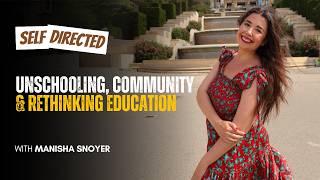
Conversation with Manisha Snoyer about unschooling, community-building, and her modular-learning marketplace Modulo. Manisha describes her path from acting studies in France to tutoring and founding Modulo, outlines philosophies around receptive teaching, attachment-focused learning, and the spectrum of unschooling, and emphasizes the importance of local communities and homeschool co-ops for supporting families.
Questions this video answers
Modulo.app
About 100 vetted tutors
About 10–20%
18 subjects
Chapters
So today we are together with Manicia Snorria. First of all, welcome to our talk.
It's so great to be here. I'm so happy that we finally had a chance to connect.
Yes. So, Manisha, for the people watching, I have a little sun hat on. And we move from cloudy Denmark to France. I saw that you had a history with France, so if we could start there. Why do you speak French?
Absolute France. And I think the big reason that I would teach, I became a teacher is because of France. When I was younger, I dreamed of becoming an actress and I loved French films. And so in college, I decided to study at a French acting school. It was actually going to be my first hack that I like. Kind of like Gerard d'. Arpeu. I was going to break into the French scene as an American actress and then become world famous from there. So I studied for three years at a place called Courfloron, an acting school. And during that time, I needed a way to make extra money. And so I started working as a private tutor and I taught a family that went to the Australian high school. I tutored another kid for an American exam. And then I just found that that was easy. Best side gig for me. And when I moved back to New York, I started my own, my first business, which was a French language school for adults. And. And then I just started teaching everywhere. Eventually with 18 subjects, I became a bilingual sub for the New York City public education department. And that's kind of how I got my in, because they weren't taking subs. More subs at that time. And. And then on the other side, I think that, you know, being studying French at an acting school really showed me the power of experiential learning and having an emotional connection to what I was learning because my verbal skills accelerated so much more quickly in that environment than my peers who are also in the study abroad program.
Yeah.
What is it about teaching? On our podcast, most often we talk about homeschooling, unschooling, self directed learning and traveling. But there's something, maybe it's the gift of sharing knowledge. What is it for you that makes it a thing that you have been attracted to?
Yes. So it's funny, like many others in homeschooling, I never wanted to be a teacher. It seemed like such an icky job. And my mother was a teacher, you know, so I thought that's the last thing I'll ever do. And I guess I think that I see teaching as a very receptive art rather than an active art. If you're doing it well. And when I was a tutor, I was kind of called in when the wealthiest, most affluent families had a problem with what their exceptional private school was doing. Right. So I was there to target, like, the worst problem that a student was facing. And the more I taught, the more it really became the art of saying, I don't know, what do you think? And having the student teach me back and learn themselves and then explain it to me and occasionally pausing or asking a question. And so I feel like, you know, with Modulo, we have tutors, but they're really more like learning coaches that are there to support children through their own learning. So I think the highest form of teaching is really just to be able to build a secure attachment with a child and help give them the confidence that they have the internal tools to find out what they need to know.
That sounds very much like parenting when you're an unschooler.
Yes, exactly. Yes, it does sound a lot like parenting. And I, you know, I always, you know, Modulo developed a tutoring program because people asked for it. And I basically have this philosophy that if a parent feels like something is a good path for their kid, then I will do that. But it wasn't actually my idea to start a tutoring program. And so I feel like, you know, what I hope parents will understand is that they do have the capacity to support their children's own learning. Sometimes as a parent, it can be a little bit. You might need more trouble stepping back, because it can feel very scary to kind of let go of your child's learning in a way. And sometimes a mentor or a peer is better prepared to do that. I find that some of our best tutors are really high school students because they've been through it recently, and they can kind of help kids get where they need to go. But, yeah, I do think that every parent has the capacity to teach their child better than I do.
I think we're skipping a little bit here. So you're talking about it just, you know, I've been looking briefly, but maybe the listeners have never heard about you or your project. So now we're talking about your tutoring thing. And we were just in France studying acting, so maybe you should.
Amazing.
It went pretty fast. So maybe you should say a little more about what it is that you're doing with Modulo.
Modulo, yes, absolutely. And so Modulo is a marketplace place for modular learning. And when I talk about modular learning, I'm referring to the kind of homeschooling that's curating your child's education through a combination of learning experiences, social experiences, self directed learning, could be co, op, could be online school, but it's very highly curated, customized process, and our platform is there to help parents find the right tools for their unique child. I have nothing against doing nothing. I think unschooling can just pure unschooling. You know, letting your child go to a library and explore books or watch videos, I love that. But sometimes parents feel like they need some tools and it's really the wild west out there. I mean, every kind of person is developing curriculum and apps, and it's just really hard as a parent to sort through it all. And what I've found is that when children find tools that they really love makes everything else happen so much more easily. So we've gone through and just vetted. You know, basically my process has been to kind of scour online parenting forums and see what people are saying about different tools relative to different types of children and then make it so anybody can find the right tools for their child.
So I had to make a note when you said I don't have anything against doing nothing, just to clear the, you know.
But I have a lot.
Of listeners who are in school and a lot of listeners who want to unschool. And I just want to clarify that unschooling is very much not doing nothing.
Oh, absolutely.
Nothing is not what we do and it's not what unschooled children do. And I know that you don't think so either.
Thank you so much for highlighting that. Yes. Because as I was saying it, I realized how that could kind of come across the wrong way. Because, you know what I, what I mean to say is that like, there is a spectrum even within unschooling, there is a huge spectrum of how much you as a parent want to be involved in your child's learning process and how much feels right with your family. And so a really beautiful and powerful way to learn can be to just simply allow your child to explore. It's truly extraordinary. And I love that form of education. And I, I'm always trying to kind of hold the hands of parents to move towards that approach, towards the real unschooling approach, given that you know everything. So every single thing that's happening in a child's life impacts them, what environment they're in, what books are available to them, what art supplies are available to them. So even in a very hands off learning experience, there are so many things that are shaping that child's experience. Now on the other hand, we have parents at Modulo who really do want to schedule every single moment of their child's day. What tasks they want them to do, what curriculum, what tutors. And my basic philosophy is that if that is a parent's desire and they feel that's the best approach for their child, I'm going to believe in them and trust them and allow, you know, provide what support I can for that path. And so when I said, like, doing nothing, I think what I was trying to really imply is like, I think that I lean more towards this side of the spectrum in terms of what I would choose. But modulo is there to support the whole spectrum, if that makes sense.
It makes total sense. I just wanted to make sure that it was clear for.
Yes, thank you for doing that.
Are new for the listener, maybe, you know, so just to not mix things up and. Absolutely. I haven't checked out your platform too much. We. We have no personal need right now in our family, but I think a key word we should throw in here if we're, you know, bouncing. Teaching versus unschooling. And, you know, how can we make sense of these things? Is the word voluntary? Because it's not about whether you have a tutor or not or whether you choose to go through a high school experience or you, you think, okay, maybe, maybe I want to know everything. Math. And now I'll find a specific course and I'll find someone to help me get through it because my parents can't help me any longer. I want to do that. And for me, being an unschooler, the key is that this idea has to. Well, maybe not even the idea has to come from the child because you're allowed as a parent to come up with ideas, but the actual doing it, going through it. From my point of view, the important part is that it's voluntary. That makes it unschooling. You can go to school and still be an unschooled child if you chose to go there.
Right.
Choose to stay. And your parents every morning can tell you, oh, you can stay home if you want to. I'm not going to be school police. So, yeah, I just wanted to. It's not about whether you use a platform like Modulo or not. It's it or any other platform for learning. It's about whether the child gets to make that decision on his or her own.
Absolutely. And it's such a. I find, you know, kind of in the role. I am trying to support families. It can be a very delicate line because you have Kind of you have parents rights and then you have children's rights and some of the. And because, you know, not a lot. I'm running a marketplace. You know, it's a business. The people who are paying are parents. Then fortunately, you know, I would like at some point in the future to be there some kind of kid cash as well. Well, but, you know, the people that I think I'm really called to serve are, are the children, but then they're also their parents. And sometimes I will run into a situation where I feel like a parent is putting too much pressure on their child. And that's a challenge for me. Right. Because who am I to say how they should parent their own child? And at the same time, I want this child to have the freedom. And so it's, you know, that's still something that I, as a founder, I'm trying to navigate and in my own relationship to this work. And I don't have the best answer.
It sounds like a hard one. Because you're not in the business of parenting counseling. Basically, that's not what you're selling. You're selling tutoring so.
Well, you know, in a way, in a way we are because it's a marketplace for families to find different learning experiences. And a lot what modulo does is talking to parents and help, you know, help them kind of walk through what's the next best step for them. But I think, like, even in a counseling situation, you can't really be an effective counselor if you're telling someone what to do. Right. I mean, you're being a good counselor if you're answering their questions and responding to their questions. And, you know, if the parent, you know, I mean, as a teacher, you deal with child abuse and that's, you know, we're a mandated reporter. You know, as a teacher, if you have to say something, if you see emotional or psychological abuse. But then. Is it illegal to force your child to do math homework? No. Is it my job to say, don't do that, that's bad for your kid? I don't have all of the information. How am I supposed to know better than this family what's right for their child? And, you know, I need to respect their freedom as well. So it's a, you know, it's a tricky thing. It's a tricky thing to walk that line.
I understand, but you are helping people who have chosen to take the. So let me start another place. I presume most of the families who, who goes to your marketplace is from the homeschooling environment. Or is there also families who want extracurricular? I don't know the percentage. How is that?
Yes. So modulo is designed for homeschooling families, but we do have, I would say, 10 to 20% of people whose children are enrolled in traditional school. And that I become a lot more direct with people in saying, this is not going to work the way that you want it to if you're layering it on top of school. Because when a child is homeschooling, they are able to study at the hours where they're most fresh and focused, and they're learning for the sake of learning. Most of the time, they're not learning for catching up with school. So if a parent comes and says, wow, like, I want all these benefits of modulo, but I also want to send my child to school, I say, look, you know, doing this type of work after school, when your child is tired and trying to conform to a school standard, which might not be the way their brain thinks, and you don't really know what's going on in class, it's just a whole different ball game than doing modular learning. So I think probably a lot of what I try to do is just give parents confidence or help them tap into their natural confidence to pursue what they kind of already know is the right path for their kids.
What attracted you to support the homeschooling community? Have you been homeschooled yourself? It doesn't sound like it, but your mom was a teacher, so this is. Has there been a lot of family fights at home where your mom is like, why are you supporting them? Sent them in school and said that is the only right choice?
Yeah. No. My mom is, first of all, very less a fair. I don't think she said no to me once in my entire childhood. So that's. That's probably part of my attraction to unschooling. But she. It's funny, I think that in a way, we're kind of reverse homeschoolers because I was raised by a single mom, and when the. She went for the first day to drop me off at daycare, and I was upset, and so she just stayed the whole year at daycare with me and never left, even though we were paying for daycare. And then she really wanted to give me a good education, and we. There was a private Montessori school in our hometown, and in order to afford it, she became a teacher at the school. So that. So I was always running into her classroom because I had this natural inclination to be near my mom. So my mom came to school instead of me coming to home. But I think that my attraction to homeschooling was when I was a teacher in the New York City Department of Education. And I saw these private schools, public schools, after school, some of the best public schools, some of the considered most failing public schools. And I just was kind of appalled by what I saw. I mean, I taught in dozens of different schools to all ages. And I just was. The system was so broken. Just because you're paying $60,000 a year doesn't mean that your child is learning anything. Like the goals at that school were to prepare kids to get into Ivy League universities and they were answering to their board, not to the, you know, not to the children. And then, and the kids were so stressed out, parents were crying. I had children throw up because they were under so much stress. I mean, that doesn't. Why. At Dalton, every kid had four hours of tutoring a night after school just to keep up with what was going on in the classroom. And then you go to, you know, I taught an after school at risk school program for at risk youth in, at a Title 1 school, which people don't know. It's schools that are performing poorly and so they get extra funding. And that was like, I mean, just. I couldn't even believe what was happening. I saw a teacher hit a kid. I saw parents picking their kids up drunk. I saw kids saying, you know, my mom said if I don't do my homework, I'm going to get beat. And the people saying, like, well, let's just see if they do beat her and then we'll do something about it. And I mean, it's just like, just atrocious schools that just felt like prisons, just prison. Like you just walk, you were in a prison. All children of color. And one block away was an all white school in the same area in Brooklyn that had like organic lunch. You know, I mean it just. And then in the really kind of good public school, I mean, they had received so much money from the PTA that someone embezzled a hundred thousand dollars and no one noticed for three years. And yet in my music classroom, I didn't have a single instrument that wasn't donated by the PTA, even though that school was getting 20,000 allotment per pupil. And so it was just a mess. I started hearing these stories of parents who are starting homeschool co ops. Basically they were like, okay, public school is not working for my kid. Private school is $60,000 a year. I don't even get in when I apply. And so let's just get a group of parents together and hire a teacher. And I thought that was pretty cool. And at the same time, I was a host on Airbnb, so I kind of made the connection. Sharing economy, homeschool co ops. And I did want to start a new company at the time. And so I started talking to these homeschool co op leaders, people like Noah Mayers, who runs Brooklyn Apple Academy and Park Slope. And I was just blown away by these homeschool co ops. Like the kids were thriving. There was, There was actually a child who went through our program who was about. His doctor said if he stayed in school, he was going to have a heart attack. He was 10 years old, and the family had to sue the state in order for him to go to a special private school in New York. And so eventually they decided to go to a homeschool co op. And within four weeks, he's fine, zero anxiety, totally good. And so I just kind of thinking, like, why is this so sick? So complicated. All you need is a teacher, a space, a group of kids. And I kind of thought that was a little bit naive. But then I started discovering through homeschool co ops. I discovered homeschoolers. And that's when I was really blown away, because it was not religious people sitting at a kitchen table educating their kids six hours a day with no friends. It was people in tech, software engineers, it was activists, artists, you know, really. And, and what was amazing too, I mean, I still remember the first day I visited Brooklyn Apple. I asked if I just been emailing and emailing and emailing. And finally they granted me a visit. And I met them at the Brooklyn Public Library. And I saw six kids just. There's like this staircase, and it's the, the thing you hold on to, to walk up the staircase. And they were all swinging around it like monkeys, like crazy. And so I, I. Every part of my body wanted to tell them to stop and be safe. I had. And I watched the teacher just let them swing around the bar like monkeys. And I realized, what is this impulse in me to contain these children's energy that is so strong, it's almost like a reflex. And I kind of. And that was like an incredible awakening for me. And then, you know, from there I just started meeting so many more cool, talented, you know, the best children's app developer in the world, homeschooling his kids and other, you know, all these product developers and techies and just world famous photojournalists. And that's that was just the beginning of my journey, and I fall more and more in love with homeschoolers ever since. And I'll just say one more thing.
I'm listening.
We are connected both to Gordon Neufeld, and I think that his book was really the kind of last piece in the puzzle for me, because I had my own question. I saw these thriving homeschooling communities, but I had some questions about, you know, do kids need to be in a group of kids the same age? And Gordon Neufeld's book really helped me see that this idea of a peer culture being needed is false and that what children really need to thrive is this secure attachment with their primary caregiver. And from that foundation of love and confidence, social relationships flow. And I feel like in this day and age, we are so missing. True communities that share skills and resources is the only example I've seen of what community should be like, what true community should be of people who share their skills, share child care, share food and shelter with each other. You know, if you want to travel around the world and you're an unschooler, you just say, hey, who wants to host me in Chile or Mexico? And you just. You travel and it's. And it's these communities that are united around a shared value of education. And it doesn't always take this form. There are some homeschooling communities that are exclusive, but for the large part, they. People come together across politics, across religion, and they support each other because they care about their children's education. And I think that it's just an amazing thing.
That is one of the best speeches for homeschooling I've heard in a long time. Well, something I would like to try to unpack together with you was this aha moment. We sometimes call it when we started homeschooling, or when you do, it's like opening the doors to Narnia. You're like, what is happening on this place of freedom? But I want to talk about the. Why do you think we live in this or have this instilled? Oh, they cannot do that. They cannot do that. They shouldn't swing on the. On the stairs and all these things, because I'm 50, and. And I think it happened in my chat, in. In my lifetime that the world has gotten more scared around just letting kids be kids. It's Peter Gray. Also, talk about the value of free play and real play. I remember my mom saying, oh, are you walking around the small. We had, like, a small kind of swamp thingy. Not A real swamp. A moss, I think it's called in English. And she was like, please don't go out there. And me and my brother, we of course were out playing there and fell in the water, needed to drag each other up. None of us drowned. We're still here. We had a lot of fun and learned a lot. And today, people would be terrified to let their children go out and just play. So what do you think happened?
Yeah, so I guess I can speak more to the institutionalized schooling role than I can to the cultural shift in parenting. But most of us experienced institutionalized schooling. And coming from a teaching background, I can tell you that what teachers are trained to do is manage large groups of students. Because if you don't develop good behavioral management techniques, it's just going to be 30 kids yelling and bouncing around for an hour, which is what children should do. That's the natural state of childhood. Then once we get to be 30, we have to learn how to go to the gym because we're sitting too much. But I think that's all I learned to do. It's all about, what is the Pavlovian dog or whatever. How do you manage behavior? Now, the literature is all positive rewards, incentives. You train behavior through, you know, remarking on good behavior instead of punishing bad behavior. But it's still behavioral training. And so everything that we experienced as children was people managing our behavior. That's what we think of when we think of a parent or a teacher. It's people who've developed all of these techniques to get us to do, you know, what we want them to do. And so, of course, that's all we know about being a parent or being a teacher is that my role is to manage this child's behavior. So to think, to do, to become a totally different person who instead allows a child their freedom and trusts that when you allow a child their freedom, you have to go against all of your conditioning, all of your role modeling. You know, I mean, that's basic social learning theory. Kids learn by watching adults. That's how you learn. So I think the first step is just to have some compassion for yourself. And that's what you. That's all you know about being a parent, because that's all you've seen. And so what are some other examples that you can see? What are some other things you can try to get used to? This new approach? For me, it happened very quickly, you know, once I realized, like, oh, I don't have to do that, then all of these different possibilities start Emerging.
But isn't it also very contextual? I, I often say when I speak about unschooling that if I had to be the responsible adult around 25, 9 year olds for 7 hours, 5 days a week, I would probably invent school. Absolutely safe. I would need them to sit down, I would need them to pay attention to whatever I was asking them. Maybe I could do slightly better than what we see in public schools, but I would still have to have the discipline. And I think, you know, in no human natural culture, we have organized childhood around same age peer groups of this large amount of children. It's not natural to humans, which means we've created a very artificial space and behavior is very contextual. How we behave is based on where we are, who we are, around what we feel, how much sunlight, how hungry are we, is the, is there a confined space, how much oxygen is in the room? There's so many factors and we're creating a very, very artificial, weird context for children to grow up in. So in a way it makes a lot of sense that we have to manage it because. Yeah. Whereas unschooling or natural learning could, you can call it whatever, doesn't have to have that unschooling hat usually happens in the context of family life, community life, the neighbors, your friends, people you know for you've known for a long time. And the word voluntary comes back into that equation. Your friends and someone you choose, not someone you happen to be in a classroom with. And then the job for the quote unquote teacher that could be the parent or the neighbor or whatever is to just create a space where learning can happen. So absolutely, we don't have to plan it, we don't need the curriculum, we don't need the positive reinforcement. We don't need, we don't need to push because, well, if we do trust the process, the, the, the learning will happen. If there is, you said before, you know, you, you choose the art supplies, you choose with the means you have, you know, what books are on the shelf, where do you live, how much heating do you turn on, what times of day. And there can be many factors that are limited by other things than your, your choice. It could be money, it could be health. But still you create a space and then learning can happen. Should, should be able to happen in that space. But we're not managers. We don't need to check it, we don't need to tick it, we don't need to grade it, we don't need to push, we don't need to to plan it.
Absolutely. And I love the empathy that you have for teachers in that situation, because even when you go from a dynamic of, you know, maybe giving a math lesson to one child versus two children, the whole everything changes about that experience. And I guess another aspect of this, too, is that when you are. I think that sometimes when people think of unschooling, they think of, oh, you know, some kid just runs around and does whatever they want and has as much money as they want. And. And I think another way of thinking about it, and of course, you know, everybody has a different approach. And so this is just how I think about, is that you're starting from this foundation of a very loving relationship. And in a relationship, you need to ask the other person for things. Sometimes you need to say no to the other person. Like, you wouldn't ever never say no to your partner or never say, I don't like it when you do that. Or like, I can't exist fully in the way I need to exist. If you're doing that, it's. And in the same way with your child, you know, if you're, you know, contextualizing it as, like, we have a loving relationship and, you know, if you throw a rock at that kid's face, I don't feel comfortable being in this space with you right now. And we're leaving. And that's still, you know, and. And I think, you know, that's kind of an extreme example, but I think one I give parents a lot is around, like, recording videos on the iPhone, because I've had a couple parents say, I don't know what to do because my kid won't edit their videos. They just want to film everything, and they don't ever want to edit it. And the first thing I say is, are you paying for more icloud storage? Because you can stop doing that. And then they are either going to have to edit their videos or not record any more videos. And almost 100% of the time, I find out they are paying for more icloud storage. And so it's like, you can give freedom if you're in this loving space where you're taking care of your own needs and supporting your child in the way that they need to be supported. Supported given their developmental abilities, you know.
Yeah, but I mean, I might come out wrong when I. When I talked before about not managing, because obviously, in my mind, obviously we do. Unschoolers do interfere somehow. Not just set the scene, but also interfere. I think some unschoolers can be slightly afraid of interfering. And some do it more and more. Not being the judgmental. It's just a spectrum. But I don't feel I manage. I just usually say I adjust. And I also use the word around the kids. So I say I'm going to adjust this situation. Now, my kids are old adults, so. But. But still, then I ask, often I ask for permission, can I please adjust this situation? I feel that's a bad vibe. Or I feel we need to talk about the ethics, or I feel we're overdoing this. So could we adjust? Because I feel this is not a bad thing. A, that you're doing is not. Or we're doing it's not a bad thing. But as we're doing it so much at the moment, B is suffering, so we're not doing B. And B is clearly suffering, so we need to do some more B. This is my adjustment and I'm. I'm the adult, but I think, well, we are sometimes he's.
Actually, I'm kind of bad on that. Well.
So I. But I think the reason that these adjustments work. Work that I. I get to do this and sometimes it goes the way I. I was thinking. So we do Moby is because we have this relationship and I'm not trying to manage their life and I do not have a huge set goal of where they or we are going. And also, very often, you know, they will tell me. Some parents call it talk back. I'm happy we're having a communication. So they will say we're doing a lot of A. Right now we see that B is suffering, but right now A is very easy to do and we have all the settings for it. So we can do a little bit of B, but we can do more B on Sunday when it's raining, because then we will have a lot of time and they give me something I didn't think about. And then we adjust my adjustment. So it becomes this circle of. Everyone gets to say what they mean, which means they can adjust me. Basically. It's. I. I don't like the word democratic.
I think it's.
No, no. But it's respectful.
It's not like I am this king of the universe and. And they are my little minions.
So beautiful. I mean, there's so many dimensions to what you're saying. And I feel like it's so refreshing to be having a conversation about the nuances of different educational philosophies and approach. And I just. My heart really feels for anyone listening who might feel like this feels off to my approach. Or how I think about education. Because the last thing I would ever want to do is say, like, this is the best way. This is the absolute way. And it's so exciting to be having a conversation where we can talk about approaches like adjustment or natural consequences, or operating from a foundation of love and giving the other person their freedom. And someone else can say, oh, I have a slightly different approach. And then that approach informs my approach. And in this way, we have an education system that's constantly evolving through conversation and feedback. As opposed to traditional school, which where Nothing changes in 100 years because it has to go through this huge bureaucracy and so much limited time to actually build that relationship, that deep attachment that you've built with your child. I mean, that's what makes the best teacher in a traditional school, is someone who has a magical ability to build close relationships to 30 kids. That is something that not every parent can do.
That would be a unicorn when we grew up.
Every with their own child. Right. Every parent can have that foundational relationship, especially if there's not that divide between school and home, because that's something else. It's like you're constantly adjusting the way that you relate instead of having a fluid relationship like you describe.
I also think maybe one of the reasons school systems fall apart is that you don't. They're not made with a space for that relationship to happen. I was In, I think, five different basic schools before I was 15. I think you were in the same.
Same, Same all the time.
Yeah. The school system that we grew up with In Scandinavia some 40 years ago, it was designed to make, at least to create the option for this kind of relation to happen. So you had a main teacher. They would teach Danish. They would often also teach religion, sometimes even history. We have something we call the hour of the class. So we have one lesson every week just allocated for relations.
And as an example, I had. They call it the class teacher. I had her from grade one till I left school. And she followed me through my whole development. And it was both strong, but also she was not my mom. So. So there's this difference, but the, The. The level, I. I think the teachers, the three main teachers I had didn't change in 10 years. That was very secure. They knew who I was, I knew who they were, and didn't grow the relationship.
There's the option of growing the relationship if that's how the school is designed. And in Scandinavia, it's.
It was.
I don't know if it's still like that. It was like that. So you would very likely have the same main group of teachers for 10 years, which gives you the. And it's a big responsibility to say, yes, I'll be the main teacher of this new class starting. Because you kind of promise your boss to stay for 10 years. It's a big deal to let go of that.
Nobody would do it today.
Someone else to step in. And also I don't. I have the impression that it's not in the same. The same in the US but in Scandinavia you have one base room where all the teaching happens. So it's a little bit more like a home. You don't move around. You're in the same physical space unless you're doing PE or physics or something that requires a different room or the cooking classes that we also have. And I think this design is a better design. I'm still against schooling basically, I admit it. But it's a better design then a school where the kids have to move around all the time. The teachers, they change every year because now you're in grade five. So you have the grade five teacher and it becomes very much about the grade and the. And the material you're studying and not so much about the relation that is the root of the learning journey. So we, we could if we wanted to reform the school system, look a little bit at me. It's an interesting conversation, the conversation between. Between the experiences of the unschoolers and the homeschoolers and how the school system works. So if we shouldn't do what I sometimes say we should do, burn it down, then maybe we should learn from.
Each other, have an evolution. I. I am sitting with these thoughts. I've on our podcast. We have had some wonderful, wonderful people during the time. Gordon Neufeld who I now have the pleasure of working together it which is just a dream come true. Peter Gray and and recently my mind was blown by Sugata Mitra. And then we've talked with unschooling pioneers like Sandra Do Sue, Elvis and all that wrote down there. And I am looking so unschooling and radical unschooling in combination with the fors from Gordon and. And his thoughts about what how connection is shaped and children grow up with Sukata Mitra about how learning emerges in groups even more. And with the. The Peter Gray wipe of free play I'm like what will that be defined as? Because it's not pure unschooling, it's something else. I'm still looking for words to. To. To describe it, but there is an overlap where I'm just like, oh, I want to explore what this overlap is because I think for many people who start a homeschooling journey, many of the ones we have met during our now many, many years, they have started with having their kids in school. Experiencing that is not wonderful place for them to be. Like you said, your own experience of being a teacher was hard for parents who have their kids in that system. Some of them are like, this is not working. Let's take our kids out. But then you often take them home to this world we now live in where we have these nuclear families, where we are small units where we don't have children playing at the street every day. We. We don't have the not necessity of the peer group. But who are you supposed to have free play with if people only have two kids per family? So. So there. There is this really valuable thing about the co ops that I. Denmark was just not big enough for us to. It was. We had. Yeah, okay, let me rephrase that. Denmark has not had unschooling and homeschooling so long that we were lucky to be in Copenhagen where there were other unschoolers. And when I went to work, Cecilia. Most of Cecilia's time spent being there in the home with the family and then going to social excursions with other homeschoolers in Copenhagen to meet up with all the others to create this.
One of the big jokes about homeschooling is that home is part of the word because you're never home. Yeah, we laughed about that a lot. You say you homeschool, but you're actually never in your home because you're always out and about at a museum or a grandmother's place or meeting up with the other homeschoolers in the park or. Yeah, going to whatever. So I think you're kind of a little bit wrong there.
I stand correct.
I think that you're both right. For me, the essence of all of these philosophies and all of the people I've met does come back to this true community idea. How do we find true community and how do we build true community? And I think that this natural urge for parents to provide, to learn, this natural urge to learn, I mean, for me, right now we're on this podcast so we can learn, right? We're receptive, we're excited, excited. We're asking questions, we're being challenged. I'm different now than I was 20 minutes ago. And so it's so sacred, learning. And for some reason, learning has to happen in Community and communities need each other to thrive. And because of so many different factors, there are fewer and fewer places that communities gather. You know, some of us don't go to church. You know, they're not into that. School is one place where people gather. But. And so there's a researcher I love, Daniel McFarland, who talks about network ecology of schools. And he found that schools that are smaller and unite around a shared value of education have lower rates of addiction than schools that are bigger and revolve around shared values of team sports. Now, I love sports. I think that's great way to connect. But I feel like that when I read that study, I understood something very, very deep about my attraction to homeschooling, which is that you go to communities like San Francisco, the Hugs, SF Unschoolers, or you see Brooklyn Apple Academy in New York City or different directions, and you find these or cultural roots homeschool co op in Virginia. And there are these communities that they have found it. They are parents and teachers and children of all ages who are sharing and who are together. And that I think is really what's extraordinary. And then I guess the other aspect of this, when you talk about what unites all these people, is just how do you center education around the child and their needs and the family and their needs even. There's so many ed tech companies that are building products for schools because those are the people buying the products. And the products are so boring and painful for children to use. But you know, how about a company like Toca Boca that is like watching children use their product and they're building something really amazing for children and then freedom comes in, right? Because you trust this child's desire to learn, you honor that. And then, you know, it all, it all flows from there.
I think the misconception really is it's twofold. One is that we try to plan the education of the children. And the other thing is that it's children and we try to push the learning as young as possible. So if they start reading at 3, we can't get our arms down. And if we, if they don't reading read at 8, we, we can't sleep at night. But really, does it matter? Does it matter?
Does it really matter?
It doesn't. And I think that's one problem. And the other is, you know, the idea that it has to be all about education if we really trust the process. Learning is a byproduct of living. Learning is something that happens. If you live a passionate life, you cannot help learning. That's why we're having fun here. We're not doing this podcast to promote our businesses. We're actually doing it because we like the conversation.
And.
As a byproduct, we learn something, we get new thoughts, new ideas, and the same thing happens for children. So Gat Mitzra has this very beautiful insight into how it happens in community, that it happens more in a natural way when more than one child is together. So a group of two or three or four children or adults, it actually has nothing to do with the age. Exploring, being curious, laughing, being tired, going for a walk, making some food, food, calling grandma, watching Netflix. Whatever you do, if you're just slightly excited about doing it, it's because there's something there because otherwise it would be boring. And an interesting thing about humans is that we will do almost anything to not be bored. We hate being bored because being bored is learning nothing.
Yes, it's impossible.
And so I think this hyper focus on education, hyper focus of it's like a factory, we try to shovel things in there in their brains instead of understanding that, that living life with a.
Passion.
Will put us in situations where we learn a lot and we learn way more than if we have to look at something, some boring stuff we're not interested in and that we, we don't get why we have to learn it. So yeah, I ranting on and I.
Forgot where I started. I mean, what you say makes so much sense. I mean, it's a lot of this stuff is just really obvious. Like if you explain to a child why they need to learn to read, it's going to make it much more motivating to learn how to read. And that's just so obvious and so often we do not even take that basic step of understanding ourselves. It's just, just do it because you have to. That's it. I mean, that's so rudimentary, you know, I did, I wanted to say, I wanted to go back to your question about community though, and having difficulty finding like minded community. Because when parents ask me how do I even start homeschooling? I always, the first thing I say is find a local homeschooling meetup and go. If a parent says, I'm feeling really overwhelmed, I feel like I'm not doing a good job. Homeschooling, find a local meetup and go. Because there is so much social pressure against homeschoolers and unschoolers. Like people in your family are telling you you're crazy because it's still counterculture. And so you need this community to say, oh, okay, this is what this. This person supports what I'm doing. At one point they were feeling overwhelmed and then they got over it. Or, oh, that kid is older than my kid and they still don't know how to read. Oh, or this kid just got into Stanford and he learned how to read when he was 10. You know, and you are interacting with these people who can share ideas and support and advice. And so that's just essential. And if you don't have that, you don't need to go to some fancy co op. All you have to do is get a board game, post to your local group and say, I'm having a game night on my house a Thursday night. Anybody who wants to come over and play board games, come. You have a whole activity kids can do together. If you're shy, you can go off in the other room, not interact with anyone because some people have social kids and they're not social, or the reverse. So board game is like the perfect other thing. Unstructured park day. Go to your playground, post in your local group. We're hanging out at the playground on Thursdays. Anybody want to come, come. And that is those two things. Unstructured park day and board game night are just win win situation for building community with homeschoolers. That can be that simple. And, you know, from there you go through the stages of community. First of all, it's like so happy. Everybody loves each other. Oh, wait, now there are some things that we don't love so much about each other. Okay, are we gonna work through this and become a real community? Are we just gonna part ways and then eventually we come to this ripe, juicy, beautiful thing that nourishes your whole.
Life or you find another community.
They were all weirdos.
Which is all right. I mean, it's also, I think I actually put a little highlight with the community word because I don't want to disencourage the newcomers. And if you think, oh, that's going to be really hard because I'm in a country where it's illegal to homeschool, or I'm in a country where there's so few homeschoolers I can't find anyone, or my kids don't have the same age or religion or whatever, so that's going to be impossible, I'm going to give up. I think you can even start homeschooling without the community. Find an online community maybe where you as the adult can chat with someone because you're going to need that. Take the Kids out of school see what happens. Very often there's a neighbor whose kids are in school but they're good friends anyway. And maybe there's a church where there's embroidery nights every Tuesday and it's mostly elderly women and some young women and then your little seven year old and they're having fun. So sometimes these communities don't have to evolve around the homeschooling. They can. Lots of things can happen and they usually do. I've seen it when people start home educating. So yeah, doesn't all have to be this epic, you know, group of friends of, of London homeschoolers that you know, happen to meet three times a week and you celebrate Christmas together. It doesn't have to be like that to be good.
It can change, it can evolve. I usually just tell people, give it a little time because sometimes that kid people will organize a playdate, the kids don't have this magical hit it off romance and it becomes almost like online dating, you know, as a come on. Like it might take a month to kind of get things going, you know, give it time to get to know people a little bit. But in general, yeah, I mean pick your friends, why not?
When you mentioned board gaming, it just occurred to me that is one of the things we have enjoyed so much, both with other people but also as we are full time travelers. There are games where you don't need the language. If there's a language barrier, you can play. And I just wanted also to give a shout out to our dear, dear friend Erica Davis, Peter, who have a yearly game school conference where I mean it's a lot of homeschoolers meeting up once a year just playing board games for a weekend and it is epic.
We should go.
Yeah, yeah, we will go next year. Yeah.
I just add here, I mean if anybody has listened, I keep talking to these listeners.
I know, but I, I hope we have some.
Yes, if anyone is listening and says there is no homeschooling community near me, oh gosh, I wish I had a friend. I'd love to meet someone online. Just send me an email, I will hook you up, guaranteed. Okay, so you're not alone.
But Manisha, it's also time because.
It.
Has been a wonderful talk where we have explored a lot of really good subjects together. But for people out there who is like, oh, in the start this talked about this project she has, where do I find it and what is it you offer? Not the 10 minute sales pitch but just like for the people who are like what is it? What Is it. When she said it's a marketplace, how is it it. She's connecting people. So if you can give a short introduction.
Sure. And thank you so much for inviting me to share. So my company is Modulo. You can find it at Modulo App M O D U L O dot app. And if you. You can go to the site, you can search for curriculum, ask some. You answer some questions about what activities your child enjoys, do they have special needs? And we'll recommend a math and an English language arts and a full curriculum. We're adding on more subjects and then we also have a directory of resources that has 18 different subjects and so you can read reviews of different programs. We also have an online community, so there's the free community where you get all the content. I'm constantly producing videos and then we have a paid membership where you can get a little bit more tailored support and talk to other parents. And you know, mostly it's very easy to go on Modulo and contact us me directly at this point. And I'm just here to answer any question you have.
But how many tutors are involved? Is it you tutoring everyone?
Yeah. So I guess when you think about module, we have different modules, so we have tutors, clubs, curriculum. And so if you're looking for a tutor to fit your child's needs, we do have about 100 different vetted tutors and we can, if there's a new subject that we don't have, we can find a tutor for you and we'll connect your. I think of them more as learning coaches. We'll connect them with a curriculum and a coach and you can set up, you know, recurring meetings with that tutor and get progress reports about how your child is learning. And by the way, both children and teachers fill out progress reports for each other after every single session. So it's really driving their own learning.
Yeah, but it's a wonderful way to learn from someone who is passionate about a thing. That is one of the things I, I love myself learning from someone more than from. So book is wonderful. I love books. But if there is someone who is passionate about a subject, I just love listening to them. It is time. So, no, I, I really enjoyed the talk. So, so thanks a lot for your time. It has been a pleasure exploring these subjects together with you.
Thank you so much. I mean, you, you really woke up my passion. And so apologies for all the shouting and talking over, but it was my favorite kind of conversation and I, I feel like it's just the beginning. There's so many other topics I want to talk to you about, so. I'm so happy that. That we know each other now.
Yeah, it's great.
More from Manisha

Contributing to Florida Prepaid Plans (2026–2027) | Step-by-Step Guide for FES-UA Families

Contribuyendo a los Planes Florida Prepago (2026–2027) | Guía Paso a Paso para Familias FES-UA



Finding Providers & Services in the Marketplace (Families) | Step Up For Students (2026–2027)

Encontrando Proveedores & Servicios en el Mercado (Familias) | Step Up For Students (2026–2027)




