Alycia Wright: Building Homeschool Co-ops and Cultivating Community
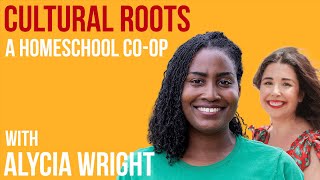
Alycia Wright founded Cultural Roots Homeschool Co-op in Richmond, Virginia to serve children of color with community-centered programming. It grew from 20 kids meeting one day a week to serving about 100 children across multiple days, using donations and partnerships to keep it accessible.
Chapters
Hi, I'm Manisha and this is Teach youh Kids, a podcast about homeschooling, learning, whole child development and the future of education. On Teach youh Kids, we empower families with resources and strategies to optimize your children's education, cognitive, social and emotional well being, which are all parts of an educational experience. If you're looking to get more tailored support than this podcast is able to provide, we also have a subscribers only online community. I facilitate the community myself and I personally respond to any question parents have about curriculum or feeling overwhelmed or making friends or finding a Japanese tutor or whatever you might need. And I'm also thrilled to announce that we just introduced interest based clubs for kids and we already have a Minecraft club, a Chess club, and a Climate Action club as of yesterday. So if you want to help your child make friends, all you have to do is post to our WhatsApp group that you're looking for a friend to connect with and set up a fun play date. Today I have invited my friend and collaborator Alicia Wright to talk about everything homeschool co ops and building community. Alicia is the founder of Cultural Roots Homeschool Co op in Richmond, Virginia with I think 100 members now or more and a homeschooling mother of four. Alicia is a former educator turned homeschooling parent that launched cultural roots in 2016 after struggling to find a learning space that celebrated her family's African culture and history. Cultural Roots Homeschool Cooperative is a nonprofit. Its mission is to create a liberated educational space for children of color. The intentionally center their programming around the diverse cultural attributes, traditions and histories of Black, Brown and Indigenous communities. The vision of Cultural Roots is to create a cooperative community that nurtures the love of learning and develops a strong cultural historical awareness in Black and Indigenous children that results in self love, self liberation and community empowerment. And Alicia is just one of the most brilliant people I know when it comes to thinking about education, educational systems and the future of education. So it's so great to have you here.
Thank you so much and what exciting things coming up for your organization.
Thank you so much. Well, I just feel so fortunate to have you as a collaborator. I think it can be a little bit lonely paving this pathway of education. And you know, we're both VELA founders and it's just been so great having a friend to communicate with around these issues. So I'm just happy that I get to share you with all of our people today.
I'm excited to be here and excited for the conversation to develop.
Alicia could you share a little bit of your story. I mean, I've heard it, but I think our listeners would really love to know what inspired you to start homeschooling in the first place.
I feel like I have so many stories for children, but in essence, I mean, honestly, my children were pretty happy. My oldest and my two oldest at a local Montessori school. I was a public school teacher. I didn't have a whole lot of faith in our neighborhood school to provide my oldest daughter with the supports that she needed. And so we opted for a private school route. But with me being a public school teacher, by the time we were expecting number four, my husband was basically like, we're making negative dollars. All of your salary is going to pay this tuition. So we need to really think about that. And I thought, we've been living without my salary all these years because it's been going to a private school. What if I just stay home and really take control of their education altogether?
Then you got started and we got started. Yes. And I know that your oldest daughter is gifted or diagnosed as gifted, and that was a challenge in trying to find her the right resources in a traditional school environment. And. And then I really do want to hear more about the homeschool co op story because first of all, I just can't believe you have four kids and are running this 100 person homeschool co op. So I need to really dig in there to see how that's humanly possible. But can you tell us a little bit about when you started looking for homeschooling communities, what you found and what eventually made you feel like you had to start your own?
Sure. Well, if nothing else, I am very much a researcher and very much thorough in things that I am thinking about taking on with regards to digging back and making sure I understand as much as possible. So our first year homeschooling, my daughter was probably about a fourth grader, I think is when we pulled her out. We sort of dated all of the different homeschool communities and we never really found one that really felt like a really good fit. And I even tried my hand at like trying to create different opportunities. So my daughter wanted to do a biology class, but she wanted it to not be a little kid biology class, but to actually do dissections and to have a professor. And she just wanted a level of depth that we couldn't find at most traditional programs for geared for kids, youth her age. And so I sort of started, you know, like organizing little workshops here and there and finding that I was really clicking with a lot of those families. But in the meantime, we had joined a homeschool cooperative, really, because of the distance. It's about six minutes from my house. But we had a lot of core beliefs, political and social beliefs, that were not aligned. And I found myself really sort of hiding who I was a lot of time, or just not engaging in certain conversations. We're a Christian family, but we're not, you know, like literal believers of the Bible, necessarily. And so we found a lot of people that we were interacting with in this co op were. And so we just had differences all even in our interpretations of Christianity and what that looked like. And so it was just a really hard place to be in sometimes. And I remember thinking, you know, as I would go through and mark up my daughter's science book, you know, and say, no, we think climate change is real. Scratch us out, you know. No, we. Yeah, we don't think. We don't believe that. We don't believe that. I don't. You know, and eventually I got to a point and I just thought, what am I doing? I'm putting so much effort into this co op that is clearly just not a good fit for us.
It sounds like you're doing so much accommodating. You know, you went out to personalize your child's education, and instead you're just bending over backwards to adapt to something that's not working for you.
I really was. But I also started to think about what message I was teaching my girls. You know, like the place that I want them to take up in spaces, the one that's always bending over backwards, the one that's always accommodating, the one that's not speaking up, the one that's, you know, at home having one conversation in public, you know, not engaging in conversation. And I was like, this is not what I want to teach them. These are not the memories I want them to have of me and who I am. I don't want to raise them wearing this mask. So we need to just leave.
Alicia, just to rewind a little bit. How did you become a person of such integrity to have that level of awareness in yourself? I mean, have you done a lot of meditation or were you raised that way? I mean, I did. I think even to observe in this situation that you're not in your integrity, it takes a lot of strength.
It does, because it's a lot. Sometimes it feels easier just to just to sort of suck it up and just be like, we're just going to go here for this music class and not worry about all the other things around you. But at some point, you have to just think, I'm compromising my ethics. I'm compromising everything I believe in to be in a space that the people don't really even know me. And I realized that after having a conversation with someone and they were talking about something that was going on with Black Lives Matter, and it might. Obviously, it was probably a little before that, but it was some issue that in our family, we were on one side. And I remember this parent called and was like, can you believe this? And da da, da, da da. And I remember hanging the phone thinking, and I told my husband, said, that person has no idea who I really am, and we consider ourselves friends, but they really don't know me because they would not have addressed this with me in this way. And whose fault is that? That's my fault, because I'm not speaking up about who I am and what I believe in. And so I thought I was like, this ends today. Like, this is not. This is not who I am.
That's amazing. I mean, there's just so many dimensions to it. I love the example you're setting to your children. I love that it's your awareness about the example you're setting to your children that helped you look inwards and realize that you were out of alignment. And I love that you're allowing yourself to choose your friends, because I think that that's not something that comes up a lot in conversations about homeschooling. But you can be a compassionate person and make choice about who you want to spend your time with. And in school, you don't really have a lot of choice. But in homeschooling, you can say, you know what? I don't really like being around these people very much. They're not aligned with me. I'd rather be around these people. And, you know, some mixing is good to make the idea pool mix around, but I just. I love that that you made that discovery. So. So you decided this is going to end today, and then you set off in search for your ideal environment, or you just decided you had to create it because it didn't exist.
Yeah, I just decided I had to create it. I had done all of that. I mean, I knew what spaces were out here.
And by the way, just so people understand, I mean, where were you finding these groups? Was it on Facebook or Meetup or. How did you kind of discover what was there?
Mostly social media. You know, their Facebook, you know, it's still pretty popular. I feel like it was even more popular like sort of at its height because now we have other, other social media platforms where at one point it really was just Facebook. There was no Instagram, there was no, yeah, you know, these other things didn' exist yet. And so, you know, lots of groups have Facebook pages and meetups and co ops and then they're, you know, I'm in Richmond, Virginia, so there, there's been a decent homeschool population here for a while now. But it looked very much in the sort of the traditional sense of what people have as stereotypes, which we know are not necessarily true of homeschoolers. Like I said, we had spent the first year sort of, like I said, dating, you know, going to these different places, you know, sometimes feeling very welcomed and you know, but still feeling unaligned sometimes going to places, thinking, why am I even like, you know, you walk up and they're like, yeah, can we help you? And I'm thinking, it's a homeschool event, right? We're here, I've got my kids, like, what else would I be doing here?
Okay, so you decided to create your own. And how did you do that? I mean, can you talk about. I mean, of course this was a while ago. Things have changed a lot. There are more homeschoolers, but I think that there are definitely all around the world who are interested in building community and small or large places. So. So can you really take us kind of step by step how you created cultural roots homeschool co op?
Yeah, well, you know, I just started reaching out to people I knew here and there. You know, you might meet someone at a one off kids event that you think that person seemed kind of cool. They've got a child about my age, my child's age, invite them. I started just building relate, intentionally building relationships. I would also probably seem kind of like a stalker. I would also scroll Facebook pages looking for reading profiles. Right. Just sort of see who these people were. And I would also send blind messages. Hey, no, this is kind of weird. I'm just, I saw your Facebook, you know, posts two years ago, you know, on such and such page. I also have children. We live on this side of town. You know, would you like to get up for a play date sometime? And it was surprisingly the number of people that have been like, oh my gosh, yes. Who are you? Where are you?
I love that. I think as an entrepreneur you kind of have to be a stalker a little bit. I mean, I have spent just weeks just connecting with 200 different teachers on LinkedIn based on. Oh, wow. They study coding at Stanford and just connecting, connecting, connecting. Asking if they're a tutor kid. So, yeah, it's great. I love it.
That's exactly, you know, you just reach out to people. And I've never had anyone that's ever responded like, you know, who. How dare you. You know, if anything, people. Some people may not respond, but, you know, the majority of people did respond and were happy. You know, some people said, hey, we're not homeschooling anymore. Or, you know, hey, have you heard of xyz? Or we'd love to get together. Or, you know, our schedule doesn't really allow. We now live here. You know, we've moved, you know, but it was just interesting, the process. And then, you know, that's how I met some of my, you know, some of my best homeschool friends today. Just through random messages and saying, would you like to meet up?
You created your own homeschool dating app for friends. It's incredible connecting around of shared interest. Like, homeschooling is such a good way to make friends as opposed to just, you know, more random interests. And so. So what was. I mean, what was the first iteration of Cultural Roots Homeschool co op? Like, did you call it a co op? Did you meet in a space? Did it. Just did this. These playdates just evolve organically?
No, it started out pretty formal. It wasn't like we're just having play dates. I mean, we came together and the conversation was always, I want to build a homeschool space. Right. My daughter. A lot of times kids move around, you know, transition sometimes out of, you know, homeschooling kind of has these entry points or more common entry points. Right. Kindergarten is a common entry point, middle school, and probably the smallest number, high school. But middle school is a big, you know, exit entry. You have a lot of kids and families who decide to try public school because they've homeschooled all K through 5. Or families that say, we're not going to middle school because we already know what that's going to look like. Or we tried a semester and they leave middle school because middle school is a really hard set of years with all of the things going on just internally with children, biologically, emotionally. So it was myself and about 12 women. We had a meeting at my house. We came up with a name, we proposed some classes. We didn't have a big budget. We started it like, everyone pays $35 a month, I think, is what we. We had a friend who. Who's a professor who donated her time and she was an anthropologist, so she taught a class for us. And then we eventually added in a chess teacher and a yoga teacher. And us parents did everything else. It was just one day a week. It was three hours, three or four hours a day. And it was a lovely little space, maybe 20 kids.
How great. So basically you just had this three or four hours a week, you rented a space, everyone paid $35 and then you just alternated teaching. And then your friend who donated her time taught and you occasionally hired a yoga teacher or something like that.
We always had a vision this was going to grow because we knew that we, we didn't. None of us had plans to send our children to school. And all of us, you know, were looking for things that would be sustainable, right. Not wanting to build something and then next year it's gone and we have to figure out something else. And so we decided to make it sort of cultural, historical base, the co op. We had this common theme which was pre colonization Africa. Right. We want to learn about African kingdoms before Europeans. Because that's often, I mean, that's like a majority of the history. Right. You know, colonization was relatively late to that with a. And so we wanted to teach our children that. And so a friend of ours at the local university, she taught anthropology. She's like, yeah, you know. Yeah. And she spends a lot of her time traveling to Africa doing, you know, digs and all sorts of cool things. She's like the person I wanted to be when I was a child. And so she came and every, I think we were doing Mondays, she did like an hour of that. She always had some cool activity. And then afterwards we would have half the kids go play chess, half the kids do yoga, and then we'd swap. The other kids would do yoga, the other kids would do chess, we'd have lunch and then like play. And that was sort of our, you know, our sweet little day. You know, these were mostly like upper elementary age youth.
That's so incredible. And I mean, what advice would you give for a parent who maybe, you know, living in Los Angeles, has a five year old, is just starting homeschooling? I think I hear this situation a lot where it's like, oh, well, we tried to. I have this really nice house and I tried to host a homeschool grow up co op here. But like the people who came weren't really like my kind of people or I couldn't really get anyone to participate. Maybe they didn't want to come in my House, you know, do you. What. What kind of advice would you give to someone who's trying to build some sort of class for other homeschoolers and maybe has a space?
I would. So I tend to stay away from holding things in your home. I think sometimes people are uncomfortable going into people's homes if you don't know them very well. Public spaces tend to just be a lot easier for, like, strangers to navigate. And then, you know, even if it was, you know, we're going to meet at Starbucks or Panera, I don't necessarily go to either of those places. Or the library.
Right.
It's just easier versus somebody's house. It's also easier for the host because, I mean, that means you've got to. I mean, you don't have to, but you probably want your house guest level clean, you know, every week.
You can't put up a zoom background when people come over.
And it's just a lot of pressure and it's added pressure on top of the stuff that you already have planned to do. And so I'm always just like, don't even. Unless you just have, like land and space or something. Maybe a separate patio that's attached, but not your main living quarters. That would be one recommendation.
That's a great recommendation. I mean, I think that's something that people don't think about, is that even if they have a really nice house, other people might not be comfortable being on their turf. And parents might feel like, where am I allowed to sit? And they don't really have the same ownership as when it's a shared space. Wow. Yeah. And then what about the parent who does? I mean, and I know this is a bit abstract, but I know a family in Australia whose child loves chess. And so. And they're kind of. It's not, you know, in Richmond where there's a lot of people living close together. It's kind of people are a little bit more spread out, you know, or any family in a rural area, you know, they tried to set up a weekly chess club meeting, and then two or three people came the first time, and then it kind of petered out and no one came. How can you know? I mean, I've heard this story a lot, and I guess what strikes me about your story is that you kind of got everyone together and had a meeting and everyone decided to. Decided what was going to be together. Is that the way to kind of make something with more engine fire to it, or what would you suggest?
Well, I mean, it's definitely helpful to have that level of buy in in the beginning. Like a group of people who are saying, we're going to make this work because they're dedicated and it's not purely your energy trying to hold everything together. But sometimes you don't have even that. Sometimes you're, you know, if you're still trying to find the people, you know, folks are. It's hard to get people to commit to something they don't know yet. So building relationships is kind of important as much as you can. But I mean, I tell people, I suggest that even if you only have two or three people and it sort of dies out, just keep going as much as you can because you will find people. Will. You'll find your people. I always share the story of a homeschooler by the name of Pierre. And she's in D.C. and she was with this group, Sankofa. Actually, I think she may be in Maryland somewhere in the DMV area. And you know, I was watching an interview with her one time and she talked about sort of being, I don't know if she's in a rural area or the suburbs, but she was away from the majority of people that she wanted to be around. And she talked about feeling lonely and one day just sort of plastering as much as she could about what it is she was trying to do. And she said she, she aligned it to like the Batman signal. You know, how it kind of gets shown up in the air and then people from all over the city are like, oh, wait, what?
I love it. Yeah, I totally get the analogy.
I feel like, you know, just keep sharing your Batman signal and, you know, your people will see it.
Completely. Completely. I mean, I even think about our families in Australia who are posting their hikes. And I'm thinking, I need to get on a plane to Australia and go on that hike. It looks really nice. How lovely. And the other thing that really struck me about your story is how you made friends with these people first. So you organize these play dates. And as we know, I mean, some playdates are great, others can be a dud. I think perhaps the fact that you have multiple children is an advantage. But sometimes just meeting a child for the first time, it's not necessarily going to be, you know, whistles and bells going off. It can be a little awkward getting that playdate going. But I think you made friends with these people. You made relationships with these 12 people and then or you sat down and had your conversation about building something together. So let's continue on that. So you launched Your co op, the first year, it's one day a week, you have 20 people. And then it started to grow. Can you tell us about that?
Yeah, because we're sharing all the cool things we're doing, right? Yeah, we're sharing. And so people are like, wait, what, you guys got to go down to the anthropology lab at VCU or you guys got to go do you know. And we, and what we were really great at before COVID right? And we're getting back there now was building partnerships with community. So, you know, if there's something I want, then I'm like, okay, let's, let's call and ask for it, right? And so we contacted our neighborhood Capital One Cafe, which is like a Starbucks version, right? Sort of spin off, no slight to Capital One. I mean, it's great. We love it. We love you guys. And we said, hey, we, you know, we, we all live in the community. There's. There was a new cafe at the mall. It's pretty much empty during the day. Can we bring kids and can we like, do some stuff? And they were great. They were like, yeah, what do you guys want to do? So they helped, you know, organize and sponsor, right? Like, they did a whole friendsgiving for us at the cafe. And I'm talking like catered food from restaurants, like sit down tables. They sponsored a Halloween or fall harvest movie thing. So they play, you know, they, they sort of, they really shut down it. But it was clearly, we took over, sat up, brought in a screen. They had like cups of popcor, you know, with all the different seasonings. They had cake pops made for our kids. They gave them bags of candy. I mean, these different, you know, companies, I think a lot of times they want to build and support the community, especially during the daytime when it's slow, you know, slower. And it's great for them because they get parents in there. So then our parents could talk about, what does a checking account look like here? What does a savings account look like here? What does refinancing look like here? And our kids were having, you know, a great time as well. And so there's ways to mutually grow these relationships to really enrich what you're doing. And so I really encourage people to think about who can you partner with to hold something that you can then invite people from the community to other homeschoolers too.
I think this is definitely a theme of the best homeschool co ops I know I'm going to think about. Noaa Mayers at Brooklyn Academy has so many relationships with Local businesses that he's just built over the years. And I think it's really a fundamental human need to educate children. But in our society, sadly, I think adult spaces and children's spaces are very divided, and most kids are at school all day long. So often when a business or a museum or any cultural organization gets a request of, hey, could you help educate our kids? They're really excited to get involved. And often they. People are looking at them and expecting them to be involved with the community as well. So it's an opportunity for them to make that happen.
Yeah, I mean, every company I know has some sort of community piece of their mission. Right. Because how else would they stay in business? Honestly, like, you have to, if you're going to be located in a community, you know, have some sort of, you know, relationship with the people in your community. And so it's a really wonderful opportunity for homeschoolers to be a part of that.
So we start with 20 kids one day a week. Flash forward to 20, 23. What is the vibe at Cultural Roots Homeschool Co Op today? What does it look like? How many kids there are there? What's a typical week like?
Oh, my gosh, it's a lot. It's all, like, really amazing goodness. I mean, I really wish I could have invited. Yesterday was such, like, a beautiful day in our co. Op. A day in our co op. Because I had several parents come to me and said, this is like. As they looked around for yes, in particular, it's like, this is Cultural Roots. We had. I mean, it's just a regular Wednesday, but on this Wednesday, you know, we had our normal classes, but during lunch we had. One of our new families is expecting a baby. So we had a big, you know, sort of cultural presentation for that family. We did some drumming. We called the parents up. We all made a craft where everyone inserted a bead on the string that was then presented to the mom. We had another one of our grandma, Grandma Cho, who's from Korea, she brought in all of this delicious kimchi that she'd been cooking up and making, and she brought in Korean food that she's serving to everyone to taste. We have our Indian family who's celebrating Diwali. So they bring in all of this Indian food, and we've got this giant Diwali table up, and they're doing presentations on the holiday. And I mean, it was just like this beautiful day. We started our day with, like, African drumming with our teacher from Senegal. He's talking about. This is a welcoming call. That's in Senegal and the people of Gambia and the language. And it was just like a magical day. And I'm looking around at all these different people. You know, we have, you know, people from really just everywhere, all background in our co op. And it was just. Yeah, it was just a beautiful day. It was really just the sun was shining. We're all outside running and playing. We have a fairly decent number of dads who homeschool were there, which is not something you see as often. So we could have as many as like six or seven dads on site. And oftentimes they'll take the kids and our young boys in particular, and they're playing basketball with them. They're kids, you know, tossing balls and football. And it's just really beautiful. I don't know to say, but co op now looks like a much bigger facility. We rent a community center versus my neighborhood clubhouse. And instead of one day, three hours, it's now up to three days. We're there from roughly 10 to 2. And then from like, I'm sorry, 2:15, 2:30 ish. And then from like 2:30, 3:30, we're on the playgrounds. And we've gotten another partnership with the community college to come in with a teacher education program, and they do skilled sports and activities. So it's Native American Heritage Month. So we're teaching the kids how to play lacrosse, which is an indigenous sport. Right. And so they're just. Yeah, there's just all this beautiful, beautiful, rich cultural pieces that are always flowing through the cooperative. Like, I feel like we're really just knocking it off the park.
I think you are. I think you are.
Yeah. Feel celebrated. It's a big thing I talk about every week. If your family has a cultural tradition or anything that you want us to, that you want to talk about or celebrate or share, let us know because we're going to make a big to do about it, and we're going to make sure your kid feels special that they're not having to hide who they are.
It's so fantastic. And I just feel like you capture how incredible homeschooling communities can be in terms of the resource sharing and idea sharing and celebrating of different cultures and contributing to each other and the love and the joy and the diversity, it's really quite something. And as we're looking for more ways to cultivate connectiveness in this kind of lonely world we live in, I think that homeschoolers have really trailblazed an interesting path with the communities that we're Creating.
Today we're at about 100 children. We have a wait list. We opened up a second program that we call Rooted Tuesdays, which are a la carte classes because our Monday, Wednesday co ops are not a la carte classes. Like we all the kids all go to the same classes. Them and parents help choose them in the spring of each year. And then last year, we launched a high school. Now that one does look a little more traditional in terms of structure, but not necessarily in terms of what they're learning at the classes. But what we do tell families is that we tried to build the high school so that. And that's three days a week so that your child would not, you know, they take English with us. They're taking a full year of English with us. Like, you don't need to, unless you really want to. You don't need to go out and purchase another English curriculum or anything. Like, we're going to do it. The same with math and US Government and science. And then they have Arabic is their foreign language. And they take an art class. They're taking a personal. They just finished a personal finance class. They're taking a health and nutrition class. They'll have robotics next semester. So they kind of have like a elective wheel similar to what you would have in a more traditional school for exposure.
Did they get a say in what classes they take? Do they get to choose them?
They pick the classes.
How does that work? Oh, okay. Wow.
Yeah. So in the spring, we kind of send three questions out. What do you absolutely love? What do you never want to see again? And if resources were no option, what would you like to have?
I love those questions.
And so for the high school, it is a little, you know, a little trickier because we are trying to cover the four core academics, right? So there will be a history class. What that looks like is, so last year the kids did world history. This year they're doing government, right? There will be an English class of some sort. There will be a math offering and there will be a science offering. This year they're doing environmental science, so they choose the theme. But there are all those four classes. Now we do have some students who choose, you know, they say, hey, I'm doing Spanish. We're good. We're not going to do Arabic, Right. And so during that block, they bring their Spanish work or they do something a little bit different.
So Alicia, your youngest child, I guess, is still in the younger group for the cultural roots homeschool co op.
Now she is 10 and she's in our upper elementary group.
Got it. So what is it? How do you, what's the balance between home learning and the kind of classes that she does at the co op? What does she do at home with you or independently? And what does she do at the co op? What's her week like?
So, you know, the high school is the only one in which we as the co op sort of take most of the accountability for core classes. Do you know what I mean? The K through 8 program is a mixture of exploratory classes, but also some could be kind of academic classes. So I'm going to go through my daughter's classes. So they take three classes a day and she is taking right now nature studies, which is an outdoor class. So yesterday they learned to make fire using flint and they've roasted marshmallows right in the forest.
I don't know how to make fire. I do know how to make marshmallows.
So at home we do a lot of what I call sort of the three R's even though they don't all begin with R. So I never know why that is. You know, reading, writing, arithmetic.
Not spelling.
Yeah, so we do. Well actually spelling is a huge thing because spelling is not my daughter's strong suit. So we do lots of spelling using Ordon Gillingham tutor for my 10 year old. But we do lots of reading, lots of writing, which includes spelling and grammar and we do lots of math. My real thought a lot of times is if you can get kids able to be strong readers and decent writers, communication, then they can really lead the way in learning whatever they want to learn, you know, in terms of science or math or history, I'm sorry, science or history. Because they can read books about them, living books. They can do reports they can, they can comprehend, you know, if you build those skills and then if you, you know, have kids have a really good fluency with numbers and understanding number relationships, then you know, you can really build into higher level maths. A lot of times when I find kids who have difficulty and they're older, it's because they have so many gaps in at the elementary age, like they never really understood numbers and relationships. So then they have a hard time understanding ideas around multiplication. So then they have a hard time understanding, well, what are exponents? So then they have a hard time doing algebra. You know, it sort of leads on and on because they never quite understood.
Yeah, I wrote a blog post called mastery hours. I mean some people call this power hours in the homeschooling community, but it's basically. I mean, so right now, a lot of teachers are choosing to homeschool and really organically without talking to each other. A lot of them have chosen to focus on doing an hour of mastery based math and an hour of English language arts. So the students know how to read, they have numeracy, and then from there you can use a more unschooling or interest LED approach. But if they have those foundations, they have the tools to learn anything.
Yeah, I'm in agreement. Yeah, I'm in agreement that I feel like they're the core work. And nowadays, honestly, I really feel like computers, technology needs to be a part of this as well.
Yes, that's also a form of literacy if you want to go into AI or anything. I feel like maybe for our generation, it's okay that we don't know coding. There's enough support systems in place. But in the future, I think kids really do need to know. Even I was seeing a post in one of the groups I'm involved with talking about wealth and how the way you accumulate wealth is building things that can generate income while you sleep. And, you know, I mean, it's a bit of a complicated subject because I also think there's a lot of value in being an artist or a teacher and. But it is true that if you're able to build an app or new technology to make the world a better place, you have a lot of power that you wouldn't have if you didn't know how to code and you have.
The resources to do what you want to do.
Absolutely. I mean, and there's so many good apps like Scratch Junior Scratch, Code Spark, where kids can teach themselves how to code and start making really cool projects. Even Minecraft has, I think, coding lessons built into it. I am not a Minecraft player, so I don't know if I phrased that right. Okay, amazing. I mean, it just sounds like such a rich and wonderful education for all of your children. And I've been really impressed by the activism that Cultural Roots homeschool Co op has done. I mean, I was just looking at your website. I still saw that you got 100 computers or laptops out to families in need. How did that project emerge and what made you decide to focus on that? I mean, I'm fascinated.
Well, that was in conjunction with nasia, who you may know from Canary Academy Online, and the real need of technology here in the. In the city and with homeschooling families. You know, we had a lot of people who made the decision to homeschool school during COVID or after Covid. Without. And this isn't necessarily a bad thing, but it can be a much challenging thing, but without necessarily really thinking about what this life looks like. Because it is a lifestyle change. It's a huge lifestyle change. If you're used to having all this time to do what you want to do without children during the day, and now you have a child in tow and you are responsible legally for their education, depending on what state you're in, that could look really daunting. And so anyway, we realized that a lot of families really just didn't have access to technology. And how do we get homeschoolers access to technology here where we live? The schools provide. In Hernco county schools, they provide each child with a laptop. Right. If you decide to homeschool, you don't get that laptop. Yeah. And so how do we get these kids access? So NICA received a grant and we were able to be the beneficiaries in partnership to hand out. Yeah, I feel like it was like 150 laptops and tablets to homeschooling families. And there's very little criteria. You could be a part of an underrepresented group or you could have an income need for them. So if you were a wealthy person, we're kind of like, say, these are people who really need them. This isn't just to be your, your, your child's car laptop for fun, you know, like.
Yes.
Who need it, you know, and it was just anyone, anyone could, you know, come and come and, you know, receive a backpack with a tablet or a laptop and some school supplies as well, and then also receive access to Canary Academy's virtual classes at no cost. So we were able to sign up. Yeah. So how that partnership really benefits is that, you know, nasia's work and Canary Academy work is pretty. Is all virtual and my work is all in person. And so I have a lot of the in person connections because I'm constantly working with families directly. And she has a lot of connections with, you know, resources online. For families who prefer virtual, being able to her reach is also, you know, you would imagine a lot larger because she's virtually. Which doesn't have location limits. And so we're trying to figure out how to support the kids here using both, both of the wonderful attributes that our organizations offer.
Phenomenal. And let's talk about that a little more because you are a nonprofit and I know you, so I know how deeply committed you are to giving access to cultural roots homeschool co Op and educational opportunities for people who might not have a lot of funds. What are, what are the ways that you are able to expand your offerings to families who might not be able to afford it otherwise and what's involved in that? And then also if you could kind of touch upon, you know, what kind of supports low income homeschooling families need right now and how we can all help.
Yeah. So first, please know that we do have a donation.
We'll definitely put that in the show notes and I will make a donation too.
Culturalrootsco op.com I believe co op is stagnated. You would think I would know this by heart. Is it. Org. Is it comp.
It's Cultural Roots Co Op with a little line between the co and the opinion.
Yes.
Social roots. Co-op.com yeah.
Thank you so much.
You're so welcome. I've been on your site a lot today, so.
Yes, well, there is a lot of need. That's the hardest. That is probably the hardest challenge we have. You know, we were able to. To offer all the classes we offer because we took. How we fund our co op is we charge a flat rate. This year we actually changed this model a little bit. But in all the other years we charged a flat rate no matter how many children you had. So if you were coming to us with five kids, you pay the same amount as a person with one child. And that was how we made it affordable. And that rate was $250 a month per family. Before that you got two full days of classes. And that tended to be affordable for most of our families were able to make that. But we do have some families. So even for that, for them, that is still financially difficult to provide, you know, proved to be financially difficult. And as you know, a lot of times in homeschool families you have one person who's working and one person who has probably a little bit more limited ability to work just by nature of being home with the children. And so your work, you know, thankfully after Covid work looks a little bit different for a lot of people now just due to technology and how creative people were able to become during those years. But it is still difficult. And what we have done in the past for families that have already been with us, that face chat, you know, financial difficulty, we had a number. We have actually some families right now where a parent, the main bread renner, may have, you know, no longer, for whatever reason, the employment situation has changed for that family. And so sometimes we ask the families who can pay a little bit More to pay a little bit more. Oftentimes we have those. Families are usually really happy to do so because it's still such a great rate at $250 or in essence. I think I looked. I think it came out to like, I don't know, what, six hours, 12 hours a week of classes. I think it came out to like seven bucks or something for class. And so most people are like, yeah.
I don't want to say cheap, but it's a good deal. Yeah, it's a good bargain.
For high quality classes, right? For high quality classes. I mean, it's a wonderful.
Oh, yeah.
And community trained, like life coach and counselor. She's doing a series for us parents right now. And get this, the series is called how not to Sacrifice Yourself on the Altar of Intentional Parenting. Oh, wow.
That's amazing.
Often we feel like sometimes that we are putting ourselves on the back burners as parents and as caregivers so that our children can have all the things. But it's like, how do you. How do you do both things, like take care of yourself but also take care of your children?
Absolutely. And I really try to hammer this point home is that it's so important to be intentional about the whole family. Because even if you're just focusing on your child, it can kind of enable the child in a way in where that's not really taking into account the whole context, the whole ecosystem of your family. And if you're not thriving, your child is not thriving. If you're not modeling self care, your child's not going to learn self care. So you really have to think about what's the best situation for all of us. Wow. So, so many great classes. And I love how you're getting some families to offer, you know, more support if they can, and then the donations. I'm curious to know your thoughts on school choice. I mean, just do you. All this funding that we're kind of starting to see for homeschooling or are you in favor? Do you think there's any kind of danger in terms of equity when it comes to school choice? What are your thoughts on the topic?
You know, it's interesting because if you'd asked me a few years ago, probably even five years ago, I would have most likely said no to school choice.
How come?
I still have a lot of love for public schools. I feel it does. I've never been one to say public school should be abolished. That's not me or one to say they're all horrible places. Because as a child I loved School. I needed school. I had two parents who were disabled from mental illness, and for me as a child, school, like, I would not be here today if my parents had, like, homeschooled me. I mean, I can say that school.
Was a refuge for you.
It was a refuge, and it was a needed refuge, and it was my place to be, and I had a good experience overall in school. So, you know, when people say, oh, all parents should homeschool, I know for certain that all parents don't have the capability to do that. Right. Because there are some people who just struggle with basic parenting. You add in a layer of education and that accountability, it's overwhelming, and it can be a disaster.
What's changed? Why do you feel differently about school choice now?
I think what's changed in my views on school choice is just seeing the needs of the community that I've built and knowing that there are families who really need those funds to continue doing what they feel is best for their children. What I see is working for their children. I've always been one that didn't want to pull money or dollars away from the public school system, especially when we're talking about schools that are struggling and kids who are in need and there aren't as many opportunities for them. But, you know, as of right now, I would have to say I am more in favor of giving parents.
More.
Choices and access to funds, because I have entered a world where I see parents doing the best they can with limited funds. And I feel as though there really should be some way that they could access some of the funds that our states and governments provide for their education to allow parents to educate them how they see fit. There's really wonderful. Yeah, there's some really wonderful things happening in the homeschool community. And those opportunities could be even more plentiful if there were funding to help assist parents with that, for sure.
And it seems like you, through homeschooling, have developed this extraordinary model for learning, which works a lot better than many public schools and is extremely cost effective.
Right.
Yeah. Could save taxpayers a lot of money. So it would be great to start seeing more of that innovation springing forth and available to all students, you know, regardless of their parents ability to pay or their. Their kind of drive.
Homeschool. Here in Virginia, the homeschool population is pretty torn. You have one set of people who want no government intervention, no government anything, including dollars. Right. And I think that's fine, but I think that the challenge comes when they try to prevent others who are in need of access to funding from having it. So I really hope that our governor and those who have the power to make such decisions are able to come up with some sort of way here in Virginia so that those who want to take advantage of funding to home educate their children can do so. Right. We had a program that Governor Youngkin did include homeschoolers on. It was a Virginia Learning Recovery Grant. And that gave us either $1,500 or $3,000. And that was the first time homeschoolers have ever received anything.
Wow.
And because it was the first time and the first rollout, the program had quite a few bumps. But in general, our families were able to take advantage of that. And because of that, we were able to really. It was because of that grant funding that we were able to really pull in enough kids to make our Tuesday a la carte program work. Because we could tell families, if you want to take our math class, if you want to take our class to learn the states and capitals, if you want to take our vet science class, you can do that, and we'll accept these grant funds. And so we have families who, you know, are in need. We have a few families who use public transportation to get to us, you know, and it's not because they don't want a car because they can't afford the expenses of the vehicle. And so, you know, if they. And they've said if we didn't have access to these grant funds. And so they were very thankful that we had the foresight to go ahead and get our organization on the list to be a vendor to accept these funds, because it was a sort of a two pronged approach here. And so that allowed them to come out. And for the first time, I think for. For one family in particular, I'll just say we have a brother and a sister, a high schooler and an 8th grader who I was talking to. They've been homeschooled since the fourth grade. Their homeschool experience has since, from what they shared has consisted of, you know, Khan Academy and, you know, things that their mom put together for them. No community, right? No additional classes. No. You know, so there are. And these kids catch the public transportation from the county to the city, which is where we're located. Which I'm saying this because that means. That means multiple bus transfers to get to the program to be in community with kids their age taking classes. And so they come to us and they take Spanish, algebra, Intro to DJ class. One of them takes, right. He's learning how to like and I'm telling like I'm telling these kids.
Quite a lucrative profession.
That's what we're sharing. Last week we said, listen, you can take this skill and host parties in charge, right. You can advertise.
Absolutely.
To be a DJ at a birthday party.
Totally.
Family events, friend events. Another one is taking spoken word because she really loves poetry. But in my mind I'm thinking I couldn't imagine being a teenager homeschooling alone.
I couldn't. And you know, the thing is, is that even a lot of parents who send their children to school are extremely isolated because parents are kind of kept out of that school environment. So what, you know, people don't realize how much, much support they need. As a parent, you're not meant to do it in a vacuum. You're meant to do it with others who can help carry you through the rough times and give you new ideas and create together. I would love to ask you a little bit about curriculum because I know that a lot of people who listen to my show and who have decided to homeschool more recently are really interested in more inclusive history, inclusive literature. Do you have any resources for or history curriculum that you'd recommend either, you know, black history, indigenous history, or even just more inclusive history in general if parents want to, you know, give their child a more comprehensive education.
I tend to sort of stay away from traditional curriculums in terms of history.
This we know. What are the non traditional ones? You can.
What I'm going to share is that I have still yet to find. You know, there was a lady and I haven't had a chance. She just published out and I'll try to get this name to you because we're on. I follow her on social media. She just published Asian American history curriculum, which I was super excited to see, but I haven't bought it or downloaded it yet. But it's the first that I've. That I know that I've heard of. Honestly. I am personally much more likely to pull things from trusted sites. So I will go to the Black History Museum of culture in D.C. they have a wonderful website with all sorts of resources there. And I'm more likely to pull things from these different places. Right. So if we're learning about World War II and the Jewish Holocaust, I'm more likely to go to our local Holocaust museum and pull information from there or pull information from these larger or smaller organizations that are led by whoever the. Whatever the group or event or what have you. It is I'm studying, right. And to sort of see what lessons they have and how can we sort of tweak it and modify it? So if we're doing Civil War, you know, Richmond has lots of history, Civil War, former Confederacy of the capital of the Confederacy, but there's also a African American Civil war Museum in D.C. right. And so that's going to have information that I'm probably not going to find in any books that I look at. And there are tons of Civil War sites here. And so I may say, all right, we're going to the. I don't know, there's a. There are a couple of museums here that are dedicated to the Civil War. And so I may go there, even though you still have to take. Pick and choose your pieces. But I'm more likely to just visit as many sites as I can. Our national park system has really wonderful houses that are dedicated to many great folks or people that I may think are not so great, but they have stories that I don't know that hopefully have been collections from primary resources that we can learn from. And so that is where I tend to limb.
I love it. So many great resources. Museums I would also add to the list. Universities often have Africana studies department and their sites has research. You can look at that research, do your own research. And I love that you even hired that anthropology, anthropology professor if you live near a college or a university. And that can be a great option as well. So much great stuff here. I feel like you could ask you questions for another hour and maybe we will at some point. But I would. I'd love to kind of wrap up every show by asking the same question, which is, is there something you're learning right now that you're excited about? Because I feel like the theme of my show is about having a passion for learning and always being curious. And so it can be completely unrelated to homeschooling or anything we've talked about today. It could be fact, could be interpersonal, could be something you're studying for business. Anything that you're learning you want to share.
I've been studying herbalism for a couple of years now, so that's really interesting to me. Just plants and medicine and energetics. We purchased some land about two years ago with hopes to build out a forest school for the co op as well. And so I have spent an enormous amount of time researching and building and just trying to understand what that looks like for kids and what that feels like for kids in that space. So, yeah, I mean that those are sort of my two things that I spent a lot of Time thinking about. And then I also just spent a lot of time thinking about in researching, like, you know, I think all of us are trying to figure out what does this look like in 10 years? Where do we want to be in 10 years? What does cultural roots look like? You know, I'm still trying to figure out what it's going to look like next year, you know, so we had a call earlier this morning.
We're planning cultural roots all over the world.
Yeah. Is it? I don't know.
I think so.
It would be great. I mean, I think, you know, I've been thinking a lot about that, you know, as people have been looking at. I don't like the word franchise, but in essence, starting little groups of, you know, mini groups themselves. And I feel like, you know, you can definitely use a blueprint, but I would want people to always think about what makes sense for your community, for where you live, for who you are as a person. And what can you build? Like, what can we help you with? But what can you build specifically for your community?
Yes, completely. And the more diverse, the better. And I think, you know, Alicia, you are just such a wonderful educator and so fiercely intelligent and compassionate, and I so admire what you've built with cultural roots. Homeschool co op. I mean, it's one of the biggest and most vibrant homeschool co ops I've come across in my many years. And I'm just so excited for the seeds you've planted. I know you've inspired so many others to start similar projects for their community. If people want to find you, I think you go to culturalrootsco-op.com and you can make a donation, which really helps a lot to get give access to more families. You could probably ask Alicia how to start your own group. There's, I think, a lot of different ways to get involved. Am I leaving anything out? Volunteering. You can volunteer your teaching skills.
Volunteering. What we're mostly looking for, though, is. Well, obviously donations are always financial. Donations are a big help.
Money helps.
Money helps. Right. And money that we can continue to use during the work that we want to do. Not necessarily someone else wants us to do is always a big deal, but just access. So there are people out there who have backgrounds in different fields that you think could be a blessing to someone else. Like you could share the fact that you worked in, I don't know, studio art, and we could set up a little zoom for you to talk to the kids about what was your path to becoming a studio artist or what does it take to do this? Or here's some of your work if you have a lab or it's just giving kids access. I think people forget about all the gifts they have. And I don't think people tend to sort of hoard their knowledge. But I think until you've been asked to openly share and it, you know, what it does, it makes you feel so great too. I am happiest when I'm giving. I am happiest when some kid says, Ms. Wright, that was really cool, thank you for, you know, scheduling that or organizing that, or this place is awesome. Or some parent says they just kept talking on and on and on about that, blah, blah, blah, blah, blah. Like that's what excites me.
It's so fulfilling. Yes. I think, you know, whether or not you think you're a good teacher or you're good with kids, I think we all have this fundamental need within ourselves to help raise the next generation. And, you know, and it doesn't matter if you think you're good at not or not or don't know how to do anything. You can just say, hey, I want to help. And guess what, you're a software engineer. The kids want to learn how to code. Or you're really good at playing Minecraft. I mean, all the these kids love Minecraft. You just don't know or you like, you know, doodling or studio art. I mean, sure that you have something to share and you know, also we live in a world where there's lots of trouble and trauma and doing something good for your community that actually makes an impact. There's almost nothing that makes a bigger impact than educating children and helping uplift them. And so you're going to feel a lot less anxiety and a lot less sadness if you are, are helping the community by educating children. I mean, it's, there's just even, you know, scientifically, logically, if you can teach skills to children, show, build healthy attachments with them, they're going to be more successful in their lives.
And you can be the person I say all the time, you know, be the person you needed when you were 8 years old, be the person you needed when you were 13, be the person you needed when you were 15. Right. Just little things. I had a kid. This is my last comment. I had a kid when I taught in public school. My background is special education, but I have degrees in gifted education and technology education. But the technology education is so old, it's not even technology anymore. It's all old technology. But anyway, I used to work. One of my favorite class was working with kids with dyslexia. And we had a little boy. He had a little girlfriend. She would write him notes, but she would write it in cursive. And he already had a hard time with reading. So to get these notes in cursive was, like killing him. Right. Literally. Because, you know, he couldn't. He didn't want her to know, you know? But he'd come to class and he'd be like, Ms. Wright, can you help me learn cursive and whatever? And he. He always struggled with just written language in general. But I used to tell him all the time, listen, don't worry about it. You know, when you become older, you know, you'll have your secretary to sign all these checks for you. Like, you're going to be so. Because he's so brilliant, you know, I'd say it's okay. You'll find. You'll find your thing. And I saw him working at Whole Foods a few years after graduation. This is when he was in middle school, which is a hard set of years for kids, especially young boys. And he remembered that I didn't even recognize him because he was a full man now. And he said the voice change a lot.
Yes.
He was like, it's me, you know, Brett. And he was like, you remember. You remember? You told me, you know, to just keep going and that one day I'd have a secretary to write all these things. He says. He's like, I do have someone who does that work for me. He's like, I'm actually an artist now. I write music.
Amazing.
He was working at hopefuls, like, here. He was a writer. He wrote music. Severe dysgraphia, dyslexia, and all the things. And he was like. He never forgot that. I encouraged him, and I literally started crying in the Whole Foods. People came around and was like, are you okay?
That's so beautiful, Alicia. I'm always shocked by the kids who remember me and remember specific things, like we ate chips and salsa two years ago together, and you really make a huge impact. It's beautiful. Well, thank you so much. I love our conversations. Alicia, I'm so happy to be on this journey with you together, making the world a better place, building the future of education. It's just an incredible thing that we met and just thank you so much for being here today.
You're very welcome. You're very welcome anytime.
Make sure you check out Cultural Roots Co Op. If you live in Richmond, definitely volunteer to teach. If you don't give a donation or teach at your local homeschool co op or after school class. And if you're excited and you feel like you need more help building your homeschool co op or connecting with people in your area, definitely check out the Teacher Kids Community. I am very happy to guide you through that process of starting a homeschool co op and make making friends. You can also join one of our online interest clubs and if you can't afford the it's 15amonth membership, if you can't afford that, all you have to do is just tell me and we'll give you a scholarship. We are actually supported by the Villa Fund, which supports Alicia as well, and that is to make sure that we give everyone equal access to this personalized education for their kid. So thank you again for being here and I hope everyone has a wonderful day.
More from Manisha

Contributing to Florida Prepaid Plans (2026–2027) | Step-by-Step Guide for FES-UA Families

Contribuyendo a los Planes Florida Prepago (2026–2027) | Guía Paso a Paso para Familias FES-UA



Finding Providers & Services in the Marketplace (Families) | Step Up For Students (2026–2027)

Encontrando Proveedores & Servicios en el Mercado (Familias) | Step Up For Students (2026–2027)




