Are Parents Qualified to Teach? Britt Hamre, Columbia Professor of Education Responds
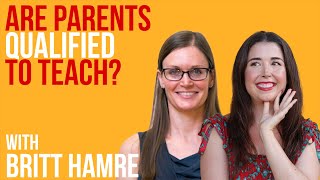
A recorded conversation between host Manisha Snoyer and Dr. Britt Hamre (Columbia Teachers College) exploring whether parents—especially non-professionals—can effectively teach their own children. Hamre emphasizes inquiry, knowing the child, community supports, and practical pedagogy (specific feedback, scaffolding, backward design) rather than formal credentials alone; she shares homeschooling examples, resource strategies (local classes, tutors, online programs), and cautions (ensuring basic literacy/math skills and avoiding isolation). The interview closes with Hamre mentioning ongoing work and an upcoming book.
Chapters
Hi, I'm Manisha and this is Teach your kids. And today we are going to be addressing a question that so many parents ask, which is how can I teach my own children if I'm not a trained teacher? And I could not imagine a better guest to address this topic than Dr. Britt Hamri, who is a professor at the premier teachers college in the country, maybe the world. She is a homeschool mother herself. She has a bachelor's in special education in the area of severe cognitive disabilities. She has a master's degree in early childhood education and a doctorate in curriculum and and teaching. So if there's anyone who really knows about this topic, it's Britt. She is a professor at Columbia Teachers College, as I said, and she is also the co director of the Teachers College Inclusive Classrooms Project, bringing so much beauty to the world. And I know Britt because we collaborated for many years when her child was attending Brooklyn Apple Academy. We had Noah on the show and I was running my marketplace for micro schools. Lots of email, lots of good community exchange. So thank you so much for taking the time to be with us here today.
My pleasure. Thanks for asking me.
It's really great to have you here. So one thing that I'm kind of curious about is what do teachers learn at Teachers College or, you know, what is the mission for Columbia and what you're trying, what kind of education you're hoping that the teachers leave with? What kind of skills did they learn?
Well, our program is titled the elementary inclusive Program. And at the core of what our program stands for is teachers who are able to educate all students and all means all, full stop. And everyone in our program receives two certifications at the end of the two year program and they receive childhood certification, grades one through six, which is essentially a general education. Most people might know of it that way, general education classroom teacher, but they also receive a certification for being able to teach students with disabilities. Right now, New York State, the grades are one through six, but they're moving towards an all grades certification as well for teaching students with disabilities. And you know, we really believe in this idea of and are committed to the fact that students are different in every single way and that we need to consider race, disability, ethnicity, housing status, language development, gender, gender expression. So when we mean all means all, that's what we mean and that it is the teacher's responsibility to get to know their students, to check their own biases and to do a deep dive into what it means to support all students in an educational context. I could talk More about their experiences if you want. But that hits the highlights of really what we're about. We're about supporting teachers who want to be public school teachers and really serve students that are the most vulnerable in our society.
This is a leading question because returning to this topic of how can I teach my own child if I'm not a trained teacher? It sounds like a lot of what teachers really learn is, is how to teach other people's children in terms of checking bias they might have, which a parent would likely not have as much in teaching their own child or to differentiate instruction to different types of learners. Are there. What would you say to a parent who might feel like there are these vague skills they can't quite get their hands on that people might learn at a teacher's college that they don't know?
You know, I think a big piece of being a learner in the world and being engaged as a growing, developing person is that we try as both, well, teachers, but I think just people and citizens in this world to identify what it is that we don't know. And I think even as parents or guardians, a colleague of mine calls it the grownups and kids. Life is that we all have particular funds of knowledge, which is a term by Luis Moll, who coined that. And I think that whether you're a parent or whether you're a teacher, something that I say to my students is that we all can't know everything and do everything, but it's our job to work, to try to teach kids and ourselves the things that we don't know. So it takes a commitment to inquiry, a commitment to having a curious stance, and I don't think you can. And a commitment to really getting to know kids and other people. Right. I don't think we can ever know another person, even if they are our own child.
Right.
Because we're all like they're growing beings. And that's part of the joy of, I think being a human is to recognize the humanity in other people and to see and be on that journey of rediscovery all the time. And so I think that really is what plays into teaching and that there's not a one size fits all approach to doing that.
That's a wonderful answer. So if a parent is just thinking about homeschooling for the first time, and maybe, let's take it perhaps an extreme case where they don't have a college education themselves, maybe they don't think that they're very good at math, but they really want to be able to give this individualized instruction to their child. Do you think that such a parent would be qualified to teach their child, or are they missing out on having a trained teacher in the system?
You know, I don't know if I can really make a judgment on that.
Sure.
I don't feel all the time that honestly I had all the skills, and I think that that was the beauty of connecting with other families, to collectively provide those experiences. So, I mean, honestly, when my son got to be about third grade, I didn't feel like I really had the skills to be as good of a math teacher to stick with that same content area. And so I actually looked for other resources, whether they were free, online, there's a lot of free individual programs, or low cost. But then there were also times when we did tutors, especially when he was older, because I definitely didn't have the skills to teach that higher math. So. And. And you know, I also would say that it goes back to. I think every person, regardless of what their education degree is, has the ability to find what they don't know, connect with people that can help them find those resources. I know. And so. And there's no template for. Just like there's no template for classroom teachers to teach kids. I would say there's no template for what it looks like for a homeschooler. You know, every single homeschooler, I think, has a very different experience. And it's about finding an individualized program or match or creating your own that fits with them.
That is such a great point. And just kind of embarking on a learning journey. You're learning about your child, you're learning about teaching, and you're realizing it's not about sitting down at a desk. It's about finding the right resources to support my child. And everyone has that ability to identify what will help their child learn. I would love to dive a little bit deeper into skills. I mean, I've written a little bit about it myself, just in terms of growth, mindset, praising a child for working hard rather than, oh, you're so intelligent, things that they can actually change, or rather than things they can't change, like, oh, it's so great that you got stuck and then you tried another solution. Or I talk about grit and, you know, pushing past that frustration, how to cultivate that in your child, you know, giving children space to think, choosing a mastery based curriculum or one concept builds upon the next, or anything come to mind in terms of teaching techniques like that that have been useful for you as a homeschool mom or you think that maybe some parents might benefit from knowing about as they embark on this homeschooling journey.
I do think that there's a real difference between praise and encouragement, which is what I'm hearing you say, talking about just saying, oh, that's a good job, or oh, you're so smart. Actually, in our program and in my own beliefs and philosophy, I sort of critique those ideas of smartness and goodness because I think they're raced, I think they're classed. We have ideas about what counts as a good student or a smart student, and that usually prizes very particular white middle class behaviors. So, you know, what I try to teach my students and what I try to do myself is really be specific about the feedback that I give, even for my daughter who is in a public school. And what I, you know, the mantra that I kind of try to stick with and that I teach my students is just describe what you see, just describe what you hear, just describe what they're doing. Because being just specific about, I noticed that you wrote three really specific details to describe. You know, this text that you just read is really all the encouragement that they need. And it's communicating to them the skill that you are like, indicating that they are communicating and doing without putting a label on it being good, bad or indifferent. So it's giving specific feedback. I mean, I will tell you that there are many educators and scholars that are actually starting to critique this idea of grit, especially African American women. My colleague Bettina Love has a new book out and but her first book, you know, We Just Want to Survive, you know, really sort of critiques this idea of grit as being very white and that, you know, kids that face, you know, a lot of marginalization and suppression and in schools, you know, have grit just by the fact that they're able to resist it and not let it destroy them. So it's something that I do try to think about myself with my own kids.
Yeah. And it's so important to strike that balance. I think learning about grit has been helpful for me, even as a woman entrepreneur and encountering so many obstacles and trying to raise venture capital and all of this type of stuff. But I feel like what I've learned is when I see a challenge, when I'm trying to solve a problem and I see a challenge thinking of it as an opportunity, that if I can figure out this piece of the challenge, I'll be that much more far ahead than, sorry, it's a bit capitalistic, but my competitors are the people. There's a reason that people haven't solved this. And so that's a kind of fun opportunity. But then also recognizing support is needed, you know, and I need people, for example, for me, I need to be surrounded by a community of women entrepreneurs who can uplift me and make introductions. And I value, obviously like male mentors and male investors, but I know that I really need that support and also money to help make my ideas thrive. And you know, what a huge support it's been to get a grant to work on this after really kind of just, I mean, I lived in, I shared a room with some of, with a family at Brooklyn Apple Academy when I was my first startup. I slept in a room with their kids. I was like under such a, you know, such scarcity at that time and really afraid to ask for money to support my ideas. And yeah, so I think that, you know, it is a balance and just telling people, oh, if you work hard, you're going to achieve whatever you want. That's just a small piece of the puzzle.
Absolutely agree. And I just want to highlight what you just said. You know, again, the same, you know, very similar. Another little sort of mantra that I try to, you know, to say often to in my own family and also to all of my students, is that a conflict or a challenge or a problem is an opportunity. Like if we can always refrain, you know, reframe it in this idea of it's an opportunity for learning. It's like, how can we take a conflict, a conversation, a time when we're uncomfortable, a time when we supposedly fail. And really it's those times that are the best learning experiences, as opposed to always being right or always having something be easy. That's not where we're developing our muscles for growth and really becoming better at something, for sure.
And we had Rohan Mahimker on the show who built Prodigy Game. And I love how it's supposed to be like Pokemon this math game. And kids love it. And he says what they do is they really work to keep kids in the zone of proximal development where it's not too easy and it's not too hard and just kind of trying to assess that all the time. Julie Bogart, who founded Brave Writer, she posted on Instagram the moment a child starts to cry, the lesson is done. She also said that in kind of a way that rhymed and was more witty than I just said it. But I think you can get the point. And a parent is really able to gauge that in a one on one environment in a beautiful way. So you Mentioned Bettina Love and I can't wait to check out her books. Are there any, you know, like for a parent getting started out, who's excited, who wants to develop these great teaching techniques, do you have, you know, two or three favorites that you would recommend?
I think something that I would encourage all people to do is to really think about what their kid loves. And I think that anytime that you can focus learning around what kids are already passionate about and I think that that would connect to this idea of zone of proximal development. I know that oftentimes thought of as connected to skills based development and education, but at the same time I think it can also be around curricular content as well. It's like what are kids, what do they love, what are their passions, what are they interested in? And then how we can like stretch those things that they love and are passionate or will and want to engage with and then have it move outward from there and really connect to other content areas areas and stretch those development and I think just really taking a close look at what that means for their children and being open to really following their path.
So, Britt, I know you are just your whole nature is inclusive and supportive, but I really want to get at some of those questions on people's minds that they might be thinking when it comes to homeschooling. And I'm wondering, you have raised your child in a large New York City homeschooling community. You know, there's some homeschooling kids who really just never learn how to read and have pure unschooling philosophy. And then on the other hand, there's a lot of children who kind of play Minecraft all the time. So I'm just curious, you know, what you, what do you think maybe are some things that parents might want to watch out for when they're starting to homeschool their kids.
For me, fin made it easy for me around sort of that first part around reading. And I think that he was unusual in the sense that he was essentially reading by the time he was three and so I didn't have to do a lot of that kind of work. And I think it was, you know, he did start out in public school and I was hopeful for it, that it was going to be a success and a good match for him. But I think that kindergarten, pre K and then kindergarten and then first grade sort of raised the issues over and over again around for him. He just wasn't, he wasn't challenged in some ways, but he was also a very creative child. Who liked to do his own things, at his own time, at his own pace, and in his own way. And that doesn't always work well in school. I do think that kids learn how to read in different ways and at different times, but by the end of second grade, kids should be able to read. And how that happens, I think is different for everybody. I didn't do a whole lot for my. For Finn to learn how to read. My daughter developmentally was very interested in books, but she pretty much learned how to read by January of second grade. And at first we were kind of like, okay, when's this going to happen? And then, you know, it just kind of. It took off. She had a variety of amazing teachers that, again, supported her through the process, and it was still, again, within sort of that range of normal or typical kind of development of reading. So she went into third grade as a pretty solid reader. I do think it matters in our society that kids have literacy skills and basic math skills. When I think of literacy skills, I think about being a critical literacy engaged citizen. What does it look like to synthesize and analyze information? It doesn't necessarily have to always be about reading and writing per se, but it needs to. Those are skills that build upon it, whether it's how to watch videos and analyze and make connections across time. So, again, I think it's hard and complicated to sort of figure that out. For me, I really wanted Finn to have basic, you know, math and an ability that wasn't his strength as much as reading was. But he struggled a lot with writing. So I found resources, and eventually, you know, he had amazing, you know, people to work with to help him develop those skills over time. And still to this day, his handwriting, for example, is a challenge, but he types. And so it's also letting go, I think, of what counts, again, as being a literate person. But at the same time, he's learned skills, and he's actually an excellent writer. But he types. He doesn't take notes, he doesn't write, handwrite per se, but he uses those other methodologies. So I do think that kids, again, should have some basic reading and writing and math skills, as well as knowledge about the world in science and social studies, broadly defined, so that they can pursue a professional and intellectual path, whatever that may be.
Right. And it seems like empowering them to be able to be engaged in civic action is important as well, to be able to process that information and be a critical thinker. I'm sure people would love to know what some of your favorite homeschooling resources are. I always say this with a caveat that the great thing about homeschooling is you get to choose a resource that works for your child, but would just love to hear what you used and found. Worked well.
Well, one of the things that I did learn about Finn was I know that there are a lot of amazing online resources. And as much as Fin was really interested in technology, he was not the type of kid who could just do an online program from beginning to end and sit at his computer for three hours and then have the rest of the day free, which I know for some kids that works out really well. Finn is the type of person who really wanted to do hands on activities. So the best resources that I came across were really found through local homeschooling groups and listservs where parents and or family members, I should say broadly, would organize homeschooling classes. And they might be like museum classes where they would, you know, for years he did the homeschooling classes that were at the architecture museum, I believe, on Lafayette. Those were really amazing. Learning about history through architecture in New York City and beyond. There are other professors, maybe you will have them on their podcast, who would teach about ancient history at the Met. So lots of field trips. I organized field trips myself through the New York Historical Society with colleagues and friends that I met over time. So listservs and finding, just doing Google searches through the local community of finding out, you know, what's out there and then talking and meeting people and having conversation about what our kids were interested in, would sort of go from there and really sort of explore what some of the options are. I think that even in a more suburban or rural area, I've been amazed to see the way so many co ops and other homeschooling communities have found themselves to have something that, you know, is a little bit more community organized and community based. And so those, those were the type of experiences that we found and really was a matter of connecting with people, showing up to events and the good old basic, you know, Google searches and talking to people really even, you know, not just here in New York City, but colleagues and friends from around the country that we just, you know, we shared our experiences.
Stupendous. I mean, New York City is an extraordinary place to homeschool your child, but even in smaller areas there are still museums and events. And it sounds like you learn that Finn was really a social learner, that he liked these classes and experiences with other people and so valuable to know that about your child. I hear this word tossed around all the time and everyone seems to have a different definition. I think it relates to what you said and that is the word scaffolding. I mean, so it's kind of like this sought after ideal that a great teacher knows how to do, scaffolding. And that's something you learn at teachers school. And I was wondering, you know, what you think, how would you define the word scaffolding? And in the context of a child who's taking many different classes, how do you scaffold their learning? Is there? You know, how do you build an arc? How do you have one concept build upon the next, if that's even important in their learning process?
In about, I can't remember, I think it was around sixth or seventh grade, Finn started taking writing classes at Writopia. And so in that way what I would try to do is I pick different content areas. So when we first started, I was just pretty much like, which of these options look good to you? Whether it was like graphic novels, whether it was informational writing. He had done a lot of informational writing when he was younger. He read a lot of fiction, but he did a lot of informational research and writing himself. You know, so to get back to this idea of. So, I mean, those are sort of some big curricular pieces that I really sort of again, I started with his interests and then I tried to make sure that some of those other important things, like becoming a good researcher, becoming a good note taker, were skills that he developed over time. How do you cite readings? As he got older, you know, it was like note taking on if we're going to do, say for example, informational texts. It was like, all right, what's something that you're interested in? I think one of his first research studies was about the development of Minecraft. I think he also did one like on the history of Star Wars. So I mean, not my field of study, not particularly my interest, but I let him pick the topic. And then what we did was sort of, I scaffolded that project by starting with like, what do you want to learn about this? And so part of it was just like sort of those conversations, documenting some key questions or documenting maybe at first all of his questions and then looking at the questions more closely and saying, okay, which two or three are we going to focus our study on? And then we'd sit together and say, okay, you want to learn XYZ about the history of, you know, Star wars or XYZ about how Minecraft was developed. And then sitting side by side and doing some, like, searches together. Well, then the next step in having a question and researching your question is finding resources to do it. So it's really just taking the time to, to really break down those steps piece by piece by piece and, and talking about how not only having the experience which he was of going through each one of these steps in the process, but also really making it evident through the words that I used describing our scaffolding process of learning about the history of Minecraft craft. Then, you know, finding resources. Now we're, now that we've found some resources, how do we choose which ones we want to include? Which ones are giving us information that, you know, address our question? How do we take notes? We wrote notes on post, you know, on little post it notes and sort of, you know, the scaffolding is about those steps, breaking down the steps piece by piece by piece, enacting them in a very systematic way, and then talking about the enactment of them in very specific ways so that then he's able to pull from this experience of this is how I research for a project as like just one example.
Yeah. It almost sounds like, you know, rather than specific steps for each skill, there are these threads of learning how to become a learner, inquiry research that extend throughout all of these different topics that he's studying and that ultimately you're trying to help him understand as specifically as possible how he learns and how to learn kind of together, which is a really great way of thinking about scaffolding and taking your time to learn, which is valuable. I think even in tech we talk a lot about untested assumptions and instead of just kind of racing ahead, trying to slow down and break down all the pieces and take a closer look at them together, it's a really great approach, I hope. You know, I wanted to address this because I think when people hear that word scaffolding, it can feel really overwhelming and like a teachery thing that you might learn at school but don't know how to do as a parent, but can perhaps come quite naturally.
I was just going to say, but we do that as parents too. Right. If we think about how we help kids scaffold learning how to walk. Right. How did they start? They start by we're just like holding them, bouncing them, and they're like straightening their legs on our laps. Right. And then the next step of that oftentimes is that they're standing up on the floor, but like walking around the table, but holding onto the table for sure.
And one of the things I was Talking about, we had a conversation with seven homeschooling parents, and I mentioned Naval Rabicant, who's an investor and entrepreneur. And he was saying how parents have these gut instincts that have evolved over billions of years of evolution. And. And so. And those instincts are designed to help us raise our children. And those instincts can be used for teaching them skills like math and reading and writing as well. And so I think often, unfortunately, I mean, I was a teacher as well, parents are often told that they don't know what's best for their own children. And so it can take some time to learn how to trust yourself. But you'd be surprised how many instincts come naturally to you in that process. So I'm wondering just, you know, along the scheme of parents as teachers, and so many teachers are choosing to homeschool their children, I think partially because they don't have that lack of confidence. They know, I mean, okay, I know how to teach. I know what teaching is in the classroom. Do you think that you had any particular advantages over people who are not teachers when you. You know, things that were easier for you because you had that training?
I would say curriculum development.
Sure.
I would say that. I think that something universally all families feel is the concern and the worry that they're doing the right thing by their kids, whatever that looks like. I also have those same feelings 100%, where I'm like, should. Was this the right call? You know, every year it's like, I don't know, should we keep doing this? You know, so there were a lot of questions along those lines. Do I think there's some advantages? Some of the advantages, I think were that because I had been in the field for so long, I'm able to take a breath a little bit and.
Say.
You know what? I do think that most kids get to the place that they. That we want them to be as young adults, and even if the journey is different. And I would say that about any kid, whether they're in public school or not. You know, I have a daughter who's two years younger than Finn, and she's about to graduate, and she's always gone to public schools, and that was just the perfect match for her. And we were very fortunate in that way, in the sense that we were able to do these two different things, because for me, I just, you know, it's a family choice for sure, but I think it's also about really listening to your individual child and what that looks like. So I think that that was an advantage that I think was helpful for me is that. That I could be okay and as concerned, for example, as I was about, is he going to develop the skills that I want him to have as a writer? It took a long time to do that, and yet that's one of his biggest strengths now. So I think that I was able to sort of feel. Find a sense of calm, even though there were many years where I wasn't sure it was really going to take off. And then once it did, I was.
Like, okay to trust the pace. I think that's one thing we learn as a teacher that Benjamin Bloom says anyone can learn any skill given enough time to do so. And I think that's a bit of an exaggeration. I think there are some people who are great at certain skills and shouldn't have to learn all the skills and. But you do see as a teacher that learning doesn't happen in a linear way. Sometimes it goes slowly and then suddenly there's a dramatic spurt. And the more we can kind of give our children that space and trust, these ideas are marinating. And if they're learning at a pace that feels good to them, the learning will happen. I mean, it's just like teaching a child how to walk. I mean, teaching a child how to walk, that braces an oxymoron, right? We don't, you know, we don't stand next to our child and say, here, you walk. Walk this way. We hold out our arms and they have this incredible desire to run to us. And then they figure it out because they're driven by that desire. Perfect combination of grit, growth, mindset, and love of learning all bundled into one personalized education. But, yeah, that's so wonderful. So how come public school was a good fit for your daughter?
When my kids were young, we did like a little preschool for a couple days a week, obviously, so I could go to work on a regular schedule. And she just always loved it. She was so happy there. She was happy to go. She was displeased when we would come pick her up when she started going five days a week. Even before that, there were, like, when she was 2 and I would take Finn to. To pre K, I had to stop taking her with me because she would cry because she wanted to stay and was not allowed. And I was like, I can't deal with this drama. It was just too much. So she just really loved it. And I mean, you know, my kids, again, had a lot of the same teachers, actually. And he was just, you know, not. He was again, what he said to me Once was like, I just don't understand why people, why, why we all have to do the same thing at the same time in the same way. And that wasn't always the case. There was a lot of, you know, flexibility at his particular public school. There was a lot of project based stuff, but there was also the end of the day and if he, or the end of a period and if he wanted to build something, he wanted to keep building something. And Haven was pretty flexible about being like, okay, I'm done now, I'm ready to go to the next thing. And so she just always really enjoyed learning in a very, a very social and, and not even just, it's not that it was so social, but she liked going to the same place every single day, I would say five days a week. Right. Versus Finn in a lot of ways he kind of had a college, his college, let's just say his college course schedule now on a week to week basis is very much like it was when he was in third grade. It was like Monday meant, for example, going to Apple Academy, right? Brooklyn Apple Academy. That was his Monday. And on Tuesday, you know, he did this activity in this class. On Wednesday he did this and that, you know, so for him, like having that every single day be a little bit different, seeing different friends on different days or different friends on Monday and Wednesday or Tuesday and Friday or you know, all of those kinds of aspects. For him just, he really loved that. And Haven just really liked and enjoyed having flexibility within her day, but going to the same place and having that consistency throughout. And she's just had brilliant teachers from beginning to end, you know, and they both have just in very different contexts. And again, it's just about listening to.
Your kid that's so wonderful. And what a gift to your children that you do listen to them so deeply and follow what their needs are. It's, it's funny, you know, I think it's almost kind of the difference between someone who's an entrepreneur or a professor, a researcher, and someone who just really likes going in the office from 9 to 5 and having the tasks outlined for them. And there's a need for both types of people in the world, for sure. I mean, not everyone can be a crazy entrepreneur, you know, so that's, that's just so wonderful. Britt. I love hearing that perspective of, you know, school working in that way for some children. And I do think that we are moving towards an education system that's going to be more decentralized, more curated, perhaps look more like college. But as we think about customizing our children's education, recognizing that some children are going to do really well with the same thing every day and sometimes that might change also throughout their childhood in terms of what they crave. Can you envision a way in which we could fund a more diverse school system without it taking away from the education system that we have now, where that is more parent driven and community driven and doesn't look the same for everybody?
I guess I'm not so sure it does look the same for everybody in some ways. When I attend, you know, when I walk into public schools all around the city, I feel like there's a huge diversity of what that looks like. Even teachers on the same grade level can have very different looking and sounding classrooms. And what happens, I mean, the other thing that I would say so, I mean, I think that it's hard to know, like there isn't, you know, there isn't a lot of clarity of exactly what all the different classrooms and schools like, look like. I do think that there are schools that have commitments. And so while we might even share a curriculum or we might even share commitments and value statements, how that's enacted could be very different. So I think it's hard to know. I think that always connecting at the local level is the place where we're going to be able to have those community commitments. I mean, again, my daughter goes to a small public school. It's just, it's a local school. It's not screened. New York City has also it's whole issue around screened middle schools and high schools. And you know, and some people want that.
So what does that mean for. To be, for it to be screened?
Screened? It means that schools. So for example, you've got the, the schools there are particular high schools where you have to pass a particular test to get in, like Stuyvesant and.
Right, okay, right.
So it's application based and versus, for example, in the suburbs, in a way it's kind of screened because you just go to your localized high school. But that really is based on how much money you make.
Right. How much real estate you can afford.
Yeah.
How much you can pay for your house. Exactly. So it's the same as a private school. So shifting gears a bit before we wrap it up, Britt, you did mention that having the ability to develop curriculum was helpful to you in being a homeschooling parent. For those parents listening who might not be willing to get a doctorate in curriculum development, but are interested in maybe developing this skill, are there any tips you have or books you recommend for getting started and being a curriculum developer for your child.
I would say one of my favorite resource that I use in the curriculum class when I teach it is, is understanding by design. And it's basically backward planning for curriculum. And it starts off with, what is it? That essentially, what is it you want? Students, kids, you know, what do you want to learn? And then you go to the very end and think to yourself, what do I want my kids to be able to do, know and accomplish? And how will they show me that they've learned the things that I wanted them to do? And so it's sort of like coming up with the first step is like, you know, what do you want them to. To know? What do you want them to learn? What are sort of like the. The goals or the standards, if you will. And then the next step is like, how will I know that they. They learned those things? And then you just do backward planning. What are the resources involved? And then that, to me is the fun part. It's like finding every resource you could possibly can and coming up with ideas and activities and learning experiences that help get them to that culminating project at the end. So I find backward design really helpful as a framework because it helps me think about the beginning and the end. And then I can go back through and really sort of develop over time where I'm going. So I have the vision. It's like I have the vision of where I want to end up. And so it's really about getting there.
I love that. I'm not sure if you know, but my first business was a French language school for adults. And I always found that so helpful to think about what, what are the goals for this class? What do I want people to learn? And then also what do I want them to be able to do? Because those are two things. You can learn all the French verbs, but you might not be able to have a conversation with a French person. And it's funny that often in classes you can tell the teachers aren't really thinking about that at all. What goals? Especially classes for adults, it's often just more social. But even something just as simple as thinking about what you're. What you want your child to be able to do in the world when they're an adult, what are they, you know, and breaking it down from there, what do you want them to learn? What do you want them to do? And it can also ease a lot of that kind of feelings of fear that you're failing your child. If you have that clear Set of goals. And I really like that. I have been actually thinking a lot about goal setting in my own life and manifesting positive things. I was listening to a podcast by Andrew Huberman. I've been getting into him lately, and he was talking, talking about, you know, how it's, you know, sometimes it's difficult to have a clear outcome, such as, I will be able to have a conversation in French, or to measure the quality, you know, if you want to be a writer, how do you measure the quality of your novel? But just having those, you know, what do you want to learn and what do you want to be able to do that shows that you have achieved that goal is so fantastic to think about in designing curriculum. So hopefully that'll give someone some great ideas for where to start and what tools to use, whether that's tutors or classes or curriculum. And also helpful for children to learn how to design their own curriculum, too. So. Great. Okay, so is there anything for people who are just starting homeschooling, you have done it from childhood to adulthood. Successful homeschooling story. Is there anything we left out? Any advice you would give to a new homeschooling parent? Any mistakes you want to help other people avoid? Anything we didn't touch upon today.
I think that community is really important in not finding, not. Not ice. Not feeling isolated, so really connecting with people, talking about your experiences. And, you know, in the same way that we're saying and that we are committed to this idea that there's no, you know, one way for a kid to learn, I think that we also have to go easy on ourselves as families and say, there's no one way to homeschool my kid. And. And so that we share and that we build these communities without judgment, but as a way to. To share ideas but also be okay with being like, yeah, that's a great idea. I can see why that would work for your kid. This isn't gonna. That wouldn't work for mine. And have it just be like that, like, that's okay.
I don't see how that can work for your kid. But I appreciate you and it's your decision, not mine.
Absolutely. And I'm so glad I have this community right in these friendships to talk about all of the different ways. Because then also sometimes too, it'd be like, I hadn't thought about that. I'm definitely going to try it or thank you for this resource. I'm definitely going to try to find out how I can enact it in. In the journey of homeschooling that I'm trying to provide for my kids. So it's all of those things.
One of the extraordinary things about the homeschooling communities I witnessed in New York City and San Francisco is that because people are uniting around the shared value of education and whole child development, people who have very different perspectives are able to come together and live together. And what we see in society at large is that we're more and more divided between the right and left. And it's really nice that there is still something people feel so passionate about that can bring them together in community. And there's reliance on each other for sharing skills like classes and childcare even, which is really quite lovely in my opinion. To wrap it up, I'm going to ask you my iconic question. That was a 15 year old homeschooler just dubbed it my iconic question, so I'll take it. This is a question about learning because I am passionate about learning and clearly you are passionate about learning. Is there something you're learning right now? Ideally something completely unrelated to anything we've talked about that you want to share?
I actually recently did a revamp of some of my classes. It's been really great. I'm reading this excellent book called. Well, I'm using this book called Social Studies Studies for a Better World. It's anti oppressive social studies teaching and something that I'm really trying to do a deep dive into and something that I think that I have actually been working more and more and more to educate myself about is settler colonialism and really learning more and more about the indigenous people of our country and around the world and what amazing environmentalists they were even before they, you know, we had the word environmentalist. So I think that that is something that I'm really trying to educate myself about. So that book has really helped me. And then I'm reading, I just started reading to do a deep dive into learning more about, you know, what we can do to save our planet is Naomi Klein's book On Fire the Case for the Green New Deal. And so those are the things I'm trying to educate myself about right now. And solar panels. And just so I would say that that is actually probably the big thing that I'm trying to. And I was inspired actually by my daughter who is interested in going into environmental studies. So it's a little bit of a collaborative deep dive that we're doing now. But I would say.
Those are a.
Couple of the things that I'm thinking about a lot.
Wonderful. Well, thank you so much for taking the time to talk to us about teaching and how to homeschool. And I hope that parents will, after they listen to this, will have some more confidence in their own ability to teach their children, whether that child is going to school or they're homeschooling, that first of all, they have instincts that have worked effectively in the past to help their children learn, that trusting your child's pace is so valuable and you can have confidence in that pace and that there are also techniques you can use, such as trying to figure out what your goals are, how you want children to learn those goals and demonstrate those goals. So this has just been so wonderful. How can we follow your work? What's the best way to see what you're doing?
Right now I'm really focused on my teaching. I have a new book. We have a book coming out with Norton. We're in the final stages of finishing up and working on it with my colleagues, Dr. Celia Euler and Erica Hughes Hooper. So that's sort of what we're doing in the background and trying to finish that up. And hopefully that will. That will be out within the next nine months to year.
Well, thank you so much again for your wisdom. It's been absolutely wonderful having you here, and I can't wait to read the new book when it comes out.
You're welcome. I really appreciate you reaching out to me, and this was a lot of fun, so thank you.
More from Manisha

Contributing to Florida Prepaid Plans (2026–2027) | Step-by-Step Guide for FES-UA Families

Contribuyendo a los Planes Florida Prepago (2026–2027) | Guía Paso a Paso para Familias FES-UA



Finding Providers & Services in the Marketplace (Families) | Step Up For Students (2026–2027)

Encontrando Proveedores & Servicios en el Mercado (Familias) | Step Up For Students (2026–2027)




