Game-Based Learning: The Prodigy Approach with Rohan Mahimker
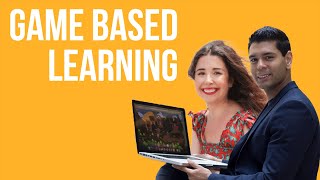
Rohan Mahimker, co-CEO of Prodigy Education, explains how the company uses game-based learning to teach K-8 math. Prodigy started at University of Waterloo and aligns with state curricula while offering free tools for teachers and parents, with optional paid memberships. The platform has shown impact in under-resourced schools and homeschooling.
Chapters
Hello everyone. This is Manisha from Teach youh Kids. And we are a podcast designed to support families who are customizing their children's learning, really trying to build that ideal educational experience to suit their child's unique needs, whether their child is homeschooling or attending a traditional school. And today I am so happy to have someone here who I deeply admire and a friend, Rohan Mahimkar. He is the co CEO and founder of Prodigy Education. And if you're a parent with a child over six, you have probably heard of Prodigy. It is a global leader in digital game based learning thanks to its award winning and standards aligned Prodigy Math and Prodigy English Games. In fact, more than 7 million students a month learn math with Prodigy and it's been named the most popular supplemental classroom tool in America. I think every child in America was playing math on Prodigy Game during the pandemic for sure. And more and more are joining every day. I discovered Prodigy Game during the pandemic while we were looking for tools to support children for learning math during this crisis. And in fact, as I was trying to help families find curriculum, a lot of parents told me that their children were playing Prodigy Game. And as we saw more and more kids really loving playing the game and more and more parents were approaching us and saying, oh my gosh, we are really in a crisis. We need math tutors. We actually founded a nonprofit called masteryhour.org which is where we recruited college student volunteers to tutor children online. And what we did is we actually had the children play Prodigy Game and then the tutors would coach them as they went. And this method of combining this really well designed, fun digital learning app with a live tutor resulted in children just zooming through two or three grade levels in the matter of six months. It was incredible to watch and Prodigy has just been an invaluable tool for us. So thank you so much for building such a wonderful tool, Rohan, and I'm really excited to dig into it with you more today.
What an introduction, Manisha. I'm very excited to be here.
I was at the south by Southwest Education Conference and I was in this kind of mixer and we had broken out into different groups and there was this like very sweet, humble guy. I thought maybe, you know, he was an early stage startup founder and he was in my group and he was asking the, I guess investor leading it questions about telling your story. And I kind of started looking at his name tag and I was thinking Rohan Mahonker. And I realized no one there knew that you were the leader of one of the biggest math apps in the entire world. And you just were so humble and nice and eager to learn. And I totally fangirled out and said, oh, my gosh, I'm such a fan and I need to know you. And you were very gracious. And we ended up meeting up for coffee and having a wonderful talk about Prodigy. So very happy that happened.
I was very excited to hear a lot of your stories as well. You've done some amazing things with the nonprofit that you built, so the results really speak for themselves.
Yeah. And I think it's so cool how, I mean, you can build a tool like Prodigy, which, if I understand correctly, was designed to be a supplemental resource, and then someone like me and other homeschooling families start using it as a full curriculum for their children. It just takes on a life of its own, which is really interesting to watch.
I think the lines actually between supplemental and core resources are being blurred quite a bit now. So you're not alone. I've heard that story of other parents, and specifically homeschooling parents, using Prodigy as part of their core curriculum for math.
Which is great, for sure. So I think everyone here is really curious to hear your story. You built Prodigy kind of fresh out of school, it seems. What gave you the idea and what's the origin story?
Yeah, so you're right. We actually built Prodigy or started the company when my co founder, Alex, and I were mechatronics engineering students at the University of Waterloo. So in our last year in engineering, our program gave us essentially eight months, and they said, do whatever you want. Build your own project. And you had to go all the way from kind of ideation and identify a concept that you wanted to build all the way to a prototype that actually worked that you could put in front of somebody. So that was an amazing opportunity for us to really test the idea and understand what we wanted to build and if this would worked. And the inspiration for Prodigy actually came from our own childhoods. So for me, I had grown up in a family where there was a lot of emphasis on math education. My parents didn't necessarily care how I did in gym class, but I had to be top of the class in mathematics. So they had put me in an after school tutoring program. And I had a lot of worksheets in my early childhood. And I still remember the experience of coming back from one of these tutoring centers with a stack of worksheets about that thick, going through pages and pages of these every single night, and absolutely dreading that process. When we got to the University of Waterloo, we said, how do we make this process more engaging for kids? And can we even flip this on its head where it's not the parent or teacher pushing a particular solution onto a student, but the student would want to do this themselves? So we looked at what we liked as kids, and for me, that was video games like Pokemon. And we decided, hey, can we blend these two and make learning math as engaging or even as addictive as a Pokemon style video game? So that was where Prodigy started. We had a lot of learnings in the first year. I will tell you that I was, I was not very knowledgeable in the education space when we first started because we were 23, straight out of school engineering students. And we just sat with a lot of parents, teachers and students in that first year and a half and learned what people wanted from our product and built features accordingly.
The fact that so many people are using Prodigy today is really a testament to how closely you listen to users and integrated feedback. Even though you weren't so knowledgeable about developing curriculum in the beginning, you really use that feedback to help it become something really exciting and fun for children around the world.
Absolutely, yeah. And to one of your earlier points, the fact that Prodigy has alignment to the state curricula in the US and the provincial curriculum in Canada came from some of our early users. And one of the first requests we got is, so my kids were doing all these math skills in Prodigy. How does this actually align to what I'm teaching in class? So that was a really big emphasis. And it wasn't us, by the way. We've had help from professional educators that are on our team full time that actually develop and build the curriculum itself.
So great. And so if you're not familiar with Prodigy Game, one of the really special and unique things about it is that whatever state you live in, Prodigy Game has a list of all the standards in that state, all the core concepts you're supposed to master for each grade to do well in school. And as your child progresses through the curriculum, essentially you sign up and then you're given a problem to solve. And from the very beginning, Prodigy Game is assessing how you're performing relative to the standards in your state. And then once you've mastered a certain standard, the game adapts to move your child onto the next standard. So it's really helpful for parents to make sure that their children are on track and a grade level before we dive into mastery based. I want to point out that I'm not sure everybody is familiar with the term mastery based learning. And I have a certain way of talking about it, but I would love if you could share your own definition of mastery based learning and how you integrate a mastery based approach into the Prodigy game.
Mastery based approach is actually is essentially building up on the fundamental skills and prerequisites in order to get to the next skill. So this works especially well in math, although it works in a number of other subjects as well, because math is by nature very cumulative. So, for example, unless you learn to count, you're going to have a very hard time doing addition or subtraction. Unless you learn addition or subtraction, you're going to have a very hard time multiplying. Unless you learn how to multiply, you're going to have a really hard time doing fractions as an example. So mastery based learning is, I think, especially effective in mathematics because it takes the approach of looking at what prerequisite skills you need in order to learn or get or have the prerequisite knowledge in order to learn and get to the next skill. And there is a combination of mastery based learning and scaffolding, which we actually employ within Prodigy. So let me give you an example. Let's say you're learning to multiply by five and a student is having difficulty with that. If we determine that, we'll actually pull that student back to a prerequisite skill and actually try to identify which prerequisite skill that student is missing. So if you can't multiply by five, maybe we'll pull you back to counting up by fives and skip counting. If the student is still having difficulty with skip counting, we'll pull them back up to skip counting by ones or twos. So in that way we're actually identifying what the prerequisite skill is that they're fundamentally missing. And then once they learn that, we kind of scaffold them back up to the previous skill that they were in.
I think sometimes it's a bit tricky to understand the difference between what's scaffolding and what's mastery based learning. And I love this idea of if I understand correctly, mastery based learning is somewhat like climbing up a flight of stairs. There's an order in which you learn things to make sure that you've mastered the fundamental skill before you move on to the next fundamental skill, where scaffolding is making sure you have that foundation. Let's say they've moved up to multiplication, but you realize something else in counting is missing. You can pull them back in order to jump back up the stairs. It's Like Candyland, something like that.
It's a great analogy.
Yeah, I love that. And I find that this approach, another part of mastery based learning, as defined by Benjamin Bloom, is being able to learn at your own pace, which is something I think Prodigy Game does so well. There's absolutely no peer pressure. You're just learning at your own rate. You keep getting problems at the same rate as other people, and then you move along. When you have taken the time to master a skill and all studies show that it doesn't matter how fast you learn. What matters is that you learn. And someone who learned a concept more slowly can master it just as well as someone who learned it quickly. And in learning, there's always times where we're speeding up or slowing down. And it's just so great that you allow this fluidity in learning. So I mean, how incredible that you have scaffolding and mastery based learning and this amazing app that's adaptive and it can tell what skills a child is missing. I think a lot of people don't realize how challenging adaptive learning software is to build. Could you tell us why? Why is it so hard to build adaptive learning software?
There's a few challenges. The first one being as we were building Prodigy, we've taken a look at all of the different state curricula across the United States, and then we had decomposed it into over 1500 of what we call skills. So skills are kind of our unique block of learning. And this is how we employ the mastery based approach. We actually keep you on a skill until you master that skill, and then we progress you on to the next skill in the curriculum. And it matters in what order you learn those skills as well, as we'd reviewed earlier, so that's kind of one of the challenges of employing adaptive learning. The second one is you have to be constantly learning and adapting the curriculum. And as we get data from over 7 million students a month on how they're actually progressing through the skills, that provides us with a really unique opportunity to learn. What are true prerequisites and post requisites? What is the pace that we need to progress kids through the curriculum in? How do we. If a particular skill isn't being. Isn't being taught effectively in the way that we have it in the curriculum, what is another way to potentially teach that skill? So one example is, let's say you're counting and you employ a number line to count. So you'd have each one of the ticks on the number line and you Skip count by two. So you know, two, four, six, etc. Another way to count is a place value chart. And in the classroom, teachers often employ multiple different approaches towards learning the same skill. And we've tried to actually replicate that within Prodigy as well. And that just gives kids different mental models of how to approach a particular concept in the mathematics curriculum.
I love that. And many of your questions, you also have the option for students to watch a video or get a hint or hear the problem. And so you're really drawing on that multisensory approach for learning that's so fascinating. So how do you determine at what point a child has mastered a skill? Is it after they've answered 20 questions correctly? And how did you determine that point?
Yeah, that's a great question. There isn't actually a set question limit that a child must hit in order to master a skill. We base it upon the percentage, essentially, of correct answers in a certain time frame. So let's say a child answers the first five in a row correct. That might qualify as a mastering a skill. But if they're answering one right, one wrong, one right, one wrong, then they might more than five questions answered in order to deem that they've mastered that skill, because clearly, they're still making some mistakes, and there might be some concepts that they need to clarify, get clarified along that path.
So one of the things I think is really interesting is how you've thought about social emotional development and combined it with the way you approach learning math. And in my own experience working with students, I found that children with very low confidence in math start playing Prodigy, and all of a sudden they feel like they're good at math again, and they enjoy it, and it's just changes their entire view of themselves. Almost miraculously. I know that your algorithm automatically progresses students through standards with the goal of keeping students in their zone of proximal development, where they're optimally engaged and learning, and this keeps them motivated and encouraged. Can you tell me, how do you define the zone of proximal development? And what are the ways that you're building your app to use this to keep students motivated and encouraged as they learn math?
The zone of proximal development is a really interesting concept that we actually built a lot of how the algorithm adapts around where there's a bit of a seesaw. So on one end, if kids are getting all the questions right, that means that they're really not learning anything, but they might be having fun and kind of going through the game and advancing really quickly. On the other side, if the content is really challenging for kids. They might be answering the question slowly and progressing more slowly through the game, but they might actually get frustrated to the point where they say, hey, this isn't worth it. I'm going to give up. I'm going to go do something else. So there's a constant balancing act in terms of how you keep kids in their zone of proximal development. One of the advantages that we have because we employ game based learning is that the video game in itself provides some intrinsic or, sorry, extrinsic motivation for students. So they're motivated because they're leveling up their character in the game. They're motivated because they're advancing through various quests and zones within Prodigy. But then you also have the intrinsic motivation of actually mastering the various skills in the curriculum and learning. And I think if you combine those two things, we've seen some really powerful results. So I'll give you a specific example. One of the first and kind of favorite schools that's near and dear to my heart is a school in the Toronto area. This is in a very socioeconomically disadvantaged area. And a lot of these kids were working, you know, two, three, four grade levels below where they should be. Their computer teacher had actually introduced Prodigy to their school and had made it available before class. And just for context, the school had some very basic problems like attendance was an issue. So students either weren't showing up to school or weren't showing up on time. Motivation was an issue. So a lot of the students weren't answering a single math problem at home and they kind of refused to do any work outside of the classroom hours. And that made it very difficult to catch these students up to grade level, much less kind of progress them even beyond. And through the introduction of Prodigy. In this kind of before school session that this teacher set up, a lot of the same kids who previously were showing up late or not showing up actually started coming early for the opportunity to play Prodigy. A lot of the same students who were previously refusing to do a single math problem at home actually were answering hundreds of math problems per week because they enjoyed playing the game and were motivated. And for the first time in a lot of these students lives, they started to feel like they could be successful in math. And that's because, as we discussed, if there was a skill that a stepchild didn't know, we pulled them all the way back to prerequisite skills. Although they were in grade three or grade four, we, they were actually working at a grade one or two level in in the Prodigy curriculum. And we're starting to answer these questions successfully. And as they close those gaps and built those foundational skills, they started to increase their math confidence. And that was a really powerful thing to see in person. And it's almost a switch that you can see in the child because it goes from, hey, I can't do this. I'm really not good at math, to, okay, maybe I can be successful in this. I want to try and I to keep going and learning.
It's amazing how if you are able to make a child feel that they are capable, their learning accelerates beyond belief. And especially when we're talking about under resourced populations, I think that is one of the most important things that you can do to support learning. And it's just beautiful how you've designed your game to really achieve this. So I'm curious, as more and more families are homeschooling, and not just homeschooling, but really taking a bigger role in their child's education and excited about tailoring it, about supplementing their children's learning, whether their child is gifted or has special needs to make even more out, to get even more out of the Prodigy math game, what are ways that families can engage with their children while they're learning? I mean, I've told you our story. We have students work with online tutors who give them techniques. I always. I think that the best kind of screen time is engaged screen time. I encourage parents to sit with their child and ask questions and discuss as they go. Are there any ways you've seen parents engage with the game with their children that you have found to be effective?
Several. So for a lot of our homeschooling parent population, one of the popular requests that we get is actually to set them up with a teacher account. And teacher accounts are entirely free, and it gives you much more detailed reporting so parents can actually follow along in terms of how their students are doing in the curriculum, which topics and standards they are working on, which topics and standards they might be doing well, and where they might be struggling. So a lot of parents have actually had the experience of sitting down with their kids, and if they notice that they're having difficulty in a particular topic or standard, they actually are able to engage and help them with it. On the more fun side, there's some parents who have taken it as far as creating their own avatars in Prodigy and actually playing with their kids.
I love it.
And we've had teachers or parents who say, I have to go home and basically have a second Job because I need to play Prodigy so that my kids don't get ahead of me.
Right. That's so great. I actually know a student, a six year old, who plays Prodigy with his grandpa. His grandpa signed up for the eighth grade level and you know, he's at the kindergarten level.
There are some challenging questions in the eighth grade level for that grandpa.
Absolutely. What are some other trends you've seen among homeschoolers who are using Prodigy?
Yeah, so as you were mentioning earlier, there are some homeschooling parents who are using Prodigy as kind of like their primary math practice tool. And the advantage that we have there is we do have the curriculum for states across, across the. Across the US So parents can actually track how their kids are doing against those curriculum standards. And in that way, you can use it as not only a practice tool, but also a bit of a teaching tool if you're able to. If your child encounters a new concept in the curriculum, work with them and explain that concept to them. As you mentioned, we obviously have hints and help content on our side, and there are some questions with, with lessons built out on our side as well. But homeschooling parents, as you know, are quite resourceful and they will find a number of different sources for lesson content. So a lot of parents are actually using it to not only motivate, but teach their kids as they progress through the curriculum.
So great. And I often talk to parents about starting with the problem rather than starting with the solution. I think that we have such an image of teaching about being direct instruction. You teach children about multiplication or long division and then you expect them to solve problems. Often in the lecture component, students will tune out unless they're incredibly auditory. Some kids do really thrive with direct instruction. But often it can be really helpful to just start with a problem and then you'll go to YouTube or you'll watch the Prodigy game video, or you'll Google and you'll start finding information that will help you solve that problem. And your understanding and retention is much deeper because of that. And often as a final step, I often recommend that parents ask their students to explain it to them. So, you know, there's skepticism around this approach. But in my own experience as a teacher, I think that, you know, it's kind of like, I don't know, throwing your baby in a pool or your little birdie off a cliff sometimes just giving a. It's really. Children's problem solving skills are extraordinary. Their minds are just amazing. And you really might be surprised if you just give your child a problem and see if they can figure it out, what they'll come up with.
Exactly. And you're leading into Growth Mindset and enabling that for your kids.
Exactly. And I love how Prodigy Game supports growth Mindset. If you're not familiar with growth Mindset, you can read Carol Dweck's incredible book. Growth Mindset is basically the idea that you are encouraging a child to learn and you're focusing on praise around their learning as opposed to praise around their accomplishments or their character. When you say a child is, oh, wow, you're so smart, it's nice to hear, but it's not something that they have a lot of control over. That's just their genes. But if you say, wow, I love how you were confused and frustrated, but you kept going until you got the answer, that's so cool. That's something they can absolutely repeat the next time they're trying to solve a problem. And then when they are encountered with frustration, they don't freeze. They recognize that as part of learning and something fun. And I think Prodigy Game just does a really good job of that by having kind of that right balance of challenge and in the problems through your adaptive software. It's not just a for effort. I mean, it's much more deep than that and profound and effective. So, you know, and again, the student is learning at their own pace and they're comparing themselves to themselves as opposed to what their peers are solving at a certain point in time that they're trying to solve that.
One of the interesting things about video games and using that as a format for learning is that video games have Growth Mindset built into it. So if you think back to when you're looking playing Super Mario, what happens if you fail the level? You could just start again. There really isn't a ton of consequence to it. So it encourages really trying again, trying a different approach. And there's again, you get the hit of both external motivation and intrinsic motivation as you start to learn and develop skills within the math curriculum.
Yes, completely. And I think it's really great that you have a balance. I mean, some people might say, okay, you get to win these little characters and prizes that are totally unrelated to learning math. Which, you know, some people might say, okay, that's just extrinsic. What? But then you also have people feeling excited and accomplished for mastering these skills at the same time. So I like that you have the balance. I think it really does motivate, rather than just either or.
Exactly. Yeah. When we debate this internally, I say, why not Both. It's a lot more powerful if you have both intrinsic and extrinsic motivators, because that ultimately accelerates a child's learning, which is what we all want.
I think that now we're starting to think about screen time less as an either or. Like screen time is bad or screen time is good, but that there might be different ways that we can use screens. And one thing about Prodigy Game is I think that you have a really nice balance of being engaging but not being too addictive in that children will happily play Prodigy game for two or three hours, but they might not play it for 10 hours and not sleep. Such as, in contrast to a game like Fortnite, are there ways that you're consciously making it engaging but not too addictive for children?
Yeah, that's a good question. The issue of screen time has been one, actually, even before screens have been invented, there's been a similar issue when, let's say, going back several decades when the radio first came out. This has been a recurring theme throughout history. And the way that I look at it is it can be a tool that can be used either productively or unproductively. So if you're sitting in front of the TV and watching reality TV for all of your screen time, that's obviously an unproductive use of that time. Although I will say we all need our reality TV from time to time. But if you're using it as a tool for education and learning, it can be productive screen time. So what we do is try to make the most out of the time that kids are on their screens. And in that way, it's used productively as opposed to, as you said, kid playing Fortnite in their spare time.
I love that. And our students have also really enjoyed making friendships through Prodigy Game. You have that wonderful feature where children can play at school or at home, and if they're playing at school, they can connect to other kids in their class and play with them. We have set up our own kind of homeschool on Prodigy Game. You can look at. We'll have all of our codes in the chat where students can kind of talk. And sometimes our kids come into a zoom room together and they play, and then they give each other tips on how to solve different problems. It's been really amazing to watch them interact in that way and make friends through learning Prodigy games. It's so cool. And I do want to talk about your mission of helping every student in the world love learning, regardless of their socioeconomic status, your content and your Teacher tools are free for everyone. And I think that you have done a very effective job at, at reaching under resourced communities, whereas other online programs have not necessarily been as effective. But how have you got Prodigy into the hands of the students who need it most?
So this has actually been a part of our mission since the very beginning when we started the company. In fact, a lot of the first schools that we went into that would let us even try out this experimental new software with their classrooms were in underprivileged neighborhoods. So we've had to actually build and evolve the business model since we first started the company. The way that it works is all of the education content in Prodigy Math is free for everyone. So regardless of if you have a paid membership or not, you can still benefit and get through all the content. We have a free suite of teacher tools. We have a free parent account as well, which gets you some of the reporting, not all of the reporting that you would get in the. In the paid account. And in effect, any child anywhere has the ability to sign up for Prodigy for free and progress through the entire grade one through eight math curriculum. And there's no limitations on that. The way that we essentially make this sustainable for us and earn money as a company is there's an optional membership available for parents. And that optional membership gets you certain extras within the game that enhance the gameplay side of things for kids, but don't impact the educational element of it. So, for example, you can get different outfits for your character. Some outfits are available for free, some outfits are available only with the premium membership. You can level up your character a little bit faster than the free version. But what we've tried to avoid is hard blocks, especially when it comes to the education content. So there's really nothing preventing a child from playing for free for years and progressing through the entire curriculum.
Do you think that access to Internet could be a challenge for some families who want to use Prodigy game?
Yeah. So that is one of the considerations where in order to play Prodigy, you do need an Internet connection. Fortunately, that problem is becoming less and less persistent in the United States. However, I am from India as an example. We've actually gone to schools physically in India where they were trying to access Prodigy and they're like, let's connect to the Internet. They crawled under the desk and literally plugged the LAN cable into the Internet to connect. So it is still an issue in some parts of the world. I think over time, with the right resourcing and with the rate that we're advancing, that will Become less of a, less of an issue as we go forward.
Yes, and we'll share some of these in the chat. But there are now lots of organizations where you can get access to free Internet. Sometimes it's really challenging where, you know, someone might even need to put down a cable to get Internet in their neighborhood and hopefully there'll be progress on that. But even in terms of devices, there's an organization we've been working with called PCs for people that gets recycled computers and tablets to families in need. So we'll be sure to share those resources in the chat. And what I'm really pulling from what you're saying is that going to the schools is a really important way to reach these communities. Going to the Title 1 schools, I mean this seems like these schools came to you, which is great, but I know that some of the leading free apps are not getting into the hands of under resourced families. And it's a big problem in education which is that rather than massive online courses and educational software helping to close the equity gap, they're actually increasing it because only wealthy people are getting access to these apps. But Prodigy Game has done a really great job by going right to the school. If anyone is trying to build an app that really does reach people and helps make education more equitable, really starting with those schools is a really good place to begin. And supporting efforts to get Internet and support, supporting efforts to get devices to people who need them is very, very critical.
Yeah, there's other resources like if you're in a city, going to your local library is a great way to access a lot of these educational tools, including Prodigy. One of the big benefits or one of the big challenges for schools as well is more recently we have gotten funding, especially post Covid with the CARES act in order to have the right hardware and have the right technology infrastructure within a lot of schools. So a lot of schools across the US at least I found, are now resources resourced with one to one devices, which is kind of fantastic for the students and learners within those schools. However, I will say from an equity and access perspective, their schools still have limited resources. And this is one of the key things when it comes to educational tools because tool that you might be able to afford and purchase today as a school, you may not have that same funding next year or three years from now. And when resources are constrained, schools would still have to make a choice between do I purchase this math tool, do I purchase this English tool, do I purchase this programming tool, do I purchase the textbook? So one of the advantages that we have is by making everything entirely free for schools so teachers don't have to pay for an account, there is that continuity of access and we're able to ensure that we continue to reach the kids, especially in the underprivileged neighborhoods, that actually need the resources that we provide.
That's wonderful, Rohan. And I know that even for the paid membership, if that's something of interest to you and you feel like you can't afford it, there's always so many grants and resources available. So if that's of interest to you, you can't afford it. Talk to me, talk to Rohan, and I'm sure we can figure something out for you. So, Rohan, this is just also wonderful. I'm just so happy about the good work that you're doing for children. And I'm curious maybe to dig a little bit deeper into math standards. I mean, you've made a very conscious choice to be completely aligned with the math standards in schools. You've been watching them for a long time. Do you feel like there are problems with math standards in schools? Is there something that you would change? What's your take on that?
Oh, boy. Yeah. So there's always pros and cons to different approaches. So in my view, one of the things that we, we'd gone to in the United States was we tried to unify to a national standard called the Common Core. And essentially we tried to get all states to adhere to the Common Core. There are advantages to that model, one being that you could ensure that standards were consistent. So a student in New York would be learning the exact same curriculum as a student on the West Coast. In California, there are also disadvantages where, as a lot of parents have pointed out, it's more generalized and it's not localized to what that state might actually need. So that's where we'd gone to kind of state specific standards. In reality, if you actually look at the state and read the curriculum that the various states have put out, they're actually quite close to one another. So there aren't huge differences between the various state standards. And math, I think, has a big advantage there, where math is quite cumulative and it's linear as well. So you still have to, as we mentioned earlier, learn how to multiply before you learn fractions. I think this can be different as you get to different subject material and there. There might be variations and more of a disadvantage to taking a more individual approach.
Very interesting. So you've built this incredible math game that's benefiting so many students. And you also have an English program, which is amazing. I know that you are coming out with an app, which is very exciting. Can you tell me what are you working on now? How are you making Prodigy even better and what can people look forward to in the months and years to come?
Yeah, so there's a lot of exciting stuff in the kind of near term horizon. Our team is constantly working to make the app better for students, parents and teachers all together. So on the student side, one of the big things, there's actually a lot coming out for this back to school season. One of the big things being that you can finally battle the puppet master who is the big kind of antagonist within the game. There are students.
Better get on that right away.
Oh yeah, there are students who have seen this feature already and there's, there's YouTube videos up and you know, in the comments, kids are very excited about being able to kind of complete the narrative within Prodigy. There's also additional features coming out for teachers. One of the big ones making it is making it really easy to actually add your new class and get onboarded and get started. And as you mentioned, there's an app that we're releasing for parents that's coming up as well and that will allow parents essentially at your fingertips to monitor how your students are doing and be able to aid your students as they're going through their learning journey. So quite excited for that. We also have Prodigy English which alluded to. So English is. Prodigy English uses a different, a style of game. So it's what's called a life simulation game. Think of the Sims, Minecraft, Roller Coaster Tycoon or kids would get their own village and they would be able to invest and build this village as they're progressing through the skills in the English curriculum. So that is. Yeah, that has been launched quite recently for grades one through six and we're, we already have a couple million students that are playing Prodigy English on a monthly basis and quite excited about it.
Amazing. I just wrote a post about English language arts programs and I think one of the things I tell a lot of homeschooling parents is that if you can really focus on getting the math and the English language arts skills very strong, it becomes much easier for children to learn other subjects and it really empowers self directed learning. So I love that that you're focusing on those two core areas. It's very aligned with my thinking about.
How learning happens and in the longer term there may be more to come. So one of the things that we're excited about is the game based learning approach doesn't have to be limited to just math or English language arts. Why not learn science or social studies through the same medium? So that's one vector. To be clear, we haven't started working on additional subjects material, but it is on our longer term roadmap.
Good to you.
Keep a focus.
For sure. There's been this huge growth in homeschooling. The population has tripled. For some populations it's five times what it used to be in the United States. And not only homeschooling, but I think back to school spending has grown 20%. More and more parents are hiring, tutors are using educational software, really excited about customizing learning and you've built this wonderful math tool. And I think there are a lot of entrepreneurs who are interested in building technology to support children. I was wondering if you had any advice for aspiring entrepreneurs. I mean, even from choosing what to build, I feel like personally I get a little frustrated because I feel like everyone's building literacy apps and I mean there seems like a big need for more high school materials. I mean that's just a content question. But I'm curious if you've thought about things that you, you think need, you wish someone would build or just advice from one entrepreneur to another about this trend in education and how to approach building a company that supports these customized learners, customizing learners.
So in terms of things that I think should be built, you probably actually have a lot more exposure to this than I do.
I have a huge list, but I want to hear what you say.
But in terms of kind of general advice for entrepreneurs kind of engaging in the education space, the big thing that we try to focus on internally and has largely been responsible for a lot of our success since the beginning has been we've put a large focus on the user and who are actually helping and what outcomes they wanted to drive. So for example, you know, in the first year and a half, two years, we were both my co founder and I were in classrooms almost every single day talking to teachers, talking to students. A lot of the features that you've seen in our teacher platform come from those interactions with teachers. A lot of the features in the game as well, students were battling these pets in the game and they said, hey, I want to capture them and add them to my team. And we said, sure, we could do that for you. And our developers worked on that feature and a couple weeks later had the ability to catch bets in the game. And that's largely being responsible for a lot of the Growth. We built a product fundamentally, and I think if entrepreneurs built a product fundamentally that adds value and that teachers, parents, students want to engage in that, they will come. And that has been our experience.
I agree totally with that. You've talked about how in the beginning you were really in the classroom and that as you grew your approach started to shift, but you retained this real focus on getting user feedback and iterating. Based on that, how do you recommend, I mean, this is such a common theme, I think about remind. It's a 90% of U.S. schools class dojo. They all started by talking to teachers and going into the classroom. How does someone meet a teacher and start figuring out what they need?
The first thing is people in your personal network. When we started Prodigy, we combed through who do we know, who do our parents know that are educators that would be willing to even have a conversation with us. We then started and we got an introduction to our first school in the public school system. And we'd gone in there and done a demonstration of Prodigy. That teacher had set up a meeting for us and their staff or demonstration for us in their staff meeting. They loved it, their teachers loved it. And we said, hey, do you know any other principals or teachers that might benefit from this as well? And it's largely spread through kind of referral and word of mouth. So that's the system where we use it. Just kind of meet people and ask them if there are others that they know that might benefit from this as well.
Rohan, we've covered a lot of topics today, some of which I prepared you for, some which I just sprang on you. You've been amazing at answering all my questions. Is there anything important I left out about what you're building at Prodigy, your math, anything that we didn't touch upon you think is important to add?
I would love actually for you to share some of the stories from your students who might have been using Prodigy and how you'd use it in your tutoring program.
Oh my gosh. Well, I just love it so much. I'll share the whole spectrum. So when we first started using Prodigy, it was the beginning of the pandemic. I had a group of 25 year olds and 14 year old who all had just brilliant parents. I mean entrepreneurs, investors, have like 300,000 followers, specialists in AI. And we had this little group I was teaching them, but like you, I'm very hands on in the beginning of companies. And one of the dads said, you know, why, why have someone, why have a teacher teach like a classroom when you're online anyway, why not draw on all these amazing online resources that are out there and use them on your online medium. So we started using, you know, YouTube videos. Like instead of an art teacher, we would use Art for Kids Hub and we would all draw together. Or Cosmic Kids Yoga and we would do yoga with the best yoga teacher in the world. And so Prodigy game had come to my attention and usually with an app, a ton of people tell me it's great. And then I try it out with my kids and see if they can. It holds their attention for more than 30 seconds so that we continue using it. So we tried Prodigy and what we would do is we would have, you know, one child got to screen share and then they could ask questions, we would chime in and then maybe another child had a question and they would chime in. And you know, as, as I said, it was like a 4 year old and two 5 year olds and it was just amazing to watch them because they were teaching each other. When one child got stuck, the other child would chime in and they were a much better teacher than me. They weren't just giving the answer, they were explaining how the problem worked. It was extraordinary to watch. We would do this every day and it was so funny because we would be online in a class and they would say, now can I have my screen time? And by their screen time they meant Prodigy, their special reward they got. This was like my special screen time was playing Prodigy and the online class time was the non screen time. The whole thing was. And they would get really excited about being the host of this game. Anyway, to make a long story short, all of these children went through the entire K through 8th grade math curriculum in six months. And unfortunately we could no longer use Prodigy because they had just mastered it. You know, I mean, they are intelligent children, but I mean to think that the alternative was sitting for, you know, I mean, seven, six, how many years? Eight years in a classroom versus learning at their own pace with a tutor and peers chiming in. I mean, amazing. You know, there was another teenage girl who she was also studying online because of the pandemic. She was dyslexic. She just was one of those people who said, I'm not a master person, I'm not good at math, I hate math. And I, you know, I talk to her parents. I always do this intake or I kind of try to understand the child's archetype. And I don't always assign Prodigy, but it happens a lot. And I felt like it would be a really good fit for her. And within a month, she had gone from being depressed to being happy to seeing herself as good at math and getting totally on grade level. And she did go back to school and is thriving and doing great in math. And for me, that was just amazing to watch her. Her entire attitude about math changed just from playing this. It's not a chore, it's not, oh, now I have to do my math homework. It's, oh, good, now I get my treat, I get my reward, which is to play Prodigy. And then I will say, I mean, the story that really has impacted me the Most is with masteryhoura.org, we've had hundreds of children from Title 1 schools play prodigy with our tutors. I usually contact math professors and they refer to their students and then we give them some basic training in developmental stages and communicating with children. Anti bias. Everyone signs into a Zoom room on the same day and they get paired with a tutor. So we had one family who lived in the projects in Brooklyn with their grandmother in a one room apartment, Single mom, grandma, three kids, preschool, first grade and third grade. And the son in first grade was in danger of being held back a year because he was failing out of school. And all the family, they would just go to a different part of the apartment and sign in every single day to mastery hour. And within a couple months, the son was above grade level, just doing great, really confident in math. The daughter had skipped to grade levels and the kindergartner was just way ahead, obviously. And it was just life changing for that family, their whole identity about who they were as learners. The mother was so grateful to us, but we got so much more than we gave. I think our volunteers. The pandemic was a really hard time for college students and I could just see how it impacted the mental health of those students to volunteer and help the children and see how they learned and how they loved it and. And just the commitment of the mom to get those three tablets set up in three corners of her one bedroom in the apartment. So those children's lives are changed forever because that tool was available to them.
What an amazing story. And I love the fact that you took a very collaborative approach and got these kids to actually work with and teach each other if they were struggling.
Yes. And that it really does depend on the dynamic of the group. I think that group is particularly special. Sometimes it works, sometimes it doesn't work. But I think it is so cool with when an older child can help a younger child or, you know, children are learning at different rates and they can be the teacher. And I definitely feel like that, you know, if anyone is even interested in tutoring for the first time, having the student use a tool like Prodigy and being kind of a guide and a mentor and learning along with them is a great, a great way to become a teacher and it's really, really awesome. So, yeah, your, your game definitely means a lot to me for sure. And how it's helping families.
Fantastic. I'm so happy to hear that.
Yes, absolutely. Rohan, this has been just delightful and I'm so excited about the families listening. You know, maybe they're going to get some more tips on how they can get even more rich experience using Prodigy Game and others will discover it for the first time. You know, if you need extra help, please join masteryhera.org and get a free tutor. We, you know, we accept students of all levels of all socioeconomic status. You don't have to be struggling to get access to a great education. And if your student is doing great at math, you're welcome. If they're struggling, you're welcome. It's really for everyone. But I wanted, and I guess if people haven't heard of Prodigy before, you can go to prodigygame.com right? Is that the best place to start? And of course find you easily on all the social media. So just to wrap it up, Rohan, I'm asking you a question I like to ask everyone on the show. This show is really about a passion for learning, which you clearly have in spades and, and witness through the way you collect user feedback and build your platform and have helped so many people love math. Is there anything you're learning right now completely unrelated to math or education or entrepreneurship maybe related to entrepreneurship that you would like to share?
There's stuff I'm constantly learning on the personal side or, sorry, on the business side related to management and leadership. But one of the fun things that I've gotten into recently is I've watched the Drive to Survive show on Netflix, which is about Formula one, and I've gotten into racing a little bit. So trying to learn how to do that, go karting a few times and really trying to improve my skills and how to get around a racetrack and there's so much physics that's involved in it because you've got to see where the weight distribution of the car is. And I just geek out on it as an engineer. It's fun.
Well, maybe we see hints of the next Prodigy game physics involving racing cars.
You know, I've been campaigning for a racing game for a long time.
Oh my gosh. Well, thank you so much again. If you want to learn more, go to prodigygame.com we'll put our own class codes in the show notes. And just thank you so much for coming and sharing your story with us today and for creating such a wonderful resource for students around the world.
Appreciate it. Thanks so much for having me.
More from Manisha

Contributing to Florida Prepaid Plans (2026–2027) | Step-by-Step Guide for FES-UA Families

Contribuyendo a los Planes Florida Prepago (2026–2027) | Guía Paso a Paso para Familias FES-UA



Finding Providers & Services in the Marketplace (Families) | Step Up For Students (2026–2027)

Encontrando Proveedores & Servicios en el Mercado (Familias) | Step Up For Students (2026–2027)




