Homeschooling a Quantum Innovator: Meet 15-Year-Old Jasmine
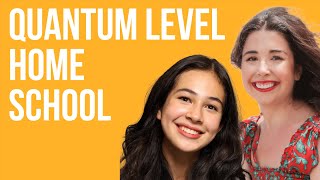
A recorded YouTube interview (uploaded Sept 15, 2023) between host Manisha Snoyer and Jasmine, a 15-year-old homeschooled student and STEM enthusiast. Jasmine is a Breakthrough Junior Challenge finalist who produced a 2-minute science video explaining quantum navigation. The conversation covers Jasmine’s research and video-making process (about one month to produce, ~3 weeks focused research), her use of tutors and platforms (Wyzeant, Thinkwell), homeschooling daily routine, extracurriculars (trampolining—Guinness World Record: 49 backflips in one minute), teaching/tutoring experience (teaches Python at Modulo), perspectives on climate change, and a call-to-action to like/share/vote for her video. The interview also references the competition prize (approximately $250,000).
Questions this video answers
15 years old.
Breakthrough Junior Challenge (global science video competition).
Quantum navigation.
About one month to prepare the video; roughly three weeks of focused research before the deadline.
49 backflips in one minute (Guinness World Records certificate).
Chapters
Hello, everyone, I'm Manisha and this is Teach youh Kids, where we talk about how to optimize your child's education by tailoring it to their individual needs. And today I am very pleased to welcome back our first ever recurring guest. This is her second, second time on the show. She is a certified Python engineer, scientist, trampoline champion, teacher with modulo, and she also just celebrated her 15th birthday. Happy belated birthday, Jasmine.
Thank you so much. Yeah, I'm so excited to be back.
It's so wonderful to have you. I invited Jasmine to come back on the show because I love talking to her, but also for a very special occasion. She is a finalist in the Breakthrough Junior Challenge, which is a global science video competition for high school students. The Breakthrough prize aims to celebrate the best scientific work and inspire the next generation of scientists. So she has created an incredible science project and I want to mobilize our entire community to vote for it so she could be the science champ. I'm just so inspired by what she's done and it's the thought that, the fact that you've done this science project, but I also want to want you to win. So I want to share your work with everyone here.
Thank you so much.
Yes, of course, of course, of course. You know, you're one of ours and so, so we are going to have a link to the YouTube video and also the Facebook post. And if you can make sure you click on the link and go through and vote for Jasmine's project and share, that would be really fantastic. So thank you so much for being here, Jasmine. And I guess let's just dive right in. I mean, I would love to hear more about this challenge and the project that you've created. Right.
So I think you summed it up really well. The Breakthrough Junior Challenge is a worldwide competition for 13 to 18 year olds. You submit a two minute long video in physics, life, science, math, anything of those three categories. The video I did specifically was on quantum navigation, so kind of how it works and applicable uses.
Wow, that's incredible. And is this your first time competing in the challenge or have you done it before?
This is my first time competing in the challenge, so it was really fun, kind of going through the process of video making and creating.
Yeah, amazing. So I do not know what quantum navigation is and so perhaps you can explain that concept to me and anyone else listening who might be. Who might not know what that is either.
Yeah, sure. So essentially, kind of quantum navigation in a nutshell, GPS is the current navigation system. We usually Use, but that can very easily be hacked or kind of deterred by other people. So basically what quantum navigation does is you have a bundle of atoms inside this quantum navigation device and it's extremely sensitive to changes in motion. Once you cool it down a lot, almost to the coldest it can get, and you're essentially able to track the changes in motion and you're therefore able to determine where you are in the world. So why that's useful is that, for example, underwater or in space, where GPS can't work, we could use quantum navigation. It could help us determine changes in rising sea levels. So for climate change, yeah, there's quite a lot we can do with quantum navigation.
And so you have actually built a device that can do this, that can navigate.
The device. That is quite a taller. No, I'm just the. I'm just the deliverer of information. You don't necessarily have to create the object yourself. That's quite a complicated.
I was going to order one from you for my next road trip.
They do exist in the world. It's a very cutting edge technology. Yeah. The breakthrough challenge, it involves more of kind of identifying some kind of really interesting concept and then explaining it. So that was more of my task.
Okay, amazing. So basically you kind of figured out that you could. That it would be possible to develop such an advice through this type of technology. And your project was explaining how that would work.
Right. So kind of when I was researching quantum navigation, I found that all.
I'm a beginner here, so you really have to break it down for me.
So was I when I started this. So essentially while I was researching quantum navigation, I found it was really, really hard to understand these like, highly scientific article. So basically I was more tasked with kind of breaking it down so that hopefully the average person can understand how it works.
Amazing. And how did you get interested in this particular project?
So while I was kind of researching, I knew I wanted to participate in this challenge and I kind of just wanted to see different topics that would be interesting. So I was kind of researching and I came across quantum entanglement. And then I woke up the next day and saw a news story about a successful quantum navigation test. And after reading that and a few more articles, I just thought it was so fascinating and would make for an incredible video.
That's amazing. It sounds like such a fascinating topic to explore. And have you been researching it with a science tutor or teacher? Is there you have a teacher who's supporting you through the process?
So, yes and no. I did.
I was lucky Enough to be able.
To consult with an actual physicist. That was one of my favorite parts of doing this project. Yeah, he was super helpful in explaining kind of the mechanics behind how all of it worked. I don't have a tutor directly guided me through the process. That was kind of just me winging it and doing my best. But, yeah, I definitely enjoyed talking to an actual physicist.
That is incredible. And is that someone who you found or your parents introduced you to? What was the process of connecting with that person?
So one of the kind of tutoring platforms that I use to find people like that is Wyzeant. So we just kind of did a little bit of research, and there was actually a tutor who we met up with for about an hour who was actually able to explain a decent chunk of quantum navigation.
Fabulous. And as I understand it, you actually select a lot of, if not all, your own tutors during your homeschooling. Is that right?
Yeah, I definitely. I won't take entire credit for it because my mom usually does kind of like the first screening, but then after that, I do have a lot of say in, like, who I think is going to be most helpful to me, which is. I really enjoy that part.
That is so fun. And what are the qualities that you look for in a teacher when you're trying to find someone to help you out?
Yeah, that's a great question. I think it's kind of. It depends on what subject you're doing. I feel like, in general, you kind of need people who are patient. And for me, it's really important to thoroughly understand a concept before moving on. So I think finding people who are patient and will just really help you truly understand the concepts that you're trying to grasp.
Yeah, I love that. I really need teachers who can meet me where I am and have a lot of empathy and try to figure out how to understand, how to explain it in a way that I in particular, can understand.
Definitely. Yeah.
That's. That's wonderful. So have you always loved science, or was there a moment when you started to get more interested in it?
I think I've always been a very stemy person.
I don't know if there's, like, one.
Moment where I was like, whoa, STEM is amazing. But I think I've always just found, like, science and technology just really fascinating. So, I mean, as you kind of mentioned before, I do a lot of work with programming and data, so that's kind of the technology side. And then I've taken. I just finished AP Chemistry. Finally, the AP tests are over.
So congratulations.
Thank you. That, and also just kind of being exposed to science. I think that's what I hope to do someday. Something in stem, so I think that's really helped me. But I don't know if there's a specific moment where I shifted my mindset.
You fell in love with sc Saw it across a crowded room. Definitely. Yes. Oh, my gosh. How wonderful. So how long have you been working on this breakthrough challenge?
Ooh. So I think I spent about a month kind of getting the video and, like, the script and all of that kind of ready, and since then, it's been a few months. So kind of how it works is you create your video and you submit it. You wait, I think, like, two months or so before they get back to you. I was lucky enough to make it to kind of the finalist round, which I'm super excited about.
Wonderful. I mean, your video is incredible. I'm not surprised.
Thank you so much.
Of course.
Yeah. So now we're in kind of, like, the finalist round. The next thing is, like, the regional champions. So if I get enough likes on my. On my video, then I'll be named, like, the regional champion, which is super exciting. Hopefully, I can.
I can feel it. It's gonna happen. It's gonna happen.
I really hope so.
Yes. And so I guess. But I imagine even before you made your video, there was a research period, Right? So was that. How long did you spend just choosing your topic and doing research on it by, you know, consulting with the physicist, reading scholarly articles, and breaking it down in a way that people can understand?
I would say that was relatively expedited because I think one of the really nice things about homeschooling is that you can kind of dictate your schedule. So I kind of shifted it around so I could really have a focus on this start to finish. Honestly, maybe around three weeks. I had to work really fast to do all of that. Yeah, I would say around three weeks before the deadline.
You mentioned that some of these scholarly articles are really complex. Do you have a strategy for breaking down and understanding articles that might seem very complicated at first?
Yeah, I mean, there's no real. There's no magic way to do it. I find that kind of just reading through a few times and just noting down, like, big concepts is really helpful to me. I think what can be really tricky is, like, the complex kind of terminology. So kind of noting down big ideas and then kind of supporting it with other evidence, I feel like that's most helpful to me to understanding those big concepts.
Right. Yeah, that seems like a very good way to go about it. Wow, this is just so amazing. And I mean, you have become so advanced in science that I heard that your dad is actually taking a class with you. That is because your parents are no longer able to teach you these subjects.
Yeah, it's actually, it's really fun. My dad and mom have been like super excited about kind of learning or relearning different skills. So me and my dad just finished an MIT economics course which was really fun to take together. Now we're going to be working on a video editing course which will also be. I'm also very excited.
There you go. Yes. I mean, I think it's wonderful because you have this passion for science and then in order to share your passion with the world, it requires you to learn video editing. And you might not have started out wanting to be a film producer, but you're learning these skills because you're motivated by your scientific objective. And it's really wonderful how that all fits together.
Definitely. Yeah, it was really actually fun. I've never done video editing like that for like a two minute video like that. So it was really cool to see kind of like the behind the scenes. It's a lot of work to edit one video. I have to say I have a newfound appreciation for all of those YouTubers who put in so much work into their videos.
It's extraordinary. I mean, there are so many little details that go into making something look clean and simple. And your video is just beautiful. So you clearly are good at video editing as well. So in this whole, of course, in this whole process, I mean, you decided to compete in the competition. You chose your topic, you researched it, you consulted with people, you made the video. What would you say was the most challenging part? Did you ever get stuck along the way?
Yeah, that's a great question. I think honestly the most difficult part was just starting. It can be very intimidating to have a challenge when you know there's thousands of applicants who probably have more support, have been practicing for longer periods of time. I think for me the hardest part was just kind of taking the leap and saying, okay, I'm going to give this a shot. And then second to that, I think the researching aspect was definitely really difficult for me. It's such a new kind of technology and such a new field that there's not that much research out there. Especially not research that I could really understand easily. So yeah, I would say kind of starting and the research aspect were the most difficult for me.
Yes. And how do you Go about finding scholarly articles.
I mean, usually Google is a great. Honestly, Google is amazing.
Do you use Google Scholar? I mean, there's so much trash on Google too. How do you sift through it all to find the real stuff?
Definitely. I think what I usually do, at least what I did for this challenge was I kind of researched on quantum navigation. I would find like a layman's article and then just kind of go a few layers deeper, like, okay, what did this article cite? All right, it cited this article. What did this article cite? And try to get kind of as deep down as I could, I would say. I usually just start off with like a quick Google search, just kind of to get the ball rolling and then kind of go from there. It kind of just leads to a plethora of different sources from there.
Are there any scientists in particular that you really admire or aspire to be, like, either alive or from history?
I mean, I think there's a lot of women in STEM who are just incredible. Like, for example, Marie Curie. She did a ton of incredible work. Yeah, I would say that would be the most aspirational person I could think of.
A very good choice. Jasmine, you mentioned when you were talking about the quantum navigation. I'm going to be throwing this out there when I go to tea parties.
Tea party conversation. Yes.
So what do you think about quantum navigation?
Yeah.
So in terms of your. You mentioned when you were talking about this that one of the practical applications was helping with climate change by detecting rising sea levels. And as a younger person, one can't help but know that climate change will probably impact your life even more. That will impact my life. I guess this is a heavy question, but what was it like for you to learn about climate change? And is that something that you want to help with? And how do you see us combating some of the effects of climate change through science, technology, or other?
Yeah, I mean, climate change is unfortunately a very real problem, and I think it will definitely affect my generation. It's never fun to hear about climate change because there's so many terrible effects of it. I think that there are many technologies that can help with it. However, I don't think that we can kind of rely on it. I think there's this common conception of like, oh, technology will fix everything, which in the ideal world it would. But I don't think that should prevent us from kind of making changes now. So I think that technology will definitely play a huge role in combating climate change. I would hope, especially with kind of quantum navigation. How it could help with tracking climate change. But I think that there are definitely things that our society at large kind of needs to come together to fix.
What would you ask people to do either in the way they vote or any other, or what fields, what careers they choose? How do you hope that people and politicians will mobilize? If it's something that you've thought about.
In my personal opinion, I don't think it's something as much that the individual can fix. I think it's kind of something as a society that we need to remedy. So whether that's with governments having carbon offset or taxes on different progressive carbon taxes, those are just kind of some ideas floating around as to how to fix climate change. As to the careers we choose, I think that we have to be aware of the effect that our actions can have on the environment. However, I don't think that it should be a kind of game changer in terms of, I don't think, for example, going into. Well, I'm trying to think of what's a career. Actually, almost any career will still have some kind of effect on the climate, whether it's being a scientist or whatever. I don't think that that should prevent you, but I think it should be something in the back of your mind just to be aware of for sure.
I mean, I guess, for example, if you're manufacturing lots of plastic products that people throw away or if you're founding a big oil and gas company, I don't know if people even start new oil and gas companies nowadays. But it's good to think about the implications of your actions for sure. Yeah, I mean, it sounds like you are really grounded in that. It is scary and you're aware of it and you're thinking of solutions at the same time, which is really wonderful. And I feel like we're lucky to have people like you who have the scientific knowledge and desire to use science for change. So that's really fantastic. So you're competing in this science challenge. You are an amazing teacher. Have you thought about what you want to do after you, I guess, finish homeschooling or go to college? If you're planning on going to college, what kind of career you might be interested in in the future?
So I do plan on going to college. I hope to do something in the future in STEM. I'm not 100% sure exactly what career either. Something kind of in more science or maybe data analytics programming. Yeah, definitely something in stem. Kind of to be determined exactly what.
I have been very fortunate this year because you have Started teaching some of the students at Modulo. And I know you've taught math in the past and now you're teaching, teaching Python coding. So if anyone is looking for an amazing Python coding tutor, I don't even know if you have room in your schedule, but Jasmine is the best. What has that experience been like for you as a teacher? What have you learned?
Yeah, tutoring with Modulo has been really amazing. I've really, really enjoyed my time. I think what I've learned from it, it's been actually really kind of eye opening to work with kind of younger students to understand. Like, I hope at least it's made me kind of a better explainer. I think a lot of the times it's kind of breaking down these tricky concepts that are tricky even for, I imagine for adults to kind of breaking them down to understand. And if one method of explaining doesn't work, kind of trying it again and again until it eventually, eventually clicks. So, yeah, I've really, really enjoyed my experience tutoring with Modulo.
Well, the children love you. That is, that is clear. I do a lot of teaching and now I'm running this company and I've always found that teaching helps me deepen my own mastery over a concept. I studied French and I lived in France, but I felt like when I became really an expert in French is when I started tutoring it because I had to break down concepts in that way.
Right, Yeah, I think it definitely forces you to understand it because you need to understand it yourself to be able to explain it to someone else. I think that's one of the best ways of learning too, actually.
So true. So, Jasmine, I would love to talk a little bit about your life and your life as a homeschooler. I think a lot of people listening are maybe just getting interested in homeschooling or maybe their child goes to a traditional school and they want to find ways to enrich their learning outside of school. And a lot of people just don't really know what happens. So perhaps would it be all right if I asked you some questions about your daily life?
Of course, yeah.
Okay, wonderful. So, yeah, so what is. So what's a typical day look like? When do you wake up? What do you usually do in the mornings?
Yeah, so I would say kind of day in the life of a homeschooler. I wake up around 7:15.
Very nice. That would not be the time I would wake up if I was homeschooler. Yes. Early start to the day, 10am sharp. Oh, yes, sorry. I've already Integrated you? Yes. It's a good time to wake up. Okay, so you wake up at 7:15?
Yeah, I wake up around 7:15. I eat breakfast, and then I start school at 8. Usually from 8 to 12. It kind of varies depending on the day of the week, what classes specifically I have. Usually I do about three hours of work with my mom, three hours of work with my dad. My schedule always is kind of shifting. Yeah. So some days it'll be independent studies, some days it'll be. Yeah, it changes a lot. Usually my parents are there to kind of help more, to help me research and understand. They don't always know the answers either.
So would that be like three. Yeah, so three hours. So it kind of alternates. Like one day you would study with your dad, and then the next day you would study with your mom. And it. And it's more of like you working and them giving you tips if you get stuck.
Yeah, it depends a lot on the course. Right now I'm doing pre calc with my mom, so I'm doing it through Thinkwell. So what I'm doing is kind of watching the videos, going through the practice exercises, and then my mom's kind of there to at least try to get me started to figure out how I can fix the problem. Because this is obviously something that. That she probably doesn't remember all the way from when she was learning it originally. So it's three hours with her and then usually three hours with my dad. Right now we're doing. As I said, we're doing video editing. Just wrapped up economics. And then I will be taking independently AP Literature, so that starts soon. And AP Computer science.
A.
So those will be a little bit more independent. So my schedule will shift again. Usually, I would say I do more stuff independently than with my parents. It's kind of an exception right now. But anyway, sorry, Back the original schedule. 3 hours of usually math, some combination of math and computer science. Then one hour of video kind of editing stuff, lunch, and then another two hours. Yes, lunch is very important.
Lunch is very important.
Definitely. Luckily, I have my favorite subject, parental chefs. I don't have to get the cafeteria food.
Well, I mean, that seems fair. You're working hard. You deserve a gourmet meal. Wow. So, yes. Do not eat the cafeteria.
Oh, yes. Which is great. No sloppy Joes for me.
No sloppy Joes for you. Only the finest pad thai rigatoni.
Then after lunch, I usually do another two hours with my dad, typically, as of as of now, until the schedule shifts again.
Okay, lovely. So you know, it's, it's interesting. I mean your schedule actually actually seems a lot more full than I see with a lot of homeschoolers. I mean, you know, some people will just do an hour of math, an hour of English language arts, and then the afternoon is more self directed or taking a class outside you. And it seems like you're someone who really enjoys that intensive study. It's not a pain for you, it's a pleasure.
I really enjoy doing kind of an intensive class, going through that and then moving on to the next thing. So typically my classes will be a shorter duration but very intense and then I'll switch to a different topic. So that's, for me, that's really fun because I get to really get a deep dive into one topic before instead of kind of just mixing and matching.
Yes. How wonderful. So also, I mean, I'm really just trying to get a sense of this. There's some consistency in that you have this daily math and literature and coding, but then some of the other subjects alternate, such as the video editing. And where do you take AP literature? Is that an online class or a tutor?
So we're kind of, we're figuring that out. I have an online tutor who I have assign kind of weekly homework for me to do. So I do two to four hours of homework and then I meet for a one hour kind of check in to see how I did what can be improved notes for next week. And then I just kind of go through that cycle.
Wonderful. So it's almost asynchronous in a way that you're following the course and then you have these check in points to see how you're doing. Yeah, fantastic. So wow. I mean it's just so. It sounds wonderful and rich and intense all at the same time. And then after. So after you're done with the kind of more formal study, I believe you do something quite enjoyable. Would you like to share your evenings?
For the past last about two to three years, I've been doing trampolining. I don't do it competitively, I just do it for fun. Recently, I don't know if you've already heard, but I did end up getting the Guinness World Records certificate.
I didn't have enough accomplishments to husband you needed to add it. The shelf is getting a little bit full, I think on the mantle. All right. Guinness Open World Records. Okay, continue. Yes.
I ended up doing the most trampoline backflips in one minute. So I ended up doing 49. So I have my little certificate. I was Very excited about that.
That's so great. Oh, my gosh. Congratulations.
Thank you. Thank you.
And the trampoline park has been a wonderful experience. I mean, you've made a ton of friends there. Is that right?
Definitely, yeah. I think there's this kind of conception that homeschoolers don't socialize, which I could see. We definitely don't have hallway socializing, but I think through kind of after school activities, you definitely can still get that social aspect. For me, it's been with trampolining.
Absolutely. And I think, you know, that's one of the things I learned from your family, because I talk to homeschoolers a lot and give them advice on how to make friends. And if you can find a community like a trampoline park or a homeschool group that has a weekly meetup and plug into that, it's great. I think it's a lot easier to make friends when you're doing an activity as opposed to just meeting up for a play date with no agenda. And also, you have quite a bit of time each week that you spend with your family. Could you share a little bit about that? Yeah.
So we usually have. Well, because I'm homeschooled, I'm not at school for. I mean, I have my eight to three, and then I'd go trampolining. So it's been really nice. We have, like, our family lunches, family dinners. We have what we like to call Wingman Wednesday, which is our kind of afternoon to discuss whether it's scholarship or applications or different schools. That's kind of our time to have a little family huddle and see kind of where we are with all of this.
One of the things I really love about the system that you have co created with your parents is that you give feedback. There's actually a feedback form you fill out to say how things are going and what could be improved. Could you tell us maybe an example of something that you thought could be improved and advice that your parents took and used to change your homeschooling program?
I think the most applicable is with finding tutors, especially when I was working with finding a coding tutor for me a few years ago. It's very difficult to find someone who can be reliable and really explain things to you. So I worked with a handful of different tutors, so I think that was where that kind of feedback loop came in handy. So I would kind of be like, oh, this. This tutor is really great. But I feel like they're consistently not allowing me to try new things or not allowing me to do this. And then we would kind of explore new options, talk with the tutor, figure out how to improve that experience.
And I think it just gives you a really great model because eventually one day you will run a company or you'll be working at a company, and you might have to give feedback to another employee or your business boss, or even perhaps, you know, right now you're tutoring. You might need to give me feedback or feedback to the parents about how to better support the child's earning. And actually, you do do that. You fill out a progress report every month. And yours is so comprehensive, it's really, really helpful. So. So that's just wonderful. Maybe we could dig in a little bit more to social learning. I mean, you. You've had lots of friends since you were very young. What are some of the things that you like to do with your friends? Friends just to hang out and have fun. What are some of your favorite friend activities? Sleepover parties? I don't know.
Yeah, I definitely like. I definitely love doing sleepovers. I mean, I guess the typical, like, watch tv, play board games. I think recently I've been doing kind of, or I hope to be doing also more kind of study sessions, because I think we're all. We all have a ton of schoolwork that we need to do, so kind of being able to have someone else in the room, almost an accountability buddy, to make sure that you're kind of progressing and doing what you need to do. But in terms of fun, Yeah, I mean, sleepovers are always great. Watching tv, board games, food. Food is always great.
Food is good. Yeah. You just eat what your parents make, the chefs, or you actually cook some of the stuff. Pretty much, yeah. Yeah, it's good. It's good.
I think I'm gonna come visit you shortly.
This sounds like a nice inspiration you've got. Yeah. So that's. That's so wonderful, Jasmine. I mean, it just seems so enriching. I mean, I've gone through periods where I had tons of friends, and now I feel like I have more of a core group of three or four really close friends. And that feels really good to me. And so for me, I really like to find people who have a lot of really honest and trustworthy and intelligent, but also kind of have a silly side. And so I say this because you're in this unique position where you can actually choose who you want to hang out with. You're not forced to be with a group of kids that you might like or dislike. So I was just wondering what are some of the qualities that you look for in your friends or that you appreciate in the friends that you have?
I think especially with the friends I hang out with the most, I think there's some people who are just really driven and who want to make changes. It's actually shocking what some kids can do. It's really crazy. So I think people who are driven, who are really trying to do stuff and who kind of have a plan, who are like, okay, I think I like this, let's try it. I think people who are kind of outgoing and willing to experiment, I think that's a really great quality in people.
Yeah. Have you done any projects with your friends?
I haven't done any school based projects, although I should. That would be a very, a very fun thing to do. I've worked in like similar or I think I will work in the same group as one of my friends in like a potential internship, but I don't. Yeah, that'll be very fun. But I don't think I've worked with them directly on school related stuff. Not to say intentionally. I haven't worked with them, just hasn't. Most of my friends. I have a few friends who are homeschooled, but I also have a few who go to regular school. So it's kind of tricky to balance extra work with the amount of schoolwork they already have.
For sure. Yeah. And your homeschooled friends, do they have a similar schedule to what you have or does their homeschooling look very different?
I think it varies a lot from person to person. I have a homeschooling friend, for example, who is kind of condensing a year of study into a few months just because it's a personal challenge. I guess it's a better. That's how he likes to learn. I guess so. I think it definitely varies a lot, but I think that is also one of the beauties of homeschool is that you can really kind of shape it around what the student, how the student learns best and how the student learns best and what works best for them.
Yeah, I think that's very true and it's good that you understand and appreciate that aspect of your learning. It's really lovely. Talk a bit about parents because I noticed that a lot of people your age tend to have tons of fights with their parents. But it seems like you have a really great relationship with your parents and you enjoy spending time with them. I was wondering, how do you navigate conflict in your family if there's something you disagree with or don't like that your family did, for example. Yeah.
I think we've kind of have this, like, mentality of the other person's never trying to intentionally do anything to hurt you. It's always the. I think my parents truly have my best interest at heart, and they're always doing their best. I mean, that's all anyone can do. So I think accepting that reality and using that as a way to kind of move forward after, because, you know, arguments and disputes are inevitable, but stepping back, kind of seeing the bigger picture and understanding none of it was intentional, and then moving forward, I think that's kind of the strategy we've adopted.
That's wonderful. I mean, it's so great that you can all communicate in such an enlightened way, I think. And I think the fact that you're able to spend so much time together, as opposed to there being this separate school world and separate home world, probably contributes quite a bit to that, as well as the agency they give you over your own life.
Yeah. I think homeschooling has undoubtedly brought me closer to my family.
And you have such a wonderful family, so I can understand why. All right. I hope it's okay to ask you about this, but one thing I find fascinating is that you have an allowance that you use to pay for all your classes and tutors and other activities, or how does the allowance work?
I don't have an allowance to pay for different tutors. Specific.
Like, that's funded. That's funded by the chefs.
I definitely take into consideration, though, because I would never want my parents to be in a position where they're paying too much money for a tutorial. Well, I don't have, like, a certain budget set aside. I definitely keep it in mind to see how I can find the best tutor for a, I guess, price that's comfortable for everyone.
Right, right. But you do have an allowance?
I have a normal allowance to do stuff.
A normal allowance. And what does that allowance pay for? What kind of.
So that's like transportation. If I'm trying to go meet my friends, food. Any activities that I do other than trampoline, is kind of my physical activity for school. So it comes with all of, like, the jumping hours that I could want, like, the package we buy. So other than that, anything I do with, like, my friends kind of comes out of that allowance.
Okay, wonderful. And how long have you had an allowance for that type of activity?
It hasn't been for that long. I would say maybe a year and a little bit now.
Yeah.
Before that, it was Kind of on a case per case basis, which wasn't ideal because it's like, hey, can I have $2 for the bus? Like, that wasn't a very efficient way. Not quite as efficient. So I think recently what I've been kind of more comfortable with, with going in trains and buses and cabs by myself, that's kind of when this allowance came into play.
And do you think that it's been helpful for you in understanding financial literacy?
I think definitely. Money is obviously such a big component in our world. I think that by giving kids allowances, it kind of allows them to budget and realize that money isn't infinite. Like, it doesn't grow on trees, sadly. So to kind of be able to budget and figure out, okay, well, if I. I'm hanging out with friend A and we're doing this, I might not be able to do such a big thing with friend B. I think that reality is also, it's. I feel, I hope at least that it'll help me later on in the real world when there are no allowances and it's just kind of a income.
So, Jasmine, you're 15. We've talked a bit about climate change and the concerns. When you look at the world around you, what are the things that scare you or worry you? Where would you most like to make an impact in your life in terms of making the world a better place?
My goal personally is to improve the world, even if it's in some small way to leave behind some kind of mark. I would hope it's something in stem, because that's kind of where my interests lie. I wouldn't try to have too much of a negative outlook on the world. I think it's really easy be consumed by this. Like, oh, no, there's so many problems in the world. I think it's really important to kind of step back and see, like, there's so much beauty and so much progress that we've made. It's easy to be consumed by, like, all of the problems. So I think while there are a lot of problems that need to be remedied, and I think hopefully my generation will kind of step up and figure out how to fix big problems like climate change. I think also seeing all the progress we've made is very important.
That is so beautifully put. And I believe that it's through this attitude of gratitude that we also become better at making change, because when we can appreciate what we have, we can make more of that, which is really a beautiful way to be in the world. How do you Feel like, were you born with this positive attitude and this spirit of gratitude, or are there ways that your family helps cultivate that value in your life?
I don't think I was necessarily born with a spirit of gratitude. While I would like. Well, I would like to say that I don't know if I was necessarily born with that.
I imagine you as a very smiley.
Baby, so maybe there might be. I mean, all the photos would indicate very smiley. Jasmine, I think my parents have really instilled this kind of like positive outlook on the world. I think especially, especially with my mom, she takes this. I don't know how she does it. She manages to kind of put a positive spin on everything. And I think that's really had an impact on me and seeing, like, there's always kind of a silver lining to every situation.
What I love though, Jasmine, is that you're aware of the problems, you don't deny them, but you also have this spirit of gratitude. So you're able to, to feel some of and see the sad things happening in the world, but also to see the potential and the joy, which is a really beautiful quality. You're welcome. So, all right, well, let's go back to this incredible science project. If you win, I believe there is a financial prize, am I correct?
Yes, there is. It's pretty insane. I think it's something like $250,000, which is an utterly ridiculous amount of money to comprehend right now. I'm not even thinking that far. My goal is to do my best to try to win this regional challenge and that's kind of as far as what's in my control. I'm really happy that I even made it this far. That's pretty crazy. There's thousands of applicants, so to make it to the top 30 with my first submission ever is really mind blowing for me.
Wow. Well, I am also very committed to helping you win and very, very excited about this. So. So I guess you haven't thought about what you would do with this quarter million dollar grant.
It would definitely have to be towards school. I think my education, I really, really value that. So that would be a huge chunk of my student debt taken off. True.
That would be a gift to your parents. I mean, college has gotten so expensive. It's really out of control. Wow. Wonderful. Okay, so quantum navigation. All we have to do is go to the YouTube or the Facebook. Love it. Share it with our friends, tell them all to vote. Is there anything else we should be doing to support your project?
No, that's pretty much it. I mean, if you have capacity to, if you could like on Facebook and YouTube. It's kind of the combination, the sum of like the YouTube and Facebook. Share it if you know anyone who might find it interesting.
Yeah.
Thank you for all your support.
Oh, it's wonderful. I mean, and your video is so fascinating. I feel like people are really going to benefit from watching it and sharing it with their friends and having their kids watch it because it's fascinating. I mean, now I know about quantum navigation. Thanks to you.
You have a lovely three time conversation starter.
I just think it's so wonderful what you've done. And so Jasmine, I guess, let's see what I did want to ask you. So I asked. Well, first of all, have we left anything out? Is there anything about your project or science or homeschooling that, that you think people should hear that I didn't ask you about?
I guess in terms of exploring stem, I think it's kind of this. I would really encourage any, if there's any homeschool parents who are watching this, I would really encourage to at least give your kids some exposure to stem. I think it's kind of underestimated just how fascinating kids can find it and how much of a game changer it's going to be in the future. So, yeah, I think if you have the opportunity to STEM is really worth exploring.
What do you think is a good place for parents to get started? I mean, maybe if they have kids who are a little bit younger. What are some good resources that you might recommend?
I think it depends on. I feel like there's kind of two main. Actually, that's not true. There's maybe three main branches. There's kind of the science, like physics, chemistry, biology, that kind of world. There's kind of the math world and then there's like the tech world. I would say I started exploring the tech world first. It was kind of through various things. I think my mom did a lot to kind of encourage me to pursue that. I would do little like Scratch, I think is a great place to start for kids. It's block based coding. It's free. It's a really great. Not a, not a paid endorsement. It's really great.
Maybe get them as a sponsor. But they're free so they can ask. Yes, okay. Yes. Scratch is great. And they have Scratch Jr. And.
Wonderful.
That is so fascinating. I wonder. I would never, I would never have thought of starting with coding. So it's interesting that you suggest starting there.
Kind of visualizing, especially code is a really great way to like apply technology. Because I feel like when you say like coding, it's kind of this. Just picture some like 30 year old just like typing on their laptop in a dark room. When I think programming is so much more than that. So especially visualizing, I think for kids, programming with block based coding, if that's a good starting point for your kid, then I think that's a really great field to give a shot.
Wonderful. And then after they get started with coding, more of biology, physics. Are there certain materials you used when you were younger that you liked a of lot?
I think I did mainly throughout school. I did like kind of group classes, which I enjoyed. I mean, for me, anything where you have like a lab I think is really fun for me. I think I'm a very visual learner. I like to see whatever I'm doing like in action. So I found labs really valuable. There are definitely. I think I did my classes throughout school. So it kind of allowed me to. With those labs, it kind of allowed me to understand, I feel like the concepts better as I actually I do.
Have a question about that because how, as a homeschooler do you do science labs? I mean, do you. Do you get kits mailed to your house? How does that work? How do you conduct science experiments?
You definitely have to make sure you have no flammables on the table.
That would not be good.
It's definitely. You have to kind of acquire this random lab equipment. Usually most of the labs designed for homeschoolers won't be like too expensive. You won't have to acquire like a mass spectrometer or something. It's not too, not too crazy. I think maybe a few beakers and stuff like that.
Yeah.
Usually there'll be websites where you can just get whatever specific supplies you need just shipped to you. I think that curriculums do a really great job of kind of taking the label that homeschoolers will be able to do and not kind of presenting ones where they won't have access to those kinds of materials. So yeah, usually buy them online, give it a shot at home.
So maybe like the outschool classes would have a list of materials and you can buy those online and do the experiment with the online class. Wonderful. And then most of the time they'll.
Even have like Amazon links. So it's super easy.
Oh my gosh. Perfect. Yeah. And I think that's great. Especially if you have the right tech set up. And outschool is so easy to navigate because you, you can see who has the most reviews. They Even have teacher demos. It's really great. Okay, wonderful. So we had coding, science, and then there was a third one, Math.
I would say the third one, I.
Would give it its own point of learning math. Why would we want to learn that?
Oh, why would we want to learn math? I think math definitely surrounds every aspect of our life. There's so many different. There's so many different ways it's applicable to our world. I think what I did with math, I did aops. I think you actually did an interview.
Oh, yes. One of our favorite. He might be our second recurring guest. The art of problem solving at Beast Academy. Because they just have such a wonderful time.
Oh, I used to love Beast Academy. I think that was one of my favorite.
So good.
Yeah, they have a really innovative way of thinking about math problems. It's definitely more difficult, I would say, than like the traditional approach, but I think if you have the time and capacity, it's for the better. Definitely more challenging, but I think it pushes you to really understand what you're learning and not just memorize another formula.
And I feel like Beast Academy really focuses on conceptual understanding rather than procedures and measuring formulas, which don't really have any application to the real world. I was going to hit you up, Jasmine, because I feel like it's so sad that Beast Academy ends at sixth or eighth grade, and I feel like it's so bad. And. And I think that we need to build an adaptive learning app for high schoolers or for gifted children. And I'm thinking that you might be a good candidate to do that if you. If you want to build it. I'll go raise venture capital for you and.
Okay, we can keep that in mind.
I think it's a big market, you know, and then there's also all these super gifted kids who are homeschooling and just moving ahead so rapidly. And then they still like cute animals, but they're running out of math problems. So it's.
I think we need to start like a. Some kind of form or something for people to just vote that. I think we should have characters and everything. I think we should be doing calculus and we should have characters. If you can cartoon it, why not? It's so much more fun.
Why not? Why not? I wish that there was a character jumping around our screen right now. I mean, you know, characters are the best. I don't understand why we have to deprive high schoolers of fun characters.
Exactly. And it's funny because even in the real world, like kind of a little bit of a Tangent, but it's with some coding platforms you can like add in little characters that will run across the screen. These are things that like professional big developers will be using. For example, in like Google Collab. It's just one of the things you can code and you can have like little kitty cats run across the screen. So I don't know why there's this gap where like for some reason when you go high school, there's just no characters.
Yes. Do you have interest in building apps? Is that something of excitement to you?
I haven't. Oh, I think I only. I built one app once as like kind of wasn't like it was just part of some random, some random course. More as a test. Not a unique app or anything. I haven't gone too much into app development, but I think it's a super cool field. I would love to like learn more about it. First I think I would need to have an amazing idea of what to build an app for.
Here we go. High school math character. Yes. All right, well, yeah, we can make our digital learning app or else. I was also thinking about having you build a platform for me where we can find tutors and classes. Anyway, maybe that's a conversation for another time. I'm looking for a technical co founder, so I thought maybe Jasmine. Jasmine will be up for it.
I can try. I can try my best. I'll. I'll do my best to help in any way I can.
Okay, Jasmine, so one final question. I asked this to all my guests. I mean, you have already talked a lot about things you're learning. But I like to end the show by asking everybody, what's something exciting that you're learning right now?
Right now I'm tutoring someone P5 JavaScript. So I think that's been my favorite things I've been learning with that. We've been doing a lot of like different 3D designing. So seeing how we can like use 3D shapes and stuff in our different projects, I think that's probably one of the most fun kind of coding related things that I've tried recently. I've never done anything with 3D shapes, so this is definitely a new experience for me. But I'm really loving kind of learning along.
That's wonderful. And I just, I really want to highlight that because a lot of parents are afraid to teach their kids because they think they don't know the material or they're not a teacher. And the best teachers know how to learn with a student. And I think that your parents do that with you. And now you're doing it with this younger student. And learning along with someone else is one of the best ways to teach. You don't have to be a subject matter expert before you start teaching.
So, I mean, it's always scary to try to jump into something new, but I think that really just kind of giving it a shot. Learning along. I think also selfishly, as a kid, I really love having someone learn along with me because you also get to see the other side of like, oh, well, that is a challenge. And it's not like they know everything. I think it also provides a much more like, human aspect. I think, again, that's one of the things that have brought me and my parents closer. But I think that learning along with your kid is. It's really valuable for both, I hope the parent and the kid too.
Absolutely. Because, I mean, first of all, it gives the parent an opportunity to learn because often you're so focused on work, you don't have time to learn new things. And so in a way, you get to be a learner again. And I think for the child, you model a spirit of learning. You can see your parent make mistakes and try to solve problems, and that teaches you how to learn and that you don't have to be perfect, that it's okay not to understand. And what do you do when you don't understand?
Figuring out how to fix problems is one of the most important skills. And I think that's something you can really learn from having, like a parent coach you.
And I just love how you described it as an intimate experience. I think that's such a beautiful way of thinking about learning with your child. It is intimate. It's really lovely. Well, thank you so much again for joining me today. The first ever recurring guest on our show. Please go to to the Facebook Link and the YouTube link that we have on our show notes. Love both of them. Share them with all your friends. Tell them to share them because we are going to win this thing. All right. That is. That's happening. So I'm really, really proud of you and really happy to have you here and that you're part of our community. And I'm so excited for everybody you're already bringing into this world to make it a better place.
Thank you. Yeah, I really love being a part of the modulo community. It's been really valuable. And thank you to anyone if they have enough time to like the videos. I really appreciate it means the world to me.
More from Manisha

Contributing to Florida Prepaid Plans (2026–2027) | Step-by-Step Guide for FES-UA Families

Contribuyendo a los Planes Florida Prepago (2026–2027) | Guía Paso a Paso para Familias FES-UA



Finding Providers & Services in the Marketplace (Families) | Step Up For Students (2026–2027)

Encontrando Proveedores & Servicios en el Mercado (Familias) | Step Up For Students (2026–2027)




