Homeschooling: Naval Ravikant, Nir Eyal, Rachel Thomas & co: Part 1
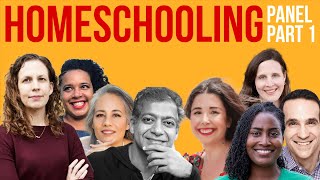
A multi-voice, asynchronous panel (hosted by Manisha Snoyer) discussing homeschooling, unschooling, microschools and independent learning. Speakers (Naval Ravikant, Nir Eyal, Rachel Thomas, Kerry McDonald, Alicia Wright, Shirin and others) share personal experiences, debate socialization concerns, the role of technology/AI/adaptive apps, tutor matching and skills parents should prioritize (numeracy, literacy, creativity, entrepreneurship). The conversation also covers practicalities like tutor sourcing, community co‑ops, mixed‑age groups, and parental roles in education.
Chapters
Hi, I'm Manisha, a K12 teacher turned tech entrepreneur. And this is Teach youh Kids for those of you tuning in for the first time, maybe because you're fans of Neval, Welcome. Teach youh Kids is a podcast and an online community devoted to empowering parents to curate their children's education as a replacement or sometimes a complement to traditional school. Today I have a truly unique episode for you. It's an asynchronous conversation that takes place in six time zones and four different continents with seven of the most brilliant minds I know in tech and education, and including Naval, who is an entrepreneur, philosopher, investor. And thanks to this conversation, my new friend. And it's all happening on Naval's new social media platform, Air Chat. So what's air chat?
Naval AirChat is an asynchronous audio first platform for recording conversations. It lets you record conversations regardless of what time zone people are in or what time it is or where they are, and to bring in multiple voices into the conversations, including talking directly to your audience and then creating exports for your podcasts or for all the various social networks.
All of our panelists are triple champions, entrepreneurs, teachers and homeschooling parents. They represent a wide variety of perspectives and backgrounds. Together we'll explore reasons for homeschooling objections like but what about socialization skills we think kids need for the future, the challenges and promises of learning technology, the fundamental purpose of education, and share our visions for what the future of education might look like. I'd like to add that anyone is welcome to join in on the conversation and ask questions to our guests. All you have to do is visit the homeschooling room on Air Chat to get started. I'd love to hear why you all started homeschooling and what you see as the benefits of this approach.
Thanks, Manisha. Yes, we kind of started homeschooling by accident with the start of the pandemic and we basically had our daughter at home with us for a year during which we connected with Manisha. We did modulo mastery based learning, which was awesome. My daughter made best friends that she still talks to regularly that she's never met in person. Then we moved to Australia, we tried in person school, and then we ultimately went back to homeschool. And across this experience of going from basically school to homeschool to in person school to homeschool, we saw that my daughter just thrived with homeschool. It really suited her more. She was more engaged, more curious, more active, and I think, I think what was happening in school is that she was kind of learning to tune out and be more passive. It was too easy for her and she was bored, which then fed her perfectionism.
We have been homeschooling since my daughter was in the first grade and she's about 15 now, and we've had a fantastic experience. I have to give credit to my wife, who is more the principal of.
Our homeschool, if you can call it that.
Although really we try and put our daughter in charge as much as possible.
I have opinions and I have thoughts. I'm not sure they're all that valid because I don't personally invest that much time into it. I do some home lessons with the kids myself, but largely I would say that they're more unschooled than homeschooled. Homeschooling requires a lot of effort, a lot of work, a lot of resources, a lot of support, and frankly, it's not easy at all. So I would say for the most part, I'm just punted. I do think that the majority of industrial schooling and the industrial education system is designed as a combination of daycare and employability and keeping kids off the streets, and much less about education. Real education I don't think is really possible unless the kid wants to learn. What each kid wants to learn, what level they're at, is highly individualistic. So Brett hall was saying another room that tutoring one to one tutoring is the way to go. And to me, homeschooling is just parents essentially taking responsibility for one to one tutoring for their child and then not wasting the child's time letting them have the same freedom that you would have wanted as an adult. After all, I'll bet you don't remember 95% of what you learned in school. And yes, maybe it was absorbed in some deep way and sank into your bones, but I doubt it. A lot of that stu just gets forgotten. The real things you remember are the things that you are interested in. That said, if a child shows an interest or an aptitude early on in math or music or reading or writing, you kind of want to let them indulge in that early on and not have to spend times on things that they might not care about, like geography and history, you can learn that stuff later. A lot of that stuff can be done by looking up things or by AI or calculators and so on. So especially given the tools that we have today, it probably makes more sense to allow a child to indulge in whatever they're actually into, whether it's Minecraft, Legos or robotics or creative writing or storytelling or poetry or singing. That is to try and force them into something they don't want to learn otherwise. But you can give them efficient foundations like basic arithmetic, which is kind of all you need in math for most professions or skills or careers, and basic literacy, which is kind of all you need for the ability to then learn most things. If you can kind of lay those foundations out, then I think the rest should just be driven by the child and their specific needs. And the parents are playing the role of one on one tutor as needed.
So we decided initially to homeschool our children. And really I had always been interested in alternative education, but as my children kind of hit school age, we realized that sending them to school would make their learning contract. That in their early childhood days we had been spending so much of our time exploring the city and meeting up with friends and family members and going frequently to the library and local museums and that if we were to send them to a school, their learning would be really confined to the four walls of a standard classroom with kind of the same age segregated group of students and the same static handful of teachers. And that just didn't appeal to us. We wanted their world to be much more expansive than that. And so we started homeschooling. And then that led to unschooling. As just watched the children learning as they went through life kind of exploring their interests and teaching themselves to read because they were reading things that mattered to them and wanted to know more and to do more. And that carried over in all aspects of their lives. So that's really how we made the decision to unschool and follow their interest with self directed education. And then sort of with the COVID Disruption, the micro school that my kids had been attending several days a week. We kind of pre Covid ended up closing for a long period of time and so we looked at other options. And of course I was always familiar with the Sudbury Valley School, but it was quite a far distance from us. It's about 45 minutes each way outside of the city. But it was a great fit for my kids. And again, it's been around for over 50 years, has roughly 100 kids, has led to dozens of Sudbury Model school around the world that all value and embrace the philosophy of self directed education.
Hi everyone, I'm so excited to be here. This is Alicia Wright. I run Cultural Roots Homeschool Cooperative in Richmond, Virginia. We are eclectic homeschoolers, which means we don't really follow one particular curriculum or Ideology. We really do try to tailor learning experiences to each child. And so for each child, it looks drastically different depending on their interest. One of the gifts of homeschooling is that students are able to work at their own pace. We really don't do grades, grade levels in our home. It's just you are wherever you are, and when you finish doing something, if you want to continue, we continue going. And so we don't have to stop because it's. It's summer break. We don't have to stop because it's a Saturday morning. We just do whatever it is we do. It's really a natural part of our. Our life and rhythm Learning is a part of our natural life with being able to go at your own pace. It allows children to slow down or accelerate, just depending on what they need and depending on what it is they're learning. A lot of people will look at my oldest daughter as an example, and sometimes I hesitate to share the example, but it's her experience. We homeschooled through, and she just turned 19 this past May, and she graduated from College on her 19th birthday. So I think sometimes people are really impressed with that.
But it took a lot of work.
She ended up getting her bachelor's in biology with minors in physics and mathematics.
And.
I don't know. I mean, she is definitely a gifted young woman, but I tend to think that that's something that most children can do with certain levels of support and access, being able to move at their true pace.
Manisha, I'm so happy and honored to be here. I love collaborating with you in all the ways that we have done in the past and that I know we'll do in the future. Thank you for having me here. I'm happy to answer any questions that I can as definitely homeschooling and what I would call independent learning is a passion for me, for children, and for lifelong learners as adults. I remember being so excited about going to school when I was 5 and then getting to school and discovering that the education was mostly about memorizing and regurgitating and saying what was expected and wasn't what I had intended or imagined learning to be. So even though I went through public school for most of my life, I wanted something different. So when I had kids of my own, I always wanted them to be engaged with learning and passionate about it and to maintain that in their lives. So when my eldest child started reading very young, at around two, a little bit older than two and a half, I realized regular education was not going to work for that child, and so started looking for other ways to have them be engaged and be excited about learning. And in fact, that child started out in a special private school for gifted kids, which I think is an awesome school, and was very successful for many people. But it was extremely expensive and didn't always. It just didn't always meet my own needs for very customized and independent learning. So when the opportunity came up to homeschool when they were 7, we jumped.
Thank you so much, Manisha, for having me today. Well, you know, I really wanted to have relevant education for my children. I wanted them to be really cultured and have seen most of the world. It was something that was really important to me. And so we started on our journey to world school and see different parts of the planet. I think the having the bells and sitting in rows and taking attendance and being tardier, truant and penalties in this way just isn't relevant for where we're moving. You know, a lot of my students are cycle breakers, and so they're having to move out of the industrial and into the future fields.
I saw a study a while back that said that homeschool kids were one to two years ahead of private school kids. Private school kids were a year or so out of public school kids. But unschooled kids, kids who had received no schooling whatsoever and spent their day however they wanted, were only about a year behind. This was at the college level, and once they were in college, the unschooled kids caught up very quickly within a year or two. So essentially, not schooling at all only sets you behind for a year until you care to catch up. And that indicates to me that it's learning that drives teaching, not teaching that drives learning.
Well, Naval, I think that you've definitely hit the nail on the head with that one. I think that students and children have to be in a space that's safe for them to learn and to explore. The space that we've created is really about unschooling a lot. A lot of my students come from industrial school and into a more open environment. I find that they actually need a lot more time in nature and that that is a consistent way to get them off the screens and reconnect with themselves in nature and each other in nature. I think that that is a huge component that is missing in our society, definitely in our education system, and that there's plenty of time and space within the homeschooling spheres to do that.
I have a question for you, Naval. A lot of the families that come to modular are very successful, innovative tech entrepreneurs. Do you think there's a reason that people in tech are especially attracted to homeschooling?
Yeah, People in tech are much more likely to be self made and they're much more likely to understand that a lot of the skills that school teaches you today, or at least the industrial schools teach you, are obsolete. They're making you memorize things in a world and age of Google. They're making you memorize your times table in an age of calculators. They're making you learn skills like handwriting, which are functionally, unfortunately obsolete, whatever you may think. And they're just wasting a lot of your time. And these are also people who know how much you can learn and how much you can create when you're highly motivated, like for example, when you're building a company. So naturally they're going to be attracted to homeschooling. They're also capital rich and poor on time and frankly a lot of them are living in the SF Bay area where the schools are kind of a disaster. The public schools have been destroyed and even the private schools, frankly are full of drugs and over socialization and teenage depression. So I do think they're all looking for alternatives. They're also comfortable with remote work and homeschooling is sort of an analog of that. So I think they are ripe for homeschooling, but they do need guidance and help and tools of the highest quality and order. But I would say homeschooling is still very, very hard. It would be great to have automatic lesson plans and curricula and materials and frankly, something that can compete with games. The games out there are so good now. The cheap dopamine addictions are so good. How do you raise kids in an environment where they have the iPad and they have unlimited YouTube videos and TikTok for teenagers and Snapchat. And how do you compete against legal marijuana? How are you going to incent your kids to get off the couch in that kind of environment? So I think contraception. So you have a lot of teenage sex going on. How do you compete with that? How do you create an environment where there's any room for anything else other than pure indulgence?
Some parents might be concerned that if their children get to follow their interests, all they'll want to do is play video games. What would you say to those parents, how do you do unschooling in a world where there are these highly, highly addictive video games available?
Naval this is a good question, but I hesitate to answer because it's Not a question that is answered easily. I think it really starts with family values, starting with what kind of parent do you want to be? Personally, what's worked for me is, is a non coercive parenting style. I think we need to be very cautious about coercing our children to do anything, keeping them from running into oncoming traffic. That's a good time to be a coercive parent. Homeschooling is not the time to be a coercive parent. What we want to be is a persuasive parent. Coercion is getting people to do something they do not want to do. Persuasion is helping people do something they themselves want to do. Homeless homeschooling is a privilege. It's a choice. And it's not for everyone. And if a child does not want to be homeschooled, they want to go to conventional school. That's their right, and they should absolutely go to conventional school. I know video games can be very engaging, but let me tell you, in my experience, none of them compare to a child who is motivated to be homeschooled. If a child wants to be homeschooled, they will follow through. Now, this backs up to family values. Again, let's define values. Values in my book, in my definition, are attributes of the person you want to become. And this is something we've taught our daughter who's been homeschooled since the first grade. And starting early is very important. We have to ask our children, what kind of person do they want to become and help them make a schedule to fulfill their values. So perhaps one of the most important concepts we can teach our children is the idea of an opportunity cost. We don't want to terrify our children and tell them that technology is melting their brain or addicting them. That's ridiculous. What we want to do is tell them that the price of using these technologies or overdoing it is what else you could be doing. Spending time with your friends, helping around the house, all the other things you want to do, that's the price. And by having a civil dialogue with them about how do they truly, really want to spend their time to live out their values. Children that are very young. We had this conversation with my daughter when she was only 6 years old, can start making better decisions on how they want to spend their time. And that gives them back this autonomy to make their own decisions.
I am super excited about the AI Era. These kids are playing in the AI pools. I am loving watching them jump up for joy when they find out that they can Create things using AI. We've most recently been doing image creation, which has been profound for them. Yeah, I definitely think AI is a huge tool and a helper, not a hindrance. But I think what we're also finding is in early literacy and numeracy, children, young children, need a immediate feedback from somebody who's engaged with them. That can't be replicated, I don't think, in a game. I think there's something to be said about human connection and the role of the learned to the learner.
So the idea of kind of addiction to video games and lots of screen time, you know, certainly this is a concern for families. I think the best person. The best person spokesperson for this topic is Dr. Peter Gray, Boston College psychology professor who wrote the book Free to Learn and also wrote the foreword to my unschooled book. And he makes some really great points. First, he challenges the whole idea that video games are addictive. But beyond that, he says if we look at examples when children seem to be addicted to video games or screens, it's often children who attend conventional schools and will escape to video games because that's often the place that they have the most autonomy. It's where they're able to control their world, they're able to engage in play. And this is something that they may not be able to do quite well in a standard schooling environment where they're basically told what to do all day and they have every moment of their day scheduled for them. And similarly, you know, Peter Grey would also say that because we have sort of this decline in childhood play over the past several decades, that our society has really sort of prompted this video game escape for a lot of children because again, it's really their only place to play. You know, we don't welcome children into public spaces like we used to. Children typically are not out roaming the neighborhoods and playing on their own and riding bikes, you know, all around town like we certainly did when I was a child. And so sort of the socially acceptable place for kids to play is with video games. And yet that's also then what parents are, are saying is frustrating to them. So the answer to that is to, you know, make our culture, ourselves, society more welcoming to children and encouraging children to experience free play and unstructured, unsupervised play out in their neighborhoods to kind of create play based neighborhoods. I feel really fortunate that we've been able to do that in our neighborhood and in kind of our urban environment. And I'd encourage other families to really make that a priority too. Especially if you're concerned about screen time to just provide those other opportunities.
Yeah.
So I think many people lack nuance in how they discuss screen time and even also the difference between the Internet and social media. There are a lot of non social media sites on the Internet. In fact, most sites for primary school aged kids that I would recommend are not social media. And so yeah, I think it's helpful to bring more nuance to this discussion. So in terms of types of screen time, I always think about is this relational versus not so. And relational can be you sitting next to your child doing something or it can be your child talking to a trusted friend or a teacher online. And that can be on a screen. But it's quite different than I think most people when they hear screen time kind of think of a worst case scenario of a kid by themselves, just passively watching a movie on their own and then just kind of continuing. So I mentioned whether it's relational or not is one of the axes around screen time. Another axis is if it's educational or not, if they're learning from it. And I think, I think recreation has its purposes as well, but it's important to think about that distinction. And then a third axis I think about with screen time is how active it is in terms of is your time child creating something if they are writing a story or creating art.
The key is the digital learning apps because if my own children are any guide, otherwise they'll just spend all their time playing video games.
There are a couple apps that I think are doing a really great job at this. The first one that comes to mind is Prodigy Game. They've built a math app based on Pokemon and kids are just begging to ask to play with it. And some schools have even banned it because they think the kids are playing math too much. It's kind of crazy and shows the resistance to technology.
And it's so true. There were not nearly as many tools as there are now. It's so exciting what's happening in the independent learning space. I remember for example, when Khan Academy was this unknown amazing tool that homeschoolers loved, but I think for a certain number of time it was pretty much only homeschoolers using Khan Academy. And watching Khan Academy become what it's become has been really beautiful thing to watch over the last 10, 15 years.
I want apps that are as compelling as Roblox and Minecraft and teach math and science, but I think you're actually alluding to some in the subsequent chit. So that's exciting. Thank You.
I'm excited for you to try some of them out. I will say I think there are a lot more apps like that available for children in early childhood up to grade eight, and there's a real lack of them for children in high school. There's a big need for more adaptive learning apps for that group. For some reason, everyone's building for early childhood.
I think we're finding that the games can be engaging, similar to Roblox or Minecraft. You know, the tokenomics in there really help to catapult some of the engagement. But I think what we're also finding is in early literacy and numeracy, children, young children need a immediate feedback from somebody who's engaged with them that can't be replicated, I don't think in a game. I think there's something to be said about human connection and the role of the learned to the learner.
And a combination is essential. Ideally, there will be nature based learning, there will be handwriting, there will be adaptive learning apps. Technology is definitely part of our world and it can be a great way to learn. But we really have to see what works for each individual, individual child. And I don't believe in an all or nothing approach.
And I think the most overrated objection to homeschooling is what about socialization? In my experience, people are over socialized these days, not under socialized. There's so many avenues to socialize and a lot of the misery and depression and suicide comes about because of social games that people are playing. Look at people who are on Instagram or TikTok all the time. They're over socialized. Are they happier for it? I think socialization leads to groupthink and bullying and just sort of conformity. And you know, kids these days are so heavily socialized, socialized thanks to social media. And they get to go out so much and they're always doing team sports, team activities, team play. There's just a high degree of socialization. So I don't think that's what's missing. If anything, I think exceptional people are built in solitude. If you look back on any truly exceptional person, they spend too much of their time doing the thing that they were obsessed with, whether it was science and math or reading, or just doing push ups or going out and surfing or tending to the garden or whatever their obsession was. And a lot of these obsessions are solitary. So I think especially if you want your children to really be their exceptional self rather than learn how to play artificial social games. After all, high school is all artificial social Games which don't even really map well to real world social games, then I think you want them to have more solitude and less socialization.
I love the framing of it as being an overrated objection. I have definitely seen so many homeschoolers who lead highly social lives. What's interesting to me is that people are comparing school versus homeschooling for socialization. But what's cool is that in homeschooling you can curate an ideal social experience for your child.
The kind of socialization that we do as adults, which is much more voluntary with friends, is very different than the kind of socialization that kids do in school. They're almost forced to socialize and that leads to environments where a victim can't run away from a bully because they're forcibly put in channel environment where they're going to interact with each other all the time. They also play very artificial status popularity games where they can't step out of the dominant popularity game, whether it's like who's the coolest kid, who's doing the best drugs, who's playing football, et cetera. Whereas in the real world you have much more freedom to navigate to find your tribe. And then to the extent that you do play a social game, it's at least the one that you want to play anyway. Some of this is just idiosyncratic to me. I hate obligatory social functions. You'll never catch me at a wedding or, or a birthday or a bar mitzvah just because I'm quote unquote supposed to be there, not even at a PTA meeting. I just do everything out of interest, nothing out of obligation. And so why should I demand that my kids do something differently?
Nir, I know I've asked you this question a million times, so thank you for humoring me. One of the biggest misconceptions about homeschooling is that it's not social. Your daughter has such a vibrant social life and she's so easy to talk to and engaged with, so confident and self possessed. Could you tell us how she makes friends and talk a little bit about homeschooling and socialization relative to your own family and in general.
Thanks for the kind words, Manisha.
And you're.
I happen to agree. I think Jasmine does have fantastic social skills. Even though that's the first question everyone asks about homeschooling. I think that there's some real advantages to the kind of social social skills that kids develop from homeschool rather than conventional school. Let me list some of those out. Maybe first we should start with the status quo. I don't think that public school or conventional school is a panacea for socialization either. You know, when we put kids in cages, they tend to behave like animals. And so there's only two places in society where you can tell people what to think, how to dress, where to be, who to be friends with, and that's school and prison. And so I think you get a lot of terrorists. Second, I think one of the real advantages of homeschool is that you have the opportunity to have children be around adults who are modeling what it means to act in a civilized manner, as opposed to children in conventional school who act crazy. Right. And often it's the, you know, we know through a memetic desire. It's often the worst elements that influence everyone else.
The majority of our homeschooling approach was based on community. And because we had 350 families in our group and the principal and the organizational culture that create something for your kids and bring it to other people. Many people in our culture, myself included as a model, would create day long groups of classes by finding really interesting tutors and teachers and creating a whole day of it. The group is called Bay Area gifted homeschoolers, and it was founded by my friend Jennifer Dees and me when her daughter was 8 and my eldest child was 7. And it was modeled after some other online gifted groups that we were both involved in, but we wanted it to be in person. So we created a group to bring people in the Bay Area who were in the same situation. We were together for learning and fun. I think that it's true that the pandemic was as hard. Maybe it was just hard for everyone. And I think that you're touching on one of the big misunderstandings about homeschooling still to this day is what we call the S question. People think, well, how in the world do kids become socialized if they're isolated at home when they're homeschooled? But of course, that's not the case throughout in the world, they have other friends who are homeschooled in communities like ours.
What do we mean by socialization in a large traditional school? And is that the kind of socialization that parents would want? I think a lot of that is negative socialization. You know, it's sort of institutionalized forced community and not sort of the authentic relationships that certainly the rest of us experience outside of mass schooling. So I think first let's kind of look at what happens in traditional schools. But the larger point of how can children be social? Which is I think maybe more of what we're trying to get at here in a homeschooling or microscoping environment. I think that's really been a myth of homeschooling for many years that's thankfully being shattered as there are now so many homeschoolers. More than 5 million homeschoolers across the US today. They're very networked, gathering frequently, meeting up in co ops and hybrid programs and various community classes and park days. There are so many opportunities for homeschoolers to be social then in these micro schools. What I'm finding to be really exciting, particularly in areas where there are high concentrations of micro schools in certain geographic locations. Like for example, in South Florida. In the three largest counties of South Florida, there's about 125 micro schools now serving more than 8,000 students. And they're highly interconnected. So students at each of these micro schools are connecting with each other and you know, forming various community partnerships and programs. So there is that level of interconnectedness that that's possible even within a small individual environment.
I found that one of the biggest reasons people join my co op is because they want in person connection. They want their children to literally get together with others and play and tinker and learn and discover and grow. They're looking to build friendships for themselves as well as their children and their families. And so we have found that that tends to work better with being able to offer in person activities and in person field trips. We have families who drive as far as an hour away to participate. So I definitely feel as though it's something that is of high demand and we have a huge wait list.
You mentioned naval that you think people are over socialized and that there's an overemphasis on socialization. Could you expand upon that? I'd be really curious to know how you think or over socialized.
Yes, I think adults are over socialized too, but children especially forced artificial environments for children. I think you're right in that a lot of the games that we play in school hierarchies are inherently fake and that instead of having to play them and then learn that they're worthless, it would be better not to have to play them at all in the first place. Although perhaps such shortcuts aren't possible and it's just part of the developmental process. In either case, I think socialization is overrated. Introverts turn out to be very successful and very well adjusted. So there's no reason why every kid has to be forcibly turned into an extrovert. I've noticed that there is a tendency in some cases to talk about meta things. So, for example, there are apps when they're new, like this app where you spend all your time talking about the app on the app, or you're in a relationship and you end up talking about the relationship all the time. Or in this case, kids are in school and they end up talking about school all the time. And I think these meta conversations are fine at the beginning, but they're kind of an unassisted, unhealthy sign later on. It means that you're too obsessed with the container, with the form of the thing, rather than the thing itself. And I think homeschool kids benefit from not having this artificial container called school, which they then have to obsess over how to navigate, how to succeed, and how to work within the confines of school when it's an extremely artificial environment. And when you get into the real world, you're in for a shock. So not having school to talk about, I think frees you up to talk about real things. And I've seen homeschooling school kids just relate better with adults on more adult, like, situations and topics. To put a story to this, we once took a bunch of kids out along with our kids. Our kids are homeschooled, and we took them out with a bunch of conventionally schooled kids, and we took them to an outing. And I noticed that many of the other kids who were 5, 6, 7, 8 years old, each one of them seemed to have developed some kind of a tic or an aberrant behavior. They would cry in certain circumstances, they would run off by themselves, or they would start whining in certain situations, or they would, like, hit things or whatever. And to me, these just seem like behaviors to get attention in environments where they didn't have a lot of control and a lot of love. And that's not to blame anybody, but if you're one teacher who is tasked with socializing 30 students and controlling them, it's probably going to be like the airline stewardess who's frustrated and has to tell 300 passengers to put their seatbelts on to keep them all under control. And so kids being kids, the only way they can push back is by developing these behaviors that I thought were extremely unnatural. And you could already see at a very young age what problems they were going to face as adults. I would basically say these were responses that the kids had developed in response to an environment where they were essentially being domesticated like animals and they were frustrated and lashing out and they were looking for behaviors that would still allowed them to express themselves but were barely permissible. Luli, who interviews David Deutsch a fair bit, she was homeschooled and she told this great story about how she would go hang out with other high school age kids and she herself was homeschooled, but her high school age friends were in conventional school and when they were out the bullies in the group would bully the other girls, but they wouldn't bully Luli because they knew that Lily was homeschooled. So Luli wasn't forced to be in the same environment with every day and she was only there by choice. So if they bullied her, she would leave. But the other kids had no choice. If they were bullied, they had to stick around and therefore the bullies had a captive audience and the bullying continued.
Here's an unpopular opinion for you. Homeschooling is better than school for socialization I have three reasons. Number one Reason Parents matter more than peers. Children learn socialization from watching their parents. Children have terrible social skills. They're just learning. Do you want your child to learn the social skills of an adult or of another child their age? Number two, the parent child relationship is critical for building a secure attachment. A secure attachment is what leads to healthy social relationships in every other aspect of your life. So kids need to spend a lot of time with their parents to have a secure attachment. Number three in homeschooling, kids get to hang out with large groups of other kids of mixed ages for as much time as they need. In school, kids sit at desks all day long and only have 30 minutes of recess to play and interact organically. Homeschooling communities are much more diverse and inclusive. If there's a bully, you can just leave.
I've definitely seen the mixed age group phenomenon and I think that's extremely healthy. Young kids develop faster when there are older kids around who see them as brothers, sisters, friends, take care of them, love them, etc. And so having kids of different ages mixed together is something that we evolved to do, but is really missing from the normal industrialized education system.
Rachel, you wrote a wonderful article called My Family's Unlikely Journey to Homeschooling, and there was a response on Hacker News that I'd like to share and get people's thoughts on. Someone wrote in response to your article, not surprising that the kid of two extremely successful and intelligent parents parents, at least technically and academically, is suffocated by the pacing of public schooling. It's supposed to accommodate the needs of the general population and its standard deviations of nurture and nature. I wonder if this will become a more common pattern for the cognitive elite.
I think many, many children from all class backgrounds are being intellectually stifled and creatively stifled in traditional social schools. And this can show up in a variety of ways of not being given material that meets them where they are not being allowed to go at their own pace, not being able to nurture their special interest and passions and kind of the thing that lights them up. Most often school doesn't give you the flexibility to focus on that.
I think homeschooling just requires two things really. It requires a commitment and it does require resources. And those resources can be a combination of finance and time. And so if you're going to make this transition to this lifestyle, I do think those things must be present.
I don't think homeschooling is for the cognitive elite. Homeschooling is how you create the cognitive elite. So if you want to break out of the current trap that you're in for your children, the best thing you can do is give them the best education. And the studies show over and over and over that homeschooling is the best education and that tools are easier and more prevalent than ever. Yes, it's still hard, but people like Manisha are helping force the way. So if you've got an hour a day for your child, I think you can pull it off.
Naval, I agree that homeschooling and I'm going to argue that microschooling are the ways to create the cognitive elite. I'm going to agree with you on that one. I like to think of my students as the cycle breakers of their generation. If the parents are taking on what I call the anchors, which are the math, science, social studies and language arts, and then they're using the providers that we spoke, that I just spoke about as the fill ins, their extracurriculars, then I think that it could actually be affordable. The childcare piece is yet to be seen.
Naval, could you elaborate on the elements of homeschooling that you perceive to be really hard? I'd love for you to break that down for us a little bit more.
I wish there was an easier way to find super high quality tutors. I know you and I have been through that and obviously that's a rich person problem, but that would be a game changer.
Okay, this is great. I'd love to dig into this topic more with you. Let's see if we can really find out what we mean when we say high quality tutors. For the last three years I've been highly focused on matching parents with tutors. This is what I typically do. I go on LinkedIn and I search for everybody who matches certain criteria. Either they are students at a university or trained teachers or subject experts. Part of the issue is that it used to be that teachers did need to know a lot of skills. So a lot of teacher training is focused on learning information. But now with technology and all these learning apps and and Google, what teachers really need to be are good communicators and able to process and convey information and help a child direct their own learning. Most teacher training programs are focused on the traditional education system. Of course there are a few, I would say, notably Bank Street College of Education, that are more focused on a holistic, innovative approach. I do source a lot of my teachers from Bank Street. It's also possible that the market might be undersupplied. I think that you might have to import a teacher from another area or just have a lot more training and potentially that's something important that we start offering as the homeschooling population grows more training for this specific type of teacher. It might also be similar to job platforms in that you kind of of don't know what it is until you see it. I've talked to a lot of high powered parents who really felt like I just want an amazing teacher my aristotle. But then there were a million things about different teachers that they didn't like necessarily.
I agree, it's exactly like job hunting or dating. You can list resume items, but the reality is the best way to know if you want to work with someone is to work with them first or have someone you trust work with them first. The best way to date somebody is to get to know them in a natural environment. Environment first, not by listing out a checklist of attributes. And the best way to pick a tutor is to watch them teaching in action. Whether on YouTube or air chat or something of that sort I think would be phenomenal be a great way to audition.
What I have found is the absolutely most effective thing I can do is pair a caring individual with a high quality curriculum. So for instance, I'll find a math major at MIT and I'll suggest that the student uses the online version of Academy and then I'll give the teacher some basic tips about growth, mindset, grit, how to nurture learning in the student and those experiences tend to be really effective. What does not work as well is trying to hire certified teachers can be really difficult for them to adapt to a homeschooling environment for a variety of reasons.
I agree. I don't want an education person. I want someone who's a domain expert but but has the right personality to spend time with a young kid. As we talked about before, it's kind of like Aristotle tutored Alexander the Great. So we want project Aristotle.
When I think of a domain expert, I think of someone who is really smart at math or really smart at physics and needs certain skills to help the child cultivate knowledge of that subject and can model a passion for learning about that subject.
I like the Aristotle approach. I mean, that's what we're trying to do with Global Classroom is ask really difficult questions that adults are trying to answer and activate the youth voice and magnify it and amplify it as much as possible.
I think of Aristotle as a generalist and someone who was really asking questions and prompting self directed learning through inquiry. A really, really skilled questioner and nurturer. One thing I would suggest is that even if you find an incredible generalist, you might want to consider getting someone just for math. For some reason, I find that the teachers who are good at math are really good at teaching math and the teachers who are good at teaching everything are not necessarily great at teaching math. It's also the same with curriculum. It's interesting. I actually read a study and maybe Naval will disagree with this, I'm not sure. But the two professions that are the most difficult to replace with artificial intelligence are one, dental hygienists and two, caregivers. The Japanese have actually tried to build AI for caregivers and it has not worked. It has not been a success.
I would disagree with this because I think it's too narrow and I think AI is overhyped at the moment. AI is not going to replace any creative task. So the more original originality and creativity there is required, the less AI is going to replace it. AI is, you know, it's like the calculator for language. It is an amazing tool. It can even find hidden connections in the semantic grammar of human language that we may have missed. But it's not fundamentally creating brilliant new things. And every profession, literally every profession has some room for creativity. And so if you're focused on that creativity domain, you're not going to be really replaced by AI. On the other hand, if you're just doing the same thing over and over, whether it's a physical or a cognitive task, you will be replaced by AI. So in that sense I think actually dental hygienist can either get replaced by AI or it can get commoditized so much that it doesn't pay anything. So I don't think that is a. I don't think that is a secure profession if you're looking to hide from AI.
So Naval, clearly you think that platforms like wyzant or tutor.com aren't offering what you feel like parents need in terms of finding high quality tutors. In your opinion, what do you feel is missing from these platforms? I mean they have reviews, they have everything else. You actually designed a job platform, so maybe you have a vision of what an ideal tutoring platform might look like.
I hate to say it, but I think it is like dating and job platforms. The absolute best candidates are not on these platforms. Plus you absolutely need the personal touch because it's just too custom and it's a one off high value transaction. And online platforms tend to be terrible for those.
I do agree with you that it is a lot like dating. In most cases I've been able to find tutors for parents that they absolutely loved. But in two cases, including what you're familiar with, I was not able to find someone. I mean when I went through high school, hundreds of teachers, interviews, videos and we came close a couple times but then when we almost found the person, they dropped out at the last minute or wanted more money. But I still am curious to know how you would go about finding the best teacher ever in the entire world if you had all the time to do so. I mean you started an amazing job site but what would you do? What would your approach be for finding your Aristotle? I am so curious Naval.
I'd probably go on YouTube and TikTok and try to find people there who are very good explaining things and see if they're available. That's the ultimate audition, but obviously that's quite the hunting job.
And you know what, I actually think that there might be some ways with AI and machine learning that we could sift through some of those teacher videos. Another really cool thing about this idea, Naval, is that if people are very good at YouTube, they're often very good at teaching online because they understand how to use an online medium to teach kids. And that's a really important thing that we have to vet for the harder.
Problem is not even just finding them, but how do you convince the parents you're founding them? And so there I would have them audition. For example, if somebody had a good air chat channel where they're constantly explaining to young kids how to do things and explaining things in a very simple way. Like in Eli 5 channel, I'd hire that person. The air chat is the audition. Just like Twitter is a good audition for writers and for community marketers. The same way air chat can be a good audition for teachers.
I love that we need to start an air chat teacher room. Maybe people could give mini lessons in it. I actually do that in all my teacher interviews. I have the teacher give me a mini lesson and it's a really wonderful way to get to know them as a teacher. Often when I send the video recording to the parents, they'll show it to their own child and it's a really great sign that that teacher is a good fit.
That would be amazing. I mean, we have voicing over of images and you could have kids or their parents leave questions in the side chat below and then stitch them in and then you could just see how the teacher responds. Like there's a room on here that I can put a link to where Brett hall is answering basic physics questions. I mean, Brett did used to be a high school physics teacher. I would kill to have Brett as a tutor now. He's past that. But someone like that younger, perfect.
It's much easier to find an online tutor than an in person tutor just because there's so many more options online than in person. Shirin and Alicia, I'm very curious to know how you find and vet your teachers.
That's a great question. Well, you know, I think SPED teachers, special education teachers, really understand how to nuance curriculum and how to have the any student or many students be at totally different places, totally different curriculums, totally different times in their life with grace. And so I tend to lean towards SPED teachers.
A lot of our teachers have come from referrals within the community, different people that we know, just word of mouth. Typically, what we do when we have a lot of interest in someone teaching more than one person teaching the same subject is that we will invite them to come in and do a lesson and then have the kids to vote for the teacher they enjoy the class the best with. And then that's the one we'll offer the contract to. One thing that I'm really excited about is that we have a high number of educators or guides in our program that are at the doctorate level in their pedagogies. And so that really allows for youth and for parents to tap into a wealth of resources. We've also been really lucky over the more recent years to partner with the local universities and being able to take the youth directly to some of the labs to experience course levels by some of the professors or graduate students.
Novel. I'm super interested in hearing your thoughts on what are the projected skills that we're going to be needing moving into the future. I'm really looking at 2036 at this point, to preparing not only really my own children, but the. The students that I serve.
I'm a simple guy. I think it's just numeracy and literacy. And numeracy is best learned in the context of something useful in the real world. So it could be physics, it could be engineering, it could be statistics, it could be running a business, etc. And literacy is best learned by just reading and read what you love until you love to read. And these are foundations. And after that, you can pick up whatever you want, whatever you need. Because the world is not staying static. It is moving and changing and switching around faster and faster. And what you want to be is you want to be creative. And to be creative, all you need are the tools and desire. And these tools are numeracy and literacy.
So I say very clearly in my unschooled book that it's a parent's responsibility to ensure that their children are highly literate and numerate. And I, I believe this is the case whether your children are homeschooled, unschooled, or attend a conventional public or private school, that it's ultimately a parent's responsibility to ensure that your children are highly educated. And we know, of course, from some of the dismal results we're seeing in conventional schooling that those levels of literacy and numeracy that we would expect are simply not there. And so I think parents should be concerned about that, regardless of the educational environment that their children are in. I think the benefit of homeschooling and unschooling is that we're kind of living and learning alongside of our children. So we have a much clearer picture of what they're interested in and of their strengths and weaknesses. And we can introduce ideas and material to them, we can connect them to resources in the wider community. And then you find through that process, again, the foundation or the premise being that we believe that children, that humans are naturally curious and eager to explore and discover their world, that as part of that process, they will become highly literate and highly numerate. And that's certainly been my experience in my own family and in the families that I have certainly interviewed and talked with over the years.
Okay, then. So if that's true. Why do we care at all about finding these amazing tutors? Why does Aristotle even matter? Just get an adaptive learning app, learn how to read, learn some basic math. Why do you need a teacher at all?
Two reasons. One, it's actually really hard to get kids to learn math. I've had a hard time doing it and I want to try every possible way for, from riddles and puzzles to incorporating it into everyday life and just having someone around them who cares about their education and who's always willing to engage with them while always bringing back numeracy and literacy. And then second, beyond numeracy and literacy, then they get to pick and engage in what they're interested in. Rachel, let me ask you the most difficult question, especially because you've got Math Rachel as your handle. How did you get your daughter interested in math? I find that with young kids, getting them to engage in math, especially in the abstract, is such a chore. I do remember someone talking about, oh, I think it's William Glasser, the creator of Choice Theory, talking about how the right way to get kids interested in math is to do word problems with them or real world problems. But even that still gets fairly difficult. I'm just wondering how you managed to get them excited about learning and studying math. My philosophy is basically, hey, if you do your math, then you can kind of get whatever else you want and you can read any book you want, I don't care which one, just read something and then after that you're kind of a free agent. And I think I can talk them into programming just by introducing them to Minecraft, modding and things that are fairly fun. But on mathematics, they just don't see the point. It's a chore, it's a struggle, and it's the one thing that I really want them to learn that I don't think they're going to intuitively pick up from the environment around them. And unlike some other people in the this platform, I do believe in brain plasticity. So I think that if they get to it earlier, then they're just going to be better at it. More facile with mathematics and I think it's harder to pick it up later in life.
Yeah. So for getting my daughter engaged with math, we used a mix of manipulables, so kind of tangible things she can use with her hands, whether that's Cuisiner rods or balances with weights of different, you know, different sizes. As well as apps. There are so many great, very visually appealing math apps out there, particularly Dragonbox, Algebra is fantastic. Slice fractions, there's some, some really neat ones. I do think with math resources there is an element as a parent of having to see kind of both, you know, what is, what is well done and appealing and also kind of is catching your child's interest and it's not too boring or too difficult for them them. And so just kind of filtering can be, can be challenging because there are, there's so many resources to choose from and recognizing there, there are a lot of rep math resources that I find boring.
So there's a lot here that I'm really struggling to encapsulate in these very short audio clips. But I think we need to release many of our trap priors around getting our kids to do anything. I think that's a real barrier. We don't get our kids to do something. We talk to them like human beings so that it's in their self interest to think about their future. When it comes to math, I don't think mathematics is any different from any other subject. I think that there are probably some barriers that people erect when it comes to a student versus teacher mentality. And I think that's why starting early with homeschooling is such a good idea.
So I think in the early years of introducing mathematics to my children and it was similar to introducing reading. Just like we sing ABCs or talk about letter sounds when we're going through the motions of our day, I think we did the same thing with numbers. So just as you would sing the ABCs, you'd also talk about one, two, threes. And then as specifically my daughter, it was clear that she became more and more interested in mathematics. So we would grab workbooks that she would go through again having no, no coercion. You know, she was never required to do worth workbooks. They were always available if she wanted to participate in them and, and to work through them. But they were never, it was never something we sat down and said, oh, it's math time or it's workbook time. But she gravitated to them and that was what she liked to do. We also found various computer programs. I mentioned prodigy math. There's IXL.com obviously, Khan Academy. We had a math tutorial in our city that provided various homeschool classes that didn't teach math. She didn't teach kind of addition and subtraction, multiplication and division. It was really learning math through play and sort of logic games and puzzles. My kids also love board games and I think there's so much math to be learned through board games. If we think about, you know, Monopoly and some of the other games that focus on strategy and logic and building that those sort of neurological pathways to learn math. So it's again learning through play and connecting children to resources again either in literacy or numeracy. It's all the same thing. As adults often we carry with us a lot of baggage when it comes to math and I think some of that, a lot of that is probably due to the way math was taught to us and presented to us. And I think for many of us it, you know, symbol drudgery and tedium and you know, is not something that we looked forward to. And I think with unschoolers and those who learn in more self directed ways, there isn't that baggage that they have no mental model to think of math as anything but joyful and exciting. That's certainly been my experience. My older daughter, who, who's now almost 17, expects to be a math major in college. I wouldn't be surprised if she ended up going even to graduate school in mathematics. It's absolutely her passion and was never something that we forced on her. She never took a formal math class until she was 15 and just absolutely loves it and it's truly a passion for her. So I would say that, that in terms of teaching math like literacy, it's surrounding children with a numeracy rich environment, encouraging them to learn and explore. There's now so many fun math games and math programs available. I think about Prodigy Math that my kids like, that's a computer based game. Obviously Khan Academy is excellent and it's a free online resource. So there's just so many more tools and resources available and just presenting them to children and encouraging them to play with math I think is the way forward.
Regarding math. One of the most powerful things that I learned and this was through the gifted Development center who evaluated my kids, who was an unusual kid. Like I said, they started reading when they were very young and had a very different kind of brain type and were and were somewhat mathy but also not very, very good at sort of algorithmic based math. And so we were advised when that kid was very young to not be concerned with the typical things that schools are concerned with. Don't worry about times tables, don't worry about memorization, but rather look at math as an exploration, as an artistic thinking exercise and let them get involved in the high level concepts of math that kids can be really fascinated by. So many times with math, people believe that it's so consecutive based that you have to know how to do one very maybe potentially boring practice of algorithmic practice before you get into the high level conceptual stuff that can be more interesting. And so we were encouraged to separate those two things out. And I think it was very, very great advice. So for example, there's a lovely book called the Number Devil which was a fun way of thinking about conceptual math. And I usually think about it the difference between math and arithmetic. Like let's not kill the kid's interest in math by doubling down so hard on arithmetic or algorithmic math that you destroy their curiosity and interest. So the Number Devil was one book that was a lot of fun that introduced a lot of mathematical concepts in a very age appropriate way. And while I'm on that, since a lot of people who are mathy are also musically inclined, I'm going to share something that happened with my kids piano teacher teacher when they were about 6 or 7. I said my kid's not practicing, should I can their lessons? Should I tell them they can't take lessons anymore? And their piano teacher gave me one of the beautiful pieces of brilliance that I think was hugely beneficial to my family. And what he said was if Kaizen is enjoying their piano lessons, let them take it. Even if all they do is music once a week when they're with me. And at some point in their life, if they are enjoying interested in music, they will pick it up on their own and they will take off and run with it. And in fact that's what happened when my kid was about 14 or 15. It just became their own thing and they just did it because they love to do it.
Naval, I'm going to ask you a question that many, many parents have told me their children have asked them and they've had difficulty answering. What is the point of learning math? How can a parent explain this to their 6 year old, 10 year old or 15 year old?
Math is a language of nature. English, for example, is a language about society and how humans work and how humans think. And if you want to understand humans and what humans have understood, then you need to know English. But if you want to understand how nature works, how the world works, then you need to understand math.
Something else that I find really important is that I'm in love with math. So I speak about math, I show math, I show where it is in nature, I show when they've used a mathematical skill and being in love with something is transferable.
I guess I should have also added programming, which is applied numeracy. It's probably the Best form of applied numeracy to learn these days. So maybe I'll add that to the list.
I have two teenage high school daughters who are interested in coding and they really want to take in person, not in person, live classes and not self paced and not, you know, like video YouTube type deals. And so I'd be curious those of you in tech backgrounds if you have something that you recommend for sort of beginners, but beginning young adults.
So something that is working great for my daughter right now with coding is that she has been meeting one on one on a zoom call with a teenager in Singapore that Manisha connected us to. And this teenager is tutoring my daughter on coding and they build these collaborative art projects together in JavaScript and make some really, really fun stuff. And so that kind of collaborative tutoring model has been working really well for us.
I don't know if it's at the right age, but I've heard good things about code ninjas if there's one near you.
This might be taking the conversation in kind of a weird direction, but I'm wondering if my life would be better if I knew programming. So for seven years I've had this vision of building a decentralized education system to replace public school. But I've had an incredibly hard time finding engineers to build it. And I'm really good at finding teachers. So maybe if I was good at programming, I would have an easier time finding engineers and building this system.
It probably would, but not because you would necessarily program it all yourself, but because then you would have the ability to recognize the difference between a good engineer and a great engineer and a mediocre engineer and you would set the bar appropriately. You know, these days it's easier than ever to pick up programming. It's never easy easy, but I think with AI tools it has gotten a lot easier. So something like replit, which is an online programming environment, paired with their automated code writer, can actually get you a long ways fairly easily.
There's a lot of talk in education about teaching kids creative thinking, entrepreneur skills how to learn. Do you think that we need to teach kids how to learn? Or if they have these foundations, that's something they can pick up on themselves just by needing to get around in the world.
I absolutely agree on entrepreneurship. In fact, people spend so much time going to business school and business classes and really running even a small company will teach you everything or nearly everything you need to know about business far better than any business school or business class.
But furthermore, it's really making everything relevant for young people so that they understand why they're building a website or why they're learning numbers and numeracy and why these things are relevant and practical and hopefully then they have their own business, right, that they can capitalize on. And my really my hope is that young people then contribute in ways that, that solve problems in their communities.
The best way to learn how to be an entrepreneur is to be an entrepreneur. Start where you are. Perhaps if you're just starting out, open a lemonade stand or sell snacks on the street to passerbys. If you're a little older, maybe create some kind of a computer related business doing computer consulting or repairs or fixes or programming for older people. If you're even beyond that, maybe you start a business in your college, but. But if you want to learn business, just create a business. You'll figure it out really fast.
I'm also curious to know if you think that it's beneficial for a parent to be involved in part of the teaching. I think that family engagement and education is very important. What do you see as the advantage of having an outside tutor? Do you think that they can explain things better than you? Is it about role models? Is it about about feeling like you don't have enough time to teach your kids?
Definitely. When I teach, I do it at a level beyond what I think any tutor could do because I'm really, really paying attention to whether the child understands the issue or not. And the level of care that I have is just going to be greater than any tutor will. That's just plain old parental incentives. That said, I don't have the time. Also, the kid is used to resisting me. The teacher has tools including just being a stranger, which may cause the child to actually want to conform and behave with the teacher where they might not want to with a family member.
When people ask me about homeschooling, the first thing I feel obliged to say is that it's not what you think it is. I don't teach my kids anything. I didn't teach my kids anything outside of improv and public speaking for the most part. But rather I was the facilitator of their learning, including organizing interesting classes and finding great mentors for them and for their other homeschooled friends. In terms of how our approach changed over the years, it changed a lot. And like I said, the parent led, child approved thing means always adapting to what is going to be interesting to the kids and not always being successful, but constantly iterating and exploring and looking for new things which by the way is also what your model traveling to kids.
I think that parents have to go through a deschooling process themselves, particularly if they are gravitating toward homeschooling and other forms of alternative education and sort of being reflective on the kinds of learning environments that we grew up in that were often highly coercive, highly authoritarian, very top down. Where we grew up, we weren't allowed often to explore our own interests and passions. And so it's recognizing that, acknowledging that, and then saying that you want something different for your own children, that you want them to be given the freedom to learn, the freedom of autonomy and personal responsibility that we as adults enjoy. And I think that we're moving closer to that now. I think more and more parents realize that we have so much more personalization in our own adult lives, certainly on the smartphone, for example, that I'm recording this message on and all of my personalized apps. And I think we're seeing that education is still sort of cookie cutter, one size fits all. And more parents are looking for that personalization and education for their children that they enjoy in other aspects of their lives.
Naval being the person you are today, what messaging, practicing and modeling from your parents do you think may have inspired you to become who you are spiritually, cognitively and success wise?
I grew up in a very unusual situation, so I don't think it was necessarily modeling from the parents, but I think it was just unconditional love from my mother and from my aunts and grandmother, which were incredible and they gave me a solid foundation for self confidence. And then everything else was just reading.
One time I heard the Dalai Lama speak and he said that everything that he has become is because of the unconditional love that he received from his mother. And I was definitely fortunate to experience that kind of love as well. Thank you so much to everyone who tuned in to part one of our conversation on homeschooling. In a couple days, we'll release part two where we will dive deeper into the question of permissionless education and cultivating confidence in our children and ourselves. We'll dive head first into the most controversial topics surrounding homeschooling, school choice, accountability, the need for public education, and see what our panelists think the future of education might look like. The homeschooling room on Air chat is alive and well, so I encourage you to join in, ask questions, and share your most controversial opinions. If you learned something from this episode, please consider supporting my work by leaving a review on Apple Podcasts. And if you need more hands on support with your child's learning, consider becoming a member of the Teacher Camp Kids community, where you get access to me and other learning specialists. Just go to teachyourkidspod.com and we'll see you soon.
More from Manisha

Contributing to Florida Prepaid Plans (2026–2027) | Step-by-Step Guide for FES-UA Families

Contribuyendo a los Planes Florida Prepago (2026–2027) | Guía Paso a Paso para Familias FES-UA



Finding Providers & Services in the Marketplace (Families) | Step Up For Students (2026–2027)

Encontrando Proveedores & Servicios en el Mercado (Familias) | Step Up For Students (2026–2027)




