Insights from the Out-of-System Space | SXSW EDU 2023
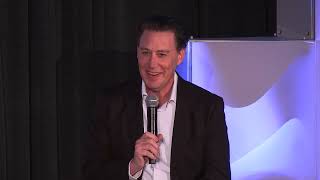
Panel discussion (SXSW EDU 2023) moderated by Michael Crawford (Vela Education Fund) with entrepreneurs Manisha Snoyer (Modulo), Sunedia Oliver Stone (Morgan Oliver School), and Tobin Slavin (Acton Academy Fort Lauderdale). Speakers tell origin stories and describe out-of-system models (online homeschooling platform, community-focused K–6 lab school, learner-driven micro-school). Central themes: community-building and mixed virtual/in-person networks; funding and sustainability (membership, nonprofit scholarships, VC, grants, tuition and donors); operational challenges (facilities, zoning, accreditation); equity concerns and strategies to serve under-resourced families; parental fear/barriers to leaving traditional schools. The session concludes with audience Q&A on equitable access and parent involvement.
Questions this video answers
Founded in 2019; provided more than $24 million in grant funding to over 2,000 everyday entrepreneurs.
Over 6.5 million learners (figure stated by Michael Crawford).
Families in 42 U.S. states and 45 countries.
$9 per month membership.
Founded in 2020; serves formal K–6.
Chapters
Welcome, everybody. Thank you so much for being here. Day two of south by Edu. Hope you all are having as much fun as I am. As we are. My name is Michael Crawford. I am the director of community research at the Vela Education Fund. For those who may not know, Vela is a non profit education fund that supports everyday entrepreneurs across the country, creating opportunities for learners and families to pursue the kind of education that they would love. Since 2019, our founding, we have provided more than $24 million in grant funding to over 2,000 everyday entrepreneurs, former teachers, parents, community members, learners who are creating a range of different offerings for folks. And those entrepreneurs have served over 6.5 million families, 6.5 million learners. So again, really excited to be here and we're looking forward to a great conversation. Next to me here are some of those entrepreneurs and we're excited to hear from them. Directly to my left is Manisha Snoyer, the co founder and CEO of Modulo, which is an online community for homeschooling families. To her left is Sunedia Oliver Stone, the founder of the Morgan Oliver School, which is a community focused lab school in Atlanta. And to her left is Tobin Slavin, the founder of Acton Academy, Fort Lauderdale school that I got a chance to visit right there in Fort Lauderdale. Really cool. So I'm gonna let these folks introduce themselves and go a little bit deeper into their story. We'll start with Manisha. What is your unconventional education origin story? Thank you.
So I'm Manisha, the founder of Modulo, and we are building a decentralized education system to replace public school. We currently help families curate their child's education as a replacement or supplement to school by matching them with curriculum, classes, community, friends, and accountability and support. So my origin story, I started out as a teacher. I taught over 3,000 kids in New York City, Paris, San Francisco, all over the world, ranging from very elite private school tutoring to subbing in some of the most challenging public school environments in New York City and also in great public schools. And my impression as a teacher was that our education system was broken at every single level. From in my tutoring sessions with very wealthy students, I saw students throw up because they were so stressed out by the tests they were going through to prepare to get into Ivy League schools. I didn't feel like there was a lot of great learning going on. And when I was teaching music in a public school classroom in New York, I had 30 kids, not a single musical instrument in my classroom. And this was a school that had so much additional money from its PTA that actually $100,000 was embezzled and nobody noticed for three years. So with all those resources, I felt like I could do so much more for the children in my classroom. And I kind of started saying to myself, like, what's really needed for a great education? You need teachers, space and a group of kids. And I thought this idea was very naive, but the more I started thinking about it, the more people started encouraging me to pursue this vision of a new kind of education system. My first company was called Cottage Class, and it was a platform to help teachers start micro schools. And after I worked on that for a couple years, I started feeling like education could actually be much even more wildly different than just a school environment. And so modulo is really kind of starting at square one and seeing all these building blocks that are necessary for good education, good socialization, good childcare, and rethinking the entire model. And I will say, much of what we've built today is really inspired by decades of secular homeschooling families iterating and building this incredibly rich intellectual experience for their children. Really wonderful, diverse social groups. And I'm just kind of taking what they've built and creating an ed tech platform that can make this accessible to all students around the world.
Love that. Thank you. And Sunedia, how did you come to this work?
Yeah, so my name is Sunedia. I'm the head and founder of the Morgan Oliver School in Atlanta. I also speak to groups of educators and entrepreneurs and philanthropists and families who are interested in learning more about non traditional approaches to teaching and learning. I was Also a former K12 teacher in both public and private settings. And my experiences there brought to light a lot of inequities that Manisha just mentioned around testing structures, resources, and really the harm that schools are doing to kids who do not have resources. And, you know, and during the pandemic, it just exacerbated these. These differences, these inequities. Particularly in Atlanta, segregation is worse than it was in the 1960s. And so being in the position to see my wealthy school community forming these privilege pods and then kids in my community not having Internet and they don't have resources or even anyone to support them through their online virtual classes. You know, and so I felt like if there are so many resources in our community within blocks of each other, let's bring these two worlds together so that we can provide equitable education to all the kids. And so, you know, we rolled up our sleeves and kind of converted an old bike Shop into a classroom. And we had a hybrid model at first and it was part time and we had kids from several different schools, district systems. And in a couple of months we just came together and went full time. And I think the exciting thing about our school is that seeing kids build relationships with others who don't have the same experiences, that is, you know, what bridges and breaks stereotype threat. And so we center anti racist curriculum work at our school now. And it is, it's a really, it's, it's. We've founded in 2020, so we're going into our fourth year. It's a very exciting time for us because we are growing. We've been based out of a bungalow for the last couple of years and we just bought three acres. And so we'll be able to grow our capacity and scale our program and offer this kind of education to all kids. But we are a formal K through 6 school that has kids all day with homeroom teachers and specialists coming in through the community. So that's our story actually. On your own.
Mic and Tobin, same to you. How did you find your way here?
So the slide says that I'm the founder. I would actually describe it as co founder. And the reason I highlight that is that for us the school has become a family project. So my wife is actually the head of school. We have a nine year old who's a learner in our Acton Academy. Our oldest daughter is actually the lead guide. And so the family part of it brought us to this. You know, we had a motivation there as well. I think that the other thing is as an entrepreneur, Acton Academies are very different. So there's no teachers, there's no tests, there's no homework. And you guys are probably thinking that doesn't even sound like school. And I would say that's exactly right. That's the intention. In fact, I would say it's even radical because we're trying to get the adults out of the way so that the learners, they take ownership and they can have that deep transformative learning. So that was really interesting to me. Where one of almost 300 schools in the Acton network, 24 countries worldwide. So we've really benefited from being part of that network and it works, it's working for us. And across the network, the learners are jumping two to three grade levels every year because they own their school.
That's great. And you'll hear a lot about the kinds of diversity from diverse models to learners being served to entrepreneur background. Tobin, you talk about Acton. How did you come to Choose Acton as the model you wanted. There are a range of different ways to start a school and to create the kind of learning environment that you might want for your own children. Why did Acton, what was it about that model that really spoke to you?
It wasn't really like that. We weren't shopping for models at the time. Our nine year old daughter was thriving as an unschooler. So we saw that, that she was doing really well academically. But Actons are very. The social, emotional learning comes first. And when you get that right, the academics become a rocket ship. And she was doing really well with the academics. But that peer to peer learning environment, we weren't going to be able to create that at home or even with some of the extracurricular activities that, that we did. And I was fortunate. I actually interviewed one of the other Acton owners. I had never heard of the network or the schools, but I interviewed him for a podcast and he said a couple things like operating a school with over 100 learners and only 2 adults on site because it's peer to peer learning and the older learners were coming down into the younger groupings. And it just, it kind of blew my mind. And we started doing our own research and it felt, feels like we're on our own hero's journey in the school. And that's very much an act and theme as well. Every single day we're talking about where they are. Each learner is in their own hero's journey.
Got it. And Sunidia, your school, the Morgan Oliver School, is not attached or connected to any particular network. How did you come to figure out over time what model was going to work for you? How did you kind of think through that process?
So, you know, like Tobin, it wasn't something that I thought deeply about and it was certainly not something that I ever thought we would be doing at this time. But the pandemic, you know, provided an opportunity to do something, to act, because we had to. I'm a parent as well. We have two children who really need that social connection. An in person experience, virtual learning was not going to work for my kids and it really doesn't work for most kids. So I wanted to create a space in collaboration with some, you know, community stakeholders that would do everything differently in private school spaces. Oftentimes kids, there's a story that's black kids, brown kids, there's a story that's written about them before they walk through the door. Those kids are going to need more support. The parents are going to be hard. You know, there's A certain pushback as far as culture is concerned. And, you know, oftentimes from everything from the curriculum to the financial aid and even to the faculty support, people of color aren't considered and centered first. And I believe that if we create systems where we prioritize the most marginalized people, even if they're not in the room, then no kid can fail. We can't get it wrong. We're not going to miss anything. And so, you know, we knew that we wanted to force ourselves to have an equitable tuition model, so we knew we weren't going to charge tuition at a flat rate. We wanted to have a tiered tuition structure which we developed. And we wanted to make sure that teachers were paid commensurately. We didn't really know how we were going to get the money. It was a, you know, build a ship in the air type thing. And then asking a lot of questions and learning and growing. I mean, we started really small. And I think as. As steam picked up and we got more stakeholders and excited people to come on board, policy started to develop.
So that's great. And I want to pick up on something, Sunidia, that you said, the importance of community and what it means as a founder, what it may mean as a learner or a family. Manisha, you have built an online community for homeschool families. Can you talk about what community means to you, what you're seeing amongst the community that you have built that has really energized folks in your space?
Yes, that is a great question. It's been really exciting to see the friendships that have been formed in the community that we've built. So Modulo is an online community. We have families in 42 states and 45 different countries. It's quite wide. And there are several different ways that our community interacts. Sometimes children have online play dates. The adults often interact with each other and share resources and advice. And we're also building out in person components. So Vella has given us a very generous grant to grow our community to a million members this year year. And one of the things that we're doing is we are hiring local homeschool moms to start meetups in their areas. And the community part of Modulo was actually really inspired, again, by secular homeschoolers because like many, I had this image of homeschooling as very lonely and antisocial. But then when I started attending homeschool meetups, I was just blown away by. By the communities that they've created, which are incredibly, in most cases of what I've seen, of course you can't make general observations, but are inclusive, are diverse. They've almost created a new economy in that they're sharing childcare, they're sharing curriculum. It's really amazing to see that dynamic. So a while ago I heard this term true community, and the way the true community is defined is really a community that is supporting each other and sharing resources. And in our modern age, I mean, for many reasons, the Internet also, like the decline of religion, there are just very fewer places for people to gather and share resources. And one of the things that's really amazing about these homeschooling communities is they're united by a shared value of education and children. And that passion for their children and their passion for the education really unites them. And when you look at, for example, traditional schools, I mean, I as a tutor saw a lot of kids who struggled with addiction, drugs, alcohol. And one of the talk about is the opposite of addiction is connection. And that communities that are smaller and are united around shared values like education tend to have less of that problem. And the other thing just regarding community and homeschooling is that often when children are interacting, they're in mixed stage groups and parents are there. And a lot of times we think about like, my kid needs to be with kids the same age. That's really, really important. But this idea of a peer culture has really only emerged in the last 50 years. And these kids are really not learning a lot from each other about how to interact when they're alone and playing in this kid chaotic recess environment. But in the homeschooling community, there are parents there who can intervene if there's a conflict, who can help guide them in interacting. If a child isn't comfortable in a social environment, they can kind of be circling around the group. And there's a lot. It's really interesting to think about how adults can help build these social skills. And we see that a lot in homeschooling communities. And that's the kind of relationships and communities and true community we're hoping to build with modulo.
I love that. Yeah. We recently had two focus groups exploring, talking to everyday entrepreneurs about the kinds of challenges that they face and the needs that they have. And community was one that came up consistently. The ability to turn to somebody that is in the same boat as them, who is doing that work and be able to lean on them and learn from them and share with them is incredibly important for you. Tobin, you know, I visited your school. I know it's a family affair. What does community mean to you? How has community played an important part in the building of your school?
I think, first of all, Manisha, I love what you said about true community. That's really beautifully said and powerful to think about. I think for us, we've engaged with the community in a couple different ways. So on a date, because we're a young school, we're still in our first year, we're very focused on curating our group of families. Being a parent is hard. Being an act and a parent is even harder because of what is asked of these folks to step back and not step in to rescue your child. And it's a mindset shift. It's a challenge for us as guides in the school. So we're doing a lot of work with our parents on that. So we're meeting regularly and we're sharing information not only from our own act, but from across the network so that they understand their place in this bigger challenge. Honestly, the challenge is not with the young people. They embrace it. If you tell them you going to be able to go do this learning and an adult's not going to tell you what to do, that sounds very attractive. But for the parents it is a challenge. And for, you know, as a former teacher myself, it's hard not to step in. So I think our first order of business has been to essentially put on our own mask first before we can help others. And then there's a lot of opportunities to engage with our community in South Florida. So for example, Actons are very entrepreneurial. We each year we host a children's business fair that's coming up in June. That's not just for our own learners. We do it for the whole community. But we love the real world aspects of being able to go out, fail, pick yourself up, learn from that experience and do something creative and put a little money in your pocket when you're six, seven years old. That's a big deal. If you actually create something, sell it, talk to a stranger about it. So we're integrating in events that way. And I think we've also benefited a lot from, from the community. So what Vela has helped create, some of our fellow micro school owners have created a really robust network in South Florida. And we benefit a lot from that ecosystem. So I just, I appreciate them. They started it, we plugged into it. We benefit a lot from the Acton Network as well. So we've got a lot of support around us and it's our turn to give back.
Great. Yeah. South Florida, for those who don't know is a wellspring of everyday entrepreneurs doing fascinating things. And in fact, after this panel, there's another panel with Sherene Radigan, who does all kinds of awesome stuff down there. So strongly recommend checking that panel out and checking out South Florida for everyday entrepreneurs doing great things. Sunedia, you mentioned the importance of community, and I'm curious how people, how families and learners find your school, how you find them. How do you ensure that the community is part of the school in a big way?
Yeah, I mean, I think community is everything. Right. If we're trying to bring back smaller schools, more intimate and give kids and families proximity to each other, we have to really rethink how we're engaging with community and how we are collectively considering all of the different elements of a healthy community. So we, instead of having in house specialists, we reach out to local art studios, local dance studios, we reach out to musicians, we reach out to people. We try to focus and center on people of color because historically they have been marginalized. It's harder for them to get a footing as entrepreneurs, period, space, et cetera, generational wealth. So we want to financially support them, and we also want our kids to see people of color doing things that they could be passionate about and doing it well. And so instead of having in house specialists, we do offer different courses throughout each trimester. So that's a way that we engage with community, our kids, we're cultivating activists because the state of education in this country is obviously not working. And we need to. There are a lot of social structures that aren't working. And so we really need to empower kids to engage with their community in a healthy way, to be able to not just identify problems, but to know, here's something that I'm going to do about it, to be able to pull out strategies and say, I can write this letter to the mayor. I know local policy. I can write to my legislator, I can write to my representative. So we try in all of our curriculum to really support kids with having those schools with those skills. And it looks very academic. And these are life skills. Right. We think about community also when we have partnerships, we partner with the YMCA to give swim lessons to kids who couldn't swim, you know, and now they are proficient swimmers. After a swim clinic, we partner with local sports organizations to offer P.E. but all of these partnerships, and we partner with restaurateers to offer food programs for our kids. And so all of these partnerships really strengthen community, build connections, and really leverage the skills the community has. We Definitely wouldn't be where we are if we didn't leverage parent talent, skills, expertise. All of our marketing and promotional materials was done by a fantastic parent who did our art portfolio. We have parents who come and make repairs at our physical space. We have parents who, you know, help with reading times. I mean, parents are critical. And some parents are working three jobs and just can't show up in any capacity, but they'll come on the weekend and help tidy our school. Right. And so they're, you know, and their contribution is having their kid in the space to share an experience that others wouldn't have any idea of, really. And that does create proximity. So community is critical in every way. So that's kind of how we do some of the things. Yeah.
If I could just tag on to that, I think, you know, you can see in what Sunedia has created, how close she is to her individual community and how quickly she's able to adapt to the needs of her community and to the needs of individual students in a way that a huge, for example, government body cannot see what her individual community needs today and what it's going to need tomorrow and the context of how jobs are changing and what the goals of her family are. And I think a lot of the times in education, we think about, let's build a perfect model that's going to work amazingly for every single child. And we do all this research and then it takes all of these years. You know, like, for example, 20 years ago, we found out that jobs and coding are going to be important. And so still now we're trying to get coding into the schools, but, like, who knows what kind of jobs our kids are going to need to do? And, you know, Sunita, she can change in real time and build something really wonderful for her individual students. And I think that's, you know, one of the things we're trying to do with Modulo is trying to build a system that can evolve and that can really support these incredible people in individual communities who are really, really quickly responding and adapting to children's needs. Needs.
Well said. I want to switch gears a little bit to funding and sustainability. And so, Manisha, I'll actually come to you. How have you thought about keeping Modulo's lights on? How. What is your business model? Where does the funding come from? How are people plugging in?
That's a great question. So our big vision is to build a public education system that's equitable and accessible. So when we think about funding, we think about how can we make this available to every child and to all the children who don't have access to any education today. So we have four primary sources of funding. One is membership in our online community. Families can pay $9 a month and join and get support from child life specialists and matching. But in order to make that accessible to all families, we also have a nonprofit branch and Vella is helping us grow that community by giving us scholarships to anybody who needs it. And then we're also a venture funded startup. So we are really trying to build the technology that can get data and nuanced insights into children as they're learning. Not periodic, but continuous. And so we're looking at hiring engineers who understand AI and machine learning. So we can really get these nuanced insights into holistic outcomes, social, emotional and academic, and demonstrate these outcomes. So then that would open us up to government funding and being really a viable replacement. And so those are kind of the primary sources of funding for modulo. And if anyone is interested in getting involved in helping us reach more under resourced families through the nonprofit or help us build up the technology that can make this accessible to everybody and improve the matching, we would love to talk to people.
That's great. We recently, last winter, fall, conducted a survey among our grantees around their business model, around their facilities, around their revenue. And it turns out that the overwhelming majority of grantees are actually generating revenue through participants, through tuition, through fees. It isn't the case that they are just getting a bunch of external dollars coming in and that's what is allowing them to be sustainable. Instead, they're being creative. Sanidia talked about different ways that families can contribute to be able to plug in whether they have the financial resources or not. There's always something that folks can do to be able to gain access to some great opportunities. Tobin, I was wondering at Acton in Fort Lauderdale, what does it look like for you? How are you thinking about sustainability? How are you thinking about ensuring that the lights stay on and that the school survives?
The first thing I want to say is that we, I don't, I won't say that we wouldn't have survived, but the support that Vela provided came exactly when we needed it most. So if you talk to any micro school owner out there, at some point the bricks and mortar become part of the question. We had one, we had one of those stories ourselves where we started in a old historical home in Fort Lauderdale. We couldn't get permitted there and so we had to. And we had already enrolled families. We were underway. We had to step back and it was a challenge. It's a big challenge. And depending on where you are in the country, sometimes it can be nearly impossible. But with Vela's support, we were able to get into a former school space, which is not only great for where we are, you saw it directly, Michael, but it's also, we have room to grow. We'll, we'll have eventually 100 to 150 learners. Right now we have 17, so we're just getting started. Interestingly, we have four adults in the space, myself included. When we have over 100 learners, we'll have four adults or fewer. And so I think part of our sustainable structure is managing the costs in a, in a unique way because of the model. This happened a couple weeks ago. We had Covid in our school, we had a couple families out and one of our guides was out and so we took a 9 year old, no, it's a 10 year old and an 11 year old learner and they ran our younger studio that day. And I spoke with our guide and she said it was the easiest day she had ever had. She basically sat back and took notes all day and observed because they knew the systems, the processes had already been provided. And young people love learning from other young people. They'd much rather prefer that environment.
And Tobin, you bring up challenges around facilities. We hear challenges sometimes around zoning. Sunidia, I was wondering if you could share a bit about some of the challenges that you have faced in starting the Morgan Oliver School and how you have been creative to kind of work through those.
Yeah, so I mean, I think as far as funding is concerned, you know, schools are largely underfunded. The entire structure of funding schools, public and private, are problematic and archaic. They're really old. From Horace Mann, when he first started education, you know, formal public school education in the late 1800s, early 1900s. And I think, you know, that that's a foundational and fundamental question that we should be ask policymakers and folks who think through these issues. So, you know, obviously we don't get federal or state funding, which is hard. We also don't have a one primary financial backer. So just like, you know.
All of.
Us up here have benefited hugely from Vela's support and it did come just at the right time. Operations are expensive and if we want to honor teachers and pay them a living wage so that they come and bring their full selves, we need to put that first. That has to be a priority. Schools, the facility is just a space. Right. But it is the kids and the families and the Teachers who are in that space and how they feel valued that really make a difference in how they interface. Right. With kids. And so, yeah, challenges mirror Tobin's with being able to get. Go through the zoning process. And, you know, that's a very expensive process. There's a lot of barriers in the way to create alternatives to education that are, you know, we kind of stumble on them as we go. I think another challenge has just been getting the. Through the whole accreditation process right from the start is also another big element there that makes things really tricky. So having guidance, you know, and having some. Some infrastructure, support and people who are experts in certain fields has been really helpful. And it's also really expensive if you don't have those connections. So I don't come from generational wealth. My family grew up, you know, pretty poor, and we didn't have a lot of resources to pull from. I used my retirement to start the store school. And, you know, I think the tuition that we have now definitely keeps the lights on, but there are so many other operational expenses. I think 68% of our revenue comes from donors. They come from foundations and grants. So to make it sustainable, I think that we have to ask that as a community together, what can we do to. To encourage SBOs and organizations and spaces to think about education and prioritize it first and teachers.
Thanks, Manisha. You sit at a little bit different position relative to Sunita and Tobin. But I would imagine there have been challenges in creating a community, an online tool, an ed tech company that serves homeschool families. What are some of the challenges that you have been wrangling with recently?
That is a great question. So I think there's two challenges. One is the space I'm in is very new. And then there's also personal challenges that I bring to this huge venture of trying to raise millions of dollars to build a new education system. So just in terms of home homeschooling being very new, there are so many stereotypes even around the word homeschooling. And I think that when you're proposing an idea so radical as, okay, right now, we take childcare, we take socializing, and we take education. We put it all in the same place, and we expect students to attain the same outcomes. And instead you say, well, what about you curate your childcare experience? What about you study, spend more time with your child? What about, you know, you change everything you think about how children should socialize? That's a big jump for a lot of people. So, you know, I have a lot of data on the Effectiveness of one on one mastery learning. There's also data on success outcomes of homeschoolers. There's data on the fact that a lot of homeschoolers are secular and work in tech and are teachers. But that doesn't really seem to have a huge impact on people.
It seems.
Seems to have an impact is sharing stories when people can relate. And see that person like me was struggling with this and wow, they took their children on a trip around the world. And you know, this amazing story, One of the Reddit homeschooling groups was posting like, can I homeschool as a single mom who's really poor? And this woman said, you know, I just knew I wanted to homeschool. And so I took all my kids and we moved to this farm in Costa Rica where the cost of living was really low. And we volunteered on the farm and I taught them using these adaptive learning apps. And it's been the most incredible experience of our entire lives. So these kind of stories really help to bring people over because I think what a lot of people kind of know, they're not happy with their children's education, but they can't imagine something better could be possible. And there's so much pressure on parents. They always feel like they're failing their kids. They feel like they're being judged by relatives. And so these stories can really help them get from one place to the next. And I'm not saying homeschooling is the best solution for every single person. You know, there's these incredible micro schools here. But, you know, when a parent really feels like a choice would be better for their kid, those stories can empower them. And then just quickly, in terms of myself, I am a woman in tech. As a teacher, I was also an actress. I never thought about that being a woman would be something that would stop me from getting what I wanted. And when I entered my first really intensive tech accelerator, I started hearing things like, don't share your emotions, like talk in really quick sentences. Everything about me was supposed to change. And then I started going to pitch my startup and I found out, like, okay, women only get 2% of venture capital, even though 50% of business are started by women. And I was really grappling with these things, and people kept telling me that I wasn't confident when I showed up to my meetings with investors and that I should fake confidence. So I kept on trying to fake confidence, and people kept on turning me down for venture capital. And a lot of people are really excited about supporting women entrepreneurs. But there's a lot of hidden bias. Like, for example, I started learning that women are asked preventative questions, whereas, like, well, what if a child gets hurt by their teacher? Or how do you vet your teachers? Whereas men are asked questions like, how big could this get? How many millions of dollars could you make? And so I kind of learned to preempt those questions, but I still didn't really have the confidence. And so my co founder in this project is Eric Reese. Some of you might have heard of him. He wrote the Lean Startup and is really well connected, has worked with a lot of entrepreneurs. And he said to me, manisha, confidence is about integrity. And that really spoke to me. He said, like, you have your mission, you have your plan, you have the experience that you bring, you might be wrong. And you show up and you present that and you stick to your plan. And that has just really helped me a ton, because it's not like I'm looking at people to say, like, are you good? Are you not good? But it's like, all right, here's what I have to offer. Here's why I came to this, and this is what I'm trying to do. What do you think? And that's been great. So, you know, we just got this amazing grant from Bella. I think I presented them with a plan, my mission, and they're excited about this insane idea. So upwards and onwards.
That's great. Tobin, your. I know you have a. A background in business, a background in marketing. What has surprised you about being an entrepreneur in the education space?
It was part of the attraction, I think that's not the surprise, but it certainly drew me in, I think the biggest surprise, honestly. So before I was an entrepreneur, I was a teacher. My master's is and education in our little school, in our group of four adults. I'm actually the liability as a former teacher, because when you are a teacher and you have something exciting that you want to share, your inclination is to go and teach. And our guides in the schools, and honestly, the two younger guides are better at this. They're game makers. They set up the rules of the game so that everyone understands what those rules are and what the consequences are if you play outside the lines and not stepping in. So it's. I think what surprised me was the shift, the mindset shift that was going to be required to do this work. As an entrepreneur, it's kind of, you know, go break things, go fast, go see what you can make happen. And sometimes this is. It's a trusting process to trust the young people and Follow them, that they know what is best for themselves, they know the pace that they're going to learn. And that's hard for, particularly for parents out there. If you have a, you know, 7 year old who's not reading the way you think that they should be puts a lot of stress on parents and they get anxious about it. But you know, age old wisdom from Maria Montessori. Follow the child. And there is a pacing, there is a natural order. And because it's natural, it's always on time, always right.
Love that. Sunidia, same kind of question for you. I know you have an education background. What has surprised you about the building, founding, running of a venture like a school?
I mean, I feel like there's a surprise around every corner. Every day there's a surprise. But I think when it comes to, I think when it comes to building the school, it has been learning how much relationships matter and that, you know, no one person can do, can do all of it. It really does take a collaborative group effort to come together and to leverage other people's strengths and so trying to remember that as we move through and grow and you know, delegating appropriately to people who have skills and trusting again that that's going to happen. But one of the most surprising things for me has been, you know, someone asked, how do you measure a student success? And I the first thing that came to mind was joy. Are they happy? You know, are they happy? And if they're joyful and if they trust the people who are caring for them for seven hours a day, they're going to be excited about whatever is put in front of them. And for our school, we do have a large group of kids who are socioeconomically disadvantaged and their transiency is high. So we do really feel like it's imperative for us to prepare them to be able to enter and matriculate into any public school system. So we do follow the standards and we do have more structure to our group because there's just a sense of urgency there because there are systems in place that they'll need to be prepared for. So it's very common for a kid to come in at an entering K level in reading and then to leave at a third grade level. We need them to feel really good about their academics. But there has. I've worked for 12 years in K12 and I've never been in a space where kids are learning from each other and doing it in a really empathetic, generous way. Kids are having conversations that include, you know, their home lives Some kids go on vacations to Tahoe or to, you know, Cayman Islands, you know, and come back from spring break talking about that. And other kids talk about how they got to stay home with their little siblings while their parents were working. And that's a conversation that we have, you know, and it really engenders and encourages empathy and being able to code switch around friends. And it also offers opportunities. So I think that the kids have surprised me and I think the core piece is just relationships in general.
That's amazing. And Manisha, you have been an entrepreneur for a while, actually. Real quick, how many Vela Grantees are in the audience by chance? Raise your hand if you're. So these are folks who are building their own ship as they fly it often. Manisha, what advice would you give to entrepreneurs, maybe first time entrepreneurs, entrepreneurs in the education space for building something that can thrive and have an impact?
That is a great question. So everybody's situation is different. So there's no advice that fits everybody perfectly. But what I would say has been most critical to me has been to be very, very clear on my mission. When I founded Modulo. Well, actually when I founded my first company cottage class in 2015, it was a time in my life where I was moving away from teaching. I was also an actress at the time, and I really felt like I wanted to make a bigger impact in the world. And I was really, really concerned about climate change. It's actually something that's been terrifying me since I was 15, just this idea that the world would end and that I needed to save the world. And I felt like what I was doing wasn't making an impact. When I was in college, we had the war in Iraq was coming out. I was very opposed to the war. I protested and we still had a war. I keep on trying to tell people about climate change and they're still driving their SUVs, and I felt like nothing I was doing was making any impact. So I just stepped back and I took two years to research on how I could make a fundamental difference in these issues I cared about. I read lots of books about how to reduce my own environmental footprint. I compared notes. I read books about how you change people's mind. And for me, everything came back to education, that if you can provide universal access to education, you can help. Actually, the education of young women is one of the top six ways to fight climate change. Human rights. I think we have a big problem with fake news. People don't know how to read and analyze research and get insights, real insights from that people don't know how to guide themselves in this world. And so I really, really focused and I decided what can make the biggest impact? Okay, giving access to education, giving children compassionate education, intellectually challenging education, supporting parents. And so now when something bad happens on the news, like, I know that I'm doing the right thing, I feel better. You know, like, when George Floyd was shot, we immediately had anti racism workshops. We did that the next day. And that technology enabled us to access people and make a difference. And so back to how I kind of navigate this crazy startup world. There are problems every single day. I mean, like, I get long emails about a parent who's stressed out because her four year old doesn't know two plus three three. And she's been doing math tutoring with us. And I want to tell her she's a crazy helicopter parent, but I need to, like, step back and say something profound and connect with the fact that she loves her child and that's why she's concerned. And in those moments, you know, I mean, so much stuff has gone down. Crazy. If you tried to build a business, you know, like, suddenly my lawyer is telling us we owe $30,000 for doing nothing. You know, like all this stuff. And I just remember I'm doing this for the children that I love. I'm doing this to fight climate change because, like, I did all that research and I know what my mission is. And so that mission, like, oh, it will get you through some really hard times. So I really recommend that. And one more thing is that every company I built, I don't feel like I came up with an idea for it. It, like, bit me in the butt. Literally. Like, all of a sudden I'm doing this thing and I don't even know why. So sometimes that best idea will find you.
That's great. I have one more question for each of you, and then we'll open it up for questions from the audience. So if you have a thought, a question, there will be a microphone that will find you. So raise your hand and we'll make that happen. But the last question that I'd like to ask you is, what do you want people to know about your work, about unconventional education, about this mission that you all are on? What should people know about that? Tobin, I'll start with you.
I was hoping he wasn't going to start with me. I feel like I've been a little bit of a broken record. So you've already heard me say, get the adults out of the way, trust the children. This model is working for us. It's working in our network. We call it learner driven. I'm not sure, I mean, mention that. So that has been, you know, we've doubled down on this. I think that when we lost that, that first building that we started in the historical home, our team circled up and we had a discussion about what we were doing. And it would have been a lot easier to say, we've learned about act and we, we love this model. It's working for our family. Take our daughter to one of the. Let's move to a community where there's an act and there are other schools in Florida. But we, our team doubled down. And one of the reasons, I'll be honest, it's selfish for each of us. You know, as adults, we're on our own hero's journey, you know, with the. Creating this environment to allow others, our young people, to. To explore, develop, build on their curiosity. We call it find a calling to change the world, their world, and we don't know what that's going to be. But each person who's walking through the door, there's a seed of genius inside of them that we're trying to tap into, allow them to discover for themselves. And I think as adults, it's been challenging for us, and it's been the most surprising and the blessing out of all of it.
Thanks, Sunedia. What about you?
I think the takeaway for me and for the school are. My hope to convey is, you know, dare to think differently. Right? Like, dare. Dare to believe, to trust in people's capacity and their human capacity. I think if you're hoping to start something, there'll be a million reasons to not do it, and there'll be a million hard moments where you want to turn back. And I think if this is kind of a pattern that I've seen in my life, if something is hard, you know, it's easy to go back to the way that. The safe way. And I think in those moments, you do have to think about your mission. What are you really here for? Are you passionate about it? Are you doing it for the right reasons? You know, those are questions that I ask myself every day. And then I think, you know, leverage your community, like, leverage people and, you know, listen. And I think hopefully schools like ours, schools like, you know, Tobin's, and I think probably a host of folks in this room inspire other people. I can't tell you how many people have started a Microsoft school since we did it in 2020, or a homeschool pod or, you Know a creative way to, to support families who are going through a challenging time, you know, when funds are limited. Get creative. How can you find money? You know, and if that's like renting out your space or if it's tapping on someone who, you know, you haven't been able to for or you haven't done for, you know, a year or so. So those are, those are the things that I'm hoping folks leave. Dare to dream big.
That's great. And Manisha, same to you.
Well, I love dream big and I would add to that. Stay curious. I think this audience is probably more receptive than some to out of system ideas. But I meet a lot of people who feel a lot of resistance to what we're talking about. And one idea we talk a lot about in which if you're in tech, you know, is this idea of untested assumptions. And I think it's interesting to get curious about untested assumptions and you know, just why are we doing things the way we're doing them? When I was a teacher and still often I think, well, there must be a reason that the school system is this way. Like there's someone, there's something I'm missing in all of this, that why we need these standardized tests and like this lots of control in the government and like there must be some reason. And then I'm like maybe not. Maybe there isn't a good reason we're doing it this way. So kind of let your mind enter that possibility. If you're curious about homeschooling, go to a homeschool meetup. If you're curious about micro schools, visit Morgan Oliver School or Acton Academy. Just get a feel for it. Like question, what are my untested assignments? What are the things I believe that I haven't really dug into? That's what I would suggest to you. And then also if there are any parents here, there is support available to you. I mean modulo, you can go to our website, you can sign up, you can ask for a free scholarship. We'll answer any question you have, give you all the support you need. I mean these people are here to help you and we want to guide you so you're not alone.
That's great. And with that we will take turn to questions from the audience. Raise your hand, gentleman over there.
Give us some hard ones. I'm Aylin Bennett from Education Reimagined. We often relate to equitable access by.
Providing good with without means or circumstance.
Being in the way of that. And so as the Learning experience that seemed very ecosystemic in design continue to.
Grow and scale out of system.
What are your concerns about that equitable access as education being a public good.
As it continues to expand and saturate in the out of system space? What are some of your concerns or.
Cautions as that trend continues to grow?
Can you repeat that last part?
It seems like this ecosystemic design for.
Learning is growing at a pretty rapid.
Pace out of system.
As it continues to grow out of system, what are your concerns about equitable.
Access to this type of education to folks?
I'd be happy to address that. So during the pandemic, I founded an organization called schoolclosures.org and it was a hotline for any family to call in and ask what their needs were. And I learned a ton from it because the biggest needs during the pandemic were access to meals, access to child care, access to devices, and then there was tutoring and access to learning apps. So if we're building this new education system, it's really important that we don't neglect childcare and meals and all these important social services that school is providing to students.
And I also think, what is the harm? What's the worst thing that can happen if people who are passionate about education start small schools, you know, they're not doing it for the money. They're never going to make a lot like it's not going to be, you know, they're doing it because they're passionate and because they feel like they can serve a need in their community. And I think if we do trust them and help with the infrastructure and help with the organizational management and the administrative part, that's what takes me away from the classroom, all that stuff, which is fine, but it is, it's limiting. And so that's what I would say. What's the worst thing that can happen if it does come to. I hope it does come to pass.
Any other questions? She's on her way.
So my question is for Sunedia in your program, is parent involvement and I don't know if this was asked, but for is parent involvement of requirement in your program? No, because some parents don't have that ability. Right. So I think we do encourage parents to come into the classroom in any way that they can and to contribute to the community in any way they can. And there is a sense of reciprocity. So parents show up in different ways. Parents, like I said, they can come and help garden on the weekends. They oftentimes will, you know, be chaperones when they can but there's no required hours of volunteering.
Right here.
So I just want to. I homeschooled for 15 years and I'm almost teary wishing that this was available when we were homeschooling, started a co op and did all kinds of things. But.
It makes me sad to see.
Parents who don't think they have an.
Option to leave the system.
I have people in my family whose children were, you know, subject to abuse every day by the other kids, but.
They were so scared to leave the.
System, even just for a year.
And I'm wondering what you think are.
The biggest barriers to families who are.
Not leaving the system when there are so many opportunities out there right now?
I think the fear. I can speak from a perspective of a person of color. I think the fear is there is a fear of failure for their kids. And, you know, as much as we can reimagine a place and a space where. Where academic rigor isn't prioritized, but rather the whole child holistically is, the truth is these kids are going to take standardized tests in high school. These kids are going to have to take ACTs or SATs unless they go to a trade school or choose not to go to college, which is 100% fine. And so there is an inherent sense of fear. My kid won't be successful, My kid won't get a job, My kid won't have the social skills or the academic skills needed. And if my kid does have to go to another school, they're not going to be prepared to. They're not going to be prepared to feel successful. And that's going to impact their confidence, that's going to impact their social perception. And so there are a lot of reasons, I think, why families don't feel safe with alternatives. And also some families don't have space in their lives. A lot of families don't have space in their lives for any kind of mitigation or flexibility around schedules because parents are working a lot in this very capitalistic society.
I think what we see now in the homeschooling movement, which has tripled since pre pandemic levels, is that the people who are deciding to do this have either hit rock bottom. I had a family who decided to homeschool because their doctor told them that their son was going to have a heart attack because he had so much anxiety. And then his school told him that he couldn't stay there anymore and his other option was to attend a special needs school in New York State. You have to sue the state if you want funding for a special needs school, which cost $100,000 a year, and you kind of have to put the money up front for yourself. So they homeschooled, and then within a month, the kid is doing great. No anxiety, happy as can be. So you have people who are just absolutely desperate. And then the other side, you have these innovators, like people in tech, who are like, I want to do everything different and try new things. So I think what we'll see is that as this movement grows, these early adopters will start bringing in more people and start to normalize it. But also, I mean, I just think the anecdotes are so powerful, sharing stories. And, you know, one thing, Amir Ayal is a kind of famous homeschooler. He wrote the book Hooked. He said, just try it for a summer. Try homeschooling for a summer. See what happens. And your friends will start seeing the results. And it still takes courage, but the movement is growing, and I think that's going to help a lot of people start doing this.
That's great. And with that, if you give our panelists a round of applause, thank you all for being here.
More from Manisha

Contributing to Florida Prepaid Plans (2026–2027) | Step-by-Step Guide for FES-UA Families

Contribuyendo a los Planes Florida Prepago (2026–2027) | Guía Paso a Paso para Familias FES-UA



Finding Providers & Services in the Marketplace (Families) | Step Up For Students (2026–2027)

Encontrando Proveedores & Servicios en el Mercado (Familias) | Step Up For Students (2026–2027)




