Interview with Kathleen Cotter Vice President of Right Start Math
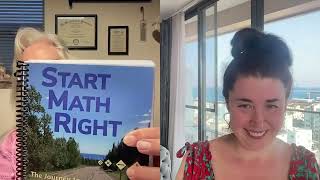
Kathleen Cotter, VP of Right Start Math, discusses how the program evolved from Montessori bead materials and classroom needs into levels A through H. The company offers a new tutoring series with 50 card-game-based lessons, no worksheets, and an upcoming book on mathematical excellence.
Questions this video answers
March 11, 2025.
Start Math: The Journey to Mathematical Excellence.
About 320 pages.
Through level H (middle school; up to 8th grade).
50 lessons; contains no worksheets and uses card games for practice.
Chapters
Hello everyone. This is Manisha from the Modula podcast. And I am really happy to introduce to you Kathleen Cotter Clayton, who is the vice president of Right Start Math. This is an interview I've been wanting to have for a really long time. So welcome. Welcome, Kathleen.
Well, thank you. And thank you so much for having me here, Manisha. I appreciate it.
It's such a pleasure. And also you are the daughter of, of Dr. Cotter who founded Raysheart Math. And I have a special connection to that because my mom is a Montessori teacher and I'm trying to live in her shoes and she's. So it's, it's very special connection between a mother and daughter and education and. Yeah, really happy to talk to you. So for, for all of you listening, I just want to say Bright Star Math is one of our favorite programs. We are actually an affiliate with Bright Start, so it's one of the programs we recommend the most in our curriculum planner. It's just in a really beautifully designed, innovative hands on math curriculum. And we found it works incredibly well for children who are gifted, who have ADHD dyscalculia because of the whole multisensory approach and mastery based approach that Right Start uses. They have levels instead of grades so children can learn at their own pace. And it's one of those programs where I meet a certain family and I know that ristart is the only program that exists that is going to work for them and I only wish it went up to 12th grade. I know it's in 8th grade, but I feel like it's a really important curriculum to be talking about when students. So much of the discourse is about AI tutors and digital learning apps and those definitely have their value and their place and their fit. But hands on learning is so important and so we really are going to dive in deep on that today.
Yes, and I totally agree with you on things being hands on. I mean, think of a child even like a six month old or a one year old, what do they do? They want to touch everything and they want to put it in their mouth, they want to experience it, they want to feel it, they want to taste it, they want to touch it, they want that. So why all of a sudden at age 4, 5, 6 when we start with math, everything is hands off. No, we need to touch it and feel it and work with it and see what does three mean? What happens if we have three of these and add three more? So I absolutely. We need to do things.
I'm so glad you said that thing about putting it in your mouth. Because this is an idea on education I've really been trying to get out there is the idea of education being delicious and so much of it is kind of dry and in the head. How are we doing education back to our body? I mean, ultimately we're doing math in the real world, not on a digital app. So that's so great. So we're going to get more into that. But I'm just wondering if you could share a little bit about the founding story of Right Start Math. What, what your mom was doing when she created this program, how she identified the need and you know, how it grew into this incredibly beloved program for homeschoolers and regular schoolers alike.
Yes. Well, it's fun because it did not, she did not wake up one morning and say, hmm, I think I would make a math program rather. What happened is she is an electrical engineer and so she was, she's one of these smart math people and her husband, my dad, is a mechanical engineer. So we've got two math minded people. They give birth to three children. I'm the first one because I was the first one. I was taught very traditionally because, you know, you just, that's what you do and you know, you give them worksheets and off they go and they memorize and moving on. My sister was pretty much the same. But when it got to my brother, and he's about five and a half years younger than me, he was in third grade and he was really struggling. And I'm being a little bit dramatic here, but pretty much every day as he would go into math class, he would get sick, you know, throw up. I mean, he just. It was awful, you know, pick up your kid, pick up your kid, pick up your kid. It was not working. So they moved to a school that probably is considered the first charter school in the United States, in Minnesota. And one of the things they did with that school is they said every parent who has a child here has to participate and help support the school. Well, because he's having difficulties in math. Because she's a math minded person, she started to take some of the ideas that she had in her Montessori classroom and bring them into this charter school. And she started to create math card games to help the kids practice because worksheets wasn't working for my brother. So she created games and somebody said, these are really good, you should write this down. And she went, what? Okay. And so that was actually the beginning of it. Then she started tutoring children with special Needs one of them, of course, being my brother. But she started tutoring them and again taking some of the Montessori things. If you're familiar with the Montessori black and white or, excuse me, the Montessori bead frame. The abacus. Yes. Is a derivative of that. So if you look at the Montessori bead frame, you look at the. We now call it the Cautera abacus. You can see how the Cauter abacus is influenced by the bead frame. And again, she's developing, you know, how could you do this? How could you do that? Wrote them down. And that's actually all she intended to do. And then when she got her. She went back to school and got her master's in curriculum and instruction, taught grades six, seven and eight, and said, you know, it was a great time of her life. It was also very difficult because she said, these guys are idiots. Not because they're stupid, but you can't math and if you don't have your basics. So she went back to school again and got her PhD in Mathematics Education with an emphasis on brain research. Her doctoral dissertation was the Right Start Math program.
Wow.
She did not mean to do this. She was just writing the one. She actually started with the first grade, or we call it level B today, the first edition. And it did so well in that environment. I mean, those kids, they were like twice as good as all the other kids. By the end of the first grade year, based on what she was doing, they said, that particular school said, we want more. So she wrote second grade, wrote third grade, she went back and wrote kindergarten, fourth grade. You know, I don't remember the exact order, but then again she was done. And then we said, well, there's more to do. Then level G came in. Again, things were done. And then she said, but there's a better way to teach multiplication and there's a better way to do this, and we have new brain research. And so we've got all these things. And that's where the second edition came in. So all of it was driven by need. It was not driven by her waking up and saying, you know, I think a math program, that's what I'm going to do. No, everything was driven by need and a better way to do things, which to me makes it the best because it's done for the right reasons and it's done for need and it solves a problem.
Wow, this is. Yeah. I mean, it's so interesting because I'm very much in the tech startup world and the process your mother took so intuitively was exactly what we're kind of always encouraging these young tech bros to push. You know, like, don't come with an idea, come with a problem. And it makes me also think about the founder of Wild Learning, Rachel Tidd. She started wild. Still, forget it was wild math or wild reading. She started first, but she had a very profoundly gifted son and then a son with dyslexia who was having just a horrible time in school. And so she was a special ed teacher. She didn't say, oh, I'm going to write a curriculum, sell it to thousands of families and get wealthy. You know, she just started building that and then adding on levels that people needed it. I am so intrigued, too, by this evolution of the Montessori bead frame, because so many people treat Montessori like a religion that's set in stone. And I love how your. Your mother kind of took the bead frame to this other level of the abacus. Can you kind of maybe go into a little bit where she thought, you know, in this modern age, an evolution was in order? And how. How. If you could talk a little bit.
About that, it wasn't so much that evolution was in order, it's that an evolution developed. So it was. Okay. This is, you know, the Montessori program for those who are familiar with it. And, you know, you said you are Manisha, but it's good. It's really, really good. But you look and see what Dr. Montessori said. She said, and I don't remember the name of the book, but it's one of the books that she wrote. She said, and I'm paraphrasing horribly, she said that every great movement has to continue to grow with the times. So there are some people that say that if Dr. Montessori didn't do it, we're not doing it. Okay, I understand that you're keeping it true and you're keeping it with her spirit, but, you know, we no longer ride horses to work. Well, most people. Some people do, but, you know, most people take a car or a bus or a train or something. You know, we have advanced our methods, we have advanced our ways of doing things. So we need to keep true to the Montessori method and yet advance that there's better ways to do it. So, for example, Dr. Montessori did not know that one out of. I think it's one out of every 12 boys are color deficiently. Color deficient, formerly known as colorblind.
Wow.
Look at some of the Montessori materials. And if you're colorblind, this is going to be a challenge. Like with the. With the beads, I forget what they call them, but the bead wires, you know, the wire of two, the wire of three, the wire four, wire of five, which many people have changed over to the colored rods. Again, if I'm colorblind, or color deficient, as we now call it, if I'm color deficient, I've got shades of gray, and I'm supposed to remember that this light shade of gray plus the dark shade of gray equals the medium shade of gray, which is 3 plus 7 is 10. That's really weird. And so the colors don't work. And Dr. Montessori did not know that. We know that now. We need to change that. So again, it wasn't a case of we needed to better Montessori. We need to take the places, the things she did not know. And we just didn't know to that point. We didn't have the research and present it better, just as we did. From our original work to our first edition. Right Start. To our second edition. You know, you look at the way, for example, multiplication is taught in our first edition Bright Start Math. We teach it with skip counting. 3, 6, 9, 12, 15, 18. We now do it in second edition with area. So if you have three fives, you can see that there's 15 of them. It's area rather than.
That's so smart. And so how does that work? What's the process that you have in place to make sure that Right Start continues evolving in the right way?
That's a very good question.
Do you just lock your mom in a room and make sure she's constantly editing?
Well, the books are it. But she's constantly reading. Constantly reading. And this is actually. And I've got a kind of advanced copy here. We actually have a new book. It's called. Ooh, yes.
Okay.
You can't quite see it. There we go. It's called Start Math the Journey to Mathematics Excellence. And this is basically. And this is not out yet. This is an advanced copy. We have them. We hopefully will have them by about mid April in house. They are published. They're being shipped right now. But what she did with this book is she took her ideas, her philosophies from Right Start Math and looked at what's out there. What's the research? Why is this? What's the history? How are we doing this? Why did we get to the spot that we're at? Why is it good? Why is it not Good. And she put this all together in this book. This book is amazing. And it has addition, subtraction, multiplication, division, fractions, number sense, manipulatives, teaching math, all sorts of different topics in here. And you can see it's a pretty thick book.
It's a hefty one. Yes.
Yeah, it's actually. Let me look here. I think it's like 320 pages. And it's neat because we show some of the joy and the happiness in math. So it's not just a 3 times 5 is 15 to quick memorize it. It's. Look at this and how this makes this pattern and the beauty and how this puts together with that. And it brings the. Well, like the subtitle is, it's the Journey to Mathematics Excellence. It brings the joy and the beauty into it. So to kind of answer, you know, go back and answer your question. She's constantly researching, she's constantly looking, she's constantly seeing what others are doing. I don't know exactly, but I would say she spends at least an hour, probably two hours a day just reading this article and reading that article and connecting with this person and sharing ideas. And like, we all know when you get together with some friends, you know, whether it's your mom friends or your education friends or, you know, just even sitting down with your family, you talk about stuff, it's like, oh, that's a really good idea. Oh, we should. You have this synergy. And that's what she's always doing. She's always looking for those new ideas so that, ooh, we could do this. Oh, we could do that. Oh, look at this.
Wonderful.
Yeah.
And, Kathleen, where do you come in into all of this? What is your role at Wright Star Math?
It's kind of funny because at first I was just kind of whatever she needed done, I did because she's always interested in the who, what, and where's. She kind of missed the marketing point. And so I kind of came in and started doing more marketing, sharing, you know, working with our affiliates, doing this and building that. What I've morphed into now is we have a new series called Right Start Tutoring. And so I've been taking stuff from the Right Start Math program, pulling it into the Right Start Tutoring. So I'm kind of rewriting and reassembling some things. And so what the Right Start Tutoring does one of the first. The first of the series is called Number Sense. And so what it is is we take addition and subtraction, start from the very beginning, like what does three mean? Working with the subitizing, the recognizing quantities, you know, three plus three. So it's not the symbol three, it's the quantity of three. So we start with that and we go all the way to simple adding, simple subtracting, four digit adding, four digit subtracting. But we assume that these kids going into the Right Start tutoring program are tutoring because they're late. So we assume these kids are two years or more behind where they should be because if they're on task, they need to go to Right Start Math. If they're one year behind, they can still go to Right Start Math, they'll be fine. But if they're two years or more behind where they should be. So let's say I've got a 10 year old who's struggling with addition. A 10 year old should have their addition aligned or, you know, ready to go. They have this and they don't have time to go back to do first grade work. So we put them in the tutoring program. So again, we assume these kids are two years or more behind where they should be. So we're only taking addition and subtraction and we're focusing on that. And here's the cool thing. Rather than taking a year to do it, we do it in 50 lessons. And they do no worksheets, they only play card games.
I love that. And you know, it's. I just think it's such a brilliant idea because often our only solution for these kids is to make them repeat an entire year. But it seems like what you've really zoned in on in this program is what are the typical foundations that kids are missing that's preventing them? How did they get, you know, it's like they're on a train and all of a sudden their train just stopped. And they really need to kind of get a shortcut back to the main train run so they can zoom ahead at their own rate. And so that doesn't mean teaching every single thing again, it means teaching those key things that are preventing them from moving ahead on those rails. Wonderful. So is that a program where you're actually matching students with tutors or is it more of a guide for tutors to use with.
It's a guide for an adult or a very motivated young person. But for an adult to teach a child or to teach a student or again, a very motivated person to do it on their own, whether they be 38, 19, or, you know, maybe you've got a 12 year old who's got enough reading and responsibility that I'm going to read this and do my own. We don't expect a 12 year old to do it on their own, but I have had a 19 year old do it and even myself as I was going through and writing it because remember I was taught very traditionally. I know the Right smart math program. I helped Dr. Cotter write the entire second edition. I did some with the first edition, but much more with the second edition. But even as I was going through and working with stuff with the tutoring, I was amazed at what I learned. It was just so good.
The best way to teach is. The best way to learn is to teach. That's they call the final stage of master. Well, I'm so excited about this and I don't know how it slipped my radar because as soon as I get on this call I'm going to get this tutoring program for our. Because Modulo matches tutors with students and gives them curriculum to use. And it's very hard to find a curriculum that a young person can guide. So let's talk a little bit about that. This question, I'm sure you've heard it before and so many parents lack the confidence to teach their own children and especially when it comes to math. And I always tell parents to make sure they get the teacher's manual when they're using Right Start Math. So can you perhaps I don't know what angle you want to take. Maybe how you address the fear of these parents who are afraid that they're not good at math enough to teach their kids or how Right Start handles, you know, because Right Start is really designed to support any parent or caregiver helping guide their children along in math. So if you could address that, I would love it.
First, I'm going to go back and check something you said. With the Right Start math program, you have to have the teacher's manual because like.
Is that optional? Yeah.
Level two, first grade, you're only going to be doing a worksheet a week. So we're teaching for five days and then you're only doing one worksheet. So if you only have the worksheet, this is not going to make sense. And even if you get to the higher levels where you have a worksheet, you know, probably four or five times a week. I was going to say a day, but not a day. Four to five times a week, you still need that lesson plan. But here's the cool thing. For somebody who is unfamiliar, I'm nervous. I don't know what to do I hear the word math, it's a four letter word. I feel very faint. I'm not comfortable. If you can read, you can do this. So in there it will say ask colon. And then it'll tell you what to ask. What is 3, 3 question mark. And then it'll give you the answer. So if you're having a rough day, gosh, I don't know what three plus three is. It'll give you the answer.
I don't know where my feet are, my hands are. It happens. Yeah.
So basically, if you can read, you can do this. Now some people are like, okay, I still don't get this, or maybe my kid gets it, but I don't understand this. I just had a question the other day. We were talking about a rhombus. And a rhombus is a four sided shape that has equal sides but not necessarily equal angles. So usually we think of a rhombus as a diamond. It's got equal sides, the angles you got the top tippy points, very sharp. The side points are very wide. So you've got this diamond shaped thing that is a rhombus. But listen to the definition, equal sides. And it may or may not have the same angles. So if it may, if it possibly does have the same angles. A square is also a rhombus. It has equal sides and it does have equal angles. So my kid gets it and I'm like, I don't get it. I always thought a rhombus was that pointy diamond Y thing. I don't get it. Y is a square. And so then what you do. In that case, we have a couple of avenues for you. How you, the parent, either help explain it to your child or explain it yourself, whatever's necessary, but you can. We've got overview videos. And in the older. Actually it was just this. About six months ago, I put QR codes in all of our lesson books that link you to overview videos. And what they are is we had somebody go through and give four lesson segments and talk about them. So in less than, you know, 6, 7, 8, 9, here's what we're doing. Here's what a rhombus is, you know, talking about these different things. And then you'll have the next overview videos will be the next four. The next four. The next four. The next four. So it's kind of like these overview videos. It's Debbie, Al, it's Debbie, Rachel or Teresa who do them. They kind of become like your new best friend. They'll just kind of help you walk through it's. Not something for your kid to watch.
It's to help you teach it the Rambus lady. Yeah.
Yeah. So if what doesn't work for you, then you call us up and you go, okay, I need to talk to somebody. Kathleen, how are we doing this? Okay, what is a rhombus? And I'm going to work through it with you and with our customer service. We don't go, oh, Manisha, you call the board this week. I can't talk to you anymore.
You know what rhombus is? What's your problem? I already told you twice. It's a square sometimes. Yeah. Goodbye.
Right. And if you need to call me 14 times in one day, we will talk to you. So we will help you help your child be everything they need to be. So it's not a case of, oh, yay, we sold something that we're out of here. No, it's a. Okay, good. We're part of the team. You're part of the right star family. What can we do to help you help your child be the best that they can be.
Good. I love that. I love that, Kathleen. It just. I think it's. I mean, that's so much more than a lot of schools are able to provide their parents. And I think that parents really need those partners in learning. I mean, I wasn't even aware. And I'm very excited about that. So. So. Okay. Oh, my gosh. There's so much goodness here. Let's talk a little bit about the abacus because it is, in a way, maybe the heart and soul of the company, but tell us about it. What makes it special? Special. And anything you want to add.
I've got one here and it's actually.
You came prepared for the show and.
Tell portion of my desk. Actually, I probably shouldn't tell you, but I'm going to tell you this. We have. We don't have many left, but we have different colored abacuses. This is the normal colored abacus. And actually, let me get my blur off of here. So we can see this.
I can see it pretty well. Yeah, I think you're good right here.
I think we can see it, but this is the abacus. This is actually a slightly different one. This has a slightly bluer frame, but you've got the beads. So that if I. Let me do it this way. So this is clear. Everything that goes to the logo is clear. So if I put on seven, I can see.
Hold it just a little bit. That's good.
Yes, I can see that it's seven. Because I have five and two more. Just like my hands. If I put on seven. So here's my blue. Here's my yellow. So when I put on seven, you can see that you have seven. Five and two more seven. I don't have to count it. One, two, three, four, five, six, seven. I can see that it's seven. Now, here's what's neat. If I do seven and six more, when I add these two together, you can see that you have 10 and three more. So the answer is 13.
Brilliant. I love that. It's so good. It's so helpful.
I mean, with anything else.
And. And even. I mean, I. I love Montessori. I. I love all of the colors and everything, but I think, you know, with children, having two options is a very helpful way to distinguish different components. And so it's so great. Amazing. So let's talk about. I'm gonna. Please interrupt away. That's what this show's about.
Look at that.
Oh, now the colors. Oh, my gosh. I want to eat that. Wow.
And we have. We have still some in house, I want to say. I think we have, like, green and yellow with a black frame, and they're different ones, and we make sure that they always have a contrast between dark and light. Because, again, if I don't know that my child. Usually it's sons can be daughters, but usually my. If I don't know that my son is colorblind, I want to make sure that he still can see the difference between the dark and the light. And that's actually why our abacus, our traditional ones are blue and yellow, because you can see this.
Wonderful. Are you. I don't want to go into a topic that you don't feel confident about. Are you able to talk a little bit about dyscalculia and how the program addresses children with that learning disability? Yes.
And I. That's not my area of expertise. We actually have a specialist of a learning specialist, Rachel Anderson. And if you. The audience, if somebody there has somebody with a problem, Rachel's your person. She can walk through it with you. But what happens with dyscalculia, however you pronounce it? Yeah, Nothing. Like, let's have. Let's have a.
Let's have a competition.
Well, it's funny, because have a problem with kids, and let's give it the weirdest name, you know, like. Like, who can even pronounce it, much less spell it. Or like, another one is dyslexia really D, Y, X, L. You know, whatever.
For kids who don't know how to read. Like, let's give them a word that no one can spell or read.
Yeah, let's give them word that just shoots them right off the edge of the cliff. Anyhow, with dyscalculia, how again, however you pronounce it, what the problem with that is the children, a lot of times they see that symbol 3, and it's a symbol, and they don't understand that It's a quantity 3. So with us relying more on the abacus 3, I can see that it's 3. I don't have to worry about the symbol. I can see the three. And when I add in plus two, I can see the five. Now, how do I write five? And that's where we start to end up with a lot more problems as to how do we write it. But if I've got a young one, instead of gripping my pencil and my paper and working with it, let's do it on a dry erase board. Let's do it in the sand. Let's put a. Put rice on the table and have them trace it through the rice and work with their numbers that way. So we give you different ways to do it to help with it. And again, if there's something in the curriculum that's still not working with your child, you know, they're still having some. Their own personal situations. Call us. We'll help you work through that. What we always say with our call, with our customer service, you call, you're going to be talking to people who've used the program. If you stump them, you come to me. If you stump me, you go to Dr. Cotter. Now, we'll put Rachel in there instead of me if she can do a better job. But. But we will help you, and we will get you to Dr. Kotter if need be. We'll help you with that.
Beautiful. So let's segue a little bit into math as a concept that children learn in school. And one of the reasons that I chose right Start Math as a program to highlight on modulo is because, based on my research, you are really focused on conceptual understanding rather than procedural, which is a lot of school is just about memorizing formulas and certain ways to do things, which is why it's so hard for parents to support their kids if they don't know what that particular method is. And you. And so you're really focused on serving the child. And what's exciting is that even though you're not trying to meet school standards, most of the children that I've seen go Through Right. Start also are able to do really well on these standardized tests because they have those concepts. So in our changing world where people need financial literacy, they need to maybe learn how to be AI engineers. I mean, how do you determine what math concepts are really important for children to learn for the future?
That's a very good question. And it's kind of. I'm glad you asked this, because to me, they don't have to know 8 times 7, but they have to know how to think it through. So I could do eight times seven because, like, for me, again, I was taught very traditionally, I honestly don't know what 8 times 7 is, but I know that 4 times 7. Are you stopping and thinking what the answer is?
I think it's 56.
I have to. And this is one of the ways we teach kids 8 times 7. No idea. 4 times 7 is 28. 28 times 2 or 28 doubled is 56. So I've got a way to figure it out, because like, with AI, I mean, that's been out for, well, it's really hitting mainstream now, but it's been out for, I mean, kind of ish for what, about 5ish years. I mean, we've been using it other ways, but it's becoming more mainstream.
There's awareness that it's the future of work. Right? Yeah, right.
And the thing is with it is, when I was a child, AI stood for something totally different, which is another whole conversation. But you're stopping thinking, what does she mean? Don't worry about it anyhow. But it meant something different. And so you have to, you, you can't teach the kids the knowledge. You have to teach them how to find the knowledge, how to think so through the knowledge. Because AI right now we're like, ooh. But the thing is, is when my grandson, who's 13, down to two and a half depending on which one I'm looking at when, when Milo, the two and a half year old, is my age, AI is going to be such old news. And it's going to be something absolutely.
I couldn't agree more. Nice.
I can't teach him what he's going to encounter in 20 years from now, but I can teach him how to think, how to be logical, how to find, how to search, how to calculate, how to find. That's what our power is with. Right. Start math. So it's not just a 8 times 7 is 56 because I said so. It's how can you figure it out?
Yes, exactly. I mean, and I think even beyond that what you're alluding to is that you're actually developing processes inside of a child's brain. By using those type of problem skills, their brain becomes more plastic, more abil. You know, and it's actually a biological, physical thing beyond just this is how to think. Memorize these three thinking processes. Yes. I love that. Oh, my gosh. So good.
Yes. Do you remember learning about trigonometry?
Sign.
Thank you.
I had a really wonderful calculus teacher, and so I just remember the joy of being in that class. And, yeah, she made it fun.
I did not have that teacher. I had the teacher who created horror. And I thought that trigonometry, sine, cosine, and tangent were things that they developed to torture me. And they did a lovely job. It was awful. It was awful. We teach it in our level H, which is our middle school program. And you're like, wait a minute. You just said we're teaching trigonometry to middle school kids.
Yes.
And when I saw how that was taught, I'm like, oh. Oh, get out. That's what trigonometry is. Oh. Oh, this is awesome. And we have an online class for levels G and H for those who are interested. You can do it on your own. But levels G and H have an online class, and it is amazing. It almost brings tears to my eyes when we're teaching it and watching these kids and using trig and using things in ways that I would have never thought of. Because, again, I'm a drill. I was. I'm better now, but I was a drill and kill kid. Oh, that's not how you do that. But to watch these kids, you know, in a classroom of 10 kids, watch them all come up with the same answer ten different ways, just brings tears to your eyes. To know that these kids are going to make a difference in the world and these kids are going to go places. That's what right start math does. So we don't teach that. Okay, cosine, sine, whatever. Who cares? I don't know what it is. We teach you how to use it. What is it? How to figure it out and so you can turn it around and keep working with it. That's what right starts.
I love that. All right, so let's talk about the high school portion. When right start ends. We have some students who are just profoundly gifted, and they have a parent who's a mathematician, and they, you know, maybe eight or nine years old, and they've whipped through the entire curriculum. What. What. What do they do next? And especially, you Know, touching upon the point of asynchronous development, you know, how do they find a program that can be fun for a kid but also.
Right.
Keep them learning.
Right? Very interesting question. Because it sometimes people say, oh, you can't be doing algebra until your brain is developed properly. Well, your brain is going to develop if you feed it the right food. So if I've taught right, Start math levels A through H, I happen to be 9 years old. You can at age 10 start algebra. Go for it.
What program would you use for that?
We recommend five. And the five that we recommend, the top two are Video Text. Video Text, Algebra. Now there's two versions of Video Text. There's the new one that Memoria Press has out. We like the old original one with Tom Clark. And I'm not saying the other one's bad, I'm just saying we prefer the Video text. The Video Text Algebra with Tom Clark. So again, no shade on anybody else, just that we prefer this one. So it's the video text and Mr. D's math and then we like Art of Problem Solving, Jacobs and Foresters. Now are there other ones out there? Probably. These are just the ones we are comfortable recommending for algebra. So you look at the five, you look at your kid and you see, okay, that one. Yeah, that's definitely not going to work. This one. That's a maybe. That's a maybe. Let's try. Yeah, those two aren't going to work. Okay, so I'm down to two. So I can't say thou shalt do the following because I don't know your kid, I don't know their strengths, I don't know their age, I don't know. There's so much I don't know. But I can give you these five. You know what's best for your child, you pick. But we can give you absolutely.
So I'm kind of just, I don't know, it's been a conundrum for me for a while because along with right start, probably my favorite digital program is Beast Academy Online and it's also owned by the Art of Problem Solving. And then after 8th grade and Beast Academy Online you can go into Art of Problem Solving, which is a more textbook based approach. And so I'm just wondering what happens at ninth grade that all my favorite math programs suddenly stop and is it, you know, what, what's going on? I mean, have you gotten, you know, what's up with that? Why don't you build right, start ninth grade.
We've been asked a lot why, why did we stop here? And basically the reason we stopped at middle school before high school is one, because Dr. Kotter's area of expertise is the elementary. Is the elementary and middle school. That's where she shines. Given her Montessori background, given the work that she's done, that's where she shines. But she probably would have continued. Now, this is way back. This is. So we have to kind of go back about 20 years. She didn't because Tom Clark with video text, did exactly what she would have done. Okay, so why would we do what's already done? And if you look at, if you've ever had a chance to talk to Tom Clark, he's still around. If you have a chance to talk with Tom Clark and you have a chance to talk with Dr. Cotter, which I think Manisha, you're going to have her as a podcast.
Can't wait. Yeah.
But if you have a chance to talk to the two of them, they're like twins separated at birth. They tell the stupid same math jokes. They, they, you know, they approach things the same way they approach with understanding. You know, the why's not just memorize it, it's why, how come, what if. Let's do this, let's try that. That didn't work. Why not? You know, so they approach with the understanding. And so that's the main reason why we never went beyond. Because we could have. I mean, she's bright enough obviously, that she could have. But again, to what avail? He had already done what we would have done. So.
Yeah, why. Yeah, we do. I think that's a great reason not to do it.
So.
Yeah, I mean, I feel like there's also a certain kind of change that happens between eighth grade and ninth grade in the regular curriculum. So we have this almost natural flow, like the mastery based learning, starting with multiplication, addition, you know, going up to algebra. It seems like you guys are already doing a little bit of calculus with your cosine. And, and then, and then for me, I mean, it was a long time ago, but high school felt a little bit random. Like free algebra, algebra, geometry, then calculus. It just seemed kind of, it seemed like that thread had been lost a little bit. And I, you know, and so I'm kind of, you know, maybe a parent kind of after 8th grade might want to start taking some college classes or something. But how do you keep that mastery based thing happening after eighth grade? Or maybe should you just start working on projects that require math? I'd just be curious if you have a.
We we start to weave in algebra in level C, second grade.
Yeah.
And by the time they're hitting levels F, G and H, they're doing algebra. So when our kids go into algebra, there's really nothing new happening. It's just we're not doing it on the abacus. And the abacus. Let me back up the abacus. We use it heavy in levels A and B, C, D, E and F. It's more. We're using it, but we're kind of moving away from it. By the time you get to G and H, there's no abacus to be had. Because at that point you have your basics. Now we're exploring, actually using geometry tools. So we're becoming more and more abstract. So when you get to the algebra component, whatever program you use, it is going to be more abstract because I've already built the concrete, now I can go into the abstract. So Tom Clark has an interesting take on the. Because normally you do algebra one, geometry, Algebra two, and then you've got a calculus with a trig or something of that sort. His take on it, and I think this is very interesting, is that we do algebra one, then geometry, because now you're starting your college testing your AC SATs, and then you do Algebra 2. He says, that's ridiculous. Why not just do, I don't know, algebra 1 and 2 and then go do geometry? And that's one thing we like about the video text program is because it does algebra 1 and 2 during that initial time, geometry, then you're still in line for your. For your college testing, if that's where you're aiming at.
Yeah, absolutely.
But you said. Kind of. Kind of made me think it seems random. Like you said, it's like we scamper around. Well, there's actually 200 branches of mathematics, and people are like, excuse me. There's arithmetic, addition, subtraction, multiplication, division. There's algebra. Okay, that's not a surprise. There's geometry, okay, that's three. But then there's things like fractals. There's statistics. There's again, right now, of course, I can't think of any of them. There's analytical math. There's actually a branch of math called recreational math. It's like, ooh, that's kind of an oxymoron to put those two words together. But like, Sudoku is really math. I was doing a project last night, just kind of a random project. And I was talking with Dr. Cotter and she said, oh, that's math. I said, well, no, it's not. It's kind of just a logic problem I'm working through. And she said, that's math. Fine, mom, it's math.
You're still having this conversation. Wow. Oh, my goodness.
It's fun to see that again. It feels random, but it's not because it's all still math. It may not be arithmetic or it's just algebra, but it really does weave it all in. And that's the one thing I love about right starting is we weave all of them in together. So it's not just multiplication, not just this. It's not just we weave them all in together. And so you see how they're all interconnected.
Yes. Oh, fantastic. Let's, let's talk a little bit about this question of when to start. You know, I mean, I've worked with all kinds of families and most people in our community really just want their children to love learning. But I have come across a couple parents who seem to have more of a vested interest in raising a child prodigy. And the moment their kid turns 2, they're looking for math resources. And there seems to be an idea which I think is somewhat of a misconception, that if you start math earlier, you're going to be much better at it later on in life. So if your kid is learning addition and multiplication at age two, they're going to be better further along. Could you address your feelings around that and you know, when would be the ideal time to start or how. Because children's brains develop differently and how to kind of assess. All right, my child is ready to begin. Right. Start math.
That's very interesting because you have, as you said, some people who want to start at age 2. And you have some people are like, well, you know, they're not really ready till they're like 7, 8, 9. It really depends upon the child. It's like potty training. You know, most of us, if I have kids, you know, a girl will potty train about a year before a boy. And you can't take a one year old and potty train. Now some of you are going, I did it. Okay, probably because you were potty trained. You know, you were trained to potty that child rather than the child indicating. And again, there's always exceptions. So, you know, no shade on anybody who's having that. But most of the time it's the parent who's just trying to anticipate if you've got a real young one who's potty trained. But most girls will potty train about 18 months to 24 months. Most boys 24 to 40. Well, two years to about three years somewhere in there. That's kind of the norm. Again, you can have them on either side. But if you have a child, I had a child who, not a child, I had a friend who had a child who was six years old and still was not nighttime potty trained, does that mean that that child is late? No, it just means she had a small bladder.
There you go.
Right. So the thing is, is you can't really say we have to do this because then I mean by the time the kid usually goes to, goes to, you know, gets, gets off, goes to college or gets married, they are potty trained, they will get it. It's just a matter of.
And they're just as well potty trained as the child who learned when they were 1 years old using the infant potty training method. Yeah, I was, I was a very slow walker. I think maybe around age 2 or something. And my mom just didn't care at all. And now I love to walk four or five hours a day. I'm a power walker. Yes, but do you think. Yeah, I mean, I'm just wondering because what I've read in the research I've read is that certain the child's brain isn't capable of developing certain like of understanding certain abstract concepts and age doesn't hit the same for every child. But if you're trying to kind of force a child to learn abstract concepts that their brain hasn't developed the capacity to solve yet, it can be more detrimental than helpful to their learning.
Well, if you learn three times three is nine and I don't know what it means, I can just chant it. That's harder. Once you know the kind of, the answer, you know the rule to go back and understand what does three times three, three, three times. Okay, there's three, six, nine. Okay, so I can see that there's nine there. To have to understand when I already know the rule is harder and every child is going to be different. You know, we all know you have that precocious one and a half, two year old that wants to start doing, adding because they're curious, they're excited, they want to learn, go with that child. But if you have a seven year old that's not seeming to be interested in starting, you can still start to set things up with them. You know, here I've got two apple slices and two more apple slices. You can see that you have four apple slices. So you can feed the child's natural inclination and you can also put them in an environment that will foster that.
Absolutely. So would you say, how would you say if a family is trying to decide if it's the right time to start? Right start. When's the right time for the right start?
It depends on the child. I know probably right now, probably about 15 to 22 and a half year olds who are using our level A. They're obviously not doing a lesson a day. They may be only doing a paragraph a day or, or maybe some kid is just gobbling it up and then two weeks later he's like, I'm not doing any. That's fine. He's two and a half. It's going to take him maybe a couple years to get through it. But again, if you've got that kid who's showing the signs, you know, back to your learning how to walk. You've got a kid who's wanting to learn, whether it be math or learning to walk or potty training. Encourage them, support them, provide them environments to practice walking, to practice doing their math. Give them that environment.
What might be a sign that a child is starting to get interested in math? You mentioned apples.
You can do apples. One thing that my mom, Dr. Cotter did is, and I even remember this as a child, whenever we had orange or apple slices, she would always lay them out two by two. So 2, 4, 6, 8. Then you'd eat one and you'd only have an odd number seven. You eat another. Now you have an even number six. Eat another one, you have an odd number five. And so you don't have to count 1, 2, 3, 4, 5. You can see that there's five babies. And this is a research things babies at. All of a sudden my brain left me. I think it's five months. Sorry. All of a sudden I was like, what number babies at 5 months of age can subitize up to 3. They can recognize quantities up to 3 at 5 months of age. They don't even have a word for, for it yet. So some of you are going, right, Kathleen, whatever. Well, what they did. Let me give you just a quick synopsis of what the research was. A baby will look at something unexpected longer. So like if dad, like you've seen all these videos where dad shaves his beard, the baby freaks out because it's unexpected. They'll look at it longer and they know it's different. So what they did based on that premise, what they did is they brought, they showed the baby two teddy bears, put it behind a screen, brought in a third teddy bear. Put it behind the screen. And what do I expect to see behind my screen? Three teddy bears brought the screen down. The baby looked at it, saw three, and like, whatever what I expected to see, they did it again. Two teddy bears behind the screen. Third teddy bear put it behind the screen. But behind the screen, they changed it. And instead of having three, when they brought the screen down, it was only one. And the baby would look at it significantly longer like, whoa, whoa. What? Where's the rest of my teddy bears? They're supposed to be three. And again, they don't have the words, but they know that two. And they never saw the three together until the end, but they knew that from there and they said that then some of the brighter babies can do it up to five.
I love that. And you can actually go to.
It's Karen Wynn W. I'll take that.
Yeah, we'll take a look at that.
She is the one who's doing this research. So if you're in the North Carolina area and you want to tag up with her, she can go do that with your kid and see where they're at. So. So back to when to start. They've got this at five months.
Wow. Amazing.
You can do it now. So it's not a case of can you write your kid? Write the numeral to. It's how old are you? I'm two. How old are you? I'm four. How old are you? I'm five. Can you show me? Okay, are you ready? Get your hands ready. Can you show me six? And if the child is unfamiliar or slower with it, I'm going to be really fast and show them six once they get good at it. Like my five year old granddaughter. Now I'll ask her, okay, Emma, ready? Can you show me six? She's got six. So I'll slow down. So she'll show me six and I'll slow down. So I'm mirroring her instead of her mirroring me. So initially, just work with your kids, the numbers 1 through 10. They need to know that this number is called 9. They can see the quantity, but they need to know it's called nine. They don't need to write, they don't need the symbol. They just need to know what it's called.
Yes. I mean, there's so many ways that parents can work with their kids. And I also encourage families to kind of take the signals from their own child. You know, the child starts asking questions like, why is my brother bigger than me? You know, and something as simple as that. Or you Know, there's. There's ways that if you're listening, you can start seeing the curiosity developing around mathematics. And it ends, you know, edit. And the pace is really important too, just because I think, you know, some parents might say, like, all right, first day of five. Now, how many do I have? How many, how many? You know this, you know this, you know this. Instead of that patient waiting, and maybe it's not today. And this. This idea of it can be one sentence a day, one paragraph a day. I mean, following your child's pace really pays off in terms of speed. When you rush, it really slows things down, you know, so that's. That's. If you can kind of get into that rhythm, that's good.
You can. And you can weave it into everyday life. So a wee little one. How many shoes do you have? Two. They don't have to count one, two. They can see they have two shoes. How many socks do you have? Oh, now you got your brother's socks. How many socks you have now? Oh, you have four. As they get older, one thing I did with my kids, and I had four kids in five years, so it was quite chaotic for a while there. Yeah, I know. Anyhow, it took us eight years to figure how to make babies. And we had the medical intervention to stop it. But anyhow, So what we ended up doing is to kind of practice their math facts. And it was just a fun game that we played. The kids loved it. I ended up hating it because I had to keep thinking about it. But I say, okay, take your age. So let's say that they're five, add two, add three more, divide it by two. And so in my head, I'm thinking, okay, I'm at five right now. Subtract, subtract two. And we'd go through, and I'd do these things. Multiply it or square it. My kids like. What do you mean by square? Well, three squared is nine. Okay, nine. Eat that many bites of broccoli. Do me, do me, do me. Oh, my gosh. Okay, so you're six, you know, and so they loved doing this. Another game that we played quite frequently is, you know, again, having a large family and dogs and all sorts of stuff. I would. I would say, okay, how many shoes are under the table? How many feet are under the table? Oh, look, the dog's half in and out. Ha ha. You missed that one. I loved it when my dad would come because he's an amputee. And so he lost his leg early on as a child. So we'd ask the question, how many toes are under the table? Ha ha, Grandpa minus five.
You know, that's great. It makes it personal and emotional and wow.
And it also makes it fun because in our culture we're very good at playing with words. You know, different meanings of words or different, you know, surprising. You know, a lot of our jolts, puns, right. To play. We play with words. How often do we play with numbers? We really don't. So find a way to incorporate it in with your family. Another one that I would do is we lived in a very rural area when the kids were little. And so to drive anywhere, like our nearest stoplight was 45 minutes away. So I'd have the kids say, okay, we need to be at, you know, here at this time. What time do we need to leave? Please add in 15 minutes because we need to fill gas. Yeah, what time are we leaving? And you have to sit our twos on, right?
You're just pushing them out. Think in a term mathematical way. So interesting. So when I first discovered right start, it was very early on in modulo and a parent who is like very, very successful tech entrepreneur, genius level guy and just started homeschooling and feels like I don't know what the heck I'm doing here and kind of, I don't even know why. Bought rate start math for his five year old. And he calls me up, he's like, manisha, my son just spent 11 hours doing math on Saturday just because he loved it so much. And so, you know, I'm just curious, you know, you know, the fun factor is really important criteria when we vet curriculum because so often kids are forced to do homework that they don't enjoy. And, and yeah, it's cruel, but it's also very ineffective. And when I, you know, parents ask me all the time, how do I motivate my child? I said, find a curriculum they love. You're done. And so how do you why is right start fun?
Well, we don't make them drill, but to get the fun factor because you still have to learn it. But to get the fun factor, we play card games. Remember the game? Very simple example. Remember the game Go Fish where you want the two to match two, the three to match the three, you know, mommy, do you have a six? No, Go Fish. We're going to change it up and say the pairs are things that equal ten. So if I have a three in my hand, three needs a seven. Mommy, do you have a seven? Thank you. Okay, now I've got a five in My hand. Five needs a five. Mommy, do you have a five? No. Go fish.
Absolutely. And I would also just add on to that. I think it's. It's that in right. Start math, kids are actually learning. I mean, I think kids enjoy learning. They enjoy solving concepts. And in a lot of times at school, they're memorizing and they're not told why. So even if. Right. Star math is challenging, children love learning. If something is challenging, they're actually learning new concepts. That's going to be engaging for them.
Right. You know, and that's actually an interesting point because a lot of times, a lot of math programs say, we're doing this because here's where it's going to be used. And that's good. You need to know where it's going to be used. But sometimes you do it just for the sheer joy of it. Like the project I was working on last night, it was. We needed to have it done, but I did it because I loved it. To me, it was just the coolest problem to figure out. And I liked it. It's just like my brain was just like, oh, yeah, I enjoy that. I enjoy the joy, the problem solving, the working with it. Absolutely. That's what we need our kids to see, is to have that joy in there, to have the delight to have the. Oh, I never. I never knew that. That is so cool. That's what you want your kid doing. You don't want them walking around going, okay, flashcards, this is what I'm doing. No, I want them to have the fun and the joy and the beauty and the excitement of math. And it's there. And some people are like, yeah, no, it's not. It is. It really is there. And we started in level A, and it doesn't matter even if you come in level D. We've got review lessons, and then we're going to show you. Level D kind of focuses on multiplication, division, and a little bit starts fractions. But it shows you where and how this all goes together. And again, you use those card games for that practice, for that joy, for that fun. And so it's not just something where I'm in the corner doing worksheets. I'm playing card games with Daddy, with Mommy, with Grandma, with, you know, my sister. You know, sometimes, again, I got tired of playing the games, in all honesty, so what I ended up doing is I tell the kids, you know, go play against the dog. Tell me who wins, you know, and I love it. Sometimes I even have to do it right hand versus left Hand. So, well speaking.
Yes, continue. Yeah, wonderful. Well, speaking of joy, it has been an absolute joy having you here today. Is there anything burning in your heart or mind that you want to share with people before. Before we sign off today?
Share the joy of math. And even if you can't find the joy, find a way to give the children your joy. And another thing to make sure, even if you don't like math or you're uncomfortable with it, don't tell the kids. It's kind of like if you're afraid of spiders, you try not to be afraid of them so that your kids don't be afraid. Share the joy or find the joy or put them in environments so they can. They can experience the joy that is math.
Yeah, absolutely. And I think, you know, if you do feel a lot of discomfort around math or hatred of math or whatnot, it's. It's okay to be honest about that, but just be kind of aware of how that might impact your child and it can be used as an empathy point. You know, like, I know that second grade math was really challenging. I also felt really frustrated in math and so done research. And I'm really excited about this new way of learning math. I think we're both going to enjoy learning it a lot together. Yeah. Yeah.
Wonderful. Well, thank you so much for having me.
Thank you so much for coming. As I said, I am massive fan. So excited and honored to be collaborating with you. Well, everybody listening. We're going to have the links to join Right Start Math in. In our show notes. I hope you'll. You'll use our link because we're an affiliate. We love, you know, getting that support from Right Start as well. So, yes. Thank you so much again. And I'm excited to talk to your mom and, and to continue this conversation. First of all, just thank you for such an essential and beautiful product you've put out into the world.
Well, thank you. Thank you, Manisha. Thank you for all that you do.
More from Manisha

Contributing to Florida Prepaid Plans (2026–2027) | Step-by-Step Guide for FES-UA Families

Contribuyendo a los Planes Florida Prepago (2026–2027) | Guía Paso a Paso para Familias FES-UA



Finding Providers & Services in the Marketplace (Families) | Step Up For Students (2026–2027)

Encontrando Proveedores & Servicios en el Mercado (Familias) | Step Up For Students (2026–2027)




