Interview with Kristina Garner: Founder of Blossom and Root
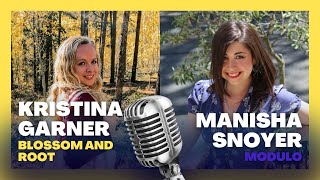
Interview (YouTube, May 3, 2024) between Manisha Snoyer (host) and Kristina Garner (founder of Blossom and Root). Kristina describes her long teaching background (first job at 16; ECE credentials; taught preschool/kindergarten), homeschooling her children in Hawaii (Big Island, Maui), and developing Blossom and Root — a secular, nature-based, hands-on homeschool curriculum (currently covering pre-K through 6th grade and expanding). She explains the curriculum’s philosophy (Charlotte Mason and Waldorf influences, weekly/subject-based scheduling, emphasis on nature study and narration), practical benefits of nature-based learning for attention, regulation, and motor skills (including accommodations for neurodivergent learners), and use cases (outdoor lessons, indoor nature study, literature flexibility). She also discusses River of Voices — an inclusive, multi-perspective US history project with a Gentle Pathway for sensitive/younger learners and an active review committee (currently eight members) — and practical advice for parents (start with samples/scope & sequence, use one subject at a time, adapt editions/media) and creators (be brave, be patient, set boundaries, uplift peers).
Questions this video answers
May 3, 2024
Pre-K through 6th grade (with additional levels being added)
Eight members
16
The Big Island and Maui
Chapters
I love seeing people wanting to share their own experiences, their own expertise, and create curriculum from it, especially secular homeschool curriculum. Because I feel like the more community we build together where we're sharing, because everybody has. They come to the table with different gifts. They come to the table with different experiences and different things to teach each other. And the more people I see coming in with those ideas that they want to share, the happier I am. Because it means we have more to choose from. We have more available to us as parents and educators, and our children are going to benefit from this bigger pool of knowledge that we can offer to them. So first of all, I just want to say that your voice is so important and what you have to share with the world is so important. And so if it's important to you and you really want to do that, my first piece of advice is to be brave. Because it does require a lot of courage to create and to give your creation away. It is something I grapple with all the time, even now. Like, this is something that is really close to my heart. I wrote this for my own children. So it's right there in my heart, in my chest. And so it is hard to take that and give it to the world. It is really hard. And so the first piece of advice is just to be brave. Hi, everyone.
For those of you who are joining us for the first time, I am Manisha, the CEO and founder of Modulo, and I am thrilled to have with us today Christina Garner. Welcome, Christina.
Hi.
Christina is the founder of one of my favorite curricula for homeschoolers. It's a nature based secular curriculum called Blossom and Root now for pre K through sixth grade. And they keep on adding on levels. And Christina also developed river of Voices, which is widely praised as one of the only truly decolonized, anti racist, really inclusive US History programs that you can use with your children. So that's really wonderful to have as a resource for us. All our materials are such high quality. They're so wonderful for children who have difficulty with textbooks and like to use their hands and play outside and really a gift to the homeschooling community. So I'm just so happy to have you here and get the opportunity to learn more about your story and share your curriculum with our community.
Thank you. And thank you so much for inviting me on. Yay.
So, Christina, I thought that maybe we could just start off by talking about your pre blossom and Root days. I know you're a homeschooling mother and also an educator and an artist. Could you tell us a little bit about your own journey towards homeschooling and kind of how that led to blossom and root? Sure.
So when I was 16, I got my first job working at a preschool. And it was also a school that had elementary students come in the afternoon for kind of a daycare aftercare program. And I did that during high school. I did that through college. I also did a lot of volunteering and other work in college, working with kids in lots of different settings. I was going to school for theater, actually, but I noticed pretty early on into my career that I really loved and looked forward to the times that I was going to be spending with kids the most. And those were the most fulfilling experiences during my time at college. So as soon as I graduated, I went back to working full time at a school, and I worked as a preschool teacher, a pre K teacher. I went back and got my qualifications to be an ECE teacher and later a director, so. So that I could teach kindergarten at this school that I was at. And so I did that for a really, really, really long time. And I absolutely loved it. Kindergarten especially was such a great age, and I really enjoyed teaching so much. And I had a lot of autonomy and freedom in the program I was in to do things not the way that you would have to in a traditional public school setting where we could take more time to be outdoors, dedicate more time to art and science, not feel constrained by the same things that you have to deal with when you're in a public school setting. So that was an amazing and wonderful experience, and I absolutely loved it. When my girls were very, very tiny, we moved to Hawaii and we lived on the Big island for a little while, and then we lived on Maui. And while we were there, my oldest was getting to be pre K age, but I was having a lot of trouble finding a program to put her in there because it was expensive, for one thing. Really, really expensive. And the programs that were more affordable had wait lists, really long wait lists. And so I decided. I was talking to my husband about it one day, and I said, well, why don't I just do it? Because that's what I've done my whole life. Not my whole life, but, gosh, most of it is working with kids and teaching this particular age, so I'll just homeschool her. And I. It was kind of like, it must have been on the back of my mind for a long time to do that, because it just made absolute sense to me, and I was so excited about it. And. But then I started looking for curricula and I couldn't find anything that was what I was looking for. I wanted something that was secular and it was hard at that time to find pretty much anything that was secular. And the few things I did find just weren't quite the right fit for us. I wanted something that was really nature based and outdoor centered and a lot of creativity, hands on learning, not so much workbook learning. And I was just having a lot of trouble finding what I wanted. So I just started to put a program together myself. I had done that. I had written my own curriculum when I was working as a teacher. So it came very naturally to me to do that. It wasn't my intention at first to sell it or share it in any way. I was just writing it for myself. And I was probably maybe a month away from being finished with it and getting ready to start in the fall with her. And it occurred to me that maybe other people might be looking for something similar.
So.
So that's when I decided I was going to format it in a way that was friendly for other teachers and parents to use. And. And that was kind of where Blossom and Root was born. I did start out blogging first about our own journey. And so I already had a platform established and that did kind of naturally lead into this. But I just kept going. I just kept just. I just decided to keep going. It was kind of this gradual decision to keep developing more and more levels, but that's how it all started.
That's incredible. And I know that parents keep begging you for more levels. So at this point you really need to keep bringing it to the people who love your curriculum so much. So I'm so curious, kind of about. I'm curious about nature based education, but maybe a good place to start might be how you yourself got interested in hands on approach. Was it through your own education or were there books that you read or thought leaders that influenced you to get interested in this type of education?
It was all of that and more. I feel like, okay, so the formal education part of it, when I was in school to get my credentials for ECE teaching and directing, we did study a lot of different philosophies. And a couple that really landed with me were the Charlotte Mason philosophy and the Waldorf philosophy. Bits and pieces of both of those really appealed to me. But one universal thing about both of those philosophies that appealed to me was the nature focus and the emphasis on being in nature, spending time in nature, dedicating daily time to nature, not necessarily Always outdoors, even when you're indoors, focusing on nature and learning about nature. So that was kind of as far as formal education where I started to really be introduced to those ideas. And they really made sense to me when I thought about them in terms of the experiences that I'd had as both a child myself and as a teacher.
So.
So when I would take my kids outside, we had a little yard at the school where we taught where we could go outside. And it was in an urban area, but there was still so much that we could observe from our little yard. We could see trees and birds and flowers and insects and things flying overhead and clouds. And my students always really benefited from the time we spent outdoors. And the more time we spent outdoors, the more they seemed to benefit. And I found lots of ways to bring that back indoors too. Growing things in our classroom, classroom, observing animals in our classroom, having people come in from other places like the Plains Conservation center here in Colorado and other places like that that would bring in hands on materials for the kids to touch and feel and see. And that kind of learning always seemed to really. Not only was it really fun for them and they seemed to really enjoy learning, but because of that they were retaining a lot and processing a lot and they just seemed happier and more relaxed and able to absorb more. Even when we weren't doing the nature based learning, the more I incorporated that. So, and that is something I saw too when I was volunteering with kids during college in different programs was time being spent outdoors, regardless of what we were learning about, seemed to have a really positive impact on what we were studying at the time. And it helped with memory and retention. So.
So, yeah, so I mean. So you talk about some of the benefits of being outside, such as memory and attention and focus.
Yeah.
What do you think is. What's the aspects of nature that are contributing to these benefits?
I think it's a lot of different things. I think being outdoors and being. And not even just being outdoors, I say that but nature based learning doesn't always have to happen outdoors. But being in touch with natural, natural objects, but also with nature itself and is really beneficial for regulating ourselves. Learning to listen inward and outward self awareness and awareness of others. It helps you with noticing patterns and cycles and then changes to those patterns and cycles. There's a lot of sensory stimulation that happens which is really beneficial. And there are ways to get that. Even for learners who might have sensory aversions to certain things, other things might be.
Could you actually expand on that a little bit? Think that parents would be curious.
Yeah, so I, I had a lot of students, not a lot, but a handful of students. And we have a little bit of this in our own home too where certain textures or sounds or even just like being in search in certain situations can be overwhelming for some learners sensorily. And so I don't want people to get the idea that you can only do nature based learning if your kids don't have that because they. That's absolutely not true. You can find ways to engage with nature that don't involve the senses that maybe are overwhelming for some learners. For example, not making children like if they're sensory averse to touching certain things, you don't have to only take it in through touch. You can take things in through sound and sight and smell and hearing. And there's a lot of different ways to adapt and adjust your expectations, but also the activities that you're doing to engage with nature. So I think I answered the question yes, for sure.
Yeah.
And I did want to, I want to circle back really quickly to the benefits because one main benefit. Oh, there's two. So I was working with kindergarteners, but this is something I feel like we work on all our lives and that's the development of fine motor and gross motor skills. And that's something that I found a lot easier to do with my students with nature based learning. And then when I was developing blossom and root, one of the reasons I wanted to have a nature based focus is because I really believe that it's very difficult to expect people to care for or protect something that they don't have a relationship with. And so emphasizing that relationship with nature was really important to me in terms of what I hope for, for the future.
Absolutely. We are so out of touch with our natural environment and it, you know, when we think about all of the problems in our world, climate change and pollution, air pollution, it's very difficult if you're sitting in a cubicle and you feel that you're detached from, from all of that.
Well, also it's difficult to notice changes in patterns or changes in cycles if you're not aware of what's been normal for those patterns and cycles currently. You know, of course they change over time, but it's hard to be aware of those. And so it's, it's easier to be looped into the science that we. It's easier to be looped into the science when you have yourself noticed. Yes, things are changing. Spring has been coming earlier or we are having more extreme weather than we normally do in this Month. And those kinds of things are easier to identify if you have personal connections to them.
For sure. Yeah, no, it definitely does. I mean, I think even if we're sitting inside our house at a desk, as both of us are right now, it's. We're still part of nature. Everything around us is nature. But sometimes it's easier to put blinders on and pretend that we are not dependent on our natural world when we're not outside. So it's really. I've heard so many, I mean, hundreds of families especially who have children with adhd, say that Blossom and Root was an absolute game changer for them. And it makes me think, my mother actually pointed out to me that in nature there are certain. There are certain fractals that only occur in nature, like when you're walking down, you know, next to a beautiful river. And I think we've all experienced, you know, if you go, if you're going through a period of intense stress or despair, how getting out in nature is just so calm, has such a calming effect. Do you have any insights into why that might be?
Well, before I say anything, I want to say that neurodivergence, of course, is not a monolith. And so what's going to work really well for some people is not going to work well for other people. When I was designing Blossom and Root, I did really want to create a program that could be very easy to adapt and adjust for neurodivergent learners. But like I said, for some neurodivergent learners, the style that we approach with is not going to support their needs, it is going to for others. But we try to design it to be very flexible and adaptable, and that goes hand in hand with the nature based aspect of it. And I think that flexibility and adaptability are the reason it has worked well for many neurodivergent families. And we encourage families to adapt it and make it their own and never put pressure on them to do all the things we list. But we try to give them options so that they can find things that really work for their particular learner. And there's a lot of choice and a sense of autonomy in deciding the direction that you're going to go with your education in our curriculum. And it's also that concept. There are many different ways to learn and to contribute. And so that's something that I try to build into Blossom and Root and continue to try and build into it as I'm designing it. Also, most lessons can be broken into really short sessions for students who need that. And that nature based aspect can be really helpful for that. So you have short periods of intense focus and then you have periods where it's more relaxed and you can go run and play and do things that kind of let you pull out of that focus mode for a little while so that the next time you're in it, you can get back into that focus mode.
And I'm really glad you put a bookmark in that because I think that at least some of the families I know, when they start blossom and root, feel like there's so many books and they have to read every single one. But part of the beauty of the curriculum you've designed and what differentiates it from a more traditional curriculum is that families can adapt it to meet their children's needs. And so it's really helpful to kind of take a step back and see how can you make the curriculum work for your child rather than trying to do what you think is everything.
Yeah, we definitely don't write that with the expectation everybody do everything and watch all the videos and read all the books and do all the activities. That's almost impossible to do. We don't do that in our own home at all. We pick and choose, and I pick and choose differently based on which of my two children I'm working with at the time. They do not require the same things as each other. So definitely, I want to emphasize that you can definitely follow a minimalist pathway when you need to. You can go deeper where it's wanted, where there's interest. There is no expectation to do all the things in our curriculum. We just like to provide a lot of choice. And that is maybe what some neurodivergent families, if their support needs are that they have less choice, more structure, we might not be the best fit for that kind of a family that gets overwhelmed by too many choices or needs, day to day, hour by hour, structure and handholding. But for the families that like a lot of choices and that like the ability to design a day that works for them, I think that's the reason it might be a good fit for a lot of those families. And like, I'm sure you know, we don't use a daily schedule in our curriculum, we use a weekly schedule. And the reason I went with the weekly schedule or the subject based schedule, like with our science, is that every family's week is going to look different, every family's day is going to look different. And even the day that you think you're going to have and prepare for, we all Know that that's not always what happens. So there needs to be some kind of. For me, what I wanted to design was there to be a bit of flexibility so that you don't feel like you're getting behind and you can weave the curriculum into the week that you have, whether it's the week you planned or not.
Wonderful. And I think good project managers would agree with the one week, two week sprint approach to learning. And I think I really appreciate you bringing up this point because I feel that a lot of families, especially if their children are younger, have an expectation that more is better, faster is better. But there's. So there's more and more research coming out showing that when children learn at their own pace in the way that's best for them, they learn best, they learn the most. I think even Angela Duckworth just published a study of a whole group of kids and you know, they all learned at their own pace and they all got to the same point eventually. And so it might seem a little bit counterintuitive, but if your goal is to support your child's learning and hopefully their well being as well, you know, really honoring their time frame, how much they can focus at a time, how much structure, how little structure is good for them, is going to ultimately benefit them more than trying to do everything.
Yeah. And that can, that can vary and change in a season. It can vary and change along their lifetime during their education. There have been seasons in our own home where we needed that minimalist approach because of circumstances that were going on around us, like moving, which we have done a lot over these last few years, or where my daughters are super interested in the subject. So it's the reverse. And instead of keeping to the minimalist, they're wanting to go down these rap every single rabbit trail and rabbit trails that weren't even in the curriculum so that we can feel free to pause and pursue those and honor their curiosity and their interests. So, yeah, there's a lot of, I hope, flexibility there for families to use what the way that is best for them.
Wonderful. So we were talking about ADHD and focus in regards to nature based curriculum. We could return there.
Yeah.
And you were talking about. No, I mean, it was a great tangent because you rightly kind of pointed out there's so many different types of learners within a child who has been diagnosed as ADHD or other. And then. Yeah, and so I would just love to, you know, we did talk about the benefits of nature, but I think that this aspect of focus is particularly intriguing to me because I've seen it so many times. I mean, and Rachel Tid, who has a wild math and wild reading, also pointed out to me that she got started because her son was having a lot of behavioral issues at school. And then when he started, when he joined a forest school, it just all disappeared in an instant. So I'm really kind of curious from a scientific perspective why this is happening, you know, why it's just so good for focus to have that outdoor time.
I have read a lot of books that support that Last Child in the Woods Think that's the title of it, is a really good example of that. And they talk a lot in the book. He talks a lot in the book about how nature does help with attention and focus. And I can speak to my own experience as a teacher. I have had a lot of learners that were neurodivergent and several of them with ADHD and a lot of experience actually with that. And like, I started out saying, of course this isn't true of all ADH learners, but I would say most of the ADH learners that I've had experience with benefited greatly from time spent outdoors, unstructured time spent outdoors in particular. And, you know, sometimes I would have students that weren't used to spending a lot of time outdoors, and it was a little hard for them in that first initial transition to get used to having unstructured time outside. But I think it's a lot of different things. I think it's just tuning into all the sensory put around you. And when you're visiting the same places frequently, you start to notice the slow and fast changes that are happening all around you all the time. And that that is helping you to learn to pay attention, be detail oriented, paying attention to changes and patterns and cycles that are going on around you all the time. And being in nature, it's primed for that. You know, there's stuff happening around you all the time on so many different levels. And so being in an environment where you're able to breathe, take in that air, feel the sun on you, watch these different things happening around you, notice when things have changed. It's priming all of your senses for that attention to detail and that focus. But it also is a natural environment to be able to break away from a focused activity. So, you know, if we did a lesson outdoors, you know, sometimes it felt like an exercise in futility because they would be so, like, engaged with everything going on around them that it sometimes felt like they weren't able to pay attention. But I did notice that Even in those situations, their retention was higher than it would be in the classroom over those same subjects and topics that we were going over. And I honestly, I don't want to claim that I understand all the ins and outs of the science of that, but I have observed it through my own experiences as a teacher and as a person, as a mother, that it really has helped with regulation and attention span with my ADHD students.
Yes. Wonderful. So I think that people who haven't tried Blossom and Root might be curious to know what a nature based lesson looks like. I mean, perhaps, you know, and I do want to talk about the indoor nature study as well, but can you give us an example of how you might integrate a topic like social studies or another subject into an outdoor environment?
Well, in our own family, a lot of times it's pretty simple. We just take our lessons outdoors and do at least part of them outdoors, if not the entire lesson. And so that's for busy people, that is the simplest way to integrate nature based learning is to simply take your learning outside or to, to take it to a window where you can observe nature while you're learning. Maybe have the window open if it's nice weather, if it's not too hot or too cold. So that's the simple answer. But if you are wanting to.
So sorry to interrupt, that might be like, we're going to write a poem outside or we're going to read this book together outside. Okay, got it.
Or let's go listen to our audiobook together while we're having a picnic.
Lovely.
Let's do our poetry outdoors today. Or in our science curricula especially, we try to integrate an option for most of the lessons to do outside. So if you're learning about stems, for example, like stems and roots, we have an option where you can go outdoors and find different examples of different kinds of stems and pay attention to, oh, these ones have little hairs on them and these ones have little thorns on them, or these ones are really thick or these ones are really bendy and thin. So we try to integrate a lot of options for outdoor learners and into our science curriculum so that it makes it easy for the parent to conduct those lessons outside if they choose to.
I love that. I think I remember When I was 10 or 11, I went to a Montessori school and at the end of each semester we had to do a research paper and my mom would sit at this big table outside and I would have the encyclopedias of my note cards and she would bring me snacks. And it was such A lovely time. Just the sun shining down and do any work. Really special memory.
I don't know if in your classrooms you had this experience, but I went to public school and every now and again we would have a really cool teacher. And in the springtime, the teacher would know how badly we all wanted to be outside. They would take class outside and it was so wonderful. Those days were the best days.
So great. Yes. I think every child would always beg to go outside all the time. And sometimes, I mean, children might have trouble. The teacher might say, like, nobody's going to pay attention if we go outside. And I feel like that was a real sign that the kids needed that outdoor time to play.
They do. And I think it's important to know, too, that attention is going to look different under those circumstances. It's not going to, quote, unquote, look like what we think paying attention is going to look like. And I think a lot of parents of neurodivergent learners and neurodivergent parents know exactly probably what I mean by that, because attention doesn't always look like what we grew up thinking that had to look like. And so loosening those expectations, yeah, maybe they're not going to sit still. They probably aren't. They're outside, they're children. They want to move their bodies. They don't have to be sitting still to hear and to listen and to process all the time. So I think that's an important aspect of that too, is to have different, have flexibility in your expectations when you're doing an outdoor lesson versus an indoor lesson.
So you're a teacher, and you told me that when you started homeschooling, you realized you had all these teaching skills, so of course you could teach your own children. And many, many people who homeschool are in fact teachers. There seems to be a more difficult bridge to cross over for parents who aren't teachers, who don't have teacher training, and they might feel like they don't have the skills to teach their own child. I would love to know how you've helped, how you've built a curriculum that anyone can use to teach their kids. And if that's true, if you do think that anyone, a parent, a caregiver, could use it to teach their kids, or if there are additional training they should get or need before they use FASA and root.
I think before I start, I think it's really important to destigmatize asking for help when you need it. So if you're teaching your child and you're getting up to the part of math that maybe you had a hard time with. It is absolutely okay to outsource that and to use resources that help instruct you as a teacher more like that help better support you and your needs. So that is going to change and vary depending on every family, every child, and every situation. So I wanted to start with that because I think it's important to say it is okay to outsource what you need to outsource. In fact, you should feel like you can. And that's just being a responsible parent and a responsible educator. We all have things that we are going to need help with as we especially as we get in the upper levels. That being said, I did try to design Blossom and Root to be very accessible for parents regardless of their educational background. And I don't think there is any special training at all that you need to use our materials. In particular, I would say that it does help if you're not familiar at all with Charlotte Mason philosophies. We are not a Charlotte Mason curriculum per se. We are inspired by a lot of her philosophies, but we are not strict to Charlotte Mason by any means. But it does help to be somewhat familiar with her ideas, especially when it comes to our language arts curriculum and I would say even moving down into a more specific part of that narration in particular. So if you have not had any experience with narration, the science behind it, how to do it, how to use, might help to get a little familiar with that before you start. One great resource for that is a book called Know and Tell. And I don't remember the author, but it's something like the Art of Narration or something like that. But the book is called Know and Tell, and it's fantastic. It explains what your expectations should look like when you're starting out with it because it can take some time to see how it's working when you're first starting out. And it can be a little hard at first for students that aren't used to giving narrations. But it is such a great tool and it's a great tool. We use it in our language arts curriculum, but it's a great tool for every subject. And it can be a wonderful tool when you're using, for example, our science curriculum to throw in cyclical review without having to do extra prep work as a parent. So if you want to review concepts that we've covered already, but you don't want to take the time to like put together a Jeopardy game or find a quiz or write your own Quiz Just do narrations. Do narrations and use like our big picture messages to help kind of give you some ideas about what to ask for in terms of their narrations. And that is a really easy, quick way to throw in cyclical review. But it's also a good way to see if they retained what you just covered in a lesson ending with a narration. But even if it's just quick, oral narration is a really helpful tool. So I would say the only thing that might help some parents coming into Blossom and Root is to be familiar with what narration is, how to use it and what to expect from it. Because a lot of people have really high expectations when they first start narration and it takes years to develop strong narration skills. But it's a skill that comes in handy regardless of what your child wants to do when they get older. If they're going to go into college or not, if they want to go into trade school or if they want to develop their own businesses or work with humanitarian organizations, it doesn't matter what they are going into. That skill will help and we lean on it a lot in Blossom and Root. So I would say that's the only thing that I would recommend. If they're not familiar with narration or Charlotte Mason as the kind of the bigger picture, I would recommend getting a bit familiar with that before you start.
Sounds like that sounds like a great book and we'll definitely include a link to it in the show notes. So I know there's a lot of wonderful teachers who have been homeschooling their children and perhaps developing resources as they go and might be interested in becoming entrepreneurs. So I know that you are hard at work writing a new curriculum for Blossom and Root and maybe you can.
Tell us a little bit.
6. Woohoo. Can't wait. But maybe you could also perhaps offer some advice from to other parents or teachers who are thinking about developing curriculum for homeschoolers.
Absolutely. I really love when I get these kinds of emails from people who are like I'm thinking of doing this and I don't know where to start. I love seeing people wanting to share their own experiences, their own expertise and create curriculum from it, especially secular homeschool curriculum. Because I feel like the more community we build together where we're sharing, because everybody has. They come to the table with different gifts, they come to the table with different experiences and different things to teach each other. And the more people I see coming in with those ideas that they want to share, the happier I am because it means we have more to choose from we have more available to us as parents and educators. And our children are going to benefit from this bigger pool of knowledge that we can offer to them. So first of all, I just want to say that your voice is so important and what you have to share with the world is so important. And so if it's important to you and you really want to do that, my first piece of advice is to be brave. Because it does require a lot of courage to create and to give your creation away. It is something I grapple with all the time, even now. Like, this is something that is really close to my heart. I wrote this for my own children. So it's right there in my heart, in my chest. And so it is hard to take that and give it to the world. It is really hard. And so the first piece of advice is just to be brave. The second piece is to understand that it's going to take time. And I don't mean just the developing the curriculum part, that's going to take time too. But growing your own audience and growing your awareness of your curriculum or whatever you're developing is going to take time. And so to come in with patience. I've seen a lot of people who did the work and built the curriculum and then they were like, well, it's been a month and I've only sold one and I give up. And I'm like, no, don't do that. It takes a long time. It takes a long time to develop a good base. But if what you're offering speaks to others, they are going to slowly and gradually but surely want to share it with other people. So it just takes some time. And so be patient would be my second piece of advice, my third one, and this is one. I like to give this advice, but I'm not very good at taking it is to have boundaries about your time and your space and to be firm with those. Because I will say juggling being a homeschooling parent with being a full time curriculum writer is such hard work. It is always hard work and I'm always trying to find that balance. And I have yet to find it. But it's, it's the biggest lesson I've learned with that for myself is just to have boundaries. And so I, for example, like email. I used to just panic if I didn't answer an email within like an hour or at least by that same day. But that's just not realistic when you are a tiny company and you're just, you know, yourself. And also Arlene, who's wonderful and runs our Facebook group. Thank goodness for her. But when it's just you, you have to be. You have to have some balance. Otherwise there you're never going to have the time and focus you need to give to your family. And my family comes first. My family will always come first. And so I have to make sure I am honoring that and having boundaries when it comes to when I'm on focusing, focusing on work and when I am focusing on teaching my children. And so boundaries are really, really important. And so that's another piece of advice. And then I wrote a note. So let me look at it. Oh, yeah. To remember that rising tides are going to raise all ships. So support other other creators. And, you know, I really don't often see people tear other creators down, but I think, think I actively avoid spaces where that's happening. But I know it does happen. And I think it's really important that we remember that if we're uplifting each other and supporting each other, especially as secular curriculum creators, that's only going to benefit our whole community more. So just remembering that, and that might look different for everybody. You know, you might not have a lot of time to commit to promoting other people's content, you know, or reviewing other people's content, but you can, you know, if you're listening to a parent and they're saying, I'm looking for, you know, such and such resource, and you know that somebody else created something that is a perfect fit for them, don't be afraid to say, you know what, mine might not be a good fit based on what you told me, but this other curriculum is out there that it might be a much better fit for what you're looking for. And not be afraid to do that, because again, rising tides raise all ships. And also my last little thing that I want to throw in there is to share your own story, because that's where we get pulled in, especially as just parents or guardians or educators, is to hear how other people are implementing things in their own homeschools or why they decided to write this or where their background is and why it was important for them to write that. So share your own story. And that doesn't mean that you have to be on every single social media platform. I'm certainly not very active on every single social media platform. It just means find a space where you feel safe sharing yourself, whether that's a podcast or YouTube or Instagram stories, wherever it is, find a space where you feel safe sharing your own personal story and share it, because that's what's going to connect with a lot of other people and help them to visualize it for sure.
I mean, I think that when people see that you are a homeschooling mother and you went through this struggle yourself, they can relate and see that you've created something for children like theirs. It's much more connecting than facts and figures. And I love how you uplift others in the homeschooling community through making introductions and recommending resources. But also, even within the curriculum, you're recommending all of these wonderful resources for. For families to use through the literature that you select. It's really beautiful. And I mean, I just kind of feel like the homeschooling movement is still small, especially the secular homeschooling movement. And there's so many families who would benefit from homeschooling but might be afraid to take the leap for one reason or another. And so the more we can work together and help these families, the more the whole movement will grow. Yes, there's enough of the pie to go around. And the more we learn about each other's work, the more it will impact and influence our own. I've already learned so much from this conversation about special needs and nature, and it's just so helpful having conversations and collaborating like this. I just love it. So thank you so much for that. And I'd love to talk a little bit more about river of Voices because it's part of Blossom and Root, but it's also in some ways its own thing.
And yeah, it does feel that way a lot.
Yeah. So, I mean, I think in my, you know, I've been doing a deep dive on history, and it can be really challenging to find programs that are truly inclusive, but also taking an inquiry based and accurate approach. So you're not necessarily. I mean, every history curriculum and social studies curriculum will have a point of view, but how do you develop a curriculum that also leaves space for people to form their own points of view while really acknowledging the diversity of voices and experiences? And it's quite a challenge. It's quite a feat. And it's really sad to see in some states like Florida, that we're just kind of banning any kind of history except a certain type of history. So I could go on and on about that, but I would rather hear from you and why you created river of Voices, what it is and how you develop this. I mean, and another point to touch on is just, you know, the complexity of history because it's important to teach children the truth, but also some of what's Happened can be quite traumatic for children. So let's talk about River Voices, because I know the parents really love it. Even the most exigent ones are really appreciated. This curriculum you've built.
I tackled that project even though I had never, ever in my life said, I want to write a history curriculum. That was never my wheelhouse. It wasn't something that I thought about. It's not my special interest by any means. My special interest is plants and animals and nature and stuff. But I was homeschooling my daughters, and I tackled River Voices because I was having a really hard time finding any resources that really focused on multiple viewpoints and perspectives. And it was something that I really thought was important for my daughters because I don't pretend to have all the answers at all when it comes to how history should be taught or what needs to be taught. But I know what I want as a parent and an educator and just a human being, and how I wish I had been taught history. And that was what I was coming to the table with. Washington. I don't really know what the answer is, but I feel like I need to do something and I need to find something. And so that's where it was kind of born, was wanting to create something where a resource that could pull from multiple points of view, books and videos and websites and projects from multiple points of view, so that we can start at least putting together a bigger, broader, more diverse picture of what our nation's history is. And so that's what that came from. And it was an effort to create that resource for other people as well. That being said, I went into the project knowing this, and it's definitely still true today. But River Voices is always going to be a work in progress. It's going to be a work in progress because. And it will never, ever be done, ever. Because every year it seems like, and this is so great, new resources keep coming out. And I feel like the amount of resources available, written for children have, like, exploded in the last several years as far as books that are coming out, other secular history curricula coming out, which is so great. I know that Mittenbloom put out a really cool one recently, Power to the People. So it's just so cool to see all these new options coming out and being available to people. So that's one reason it will never be done is because I'm always like, oh, my gosh, look at this great new series of books that have come out. And I want to integrate those things, like the Girls Survive series. That's a great new, very diverse series of history books and the. What is it called? I hate when I can't remember things. History Smashers. I love History Smashers. And they've come out with all these great books and I want to go back in and put them in. And there's one coming out at the end of this month which is by Erika Lee and Christina Sunturnvat. I hope I'm saying her name correctly, but she's one of my favorite authors. We've put her in lots of levels, but they are. They collaborated on an Asian American history text for children. So that comes out at the end of this month. I'm so excited. So that's one reason it will always be a work in progress. But another one is that I am always learning. I am always learning, and I'm always wanting to expand our review committee. So I expanded it quite a lot when we worked on Volume two, and now I'm revisiting Volume one right now to bring it up to date to redesign the format to be similar to the way we formatted Volume two. And also I'm wanting to expand our review committee for that one. So I just feel like it will forever be a work in progress because there will always be more voices to add, more things to consider. I see things that I miss, you know, and people are kind enough to point out to me and say, hey, you know, maybe don't, don't include this particular author because, you know, it has come to light that they are not who they've said they are. And, you know, we get things like that that come in the inbox sometimes. And those are really important to me, to listen to those voices, to listen to that feedback, to take the time, which takes a lot of time, to vet the sources that they sent to me to back up those claims and then to consult with our consultants and say, what do you guys think about this and how do you feel about it? And what would your recommendation be? So it's a really long, long process, especially when you're working with lots of other people on something, but it's worth it. And then another problem we run into frequently is that with the YouTube links and the websites, people are always changing them. And for some reason with our history, one in particular, those links just zip around all the time. They go missing, they change their website, so it's always needing to be updated constantly. So that's. It's. It's just always going to be a work in progress. But I feel like it's so important. I wouldn't have dedicated all that time and effort and energy and working with other people if it wasn't so important.
So our understanding of history is always evolving.
Yes, it is. And I feel like I learn new things every single day, so. And it's just important to always recognize that no matter how hard we try not to have bias, we are always going to. And so it's always going to be work. You always have to be willing to do that work, and especially when you're creating something for other people.
Inclusivity is a bias to choose to tell the histories of not just the people who are running the country and the major corporations, but all our histories. I think people would be curious to know more about the review committee who makes up this review committee and how does it work?
So I can't give specific personal details because I don't have permission from everybody to do that. But I have put together a fantastic committee. Almost all of them are homeschoolers, but they have lots of different degrees of education and expertise. We have a lot of people on our committee that I learned from and looked up to before I even started writing it. And they all kind of come to the table with their own special ideas about what should be emphasized, what's important. They help me see, like, where I can make things clearer or where maybe certain resources need to have trigger warnings or notes for people who are getting ready to view them. So they all come to the table with their own unique voices. And that's one of the reasons it does take a really long time to develop each level and to update each level is because I try really hard to give them all space and time to give me their feedback. And then it takes me a while to process all the feedback and figure out how to put it in. But right now, we have eight members on the committee, and I am hoping that by the time I finish working on the draft for the next version of Volume one, I will be able to put at least two or three more people onto the committee to round out the kinds of voices we are hearing from. But I want to say at large, like, a lot of the members of this wonderful homeschooling community have taken time out of their very busy days to suggest resources to me that they found that they think would be really cool to consider or to, you know, make me aware of some language that may have been used that maybe needs to be updated in the next revision or to let me know when there are broken links, which is just part of the game when it comes to this. And I really, really appreciate that. Like community efforts to continually improve our product and what we're offering to other people.
Fantastic. What advice would you give to a parent who's trying to navigate when their child is developmentally ready to learn about some of the more difficult parts of the street?
That's hard because it's going to vary a lot based on the child, but I would say so. When we started writing river of Voices, I wanted to make it friendly for people who were doing it either as a family or that were living in a state that required you to start history early on in their education. Some states don't have a requirement for when you start that, but some states do. Colorado is one that requires you to start teaching history from, I think, kindergarten. So I wanted to give a resource to parents. So that's why we created the Gentle Pathway. The Gentle Pathway is built to help parents with younger or more sensitive learners to navigate that. But even with that being said, it is so important to always screen any link or website or book before sharing it with your child, because every child is going to be different. And what might not be, you know, really traumatic or upsetting for one child could very. Be very traumatic and upsetting for another child. So it's important to understand that you're the expert for your own child, and it's really important to make sure that you feel free to remove things that they're not quite ready for, to set them aside for later. Now, that being said, if you're not in a state that requires you to cover US History early on, or it's not a situation where you feel like you need to bring the younger siblings along with the older ones doing US History and you have the decision to wait. I would. I would wait until late elementary, and I would just start with the standard pathway, unless you have an especially sensitive learner and go from there. I would say for both of my children, I used. I used river of Voices. With my oldest starting in third grade, she was ready. She had lots of questions. It was really important to her, something she was. She wanted to learn. So I started with her in third grade, but I kept it very gentle. I only pulled things from about half the lessons for her that year. And I said, I'm going to save the rest for when she's in middle school. And so we've started going through the standard pathway this year, in her sixth grade year, and are going deeper into those things. And she, and then my youngest, was not ready until this year to start putting things in. She's in fourth grade this year and we're just peppering some gentle resources in for now. But I would say by and large, most children are probably not going to be ready to tackle the majority of those history themes and topics until late elementary into middle school. But we have the gentle pathway there for those that need to start earlier or that want to start earlier. I hope that makes sense.
Oh my gosh, it makes so much sense. And what a wonderful resource to have this gentle pathway. So parents can just pick that if they feel like their children are more sensitive. It's incredibly helpful. So I don't want to take too much of your time away from building your sixth grade curriculum. And I thought you just launched a new novel study. It's fantastic. Is there anything important that we've left out of this conversation that you want to share with people?
Let me look over my notes really quick to make sure. Oh, you had a couple questions about prep work and advice for parents getting started. I don't know if you wanted to cover that really briefly.
Sure, yeah. I mean, I think parents are always curious to know where to when to start.
Okay, so advice for parents that want to get started with blossom and Root. I would say my first piece of advice is to take time to look over the samples that we have on our website, the scope and sequence that we have on our website, and our literature lists. Because those three pieces of information are going to really help you decide if it's going to be a good fit for you, what you'll need to add to it to meet your state's requirements. Because we don't have every single subject. I think that's sometimes, sometimes a misconception people have. We don't have all the subjects for first grade and up. We have science, nature study, language arts with integrated geography and art. We don't have math, we don't have world history, things like that. So make sure you look at the scope and sequence, the samples and the literature list to see what you might need to add to round it out to meet your state's requirements, but also to try the sample out or at least to read through it thoroughly. And I try to make the samples pretty generous so that you have a lot of information. And then if you get through that and you're still like on the fence and you're not really sure, please email me. I am always, always happy to help. It takes me some time. It can take me two to three business days for non urgent messages, but I always answer them. I'm always happy to give you my time and to walk you through it and to help you make decisions. I'm more than happy to do that. So please, please, please feel free to email me with your questions. You can put my email in the show notes if you'd like to. Another great resource is our Facebook group, the Blossom and Root Families group on Facebook, which Arlene runs for us from Arlene and company on Instagram and YouTube. And she's actually a fantastic resource too. She has lots of flip through videos, flip through videos of all of our curricula and she knows all the ins and outs and upside downs of our curriculum. So you can reach out to her too. And she's always really happy to answer questions or to and check out her YouTube and her Instagram because she has so many of those videos that might give you a bit of a deeper look at our curriculum and to see how a family might integrate them, but also the Facebook group too. And then I would say once you have the curriculum in hand before you get started, if it's if Blossom and Root is new to you, especially take time to read the first several pages of those parent guides because they really walk through how every aspect works together in the curriculum. A lot of people get really excited and skip to the first lesson and then they're like, how am I supposed to do this? This doesn't. What does this mean? And so almost always the answer is going to be at the beginning of the parent guide. So make sure you take time to read through that. And then if you have any questions again, please email me. I'm always happy to help. I'm here for you and I'm happy to do that. So also when you're getting started, take time to look over the book list and if you're not sure, especially when we have those younger, more sensitive learners, if certain books are going to be a good fit, you can reach out and ask me. You can reach out to the Facebook group. We totally encourage you to switch books out when needed. But I also want to say that sometimes those books we're not quite sure about, it's a good idea to give them a chance. I hear this a lot with the Hobbit and the level two language arts. A lot of people are like the Hobbit or how are we supposed to cover that in level two? And I know it seems like I had a lot of, I promise, very good reasons for putting it in that level, but a lot of people have given me the feedback that they were like, I don't know about that. But then they Started reading it to their kids and it was like their kids favorite book of that year, you know, and that happens a lot. And so I'd say give it a try. If you're on the fence about a certain book, like you're, I don't know, try it. And also be open to using different editions and don't feel like you have to use the classic edition of certain books or the, you know, unabridged version of certain books. There is no snobbery in Blossom and Root regarding what edition of books that you use. You can use audiobooks, you can use picture book versions, you can use graphic novel versions. Whatever works best for your child. I'd like to give a personal example with this. So when we were doing the Wind in the Willows with my oldest, she loved it. We listened to the audiobook, it was one of her favorites. We got to it with my youngest. She had a really hard time with being. She does have a hard time with being read to sometimes and she has a hard time kind of holding on to detail when she's being read to. But she loves to read to me. And that book is obviously kind of a lot for an eight year old to read to me. So I went on the Memoria Press website and ordered their picture book versions of Wind in the Willows. They have like a series of six books where they break down Wind in the Willows into these six readers that are illustrated. And I ordered those for her and she took the time to read them out loud to me over the course of six to seven weeks. She loved it. She loved being the one that read to me. She retained everything so well and was able to remember all these details and go into great detail in her narrations. And so that's just an example of when adapting something for your child's specific needs is encouraged and welcomed. And we do it too in our own home. So. And graphic novels are a great option too for children that do better with that format. So. And you can even use video, video film adaptations of certain books if that's a better fit for your family. And you're going to still get the benefit of the literary analysis and studying character and setting and all that stuff is still there, even if you're only watching the film adaptation of it. So again, just adapting it for your own needs. And then one last thing is that I get a lot of questions about brand new homeschoolers who come into Blossom and Root. They're like, I don't know where to start. This is so overwhelming. And it does seem like a lot at first. So I would say my biggest piece of advice if you're in that boat, is to start with one subject at a time at the beginning of the school year. And I will tell you, I do this every year, and we've been homeschooling a long time. We start with one subject at a time when we're starting a new school year. And we'll just start with language arts and math basically at the beginning. And then once I feel like we've got our rhythm down, I will add in science, I will add in history. I will gradually add in art. I will gradually add in nature studies. So don't feel like you have to start everything at the same time, knowing what you're doing right off the bat, because it's going to take some time to find your rhythm and your rhythms are different year to year. And start with the minimalist options at first and then slowly add in more as you find your own rhythm and figure out what works best for you. So those are my two biggest pieces. Pieces of advice if you're coming in and feeling overwhelmed at the beginning.
I love that advice. There's again, no need to rush. And One at a Time will benefit you and your child. Well, thank you so, so much for taking the time to talk to us today. Christina, you're so welcome. Thank you for inviting me. It was such a treat. Every bit as wonderful as I expected. And families can find blossom at root. And blossomandroot.com we also have a guide to the program on modulo that explains.
Wonderful guide.
Oh, my pleasure. And we'll have Christina's email in the show notes. You can write to her. You're welcome to also write to me. It's just such a wonderful program. And, you know, if you're just getting started homeschooling, it really can't hurt to try it out and see if it's a good fit for your child and spend some time in nature today. Hopefully that's one particular people will have from this.
I'm excited to get into my garden this afternoon. I've been waiting for like three weeks, and it's like the only afternoon I've had to do it. So I'm so excited. Yay.
I'm definitely going to take a walk outside myself. Well, you know, thank you for being such a wonderful collaborator and I'm really excited about what's to come and just support your work in any way I can. It's such a gift to the world.
Thank you. Thanks.
More from Manisha

Contributing to Florida Prepaid Plans (2026–2027) | Step-by-Step Guide for FES-UA Families

Contribuyendo a los Planes Florida Prepago (2026–2027) | Guía Paso a Paso para Familias FES-UA



Finding Providers & Services in the Marketplace (Families) | Step Up For Students (2026–2027)

Encontrando Proveedores & Servicios en el Mercado (Familias) | Step Up For Students (2026–2027)




