Jeremy Howard's Journey: From Traditional Schools to Homeschooling
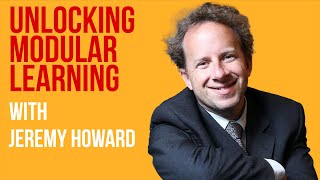
A podcast-style YouTube interview where Manisha Snoyer interviews Jeremy Howard about his decision to pursue modular/home-based learning for his daughter during and after the COVID-19 pandemic. Jeremy describes how adaptive learning apps, curated video content, small Zoom cohorts, spaced-repetition (Anki), and targeted curricula (Beast Academy, Elements of Math Foundations, biochemistry-for-kids) accelerated and sustained his daughter's learning — while conventional school placement produced social/perfectionism challenges despite strong academic placement. The conversation also covers broader critiques of traditional schooling, nuanced views on "screen time," and practical recommendations for parents and entrepreneurs.
Chapters
Hi, everyone. I'm Manisha, and this is Teach your kids. So I often talk about modular learning on the podcast, and when I speak about modular learning, I'm referring to families who are curating their children's education so they can build the best possible experience for their unique child. Definitely academically in terms of their intellect, but also socially and emotionally as well. In my experience, there is almost no one that I have met who is more passionate and committed to building a curated education for their unique child than my guest today, Jeremy Howard. Jeremy is the founder of Fast AI, which is, I think, the largest course on AI and deep learning in the world. And he's a data scientist, a researcher, a developer, an educator, an entrepreneur. He also founded the Masks for All movement, which I think was one of the largest changes in behavior. We've seen people wearing masks during the pandemic. Jeremy was my first customer on Modulo, and we still work together today. We collaborated all through the pandemic every single day, almost on making Modulo Modulo what it is today. He spent countless hours observing classes and offering feedback. I often refer to Jeremy as my.
Unpaid CMO because almost all of the customers we have came through Jeremy, who.
Is just generously sharing his content and promoting Modulo and our classes. He's just had such a profound impact on how I think about education, the role of technology and learning human health, science, and just becoming a better human. He's really challenged me and changed my views. And, Jeremy, it's just really weird to me. I often marvel at how close I came to not meeting you. A lot of building a company is about hard work and commitment, but then some things are just luck. And I met you because I sent you a cold email asking you to give a workshop on masks for kids. And then you happened to see in my signature that I was building a company. I had really no idea what I.
Was building at the time. And you showed up at my open house, and I said, well, I think.
I'm going to build this.
And you said, well, why don't you build this instead? And I said, okay, sure, we'll do that. So, you know, it's just. It's so wonderful to have you today.
And we've had so many great conversations, and I just think it's really cool.
That we can share some of that.
Wisdom with people listening today.
So thanks for being here.
Thank you, Manisha. I don't think there's anything I could say or do that will live up to that, so maybe we should just wrap it up here.
Sure.
Great.
Otherwise, it's going to be a disappointment for everybody when they actually hear what comes out of my mouth and be able to. I am excited.
I seriously doubt that. I have a lot of questions for you today, so be prepared.
Sure. I love talking about education, so I'm all for it.
Wonderful. So I thought that we could just start on a personal note. And what led you to do modular learning to choose to fully curate your child's education? We were working together on your child's education during the pandemic, and then your child went to private school, and then you decided that this was kind of the path you were going to take moving forward and not go back to private school. And you really put considerable research into this decision. And I was just wondering if you could walk us through your thought process when you started thinking about doing this, what you learned and how you came to this.
I'd say we didn't choose. Shows us. So our daughter went to a Montessori preschool in the year before the pandemic in San Francisco. She really enjoyed it. She was never in any hurry to come home because she was having a great time. There was no particular sign she was learning anything, but that is fine. I mean, it was preschool. You know, she just wanted. We just wanted her to be happy. And we also wanted space to get our work done. So everybody was happy. And then, yeah, then this thing called Covid hit, and my wife and I are data scientists, so we studied the data for it kind of in early to mid February and thought of 2020 and thought, like, based on this, it looks like it's likely to be a global pandemic, and it's likely to cause a lot of disruption. So we decided. And we also thought, everybody's probably going to get locked down for a while. So we decided to move to a quiet area whilst the world went crazy. And so we left San Francisco before the lockdown happened. And that was nice. We got to be somewhere nicer to hang out in San Francisco, but we still had this problem of, like, okay, well, there's no schools. And in fact, there was no, you know, schools were closed in San Francisco for a year. We didn't want our daughter to be bored, and we didn't want her to be doing nothing. And we also wanted to continue to be able to get our work done. So we weren't sure what to do. I will say, though, already at that point, Claire really enjoyed playing with, like, iPad apps, like I guess most kids do. And I. And I had noticed that there were some really great iPad apps, you know, for learning the basic phonetics stuff, learning the basic number stuff. She enjoyed them at least as much as garbage learn nothing at all apps. So, like, they were the only apps that she had access to. But we also thought there's no particular reason to limit the amount of time she spends learning math and reading and stuff. So we. We let her do it as much as she wanted. And so already at that time, we had a sense, I had noticed that she kept on being able to do a lot more than I expected her to be able to do, just because she was playing with these apps, you know, and they. And they were. They were adjusting to her rapidly developing skills faster than I was. So they were kind of saying, like, okay, now you're ready to learn this. And I was thinking, like, she's not ready to learn that, but she was. And of course, the app knows better than me because it's probably seen thousands of kids go through this progress process, and I've seen zero. So, yeah, then we got in touch, as you say, for reasons nothing to do with Claire's education. I think we talked a bit about this idea of, like, oh, you know, kids seem to. At least Claire seems to like playing with these apps, but she really likes. She's super sociable, so she'd really like to hang out with kids, maybe have, like, some basic level of supervision, but otherwise, maybe we could basically leave her alone. And I guess that's kind of what happened with us for the first few months of the pandemic is each day. I mean, it was a bit more than that. She spent a few hours basically on zoom with some really wonderful human beings who you found for us, including sometimes you yourself, who were like, saying, like, okay, we're going to play with our math apps for an hour or half an hour or whatever. And then if kids want to talk about something, they just start talking, and then they're chatting. And then from time to time, the adults would be like, okay, let's do a quarter of an hour of yoga now. And they'd watch, like, a Cosmic Kids yoga video. It's like, okay, let's do some art now. And, you know, that follow along with that video. And it really felt like they were taking advantage of the best resources that were out there rather than having some, you know, random adult teach, you know, do all those things. It's like, oh, here's Mo Willems, one of the greatest children's book illustrators and authors, teaching our kids how to draw the things that they're Reading, I was like, wow, it's wild.
Makes me think about how much you influenced me because at the time I felt like I was a little bit anti screen time. I was.
Definitely got that from you.
Yeah, you definitely got. I didn't, I didn't. You're very good at negotiating my strong reactions to things. But I, you know, I was planning.
This program like, okay, let's have, you know, two hours of social emotional club and maybe, you know, a teacher once a week to check out children's doing. And Jeremy says, well, what if we did, you know, 16 hours or 40 hours of screen time? And I think what, you know, and I think there were two things that really shook up my perspective. And one was you really showed me how physical screen time can be and that it wasn't a kid staring in front of a computer. There were very simple things you suggested. And not sitting, not sitting every 20 minutes, taking a break. They're very simple things. I remember I would be teaching once and you would say, what about a jumping jack break? I think this would be a good thing to integrate. And then I think number two was just leaning into technology instead of away from it. You had the idea of we can have the best teachers in the world, teach them. Why use just ordinary Joe Schmo? So we ended up, you know, choosing these amazing YouTube instructors and then combining that with in person people who would like stop the videos and ask questions. And then we got the adaptive learning apps involved. So, yeah, I mean, that was just, that was amazing to me to see how that unfolded.
Yeah, absolutely. And you know, it's meant that like, honestly, Manisha, as you probably know, we don't really care at all about the speed at which Claire learns. Like we're not trying to create Albert Einstein or something. Like we don't care, we just want her to be happy. But we've noticed that her and all her friends seem happiest when they're learning, when their curiosity is being sated. And it seems impossible to sate the curiosity of six year old kids. So with these adaptive apps, they're the only things I found that are able to keep up with Claire's rapidly growing and changing interests and capabilities. You know, like that. So after the pandemic, as you know, we. Well, actually not after the pandemic, during the pandemic, but we went to Australia, which is where I'm originally from, to live. So we migrated back and Australia, at least in Queensland where we settled, didn't have a pandemic. Like the borders were closed. So There was no Covid, so everybody was at school and everything was fine. We found a really great school in our local area, a wonderful community school, very engaged. Head of curriculum and the principal were both super supportive when we arrived. And we didn't know what to expect because we'd had preschool and we'd have a year and then a year of these modular kind of classes. Apps, videos, random stuff. Yes, there's a randomness as we went. And I'd like, I have no idea what the outcome of all this is going to be. It's not like you can look up on the Internet and find out because it's not been done before. So when we got there, during the initial walkthrough of the school, we said to the person taking us around who was like an admin person, look, our daughters had a pretty weird last year, but it seems like she's developing unusually quickly. But we don't know. But she was meant to be going into prep, which is like what you call that in the US the year before first grade prep, kindy kindergarten. So we have a bit different here. We've got a year of kindergarten and a year of prep and then first grade. So she would have got into the year before first grade prep. And they were great. They said, they said, okay, let's talk to the head of curriculum. We went straight there and the head of curriculum said, oh, I've got half an hour now, I'll give her some tests that we do. And so yeah, so she did some tests and it was like mind blowing for us that she came back and said like, okay, Claire is at fifth grade level in reading and math. And so that puts us in a difficult situation because socially she's a little preppy, but reading and math, she's a fifth grader. And so they had a cool idea. They basically said, okay, we're going to put her in the fifth grade math classes and then we'll put her in first grade everything else classes. And she loved it. She had a good year. She really enjoyed that year. She made loads of friends, but also she didn't lose any of the friends she made through zooming for the previous year. The problem was we noticed a change in her behavior. Where else previous she previously had this insatiable appetite for doing new things. Then she'd suddenly. Not suddenly, over the period of the next few months became the opposite. She didn't want to try any new things at all. She would get very upset at the worry that if you tried a new thing she might do it. Badly she might get it wrong, and she would get very emotional about this. And we thought, you know, it's hard with little kids because we've not had a little kid before. She's our one and only little kid, you know, so we thought, like, okay, I guess this. Maybe this is a stage kids go through. But, you know, eventually I spoke to somebody whose kind of expertise is in, like, kids who seem more kind of accelerated with their studies. And she said, like, oh, yeah, this is normal for kids like this. And what's happening is it's called perfectionism. And it's happening because your kid is sitting in a class all day where she's not being stimulated and she's getting everything right, but she's tuning out because she's got to sit there for hours listening to stuff she already knows. But then when the teacher asks a question and she gets it right, she gets told, oh, good girl, Claire. Good girl. You know, like, literally at the end of the year, she got a certificate for being a good girl, and so she wants to be a good girl. And so the worst thing would be to try new stuff because, like, well, like, there's no new stuff you do at school. You just rehash old stuff. You get it right, and you get, like. You get badges, you get stickers. You're a good girl. And so that was actually. It turned out, even though she's having a nice enough time, you know, and making friends, it was actually, you know, kind of socially and academically a bit of a disaster because it was destroying her, you know, her enthusiasm. So that's why we, you know, despite, you know, they were a great school, they did everything they could, but in the end, we just thought, like, maybe this isn't working. And then what happened was we opened up the borders in the state, Covid came in, everyone got sick. They had to cancel school, and so we had to do homeschooling anyway. And yet also, Claire did stuff with some of the people that you had introduced us to for a few weeks, and the change was remarkable. Like, this time, it was sudden. Like, within a couple of weeks, she was back to her old self. You know, she wanted to, you know, she. For example, to take something at random. She used to really enjoy playing chess. She'd love to play chess with me. And then for that year she was at school, if I said, like, would you like to play chess? She would start crying. I'd say, okay, let's not play chess. So we didn't play chess for a year, and then suddenly she's like, oh, can we have a game of chess? You know, or she'd like, she would want to play, play piano. She wanted to do things, she wanted to try things. And we thought, oh, wow, okay. So it really seems like in person school is kind of sucking the life out of her. So maybe we should, let's not keep doing that because it's not, it doesn't seem to be suiting her, you know.
And, and during that time, you did do some research into the education system. And I remember you, you asking me like, why is it this way? What, what's going on? Could, could you maybe share some of your insights?
Oh, sure. Yeah. So basically the last term of school, I switched. This might seem like overkill, but I switched to full time research on education. So I spent four months reading papers, listening to interviews with teachers, reading books. And I was, my mind was like, opened up to this whole world of brilliant people who spend their entire lives thinking about how to help kids with their school years. So many great ideas. And then I looked at schools and I was like, nobody's doing any of these ideas, you know, but. And I was, yeah, I was stunned. And so, you know, like, for example, the study that, you know, well, the, the, what is it, two sigma or whatever study that showed that kids who get, yeah, kids who get tutoring on average end up in the top 5%, you know, academically, there were these signs that there are ways for kids to learn a lot better. I also learned a bit about, you know, for kids that, like Claire, that do learn fast, what I had always heard, which is make sure they're with their same age peers is dramatically wrong. It turns out that kids of that type that are kept with their chronological peers on average are in the bottom 5% after school finishes socially. And depression, happiness, all that, they're a disaster. They have terrible outcomes. If they get accelerated by two or three years or more, they end up in the top few percent of those same measures. So it actually, kids need to be in a peer group of kids like them that they can like, you know, communicate with their level. And yeah, and I, I learned about, you know, adaptive learning systems and I learned, and I also learned about the ways in which classrooms are by their very definition, constrained spaces, you know, where most classrooms, you know, a teacher stands up and basically delivers a lecture and then gives people a sheet of questions to do. And, and so many teacher interviews I listened to, talked about how the teachers spent most of their time and thinking on behavior issues, you know, making sure that all the Children do what they're told to do at the time they did it. Did I do it? That the most disruptive kinds of children are the ones that learn the slowest or learn the fastest. So any kid who's outside the mainstream is going to struggle in this environment. After reading hundreds of papers and books and listening to hundreds of hours of interviews, I came away thinking. I'm not sure schools, as currently set up, are able to take advantage of what we know about how to give children a good education. By good, I don't just mean academic results, but also social and emotional results. I thought, yeah, I'm pretty sure we can give Clara an environment in which she will do better on all three of those dimensions than she. Than she could at school. And let's. Let's try to take advantage of all of this research, you know, and then hopefully, at the end of, you know, however many years of education she decides she wants to do, she'll come out feeling fulfilled and happy and with lots of good friends and ready for her adult life, for sure.
And I love that you. You know, the. The education system is so hard to penetrate and change, but I think that the parents do have the option to opt out and do it in the way that's best for them. And I love that you took that leap. And, I mean, I. I was a teacher in classrooms for many years, and I think probably the most frustrating thing to me was that there is all of this evidence about better ways. I mean, we know that children need sleep in order to learn, and yet kids are having to get up at 5am to take the bus. We know that children need more play, and yet we give them 30 minutes of research. Not just, you know, because it's fun, but for their cognitive development. They need to play.
Oh, that's the other thing, right, Manish, I learned about. I know you would know this well, but I learned. I had no idea. Like, talking to homeschooling parents of, like, how do you find the time? And they all say, like, oh, it takes an hour or two a day to get through the curriculum. Like, school days are filled with getting from class to class, you know, dealing with administration, like, dealing with behavior dealing. Like, you have to. They have to teach at the speed of the slowest kid. Like, yeah, everybody we spoke to and all the online resources we saw, like, okay, you know, if you want to make sure your kid at least stays up, the curriculum budget for an hour or two a day. And I just thought that blew my mind.
You know, it's really wild And I mean, we saw that during the pandemic. Our kids with these adaptive learning apps, I mean, they would just go through the whole K through 8th grade curriculum in six months. It was just done. And when so much time is wasted, they all did it.
Yeah.
Yeah. It's not like we all carefully curated some group. It was just like whichever Internet randos happened to buy your thing ended up on the same zoom together. And they all went independently and they all ended up at like 5th grade math level after 6 months and they all started, you know, they're all like six year old, six and seven year olds and now like talk. So they've all become, you know, those parents have all become our friends and now we're all in the same state of like, oh, what do we do now? Because they can't really go to a normal school anymore, you know.
Yeah. And I just, I think this concept of learning at your own pace. And I know, I mean, you have this amazing course course where you're democratizing learning about AI and deep learning and you have this ethos that anyone can and should learn these tools as we move into a future where AI is going to be part of all our lives if they are given the time to do so. But it's so rare that we actually give people the time to learn at their own pace.
Yeah. And also like, I mean, with these tools, the world that our kids are going to grow up into is different to the world that we grew up into. And so our, you know, our school schooling system and our teachers have all been developed for the previous generation world. And so I hear, you know, all teachers are talking about how do they make sure they can ban chat GPT in the classroom and ensure that no children are using AI for anything. And I'm the opposite. You know, in our house I'm like, you know, if Claire asks me a question, I'll be like, oh, let's have a discussion about that. But first of all, like, have you checked with Bing? Have you had a convers with being or chatgpt about that? What have you been able to learn?
You know, sure, use the resources available.
Yeah. Then quite often, like I won't really know and I'll say like, okay, let's see if there's like a kurzgesagt video about that or something. You know, we'll watch it together. And it's nice as a parent because a lot of Claire's homeschooling now because like she is like, so now she's seven, she's very Rapidly got to a point in a number of subjects where she's reached the limit of my knowledge. So now when she's learning something, we can learn together. So another great example which actually did not come through modular, but came as a recommendation of a friend we met through modular is this amazing thing called biochemistry literacy for kids. Which it's basically a Yale professor of biochem who had this crazy idea that he reckoned that seven year olds can learn biochemists if taught the right way. And it's all about being age appropriate. It's not about slowing it down, it's not about dumbing it down, but it is about adding a lot more. Princesses, castles, unicorns, magic, do you know what I mean? Like making it kid friendly. I think that helps for adults too, but particularly for kids. So he took this group again of a bunch of Internet rando kids who just happened to find this website. And after I can't remember like 20 lessons, they had gotten to protein folding, you know, and the guy who runs it, Daniel. Daniel was like, all my colleagues told me a seven year old could never learn protein folding, but there they all are, they're all learning protein folding. And it's really cool. He got everybody to get to buy these kind of plastic molecule building kits. So they're all like putting it together with their hands. And everybody downloaded this computer software called Pymol, which is like literally professional level researcher software for molecule development. And the kids learn to, you know, play around with the molecule viewers and stuff. And yeah, I mean, none of the kids struggled with it at all. And in fact, sometimes even like one really cool thing was the way Claire discovered she could do things that seemed more difficult than she believed she could do, right? So one class, this terrified me as well. The teacher said, okay, by next class, you need to learn the 20amino acids. And like you need to. If I show you a molecule structure, you need to say what it is. And so the homework that week was that one pager and it said like, okay, memorize the 20amino acids. And Claire, I said to Claire, okay, you can try to work on this. And I came down 20 minutes later and she'd written a single sentence on the piece of paper. And the single sentence said, I can't remember. It was something like, this is totally impossible. I was like, okay, that's how I feel as well. So I was like, I was like, okay, well we've learned a bit about remembering things. What do you know about remembering things? And it's just like, oh, we've Learned that you need like stories and mnemonics and we need, you know, to use something like Anki. I was like, okay, let's do those two things. So let's do, so we've got to do 20 by next Monday. All right, so let's do three a day. So let's come up with stories. So like let's look at this first one. What does that one look like? It's like, looks a bit like a dog. Okay, what's the dog's name? What's the dog doing? Okay, why is it doing that? And then like what's that got to do with the name of the amino acid? And so for everyone, each day we came up with fun seven year old stories, you know, for each of the amino acids. They made friends with each other. They, you know, they, they had life goals, they had challenges. Some of them were always hungry. Some of them ran around down too much, some of them were naughty. And then each time we then put into Anki, which is a repetitive space learning software. We used the picture, the molecule, the story. And after three days she had crossed out again, I guess came down. She'd crossed out the sentence that said this is totally impossible. And she'd written a new sentence which is like this is very hard. And I was like, oh my God. She's literally, I'm watching her revise her belief in herself in real time.
Incredible. It's so cool. And, and you know, I, you, you have, I think you mentioned Anki and I think this is really cool. Is, is this is like a learning strategy that kind of comes from AI. Could you tell us a little bit more about it and how you.
It actually comes from psychology. Okay, so it comes from a guy called ebbinghaus in the 19th century who did this really boring study where he tried to remember, I think there were triplets of letters, you know, A, N, G, B, C, X. Like it write 33 long sequences of letters or something like that. And then tracked his performance and how well he could remember them each day and then plot a curve, you know. And so he discovered that there was this kind of very predictable forgetting curve that was this kind of like drop off rapidly and then less rapidly. It's kind of pretty standard shape to this curve. And he then discovered that if he quizzed himself on them the next day and for the ones he got wrong, looked up to see, obviously the curve went back up to where it was started because he's relearned them all, but that it was flatter than the previous time and Then if he re quizzed himself two days later, it would be flatter again. If he re quizzed himself four days later, it would be flatter again. And he basically developed this system for optimizing review timing. And the reviews specifically have to be review quizzes, not review reading. So it's this active recall, this process of forcing your brain to try and remember something and doing it on this kind of exponentially growing schedule causes your brain to not forget things. So Anki is a program which basically implements that review system. So it asks you questions, basically the questions you put in quiz. Questions about things that you want to remember. And it asks you on this exponentially increasing scale, unless you get one wrong, in which case it resets it. And so when I introduced this to Claire, when she was like five or six, I actually started by, I said to her, claire, how would you feel if I told you there was a way to be guaranteed that you could remember for your whole life anything you wanted to? And she said, I mean, that would be amazing. But dad, you've told me there's no real such thing as magic, and that would be magic. So. And as I never forget that, I was like, no, it's not magic, it's science. And like, let me.
I love that.
Sit down. I'm going to teach. I'm going to teach you about this experiment this guy called Ebbinghaus did at the start of the year, you know, that kind of first year of COVID in Australia. We weren't sure whether we're going back to school. And we talked to the principal about it and said, like, okay, well, here's the things that are going wrong. You know, here are the things that are going right. And they were like, yep, that all makes sense. How about we do some experiments? Like for math, there's a gifted learning program where they basically go through. I can't remember exactly what it was, but something like the first three years of high school math in a single year. But that's in our college as opposed to our primary school. So what if we got a teacher's age to drive her to the college each day for math and she'd join this thing and then for the rest of the time she'd be with her normal classmates. We're like, yeah, we could give that a go for sure.
I could just imagine little Claire sitting next to all these college students. I see it.
Okay, so here's an interesting point, right? With accelerated learning going up one year seems socially bad. Both from the studies I've seen about outcomes and also just anecdotally, but like for Claire, when she was a. She was actually prep age, but she was doing grade five and then ended up. She did that too fast. So then she started doing grade six. It worked great because the age difference was so big that she wasn't at all a threat to the other kids. Like, they treated her like a little baby sister, you know, and they all felt a lot of tenderness towards this little kid. So it actually worked socially very well. I mean, I think there's a certain amount of bemusement when she would answer the questions in class or whatever, but that actually worked well. One that did not work well as much. I mean, it wasn't bad. It didn't work great was they put her in a kind of a grade four advanced English thing where they discussed more serious stuff and they did a podcast together and they talked about ethics and moral philosophy and whatever. And that didn't work right because just, you know, like, social. Emotionally, Claire's not at all advanced, you know, so she wants to talk about castles and princesses. She doesn't want to talk about nuanced ethical questions, you know. So anyway, what I was going to say with this thing about, like, going into this high school thing is I. I again do want to do some research. So I bought the book they're going to be doing, and it was basically Year 7 and 8, the Australian Curriculum. And I read through the book and I say, this is weird. There's literally only one new thing here compared to the primary school curriculum, which was square roots. So it covered exactly the same thing as the Australian primary school curriculum, plus square roots. And that was going to be her first two years of this high school math curriculum. I was like, that's really weird. And so I spoke to some friends who had done Australian teacher training, and I was like, what's going on? And I said like, oh, yeah, that's how our system works, because the kids need to, or we need to know that as a grade nine, that they're all at the same level. And so people could have had a wide variety of different primary school backgrounds. So the first two years of math in high school, we make sure everybody's caught up to the same place. Besides which, some of them might have.
Forgotten it over the summer. A lot of kids forget stuff for sure. Yeah. So much repetition.
And so we ended up saying, like, okay, let's not do this gifted math thing, because, like, it was just like primary school math, but less fun. Like, you know, in primary school math, at least they like, they had this really cool app, actually, they used at her school called Matific, which is just. I can't say enough good things about it. It's really good, and it's super colorful. It was full of monsters and, you know, dancing monsters and monster fashion shows and fun things and explorers in hot air balloons lessons. And then you get to high school, and they cover exactly the same thing, but the six years are compressed to two years. But they make it all boring, really boring. So in the end, yeah, we were like, okay, let's not do grade 7 and 8 math. Instead, she just learns at her own speed. And another thing I learned from listening to lots of teacher interviews is teachers spend most of. I mean, you'd know better than me, but vast amounts of their time, particularly in math class, revising what they were meant to have learned two or three years ago. And because the classes don't, like, connect really, and so the kids don't remember what they learned two or three years ago because people don't. That doesn't happen with Claire, because the things that she wants to remember or that her teacher thinks she ought to remember go into Anki. So for her, it's a constant, continual growth rather than the like, learn a thing, forget a thing, learn a thing, forget a thing. And I think this is something anybody could do. But it would require schools to be, like, way more integrated between subjects and between years, particularly subjects. Like, so much of the stuff that she does in physics and biochem and math, they all overlap so much. And so it's very difficult, I think, to really get that in a normal schooling environment.
So what would an ideal education system look like for you? I mean, I know we're not in a position to wave a magic wand and integrate all of this, but maybe you could humor me. Have you thought about if you could wave that magic wand? How would all of our children be learning? What would it look like?
Yeah, I'm not exactly sure. I mean, I'm pretty sure I would throw away everything we have. I think you need to start from scratch because I don't think there's almost anything worth saving. I think it's great having a group of kids get together each day and see the same kids. I think it seems, from what I understand, it'd be better if those kids are a bit more mixed in terms of age, for example, But, you know, in terms of, like, what do you spend the day doing? You know, I wouldn't have them sitting. I really wouldn't have them sitting. I wouldn't have them, like, having to keep quiet or having to keep still. And I, you know, I would not have it. I wouldn't have a teacher there to teach. You know, I would have a supervisor or coordinator there to, like, make sure everything's going okay. But on the whole, I would much rather the teaching was done by, like, slickly produced, beautiful videos, engaging games, you know, things really designed. Like. Like, one of the biggest struggles I heard from parents, particularly during that. That. That first Covid year, was kids spending too much time on Prodigy. They would not stop playing. Prodigies are math. Like, it's a math. Like, it's math videos, math quizzes, and it's like, literally lockstep with the US Curriculum. And parents are like, oh, my kid's addicted to Prodigy. I swear, you know, she would play it all day if she could. Like, okay, let her. Is that bad?
You know, Jeremy, I actually just interviewed the CEO of Prodigy, and it's.
I mean, it's extraordinary what they've done. I mean, they have based it on a video game, Pokemon, really. And they have built in both extrinsic and intrinsic rewards, awards. And they are so. They're so. It seems so simple, but they have done such an amazing job. Like, what he talked about is, like, keeping kids in the zone of proximal development so it's not too hard and not too easy. And so they still feel that challenge. And I mean, it's. It's amazing.
So I want to talk about screen.
Time, and you've done a comprehensive review of screen time, which is really interesting.
My wife Rachel has done the best thing on this, which is she. She did an article about it a while ago where she drew a Venn diagram, and she's like, this is screen time. So, like, what's screen time? Well, it's something where you're looking at a screen and people are like, oh, look, there's these academic studies that show screen time's bad. And then, like, every time. Like every time somebody tells me an academic study says something, I always read the study. Studies are generally nuanced, you know, and what they actually say is often very different to what people think they say. All the studies I found were of kids playing computer games on their own. And if kids play more than two or three hours of computer games on their own every day, that's probably not a good idea. But you probably didn't need an academic study to tell you that. And then that gets described as screen time. But most parents I know use the word screen time to quite reasonably Think of it as time looking at a screen. So if, you know, so Claire's grandparents live interstate and overseas in Melbourne and the U.S. if you know, we love her when she's talking to her grandparents, is her talking to her grandparents on Skype, which is screen time? Is that bad? Should we discourage that? Should we limit the amount of time they spend each day talking to their grandparents? She watches these Biochemistry for Kids videos and then has regular zoom sessions in which the kids and the professor get together to talk about what the video says. Do we have to limit that? You know, stuff like Prodigy, which is literally curriculum aligned math quizzes and you know, even like Minecraft, which Claire adores nearly all the time she does in Minecraft. She's building houses, hotels, aquariums with her friends, collaboratively designing a city, following her weekly Minecraft club time, in which all the kids together learn about some new math thing or physics thing or Minecraft specific thing or whatever. And then that week they all build stuff using these new ideas that they've learned about. This is all screen time. So my wife Rachel's Venn diagram was like, okay, you know, does it have a social aspect? Does it have a educational aspect? Oh, passive versus active, you know, so is it like watching or doing, you know, even if it's any two of those three things, if it's active and social, chatting to granny, you know, if it's learning and social, you know, doing biochemistry learning together, you know, all of those things seem likely to be very positive. And even those things which should like, oh, active and educational, like Prodigy, this is all screen time. And I, I've seen no studies to suggest that there's anything negative at all. There are studies that show a kind of passive screen time effect on learning, which is interesting, which is a kid, if there's like kind of a TV on in the background and somebody's talking versus an actual human talking at them, the kid will engage more with the actual human and pick up more of what the actual human says, which is fascinating. Although I do wonder if even that effect they didn't really study. Well, what happens in Claire's case where she spent a couple of years now mainly learning from people over screens. And from an early age there's never been any sign that she's in any way less engaged when she's talking to somebody on a screen.
Quite the contrary. And I think one of the things, there's a really great review of mastery learning, which talks about adaptive educational software and it has a huge impact. And then one on one tutoring has a huge impact and I think what you helped me do at Modulo was to actually combine the one on one tutoring with the adaptive educational software. And then our results have kind of.
Blown through the roof and it's getting harder as well. I don't know if you've noticed this, Manisha, but like, there's a lot more apps available for 6 year olds to learn phonics than there is for kids to learn biochemistry principles.
I do want to talk about that and before we do, there is one point you made that I want to dig a little deeper into, which is that you said we were concerned about screen time, so we read a study. And I don't want to take for granted that you are an exceptionally talented data scientist who really knows what studies to look for, how to read a study, check the sources, check the research methods, and I often feel completely overwhelmed by all the information flooding at me. And I think that a lot of time my go to strategy is just.
To ask you what you think. I mean, find someone who you trust, who knows how to analyze data. And I remember I was like, jeremy, should I take one vaccine or the other?
No, it's fine.
You could take it both sides.
But I do have the time, homeschooling is my area of expertise and I do have the time to take, take that time to really look at homeschool studies, see who funds them, what factors people might be ignoring. I don't think there's a lot of good data in that field. My question is, if you're a parent listening to this and maybe you're not a data scientist and you feel really overwhelmed by, you see a study that maybe vaccines cause autism or that screen time destroys the brain of a developing three year old, how does the ordinary person find out what's true and what's not?
At least in education, I think a lot of the studies are written in a reasonably approachable way. If you read something in the Daily Mail or something that's like new study shows screens are destroying kids, well, the first thing you could do is just ask, does this match with my own observation? Because studies are meant to tell you something about the world and if you've noticed that your kid gets off a Skype call with grandma and then seems like sociopathic, then that would support the study. On the other hand, if you've observed that they seem pretty normal and actually they had quite a nice time, that would not support the study. And so if the study goes against your own observations of how the world actually is working you know, trust your own observations, right?
Yes. And so I guess another question that I have, you know, we were talking about adaptive learning apps, and you told me about Beast Academy, which is this.
Oh, Beast Academy. Yeah, I know, it's so great.
It was great until you finished it.
Yes, it was great until you finished it.
But that was the problem, is that we go through these apps so quickly.
So maybe.
Tell me.
I do want to hear about why you love Beast Academy, because I think it deserves some time. Time. And then maybe we can talk a little bit about what tools or technologies you would like to see built, because there are a lot of entrepreneurs in this audience and I think it'll be good to give them some ideas.
And let's not just talk about Beast Academy. Let's also talk about learning math.
Yes, yes.
I was never that excited about learning math when I was growing up. You know, I. Philosophy was what I did at college. I was not really into school, full stop, you know, and. Yeah, but it's been interesting, like, looking at what's really helping Claire. Like, Claire has a lot of questions, you know, and she's got things she loves most of all. She loves space, and she wants to know more about space. And the challenge is when we. And like her, her knowledge about space is much more advanced than mine in a lot of ways. And so for us to be able to, like, she wants to learn more. So for us to be able to advance that knowledge, we have to find stuff about things that she doesn't know about. And generally when we do, it's pitched at a college level and it's full of math, you know, and so she's frustrated because she doesn't understand what they're talking about, you know, or like, she wants to know more about. So my wife, her mum Rachel, is studying immunology. Claire's very interested in watching the immunology videos with her, and they're often full of chemistry and physics. And then we try to learn about chemistry and physics. And again, there's lots of math. So we've really noticed that math is a. It's this kind of consistent thing that underpins a huge number of other subjects. Also, she loves coding and she keeps noticing, like, she wants to decoding. And suddenly, like, a lot of it involves trigonometry and it's like, okay, you know, if you want to make this actual bouncy ball that's bouncing on top of this cute cat's head whilst she's licking her, you know, bowl of milk, you're actually going to have to use trigonometry. So math keeps on popping up. And the other thing about math is it. It's so many layers built on top of each other. You know, it's not. It's really different to a lot of other subjects we do where you can just, like, learn. Like, okay, we're going to learn the facts about comets and asteroids or the Oort Cloud or whatever. It's like, you didn't have. It's fine if you don't know about Venus, you can still learn about asteroids. Math is not like that. You know, it's. So there's an order you have to do things in. And, you know, you can't learn about complex numbers if you don't know about square roots and negative numbers. And you can't know about square roots if you don't know about exponents. You can't know about exponents if you don't know about multiplication. You can't do multiplication if you can't add, and you can't add if you can't count. So, yeah, so I'm keen to help her go down this math journey because it opens up all these other things. And so, you know, there's a couple of different ways to get good at math. And I'm. So before we get to beast Academy, I'll say I'm super fond of manipulatives. So manipulatives are things that you pick up and move around, and that's great for building up number sense. Like, if you can really understand that six times eight can be represented by taking six blocks, putting them in a column, and then creating eight columns of those six blocks and then counting the number of blocks you've just multiplied. And Claire loved it when she first learned that then you could rotate that rectangle by 90 degrees. You've now got 8 by 6, and it's the same number of blocks. And you. Congratulations. You've just done a geometric proof of the commutative property of multiplication. And so there's this game I mentioned called Matific, which is basically the entirety of prep through grade six curriculum done as virtual manipulatives. So virtual manipulatives are things where you're moving stuff on a screen rather than physically. And I actually prefer this to physical manipulatives because you don't have to set up time, they don't have to clean up time. You don't have the cost of creating the different things. Things. And also, often the manipulatives would be like dancing robots, you know, or gorillas protecting Their bananas or things that, you know, they're more interesting than colored blocks. So that's one direction that's particularly, you know, particularly great. And then there's the more symbolic and abstract level, you know, which can be represented by plus, minus times and divide or algebra with your X's or graphs or whatever. That's where Beast Academy comes in. So Beast Academy is a series of books which are cartoons. And the cartoons are all about an academy for gifted monsters who are practicing and learning for math competitions where they generally compete against robotics, for example. And so, and each monster has a very definite personality. And yeah, the kids love the personalities of the monsters and the stories. And so that's, that's actually really important, you know, like critical. If you don't engage the kids, then what are you doing? You know, And a lot of like fancy math professor types are kind of like, oh, if the beauty of the math can't engage the kids, then and it's pointless.
I mean, math is part of our world and they're making a connection to the world through those colorful images and stories.
Yeah, so it's great stories. But then the most important thing, of course, is that they're teaching good math. Now the thing is, the math they're teaching is basically the prequel to something you know about called Art of Problem Solving, which is basically the math curriculum that is created all of the U.S. math Olympiad champions over the past few years. And before this curriculum existed, America had no U.S. math Olympia champions. It was basically the curriculum responsible for putting America on the math map. Yes, these stories of these monsters are showing absolute best in class ways to think about primary level math. And it makes primary level math way more interesting because sadly, primary level math largely consists of teaching people to do plus minus times and divide on their head or on a piece of paper, neither of which are useful skills at all.
Or memorize formulas and certain ways to solve them.
Yep, exactly. Algorithms of like, here's how you do three digit multiplication on a piece of paper. So like, one of the interesting things I did differently with math is I introduced Claire to calculators when she was 5. And I said, please never do anything on a piece of paper that you could do on a calculator. And I also introduced her to the Japanese abacus, the soroban, when she was 5, because that's the most awesome, manipulative and super fun. So, you know, so basically, if you're doing Beast Academy, it's way more interesting because they find the, the elegant underpinnings of the boring primary School curriculum. So for example, they spend a lot of time thinking about factoring, which is just multiplication and division. But they talk a lot of the time, spend a lot of time talking about prime factors, all the things you can do with prime factors and then greatest common divisors and least common multiples and the underlying important bits of real number theory in math. So you kind of come out the end of it knowing the primary school math curriculum, but understanding at a much deeper level such that they generally say like, oh, most kids should probably do the Beast Academy book about two years under their current grade level because it's a much more sophisticated thought process. Oh, but can I say our new thing.
Yes, the new thing. So we ran out of Beast Academy. That was the tragedy.
We ran out of Beast Academy. It only goes to grade, what is it, five or six. And then you can do Art of Problem Solving. And then the problem is Art of Problem Solving. Great curriculum, but not pitched at 7 year olds. No colors, no beasts, no robots.
You know, I have found that people have a distinct preference for the online version, which is an adaptive learning app. App that's adapting to what the children learn. So yeah, continue. So no adaptive learning app in the older grades either.
So there is another amazing thing called Elements of Math Foundations. And this really, I'm very excited when I discovered this.
This is new to me.
Okay, so there was a thing called New Math in like the 50s and 60s and 70s.ish. I can't remember exactly when it was, but I think it's called New Math in the. Which is basically an attempt to recreate the math curriculum from scratch to be more aligned with how math is done in the 20th century. Because the math curriculum that was done before that time and the one we have now is more aligned with math as it was done in the 18th century. So in the 20th century, real mathematicians think of math in a very different way to the way it's taught at primary school and high school. So there was this attempt to reboot the math curriculum to at least get it to kind of like the state of the art as of 1920. It didn't work. It was a big thing. And it didn't work because teachers didn't understand it because the math teachers had never learned the 20th century math and the parents hated it because they didn't know what the hell their kids were learning. And it was a total failure anyway. During that time, I'm thinking it was 60s, 50s and 60s. During that time there was, as part of this huge thing, an attempt to create More of like a gifted math program that would take. I'm forgetting the details, but I think it's like grade fives or grade sixes and get them up to college level math in two years. Like, get them to the point that they could start college level math. And again, this is talking like real math, modern, you know, not, you know, 20th century math. And that wasn't successful either for the same reasons. My understanding is a couple of schools in the US Kept it. You know, there were some teachers who were just like, this is. This is a gift to humanity. We have to do this. We have to use this. And they kind of kept it alive, but it basically died. And the way I understand it was that kind of Sometime in the 2000s, someone like Re came across these boxes and boxes full of this new gifted math curriculum and put the whole thing online, created a new online platform to teach this new math. And. And that is what Elements of Math Foundations is. And it's totally unknown. Like, even you who know everything in this field have not heard of it. It's amazing. It's totally unknown. And it's. But it's literally decades of work from, like, extremely dedicated, top of the line math teachers and mathematicians. And so Claire and her friend have been doing it basically all year. And it's crazy because, like, it takes you right back to square one.
So I think this actually does lead me to something which is really at the core of my own work, which is the just profound lack of confidence that a lot of parents feel in their own abilities, especially with regards to math. And I know Rachel talks a lot about this and I'll explore it in more deeply in the show. And I think, you know, it's important to acknowledge that, you know, some people might be listening to this and thinking like, okay, well, this is all well and good for two data scientists, professors, entrepreneurs, you know, genius parents with their genius daughter.
And, you know, but, you know, this.
Is not going to work for me. I don't know how to teach my kids. You know.
Okay, well, I'm just saying is that, I mean, maybe I shouldn't use that, the G word.
But, you know, okay, the reason I.
Say this is because, I mean, first.
Of all, I have heard this a lot from families and that they say, well, I could. I could never teach my kids. I don't. I'm not qualified to teach them. And then. And the other aspect, Rachel wrote this wonderful article called My Family's Unlikely Journey to Homeschooling. And someone posted in Hacker News on Y Combinator And I think someone replied, well, that's all well and good for the cognitive elite, but not for someone like us. And so I would really love to hear your response to that. You know that I believe that any family, any parent, can teach their children, and new technologies and tools have emerged. But I would love to hear what your thoughts on this are.
Look, I think it's fine for your kids to learn stuff that you haven't learned. As I say, Claire. Well, her biochemistry is far beyond mine. I know almost nothing about biochemistry. Her astronomy is far beyond mine. And she loves that. She loves quizzing me and seeing me not be able to answer her questions. But I never, ever say, like, oh, I'm not a biochemistry person, or I'm not an astronomy person. I'll be like, oh, that's great. Can we learn more about that together? And so we very often in the evenings will sit down and watch a YouTube video that she selected so that she can help dad learn about this thing. So, like, I take a. I take a genuine interest in what she's learning about and kids. I mean, Claire. But it seems, I think most kids, like, they can be interested in almost anything. You know, I.
More from Manisha

Contributing to Florida Prepaid Plans (2026–2027) | Step-by-Step Guide for FES-UA Families

Contribuyendo a los Planes Florida Prepago (2026–2027) | Guía Paso a Paso para Familias FES-UA



Finding Providers & Services in the Marketplace (Families) | Step Up For Students (2026–2027)

Encontrando Proveedores & Servicios en el Mercado (Familias) | Step Up For Students (2026–2027)




