Lesley Grossblatt: Unschooling With Two Full-Time Jobs
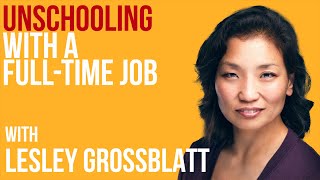
This content was created by Manisha Snoyer. This content was uploaded by Manisha Snoyer. This is a YouTube video titled "Lesley Grossblatt: Unschooling With Two Full-Time Jobs" created on November 15, 2023. It features a conversation between Manisha Snoyer and Lesley Grossblatt discussing unschooling, a form of homeschooling that is learner-driven rather than teacher-driven. They explore Lesley's personal experiences with unschooling her children, the challenges faced, and the concept of strewing to encourage independent learning. The discussion also touches on balancing full-time work with homeschooling.
Chapters
Hi, everyone. I'm Manisha, and this is Teach youk Kids. And I am so pleased to have here today Leslie Grossblatt. We originally met when Leslie was a volunteer for School Closures, which helped over 100,000 families through the pandemic. And Leslie was one of our most devoted writers and volunteers. She wrote one of our most popular articles, Sparking Independent Learning with Strewing. She has been working in technology for over 20 years at companies like Netflix, Intuit, KQED. She was the head of community at AltSchool, which was a major player in the microschooling movement. She is an unschooling mom and just has so much knowledge to share about education, technology, and unschooling. So I'm just so grateful to you for taking the time to be here today, Leslie.
Thanks. Good to be here.
So maybe just to start us off, I'd love to talk a little bit about your own unschooling experience and then also talk about the education and education technology piece. So perhaps could you share a little bit about why you decided to unschool your children and how you differentiate the idea of homeschooling from unschooling.
So my kids, this was back in 2018. So a little over five years ago, my kids were both in public elementary school. They were in fourth and first grade, and both of them were having a lot of challenges in public school, but different. So with the older kid, there was a lot of issues as far as bullying and sort of social challenges. And then from a younger kid, he was in first grade, and he had already developed a lot of academic skills as far as he had taught himself how to read at a very young age before he got to kindergarten. He could carry on conversations with adults very well. He could do a lot of he understood a lot of science and math, and it became clear with him that he was having a lot of challenges, being frustrated because he couldn't explore the things he wanted to explore. He couldn't do what he wanted to do in class because the way that a typical school is structured, everybody in the class is doing the same thing at the same time. And there's no room for deviation or exploration there. And a lot of kids are fine with that. They can go with the flow and it's not a big deal. But for some kids, and my kid in particular, it's very frustrating, though he was really having a difficult time. What we decided, my husband and I, was that this is just not a good environment for either kid. We don't know what to do with them. But this, this environment is not working for different reasons. So we pulled them out and I called it crisis homeschooling.
I love the leap of faith. Like we don't know what's next, but it's not going to be this very, very much of a product leader move.
Right.
What's the next experiment? Right.
But we had had a lot of experience with different schools. Our kids had gone to different preschools and I had been working at alt school before this happened. So I had a lot of exposure to lots of different types of schools and environments and honestly could see that if we just rushed to a different school, we wouldn't be solving the problem. That we had to really be more thoughtful about finding something that was what was going to work for the kids because that was one thing we knew was just rushing into another school. We could just be inviting the same, like how do we know this is going to be any better?
And it's great that you are willing to allow yourselves that time because I think a lot of parents think if my child even misses one week of school, they're never going to catch up.
Most of us have grew up that way in our own educational experience where we were really always on a path. And this always told, this is what you're supposed to do. This is if you don't do this then you will fail and you will never have a good job. It's very success in life if you don't do exactly what is prescribed. Yep. And so that the fear is very understandable because it's so ingrained in our own upbringings as parents. So anyway, we jumped into this crisis homeschooling, didn't have any idea what we were doing. Started out by, you know, okay, let's hire a tutor and have them teach, quote, unquote, our kids at home. Because we didn't feel like we could teach our kids and we hired a tutor that was very thinking, okay, we'll have them come in our home and teach our kids and keep them on track, whatever that means. And then we quickly found out that that was the worst of all possible situations because all we were doing. Yeah, all we were doing was we were introducing the paradigms of school into our home.
And at the time, were you and your husband both working full time?
I was working full time and my husband, he's been self employed for many years, so he was working full time but not outside of the home.
Got it. So you had confidence that there was at least going to be somebody there?
Yeah, some, you know, adult Supervision, Right, Exactly.
So you went out and you hired this tutor, and then you started feeling like this is not working. What were some. Even though it wasn't a group instruction situation, what was going wrong?
The kids were very resistant to it. Right. It's, you know, we're out of the school environment, we're home, but now we have this person who has. Who is on top of them for, you know, three hours a day, making them do stuff that they're not interested in, because the tutor is coming from a very traditional educational background and they're trying to do a curriculum, you know, with the kids.
And I'm so glad you brought up that point, because I feel like a lot of parents do go out and try to find someone who has the best resume, you know, a credentialed teacher who has all this experience with scaffolding and all, you know, checks off all those teachery boxes, thinking that that's going to be the best education that money can buy for their children.
There's a difference between school and education. They are not equal. They are not the same thing. And teachers who are trained to do school, that is a set of skills that is very particular to school. But when you remove yourself from that environment and say, my focus is going to be on education, on my children's education, not my children's schooling, then you really open up a completely different paradigm and you start to see how people learn, how children learn. And all children are people, too. Right. How people learn is very dynamic. Right. School is one way to learn things, but it is only one way. There are many ways people learn. And so as we're going through this process of this crisis, homeschooling, hiring a tutor, seeing that it just. Kids are resisting, it's just not working. Everyone's miserable. And then I finally reached out to an organization, the California Homeschool association, and they had a help kind of helpline. Yeah. I was like, I don't know what I'm doing. I spoke to a really wonderful person there who was an experienced homeschooling mom of many years, and the first thing she said was, you're going to be fine. This happens to a lot of people. And the first thing you should do is get rid of the tutor. You don't need them, and they're making things worse for you anyway, but you actually don't need them. You don't need a tutor. And what you should do is there's something called deschooling. It's a process of shifting out of the structured school environment into Homeschooling. And she described it as kind of like, it's like a palate cleanser. You need to kind of, you know, because you've taken yourself out of that situation, the schooling situation, and you're going to move into something else. But you know, she was like, like, you suspect, you don't want to just jump into the next thing. Right. You want to take some, a little bit of time to kind of step back for a second and say, like, okay, wait a minute, let's just catch our breath and let's just reset.
Right. For sure. And there's almost this discovery process that needs to happen because you're trying to redefine what education means to you. You've had this one conduit for education school, and you don't really know what kind of education conduit works best for your children.
And so the process of deschooling is actually a really. What I learned over time was that in any type of homeschooling, whether very structured homeschooling to, you know, and homeschooling is on a spectrum from superstructure to unschooling, which is very unstructured. Right. But for any type of homeschooling, no matter how structured or not, it's really important to have that kind of palate cleanser. Right. Of deschooling before you shift to the next thing. Because what you want to do is you pulled your kids out of school usually for a reason. There was some negative experience, maybe some trauma. Right. And what you need is some time to kind of recoup and recover from that before you start to push into the next thing. So she described schooling as is just kind of extended summer vacation. So no expectations, just live like it's summer vacation. You know, we're just going to like do our thing and go to the store or go to a museum or whatever we're going to do, but just no expectations for a few months so that we can recoup, recover, and be ready for whatever's going to be next.
Yeah. And I think you bring up such an important point that right now it's a very small amount of people who are saying, wow, curating my child's education just feels like the way to go. I can have one on one mastery learning. They can personalize their education how they see fit. Why would I ever make another choice still? I mean, even though the homeschooling population is growing, most people are homeschooling because they're reacting to something really extreme that happened at school. Very severe bullying or Harassment incident, very strong racism in their school. They're reacting to a child who is on the autism spectrum and is not getting served well to a child like yours who's gifted or profoundly gifted and is very bored or having strong emotional responses at school. So when something as wrong and traumatic has gone on, you need time to heal that trauma and find a better way for yourself. You can't just jump into a new solution.
You've been running some kind of marathon or something, right?
Exactly.
And you stop and you know, with a physical endeavor like a marathon, a coach will always tell you, a trainer will always tell you, your recovery is just as important as your effort.
Mm, I love that.
So same thing. You've pulled your kid out of school. And the vast majority of the time, it's not just like, oh, we were happy in school, and let's just try something else. No, it's usually something that was very negative. Some kind of negative experience that causes someone to say, okay, this isn't working. We have to take you out and do something else. So you have some kind of negative experience. You need that time to recover from the negative experience. And you mentioned it before, that people feel very stressed about, oh, keeping up and what's going to happen. It's going to be hard to make process if you're still in the throes of trauma and still in the throes of a very negative experience. Right. So if you just try to keep pushing, like, say you were running and you broke your leg, it's like, no, I'm just going to keep going. But you wouldn't do that. Right. So the long term, the better thing is I need to take a break, let my right leg heal, and then I will be able to jump forward from there. But if I don't do that, I'm never going to make. I will never be right for sure.
It's just so difficult to make logical decisions when we're in this fight or flight or traumatic mode, giving us ourselves this time. I love that. Application to homeschooling.
Yeah. So that's why the deschooling process, any veteran homeschooling parent will tell you, is so important.
Certainly. And I would even apply that to a homeschooler whose child hasn't been in a traditional school environment because we've all been to school ourselves. I mean, unless we're a multigenerational homeschooler, you know, and our partner is, or, you know, maybe we're a single mom, like, we have this way of thinking about how education is done. And we haven't really tested a lot of those assumptions, and especially we might not have thought about what are our goals for our child's learning? Can those be different than the school goals? How does my child learn? Which curriculum do they respond to? And it's really a process of unraveling and rethinking. I mean, I have parents who come to me and they say, my child just keeps asking me, what's the point of learning math? And I say, well, have you thought about that? Maybe just stop learning math and maybe you two can explore together what the point of learning math is. Or you can take a break from math for a little while first.
The thing is, we shouldn't be afraid of questions like that. Right? If we choose this path of taking our kids out of school, we should welcome and not be afraid of questions about why. Why does school do things the way they do. We should be able to understand that if we're really going to be effective, empathetic facilitators and guides for our kids in whatever. Homeschooling experience.
For sure. And I feel like also as a product developer, you have an advantage in a way, and that is part of your training to ask, what are all the assumptions that we have? What are the untested assumptions that we haven't really explored? So it's interesting, I think, that so many engineers and people in tech are coming into homeschooling as a bit of an aside.
Well, yeah, I mean, I think people who are think. Who think critically in any way, who are curious, like, well, why do we do these things?
Right. Yeah, because it's okay to ask.
Yeah, it's okay to ask because, you know, is that aligned with what's important to me and what's important to my child?
For sure. Wow. So anyway, so you did something great, which was you asked for help and you got this wonderful advice to start deschooling. And so you, I assume, began that process.
Yeah. So she said, basically, deschool. You know, we usually tell people a month per year of formal schooling that they've been in, but whatever time you need. And she said. And she said that after g. Schooling, people go different ways. Some people go into a very structured. Do that and still go into a very structured schooling, more schooling type environment where there's like, you know, classes and, you know, curriculum and etc. And all the way. And it's a spectrum all the way to. There's this thing called unschooling where people. Where it's, you know, there's the deschooling continues. Yeah, it's just, it's like you're still deschooling. You never stop.
Yeah.
And that is a perfect, perfectly valid, you know, homeschooling method. And she, you know, she pointed me in some resources to learn more about these different things, but that was her point, is that, you know, after you do this for a while and then you start to really understand what are, what's everyone's needs, what are people's goals. Right. The kids goals. Your goals. Right. You will find. You will, you will, you'll find your path and that there's many paths, they look very different. But taking that time is really important so that you can reset yourself to go on to the next thing with intention, knowing what you are doing.
Yeah. And I think about adults and how we learn organically post the school period. And I feel often, you know, there is some kind of crisis. And at least for me, I know at a certain point I've had just had to take a year or two where I give myself a break and write and don't set upon my next move. And then what learning often looks like is a blog here, a book there, a course here. And yet that idea seems so radical for children. They're all just smaller humans really. I mean, I would never enroll in a 9 to 3 school as an adult. It just doesn't make sense to me. Why would I ever do that? I would pursue the skill that I wanted to learn in the modality that made sense to me. And if I needed a little encouragement, I would get a coach.
This is a lot of what unschooling is about. We talked about school as far as that's a very, that's a very teacher driven thing. The teacher delivering a curriculum is a teacher like. And that there's a difference between school and education. Right. When you think about it in that way, unschooling is learner driven. It's not teacher driven, it's learner driven. In school, the teacher is given certain goals for the class, like, okay, all the students in first grade should be able to do xyz, we will use this curriculum to get them there, et cetera, et cetera.
Yeah. I was a teacher for 20 years and the image that comes to my mind when I think of teachers like holding up a shot like a doctor, just putting an injection in a child. But we know that that's not how learning happens. I mean, I can't force the child to learn any thing. It's, it's an appetite. They're coming to me because they're hungry, and then I can help guide them. So what happened? I mean, how did you set the stage? Did you just say, okay, kids, now you can do whatever you want. Just don't run across the street? Or what was the. The kind of environment for this freedom?
And that's kind of the negative stereotype about unschooling, is that it's unparenting, like it's free for all. Just do whatever the hell you want.
Yeah, here's the candy drawer. Video games. I'm at it.
Yeah, well, let's put a flag in video games for a second.
But what unschooling is, that's a big topic in and of itself, right?
What unschooling is, is what do you want? What are you curious about? What do you want to explore? That kernel of what they're interested in. What do they want to explore? What questions do they have? I, as the parent, as the adult, I'm there to facilitate their acquisition of knowledge about those things because they don't have money, they don't have a car. You know what I mean? But my job as the unschooling parent is to observe what are their interests, where are they naturally heading to be involved and engaged with them. What are you doing there? You're playing this video game a lot. What's going on in that video game?
So you're engaging with their learning as opposed to the other way around.
We put a flag in video games. Let's talk about that. Video games are very. For kids who are into video games, they're very important pathway to learning. Why? Because there's something. There's something that is driving them. They have some kind of goal, Right. They are getting something out of it. And, you know, we talk so much about negative, you know, video game addiction, which, you know, is a hotly debated topic.
Hotly.
And I'll.
I'll just.
I don't want to get into a debate on that. But my point of view is I look at it very differently. I look at it as like that kid is setting some kind of goal, right? They're spending all this time in there doing something. What are they trying to achieve and what are they gaining out of that a lot of time? I mean, they're gaining. They're gaining skills around, like, logic, critical thinking. Right.
Problem solving, a sense of autonomy and accomplishment, setting a goal and achieving it.
And in some games where you're playing with other people, right. Learning how to operate as a team. But you don't know that if you are not engaged with your child in a nonjudgmental way. The judgmental way is like, video games bad. Get off the screens. Da da da, da da. This very cut and dry black and white thing. And the unschooling point of view would be much more nuanced, like, okay, what's happening here? And we talk about this a lot in unschooling circles is see the learning to open your eyes and seeing the learning. For example, my younger kid, he plays lots of video games, and he's always played lots of video games. Before he even went to kindergarten and public school, part of the way he learned to read was by playing Minecraft all the time. I don't know if you know about Minecraft, but all of the different items have labels, so you have to be able to read the labels to know what those things are. Right. And he watched a lot of YouTube videos when he was 3 or 4 of people playing Minecraft and talking about things, and then he would hear them saying, like, obsidian. Right? And then he would see that in the game and he would know that word is obsidian. That's how he he there. Nobody stopped and taught him how to read, but he learned how to read because he needed to learn how to read. If I were to say, what's the most important point of unschooling? It's like you learn something because you need to learn it for your own reasons.
Absolutely. And children are such incredible problem solvers. I mean, it's amazing to watch because some of these children's apps. I've watched so many children play children's apps, and I cannot figure out how they work. They don't have any words or instructions, and the kids just. They figure out where to go, and they're driven by these levels of success. It's a really extraordinary thing to watch. And even we talk a lot about the science of reading and decoding. And certainly when your son was trying to figure out the word Obsidian, there was decoding going on about what sound is an O and a B and S make. Whether or not that was taught in, you know, the formal reading way. So that's. I love that analogy.
But you talked about yourself as an adult learner. When you want to learn something and you have your own reasons for wanting to learn something, how do you go about that? You think about, okay, you know, I have some reason to do this. So that motivates you to acquire that, because whatever your reason is, but it's your own reason.
Yeah, absolutely. I mean, it's so funny Because I was just. I have hired a trainer to help me get more strong, and she's been very big on nutrition and trying to get me to eat more protein. And today I just said, look, I have to sit down with you because I don't understand why I need to eat more protein. And if I don't have a reason for eating more protein, then I cannot eat more protein. And we talked about focus and my life goals and how to fit it in. And that just, you know, was so effective to me because I know myself as a learner, you know, as someone else would have just responded by, okay, I'll give you 10 points if you do this. Or, you know, other people would be motivated by weight loss. That's not a goal for me. And, you know, so. And. But we don't give children that same credit of the need to know.
One of the aspects of unschooling we talked about was just seeing the learning. Like, just opening your eyes to seeing it and engaging with your kids. That's one part of it. Another part of it, because it is learner driven, is that as an unschooling parent, our job is to have a great connection, have an ongoing connection and engagement with our child, to be constantly understanding and asking like, well, what are your goals? What are you trying to accomplish? Right. Do you kind of opened up the unschooling discussion with that, what I call the negative stereotype, which is just like, okay, just do whatever the hell you want and go out in the street. That's totally not it.
That's totally not it.
Yeah. What it is, is I'm having. I'm always in conversation with them. We're checking in all day long. We're chit chatting about what they're interested in. And I'm asking them, well, what's your goal? Right. And how can I support you in getting there? So, for example, my older kid came to me and was like, you know, again, I don't have problems with YouTube and video games, but my kid developed an interest in anime and Japanese culture, watching a lot of videos, right? And he comes to me and he's like, you know what, mom, I really want to learn Japanese. I said, okay, cool. Now the traditional schooling mind would be like, okay, let's send you to a class. Let's do this. The unschooling point of view is because that's learner driven. Let's figure out what's the best. How do you want to learn? What's going to work for you? So for Manisha to get Stronger. Your chosen path was let me hire a trainer who's going to tell me stuff. Right. Not, I mean, you could have gone to a class. Yeah. Or you could have signed up to get a degree in nutrition and exercise. You know what I mean?
Yeah. Someone else might take an online course.
Or use an app that was gonna. What was gonna work for you? So when my kid came to me and said, I want to learn Japanese, I was like, okay, so how do we want to learn Japanese? Like, how do you want to try this? And also realizing and reinforcing to them, like, we'll try something. If that doesn't work, you know, we just try something else. It's cool, right? It was like, you know, you could take a class. He was like, I don't want to do that. You could read some books. I was like, you could just watch Japanese movies with subtitles and pick it up. No, I don't want. Like, you could get someone to teach you one on one. He's like, you know what? I want to try that. So that's what we did. We tried that. Right. And that's unschooling is not hands off at all. It's very hands on. It's very super engaged because we're constantly looking for that information, looking for that feedback, creating. It's very producty, this loop. Right. Learning loop.
So do you have some kind of. I mean, I know you're really great at creating structures and I want to get into strewing, but do you have some kind of routine where, I mean, what did, or even like, what did day one look like? Do you. Do, you know, get up in the morning and everyone sets their goals, or is it more of a free flow? How does, how does it unfold for us?
It's just very organic. We're just living our lives like another way. It's been described like, you're just living life as if school doesn't exist. Right. We're just living our lives. We got stuff to do. We got, you know, and I was still working full time when we started, you know, and I would, I would take a day a week to work from home so that I could be there and, you know, take them places in the afternoon, like take them to museums and stuff. And so we would do that. It's like we're just gonna just be.
Part of the world and what's great too. And, you know, it seems natural for you, but you asked for what you needed from your, from your office. You asked for what you needed and they gave it to You And I think a lot of people don't realize that they can do that in their jobs.
100% own the privilege in all of that. Right. Which is I have my partner, my husband, who was able to be home all the time because he's an entrepreneur and working for himself. And I have the privilege of that. I have the privilege of being at a senior level in a tech job where I could demand that I have a day, a week to work from home when that was not common, and not have meetings that I could spend my non heads down working time on those days at home, being with my kids, my meetings are with my kids that day or whatever, if you want to think about it that way. But we didn't, you know. And so I want to really recognize that's a very privileged position. What I do know and have seen though, since being in this unschooling community, is that there is a wide range of socioeconomic backgrounds that are making it happen or are doing unschooling with their children. So it is definitely not just for the privileged. It's a lot easier if you're in a position of privilege. Absolutely, absolutely. But it can work. And it can work well for people of many different backgrounds.
It absolutely can. And the census data supports that. I mean, there's the same income level of families who are homeschooling as families who are attending traditional schools. And what's amazing to me me is your own trust in this process in, you know, I mean, I don't know if it took years or if you and your husband are just super chill, trusting people, but I would say also you seem to have a high level of confidence. Was there a period where maybe this happened in deschooling where you decided that you were going to trust this process? Or did you ever freak out and worry that your kids, you know, weren't learning the math concepts they should be learning in school? How did you. Because I know that there are a lot of parents who do kind of want to unschool, but then they get scared that maybe their children aren't learning what they need to know. How did you navigate that emotionally?
Yes, absolutely. Those fears happen and they're very natural and they're constant. And the where. Where you counteract that is the homeschooling and unschooling community. Unschooling communities are very, very supportive. And there's so many people who have already done it. Right.
You can see who's come before you and the results that have.
And we talk to each other.
Yep, exactly.
There's amazing, amazing thinkers and mentors out there in this community. So I have an amazing mentor. Her name is Sue Wolf Patterson. She runs this site called Unschooling mom to mom, and she's unschooled her kids who are now in their 30s and unschooled her grandson. And, you know, and she has been a guide. And there's a woman named Pam Laricia and is, I think, based in Canada who has an amazing unschooling podcast where she talks to all kinds of different people about their unschooling experience. So. And there's online communities, and you can't do these things alone.
Yeah, absolutely. I just think that that is the antidote to the fear, is having a community where you can see people have gone before you and maybe people who are a little further, not at the point you are yet, and that you can look at how those children are doing and how children are maybe doing in their regular school. And if you get pushback from people for unschooling or homeschooling, either family or friends, you can turn to your community for that confidence and support that, you know, that is so true. And, you know, and the other thing, too, is sometimes if you really are worried, you can take a test. And often you'll find that your child is performing way higher than other children in traditional school, and maybe not, you know, and you have to get clear on what your goals are for your child's education.
Yeah, that's the thing. You have to get really clear on what your goals are, because taking a test to assuage your fears is maybe not the best path. If you're going down a path of we're living life outside of school.
Yeah. If you're doing something outside the norm, maybe a norm reference test is not going to be a good evaluator of your success.
But I will tell you, though, part of unschooling, my older kid, when they were about 12, 13 years old, came to me and said, mom, I think I want to try high school. I think I want to go to high school. I was like, really? Okay, well, what. What does that mean to you? You know, and he's like, you know, I want to try, like, going to classes and, you know, doing assignments and maybe having a chance to be a foreign exchange student and all these things that he felt like in the unschooling or homeschooling environment wouldn't necessarily be the case, but he was like, I want to try that experience. And I was like, all right, okay, let's Try it. That's your goal. Right? So part of unschooling fundamentally for me, allows for that, too. That's learner driven. He wanted to. And I told him that's what he.
Wants his mode of learning to be. Right?
And I said, I do not care. You go to school or you don't go to school. To me, it does not matter. What matters to me is you knowing what you know, having your goals, and me supporting you in whatever those goals are. Right. So. And he was curious. He was curious, like, because he hadn't been in school for a few years, he asked the question himself. And kids, unschooling kids do this a lot. Well, they'll be like, you know, do. Do I know? You know, can I keep up with the other kids? Like, do I know what they know? And you know what? What a lot of kids don't know is that, yeah, they're learning that stuff in school, but those kids aren't retaining it either. So it's kind of not like they, you know, it's. It kind of all comes out in a wash in the end. Right? You learned a bunch of stuff that you cared about, and you learned it deeply and you retained it because it was important to you. They had to sit in a class and learn a bunch of stuff that may or may not have been at all interesting or important to them. And as soon as the test was done, they just gone, right? Look at all the remedial classes that are offered in colleges, for example.
Absolutely. I mean, look at the inability of most parents to help their children with second grade math.
Right? Like, oh, you went through it. You should know this. Right?
If it was taught in a.
That's a hard thing for an unschooling kid to hear because they think that other kids have this secret knowledge that they don't have. But my kid had to take specifically a math entrance exam for the high school he wanted to go to. And he was like, okay, you know, I want to learn the math so I could take the test, right? And it was the same thing. It's like, well, how do you want to learn it? You could take a class, you know, I could sign you up for a class. We could get a book, blah, blah, blah. And he was like, no, mom, I want you to teach me. So I was like, okay, I will find materials to teach you. Now, let me tell you this. In eighth grade, I got a D minus in algebra. I'm not the most mathematically gifted person, let me tell you. But because we have a good relationship And I'm patient with you. And I. And you feel like I can explain things to you in a way that makes sense to you. Like, let's do it. And we sat down and we cranked out. We got these books. It was like, you know, basically, learn, learn kindergarten to 12th grade math in, like, a year. We're like, okay, we only really need to figure out, like, kindergarten through, through, like, you know, sixth or seventh grade. You know, like, let's get us up to pre algebra. And we cranked it out in, like, three months. We. We just covered it really fast and. But that's the other thing about it, too, is, like, when you are motivated to learn something for your own reasons, and you can cut through all the noise and all of the overhead of school. Right. Like, it takes them, you know, the math that we covered is, like, seven years of math with no summer breaks.
To forget it and have to memorize it all again and wait for the other kids in the class and the quizzes and the lectures and all that. Yeah.
As an aside, there's an educational expert named Peter Gray, who I don't know if you've ever heard of.
Oh, yes.
Peter Gray introduced me to this very interesting story of. So there are schools called Sudbury Schools. Right. I don't know if you've encountered that Sudbury schools, or they're also known as Democratic schools. Think of them as kind of like unschooling schools. They're in a building space where you.
Can drive your own learning.
Yeah. There's a building, there's a bunch of kids there. They are all driving their own learning, going whatever they want, and, you know, with adult facilitators. So the kids will say, you know, a group of kids will be like, we want to learn French. Like, okay, how do you want to learn it? Can you bring a teacher in to teach us a little French? And so that's how this place will go. And there was an incident where a bunch of kids, like, a group of kids were like, we want to learn the math that the kids in schools learn. And a teacher kind of went through the same thing. Like, why do you want to learn it? Just to see if we could do it. And, you know, he taught them. He taught them through sixth grade math in, like, a matter of months, because they're driving it.
They wanted to learn, and they were motivated and curious.
But the point also being, though. And it's hard for kids who are unschooling to see themselves. They have a hard time seeing that they're learning things like math through life. So my younger kid is constantly saying, I don't know any math. And I'm like, this is a kid who does. He will do these games where he builds rocket launchers and launches rockets and there's all kinds of calculations involved in this. But because he isn't going to school and isn't, you know, in a class and learned it the school way, he's like, oh, I don't know any math. Like, no, you know a lot of math. Like yesterday we were on a hike, looking at the mountain by our house and, you know, the question came up. I forgot who asked it. It might have been my husband. But, you know, somebody was curious and was just like, I wonder if that mountain is taller than the Willis Tower in Chicago. We just went to Chicago a couple weeks ago and saw the Willis Tower, right? Because my son is interested in architecture. And my son was like, huh, okay, well, let's figure out how. He was like, I'm going to figure out how tall the mountain is and I figure out how tall Will's tower is and I'm going to figure out, but you know, where in a city that's, you know, several thousand feet above sea level. And then he was like, okay, I'm seeing these calculations in meters, but I want to understand it in feet. While we're walking, he's on my phone doing calculations. But the point of this long winded story is there's math is essential to our lives. So you asked the question very early on in this conversation, why am I learning math? Well, in school, you're learning math because they told you you have to learn math, right? In unschooling, you learn math to accomplish whatever it is you're trying to accomplish or whatever your curiosity was to satisfy that curiosity.
I love that so much. Leslie, just to switch the topic a little bit here, a lot of parents ask me, is it possible to homeschool with a full time job with two parents who have full time jobs? And you have navigated this beautifully. You wrote wonderful article sparking independent learning with strewing that we'll be sure to feature in the show notes. Could you tell us what strewing is and what ways some parents might be able to homeschool with full time jobs?
Strewing is basically a concept of introducing different ideas or different potential interest. Sparks of interest, right? So to kids and what it is on a practical level is leaving different items or, you know, for example, books or items out where kids can either discover them and pick them up and look at them and have interest in them or they don't. Because what it is is an invitation, right, to explore some different things. But because unschooling is learner driven, it's like, if you're not interested in that, that's cool. I'm not putting it out there to make you do it. Right. I'm putting it out there because our interests develop organically. So, you know, so it's about leaving books or materials or objects lying around where the kids can stumble onto them. It can also be very. It can also be very light in a way. For example, Sue Patterson puts out on a monthly basis this thing called the unschooling calendar. Like, every month and every day she puts in a different. You know, how all the days in the calendar have, like, oh, it's national ice cream day or national rocket launch day or whatever. So she'll pick days and she'll put it in the calendar. And strewing can be like, I leave that calendar in the kitchen and the kids walk by it multiple times a day. And every so often we'll stop and we'll go like, oh, look, today is Lucille Ball's birthday. And that might spark an interest or it might not, but sometimes it sparks an interest, like, oh, who's Lucille Ball? Or what actually happened the other day when it was like, lucille Ball's birthday? I said, oh, it's Lucille Ball's birthday. And my younger kid was like, yeah. I saw this documentary about her on YouTube. We talked about how she had a production company that produced Star Trek. You can think about them as conversation starters or interest sparkers, right?
Yeah, absolutely. So how do you work and homeschool? I mean, I think I saw in your article you have these kind of blocks where you're working and the children are pursuing their interests. Has that been hard? I mean, I know some families say, well, I can't do that because my children are too needy or, you know, and they need my attention all the time. How have you managed to set up a schedule where you can focus and get your work done while your children are pursuing their interests?
It depends a lot on how independent your kids are and the ages.
So have your children always been very independent?
Yes. Okay. They've always been very independent. And honestly, it's because that's a lot of it. Because we've given them, you know, we haven't put arbitrary limits on them as far as games or videos or whatever they're doing online, because we, you know, we have always known that's. That's how they interact. You Know, with information like adults do. Right? Like, you know, the, you know, screen time is like a very vague and nebulous notion. But think about how adults do screen time.
Like, right, what are we modeling?
Yeah, but no, but what are we. Screen time is a very vague notion that covers we are doing stuff. Yeah. What are we doing? We are communicating, we are writing, we are learning things. We are being entertained. We are, you know, but there's. It's like, we don't talk about screen time with adults, like, sitting in front of their computer all day at work. Right. But we talk about kids that way. Like, oh, that's screen time. Like, wait a minute, let's delve into that a little bit. Right? Like when we're sitting in front of a screen at work all day, what. What are we doing? We're not doing screen time. We are communicating. We are writing things. We are, you know, designing things. Whatever. Whatever it is. Right. Same thing with kids. The work of. Of kids is. Looks different, though, because they're. They're not getting paid to do it. But you think about the work of adults and the work of kids that are facilitated through a technological medium. Right? So anyway, that's how we've always approached it, that our kids are doing the work, their work of being kids, which is learning and growing through the things. There's a technological side of that, obviously. There's an impersonal side of that, too. Right. Engaging with people in real life.
And I would say that probably that autonomy, even just beyond screen time. But because you have given them so much agency over their own lives, they're not coming to you as much for directing every single moment of their lives.
Absolutely. Because they're pursuing their interests. You know what I mean? So, like, it's not a situation where they're very needy with time because they are in their own pursuits. Right. And I mean, I think it's. I think it's. It's. It's different, right. If you have, like, a lot younger kids who. And if you are not comfortable with them having, like, you know, unmoderated time, you know, watching videos on their own or exploring, you know, through the technological medium. Like, I get that. Right. But that's why I say it just sort of depends on your kid's maturity and ability. But homeschooling in general, with working full time, the most important thing is to realize that what you need to make that happen is you need childcare. It's a child care question, not an educational question. And the point being is to figure out if the parents have full time jobs outside the home, nine to five, working. Right. Can they homeschool? Absolutely possible. But you have to figure out the childcare.
Yes, absolutely. I don't know we have time to delve into this right now, but I do have a very extensive blog post about all the different ways that families can find childcare. Ranging from swapping childcare to hiring a sitter, to attending a homeschool co op, to going to school and then doing your unschooling afterwards. And there's just so many different options to explore and already families are getting childcare after school or in the summer, so it's absolutely possible to do that. But I do really want to highlight, highlight this piece of autonomy again because this, it's like if you feed a child autonomy, they take more autonomy and if you direct a child, they're going to seek more direction from you. And especially as children grow up, I mean, they're just so highly independent when they've been raised in an unschooling or a homeschooling environment. I would love if you could to touch a little bit upon the work you're doing with education entrepreneurs because we have quite a few people who are building homeschooling startups in our audience and I, you know, I mean, you are just a brilliant designer of products and I would just love to kind of hear maybe if people are interested in working with you, what you can help them out with.
Yeah, so I am, I think education has been a passion of mine within product for a long time. So as you mentioned before, I worked at Altschool where I did a hybrid operations and product role leading community there. And that was really about figuring out how do we drive engagement and kind of a lasting impression with our different communities within the school system. The school structure though, the different groups being students, parents and then educators and kind of the broader education community that was interested in education. So that was a very interesting experience. And then I also did work at a company called Creative Live, which delivered live online kind of seminar classes for creative professionals, photographers, designers, etc. And the interesting thing is when you talk about, when I hear the term ed tech, I'm always like, what, what, what do you mean? Because there's, you know what I mean? It's so broad.
Well, it's kind of boring too. I have to admit. A lot of the ed tech is school tech, but.
Well, yeah, it's school tech. Right. So what are we really talking about? We're talking about like, you know, tech for schools. So my kid who goes to high school? He goes to an online private high school. Again, his choice, which I ask him every couple of months, like, you still want to do this? You don't have to do this. Right. But anyway, you know, his online school uses, you know, different tools. Right. To deliver that experience. You know, like course management. And so it's like, are you. Is this tech for running a school? Tech for delivering a curriculum? Is it tech for, like, the. Yeah, the. In the creative life example. You know, this is like, for people who are, you know, professionals who are adult learners. Right. Who want to gain a particular skill or maybe want to change their career. So it's also a matter of the format. Right. Just like, do you want to passively listen to classes, like a master class, that platform, or do you want to do some kind of guided Khan Academy? But it's really always about, I think where it should be, really where people need to be really thoughtful is who are we building for?
Yeah. And I think that's so challenging with K through 12 education because ultimately the end user is the child. But so many of these tools are built for the school's metrics or what the parent might want. And it's so very few times do I see companies looking at children and asking for their feedback about the education that's being delivered to them. Because it's not the child who's paying for that service.
Well, yeah, and it's like I said, goal is school and education are not miles apart. The same thing.
Yeah.
Right. And I would actually heavily debate your assertion there that those tools are built for students. They're not built for students, they're built for. In that sense, administrators, because they have. They want to be able to track things in a certain way and do things in a certain way. Right.
I guess I was a little bit too kind in my statement, because my own experience in the school system has very clearly shown me that these schools are not built for children. I don't know, and I won't name any of these learning apps, but I cannot imagine that anyone would create a video so boring for a child and actually imagine that that child would enjoy watching it.
But no shade given. All I'm saying is we have to be super clear on who are we actually building these things for. Yeah. And be honest with oneself, because I hear a lot of people who say they want to work in ed tech because they're like, I want to really help, you know, I want to change education.
Right.
It's like, okay, save a new world, save the children, right? I get that. Have eyes wide open. When you're looking at different companies, what, who are they actually serving? You know?
Yeah, absolutely. And get clear on your goals. Like if you want to build a literacy App to teach 2 year olds how to read, why do you Want to help 2 year olds learn how to read? Do those 2 year olds want to learn how to read or is it their parents and how is that going to serve them in their lives? And you know, think through all those questions because a lot of things we think kids need to learn, if you really dig in or even just scratch the surface a little bit, you're going to have a lot of questions about why we think kids need those skills.
What would be the impact on a two year old who cannot learn how to read when it's actually pretty clear that developmentally that's just not an appropriate skill or expectation to have of a two year old. Right. And what is the lasting damage? What is the lasting damage that one can do with something like that?
And just to be clear, if your 2 year old is raring to read, you know, great. And maybe if they love that literacy app, or maybe, you know, they're going to teach themselves how to read through Minecraft, but thinking that by coercing them or nudging them or manipulating them to learn a skill earlier, they're going to do better later on, they. You should be asking yourself a lot of questions about the trauma that you might cause, about the distaste for learning it might develop, or even you might realize you don't know about child development at all. I mean, there's abstract thinking that children's brains are not capable of doing at a certain age. And trying to teach them those math concepts and push them to learn those skills is not only pointless, it can be traumatic.
Right. And a lot of times parents are pushing those things because of their fears.
Exactly. And so I have a lot of empathy for the parents as well. I mean, we have such a fear based culture. No one is judged more than parents. There's this belief that if your child is doing better, they can get ahead in everything. But it's good to be bringing this message that the fear is not serving you. And children are natural learners. And you can see examples in the unschooling community to inspire you. I mean, your children sound amazing and inspirational.
So they're really cool humans, but you know what I mean? It's like, I don't think there's anything like, wow, they're super different than any other humans. If given the opportunity and the resources, I think many people can thrive because what's better than that? Being able to live very authentically.
Nothing is better than that. A lifelong passion for learning. And I think that also that's a really important point. Even Benjamin Bloom said that in the 60s, if that you create the proper conditions for learning. And I had Gordon Neufeld on the podcast. He was talking about social capacity. And children learn to learn, socialize because they have these conditions of love and this really good relationship with their parent. You've created these conditions where your children are free to learn what they want to learn and the resources like the books and the games to support them and the strewing calendar. So that's just wonderful. Leslie, this has been amazing. I feel like I could keep asking you questions for hours and hopefully parents who are curious might be able to reach out to you and also tap into some of these wonderful resources, such as the unschooling communities that are all over Facebook and meetup and Unschooling mom to mom looks great among many of the others you've mentioned. I like to wrap up each of my podcasts by returning to this theme of a passion for learning. Is there anything you are learning right now? It can be totally unrelated to anything we've talked about that is exciting for you, that you'd like to share.
Yeah. So I have taken up in recent years screenwriting. So where did this start? I mean, I've always had a love for movies and TV shows my whole life. And a few years ago I had the opportunity to become a tutor in a program where people where these tutors go into an underserved elementary school and teach kids the basics of screenwriting so that they can write these five page scripts. So the name of this organization is called Young Storytellers Foundation. They're based in Los Angeles, started by people in the entertainment industry. And I had a co worker who was a volunteer with them who invited me to volunteer with him. And I didn't know anything about screenwriting, but I've always, always been interested. Like I want to learn how to, I want to do that someday. And so I did this volunteering and I learned a lot of the basics from teaching kids. So I had to learn some of the basics so I could participate in this program and help teach the kids in the program. But I've been continuing my learning by one participating in some screenwriting contests. So learning by doing like the only way I'm really going to learn this is to actually do it and give myself a deadline and the competitive angle, too. Yeah. You know, that doesn't help, but it's more for me understanding how I learn is I have to learn by doing things right and just in a vacuum, like taking a class, but then not actually.
You have to have that practical application.
And I need a deadline. Yeah. Otherwise, I'm not gonna do it. I'm just gonna procrastinate.
So I definitely resonate with that. Yeah.
So that's something that I've been throwing myself into learning more about.
Fantastic. Oh, that's so exciting. And, you know, it also makes me think a lot of the way I learn is relational, and that's why I enjoy hosting the podcast podcast so much, because it gives me the opportunity to talk to people like you. Well, this has just been fabulous, and I so appreciate you giving us your time. When you are unschooling your children and, you know, helping all these incredible companies to thrive, it's just been such a treat. And what's the best way for people to find you if they're interested to learn more about your work?
I think just Visit me on LinkedIn. Happy to connect.
Fantastic. Well, thank you so much again, Leslie. It's wonderful to talk to you, and I so enjoyed working with you on school closures, and it's just really a pleasure to reconnect. So thank you so much for your time and all the good that you're putting into the world through the way that you're educating your children and the service that you're doing.
So thank you for doing this podcast and sharing all of this wonderful information.
More from Manisha

Contributing to Florida Prepaid Plans (2026–2027) | Step-by-Step Guide for FES-UA Families

Contribuyendo a los Planes Florida Prepago (2026–2027) | Guía Paso a Paso para Familias FES-UA



Finding Providers & Services in the Marketplace (Families) | Step Up For Students (2026–2027)

Encontrando Proveedores & Servicios en el Mercado (Familias) | Step Up For Students (2026–2027)




