Meredith Olson of VELA | Funding Out-of-System Education
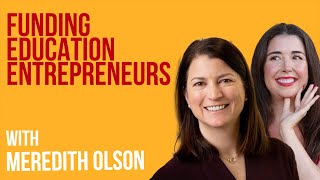
This is a recorded interview (Dec 20, 2023) between host Manisha Snoyer and Meredith Olson, CEO of the Vela Education Fund. Olson describes her career path into philanthropy, explains why Vela was formed (established 2019) to support out-of-system, family-centered education, and details Vela’s hands-off, confidence-building grant model. The conversation defines "permissionless education" (inspired by Adam Thierer’s permissionless innovation vs. the precautionary principle), emphasizes community and social proof for families considering homeschooling/microschools, and offers practical guidance on fundraising and how to apply or donate (velaedfund.org).
Questions this video answers
2019
December 20, 2023
Adam Thierer — permissionless innovation (contrasted with the precautionary principle)
More than 450 founders in 2020 (via direct and sub-granting partners)
Founders were cited in more than 500 mainstream media stories in the last year (as stated in the interview)
Chapters
Welcome to Teach youh Kids. I'm Manisha, a teacher, tech entrepreneur and homeschooling expert on Teach youk Kids. We talk about whole child development, the future of education, homeschooling, education, entrepreneurship and so much more. If you feel like you need more one on one support for your child's education, we also have an online homeschooling community where you can get expert advice and support and connect with other families who are passionate about curating their children's education. We also have virtual kids clubs where kids can play chess, math games, do origami, Minecraft with other children in 60 countries around the world. Just go to teachyourkidspod.com to learn more. Now let's get this education party started. Today we have Meredith Olson. Meredith is the CEO of the Vela Education Fund. The Vela Education Fund has invested in thousands of everyday education entrepreneurs facilitating learning outside of school, including us. We're talking about how the Vela Education Fund came to be funding out of system education initiatives and what that means, the concept of permissionless education and helping parents gain confidence in making the best educational decisions for their own children. Meredith also shares advice on how to fund alternative education initiatives running from homeschool co ops to larger educational organizations. Meredith has a long history of leading corporate philanthropy and community programs. She is committed to the belief that every child has a unique gift, learning happens everywhere and human centered community based solutions will unlock the future of education. Meredith advises the foundational education initiative at Stand Together. She is a chair of yes Every Kid, an organization committed to transforming education policy. She is president of the Koch Family foundation and the Koch Companies Community Fund. We were so fortunate to receive a micro grant and a bridge grant from the Bell Education Fund this year. And I was so fortunate to get to spend some time with Meredith at the south by Southwest Conference last year. And I just can't wait to share Meredith and this incredible fund with you. Welcome Meredith.
I'm so delighted to be here Manisha. Really looking forward to our conversation.
Well, I am so excited to have you to myself for an hour. I'm going to ask you a question that I'm dying to ask you, which is that you have such a unique background. You went from being a project engineer at Shell Oil to running one of the most innovative educational funds supporting out of system education initiatives. Could you tell us a little bit about that trajectory?
Sure thing. And you know, it's so interesting when you think about life and your life unfolding. None of us knows what the future looks like, right? Future is unknown. And unknowable. And we're led to believe when we're growing up as kids that if you do the right thing, if you do well in school, if you get good grades, go to the right college, then your life is basically going to happen the way you planned. But the reality looks so, so much different. So, you know, I went away to school and I thought, I love to build things. I love to create, I love to design. I want to be an engineer. I want to see the fruits of my labor. I want to build. And so I did that. And I did everything that I thought I was supposed to do in order to become a successful engineer. And I enjoyed engineering. I studied, I studied mechanical engineering. I then went into construction. I ended up ultimately working offshore in the Gulf of Mexico, helping to build oil platforms. Right. And this is, yeah, and, but you know, when I was out there and I was spending time offshore, and it's an interesting experience where you, you generally travel for either seven days at a time and then you go back onshore for seven days or 14 and 14. I mean, there are these regular schedules, but when I would go out there, I would. And you, you work shifts. So you work 12 hour shifts and you have a partner who basically works the opposite side while you're sleeping. And I found that I was spe time in my downtime, just reading. I was a voracious reader. This was a long time ago. So we didn't, I mean, we didn't have Internet access offshore. And so I would spend my, my downtime. Exactly. And, and so I would read and I became really curious about, well, wait a minute, I've learned how to be an engineer, I've learned how to build, but I didn't really understand how the world works. I didn't understand how businesses made decisions. I didn't understand the economy or our broader society. And I just got super curious. I mean, up until that point, I had studied math, I'd studied calculus, I'd studied design, but I had never had a single business course. And so I didn't understand accounting, I didn't understand decision making. And I just became really interested in what all that might look like. So I went back to school, I studied economics and just fell in love with it and started to shift my career into finance and economics. One thing leads to another, and I think in life when opportunities present themselves, you just have to be open minded, even if it wasn't what you planned. But just think about, like, what really makes you tick. What are your sort of micro motivations and decide whether or not to pursue those and follow those and become. If you do that, if you figure out what you know kind of fulfills your passions and you find opportunities to lean into that, then you become better and better at the things you care about the most. Which, again, that's different than what are more like what we were always told as kids. It's like, here's the straight path, here's the standardized path for you, and if you follow that path, you'll end up at a place of fulfillment. Well, in reality, I would argue that the reverse is true. If you lean into the things that you care about the most, you become excellent at those things, and you arrive at a place of fulfillment and success doing the things you care about the most. So that's what I started to do. And I found I really cared about economics. I continued to care about creating things and designing and building. Building things and deconstructing complex problems. So that led me into, okay, how do you apply economic theory to work? And so I started working on public policy. And then that led me into education. Education policy, and ultimately to rethinking education, not in terms of sort of a policy construct, but more like how do we apply the principles of what we see in our broader economy, in our daily lives, in business, into an education setting? And so it was through that period of exploration. I mean, it's. It's weird how these, you know, these roles just change over time. But it was through that exploration that I, you know, I started to look and explore and gained a real appreciation for the courageous people who are in every community in this country who are designing and delivering education in ways that are different than our conventional systems, but they're doing it on their own in order to provide. To provide value for the families that they're serving. So I saw that, and I saw that this work was happening with almost no philanthropic or government support. And it just felt like a tremendous opportunity, a gap that exists in our society where, because of the work that I'd been doing, both philanthropic and a corporate perspective, where I felt like I could apply my talents to have a meaningful impact.
Extraordinary. I mean, that's a wonderful story, and I'm just so curious. So thank you for letting me through all these questions at you. But, I mean, you worked in an oil company, and then you became the head of a foundation that was funded by people who made their money and oil. Was there a connection there, or is that a coincidence?
You know, I don't. I don't know that there was a Connection there or not. So I, I did work, I assumed.
You started working your way up more and more in the oil company, like from the rig to the foundation.
So I was working at Shell Oil Co. And, and I, I had worked there in engineering, I'd work in finance and operations roles. And an opportunity presented itself at Koch Industries, which is a sort of broadly diversified company investing in multiple different industries. And so that opportunity presented itself, I pursued it, continuing my work in finance and operations. But when I was there, look, Koch Industries also has, it continues to maintain significant investment in the communities where it has employees and operations. And I had an opportunity to go and contribute to that work. And so, and the mindset at Koch is definitely around how do you empower people, how do you apply like, you know, economic thinking and you know, sort of like an entrepreneurial mindset to making our communities better wherever we are. And so I was able to be in, and I still am able to be, to be in a corporate role, but then in doing so to apply an entrepreneurial mindset to help contribute to the communities where we live and work. And so education is a key part of ensuring that communities are the kinds of places where people feel that they have the potential access to opportunities to develop their own unique talents. And so all of this was like a glove fit. The same principles that ensure business success, actually ensure a more flourishing society. And what's the key ingredient? It's, it's helping people connect with their unique talents, their unique abilities such that they can flourish as individuals and contribute to a more flourishing society. And so that's really the genesis of the work that I've done. And I just see, I mean education is, it's like the core, it's the foundation of everything we do as humans.
So true.
It doesn't end, by the way, like when you turn 18. I mean education continues from the time you're born until the time you expire on this earth. And so you know what, what to me, it's a very life giving field in which to work where whatever role I can play to help create an environment where people can develop their talents and succeed on their own terms. That's what motivates me.
My question is, how did this fund come to be? 7 years ago People said don't focus on fixing the entire education system that's too huge. You need to pick a vertical and really focus on that one vertical. And then they said homeschooling is not going to be a thing, microschools are not going to be a thing. And now, seven years later, guess what? I'm a prophet. So now when I say homeschooling is the next big thing, I, you know, I know that it's true because I know that last time I was right and they were wrong. And now I've connected with more mentors like you who say, great new education system. I love it. That's what I want to fund. I don't want to fund another math app. I want to fund a new education system.
Go for it. That's right. Let's go. Like, that's where we want to go. You got to have that kind of drive and desire. And so this, actually, this dovetails with your question. So how did Vela come to be so part of this? Like, my personal story, I started focusing more intentionally on education in 2015. And so at the time, you kind of have to like, situate in time. At the time, much of the attention in sort of like the emerging education innovation space was focused on charter schools or magnet schools or schools of innovation. There was some focus on school choice and school choice policies. And so I was just trying to learn, get really curious, what's happening in the market? Where is there an opportunity for innovation and improvement? And I was puzzled by the fact that there was so much government investment and philanthropic investment in things like charter policy and private school choice policy or schools of innovation, and yet the market penetration of these alternatives was still relatively lim, despite the billions and billions of dollars of philanthropic and government support. At the same time, there was this sort of slowly, steadily growing unconventional education movement that was happening oftentimes just shorthanded as homeschooling. But we all know that it's a much broader conception of homeschooling than one on one homeschooling family and their immediate kids in their home, even though that's critically important. But there's this whole range.
There's so many varieties.
And, you know, very few homeschoolers are isolated solely in their homes. There's homeschool programs, there's cooperatives, there's micro schools, there are self directed learning communities, co learning communities, unschools, democratic learning communities, liberatory learning communities. I mean, there's a very broad spectrum of unconventional education that looks completely different than what we're seeing in conventional public, private, or charter schools. And so the curious part to me at the time was, wow, this space is really growing and thriving with pretty much minimal, if not zero, government or philanthropic support. And how is that? And so it was surprising to me, and not only to me, but to Many people who are working in education philanthropy. So to your question, how did Vela come to be in beginning around 2017? So it was 2017 and 2018, there was a small group of people who work in this education funding space who were casually coming together at conferences, at side events, having like side meetings, just sort of like asking one another and exploring, wow, isn't this interesting that this movement is happening? And isn't it interesting that it's kind of off the radar of the education establishment, the education reform community and certainly the education philanthropy community? Like that's puzzling. And why is that? And shouldn't we get smarter about it? And wow, this could be really, you know, this could be really exciting and maybe this is more consistent with contemporary trends in society and how society is evolving. But regardless, we thought, well, let's get smarter and let's learn and let's talk to practitioners in the field, let's talk to real families, let's talk to founders, let's talk to researchers, and let's see what's actually happening. And so together there were two funding groups, the Walton Family foundation and the Stand Together Community. They were very interested in potentially funding the work. And so those two organizations co hosted a series of convenience convenings just to learn and get smarter and talk to founders, families and researchers about this concept. And it was coming out of those convenings that ultimately the legal entity, the organization that is now Vela, was established in 2019. Vela is now in its fifth year of operation. So we were fortunate to be established before the pandemic. We had no idea that it was around the corner and it was going to happen. But our plan before the pandemic at Vela. So I ended up joining Vela to help lead this work. But when we were first launched, we thought, you know, maybe Vela will find 15 to 20 founders a year who are delivering alternative education. And in that first year, 2019, we made three grants. And then the pandemic happens in 2020. We ended up supporting, we worked with some sub granting partners. We ultimately supported more than 450 found in 2020. And so from there it's like the lid just blew off. There's so much demand. This space is dynamic, it is thriving, it is growing. There are people trying new things, they are experimenting, they're growing. And we haven't seen, there are a lot of people who thought, particularly among the media and within the policymaker community, who thought, you know what, things are going to go back to normal, you know, come 2021 2022, we're going to see, we're going to see this activity dying down and we just, we haven' experience that at all. In fact, we're continuing to see founders sustain their novel education models, sustain their businesses and grow and thrive. So it's just been, we were, I think, in the right place at the right time, but deeply committed to the work before the pandemic and remain committed today.
Absolutely. And I'm sure that the reason you've continued to be funded and that there's more demand to fund you is because of the results that people are seeing. Can you share why you decided to have this approach of hands off philanthropy? I mean, it's, it's really extraordinary. You gave me a quarter million dollar grant and I have one check in to tell you how I'm doing during the year and everyone's like, great, if you want to meet with me, get advice, you know, anything you need. What, what is, what happens when you give an organization you support money and let them spend it however they want?
Yeah. So what happens, and you described this a little bit earlier, what happens is it's confidence building. Okay. So we are investing in founders who are permissionless, meaning they are building their businesses, their education businesses in a way that's viable because they are supporting and accountable to the needs of the families that they serve. Right. Importantly, the founders that we support are self determined and they are, they are not requiring the blessings of policymakers, people in power or any other outside interests. Right. So they are laser focused on meeting the needs of the families that they are serving. Okay? So if we, as, as a funder, if Vela were to say, okay, we're going to support you because we believe in what you're doing, Manisha, we think you're amazing and we believe in everything you're doing and we want you to succeed and thrive. Now if we, if we fast followed that with a list of 25, check the box items that you must do in order to perform under the grant, then that's going to kill your confidence, it's going to kill your spark, it's going to kill your motivation and in fact, it's going to kill your ability to experiment and evolve to better meet the needs of your customer base. Right. You'd essentially be substituting the values, priorities or practices that the families you are serving want and substituting your funder's priorities. And so to us that would be a fundamental distortion. And so what we want to see is we want to say, okay, Manisha, we love what you're doing. You tell us, how do you define success? How are you going to measure success? How are you and your families that you serve going to hold you accountable for your success? And then we invite you to just share with us, you know, at the end of the grant period, how did it go? Did you change what you did mid year, did you like, how did you evolve? How did you experiment? And that's how we. A couple things happened. It gives you courage so that you can fly, it gives you confidence and then it makes you want to share out the amazing things that you did, Right?
Absolutely.
So it's just that it completely changes. Yeah.
Essentially you're funding really incredible designers, people who, and in tech we talk a lot about product design as listening to the user and iterating based on their feedback. And what you've done is selected people who naturally have that impulse and let them do their thing.
Yeah. We also find that, you know, a lot of times at Vela we frequently talk about how we're a non coercive organization. Right. Everything we do has a goal. In fact, it's one of our values is to foster voluntary exchange. Right. And so if you invite participation, if you invite the sharing of insights, if you invite someone to fill out a survey, they're much more eager to do so. Compare and want to do so to contribute versus is you're making it a requirement. This is a mandate. This is what you, you know, you, you, you must do or you shall do or whatnot. And so we've just found that, I mean human behavior is such an interesting thing. Self determined people who are able to make their own decisions, who have dignity over their own lives, they want to contribute, they want to learn from other people, they want to engage in voluntary ways. To us these are all very positive features. So we want to model like these are positive features in society. We want to model those features in our interactions within our Vela founder community.
It's just so wonderful. And I think about Steve Jobs, his quote, the design is in the product. And so many of the founders in the Vela community are committed to non coercive approach to education. And I think that that attitude really trickles down. If you want educators who give children freedom and who trust children, you start by trusting them and giving them their freedom and it just keeps the circle continues. It's wonderful. So you use this term permissionless education, which is really at the heart of the Vela education fund. And I find it fascinating because before I met you, for years I did research on homeschooling And I've just scoured through these homeschooling groups, looking at thousands and thousands of comments to figure out what do homeschooling parents need? And especially this one problem is what do parents need to get from traditional school to homeschooling? And, you know, exam lots of possibilities. Is it, you know, socialization? Is it curriculum? What is it? And what I found is that the biggest thing that parents need to make the leap is confidence. They need permission. And so I actually put that in my grant proposal for you. And then Lauren said, wow, that's us, permissionless education. So could you share how you define the term permissionless education?
Sure thing. So as we were developing, like our approach at vela, so much of what we do is grounded in theory. It's like the application of theory and putting theory into practice. And so we were inspired by the work of Adam Theor. He's a scholar and an economist at George Mason University, and he first coined the phrase permissionless innovation. In fact, he's got a book, a little booklet that you can download from the website at George Mason on this topic, and it's called so I encourage people to do so. It's called Permissionless Innovation. And the scholar again is Adam Feerer. So when we read about his work and we became familiar with his work, it was really interesting because he essentially compares and contrasts two dispositions towards or two attitudes towards innovation. And the context with which he's describing innovation is often related to technology, but it's appropriate for education as well, we believe. And so these two essential dispositions, one is the application of the precautionary principle, and another is permissionless innovation. And so as you think about innovation, new ideas, new models, new products, new services and how they evolve, if you're applying the precautionary principle, the attitude towards innovation is that we need to make sure that, that any harms, either known or potential perceived harms, need to be mitigated on the front end before innovation is allowed to proceed. Right? So let's make sure that any kind of potential harms are mitigated in advance. And so there are definitely spaces in our world and in our society where this application of the precautionary principle is just a part of the fabric of what we do. So think about the FDA and approval of new medications, right? We see that precautionary principle because we would hate to have severe adverse harm happen to people. Another attitude towards innovation is the use of permissionless innovation, which essentially suggests that innovation should proceed without being predetermined in advance and without harms being mitigated in advance. But then as harms are realized over time, to the extent that they do, those are addressed over time. So essentially allow innovation to proceed and then address harms as they come. Okay, and so with education, right? Education is different than health or a new drug, right? We would essentially say that new approaches and new models of education ought to be allowed to be tried and experimentation should be allowed to happen. Abstract, you know, material adverse harms, right? And to the extent that those are realized and they should be addressed, so there's practical approaches to a permissionless attitude towards. Towards innovation. But we would just suggest that rather than saying, you know what we don't know what we don't know, therefore we need to continue, you know, all children need to be schooled in a conventional way because there could be some harm, you know, if new approaches or new models are tried. Well, if you're not willing to take risks, you're also not willing to see the potential rewards from new approaches. So we would essentially say, and I don't want to quote Theor, but I hope you would say, like in this field, we ought to let these new innovations happen and see how they play out over time. Right? And that's what we're seeing with just these incredible founders all across the country, many of whom are former educators, many of whom are parents who are saying, you know what? I'm going to try something a little different, going to see how it works out. And we want to continue to improve and evolve and innovate. And you know what? They're getting rewarded because more and more families are saying, I like this. I like what I see. I like the results that I'm seeing in the academic progress of my kids. I like what I'm seeing in the social and emotional development of my kids. I like that my kids are on a pathway to purpose in their life. This is fundamentally different than what I was seeing in a conventional classroom environment. And look, we're not saying that this is for everyone, but it definitely is something that works for a lot of kids, a lot of families.
Absolutely. And now there's just all these laboratories of innovation for people who were desperate because their child wasn't doing well in school or teacher who just felt like they were craving doing something new. And then these initiatives are informing the system, which is really exciting as well.
This is actually a really important point, Manisha. So if we, if we believe that innovation is needed, and this is true not only in education, but it could be in any Part of our society. Typically innovations happen outside of an incumbent system. Right. Because, you know, we're not saying that innovation can't happen inside a system. It can. Right, right. But generally what happens more typically is the folks who are outside of the system who are really pushing the envelope, come up with these novel innovations that then the system will say, ah, that works. Now we're going to bring that in.
House and like American culture.
Exactly. No, that's right. And so there, you know, there's no, we don't see any conflict between out of system education and in system education. We believe that these, these different methods can coexist and be very complementary. But we do believe that there's going to be a little bit greater experimentation, more sort of, of leading edge and pushing the envelope out of system, which then will ultimately make its way into systems and innovation should, can and should flourish in both of these settings.
Just to kind of bring permissionless education to an individual level. You're a parent and a lot of parents lack confidence. To me as a teacher, it's not a surprise. I think that the whole system is designed to disempower parents, tell them that they don't know best and that they should listen to the school instead of to their instincts. What advice would you give parents who don't trust themselves to make the best educational decisions for their children or perhaps are afraid of social pressure and ostracization from their families or friends?
This is a really good question, so. And more of a societal question than it is related to education. So we believe that every person has dignity. We believe every person was born with dignity. We believe that this is a human right and a natural right that you're born, you're able to own your own person, you're able to make your own decisions about your life. And the decisions that I might make about my life are different than the decisions that you might make about your life or that I might make about your life, or that I might think you ought to make about your life. But that's okay. That's the beauty of the fact that we're all different. We're all individuals, but we're born with the ability to chart our own courses in life. And so that's what dignity means. I can make decisions about my life and I'm responsible, responsible for doing so. Right. And so as we think about education, we've got to find a way such that parents trust themselves to make decisions about the lives of their children, the education of their children, and the development of their children's Children as individuals. It doesn't mean that parents have to deliver education to their children, but they are responsible for the educational journey of their children, just as they are responsible for the health and nutrition, housing and clothing of their children. And these things are very natural in those spheres of our lives. But at some point along the way, we've lost that connection on education where too often parents don't trust themselves with being responsible for the educational journey of their children and have delivered that over to someone else for delivery. And so what we want to do is we really want to lean in and encourage parents to trust yourself. Nobody cares about your kids as much as you do. No one does. Your children's best interests are your top priority. And I mean, why is that? We're born this way. This is part of the human experience. So trust yourself, have courage, own the education of your children, own the development of your children as the individuals they are as a part of your family. And work with the educators you love to make sure that that happens.
Happens.
Right? So this is not about, it's not an us versus them, it's how do we have families and educators working together to nurture the development of their children, just as we do with the healthcare professionals that we work with, just as we do when it comes to feeding and clothing our children. So it's just trust yourself. We've been doing this for millennia. Parents have been caring about their kids and trusted with their kids development since the dawn of time.
Time. Beautiful. So what would you say to the parent who is going home for Thanksgiving dinner, perhaps? And Aunt Susie says, I just can't believe that you're homeschooling. You're depriving your child of the opportunity to make friends. How could you, how do you respond? What do you say?
Oh my goodness. I mean, and, and look there, there are a lot of critics out there, right? So what, how does, how does the saying go? The proof, the proof of the pudding is in the tasting. So share, share stories. Right. Talk to my. Talk to my kids. So when you're talking to Aunt Susie, hey, talk to my child. Talk to my child. Thomas. That's a good one. Get to know him. Let's have a conversation together. Ask him how he feels about getting up every day. Ask him how he feels about his learning environment, what he's learning, how he's learning, who he's learning with, how he's interacting with people of all ages, and just see it for yourself. And you know, I think it's an eye of the beholder thing. And what works really well for one family might not work very well for another family. What works really well for one child in a family might not work well for his or her siblings. Right. And we find this to be true. There's a lot of different modes, and so figuring out and better understanding what your values are, what your priorities. Priorities are as a parent, what. And what educational practices matter the most to you. Wow. I mean, you're going to be so in touch and engaged with the lives of your kids that. But it's. I mean, generally they're flourishing when they have the engagement of a caring parent.
Probably Aunt Sally is coming from a place of fear and actually caring about your child. And it's not your job to defend yourself and to defend your educational choices. So it's perfectly fine to say, you know, I weighed all of the options out there and it wasn't working at school. So I've decided to try this, and I think this is the best option for their social and academic development. I might be wrong, but this is what we're trying now because if you just say no contest, it can sometimes go better for you.
You know what was really fascinating about the pandemic? There was this popular media narrative that suggested parents are going crazy because they're having to spend so much time with their kids and they're not used to spending time with their families. Moms and dads are filled with anxiety. They just can't handle it. People are getting depressed. Okay. There were also surveys out at the time that suggest, oh, look, families are coming together and enjoying spending time with one another. They're going out less, they're doing more at home. They're engaging in home projects. They're doing. They're playing in the yard. They're going biking together. They're, you know, they're doing things together as a family. Right. And so what we've seen, I think the. The real shift to alternative or unconventional forms of education has shown us that not all parents, but a great many parents want to spend more time with their kids. They want to be more engaged in the lives of their kids. And I gotta tell you on your. I had somebody tell me this once, a good friend, he said, you know, nobody on their deathbed ever says, I wish I spent less time with my family.
No way.
Right. No way. So these are good things. These are positive. We should be happy about it.
Absolutely. I mean, there's just so much research showing the benefits of homeschooling and microschooling and alternative personalized learning environments academically Socially, emotionally, in terms of future success. I mean, the research is consistent, clear. It's just people take a little while to adapt culturally to these changes, so that can be tough. And I would say one of the most important things for me is having community. And that's another really wonderful thing that Vela offers. I mean, I just had. I got a. An interview with someone who I really wanted to interview for a long time, and he told me that if I wanted to interview him about homeschooling, I needed to have a few other people in the interview. It was a very complex, asynchronous interview. And so I, I just called up my friend Shereen Ratigan from Colossal Academy, and Alicia, right, another Bella founder, and they immediately said, yes, whatever you need. And invested a ton of time in this interview. Even though they were. They have four children each and are also running micro schools and building national networks. They just were there for me right away. And I think that parents too, if you lack confidence, I mean, just community is so supportive, you know, and of course I would do the same for them in a second. But. But it just. When you're feeling lonely, when you're feeling not enough, having other people who are in the same boat, it's just everything.
Absolutely. And honestly. Okay, so when we started Velo five years ago, we thought the work was primarily going to be about seed funding. But we're a learning organization, and you learn and you iterate and you change your business based on what you see in the field. And what we saw almost immediately was that, yes, there's value in the seed funding. Of course there is. Being able to share resources at a time that's critically important in the life of a founder is. It's critically important. But then what we saw, something that was almost as important, if not more so, was the organic and authentic network building that happens among founders. And so what we found was particularly in, I mean, not always in local geographies, sometimes this crosses geographies. But within geographies, we started finding that Vela supported founders were like, we have a little social media app. And you can find on that app the other founders.
Mighty Networks.
Mighty Networks. You can find the other founders who are near you, like by zip code. Right. And so they started to spontaneously. We found, we found meetups that were spontaneously happening in, in metro areas where, okay, groups are now coming together. Groups of founders are coming together once a month. They're sharing knowledge, they're, you know, emailing each other, they're sharing programmatic advice, they're sharing, hey, do you. Do you know a good accountant or a tax person? Or how are you dealing with the local fire marsh? Like, how are you complying with local, local regulations and whatnot? And that knowledge sharing, that network building that happens, that is truly enabling people to learn, improve, and get better. Each of them as independent founders, you know, competing in the market. Right. But they're very collaborative and they want to, they want to improve and they're getting better together. And so just seeing that network building happening has been, I mean, it's been so powerful. We've been able to support that. We now have at Vela, we have 20 community connectors who are people who are organizing these, these, these meetups in communities nationwide. That's really exciting. And then the other thing that happens, okay, you mentioned this, Manisha. Like, when people see other people who are doing, you know, similar things, then you get this. It's more courage building, it's more confidence building. You get this sense of belonging. This, like, this is my. These are my people, and we're in this together. And, and, and this is true across lines of ideological difference or pedagogical differ, or you find groups of founders who have very different views on how children can or should be educated, very different opinions, sort of across the ideological or political spectrum, but common interests in developing and delivering learning that happens responsive to families and communities in these small learning environments. And so that's a powerful thing in our society. That's like an example of civil society working. And that social proof that happens. It's like, oh, you're doing, doing. You're doing what I'm doing. I know you. And then, you know, it's like the Kevin Bacon effect. If, if you know, you know somebody who knows somebody who knows somebody who's doing the thing, then it becomes more normal, it becomes more acceptable in the main. And so we just, you know, everything we can do to help bring people together and then elevate the insights. That's a big part of what we do. The founders are so incredible. We talk about social proof, like, lot founders are so incredible. Their stories are just waiting to be told. At Vela, we've had. Our founders have been, have been cited in more than 500 mainstream media stories just in the last year. Right? I mean, it's extra because their stories are like, oh, my goodness. I mean, reporters want to tell these stories. So there's all these inbound requests for, hey, can you connect me to a, to someone who's got a, you know, who. I can learn more about this movement, about and so more and more Americans are hearing about these inspiring stories of founders who are really, truly living their American dream to offer something different and have a beneficial effect on the lives of families. And that story is getting told. And so, you know, Aunt Sally, you know, as she hears about it more and more, then. And then realizes, okay, this isn't quite as scary. These children, you know, contrary. They're not being harmed. Contrary to that, these. These. These children are thriving. They're doing incredible things. And I see it with my own eyes. I mean, that's. That's powerful.
It's amazing. It's so powerful. And I'll just add today, I mean, I've been doing a lot of surveys around how to improve our community and asking for really candid feedback. And, of course, in those situations, you get both negative and positive feedback. And sometimes it's hard not to get stuck on one comment. And so, you know, I was feeling a little down this morning, and I. I opened my email, and there's this email from another Vela founder, Shereen. She's like, hello, my beloved divine woman. How are you? Can we talk? And I get your advice.
I'm like, I feel so validated, you.
Know, so that those kind of connections are just so precious. I love Bela for that.
Shirin is listening. She sends the best emails.
Oh, she does. She's. She's amazing. She. What she's doing is extraordinary. We did. We did a podcast with her, which is. People have to listen to, but she's just a mover and shaker and an.
Encourager and a counselor. I just love. Yeah, I love everything she does.
She's amazing. And, I mean, there are just so many people like that in the Vela community. So, Meredith, you are incredible at fundraising. You. I mean, I think Vella has been mostly funded by Walton and Stand Together Trust, but I noticed that you also are now opening it up to other people to donate. And I was curious what kind of advice you would have for people who want to raise money, money for their homeschool or micro school. And I just want to kind of really emphasize that, you know, when I started working with homeschoolers many years ago, we were talking and talking about all the different problems trying to homeschool kids, develop education solutions. And ultimately, we kind of looked at each other and said, you know what? People just really need money. Parents need money to do this. And, you know, and it's so great seeing, you know, states like Arizona that are giving funding to families. But what I really want to know is, like, what advice would you give to me? I mean, we received the Vela grant this year to help expand access to under resourced families. It's been so exciting. I want to reach more families, so I want to go out and raise more money. What are kind of the best tips that you would give to others who are trying to raise funding for their radical education innovation?
Yeah, really good question. I think it's, I mean, I'm not going to lie, I think it's hard. And so, I mean, like what we do at Vela and you know, we are fortunate to receive some funding from, well, received substantial funding from the Walton Family foundation in the Stand Together community. But we've broadened that base of financial support and have a much broader base of funders beyond our two original seed funders. But it's not easy. And so, you know, I talk to donors and potential funders all the time and it's a little scary to, if you're someone who's donating into the space, it's a little bit scary to give to innovators who are in the space who are doing something different than conventional schooling. And so I, so I think that's hard. I think my advice is, is to, to be true to who you are, what you're, what you're doing. Be really tight with, with your, with your requests. You know, we're looking, we're seeking to raise money in order to support and define your project. Like, what are you trying to do? How are you going to measure success? What does that look like to you? How are you serving? But I wouldn't shy away from just being true to who you are and what you're trying to up accomplish. Don't try to force yourself into the conventional mold if that's not what you're doing. Right? So it's like, I mean, this is just basic advice. It's like say what you mean and mean what you say and then be bold as, as, as you go and make a, make a request. Now that's not easy to do, particularly in the education funding space. But you, you're going to want your supporters to be fully on board with and supportive of your values and, and what you're trying to accomplish. The worst case scenario is if you go and the funder says, I'm really excited about funding you, but only if you change 100% of what you do. And so that part is really, that can be really hard, right? Because if the requirement of receiving funding is that you're going to fundamentally change your entire business, ask Yourself. Well, is that going to advance my goals or is that actually going to set me back? Is that going to advance how I'm serving families or is it actually going to harm how I'm serving families? So ultimately, the path to sustainability is by offering something that your customers are willing to support through the contribution of their time or their treasure. And I know that's a lot to ask, right. But if you're offering something of value, you will find customers who are willing to pay for it either with their time or with their money. We strongly recommend that founders find a way to become long term viable by serving customers rather than becoming fully dependent on either philanthropy or, or, or public funding sources. Right. Because the minute that happens, then it's very difficult to be laser focused on serving your families.
You just, you don't have that pressure of the value received has to equal the value given. I think those are such great points. And I would also say that's a recipe for confidence. I mean, when I first started out, people would say, say, oh, you should be doing tutoring, you should serve the after school market, you should charge more. And I would continually say, okay, we can do that. And I think that made people not respect me as much ultimately. But now I feel like, okay, this is what I want to achieve. This is my plan. This is how it's going to be sustainable. This is how much it's going to cost. Do I know 100% that it's going to work? No. But this is the best plan that I came up with, given my experience and my expertise and the research that I've done. And I. And that just gives me confidence. It's the kind of, you know, real confidence. You have a certain humility that it might not work, but you've done the best that you can. So, Meredith, you are incredible. And I'm just so grateful for the time you've taken with us today. Could you tell us, perhaps this is a question I like to end with for every guest. Is there something that you're learning right now? Could be completely unrelated to education. Ideally totally unrelated to anything that we're talking about. Because, I mean, anything in everything you say, you just manifest such a passion for learning, which I think really infuses every aspect of the Bella Education Fund. So, you know, one example, someone said they, you know, were studying meditation or, you know, reading a book about history. Is there something you're learning that that is kind of interesting to share with us?
I, I would say a challenge. I feel like I've been, been really Personally challenged. Just over the last, I mean it's, it's been, goodness, probably just the last three or four months on this whole, the whole topic of AI and the integration of large language models and language processing, language production really into not only the education system but also our daily work lives. And so that to me is something I've just been trying to get super knowledgeable about and it leaves me feeling somewhat confident, conflicted. Right. And so sorry, this is a little bit off the cuff, but I see so many benefits around language production where you can do more, accomplish more, synthesize your ideas in a more fluid way, communicate them more effectively. Right. And so I've been able to apply that in my work life frequently. Like I, I can write, I can write a report or an essay or draft an email or a letter in a fraction of the time that it used to me to, used to take me and it's higher me for quality. So I love that. But then what does that mean for education? Right? And so if you're, if you're a student and you're learning, you know, right today you learn how to write a five paragraph essay, you learn how to write a topic sentence in a concluding sentence, right? You, you, you learn how to frame your ideas. And there's a problem solving process that happens with that. There's synthesis that happens, there's, you know, thinking about crossing domain knowledge and analogies. There's all kinds of skills, like life skills that are formed through the crucible of being able to write a cogent essay or a report. What does that mean in a world where assisted by technology, it can be accomplished in a fraction of the time and at a higher quality, does that skill get subverted? Is it still important? How do we think about that? Is there another way to gain that skill or that content knowledge? And so this is some of it you asked about. Like what, what I've been wrestling with, I've been wrestling with that in the lives of my own children, right. So I've always thought that being a strong writer was paramount. What does that mean in the world 20 years from now?
Absolutely. And I would just say that this is why out of system education is so vital, because you're not sure how to navigate this. How is a system supposed to, supposed to experiment, understand how to navigate this and adapt before it's completely irrelevant? Our world is changing so quickly and you know, with your own children you are able to adapt, you are able to see, wow, it's interesting. These are some ways we can incorporate AI with writing and I, you know, myself have been using some AI in my content, but also seeing its limitations and seeing like, well, what it's really about is the insight, you know, and so it's, I think that just really brings us back to how much easier it is to tailor a child's education when you have that flexibility in an out of system space. So, Meredith, I just can't thank you enough for creating Novel Education Fund and the community and for all the support that you've given me and this opportunity to collaborate together on really. I mean, education is the answer to all the world's problems. So changing the world at its root and you know, just thank you so much for taking the time to talk today and perhaps just to end, can you tell people how they can apply for a grant, how they can help fund Vela? Anything that we need to know about.
The Vela Education fund, please visit www.velaedfund.org and through our site you can sign up for a newsletter, provide your email address and we'll stay in touch with you and. And details about how to apply for a grant, how to donate to Vela are all included on our website.
Fantastic. And if you donate, you are really giving to a good cause to change the world. So thank you again, Meredith and have a beautiful day.
More from Manisha

Contributing to Florida Prepaid Plans (2026–2027) | Step-by-Step Guide for FES-UA Families

Contribuyendo a los Planes Florida Prepago (2026–2027) | Guía Paso a Paso para Familias FES-UA



Finding Providers & Services in the Marketplace (Families) | Step Up For Students (2026–2027)

Encontrando Proveedores & Servicios en el Mercado (Familias) | Step Up For Students (2026–2027)




