Microschooling with Iman Alleyne & Shiren Rattigan | Teach Your Kids Podcast
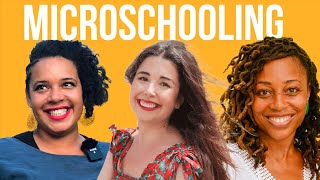
This is a transcript of a podcast interview (Teach Your Kids Podcast) hosted by Manisha Snoyer with guests Iman Alleyne (Kind Academy) and Shiren Rattigan (Colossal Academy). The speakers describe their journeys from classroom teachers to microschool founders, detail daily routines and pedagogies (mixed-age learning, Montessori-influenced ‘Montessori 2.0’, project-based learning, daily field trips), discuss serving largely homeschooling families (Iman reports ~80% homeschoolers), approaches for neurodiverse and 2e students, South Florida’s fertile microschool ecosystem (low barriers, ESA funding), recent grant/award wins and accelerator experiences, and practical offerings (Kind Academy online options, Launch Your Kind/coach resources, Colossal franchise and microschool coach).
Chapters
Foreign.
Hi, everyone. I am so honored and delighted today to have my two friends and collaborators and who are an incredible inspiration to me. Iman Aline from Khan Academy and Shirin Radigan from Colossal Academy. I have known Iman for many years now from I think the beginning of her work building a micro school. And Iman connected me to Shirin, who is an incredible mover and shaper and micro school leader in the South Florida community as well. There are some really amazing things happening in South Florida with families and teachers building new educational alternatives and it's really an incredible hub for what's happening in this education revolution. So I'm just so excited to have them on the show, especially as they are two very busy people who are not only running micro schools, but building micro schools all over the country and getting microschool leaders together and active in the homeschooling movement and just so cool and wonderful as human beings. So I guess without further ado, I thought I could leave it to the two of you to share a little bit about your story and what led you to start a micro school. Maybe we can start with Iman if you want to go first. Thank you.
Hey, Manisha.
Yes.
We are friends, so thank you so much for having me on. It really started with I, I, I, he. He's at the age now, he's like 12 now. So every time I say this, like, he's kind of like mom, like, stop. But really my 12 year old, who was 4 years old at the time, was really struggling in school. My big goal was like a play based, developmentally appropriate school. My background is education and I knew like at 4, there was really no reason to be doing certain things and like writing five sentences and things like that. So when his pre K was saying these things, I was like, that's not appropriate. And I see why he's stressed out. Like, that's not okay. And there was really nothing close to us that was, that was developmentally appropriate or that made sure that they were really teaching the whole child and was, you know, really student centered. So it just got to the point that I was, I was stressed out. I was a teacher myself. I was a guidance counselor. The teachers were stressed out, the administrators were stressed out. And I was like, this is it. I'm going to pull my kid and homeschool them. And then got with the homeschool community and they blew my mind. Like, I always give credit to that because they just knew, like, this is the way that it's supposed to be done. Let's Personalize this education. Let's individualize it. Let's get together all the time and have this big, beautiful community of people who really love what we do and are passionate about education. And that's really how I got started. And then I started my own micro school. Homeschoolers started coming to us and the rest is kind of history.
Yeah, it's amazing. And you have really been a star this year. I think you won two major grants or more so far. And I think also it's noteworthy of both of you are teachers who ended up homeschooling your own children and then starting your own micro schools. So, Shereen, you want to share a little bit about your background as well?
Sure. So I'm Shereen Rattigan. I'm the owner of Colossal Academy. We are a micro school that takes relevant skills and brings them to the entrepreneurial marketplace. So what started my journey is I am a fifth, fifth generation educator. I've always grown up in a household full of educators. All my aunts and uncles and grandmas and cousins are all educ and I didn't want to be an educator for that very reason. But it's just something that's ingrained. And I do think that there is a sacred calling into educating and teaching, and it happens to be my calling. So I started in public schools outside of Chicago, returning to the district that my mom taught in for 35 years. And I was breaking up fights. I resto restraining crates. I was going through metal detectors. We were having to check backpacks. And I thought, this isn't the place I wanted to be. And I had no windows in my room. I was teaching math. And there's so. There's only so much you can innovate and ideate on top of a system that just doesn't work, you know, so. But I didn't know that it's the system that didn't work. I thought it was me, Right. So then I looked for a private school. Maybe in the private school or something that's more elite or we're not dealing with maybe some poverty issues that come and make its way into the classroom. I worked at very expensive, very elite international schools and found that that wasn't the place quite the place for me either. I did learn a lot there and. And finally I was like, maybe it's Montessori. I really want to be in nature and outside. And there's something to that. And Montessori wasn't for me either. I didn't feel like the place that I was working. I Had enough rigor and enough innovation and getting, really getting people ready for the, for outside of the classroom. So Covid hit and I was watching what was happening online and it was terrible. It was really bad. It was poorly done. And I said, well, I could do it myself much better. And I did. And I have. And that's kind of what started Colossal. And what's fueling colossal is to really be relevant for the. For now and for the future so that kids are leaving with actual skills and entering the adult life not wondering who they're going to be when they grow up.
So wonderful. And you have also created a community in South Florida of micro school leaders. Can you tell us a little bit about how that came to be and what you all are up to?
Yeah, so. So flow is where it's at. So, you know, there's a couple of reasons why that this space and time and place is so fertile for innovation. And part of it is our restrictions on our barri to entry into the marketplace are pretty low. We also have funding. Right. We have the ESA that allows us to innovate. You can't innovate without money. So we have a beautiful bouquet and tapestry of incredible, incredible innovators and moms and programs. We have people that surf and skate and bring kids to the beach. And then we have people who teach people how to cook, teach people just how to fish. And then there are the hubs like Iman and myself who really just make sure that there's a central place that we can be able to curate and use, utilize what's down here. So I like to think of the micro schools as being the soup and that the spices are all these sprinkles of amazing programming that we have.
Nice. I love it. I talk a lot about the idea of modular learning where you have your micro school, then you have different activities and all sorts of programs that can be customized for individual children and their parents role in their education as well as. So great. Iman, could you possibly dig in a little more on what goes on in a typical day at your school? Of course, there's no typical day in homeschooling. Trick question. Or micro schooling, but maybe just give us a flavor of what's up. Yeah.
Thank you so much. Yeah. We're in camp right now, so it's a little bit different. Super cool to even watch like that. But in general, like during our academic, regular academic year, we usually start off like the kids come in, they have this really awesome just free time to explore. We have like they can kind of pull anything they want and play with anything want and just socialize. They get that like first half an hour just kind of ease into the day. And then we all come to morning meeting. We're either setting goals or we have an agenda up or we have a what do you want to do today? What are your goals for this week? Things like that, having communication with them. And we usually throw in some sort of like character education, social and emotional learning that goes there. Like the last few weeks we talked about assertiveness, like how do we say what we want but in a way that we're not bullying, in a way that we are standing up for ourselves and using our big voice to really say that and using our statements. So that's usually the beginning part of our day. Then we jump into academics. All of our kids are working pretty much at their own pace. We have a mixed age learning. So we definitely pull from Montessori. We call ourselves Montessori 2.0. Some of them are doing personalized learning on computers. Some of them are doing personalized learning with a tutor. One to one. Some of them are working in a one to three. It really doesn't matter. We really base everything off of mastery, where they're at and what gaps need to be filled and accelerate with our gifted or 2E students. And then we jump into our project based learning that's super fun. Where we're cooking, we're doing art, we're doing sensory. We have a really awesome project based learning curriculum library from all of my years in a nature school that we pull from. We're very theme based. And then we take a field trip every day. We're out in nature, we're out in the world. We're doing something exploring that's really great for my kinesthetic and my hands on kids. Finally we come back and we may do like a genius hour where the kids are really focusing on what elective they have. So they choose what am I going to do for this semester? And sometimes it's coding, sometimes it's learning another language. My son was learning Japanese last last semester and I'm super like all on his own. I didn't like, I mean I really have never really pushed this kid only because he will like fight back up against like anything like that. So I'm super excited to see like I'm interested in Japanese and manga comics and now he knows Japanese and that was just like all on his own.
So.
And then it's dismissal cleanup and dismissal time. That's our day.
Incredible. And IMAN you mentioned two E students, and not all families might not know what that is, so perhaps you could share a little more.
So 2e basically means twice exceptional. A lot of times, what we see learners come to us, especially from the public school system, with they struggled or the teachers didn't really know what to do with them because they are diagnosed with something like add. But they also don't recognize that these kids are super gifted and need to be accelerated in another area or really needs to be challenged in this other area because they're really excited about it. So these kids were really not getting that kind of, like, excitement or passion because they were kind of in this box that said, you're not able to do these things. Instead, we like to pull these kids and say, oh, you're able to do these things, and you're able to do these things really, really well. So those are usually my 2e kids. Like, they're gifted in all of these awesome areas, but may need a little bit more support in other areas. And we really, really base things off of where their strengths are and design curriculum around them.
It's so great. So in terms of your micro school, I know at one point you were serving mostly homeschoolers, and I was wondering if you're still serving that community or to become a private school. Could you tell us a little bit about your demographic? I think I.
We really still are a real. We like to call ourselves like a homeschool school. The kids that really come to us are generally homeschoolers or never have been to school and just really want something that's a little bit. That's not like the traditional model.
So I.
We do still serve mostly. Probably about 80% of our population are homeschoolers, for sure.
That's incredible. And maybe we could also explore a little bit the homeschooling community that's connected to you. I think a lot of people have an image of homeschoolers who are homeschooling for religious reasons. But the people who, you know and people who are homeschooling because they might have very conservative views about certain things that are being taught in school. And I think that the homeschoolers in your community are quite different. Could you tell us a little bit about that community you found that blew your mind and who's involved with it?
I think I thank you so much for asking this question. It is super important. And I always kind of forget that. That's like. Because we have such a diverse tapestry and array of students. So really, the students that the families that come to us or families that didn't feel like they fit into, maybe even the regular homeschool groups, A lot of our families are families of color, indigenous backgrounds, Caribbean background, things like that. A lot of our families are neurodiverse, so that's another kind of part of it. But definitely secular, I would say, is most of our population. And they wanted something that was a little bit different. And Colossal, I think does serves a lot of that community as well. And I don't even know if like, I think that we both really serve. Like we have students who are religious that come to us in general, but that is definitely not our only kind of group of people that we serve.
Excellent. Shereen, every time I see you post on LinkedIn or Facebook and all of these extraordinary activities you're doing, playing outside, doing field trips, surfing, I feel like I want to be a student at your school. And I don't know if I can if I'm too old, but perhaps you could also dig in and just give us a flavor of what a typical day looks like.
Yeah, thank you for that. And I wish I could take credit, but really I am a conduit for the students and their voices are really centered in what we do. And so I move with their needs and their desires and their wants. You know, a typical day at Colossal, we arrive around 8:20ish, and definitely by 8:45 we're kind of winding into setting our goals. So we have a self directed goal setting where we're able to sit with the child and say, okay, on Mondays we're focusing on what is the global goals for the week? What do you want to get done? What do we need to get accomplished? You know, like we need to, we need to finish this unit of language arts by the end of the semester. How do you want to tackle it? You want to read the whole book this week? How, like, how is it that your, your body and brain are working this week towards that goal? And sometimes it's like, I don't, I don't want to do this. And then the answer is like, okay, but do realize that next week you might have three more chapters, right? And really empowering them to vocalize what it is that they want. Right? What, what is, what is education supposed to mean for them? We do have anchors, I like to call them anchor subjects. I really believe deep a rich and robust learning of the, the anchors of language arts and maths. So those are enrolled in every day. But then we also have personal projects and entrepreneurship projects. So they build websites or they learn how to sew. Last year we were able to learn how to spin our own wool off of a sheared sheep. And we're always just trying to get down to the very basics of how did we get here? Right. How do we get here as people? Like, where do textiles come from? We grow food, they learn how to cook their own food. And that just came out of understanding that they need time in nature. And they were happiest, I think, when we were out and about in the nature. And then in the afternoon, we're focusing on like the. Some of the more extracurricular. Right. Activities. And some of it is. Some of it is self directed and sometimes it is front of the house instruction. It depends. So when we're learning an AI thing, if we're learning something from AI, it's not necessarily inquiry because I really want to be mindful about what they have access to and with obviously the permission of the families. So that is a front of the house instruction. But when we are exploring or inquiring, that might mean different groups or in different settings. I think one of the greatest disservices we've done to middle schoolers and adolescents is told them to sit down and be quiet. Right. Like, and continue to shove certain curriculums down their throats instead of allowing them to really blossom and bloom. And ask them, we mean, they have to ask to use the bathroom. Like, how, how absurd and bizarre has our society become that we can't even recognize how warped that is. Right, like, but you'd have to ask your teacher for permission. And if your teacher wants to grant you that permission in the time that works for your teacher and the time that you're allowed to use the bathroom, then you will be able to. Right? And then I could withhold that. That. That is a right that I can withhold from you. Or you can eat during this one specific time, if your body is telling you you're hungry, you should eat. Like, we've disconnected the child from themselves. And so really I'm trying to put them back in their bodies, ask them what they want to do and put them on their. Send them on their way.
Excellent. That's a great segue into my next question, which is about the level of autonomy that you allow students in your schools. I know that on one hand we have environments like Brooklyn Free School or Sudbury School, where children have almost total authority over what they do. And what is the balance at your school? Can children show up at 11am if that's what they want? If there's an activity going on that they don't want to participate in. Is that fine or do you try to guide them to participate in everything? But about.
Yeah, I mean, we generally, especially in this location. So we have a few different locations now, but the location, the Coral Springs, which is like my baby. I would say we really gear towards like K through sixth grade.
Right.
So around there they really do have a lot of agency to say, hey, parents, come in. Kind of anything long, really. It's like, well, you missed some fun stuff. But like, welcome, I'm glad you're here. Right. Obviously you don't want to miss like the field trip. So they're, you know. But they kind of ease in parents, don't. I really a big thing for me was like, I didn't want them rushing around in the morning feeling stressed out. Like, I feel like that was such a disservice for like everybody. Like, don't be stressed. When you walk into this space, you never have to worry that I'm going to be mad at you or like lock the door because you're not here. That's ridiculous to me.
So.
And then kids, like when they come in and they're like, I don't really want to do that project, a lot of times it's like, oh, I don't really. Generally speaking, kind of like the anchors we do kind of for math and re. Math, reading and writing are our three things that we do want to see growth in. And we do have like very laid back assessments just to confirm that we are, you know, filling those gaps and getting students where they need to be. And we usually will guide them for those things. But if they don't really want to do like an art project or a science experiment or something that we're working on that I think is super fun. A lot of times they see the other kids doing it and they want to jump in anyway. It's like, you don't want to do it.
Okay.
And then like five minutes later they're like, I need to do this. And you know, that's a lot of fun to watch too, so. But they definitely have a level of freedom. I wouldn't say that we're Sudbury, which I love Sudbury. I love Brooklyn. I love all of those schools. I even did like an ALC training that I still want to like build an ALC down here because I really love the way that it worked. But we're a little bit. We're probably, I would say we're probably right in the middle. Like, we still need to do the academics and really support kids and doing the academics. But also like the other half of the day is like all about whatever you want to do.
Wonderful. So you have these big blocks for self directed learning and then you have the mastery hours with the focus on math and language arts and optional projects. I love that. It's, it's exactly what modular learning is. It's wonderful. And Shereen, I know that you have a specialty in working with children with adhd and I know that a lot of parents are concerned when their children have ADHD that they need more structure. So can you tell us a little bit about autonomy at your school and also how you work with students who have adhd?
So you know, Colossal Academy, I, I personally am ADHD and dyslexic, so that's who I like to serve because I'm creating the school that I think I could abuse and I'm absolutely creating a love letter to my middle child who is highly dyslexic and highly adhd. And so really we have flexible seating, your body, autonomy of where you can be at all times. And I also let people know who are guests coming in that my students have the ability to get up and walk around and move and they're not going. Coming into a Colossal is not going to look like what you think of a traditional education space of roads and desks and you know, forward facing children that are quiet and ready to ask questions by raising their hands. And that's just not what you're going to get when you're coming in. The other piece is being in the place often lends itself to allow for the sensory needs that we have as ADHD children to just be enwrapped or be at the beach or be at the farm. It really quenches a lot and grounds a lot of what we need as ADHD people. And so, yeah, you know, like being able to get up, have bodily autonomy and then not having to sit and pay attention for very long when I ask us to come in, the most they're Talking is for 10 minutes, max, max. And then I'm expecting them to have an exercise or an activity that includes five senses. So I send that out to anybody who is a guest speaker. But these are the five senses. How are you out? How do you plan on approaching this with our students who some of them have adhd? Also, if you need to get up and walk around, you just communicate it. It's not a permission based conversation. It's really like, Michelle, I gotta go outside, I need to run around the building one time and I'm like, okay, it's. I know where you are at. Not, I'm going to grant you the freedom of your body to do what you know you need to do. And I think the first part of coming into a colossal is unschooling themselves. A lot of my students, yeah, some are come from a homeschool background, but a lot of them are coming from traditional ed and are looking for another place that really serves their, their child. And so I have to do some unschooling. The homeschooling families that come in are great because they're used to just like not needing to ask permission to use the restroom. Right. Or communicating what they need. Right. But I have to unschool and reschool not only myself, my educators, and the students on what this new space is, right where you are the driver of it. And I'm here to help, but I'm not the one. All be all. We also have a specialist, a reading specialist that focuses on dyslexia and dysgraphia and behavior. We don't necessarily have space for a lot of behavior needs that just because the space doesn't lend itself for that. So, you know, mostly just my ADHD kids and my, my dyslexic kids do a really, have, have a really great time there. Not only that, but they build businesses, right. And the best CEOs are the ones who are dyslexic and, and have high energy and those are the ones that have the amount of stamina that it takes to be an entrepreneur and they just thrive and things are relevant for them. When I find a student is not interested in doing something, it's because it doesn't. It's not relevant for them. Right. And so then it's my job to find relevancy in what we're doing or switch the curriculum. Like, this is not relevant. You do not find this relevant. Therefore, I. It's my job to find it a channel in to. To what unlocks you. Right. It's not my job to force it into your brain, which it's never going to really stick anyway, right. When it's forced that way. But to unlock the relevant. Why is this relevant for you and how is this going to serve you? That and even more, how can you make money from it? That's always the end question. How do you capitalize on this? Where can you make money from this? And then it generally, it generally does the ticket.
Yes. And in life there are natural consequences. And so when you're building a project, it's important to think about how you're going to sustain it and your life as well. Well, you, both of you are just, you have so much energy and such an incredible ability to multitask. I think you're both mothers of many children. You have micro schools that you're actively involved with in a day to day basis. And you're also winning all of these competitions and grants and helping other people build micro schools all around the world. I mean, really. And it's just so impressive. I was wondering if you could share a little bit about this year. Maybe we can start with Iman. I feel like this is your year. I mean, you have been just skyrocketing. Can you, Iman, can you share some of your accomplishments this year and what, you know what, what has changed from this period? It's so funny.
Like I was doing this and I think I said this. I, I've said this out loud a few times. Like I was doing this for like seven, eight years and I was like just kind of like in the, like in the thick of it, just doing it. I didn't really care, money or no money, like you're gonna do this thing anyway. And then last year we won the Bayla, the first micro grant from Bayla, which was amazing. And then Bayla sent an email out saying, hey, apply for this. Yes. And I was like, let me see if we can get this thing. I was like, there's no way we're gonna get that. Like, that's such a, like prestigious, like, you know, like huge thing that everyone's doing. It was like a million dollar prize. We didn't get the million, but like it through each and every step. Like we saw her name flash up on the screen when they did the live. And I was, I didn't see it. Like somebody else was like, oh. And I was like, shereen, I think it was like, your name is there and I'll be, no, it's not. And I was like crying. And then, and then did the next step where they called our name and I was like, I fell on the floor.
There's no way without.
We were at the 200,000 mark at that point and then did this crazy accelerator where like everyone pitched and it was like a really, like just really wild like experience in general. Like everyone else was like a charter school with like millions of dollars in budget and like we were like this little small micro school that like made like, you know, a hundred thousand dollars last year type thing, you know, and paid all of our teachers and. But it was just really exciting to, to even see all the other micro schools. Like we were up there with like Kaipod Learning, who I absolutely adore, and up there with like Soar Academy, who was another macro school Black Mothers Forum. Like, we just were up there with all these other amazing educators and innovators. It just really made us feel like, okay, a, we can do this and we're doing amazing things and B, I just like the, the, the energy for the world. And I know you said like, talk about how exciting it was. I think that year really showed me like the future of education is going to be okay. You know what I mean? That's probably the best gift I got from last year. It was like, people are really recognizing that this kind of alternative and innovative education thing is amazing. The other really big thing that happened that I still like feel like has been my dream forever is just helping other people launch their own schools. So we started Launch yout Kind with a lot of the funding. Um, and I would have never been able to do that with the grant funding, which is basically just supporting other people and saying, hey, I really need a school for my, for my asd, for my kids who have asd. I have another mother that's like, listen, like, my daughter has other health impairments. 1. You know what I mean? Like, she has severe allergies. Like, she can't even come to your location. I want to start something on this farm. Can you support me in doing that? And can we do it in an affordable way? And that's my passion is like helping other people launch their own school. So I've been wanting that, so I was able to do that. And that's probably like my biggest, I think, accomplishment for this year. They graduate tonight, my first cohort. So my brain and my heart are just really.
Congratulations.
Thank you. So that's super exciting.
So that's, that's my year.
I think so far, pretty much cool stuff happening.
Amazing. Iman, where do you think all of this interest in radical education initiatives is coming from? We've all been in this movement together for many, many years and had a lot of people look at us like we were nuts and not believe in us and doubted ourselves. And then all of a sudden there's all these people that want to give us money to, to build a new way of learning. How did this happen? Have you thought about.
I think it's a combination of things. You know, on the one end, I, I feel like there is a, for lack of a better word, and we may have to cut some of this, but I do think that there is. Public schools aren't serving kids anymore. But I do feel like there is a bit of a push to make it seem more like that to some degree or. Or a push to say, hey, like parents, like, we shouldn't have these diverse communities, or we shouldn't be allowed to teach these things in school. And since we are teaching these kids, you need to pull your kids. So I think there's a lot of that conversation going on that's kind of blowing up anything that's alternative to the traditional school. I think a lot of funding has been going into this from a lot of different areas to kind of make it so that school is a bit more privatized, which I think could be a challenge in itself. So I think that the money is there now to say, hey, let's privatize education a bit more. But I also think that there is a lot of grassroots movement. So on the other end, I think there's a lot of people, for example, colossal surfskate, who are just really saying, hey, look at us. Look at what we're doing. We're doing these amazing things. And I think that once people started seeing that we were doing amazing things and the press started coming to us and showing these amazing things, people started saying, oh, I can do that too. Oh, let's all do that too. So I think it's kind of a combination, that suit of all this, of all these things happening, and on the privatization of education, like, I. There's a big dream of mine that public schools will be able to innovate as much as we are able to innovate, and kids can just get whatever they need, however they need. And there's no kind of battle between charters, privates, Migos, and I had to just say that.
So.
Yeah, hopefully that answers your question.
I. I'm so glad that you mentioned that, because it is a. It gives me a weird feeling in my stomach, too, in that, on one hand, the school choice movement is primarily seen as a conservative movement. Betsy DeVos really started talking a lot about it, and I have a lot of issues with school choice. And yet, at the same time, I really see how terrible some of our schools are and want to. To empower families to make better choices for their children's education. So private schools aren't just available for wealthy families. And I don't necessarily think that private schools are doing a great job either. So it's. It's complicated. But what's. What's interesting to me is. I also feel like it's one of the few areas where conservatives and liberals are collaborating to make change for kids. And so how do you navigate this weird world? I mean, sometimes I see that, for example, there was a school in Brooklyn that was very dogmatic and almost abusive in religious school, and it got shut down. And some people I admire were critiquing that that school was shut down because of freedom of choice and education. How have you navigated this journey yourself? Have you been in conversations with people who might have homophobic or racist views or don't want kids to have affirmation about their gender or sexual identity? And knowing the emotional health problems that can come with what. What has that been like for you? How are you navigating?
I mean, it all? Like, we just did the Black Minds Matter summit where we were in a room full of conservatives who were really, like, pro school choice. And, like, Corey DeAndalus was there and, like. And somebody. Like, there were just. It was like, such a split kind of group in a sense. But he got up and started talking, and we were like, yeah, like, we agree with that. We agree with that. We agree with that. And then right after, like, an sel, a doctor of social and emotional learning was up there, and, like, you could sense, like, this feeling of, we don't want social. But it opened up this amazing conversation. Like, afterwards, like, they went up and started talking to this doctor of social emotional learning about why there was a struggle. Like, my learner is being bullied. It's not working. What can we do? So we started talking about what the solutions are. Hey, like, adults really need the social and emotional learning piece, too, if there's this thing happening. So I think it's. It's a great way to open up conversation. Like, that is really what I see all of this. That, like, if I can be in the room with people who feel like they have an issue with, you know, other people learning about, you know, queer identities, but I have a queer identity. I could say. I love to say, hey, I have a queer. You know what I mean?
Like, or whatever, because I'm just like, fantastic.
Oh, you're human. You know what I mean? Oh, I kind of, like, I love it because they're kind of like. But I kind of like you, and I'm like, like.
And your kids are very like, I have queer kids.
Like, you know, like, you see these kids, and it's like, they are no different than any of my other kids.
Right?
They're no different at all. So when you come into that space.
A.
You usually don't even know, like, who my, you know, queer kids or my gay kids are, whatever, but they feel welcome in that space. And that, to me, is the most important thing. And I always tell adults when they walk into our space, like, as long as you are making sure that my kids feel. Feel accepted, welcome, as long as you never make them feel like this, you know, like they don't belong, you're welcome here too. You know what I mean? And I explained that to them very, very earlier on in the relationship. And sooner or later, they all kind of start coming, especially parents. They start coming on with. You know what? I really like that thinking because, you know, I know that my kid will be. Will be loved there. And that, to me, is the most important thing. And that that's what I think matters most. So that answers. Yeah, that's my answer.
It's such a beautiful way to connect with people around their children. I know that. I think it was Andrew Cuomo when he was. He was able to get gay marriage passed in New York by very quietly starting to talk to conservatives who had gay grandchildren or gay children. And then once he had massed another enough people, just overnight, he got it passed. And I think that there is something so powerful about people uniting around this shared value of education. Shereen, you are a rising leader in the school choice movement in Florida. I know you've spoken to the Senate or Congress. Can you tell us a little bit more about your activism and also maybe touch upon your own experience of crossing party lines and how that's impacted you?
I mean, I think that what's been really fascinating in the last two years of my life is really questioning what is politics anyway, right? Like, what does that actually mean? And where can we actually. Where. Where are my energies best served, right? And coalition building and actually having those conversations and crossing the party lines. And I'm, as I'm saying, I'm like, oh, my God, my friends from back home are going to, like, lose their minds. But really, I mean it. Like being able to sit in somebody's office that would vote against my own body's expression of history, right? But that we can agree on one thing. That I should be able to choose that if I want to. Right? Like, I should be able to have access to it if I want to. And the part that I would really have been exploring because, you know, as an entrepreneur, anytime you're building anything, it's a lot of spiritual exploration about who am I, what am I? What am I standing for? What am I defunding? And if the money's being shifted from one place to another, is it something that I can stand behind and believe in? And I really do believe firmly that we're building spaces that are safe and inclusive. And I think that families should have a choice in what that looks like. And I don't think that, you know, an Amanda Gorman poem should be banned in an entire school district because one family calls and doesn't like it. I also don't believe in that. I think that staying micro and being able to work within your micro, your petri dish of what's happening, that we can actually serve every child. And it goes beyond the politics, and I think it goes beyond, you know, even the common rhetoric. And, you know, I. I'm a public school teacher through and through. I believe in the public school system. I see what happens when you don't have a strong public school system. By being in many countries of the world, that doesn't. That don't. That's not an option. So I do believe in the public. What I don't believe in, though, and I will say this, is that when we talk about defunding the public schools, the money is not going to private schools. It's actually going to large publishers and testing and the paint contracts. If you look at the contracts of how Broward county is spending their money, we see that it goes to security, which is a private security company. Right? We talk about privatization of education. It's actually the people who are inside of the getting the district contracts that are all, most of them, private. There's. There are not government contracts for building schools. These are private contractual agreements with private industry. So once I started to really peel back what the budget is used for and how much money is actually going to private industry, I started to feel much better about where I'm positioning myself, because I know within my classroom that everybody is being served to the maximum capacity of what I can offer and what my trained and skilled and very loving, amazing staff can offer, and that we just stay on top of relevancy and being relevant and that when we need to move, we're agile and nimble and we could do it within a pin drop. Right? Like it's that easy to shift 25 kids versus thousands of kids. Broward county is the sixth largest district in the United States, and Miami Dade is the fourth. To shift those kinds of systems into what needs to actually happen is not going to happen swiftly. And there's an urgency. There's an urgency. Our kindergartners Entering this year will. Will graduate in 2036. And I know we're not getting them ready for a 2036. The kindergarten curriculum does not look very futuristic. And so I'm feeling really positive about.
You don't know what 2036 will look like.
Well, right, exactly.
We have to be able to adapt.
Adapt.
I agree so much. This point about the inflexibility of the school system is so core to what makes it different from the micro schools that you've been building and the homeschooling where you can look at each individual child and shift what you're doing based on their needs and what that small community needs and what their parents needs. As our world continues to change and as those children continue to change. And you also, Shereen, have won some amazing grants this year and other incredible accomplishments. Could you share a little bit about what you've been working on and your grants?
Sure. So I also applied with. With Iman around the same time frame, and we were both awarded quarterfinalist and Iman got to go on to be a semifinalist and bring it home for South Florida. We. Yeah, that was an interesting experience. You know, in. In that it was just so large. Right. Like, it was so large we flew to New York and there was like a lot of. I'm a mom that wants to do right in the community, in my. In my little garden. Right. And that going and. And going to Times Square, moving myself to a larger space. But that I. I belong here and I can. I can occupy this space as well. And that our voices belong in these. These arenas just as much as anybody else's. And I think that that was a big shift in mindset of like, what is possible. Like, can we rewrite the whole education system? I think we can. Right? Like, and then it needs to be funded. We can't innovate without money. Like, that is just. Can't happen and we can't be working. It's not sustainable to be serving out of a depleted space. Right. We need to be pouring out of cups that are completely full. We were also awarded the Vela Bridge Grant, which has really helped us to start to systematize so that we can scale quickly with colossal. We have locations opening up next year and we are really looking forward to being able to serve not only the United States, but we have a global network of people who are ready to innovate as well.
So. Great. And you've both intimated a little bit about the flavor of these different grants and feeling somewhat, perhaps a little bit of discomfort around the values of some of the grants versus others. I'm wondering if at any point you felt like you had to compromise your values in order to receive this funding. My impression is that a lot of these institutions that might share different views than us have been very open and welcoming and realize that there needs to be some inclusivity if there's going to be change, which I really appreciate.
So.
But I am just curious if you feel like you've had to walk that line at all or if you've been really free to do what you want to do.
I'm going to jump in because I think there is that. Like, I think I walked in like, maybe I shouldn't say this in front of Jeb Bush. And then I was like, you know what? I'm gonna say this in front of Jeb Bush because he needs to know that I don't like the way that they're doing this.
That.
You know what I mean?
Because that.
That's my job at this point is to come in here and give you a different perspective. Right? Like, if I don't do that, then who's gonna do that? Who's gonna be the voice for those people who don't? So there was probably a little bit of pressure just because I know what you. Your belief system is. But every time that I had the opportunity to stand up and say, I don't agree with that. This is the way that we're doing it here, and you should at least consider that and consider another voice. You have to. And I don't know if that was really me talking or like my ancestors, like, you got to do this thing. But I don't. I didn't feel the. I didn't feel. I didn't feel that kind of pressure, especially from, like, the lead people in both in Bela and in Yass or in any of the great, you know.
So I am so glad that someone as wonderful as you, Iman, is talking to Jeb Bush. It really gives me a lot of hope for the future. And you have such courage and strength. I will also just say it's been so beautiful to watch. I mean, Iman, I've known you for a long time, and also myself and Shereen, we're more new friends. But I feel like this year I've really grown in confidence. And I think the same for you, Iman. And I think it's just so important that we're out there sharing what we believe without fear. And it's. It's so cool to watch. So perhaps we should talk a Little bit about what's going on in South Florida. I, for one, am horrified when I read the news. I just can't believe what kind of material is being banned and yet what other material is staying in the curriculum.
Just.
It's really sad when. When school is supposed to be a place where you learn that seems science and math are getting banned. All sorts of things. So. So what's happening in Florida? Why is this happening and what can we do about it?
I don't know.
Which of you wants to jump in?
Because I get the next step a little bit.
Yeah. I mean, I'm gonna be completely honest and transparent about. I'm not staying on top of every single legislative shift as long. You know, I can't. I have three children. I have a large business, and I'm also. Would like to be a whole person. So I don't know every single legislation that's being passed. I do know that. I am fearful that it. When we ban education, all it does is create more. I don't know, it just creates more division between people. And I don't know if that's strategic or not, but I know that when we. When we are divided, it's really easy to have more passive people. And really what I'm trying to build is a sanctuary of unity. Right? Like that we can see ourselves and know that we have far more in common than we do. Indifferent. Yeah. I mean, book bands, just, like, I don't agree with them, but that's why I have to be super transparent with my families. Like, we might read these books. Is that a choice that you're making? You're making this choice, right? We celebrate Women's History Month. That is what this face does. Do you agree with that? We celebrate African American History Month, Latino History Month. We do a decolonized menu. Like, these are the things that we do at this school. And if that's a place that you want to be in or have your child in, then please. But if not, this is not the space for you. Right. And to really stand firm in that and allowing for space. And not only allowing for space, but our goals are to be in every single county so that there is a sanctuary and a safe space for. For children throughout Florida. You know, I think just more understanding, more gathering, and I think being in spaces of the unknown for me, because I know even. Even on the. You know, on the more liberal ended, I don't. I actually am really like, not anything politically, but I think just being in spaces where you can actually have those conversations where people can actually see you versus like a meme or a Facebook group or sensationalized news, and then gathering and having those conversations around people that don't look or think like you necessarily. And then you're like, oh, wait, yeah, I do believe in that. Right. You'll find in more time that you actually have so much more in common. And then, you know, the hope is that we could lobby to have our agendas pushed as. Just as much as big money as agendas are pushed. But we're not there yet, but soon.
Yeah, sure. I think we're headed there. Do you have a sense of who's driving this. This fear, this banning of books? If we. Because you both mentioned just getting in the room and talking to people. Who are the people that we need to be talking to?
Yeah, I mean, I think that obviously I go to Tallahassee several times a year and I'm talking to the policymakers within the rooms. You know, that that's important. Going to your representative and saying, I have hired you for this job. You work for me and you work for the people. And this is what I want in holding our elected officials accountable for what I voted for. Right. Or who I'm putting into position. They get pensions and they get paid very well to do what's supposed to be our bidding. Right. And staying on top of who is. Who's in your local communities. The sense of. I don't. I don't know where this, like, overarching. I don't know if there is, like, a conspiracy. I don't know if it's like that kind of a larger overarching agenda in that way. I do think that people make decisions in the moment based on, like, lack of information, and those turn into policies and people. Politicians are people just like everybody else, you know?
You know, so you almost feel like it's kind of gained its own momentum rather than there being two or three evil people or corporations or who've really gathered energy around this.
Yeah, I don't think that there's like, a large. But that's just me and how I work. I don't really believe in conspiracy, like, not conspiracy theories. I don't think, like, there's an overarching power, like the top 1% that are looking down on us and, like, masterminding. I don't think that that exists. And that's a personal. That's a Shereen thing. That's, you know, I do think that it's complicated and more muddied, and I do think that everybody can be a villain. And a hero all in one and that we can be magnificently errored and magnificently righteous and that can all exist all in one person. And I think just with more access and, and, and face to face conversations, I think it's easier when we're separated to continue to have conversations insularly and that it's more complicated when you have to face your child who is trans or you need to face someone whose child is trans or whatever, whatever the, whatever the hate based agenda is, right? And that I have a neighbor and he loves the kids, but he's like, yes, he loves the kids so much, but he's like, oh, teaching C, you know, the whatever and the critical race theory in school. And he's like, I brought you guys, you know, hummingbird feeders. And I'm like, okay, so it's like you can both be all step by step, you know, and that in that, in those moments he's like, they're trying to, they're trying to teach our kids to be gay. And I'm like, you know that is just games, right? Like, you love me and I love you and like look at us for right here, right now. And that doesn't mean anything at all. And he's like, all right, you know, just.
But yeah, I'm sure it will happen at some point, but I have never met a teacher in my life who was trying to change someone to be gay or to be trans. I think if anything people are trying to help children feel good about who they are because the world is so hard and we have so much data showing that children who are gay or bisexual or trans commit suicide. More than much, much higher rate than the general population. But I, I again, I don't think anyone is trying to change someone. I mean, maybe the other direction, that happens a lot. But yeah, I think it's just such a good message to all of us. I think the tendency is to go to Thanksgiving dinner and not talk about politics, but not necessarily try to change someone's mind. But being honest about your truth, calling your representatives and being involved can change things. And you two are shining examples of that. You inspire me. I'm definitely going to start having some more difficult conversations and I would love to know a little bit more about what the next steps are for both of you. Iman, you have this grant, you're helping build other micro schools. What's the next year look like and how can people get involved in what you're doing?
Thank you so much for asking. I think we're gonna kind of Keep doing like this side of it. We kind of have like three things that we do now. We have kind online, which is like our global school. We're on outschool, so that's amazing. And then we have like all of.
Okay, so sit back because this is so cool. I'm not gonna let you breeze by that. So no, we have an online school.
That'S all over the world.
Oh, thanks. Okay, so tell us about what you've.
Got since COVID So yeah, we started a virtual school in Covid and it just never like we love teaching kids from all over the world. So we have a team of teachers who are online that teach kids from all over the world, which is amazing. So we do like, we have like an online microschool. So that's going to be something that continues and hopefully grows and we can kind of keep that going.
Super. So what kind of classes are there that you're offering? Isn't it?
So yeah, so we really take what we do in person and try to make it as online as possible. But generally like the core academics so the kids can come and do their math, their reading, their writing. And then we do project based learning every week as well with them and just kind of monitor how they're doing really for like homeschooling families who just don't want to. Don't. Don't have the time to do it or whatever it is or need the support. We do that. We also serve students in a one to one on a one to one basis. So they, they have a personal teacher and they see that personal teacher four times a week and they support them in that. So that's really valuable especially for my newer diverse kids.
Very interesting. So when I, if I wanted to sign up for this school, sign my child up, would. Is it kind of a la carte where you just choose the classes that you're interested in or does it meet from 9 to 3?
How does it know? So generally. So we have the three different levels and I don't want too much like I don't want to talk for too.
Long, I want to hear all about it.
I don't want to go over. But yeah, so like our first level is really just like a teacher kind of supporting and giving them the curriculum. It's very self paced but the teacher's kind of monitoring it and there to help the students four times a week and then the last day of the week we do a project based learning activity that's either a long term one or a very short term thing that the kids can do together and socialize. And then our level two is basically they're in a group night. Like they can choose whatever time of day they want to come. They come for an hour with a teacher three times a week and then they do a project based learning activity on the last day which is a lot of fun. And then finally our one to one where they see a teacher four times a week, we manage their whole portfolio of learning. We upload all of it into their own personal classroom. They have their personal teacher and when it comes time for the end of the year like progress monitoring and assessment, we can do all of that for them as well. So that's kind of our. So those are our three options for our global online school.
So Terrific. And if I wanted to sign up.
Where would I. Yeah, you know, right now either.
Yeah.
Kind Academy on Outschool is a great way to find us. But we're also, we also especially for our one to one, we started that on our Kind online platform. So you can register right on our kind academy www.kindacademy.org for that.
Wonderful.
Yeah.
Okay. So that's one very tiny project that.
You'Re working on that hopefully like continues to grow. Because one day like I want to world school our kids at least for a year. So I would love to continue able to do that and then continuing to support like all of these teachers and educators and parents who want a very small learning community. We've always looked at actin. I loved cottage class when I was on there. Manisha, you don't toot your own horn about that enough. But that was such a huge like inspiring thing for us to be able to help and to be able to guide other teachers. So that's going to be a big thing that I think continues to happen next year. The goal is a hundred schools in ten years. That is, we're well on our way to that and I'm really excited about continuing that. And then of course our. Our baby Our Kind Coral Spring.
So if I want to get involved in that as a teacher or a parent who's. Who's an ideal candidate for this part of what you're offering, would it be someone who's wanting to start a school really?
No, no. Like generally it's somebody who really who may want something for their own learners or who really sees a need in their community. So for example, a phone call I got yesterday was from a mother, a doctor of social work who's like listen, my learner is just not doing well in this environment. She Has ADD and we are the only black people. I'm in Minnesota. We don't have a diverse community of learners. I want to have maybe a group of eight to 10 kids come to, you know, I have this location. Can. Can you help me, support me? And those are really our key people. Not really anyone who wants to, like, run a huge school or anything like that, really like a parent or an educator who just really wants to replace their income and be able to design and kind of serve a certain segment of community would be the groups that we're looking at.
Excellent. So these are people who are generally homeschooling and might be creating and a group to come together in their house or in a small church or synagogue that meets a few days, I would say.
And five days is really up to five days. I would. I generally support. I generally suggest they do. So the two big people that we see are like, homeschooling parents or a teacher who's ready to replace their income and is tired of kind of like running a classroom of 25 kids and wants to still be able to maintain their income stream. So those are kind of the two groups that we generally serve when it comes to launch your kind.
Lovely. And would you say, what. What are the biggest supports you give these people? Is it curriculum? The marketing aspect? What do you find that people need the most help with?
Thing is, is knowing that they can do it. That's the thing. I think that. That, like, I get emails all the time. Like today I feel like I can't do it. And I'm like, you got this. It's okay. Yes. That's the ups and downs of the entrepreneurship, I think. But definitely the coaching and the philosophy of, you know, making sure that your community is diverse, how to find your first groups of people, how to market yourself, what payment systems to use, how to make it so that it's sustainable, like, how to start, how to get your name out there. The things to, like the mistakes that I made, how to make a budget. I, like, half my people did not know how to make a business budget. And I was like, so giving them that template was really amazing. I know, but it was like just one of the things that it was just. It just feels so big for them.
That kind of help.
Yeah. So that's. Those have been the big things.
So.
Yeah. So nice.
And then you have your gem. Yeah.
My baby corkscrewing to, you know, like my local who next year, hopefully, you know, continue to grow that. But also, like, really looking towards, like, a middle high because My son is in seventh grade this year and I'm like, he's kind of aged out of this location. He's kind of like, like, I don't.
Want to do that anymore.
So we had really starting to think about, like, what that's going to look like and what is going to be. You know, some of our corporate locations is probably next year might open like two or three more locations like under our umbrella. In addition to supporting is is where we're thinking to go next.
There's a big transition that happens in middle school and high school where that tiny 10 group kids and we.
Colossal is well known. Like, she knows she's so far away, but she loves her Capricorns. My son's a Capricorn. I. I was like, I just can't get him over there. But she is like a specialist in that and looking at what we can do to make sure that education is amazing at that adolescent age is so important to me as well for my kids and things like that. And they just start growing up and we just don't have enough options for that age group as well.
So.
Shereen, it is so fantastic what you're offering teens. I think that there are a lot more resources that are being developed to help preschoolers and elementary school students, but there is some quite a lack of resources available for teens. What are some of the transitions that you see in this elementary to teen age and how, how do you address it at Colossal?
So it's a great. I think there's a lot of emphasis on early learning and then career prep, right. Like you can't be career prepping year, the 10th grade year, right. Like this is something that starts in kindergarten. And then I feel like the center, the middle piece is just left to the wild west, to the desert, right. And I feel like we make excuses that that's just how it is, right. Like, these are just hard years. It's like, no, you can actually spend the most creative years of your life creating things that are useful to you, useful to your society. Right. Useful to your communities, whether they're tangible or digital. And so, yeah, you know, there are four major elements that adolescents need. One is thrill. Their frontal lobes are designed to seek thrill. They are looking for thrill. So they will do crazy things like draw on the bathroom stalls, pick up school, I mean, whatever. You know, they just are designed for that and we don't allow for space for that to actually happen in an eventful way. So what I do is I stick them on a skateboard.
I'm like, no, don't show me thrill.
Go. Go land that trick. You know, like, go do that there. That's where thrill belongs. You deserve all of that thrill. Let's put it in its place. Let's give it a name. Let's call it what it is, and let's give you that outlet for that, right? Also, like, let's really quickly mulch all of this, right? Like, that amount of endorphins and rushes and having a lot of games are going to allow for some thrill and activity in the frontal lobe so that we can do a lot of executive functioning. The other pieces they need are a lot of autonomy and freedom. They need to know that they are starting to detach from their nuclear homes. And what happens with that is they want to create their own identity and really decide who they are, where they are. You know, who am I? So a lot of what we do is around the genesis and the very initial thing. Like, here's a cacao pod. This is where chocolate comes from, right? And moving from that and morphing into something else. Or here's some wool. This is what it looks like when you take it off of a sheep. Now let's morph it into felt, right? Or let's morph it into a weaving or thread or whatever we're going to do with it. But it's showing that transformation and becoming what we're going to become, right? And then these adolescent years, they're trying on lots of different hats of identity. Like, now I'm gonna wear a baggy shirt. Now I'm gonna wear a hoodie every single day. It's 105 degrees outside, right? Like, all of those explorations of identity need to be open and free and with loving kindness, right? That they. Regardless of which avenue you go in, you're gonna be loved and respected. Another is autonomy. And that's really where we focus a lot of time on life skills, financial literacy. They need to be able to take care of themselves, right? Like, that's where they're like, I'm. I'm big and grown, right? So they need to handle their money, make some money and handle it. What are you going to do with it? Where are you going to invest it? How are you going to. How are you going to get someone to match it? What are we going to do with this money that you made? We go to market once a month, and so they make a lot of money.
Nice.
And yeah, no, like, I'm like, maybe I should be taking, like, a booking fee for maybe if I just Take.
A booking fee from your investors.
It's like, man, making a lot of money.
So.
And then the last is positive peer to peer interaction. They want to be seen and loved and heard by their peers and know that they are a part of something. Although there's like this, there's like this back and forth between wanting to be a part of something and being like, no, I'm my own thing. Like. And so why it's so important that we don't have front of the house instruction is that they want to learn from each other at this time. That's why the Roblox is really great. That's why having lessons out that they can learn from each other rather than some girl who doesn't know anything. Right. Like, like that is central in what we do. So really it's just a beautiful cocktail of all those things at any given time that we're trying to make sure we get our in with the child. We do that through curriculum, we do that through activities. We do that through making sure that the culture is positive. Right. And wonderful. Yeah.
I just think that is one of the most beautiful descriptions I've heard of the adolescent in mind. You captured those four points so well. So before we wrap up, Shereen, can you tell us a little bit about what big projects you're working on and how people can get involved with them?
Sure. So we are launching two colossals as a beta test for our franchise. We are franchising as a way to rapidly be able to enter the market and do what we need to do as far as creating safe spaces quickly. Right. The other aspect is we're continuing to grow innovative educators network where we're having speakers from all over come in and really help give the founder support so that we can innovate and have the best practices. One thing that's missing when you're, you know, when you start your own micro school or when you're coming out of education and into these different spaces is that we learn from each other. And education in general is very collaborative and so is motherhood, actually. And so those two combinations put together, we'd want to really make sure that we're supporting each other. And like, look at this new AI.
Tool and look what I can do now.
Like, these are, these are really important aspects as well as, like, how do we stay in business, how do we maintain sustainability so that we're around for a very long time? And the last thing that's opening in August is the microschool coach. You can check it out in August. We'll be getting ready to help people who maybe don't want to colossal. They want to build their own kind of space that they can be tailored that way. But if you want to colossal, there has to be certain parameters in place for it to really be successful. And so I want to support people in building whatever their dream is. And maybe it's a colossal, maybe it's your own thing too. So that's coming up.
Very nice. So if you're listening out there and you've always dreamed of starting your own school, or if you're thinking, hey, maybe I can get a group of kids together and make something better for my child, these are two amazing resources that you can use. Iman and Shereen are just such great people with such a wealth of knowledge. Could you tell us where to find you? Iman, I know you have this incredible growing TikTok channel where you're sharing some of your wisdom, doing a great job there. What are your social media?
All right, don't get on my TikTok, people.
You're crushing it.
So TikTok is amazing. I love my TikTok, but I'm on there, like, in like a hoodie and sweats and, like, I don't care. Like, I got, like, my bonnet may be on and it's very. Like, I have. I have to answer a question real.
Quick, so I jump on there.
But that's an amazing place to find us. Kind Academy IND Academy on TikTok. Of course you can find us on Instagram, find us on LinkedIn, find us on Facebook.
We're pretty much everywhere at this point.
Twitter.
But TikTok is like, you'll see me everywhere else is kind of like somebody else's dips.
The book, I love it. I'm on TikTok. That's gonna be my morning breakfast.
I'm always shooting people to the website. Like, honestly, you can find everything on the website. So kindacademy.org is really where to find, like, everything that you need to know about who we are, what we serve and how we serve.
Super. So go on all the social. Social media channels and look for Kind Academy and start with the website Kind Academy.
Even on Threads now, which I'm not doing anything on there yet. But you can find us on Threads.
We're there. Amazing. And I'm always seeing these incredible photos and daily schedules that Shereen is putting up on LinkedIn and Facebook. If you. If you can handle the envy of not being there and surfing and skateboarding, can you tell us where to find you? Shereen sure.
Yeah. So you can always check out my website, colossal-academy.com. and that's more for the. If you're interested in coming to Colossal, themicroschoolcoach.com is. If you're interested in opening your own Colossal Academy. Excuse me. If you're interested in opening your own micro school and you want some coaching, we're not working in cohorts. It's a lot. A little bit more freedom than. Than that. And so if you are not able to join maybe a cohort where we're really just focusing on 1. On one coaching and consult consulting there. And we don't have the website yet for the. For the franchise model because there's just some legal things that we have to cross in order for us to launch it. But it's coming. It'll be linked in the website.
I can't wait.
Social media pages as well. Yeah.
Wonderful. And you both have nonprofits, or at least nonprofit elements of the work that you do. How can people support you?
So, yeah, excellent.
We take donations and give us money.
I think. I'm pretty sure you can donate to us on Facebook. I am pretty. Like, we generally, we don't really, like, push a lot on the donation and only because, like, that's a whole nother baby. But yeah, you can totally donate. I'm pretty sure you can donate to us on Facebook. We're also on, like, if you just look up, I know that there's another network for Good. You can donate to us on network for Good as well.
Super.
Yep. So on our website, if you check out the garden, we're accepting donations. Hollow. Read the. The nonprofit arm is accepting donations for the garden. It's a very expensive project. So please, if you want kids to grow food, go ahead and drop your hundreds of thousands there. Or five dollars. You know, whatever. Whatever. Wherever your wallet has space and bandwidth for us.
Wonderful. All right. Is there anything I've left out that you feel like needs to be said? Anything else you want to share?
Just.
Thank you so much.
I'm so excited. Thank you. Well, I mean, I just love hanging out with you. I was kind of walking along and thinking, you know, it's kind of like Daughters of the American Revolution, but we're the Sisters of the Education Revolution. You think that's catchy.
It works.
Can we use that? Sisters of the Education Revolution. I just love collaborating. You're just so great. I love collaborating with you so much. Okay, quick question before I finish it up. If I'm just getting into this, what book would you Recommend people read if you had to choose one.
That's tough. That is tough.
You can say more than one thing.
I think I may have gotten through you by reading Jade Rivera's book. I can't remember the title now. You probably know it. Manisha. That was a. Well, look it up.
She's written a lot about my school.
Like her schools and two east children. Jade Rivera. Anything by her.
She has an amazing.
By her.
Jade Ann Rivera. You can find her.
So for me, I'm not a big reader. I'm very much a podcaster because my dyslexia is really. It's a chore, right, to actually read with my eyes. But I do do a lot of podcasting and most recently I've really been into naval and what he's talking about in business and really looking for people with high integrity and high energy to be collaborative with. That's been really inspiring.
Homeschooling his children.
He is also homeschooling. He is a homeschooler.
Yes.
And the other. I mean, I think from the other end, the Gift of Dyslexia is such a beautiful book that really helps for any families that are have students with dyslexia. It really helps frame that it's actually our superpower that we're. We're globally minded and we see everything in 3D and that how we can harness that. So the gift of dyslexia for any families that are really wanting to understand what that means and get the supports for their. For their child and for themselves. Right. Like to understand. It's probably the first step.
I'm gonna jump in really quick because I forgot to say this book and I like, could not put it down and I audiobooked it, so it's amazing. Kerry McDonald unschooled like blue Line. When I. When I heard it for the first time, it was like every single thing that I. She said was just like, yes, yes, yes. So that's another really good one. I like.
She's extraordinary. She's a Harvard scholar. We chat with her a lot at conferences and she's also interviewed all three of us on her show Liberated Ed, which is a podcast. You should definitely catch Patch. And she'll be on this show too.
I'll be tuning in. Yeah.
Well, thank you so much. You warm my heart and I feel so grateful for the work you're doing for children and making the world a better place. So thank you so much for taking the time.
More from Manisha

Contributing to Florida Prepaid Plans (2026–2027) | Step-by-Step Guide for FES-UA Families

Contribuyendo a los Planes Florida Prepago (2026–2027) | Guía Paso a Paso para Familias FES-UA



Finding Providers & Services in the Marketplace (Families) | Step Up For Students (2026–2027)

Encontrando Proveedores & Servicios en el Mercado (Familias) | Step Up For Students (2026–2027)




