Nature-based learning with Rachel Tidd
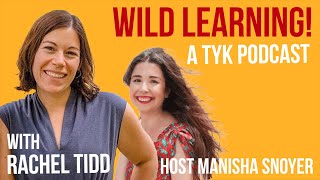
Rachel Tidd, founder of Wild Learning, explains why teaching math and reading outdoors works. She covers the neuroscience behind outdoor learning, how to make it accessible in cities, and practical tips for homeschooling parents building their own programs.
Questions this video answers
discoverwildlearning.com
Rachel estimates participation via bundles/partnerships at roughly 30,000–50,000 people.
Wild Learning: Practical Ideas to Bring Teaching Outdoors
University of Wisconsin, Stevens Point (Educational Sustainability program)
Master's in Elementary and Special Education from Bank Street College of Education; B.S. in Environmental Science from SUNY College of Environmental Science and Forestry.
Chapters
Hello, everyone. I'm Manisha and this is Teach youh Kids. We are a podcast about homeschooling, whole child development and the future of education. And today we are going to be talking about nature based learning.
Learning.
I am so delighted to welcome one of my besties, Rachel Tid, to the show. It's always fun having a good friend here. And Rachel is the founder of Wild Learning, which is an amazing nature based curriculum. I actually met Rachel because I did a ton of research on the best curriculum for different children and found so many parents who were just raving about this incredible evidence based, effective, wholesome, wonderful curriculum to teach their children reading according to the science of reading and math in a mastery based, wonderful approach. And all in the beautiful natural outdoors, which is just incredible. So welcome to the show, Rachel.
Thank you. I'm excited to be here and talk with you again.
Welcome. Yay. So I just want to brag about you a little bit more so people have some context. Rachel is a former special education teacher turned entrepreneur and a homeschooling mom of two adorable kids. She has a Master's degree in elementary and Special Education from Bank Street College of Education and a Bachelor's of Science in Environmental Science from SUNY College of Environmental Science and Forestry. And she's currently a doctoral student at the University of Wisconsin, Stevens Point in educational sustainability. And we haven't really gotten a chance to talk about that yet, so I'm really excited to learn about it. So Rachel, just, I think we should just dive in. And I would just love if you could share the story of why you created Wild Math and Wild Learning, what you were doing and how this curriculum emerged.
Like you said, I wear a lot of different hats, but a long time ago, my kids are getting older now, but I had two little ones and they were challenging in their own different ways. And we decided to go down that homeschool route for a variety of reasons. And I had both of my kids in an outdoor nature preschool, forest preschool. It was all outside. They never went inside. And both my kids are super different. And it really helped both of them in their own way, and particularly my youngest, who had at the time a lot of sensory challenges. We were having them evaluated and the teachers really didn't see any of the issues that we were seeing at home at preschool. And that was really, as a special ed teacher, that was really eye opening. And I started looking into this and thinking about it and we already homeschooling my oldest. I knew I'd be homeschooling my youngest and I was like, well, if outside is the ticket for him to learn, then I need to figure out how to do, you know, kindergarten and first grade reading and math outdoors. And I started experimenting. I started researching. There's not a lot out there for math and reading. And so I started doing my own thing, using my background and education and my experience teaching. And people friends saw me doing this. They said, you should write this down. I was like, no, no, no. Who has time for that? Homeschooling mom. And I eventually did, and it has just grown into what it is today. And I published a book for teachers and parents this spring. And it's just really grown beyond any. Beyond my imagination, for sure.
It's amazing how big you are. I mean, at this point, how many families have used wild learning?
So many. I mean, it's hard to say because I have participated and teamed up with other people and like homeschooling bundles, probably 30, 50,000 people. I mean, a lot.
Yeah, it's incredible. And I just love how you kind of almost became an accidental entrepreneur, which seems to be the case of a lot of teachers. I think a person who founded Teachers Pay teachers, which is such a wonderful resource, and, you know, it's just a testament to your creativity and generosity, solving your own problem. I wanted to kind of wind it back a little. You use the term sensory challenges, which not everyone might be familiar with. So could you perhaps articulate what you mean by that term and some of the things that you were observing which made you feel like this was an issue that was happening with your son?
Yeah. So sensory issues are. There's lots of different kinds of sensory issues. Sensory integration disorder is kind of like a diagnosis you might get from an occupational therapist. And it usually means that kids are having trouble taking different sensory inputs. So whether it's visual or vestibular, which is like, kids like to spin or they like really deep pressure. Mine was a sense, what's called a sensory seeker. So he. He wanted more sensory input, more touch, more pressure, more jumping, more spinning than like an average kid. So he sought that out. And sometimes that was like, with you and your body, sometimes that was like really hardcore, like rough and tumble play. Just like more. And it becomes like it's if it's an issue, right. It's like it kind of interferes with your daily life. You know, like clothes don't feel good and you refuse to have a meltdown. You know, he was like, three, have a meltdown because you don't like the sound or the feel of your snowsuit. Things like that can be sensory related. Is that help?
That's very helpful. I mean, and it's just interesting for parents to see. And I'm curious, what was your conclusion ultimately about why this was manifesting at home and not at school?
Yeah, so we had him evaluated. I'm a special ed teacher. I really wanted to get a little more information about, you know, the challenges we were seeing. He was basically using my body to get the sensory input he needed. Or we had a swing inside. We had a crash pad, which is like a big giant pillow that you can just like jump on and slam your body into. But in preschool, in forest preschool, I should say in forest preschool, you know, when we go outside, the rules are different. You can be louder, more movement is allowed. And the activities they did were really multisensory by design, by. I want to say nature, but that sounds weird in a. Nature based. It's a different meaning of nature. So they would do things like bounce on logs, the. Like bouncy logs that kind of bounce on their own. If you've ever seen, like the perfect tree that when you bounce on it, like you jump on it, it bounces. A vestibular and sensory input. This is something they. For fun. Sliding down a mud like path on their bottoms or sledding or skating around. I live in upstate New York, so skating around on ice and sliding with our boots and breaking ice. Ice and smashing ice and climbing trees and playing in water and picking up rocks and just exploring and hiking. Hiking at various, you know, different. But it's still hiking to them.
Still hiking?
Yeah. You know, they have their backpacks on. Okay. You know, they're sitting, even just like sitting at lunchtime. They're using so much of their body and balance because they're sitting on a log. They have their lunchbox on their lap. Like, this is hard for an adult. They have to open the lunchbox. They have to hold the lunchbox and eat at the same time. And they're listening to a story usually. So it's a lot of. It's a lot. And it's like. So it was meeting is what we decided. And the OT determined that the outdoor environment of this preschool and these types of activities were giving him that sensory input that he needed. And he was craving and not getting in an indoor environment or at home, you know, so that was. That was why. And so, yeah, got it.
So it was the forest school where he was actually not exhibiting the same behaviors. He was in that closed environment. Yes. I often think about how many spaces are not really designed for children. And it's wonderful that he was able to get that rich stimulation outside and wonderful. So you use the term the science of reading quite a bit when you talk about wild reading. What is the science of reading? Why is it not in every curriculum? And why do you think it's so important?
Yeah, so this is a hot topic right now in the news, if you've been paying attention to education news. And I think I'll start off by saying so science of reading. And the way I think of it, I don't try to get into this so called reading wars. I don't think it's a war. I think we all want the same thing. We want kids to learn how to read. And the science of reading is just a body of scientific studies and research and knowledge that we have gained in the last 30 years about how our brain works, how we learn to read, and how we can teach reading to help kids learn read based on that research. For a long time that research wasn't really well known and it wasn't making its way into classrooms. And it still in a lot of places is not making its way into, into classrooms. And so I think I, you know, that same little boy has dyslexia. And it was a very different experience dealing with that learning disability as a parent than it was as a teacher. And I saw it from a very different side. And I saw the struggle every single day and how it affected our family life. Even, you know, like, can you read this to your brother? You know, and we're going over this over and over and over, over it. It's a completely different level.
And.
To know how many students I had that struggled, I know that it wasn't being taught. I, when I was an early teacher, I wasn't necessarily always teaching it how it should be taught because I was mandated to use certain programs.
So how shouldn't it be taught?
I mean, it's hard to summarize, but a lot of people think the science of reading is just about phonics. And phonics is an important part. We should be teaching phonics right from the get go. We need to teach the code explicitly and systematically. But it doesn't stop there. It also starts beforehand. We want to work on language skills and phonological awareness, which is hearing those individual sounds, identifying those sounds, matching those sounds to letters. We need to have that all rhyming, being able to manipulate words so like changing the word pat and putting a B sound on the front and making it bat those kind of Letter games all build that kind of skill. And then after the phonics, while we're doing the phonics, it's important to still read aloud and work on language comprehension because that becomes your reading comprehension. And you want to be building knowledge while you're doing that too. Because you can't read or think or write if you don't have any background knowledge. You need something to read, think, and write about. And so, you know, sometimes the, the translation of the science of reading has become very narrow in. In phonics focused when it really encompasses all of these things. What was happening before and is still happening in many places is something called three cueing. And it was when we were telling kids, giving kids mixed messages, we were saying, look at the picture. What do you think would make sense? What word do you think would make sense here? And we weren't necessarily. Some people were teaching some phonics, which is great. But what happens is we were often, even if we were teaching phonics, we would switch to this. Well, what do you think would make sense? And we're discounting that. The words can be decoded and people will say, oh, English is too crazy. You can't decode it. Well, actually, it's very decodable. In there is a sequence to learn it and it can be taught and it's not. It's not so crazy. There's rhyme and reason to it, and we can teach that to kids. The thing with the brain in the three cueing is when we are telling kids to look at the first letter, look at the picture, take a guess. We're actually flipping our, the processes in our brain to the wrong side of the brain. So we're reinforcing paths that are inefficient for reading by telling them to, to look at the picture. And so we're, we're reinforcing poor reading habits. Those are what poor readers do, is they look at the picture and they look at the first word because they don't have the decoding skills. When you read, you look at the whole word and you look at all the letters. No matter how you've been taught, you really do. Even as really good readers, we still do it even though we don't think about it. When we look at a word, we look at all the letters. We, what's called, map that word orthographically in our brains. And when we tell kids to look at the picture, they're not reinforcing that orthographic mapping. They're not looking at those letters. They're not making that pathway stronger. And you need a lot of practice and repetition, and kids with dyslexia need even more. So we're moving it over here instead of like making it stronger where we need it to be on the, on the other side of the brain. And so that's where the science comes in. And we didn't really know that until we had MRIs. And so that's where the science has really informed our instruction. That helps. Does that help?
That is so helpful. Thank you so much. Because it's such an articulate description of how to teach reading and why that works, and just so fascinating that we can actually use an MRI to see a child's brain learning how to read, or an adult's learn. Learning how to read, for that matter. And I do want to talk about nature based curriculum, but I want to dig a little bit more into reading because I feel that there's another part of this debate that needs to be explored, especially for a community like mine and a community like yours, which is primarily secular homeschooling families, also some religious families who want to use evidence based scientific curriculum. And there are some. There's also a kind of homeschooler called an unschooler. And there's a wide range of beliefs within the unschooling community, a range of structure. But some parents will say, I don't need to teach my child how to read in an environment. In my environment, they will learn how to read by themselves. And I'm curious to know your honest opinion about that, both as a special ed teacher, a homeschool parent, and also from what you've observed, being a member of a homeschooling community.
Yeah. So nothing against unschoolers. I have totally done unschooling in the past, some, you know, in some phases of, of our life and situations. And I know some amazing unschoolers who do an amazing job. But this is one part that I really have trouble with and I'll tell you why. So there's something called the ladder of Reading, Nancy Young's Ladder of Reading. And I have a video, and it happens to be one of my most controversial videos. And basically through research, it shows that 60%, I think it's 60 or 70% of kids will need some, at least some instruction in decoding and phonics to learn how to read, to break the code. They might need, they might not need it all, but they will need some extra, some exposure to explicit instruction in the code to learn to read where in the homeschool Community. What I have seen is you have kids whose brains are wired for reading and they have won the brain lottery for sure. I have one of these kids as well. I have one on both sides.
Yeah.
So I can see this from both angles. I have. My oldest learned to read on his own at 3 years old. That is one of the reasons we decided to homeschool. And so when you have that experience, and often people do, right. Well, my kid just learned how to read, so I don't need to teach. Kids will learn on their own. Well, these kids, these 20, 15, 20% of kids that their brains are wired for reading and for whatever reason, or for whatever reason, maybe they put a lot of effort into it. I don't know. Some kids do to break that code. They read on their own efforts effortlessly. Right. But on the flip side, there's those 70% of kids that are going to need some explicit instruction. And then there's the 20% which is my other kid that's going to need explicit, long term, very specific sequential phonics in reading instruction to break the code. So if you never, you don't know where your child is going to be in that continuum. Right. You don't. It's like rolling the dice, right. You have multiple kids. They could all, they're all could be different. So you don't really know. So if you're not providing any instruction, I mean, you certainly can wait until 7 or 8 to do reading instruction if you want. And many people who are Waldorf homeschoolers believe in waiting. Developmentally, yes. Five year olds do not have to be learning to read. They never did in kindergarten. Now they do, you know, so it's certainly you can wait and see how your child is doing in those warning signs. That they're not learning letter sounds is really difficult, that they're not blending sounds. They just have no interest. It's like print doesn't exist. Have one of those, you know, these are warning sounds that you might want to provide some instruction because what happens is if you're in the, if your child's in that lower 20% or in that 70% is. You're just, they might, they might eventually figure it out, but it's going to be really arduous and they might really not enjoy reading when you could have just provided a little bit of instruction for most of those kids would have been perfect. And then they, we often say they take off, right. Because they, they've gotten the amount of instruction they need to figure out that code and they just go So I think if you unschool. Yeah, like I, that's my worry is that often, you know, I know people that have waited till, well, my, my 12 year old can't read and he'll read when he's ready, but what if he won't be ready because he needs that instruction? And that's on you. You're in charge of your child's education. And so it's, you know, as a parent, you can make whatever choice you want. That's just my reading science and educator take on it, if that makes sense.
That is such a great perspective. And I would frame it almost as it's a parent's job to keep a child safe. And reading is a tool and handwriting still is a tool that's critical for being able to navigate the world. And I think sometimes we take that skill for granted, being part of a privileged society. I interviewed Dr. Cheryl Field Smith on the show who's an expert in black homeschooling, and she was telling and African Americans in the United States have always been innovators when it comes to education, paving the pathway a lot more than people realize. And she was telling the story of slaves. A slave who hid in a ditch and went blind, teaching himself how to read. That's how. And said he never regretted it. That's how valuable it is to someone who doesn't know how to read, who wants freedom in the world. And we see in the developing world, learning how to read is the most important way you can empower women, promote economic development, human rights and child marriage. So it's, it's a thing of value and beauty and a gift that you can give to your child. And unfortunately, I mean, I was talking to Blair Lee as well, who runs C Homeschoolers and she knows so many unschooling families where the kids are 18 or 19 and don't know how to write, don't know how to read, don't how to write a resume. So I think there's a lot of misconceptions. And just one more anecdote is Carrie MacDonald, who wrote Unschooled, talks about teaching your children to read and says that's because all of my children were in literacy rich environments. They taught themselves how to read, but their mom is a scholar. Right. So even if you're not giving explicit phonics instruction, you have an influence in your own background.
So yeah, I mean, even if you have a literacy rich environment, I would say it depends. I mean, when I'm reading aloud or when I'm reading Aloud to my kids, you know, I'd often point out the words and, you know, and you're giving a lot of instruction there, but you have to be careful that it's a slippery slope, because if you have one of those kids that's in the 20 or 30%, they're going to need more than that. And what happens if you don't, and you wait till you're 12 or you're 18, is you're missing all of that reading that, you know, that's 10, 15 years of reading and knowledge gaining and exposure to vocabulary. There is a lot in written language that is not in spoken language. And so you kind of. You're there. They are missing something. Will they be fine? Probably, but probably not.
I mean, it's not always the case. Yeah, I mean, you know, this is great, Rachel. I mean, I think that this gives a lot of people a lot to.
Think about when, I mean, it's just a parent decision. Right. It's one of those things. You research the information which we. We're giving our point of view and our expertise, and then, you know, parents make their own choices.
For sure. I mean, it does come back. Does come down to that, especially in the United States. And I think this actually might be a good segue into math because 1. I guess I've noticed, I've heard from a couple college professors that sometimes there are kids who are extremely gifted in math that come into programs in math at colleges and universities, and it is. And they've always excelled in all their classes. Just super, super bright. And at a certain point in advanced math, they get stuck because they never actually learned how to solve the problems, and they're then at a huge disadvantage. So I'd love for you to explain how you created Wild Math, which I believe was the first program before Wild Reading, and why you felt there was a need for a different approach to math, what that math approach is and how it helps children cultivate the problem skills they need, problem solving skills they need to excel in math.
Yeah, that's a lot in one sentence. In one sentence in one minute. Yeah. So Wild Math. I actually struggled with math in school. I moved a lot, and so I didn't have very continuous math instruction. But when I started teaching math, when I started learning how to teach math in graduate school, you know, how we taught math had changed a bit. And it was more about being flexible with numbers and being able to solve problems and figure out think about numbers in different ways and apply them in strategies than when I learned, which was, you Know a worksheet and the process and carrying the one and doing 30 problems and getting them all right, right. So the focus had been taken off and I really, really enjoyed teaching math this way. It was a lot of manipulatives. I went to Bank Street College of Education, they're very progressive and so, so it was an eye opening experience and I really enjoyed it. And the kids all would say, if you ask them, especially in the younger grades, what's your favorite subject? They would say math. Because it was such an engaging way. It was kind of like playing because we did a lot of hands on, a lot of manipulatives, a lot of thinking, a lot of games. And so I really wanted to bring that experience outside. So instead of plastic manipulative, wild math uses lots of natural materials, either pre gathered or gathered in the moment, whatever. You may have to kind of give a hands on understanding to construct that hands on model of what you're doing before you go on to paper and pencil and algorithm. Because you really want to build kids understanding. And so when you just teach, let's say addition and subtraction like multi digit with regrouping, you really want kids to understand what that means when we're carrying the 1 and why we're borrowing or regrouping that 10 before you say, all right, here's the step. So you know 21 plus 42 or whatever it is, right? And now you carry the one and you can just cross this out and you know, cross it this out, put it over here. Now it's a 13 or whatever it is, that's a process and that doesn't show that you understand what's going on. So when you get up to the higher math that's sure you're going to get the right answer, you're going to pass all your tests. But when it may be not multi digit, adding, subtraction, but it adds on in each layer, right. You get higher and higher and then you can't, you don't have the number sense and the understanding to think about problems in any other way than this very specific way. And so in wild math and in a lot of math programs now we really are working on kids flexibility with numbers and thinking about solving problems in more than one way. So I teach in wild math this adding and subtracting multi digit numbers in three different ways. And I encourage parents to let their kids use whatever way that they like or feel most comfortable with and that can change as they get better. We use a hundreds chart, we use what I call place Value sticks, which are just like base 10 blocks that you often see in classrooms. You can use a number line. You can use an open number line, which I have a whole video about. It's a great tool. And then you can also. And it doesn't mean I don't teach, but you can also teach the standard algorithm. And sometimes it's best to do that last. You show them all these ideas. It is a faster, more efficient way. Sure. It has less understanding. And so you kind of want to show all those ways.
So does that explains it so well? I mean, you've really, you've articulated something I experienced so many times in public school classrooms when I was running all over the place in New York City, dropping into classes and teaching whatever lesson happened to be on the agenda today. And I think that is the core of the problem of what's happening in our public schools is that and private schools is that children are being taught techniques and they're not being taught conceptual understanding, they're memorizing ways to solve them. And I just have this memory I will never forget. I was teaching math in a second grade classroom and they were working on, I think it was long division that day. And there were these numbers kind of in a row and some system that you were supposed to solve the problem. And I just looked at it and I did not get it. I just had no idea what was going on. So I just kind of looked around the room and said, is there anyone here who understands how to do this? And I let a second grade girl teach the whole class because, I mean, I know how to long do long division, but I just did not know how to do that the way the worksheet. So I love that you're giving three different strategies and you're letting them kind of ruminate themselves on solving the problem first and then providing a technique when they already. When their appetite is already wet for solving the problem. And there it's like, okay, great, you know, I want to make truffles. Well, maybe play around. And then here's a recipe that you can follow. So that's so fantastic, Rachel. I love that. And you really handled all the different threads of that.
You brought up something interesting too, that these are not ways that we most likely learned math. And that can make people feel really uncomfortable. And it doesn't mean what we did is wrong or these other ways are really any better. They're just different. And kind of what we want from kids is a little bit different than we wanted when we went to school. You know, we have. We all have calculators in our pockets, you know, and that wasn't the case before. And we have computers to do lots and lots of calculations faster than we ever would. And more accurately, what we can't. What we really want are kids that can solve problems and can use math to solve problems. And so our focus has changed a little and that can be really hard for parents to kind of think about. They're like, oh, this is a new math. It's not really new math. It's just we're, we're really focusing on understanding and problem solving as opposed to being a calculator.
I love that. And we want our children to have fun and solving problems is fun. So. All right, let's dive into nature based learning, which is just so wonderful. And I will just say there, there is. Rachel's program is math and reading and it's the best out there. And there's also a program that covers more subjects which is blossom and Root, which is, which always recommends wild learning as a complement because they don't have math. Math is very difficult to teach, but there are not a lot of nature based curriculums out there that I would say are really top notch like yours. So maybe could you kind of give people a sense of this history of the nature based learning movement? I mean, we see forest schools. How did this emerge and, and what's it, what's happening today in nature based learning?
A lot is happening. So I think it kind of originally started, you know, I mean we've always taught kids outside and there's sure that.
Was kind of the original way to learn. Right? We were all in nature.
Yeah, right. You know, the environmental movement really got people interested in teaching kids about nature and the environment. But most recently I feel like we people got very interested in what was happening in places like Sweden and Finland in their forest schools. And they have forest schools for what we would call preschool. Their preschool goes a little older than ours. And they are all outside. It is very cold and snowy, just like here. But some people are like, what outside, isn't it too cold? But well, they're doing it in Sweden and Finland in the snow and it's. And they get, you know, great, great results in their education system. And so people were like, there's really something to this. And a few people started doing it here in the United States and it's really caught on especially huge growth in early childhood nature based learning. People are really seeing the benefits of taking kids outside, especially younger kids in their development. We are starting to see this go up in the grades. People especially are looking for getting their kids outside more, are wanting more recess, are wanting their kids to go outside. The schools are not necessarily responding to that, but parents have taken it in their own hands and, and you can see that with the success of, of wild learning in the curriculum because parents are often choosing to homeschool because they want their kids outdoors more, they want their kids moving more, they want a more hands on experience. And so I think the schools are going to start and some are. I have talked to some amazing educators I know in Canada. They're definitely doing more of this. Durham county schools in North Carolina are doing an amazing job of this. There are definitely schools that are doing this and I'm hoping that more get on board. That's why I wrote that book.
Yeah. So tell us about the book. Who is an ideal candidate to read this book and what can we learn from it?
Yeah. So the book's called Wild Learning Practical Ideas to Bring Teaching Outdoors. And it was inspired by wild math and wild reading for sure. And I expanded it and I wrote it in a little bit of a different tone or point of view than the curriculums. Many especially Wild reading is written more for a parent. Many, many schools use both but that was kind of who I originally wrote it for. So the book is more towards the teachers and educators or other people working with more than one or more than a couple teachers or students. And so it's more towards an educator, a teacher audience for sure. Many, many homeschoolers have. I've bought and used it but I give a lot of examples of like more like the management piece of how to put kids in groups. And I wouldn't say in wild reading put your kids in groups and two to work on this. You know, like it's a very, a little bit different but very.
It's an essential part of classroom teaching is behavioral management.
Yeah like all these little management parts of like in what's appropriate natural, materials wise with one or two kids in your own backyard is very different when you have 25 kids using materials. Like you have to be a little bit more aware of treating nature with respect when you have a lot of kids still can be done. You just have to think of it a little bit differently. And so the book is really for that. It covers like K through 5th or 6th and it goes through. I kind of tried to design it to make it very accessible no matter where you lived or wherever your school was. And so instead of doing a lot of nature books organized by seasons I organized by zones of what I call accessibility. And so the first chapter is all activities that you can do in your schoolyard or your backyard very close. You don't need a permission slip, you don't need a bus, you don't need to go anywhere. Just right there. Lots of things that you can do whether you're an urban environment or a natural environment. Because a lot of people mistake outdoor learning and nature learning with having to be in like a pristine environment. And I don't really prescribe to that. Is that important? Sure, it's an important experiences. And I wish kids, all, all kids had that experience is frequently, however, it's not, not the reality for most. So after the schoolyard, I move out to the neighborhood, whatever that neighborhood may look like. Those activities in the book are more oriented to what you would think of as a neighborhood in a town or a village or a city. If you live in a very rural area, you might flip flop these two chapters. So the next chapter is farther afield and that is where it's more, you might take a bus, it's more oriented towards very natural or parks or that kind of a setting. So if you lived in a rural area, you might switch because you might actually take transportation to visit a town or a city. Right. I mean I live in a very rural area. And that is what we did. We, we have to go to town for that experience where we go outside in our backyard, around our neighborhood. It was very natural. That makes sense.
And the way that you are making this nature based curriculum accessible to children in urban environments is really satisfying. The equity piece of this question, how can we extend nature based learning to all? Because the reality is that a lot of the time children who don't have as many resources are in areas that might not be as naturally pristine, which is not always the case. There's also rural poor. But it's wonderful that you have made this accessible to all through that. So wow. It's just such amazing what you've built. And Rachel, I think one of the things that's quite unique about you is that you have this extraordinary background in neuroscience pedagogy and you're also kind of a nature loving tree hugger.
Totally. At the same time, my phone, it's like leaves.
It's all leaves. I love that and I love you for it. So perhaps you could kind of tell people a little bit about some of the neuroscientific benefits of learning outside. How does nature contribute to a child's brain development and their learning?
Well, there's a ton of benefits to going outside and learning outside. And there's been a lot of research in this area, not necessarily on the academics side, there's been some there, but on the other side, such as increasing engagement, increasing attitude towards positive attitude, I should say I have a teen, not that kind of attitude. And those are really important. You know, we have kids that are very unmotivated often to learn or they school is hard for them. And if you can increase engagement and attitude just by going outside, it's free. That's the other thing. Going outside is really free and accessible. And so these, we're often trying to boost all of these things. I'm going to talk about including engagement and attitude in our students or our own children in our classrooms. And we're struggling with them, but if we can go outside, we can improve them. Also studies have shown that your stress levels and cortisol levels drop when you go outside. And so a lot of kids are experiencing a lot of trauma and anxiety. And these have consequences for your health for well into the future. And so you're reducing cortisol, you're reducing cardiovascular risk, all kinds of things of heart attacks. So it's really, it's not a trivial thing. Also vision, you know, we spend so much time looking close up and at computer screens and this is actually really affecting kids vision development. We need to be able to see far away. And the natural light outside really helps your vision and the development of that vision. And so it has a full spectrum of light as opposed to indoors. And so going outside gives us that vision boost that kids really need. And people don't even think about that. I mean, you don't think about that. Vitamin D. Right. Boosts our immune system. So we're like boosting health on multiple issues. We're boosting our development also physically. Right. Kids can move. We don't move enough. We're kind of movement starved. And so by going outside, we're getting kids out of their seats in their classrooms. They're actively learning. And that is really important to those kids that need to move a little bit more, need that sensory input. Going outside is naturally multisensory. And all of these little things add up. And I think they add up to better achievement.
Absolutely. Creativity, focus, happiness, all contribute to learning.
Yeah. There's even been studies that just having more green outside your window does boost test scores. So that's super interesting. And then finally, my favorite is because it always comes back to literacy and math for me, I know I can't help it. So for me, I think the outdoor experience and seeing nature and experiencing nature and learning about nature and does a couple of things. And one of those things is that it builds background knowledge. And we know that you cannot comprehend something if you have no background knowledge.
Math is the language of nature, right?
Yeah, Math and reading. Any book you read about, anything outside if you have no idea. My favorite, yeah, it gives context. I teach phonics a lot with road signs, like parking signs, and it gives a real concept, like here are the words. They're not just a list on a worksheet. Here it is. It's telling us something. It's telling us when to park here and when not to. And I think that context and that meaning is really important. But my favorite, one of my favorite example for comprehension is we often teach flowers with that, you know, as soon as I say it, you, I know you know what I'm talking about. That diagram of the flower part, right. With this like random flower. Everyone knows, everyone knows what that is.
Everyone has done that.
We've all used it. But flowers don't really look like that. Very few look like that. And they all look really different, right? Completely in real life, what a flower looks like is totally different. And so you have that experience of seeing anthers in three different flowers is really going to inform you when you're reading about flowers, about plants, about biology as you get older. And it all adds to your collective background knowledge. And every time you read something adds to that collective knowledge. And so you're really building. And so it's hard without, if you have some of these real life pieces missing to, you know, learn about the world, you're like missing the foundation.
Yeah. Oh my gosh, it's amazing. And I have that image of that flower right in my mind and can't remember any of the parts except maybe the petal and. Wow. So when you decided to pursue your doctorate, many of your friends wondered why such a brilliant, informed, successful woman needed to get a better PhD. Are you happy with the program? What are you learning?
Oh, I, you know, I love learning. And it's a little bit different when you choose to go back when you're older because it's really your choice and it's all about your own learning and you're learning for yourself. So I am at the University of Wisconsin, Stevens Point in the Educational Sustainability program, which is a little a different topic. It's kind of a rare topic, but they really understood my outdoor learning and pedagogy kind of perspective. And I'm looking at well, I'm hoping to look at, I am looking literacy and outdoor learning and sustainability and how we can integrate sustainability into the ELA curriculum. Because we are facing a changing world and the kids now are going to be the ones that have to make a lot of decisions and solve a lot of problems, but they need the tools and the knowledge to do it. And we're not doing. It's a very new field and we're not doing a great job of teaching some of these thinking skills like futures thinking and systems thinking. Definitely not the primary level, but I would say K12 at all. There's been a lot of research at the higher ed level, but it hasn't really trickled down beyond science. And it's kind of my same argument that if we wait to go outside for just science time, we're really missing an opportunity, which is why I focus on math and reading. Those are also our foundational skills which we need if we wait and we only do sustainability for like a class or two in science. Remember science and social studies have really been pushed out of our schools because of testing focus. The amount of instructional minutes devoted to them have decreased since no Child Left behind way back when. And so we're really have very few opportunities to give that, give kids that information. And I think there are so many connections between reading and writing and thinking, which is a huge part of sustainability is content and thinking, these critical thinking skills that it can be easily integrated. And then of course I'm putting in my outdoor learning place based learning skills spin to it. So I'm developing a new curriculum to pilot in schools hopefully in 2025.
That is so exciting. And I know that wild math and wild reading is already starting to be integrated in some of the public schools, which really gives me hope for the education system and its ability to grow and improve instead of just fall apart. And when you talk about systems thinking, I actually interviewed one of the scientists at Project Drawdown and she was talking about how video games can be a good way to encourage systems thinking. And I know that you have some rather strong views about children using educational apps and software and I'd love to hear your perspective on that. Should parents be limiting their children's screen time? How much is appropriate? What are your thoughts?
Yeah, I mean this is another one of those great parent choice, right?
I'm asking you all of the controversial questions because I love you so very much.
It's great, you know, if we don't. We have to talk about contrast. We have to talk, we have to hear different People's perspectives and your perspective might. May be different than mine and it may be different than somebody down the street or people in my homeschool co op or whatever. And that is totally fine. And I think it. There's a lot of value in talking about what you think and hearing what other people think. And you might adjust based on what I hear from other people or I may. You know, it also really depends on the age of your kid. In my opinion, as a mother of now teen and tween, it's a very different landscape than when I started homeschooling. So in general, I am not a big technology for kids person. I obviously like kids to go outside and I think that interacting with the real environment and other people is really important, especially as our brains are developing. And there has been a lot of research about how it. A lot of technology can affect brain development. So I am really not a fan of it, especially like under 5, even under 8. However, we live in a technological world, so we do need. Eventually kids will need to be able to use a computer. They do usually pick it up relatively quickly. So I'm not saying no technology ever. It's also an extremely useful tool. So when we're talking about literacy and reading and writing, we need to be able to communicate and we need to be able to share our ideas. And technology is often a really good way for kids to share their ideas and use their writing and their voice in, in a way that allows them to be active and, and create action and share it and you know, act advocate for things that are important to them or share information. And so it can be really good tool. It can also be a really good tool for finding out information, for researching what you don't know. And that's also really, really important. And that's an important literacy skill. So it's not that I'm anti technology. I just feel like we should really be careful of the technology and how much we're doing, especially in those younger years. It can easily supplant books and conversation and connection with kids. And so we have to be really careful of it. It's hard. Most of my work. Right. Is on the computer nowadays. And as kids get older, the technology increases and you know, it's a hard balance. It is hard no matter where you stand on the issue. I think it's just tough.
Wow, you are just a jewel. Rachel and I have kind of a weird question. So you're a special education teacher. Are there any kinds of children or archetypes or learning challenges that have an especially difficult time outside. And if you've noticed that maybe there's not what recommendations you might have for.
Parents, I mean, I'll be the first to say that outside isn't for everybody. It takes a little more effort on the parent part to get kids in the right gear and to spend that time and to go out there. So it's not always for everyone. But it doesn't have to be all or nothing either. And there's definitely kids that are more that the outdoors works really well for, just like any learning approach. Right? Yeah. You know, yeah. And so there are, you know, if you have sensory. Kids that have sensory issues that are very sensitive, that can be too much stimulation outside. Or some kids are kind of. You might have to put a lot of effort into it if they're fearful of the outside. There's a lot of books about that, and you can really work on that and, you know, educate them about what are real risks and what are real not. You know, the kids can be scared of animals or like poison ivy and, you know, and sometimes they get these notions and you just have to work through them, so it's okay. And yeah, not every kid's gonna love it. Does every kid gonna benefit?
Sure.
But we don't have to push it and say, oh, we have to be outside all day every day. For sure not. But we do want to make sure that they get some of those, you know, amazing benefits of being outside and those experiences for that background knowledge. But it's good to have some exposure and get out there for those that vitamin D. And for sure, I love that framework.
And I think also one of the things I've observed is that, for example, if I go into a shopping mall, I feel completely overwhelmed. And if I go outside into a beautiful natural park, I feel completely at peace. So even if you are someone who feels things very deeply, an outdoor environment can be completely different to a shopping mall, which I'm sure every parent listening knows, because everyone here has been outside to a park and I think, and to a shopping mall. Although I will say some of the kids I tutored in New York City had never climbed a tree until they were 18. So that can be kind of wild. And New York curriculum gives so many great tips for being natural in an urban environment. Yeah.
Yeah. I student taught and taught in New York City. City. And it was a really good experience for me being from a rural area. You know, we went on a field trip to see what the woods was because we were studying the forest, but they had Never seen in a forest. So we had to go to a field trip. And I remember dumping leaves on kids desk, you know, because they just didn't have that experience. But they have different experiences that are also very valid. I didn't know how to use a subway at their age. I didn't know what a city was. I'd never been to a city at their age. And so, you know, it's just a different perspective. But it's really good to give kids lots of different experiences so they have all of those experiences to draw on.
So cool. Would you have any advice, perhaps for a mom or a dad who is homeschooling and thinks what you've done is so cool and might want to start their own business? Maybe let's be specific and say, right. Perhaps they've been developing curriculum for their child and they want to be able to sell it to other people so they can benefit.
I would just say start, I mean, put it out there, see what people think. It's, it's a slow build and you got to have a lot of patience. And I would say that, you know, social media has helped me a lot, but the social media, as you know, the climate has really changed and it's not as easy, I feel, to be seen as it has in the past. And so, you know, work your connections and network and try to, you know, put out some engaging content. And I, I think if you just work at it, it'll slowly build. I mean, I did not get here overnight. This has been five years in. And so I feel like, you know, I'm very lucky. I, you know, Covid did help me a lot for sure, because everyone was trying to get outside more. And so, you know, I've had some luck, but I definitely was a very, you know, a slow climb. And, and it's worth, if that's what you want to do, it is definitely worth it. I would not say it's passive income, though. I don't, I work more than full.
Time on this and the whole family is involved, right? Yeah.
Yeah, so.
And I think also you are interested in learning, so you're constantly studying social media, how to present yourself on camera, different techniques, how Instagram is changing and not necessarily showing videos, all your fans, as it was in the past. And so you're really an active learner when it comes to all aspects of the business.
You have to be. It's changed so much just in five years. You have to be really, you just got to keep learning. You can't, you can't find one way and just stick with that because it's just a. Constantly this. The. The way our society and everything works now.
And so Rachel and I actually met such a crazy way because I was a huge fan of her curriculum and we're an affiliate, and suddenly, you know, I was said, okay, I want to meet this. I want to learn more about this person. And so I looked at her website and I realized that she lived in the same town that I was born in, Ithaca, New York, and where my mom still lives. And I was coming to spend a couple of months with my mom. And so we just had a beautiful meetup in Stewart Park. And I think it was very clear from that initial meeting that we were going to be friends for life. It was such a happy way for two people to come together and start collaborating. And you've helped me so much as I built my business. And I just am so grateful for all of the amazing support you're bringing to families in the US and around the world.
Oh, well, thank you. You're so welcome. Yeah. So you love me, too? I do. I. I miss. We often have some great work sessions together. I miss when you're not local.
It's going to happen. It's going to happen soon. Again, well, thank you so much again, Rachel. And before we sign off, can you tell people where they can find you and get started with Wild Learning?
Sure. So My website is discoverwildlearning.com and I post regularly on Instagram and Facebook at Discover Wild Learning. And you can find about about all my curriculum and the things I am doing. And my book is available at all major bookstores, including Amazon and Barnes and Noble, but don't forget your small local bookstores, and I have those linked on the book page on my website.
Thanks again for being here, Rachel.
Well, thanks for having Manisha. It was great talking to you.
More from Manisha

Contributing to Florida Prepaid Plans (2026–2027) | Step-by-Step Guide for FES-UA Families

Contribuyendo a los Planes Florida Prepago (2026–2027) | Guía Paso a Paso para Familias FES-UA



Finding Providers & Services in the Marketplace (Families) | Step Up For Students (2026–2027)

Encontrando Proveedores & Servicios en el Mercado (Familias) | Step Up For Students (2026–2027)




