Navigating Education's Hot Topics: From Screen Time to Climate Anxiety
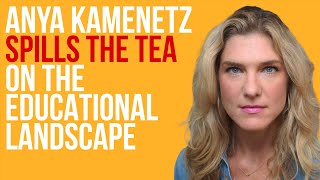
Education reporter Anya Kamenetz discusses standardized testing, school choice, screen time, and climate anxiety in schools. She recommends ditching high-stakes tests for better accountability measures, and suggests parents focus on local civic action and caregiver involvement rather than panic about climate change.
Chapters
Hi everyone, this is Manisha from Teach your Kids and I am so happy today to welcome Anya Kamenetz to the show. Anya is just a treasure trove of information about every aspect of the US and even the global education system system. Her bio of awards and accomplishments are too long to even mention all of them in this podcast, but I will just say she is an education reporter for npr. She's written the Stolen Art of Screen Time, Generation Debt, the Test, and Diyu, all amazing books. She's currently an advisor to the Aspen Institute and the Climate Mental Health Network. She's working on new initiatives at the intersection of children and climate change. I first met Anya several years ago when she was attending a few of the eclectic summer camps offered by some of our homeschool co ops. While not as homeschooler herself, she's dabbled in the homeschooling world and also in school. She's a true modular learner, combining all of the amazing learning experiences available for her children. I was actually privileged to attend her book party for the Art of Screen, which was really a seminal book, the first to really talk about different types of screen time and navigating screen time that I'd read. And we had a really fun party at the Public Theater, an iconic spot in New York, which I will never forget. So I'm just so pleased to have her today. She's one of the people I follow most on social media and really rely on for authentic, passionate advice and thoughts about the issues I care about. Welcome, Anya. Thank you so much for taking the time to talk to all of us today.
Thanks for reaching out, Manisha.
It's really fun to be in conversation.
With you and your community.
Thank you. So, Anya, I thought I would start with more of a general question today. As a mom, a scholar reporter, someone who cares so deeply about our world and our children, what's on your heart and mind today? What are you thinking about?
Oh, gosh, you're asking what wakes me up in the middle of the night?
Huh?
Yes, and it's a lot of things. I mean, this summer has been really intense when it comes to climate anxiety. I am thinking more about, thankfully, my children's back to school, getting them ready, getting their supplies, dealing with their calendars and their activities, and just getting comfortable with the fact that they're growing up and they're getting to new grades, which is always bittersweet, but something that as parents, we really learn to try to get comfortable with the fact that change is a constant, for sure.
Let's talk about the Test. You wrote a book about standardized tests, and right now there's been a lot of press about student losses in math and reading and the equity gap. Could you tell us what you feel is wrong with standardized tests and potentially what would be a better way to track student outcomes?
Sure, sure. Great question. I think that we all know that basically the low cost, machine graded standardized tests that we use for our children are very imperfect tools. They are able to give some amount of benchmarking information according to really widely understood standards, but they do not measure the things that are most important to us in terms of what are our children's true strengths, what do they really care about, what are their passions, what are they motivated to do, and what do they love about school? So, not to mention the types of skills that we know are going to be crucial to thrive in the society that we're in. Things like collaboration, creativity, leadership, divergent thinking. And the other really big problem with the test that we have is that we are making our teachers, our schools, and our students responsible for the outcomes on these tests. When you make a test high stakes, you are reducing its value as a measure of learning because you are prompting and pressuring the entire educational environment to optimize for the results in those tests to the exclusion of really, really important things that our kids may be learning. So, yeah, that's the argument in a nutshell that I make in the test. And I think eight years on, it's only more important. Yeah.
So what's the alternative? I mean, I know it's so hard to make changes in policy, but do you think it would be possible to hold our schools accountable for children's progress in another way? Or perhaps there's even some techniques you're using at home to help you evaluate your children's progress? What are your thoughts? Should we just eliminate it altogether?
High stakes testing is used for a lot of different purposes, so it's kind of helpful to break those down. If we're talking about our school performance and having measurable and comparable information for different public schools in different states, I think it's really important. I don't think we should drop that because the arguments that I make in the stolen year are really about shortchanging our kids. It's important that schools be held accountable. There are other measurements we can use to do that. I think it's really important to look at things like attendance and engagement and student involvement in various types of activities within and outside the classroom. Teacher involvement, teacher feedback. What is the morale of your most important professionals that are Making the school run. Those are all measurements for schools, measurements for students. We can talk to our kids to learn what they're learning and what they care about and what they like. Can talk to their teachers to get a good idea about their, their performance and their interests. This gets harder when the classes are very, very large. But experienced teachers know very well how students are performing and how they compare to other students of a similar age group, either that year or different years.
Fantastic. That's so helpful. And, you know, kind of along these lines of, you know, talking to our children and making parents more involved and seeing how kids are doing. I'd love to hear your thoughts on school choice. In particular, programs that give funding to homeschoolers, such as the Arizona Empower Scholarship account, the Idaho Empowering Parents program. On one hand, I feel concerned about the motives of some of these, this funding that's going on. And on the other hand, I see, you know, black homeschooling families in Florida who are really unhappy in their schools and other marginalized group who are benefiting from this funding and getting involved in this movement, you know, making high quality education more accessible. What do you see as the challenges and maybe promise of what's happening now in terms of that type of funding?
I think you articulated that really well, Manisha. And I think it's a, it's a genuine dilemma because. And it's something that we come across a lot when it comes to conversations about our children's schooling, which is the difference between what we want for all kids and what we want for our own kids. You know, and in an ideal world, they would be exactly the same thing. But as long as we have this atmosphere of scarcity around education, they may not be, you know, we may, we may find ourselves in the position of opportunity hoarding or resource hoarding, which are some of the kind of epithets to talk about the decisions that parents make that sometimes are privileging their own kids at the expense of others. So that's a line that I think that all parents should have to figure out how to walk for themselves. I'm not here to sit in judgment of the choices of any parent. And so when we think about the rhetoric of choice, choice always sounds very, very good. We kind of have almost an ideology around choice being that's how we express ourselves, and that's how we really come to an optimal decision. The thing about education is that education is a public good. The benefits of education don't just accrue to the person who participates in it, but they are shared by everyone. The other thing is education is co created. It's created by learners in collaboration with their teachers and ideally with community members as well. I think every homeschooler knows this because instinctively, what do you do? You form community with other homeschoolers and you find the activities in the places where your kids can be with other kids. Because there's very few families who say, I want to go this totally alone. The public school is the framework that we have created that gives the most opportunity to the most people and that increases equity. The most alternative schemes don't do that as well. And so figuring out the way that we can have policies that benefit the most kids the most is something that I think is really ongoing, for sure.
I think one thing that keeps me awake at night is just, should there be topics that every student learns? You've done such wonderful work in trying to get climate change into the curriculum. I think many people heard about this Nazi homeschooling cult and it was really concerning to me. And I'm asking myself a lot of questions about should there be some rules around what we teach our children? Should homeschoolers have more accountability or is it better when we leave parents to their own devices? What are your thoughts on that?
Yeah, that's. That's so huge. I mean, it's a really good question. I think, you know.
In.
In a lot of ways, you know, it goes back to obviously, what is the purpose of public education, of education in general, which is to enable people to participate in society, not to form their own. Yeah, I mean, to participate broadly. Right. I mean, we have a democratic system. Right. This is a Jeffersonian ideal of education. Education for citizens to prepare them to be active citizens and participants. That means literacy, that means numeracy. It means mastery of, you know, the numbers that will enable you to understand policy issues, understand your own healthcare, pay taxes, be part of business. It means a cultural lingua franca, a shared vocabulary of information about our history and about current affairs so that you can be that equal participant and stand up for your own interests. I totally understand why specific groups in society also want their own cultural backgrounds represented, perhaps to a greater level of depth. I am a Jewish person. I sent my children to Hebrew school to learn Hebrew language, Jewish customs. Customs, you know, that is every person's right in a pluralistic society to go deep dive on the topics that they care about the most. But it's a both and for sure, for sure.
And it'll be interesting as we can kind of continue to pursue what Are the qualities that the values that we share that we want to instill in this education. I love how you phrase that. And education really does allow us to participate in democracy and build our democracy in such a special and unique way. You wrote about and I think this kind of. You've almost answered the question already, but in Diyu, which is one of your earlier books, you talk about a new model for universities with learning networks and paths learning that blends experiential and digital approaches and both free and open source educational models. There's also a lot more of the person curating their own educational experience that exists in University Day. I wonder if you think a similar model is possible for K12 and why or why not?
I think it's an ideal for K12. I think scaffolding children to make choices about their own learning and have interest based learning and choice based learning is a fantastic ideal for progressive education and really for all educators. You want kids to really care about what they're learning, but at the same time, I mean they're coming into the classroom fresh and the scaffolding part of that is really important. So figuring out. I was recently in conversation with Megan Bang, who has created something called Learning in Places, which is a model for STEM educators for K12. Sorry, for K5, really pre K5. So she's focusing on elementary kids and it's a model of ecological knowledge that is based on partly on traditional indigenous ways of knowing. And it's very getting to this point is very specific because from what I understand, you are taking your kids into nature, into parks, into gardens, and you are helping them elicit their own questions from what they see. But in a way, as a teacher, you have to have the landscape mapped already so that you kind of know what they might ask so that you have some, some good answers to pique their, their curiosity and kind of pull it out from them, you know. And so in that way, as a teacher, you're like a gardener, right? You're preparing the ground, right? You're creating the conditions and the kids are going to do the growing.
It's such a beautiful image and we'll definitely include a link to that program in the show notes. I, I just, I love that idea of encour children's questions. So often we can get exhausted by that why, why, why? And forget like this is a child's natural, organic, biological desire to learn. And I love that the program is encouraging questions rather than giving answers. It's such a beautiful analogy about being a gardener as a teacher. So Maybe let's talk a bit about screen time. I know we're covering a lot of ground today, but you have so much information, I just want to get it all out of you. So the art of screen screen time. I mean, to me, that book had such an impact because as, you know, as a teacher, I always thought of screen time is bad and non screen time is good. It was very clear distinction in my mind. And you were, you know, this is way before the pandemic and people who would say, oh my gosh, I would never expose my child to screen time, you know, started using screen time. So what your book is, it woke me up to this idea that maybe not screen time is here. Our children live at an age where they're going to have to use digital technology. So let's figure out how to navigate. Navigate screen time. And what I remember from your book is you talked a lot about engaged, educational screen time where you're not just throwing your child in front of a video, but you're actually engaging and asking questions. So rather than review the book, I was just wondering, I mean, it's been a while since you published that book and have your thoughts on screen time evolved at all? And what advice would you give to parents on navigating screen time with their kids?
Thank you. This is such a great question. And I do feel like the world has changed, right. Because we really threw our kids in the deep end when it came to this just unlimited screen time with no alternative to anything else. And that's really a key part. They didn't have sleepovers, they didn't have activities, they didn't have time to play in person with their friends. And so it's a lot to unpick and to undo. I've recently been doing some reporting where I'm talking to teenagers about their experiences in social media. And so many of them, their formative years, 9 times 11, they were basically forced to use social media in order to communicate with their friends. And they themselves would tell you that that was too soon. They didn't want to be there, but they had no other alternative. So I think for parents right now, we're really doing two things we certainly want to be protecting our kids time and ability to do the things that you can't do on screens. So we want to give them the opportunity to be bored, to have to fill, to fill time, you know, Right. Without screens, we want them to give them to the ability to do things that engage their fine motor skills. Right. With their hands. That can be cooking, it can Be knitting, it could be modeling clay, anything building with Legos. Right. They need that hands on time for developmental purpose. They need face to face time with friends, relatives, family. They need their sleep. Screens are interfering with sleep from toddler nap time all the way through teenagers. And that's something that you have I think as a parent pretty much obligation to try to hold the line on because we know sleep is so important for development, for mental health, for cognitive development. So yes, hold the line. Yes. Create those screen free zones and oases and regulations and rules and routines. Yes. And, and understand their time online has a purpose. It can be very fun for them. It can be learning time. We can encourage positive uses of screens. So your role as a parent is not only to say no, but it's to figure out ways to say yes for sure.
And are there types of screen time that you would consider particularly dangerous, like do not play this type of video game or this type of social media screen time that can be really harmful or addictive that parents should be aware of.
The worst thing that parents need to be aware of is their own distraction when they're parenting. And that starts with babies. If you're parenting with a phone in your hand or notifications are going off or you're turning to the phone in the middle of something, your child talking to you, that's the modeling that happens and it's a very clear message that you're sending. So that's one thing, I would bracket that. Secondly, there have been a few studies done on basically the kind of like I would say casual games, casual mobile games that have a lot of in app purchases that have a lot of dings and dongs and sort of reward mechanism that can be very hard to unplug from. Those might be something to look at. And there are, there is a world of kind of like slower paced media. So I really advocate to sort of do the lesser of two evils. So like in our books, in our world, audiobooks are a big thing. You know, audio media instead of visual media or a coloring app, which is not, you know, which is very slow paced. Right. Which occupied my child just like a video would, you know. So just seeking out ways that you can be a little bit slower, a little bit more participatory and a little bit less beholden to these kinds of algorithms that really make us feel like a rat pressing a lever.
There's so many things I love. I mean, first of all, I feel like there's kind of a theme I was speaking to Nir Eyal who wrote indistractable about if you want to. If you're concerned about your child's screen time, you really do have to start with yourself. And that's in any area. And once you resolve these issues in yourself, it'll be a lot easier to learn how to navigate them with your child. And I think that's just really important to keep in mind. And then I also love the focus on putting aside time for things that are important for physical activity, for sleep, for nutrition, before, Instead of thinking 30 minutes a day of screen time, what time is left after all of these important things that are important to you and to your child? And perhaps you can even involve them in the conversation. Just really beautifully put on the subject of screen time. Another huge aha moment I had is when I was listening to you on a panel at a conference in New York City and you informed us that massive online courses, MOOCs, massive open online courses, everyone had this idea that wow, Khan Academy is making it possible so under resourced people can learn and it's just expanding access to education everywhere. But in fact, the research showed that online education was privileging the elite and that in fact, the people using these resources already had resources and were using them to become even more competitive. And the people who didn't have resources were falling behind. Is there still a big gap in who's using these resources? Have we been able to democratize them at all in the last couple of years?
Yeah, thank you for asking about that. So you're really describing the rich get richer effect, right? Yes. When it comes to free educational resources, online educational resources, that is still the case. And that impact intensified so much during the pandemic because remote learning was far higher, a far higher quality in richer communities. And even within the same classroom, children who had the fast WI fi connection, the dedicated laptop, the quiet room to sit in, the adult that could sit with them had a much, much improved experience. Right. With remote learning. And that, I mean, that's common sense.
But it is parent involvement in education is huge impact.
And we're also talking about the digital divide. Right. And the underconnectedness. So. Yes, you know that the reality of having just multiple kids on a single WI fi system.
Yes.
So these impacts have intensified. I am very concerned with the increasing adoption of AI tutoring that the same thing's going to happen because those systems are cheaper to run, cheaper to use, and they don't work as well as having an individual human tutor for your kids. Technology does not solve the problem of equity. It can Create worse problems with equity. What helps with equity is very intentional design and provision of resources.
Yes. And I do want to really highlight this point for listeners. If you're someone who is under resourced, doesn't have the money to hire a private tutor, and you just to know AI is not necessarily a good supplement, but there are free resources available to you. And I run a nonprofit called masteryhour.org students can sign in and work with a live tutor as they go through a learning app. So don't despair. Just know that live tutoring is better for your child and there are resources available to you. And on those lines, Anya, you know, if what can we do about this? I mean, if someone, you know, some of the people in our audience are entrepreneurs. They're building nonprofits. Maybe they want to help get technology to families who don't have, you know, who aren't finding it, who really need it the most. Do you have any suggestions on outreach efforts that we can do to expand access?
Some of the approaches that I find the most winning and compelling take advantage of the caring adults that are already in a child's life. Springboard Collaborative is an example of a nonprofit that works with children and a caregiver. The way that they structure it is it's a workshop of several weeks and the child comes. It's either Saturday mornings or after school and the child comes. It's struggling readers. The child comes with a relative. It could be a parent or grandparent, sometimes it's even older sibling. And together the child and the adult learn the strategies. They learn the strategies for how to teach the kids to read and how to work on reading. They have very impressive, measurable results because they're looking at these families who are majority, low income, majority first in their families to come to the US either the child or the parent is an immigrant or both. They're looking at them as resources, not as obstacles to the children's learning. Because an adult who cares about a kid and wants them to succeed is the most important factor in child's learning.
I love that, and especially when I think about grandparents, but parents as well. Often older people can be somewhat isolated. So empowering them to help with their children's education is so critical, as are everyone in the community. If you're thinking about doing some volunteer work, the more you can help out in a live way with children in your community, it makes such a big impact. And I think that some of these companies that are building free profits should think about how to build a hybrid model where they can mobilize local communities, train parents and caregivers to support kids using this technology. Such a great tip. And I'm definitely going to be looking into that organization more. I do want to talk about climate change with you. You write about it a lot. It's also very dear to my heart. And one very interesting thing I learned, I think a few years ago is that educating girls has one of the biggest impacts on mitigating climate change is any other factor. Could you tell a little bit about what you know about the connection there? Yeah.
So this is a finding that I sourced to Project Drawdown, which is an incredible project to really visualize and understand the most important solutions to climate change. And they have foregrounded this fact and it's something that I also wrote about and I profiled an organization in Africa called CAM Fed which sponsors girls education and then trains them to train small holders, farmers, women farmers, to use more climate friendly agriculture policies to make their lands more adaptive. It can be a little bit delicate to talk about because part of what we're talking about when we talk about women and girls education, we're talking about their self determination and a lot of times that has to do with their ability to participate in family planning and have their access to reproductive choice. But we're not saying that in the context of any coercive or centralized population growth planning. And we're not talking about, we're also highlighting and foregrounding the fact that children born in the developing world are in societies that have not not been primarily responsible for climate change. Right. So places where you do have these very high birth rates, they're not the ones who really bear the brunt of.
The, they're not over consuming of the blame.
But still these projections are that when women have self determination that they are able to make different choices, they do make different choices and they are able to have more ability to manage economic resources and ecological resources in their communities. And women by and large as a group are more likely to steward those resources in a way that is most caring for future generations.
Phenomenal. I find that so inspiring and every day I wake up it makes me want to bring greater access to education. So it's continuing along the topic of climate change. A lot of parents are terrified about climate change. I mean, I think everyone is. But even more so for a parent who knows that their child is going to grow up in this world with a lot of uncertainty. And I just, you know, I think sometimes it can just freeze people. I mean they're so scared, they just don't even know what to do and decide not to do anything. And so I wanted to ask you two questions. First of all, I mean, as a parent, how you can talk to your child about this really difficult issue. And then also, what can you do instead of just be afraid? What are actions that we as individuals can take?
Well, you really put your finger right on the heart of it, Manisha. And this question of parental climate anxiety is really something that I'm dedicating my work to in this moment. I started the substack, the golden hour to help bring resources and information and just ways of thinking about this. So there's so much I could say. But really the number one message is that your climate anxiety as a parent can be your superpower. It is a feeling. It is a feeling that you have that connects you to all life on earth. You are concerned for your children because you are concerned about all life. And you're not alone. You're in very good company. Facing those feelings is going to be, it's really the only way through them. There's no way to ignore these feelings. The news is only going to amplify and intensify. We are at the beginning of a very, just in a very concrete terms, the El Nino weather pattern is going to continue to bring extreme temperatures for the next few years and new records being broken. And we're going to get more and more of this news all the time. So figuring out where you fit in, the enormous efforts that are taking place all over the world to create a more sustainable future is only going to become more pressing. And there's so many different ways to do that. There's many different ways to do that as there are, you know, people that might be listening. You know, some people are political actors, some people are great fundraisers. Some people want to get involved on their neighborhood level. Some people want to protect oceans and waterways. Some people want to work on conservation. Some people want to work on foodways. Some people want to amplify indigenous sovereignty. Some people want to stop fossil fuel infrastructure from being built. Some people want to deal with car free streets and getting their kids to school safely. So, you know, the only important thing is that you start somewhere.
That's so true. I mean, just to push you a little bit on that, I think, I mean, some people, including me, might feel a little overwhelmed with all the options and limited time as a parent. Could you maybe give us one or two suggestions? I don't know where to start. Anya, what, what would be a good thing for me to do today to Help.
So where, where do you live? Where's your home base?
My home base is New York.
New York City?
Yes.
That's really exciting. There's great climate action happening in New York City. There is a campaign to have, for takeout restaurants, to stop using takeout boxes and to offer reusable boxes at every restaurant in New York City. You could talk to your council person about that. There is a campaign to decarbonize our school systems, our school buildings. And there's going to be student activism all across the city. We've already set the public target, which is, you know, carbon neutral by or carbon zero by 2050. But how are we actually going to get there? What's the plan? And this is something that is being hashed out as we speak. So very excited about stuff that's going on with getting cars off of our streets, keeping getting streets closed around schools. So these are all very local actions. It could be. See what people in your neighborhood are interested in. Bring it up at the coffee shop.
Taking action, both you and your child. It's such a good, so good for mental health and it does make a difference. So that's really great to hear. Okay, so here's kind of a funny one. I hope you won't mind this question. A couple years ago, I mean, just as we wrap up and kind of bring everything together, the podcast Freakonomics, they had this question that they put out to listeners which was if you could fix one thing about our broken education system, what would it be? And I kind of love the question. I mean there were thousands and thousands of responses. But to you, who has such in depth knowledge about our education system, I mean, I'm sure it would be impossible to choose just one. But if you could wave your magic wand and change one thing, is there something that comes to mind?
Honestly, I would stop people from thinking about it as broken. The fix that I would make would be for people to engage what they see as being the strengths of their local school. I've never been in a school that didn't have something to celebrate.
Yeah, and the more that we do become involved in our school, the more our schools improve. And also if you choose to homeschool, I mean it's incredible that that resource exists to you. That possibility is alive for you and you can help cultivate that as well. So I love that answer. I think that having an anti school view is not productive. And that really, look, thinking about how you can help and change the system, it really does make an impact. I mean there's so Much research that shows that schools where parents are more involved just do better than other schools. And it can be frustrating sometimes. I mean, I know you wrote about in New Jersey and so many parents are in favor of climate change curriculum, and yet there's so much opposition to it. It's good to be involved.
Well, and I think, you know, it's possible to see a lot that needs to be changed. But just as we do as parents, you want to move from a position of strength. You know, you don't, you don't, you don't say, like, if there's one thing you could fix about your broken kid, what would you fix?
And just along this theme of how parents can be more involved in their children's education, as a parent, what do you prioritize in terms supporting your child's learning?
What they're excited about when it comes to learning what they're engaged in and figuring out ways for that to be, you know, for that to come out more. So, you know, and we're just the type of family that's like, so eager to engage with our kids when they have a great question, and we really prize great questions. And this is another way that you can use technology also, because it's a rare dinner that we get through that we don't ask some questions about, you know, cryptobiosis or, you know, where is Uzbekistan or, you know, there's just like so many different ways that like, or when did this thing happen in history? So, so getting them, you know, getting them, seeing what makes them excited and helping build on that is really my key priority as a parent when it comes to my kids education.
This has been such a rich and fruitful interview and I feel so inspired. And you talk about really heavy issues and we addressed a lot of them, and yet I leave feeling with hope. So I think it's just a testament to who you are as a writer, as a scholar in your ability to really look directly at the pain in the world, but also be hopeful and think about solutions in a really vibrant, active way. It's just a beautiful quality. So I'd like to end each episode by asking my guest, what is something that you're learning right now along the lines of passion for learning? And it doesn't have to be about anything we just talked about or education. Education. It can be learning how to. Yo, yo. Is there something that you're learning or studying right now that you would like to share?
Well, I'm just following on from the last question. So I've been reading a lot about kind of species preservation. And there was just a news story about a 46,000-year-old microscopic roundworm that was taken out of the permafrost.
It was taken.
Dug out of the permafrost, I know, out of a gopher hole in the permafrost in Siberia.
And they saw it.
It out and it started moving around and it got.
Oh, my gosh.
And it had clone babies.
What? Oh, my goodness. Hope to us all.
Completely insane. It's cryptobiosis, like, so insane. And it's. It's just like the kind of science that just makes you go, wow, that.
I'm totally so excited to look up that up immediately. Wow. I think that's one of our best. What are you learning now? Questions, answers, everybody? Ever from a true learner. Oh, my gosh. Anya, thank you so much again. So where can people find you? What are the best places to look for your work and get involved?
I'm sending out a weekly substack. It's called the Golden Hour. Please sign up.
I'm on it. It's amazing. You should sign up right away. We'll have a link in the comments.
Thank you so much. And I'm putting out my articles also on Twitter, on threads, on Instagram. You can find my stuff on LinkedIn. Hit me up on LinkedIn.
Hit her up on LinkedIn. And I. I just personally want to recommend Anya's Twitter. It's one of the ones I almost, like, can't help replying to. And sometimes I push back on some of her points. And she's always very gracious. Even, you know, if it's sometimes on Twitter, I'm not as gracious. But Anya is always really cool and. And listens to different people's perspectives. So that is a very fun one to follow. Well, Anya, thank you so much again. I have just loved having you, and I can't wait to get involved in some of the organizations you talked about on the podcast today.
Thank you so much, Manisha, for following my work and taking it so seriously.
It really means a lot.
More from Manisha

Contributing to Florida Prepaid Plans (2026–2027) | Step-by-Step Guide for FES-UA Families

Contribuyendo a los Planes Florida Prepago (2026–2027) | Guía Paso a Paso para Familias FES-UA



Finding Providers & Services in the Marketplace (Families) | Step Up For Students (2026–2027)

Encontrando Proveedores & Servicios en el Mercado (Familias) | Step Up For Students (2026–2027)




