Navigating Math with Curiosity: Jason Batterson & Jasmine Eyal on Beast Academy
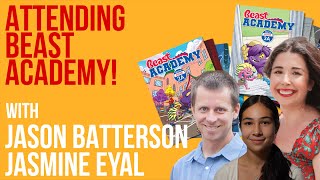
Jason Batterson and Jasmine Eyal built Beast Academy, a math curriculum designed for kids who love problem-solving. They talk about why curiosity matters more than speed, how to know if it's right for your child, and what parents should actually do while their kid works through it.
Chapters
Foreign.
Hi, everyone. I'm Manisha and this is Teach your kids. And today I'm here with my guest co host, Jasmine. Welcome back, Jasmine.
Hello, everyone.
And we are delighted to welcome a superstar in the curriculum homeschooling world, Jason Batterson, who is the co founder of Beast Academy. And if any of you know me, I have probably recommended that you use Beast Academy for your child's math curriculum. And we are just so thrilled to have you. Jason, you're a math teacher, a coach, and you have built a brilliant curriculum that has helped so many children around the world love and excel at math. Thank you so much for being here today.
Thank you very much for having me, Manisha. It's been a dream job for me, so getting to share it with the world has been fantastic. And getting to talk to a student who used it is going to be a pleasure today, I think.
Yay. So that's a great way to start. Jasmine, do you want to begin by sharing a little bit about your experience using Beast Academy and Art of Problem Solving, for which Jason is also a curriculum developer?
Yeah, so I did all of the Beast Academy books back when I was doing it. They were all just like the physical comic books. So I read through all those, loved those so much, continued on to Art of Problem Solving. I think I did pre Algebra I, pre Algebra ii, and then I did Algebra A. So I've kind of been, I would say, relatively well seasoned in the Beach Academy Art of Problem Solving curriculums. I would love to know how it's changed since I've taken it back in. The last one I took, I believe, was in 2020. So I'd love to know how it's changed since then.
2020. So Beast Academy, I think, was mostly done. So you're talking about 2020. The easiest way to remember for me is this is sort of like the dawn of COVID And at that point, everyone had to leave the office and there were just a couple of books left to right, I believe. And some of the most exciting things that I did, I remember early Covid, I got to do some video series with my daughter working on the curriculum that went up on social media and not a whole lot of books got finished after you were finished. And the biggest change that's happened online has been just a change in the way that people move through the curriculum. I don't know, Jasmine, did you use the online program at all?
I think back when I was taking it, it was still in development, so I didn't have the opportunity to use that yet.
I think that we probably had some stuff up certainly by 2020, but that you probably were sort of well, ingrained in the book series right at that point.
I was in the AOPS. I did do the AOPS online curriculum. Beast Academy must have been. I started AOPS in 2018, so it must have been some time prior to that.
But in 2018, I still had quite a bit left to write. And I think the books. I probably wrote the last math book around 2021, and now I'm writing science books, which is also a lot of fun. So if you're looking for things that changed, we now have a science book, and the second book is sort of in production right now. But in particular, if you didn't use the online program. The online program. I think as much as I love the books that I've created and the materials I've created, I think that the online program offers a fair bit that the books don't offer. And for me, if anyone asks, sort of what is the biggest difference is that when you're playing online, you get immediate feedback. So as you're playing through the questions instead of the book, you know, a lot of times, even with my kids, my kids will finish a page and then they'll flip back to look at the answers, and they'll recognize that they've been doing things wrong the whole time on the whole page. And if they had just seen that first answer to the first question that they did, it would have sort of triggered the thing in their head that goes, oh, no, no, don't do it that way. You know, I've made a mistake. Let me figure this out. And then I could do the next 12 problems correctly instead of making the same mistakes over and over again. So with the online program, having immediate feedback is probably the biggest thing that's different. And we've also done a fair bit since 2020 to try to make the online program more engaging. And a lot of that I'm now no longer a part of. The company has grown much bigger than I am at this point. So I always tell people, when I joined, there were roughly seven people in the office, and now I believe headquarters has well over 100, all working on different aspects of the curriculum and also just jobs that didn't exist when we started writing books for Beast Academy. So there's a whole team of people sort of making these resources better. In particular, trying to get these resources to a point where schools can use them more effectively, because reaching a lot more students is going to mean reaching a lot of schools. And so finding ways to make the materials easier for teachers to teach and easier for students to use is a big part of what the rest of the company is doing. As I sort of fill the, fill the role that I think I'm best at, which is sort of writing good materials, in this case, moving from math to science.
That's amazing. And I'm actually really curious about the online version of Beast Academy because that is the version I most frequently recommend. And I find that the adaptive nature of Beast Academy makes it something that children really love, that they can stay at the right level of challenge and that the curriculum actually adapts to where they are. And I have heard through the grapevine that adaptive learning technology is very difficult to build. I just always assumed, like, why don't you just keep giving kids problems until they get it right and then reinforce it with more problems. I know that you are not the software engineer building the adaptive technology, but as someone who's writing it, could you maybe help us understand why it's so complex to build this type of adaptive learning technology that everybody thinks needs to be the future of teaching?
I think I love that you call Beast Academy an adaptive program, and we would love to think of it as an adaptive program, but the software developers certainly don't think of it as adaptive in that when you're playing Beast Academy, if you get a question wrong or a question right, the system doesn't change. What really happens is that you get lots of opportunities to decide where to go. So in Beast Academy, missing a problem in Beast Academy online doesn't mean that you're going to get a different problem than this student who got it correct. But what we do offer is lots of opportunities to retry lessons, to retry problems, to move at your own pace. So that's another thing that's, that's a little bit closer to what you think of as adaptive, is that students who are getting lots of things right can move quickly, can skip through lessons, can do only difficult lessons. Students who are struggling a little bit more can stick to the lessons that are, that are at this point sort of intended for a more general audience. One of the things that we found is very difficult for a lot of students with Beast Academy, and I think it's both a pro and a con, depending on the student, is that we offer the challenge that we all wish that we had when we were students. We are an office full of nerds who were high achieving kids who love math and wish we had books like the Beast Academy series when we were Kids and in doing so, we create these books that are very challenging. And I suspect Jasmine is a very strong math student as a result of the Beast Academy, but also as a result of just sort of enjoying math. And so question was about adaptivity. The difficulty is that there's so many things to try to consider. So I'll give you the simplest example is that we would very much like to build a system that places students really well in Beast Academy. And what we've discovered is that it would just take too long for anyone to want to go through that process. So in order for someone to start playing, you don't want to put them through a 45 minute series of questions that has a tree diagram with a thousand branches and you end up answering 20 or 30 questions to get to the end of the branch where we think that you're correctly placed. And we could put you beyond something that you haven't learned yet. So, for example, a student who's really good at fractions isn't necessarily going to be really good at working with ratios, for example, or all sorts of other, you know, there's a million things that you're trying to learn in elementary curriculum. And there's the difficulty of placing you beyond something that we wish that you had learned from Beast Academy in the first place. That is another thing that's tricky about Beast Academy is that the way that we teach things is often not. Not standard, I suppose is the easiest way to say it. And so a lot of times we'd like to place you, we'd like to err on the side of caution. Right. So we want to, we want to place you in a, in a part of the curriculum where you're challenged. But almost all of Beast Academy can be challenging. I think that my daughter is right now a seventh grader and there are probably problems in Beast Academy level 2 where she still have to stop and think for a bit. Because it's. The goal of the curriculum is to make you stop and think and not just to ask you to sort of repeat a set of procedures that you've learned on the left hand side of the page that you apply to the right hand side of the page.
Yes. No. It's so interesting because as an outside observer you often think with AI and everything, but it would be possible to do that. But I can see it seems like a lot of the difficulty is just trying to gauge where a student is when they begin. And along the way it's not just as simple as giving them one or two questions about fractions to know that they've mastered fractions. There's just this, it's a lot more complex than that. And you would have to ask them hundreds of questions before you even got started teaching.
In a way, there's an enormous amount right now. The solution is, the solution that we have in place is not ideal, but it's what we found works the best, which is just to start with three questions and those are, how old are you? I think it's how old are you? Are you above or below grade level? And how do you like challenge? And so for the student who really likes a challenge, then we'll sort of err on the side of giving them slightly more difficult recommendation. And for the student who goes, oh my God, no, like math terrifies me, then we sort of err on the side of caution and put you in a place where we think that you're going to be comfortable doing problems that maybe you've already seen before, but that you see in a different way so that you can be successful early. Because it's important for just about everyone to enjoy some success early on in the program.
So seeing that there are definitely more challenges, more atypical challenges to Beast Academy than normal learning, who would you say is the ideal child to enroll in Beast Academy or Art of Problem Solving?
We had a slogan that I loved on the site a long time ago, which was, is math too easy for you? Then you've come to the right place. And I think in many ways that is still the core audience of both Agar Problem Solving and a Beast Academy is the student who sits in the classroom and knows everything before the teacher finishes the sentence. And not just that, but often sees math in ways that the teacher didn't see when they were a student. One of my favorite things about Beast Academy is that we are teaching towards the curious mind, I think in many ways. So the student who wants to know the whys behind all the procedures that they're learning. However, I have to say that we have heard success stories from everyone. It's really fascinating to me. Very early on we heard from seventh grade students who were way behind in math and their teacher just decided to work with Beast Academy level three. And so this is four years behind the math. But I experienced this as a teacher as well. I had 8th graders who had difficulty still with basic multiplication facts that really needed to dial it back a second and relearn how math works. So I don't want to pigeonhole this as a curriculum for high achieving students and students who are naturally Curious, because I think it's a really great way to learn math for anyone other anecdotally we've heard from adults. And some of my favorite, some of my favorite stories come from either parents of students or even adults who just picked it up because someone said it was a fascinating curriculum. And when they, when they go through the curriculum, I believe that one of the things that we do is that we create. There's this term mathy. A lot of people think of themselves as mathy or not mathy. I think we create mathy people when they're reading Beast Academy because they see the way math works in ways that they never saw before. A lot of times I've mentioned procedures a few times before, but so many times people learn math as a set of procedures and it's a recipe for how to do this specific type of problem. And if you just follow these four steps, you'll get this type of problem every time. Correct. But that's not how problems work in the real world. Right? Like problems in the real world, you don't see the same problem 42 times. On the right hand page of a book that someone hands you, you see problems that you've never seen before. And what we're trying to do is grade students who can solve problems that they've never seen before.
Amazing. And I've certainly experienced that. Especially a lot of children on the spectrum who do very well with online learning and the games and the fun have just started enjoying math for the first time when they didn't resonate with it at all in school. And to kind of piggyback on Jasmine's question, when is the right time for a parent to start Beast Academy or for a parent to help their child start Beast Academy? I mean, I think it's very tricky. Especially parents with their first child might be really excited to get them learning math. And I don't know, is there a too early to start? When can you gauge the right moment to dig in?
This is another spectacular difficulty of placement is that everyone is so different. We have eight year olds who are taking algebra and they are almost always either the best student in the class or the worst student in the class. And it just sort of depends on what type of 8 year old you have in this algebra class, whether or not they got there because they love math and they just eat it up and they enjoy it so much that they've just raced through all the Beast Academy curriculum and jumped into pre algebra and jumped into algebra. Or Sometimes it's an 8 year old who's been pushed a little too hard and who has never really enjoyed it the way that they need to enjoy it in order to get good enough to do an ALS algebra class at 8 years old. Right. So I think that the best way to begin is with level one as soon as the kid wants to. So Level one in Beast Academy, if you can hand it to a kid and they just like reading the guide for a year and not doing a lot of the practice problems, that's fine. At some point they're going to go, oh, you know what, I can do these. Now this is going to be interesting. Or a lot of times it's because a big sibling is doing it. A lot of times the little sibling that starts off and does well is because they're watching Big Sis or Big Brother as they get to do the fun math curriculum and they want to learn how to do all the, all the fun problems with numbers. I don't think you can really put an age for sure, but certainly two is too young and somewhere in the four to six range is probably as early as I would go for a student starting at level one, they need to be able to read or have a parent who's willing to sit there and guide them. And I think if a parent is sitting there and guiding them too much, then it's probably better to just wait another year and let the student do it when they can read most of the material on their own.
What would you say is the optimal parental involvement in a curriculum like this?
This is another question we get all the time. And in general, the AOPS philosophy is try to stay away as much as you can. However, there are a few things that I think that I would always suggest parents do. One is really try to develop habits in your child. And so what that means is setting a time and a place when it's math time. For example, if a, if a student sort of gets into a routine of, oh, after breakfast, I always pop open my laptop and start playing Beast Academy. And I do a half hour of Beast Academy before whatever the next thing is or whatever time of day works that you can do three, four, five times a week. Playing on the program or in the books setting routines is probably the best involvement that I can suggest parents have. There are also times when a parent is doing well to discuss problems with the student. So, for example, dinner table. What did you do in Beast Academy today? Oh, can you show me that problem? Letting the student teach the parent in many ways is a good way to get yourself involved. I think we Offer a ton of tools that let parents see what the student is doing. And so for example, we send a lot of emails that are either congratulations emails or sometimes they're alert emails. Like if a student fails at a few lessons in a row or a few times on the same lesson, then we'll say, hey, you know, maybe you should check on your child. Because they seem to be struggling with this particular lesson. And for the parent, I think the right way to get involved is to be sure that they are looking at the way Beast Academy is approaching. A lot of the things that we're doing. I think one of the reasons that I think we prefer parents have a lot of a hands off approach is because not all help is helpful. There are. So for example, the most common things that I think that we get dinged for is we save a lot of algorithms for very late. So an example would be if you're doing two digit by two digit multiplication a lot of times if a student. And a lot of times we don't have, we don't have just straight 2 digit by 2 digit multiplication problems very often in Beast Academy, but we'll have problems where you have to multiply, you know, 17 times 11 or something. And a lot of times the parents initial involvement is to dive in and say you write the 17 above the 11, you multiply the 1 by the 7 and you write the 7 down here and then you multiply the 1 by the 1 and they go back to the thing that they learned when they were a student, which is teaching process rather than concept. And so we always, we always encourage students or encourage parents to take a hands off approach if they can. We know that that can be very difficult for a lot of parents. And so when it's difficult, the goal is discuss, don't sort of direct the math teaching. That's what the books in the program are for. Richard, I am amazed. I'm sorry he can't be here. But Richard, one of the most amazing things to me about Richard is that he shot over a thousand Beast Academy videos for the program. And the quality of the videos, considering there's a thousand of them, more than a thousand of them, is really exceptional. There's some really fantastic. And that's just in Beast Academy, by the way, there's a thousand Beast Academy videos. I don't know how many hundreds of videos there are in classes like pre algebra and algebra. But his ability to put out really great content in front of a camera is spectacular. And so letting Richard do the teaching is something I would suggest as well. And letting Grog and Alex and Winnie and Lizzie and all the teachers of the series do the teaching is a fantastic way to let your kid learn as well.
I know that you're not a psychotherapist, but you have coached some of the best and brightest kids. And I imagine you have met some parents who have a high level of anxiety around their students performance. Do you have any ideas about where this anxiety comes from?
As a parent myself, I get so anxious. I tell people that watching my daughter's soccer team, watching 12 year old girls play soccer causes more like anxiety in me than just about anything else on the planet. They had a really devastating loss this past weekend and all the parents were just, you know, really frustrated. And it's funny because it's just, you know, it's a fun kids game and it's supposed to be just pure fun and you can't help it. And you know that it's crazy to be so upset about a kid's soccer game. And some parents feel the same way about math performance, right? There are parents for whom performance in a math contest is sort of the end all be all. And math contests happen once a year and sometimes two or three times a year depending on the contest. Whereas I get to go to a soccer game every single week and experience the joy of loss and sorry, the joy of victory and the sadness of loss week in and week out. Which makes each one of those events a much smaller event in the, in the life of my daughter's soccer team. Whereas I think my son took the AMC 8 or 10. I'm not even positive. But it wasn't the best experience for him. And we just decided he's a fantastic math student. And we decided, or I think he and I decided, probably him as much as me, that it was just not the thing for him to do. And so he hasn't done a lot of math contests despite being a fabulous math student because the anxiety is there and the anxiety around a single event that happens once a year like the AMC 10. I guess in the case of the AMC 10, I think you could take it twice a year still. It's just too much and people put too much pressure on themselves to perform really well in this one specific event. That said, I really enjoyed coaching the kids who are spectacular at these events and for some students it's a huge motivator and a lot of fun for them as well. But I have too often seen 200 kids at a math competition and even the top five feeling like they let themselves down, which is always amazing to me. Like, there's often more sadness than happiness at these events. Even among the top, top kids, a lot of times the best, the happiest kids are the teams that just sort of are there for the fun of it, are there to see really interesting, cool problems. And so a lot of times I think the happiest kids are sort of in that mid range in the competition where they're not headed to nationals to go go against all the best kids from California and Massachusetts and all the states that perform really well. They're just the kids who are there to enjoy the math. And so I'm always happiest when I see the kids really excited about the competition at the end. This is one of the top complaints is about we've got a little fish game that is timed. And it's one of the few timed events. It's Mr. Riggles, if Jasmine knows who Mr. Riggle, it's a little fish in Captain Kraken's helmet, is in a little tank and the water drains out and you have to fill the tank up as quick as you can. And it causes so much anxiety. And we've worked to try to find ways to make it a little bit less anxiety producing for the students who really don't want a timer. And I understand both of my kids hate that little fish game because there is sort of generally anxious kids about a lot of the performance stuff that comes with having a timed event.
So we've talked a lot about kids who are bored in math class. Everything's too easy for them. And it seems like that's a pretty easy sign to recognize that your child has an aptitude for math? Does giftedness in math ever manifest in more subtle ways? What are some signs that for parents that their child might need a curriculum that's more challenging? That might not be as obvious as, oh, I'm, it's too easy and I'm bored.
I think I'll answer a little bit differently, which is we do get a lot of folks ask if we have recommendations when Beast Academy wasn't a good fit. And I think my recommendation is almost always be willing to throw something out. Right. This includes Beast Academy. Right. If you're playing Beast Academy and it's just not a fit, then find something else that is right. If it's too frustrating. For example, one thing you could do is go back a level to go back to relearning material that you already know. But as far as trying to inspire a kid who may or may not be Sort of high math aptitude kid, if they just given the right stuff, I think the right thing to do is just try to give them a lot of stuff. Try to find something that sparks their interest in a subject like math or in something else that they'd be interested in.
What would you recommend for parents who are kind of trying to figure out what math curriculum that their, their kids want to do? What's the best way for parents to assist in their child's learning journey? Like, should their role just be a facilitator and just try to kind of throw as many different curriculums at them until one sticks? Should they be more, should there be more involvement? Should they be trying to help their kid learn this math?
You know, parents, there's no one right way to do parenting and there's so many different types of kids and there's so many different types of parents. And what's worked for me is not necessarily going to be fabulous for the next kid. And so I always have a tough time recommending broad, broad based strategies besides stuff like let the kid pursue their interests, you know, let the kid play, let the child have lots of experiences. The more experiences you can put in front of them, the more chance they have to find something to latch onto. So I think I've said a lot of the things that I think are sort of the broad advice and I'm not sure that I can offer specifics about how would I go about finding the right curriculum for the parents. You can do it. Very strong recommendation for playing with creating your own sort of interesting problems and puzzles. I think there's a lot of stories from Richard Feynman about being a child with the famous physicist Richard Feynman. It's a lot of fun to listen to. I think there's lots of YouTube videos of him and a lot of his stories are about his father just talking to him and him remembering the conversations that he had with his father as a kid, which were very sort of thought provoking, challenging conversations for a child of like 7 or 8 years old. I did a little bit of this with, I did more of this with my son. I think it irritated my wife a little bit, but sort of just like picking his brain about certain things that I found interesting. And I think you've talked a little bit about sort of developmental stages and I was fascinated. I remember one incident where I was fascinated with this sort of idea. I'm going to get the term wrong, but something along the lines of object permanence where you can put like seven coins in front of a kid in a long row and then the same number of coins but in a short row and say which row has more coins? And the kid will always pick the longer row up until a certain stage, you know. And you can fill a tall, skinny glass and a short fat glass with the same amount of liquid and try to have this. The kid figure out which one is holding more liquid. And there are stages where they just don't have the tools and they don't have any idea. You can't tell for sure if they even understand the question. Another anecdote is just my dad would. We would build these little Rube Goldberg machines when I was a kid where you drop a marble in and you try to get it to do as many different things as you can before it stops in a bowl somewhere at the bottom of the ramp. Play with your kid. On the weekends. We build little rockets and do little random science experiments that I just found interesting. The more you can sort of play with your kids, demonstrating that you're curious, I think is a great way to make them curious. I can pitch something called BA Playground, which is completely free on beastacademy.com you have to go into the resources menu and drop down. And BA Playground was one of these projects that a lot of us were excited about that answers the question, what do I do with my kid before Beast Academy? And it's not necessarily always before Beast Academy. This can be in conjunction with Beast Academy, but it's basically just all these little games that you can play with a young child that doesn't really need to know anything beyond some basic arithmetic most of the time where you're just connecting dots to play a game. All sort of similar to what people would be familiar with. Something like Connect 4. Right? Like playing Connect 4 with your kid, dropping little checkers into the Connect 4 board and starting to realize patterns. Right? That if I get an open ended three, three in a row with both ends open, then there's no way my dad can block both sides at the same time. Right? Like those little insights for a five or six or seven year old are so much fun and build that sort of curiosity and that you get that little boost when you discover something like that that is captivating and addictive in a way that builds learners. Right. Like when a kid figures out that little strategy in Connect 4 that they can beat their dad with and then the dad catches on or the dad already knew and was just sort of playing, but then they play with their friends and they, they have this new Realization that they can do something better than they did before, they've learned something. That same thing happens in math. And if you can build that in areas outside of math with your kid, then they'll probably enjoy math a lot more because it's so much about these little aha moments.
What a wonderful resource. I've had many families ask me how to support early math learning. So it's so great to know that that exists. And you don't even have to say let's learn math. You can say, let's play a game right now. You know, the point you made, I think that this example of the coins and asking if there are many, you know, which one has more coins, is. It's important for parents to realize at a certain age their child is not capable of abstract reasoning. Their brain is still developing. And so if you're going to try to teach them calculus, you're likely to get very frustrated, or even basic arithmetic for that matter. And these games can be a really good way to gauge if your child is ready to maybe start Beast Academy. It doesn't necessarily happen at a certain age that they start to develop that capacity for abstract reasoning. But then it's also just fun to put these questions out there and maybe it will plant a seed that blossoms in a year or two. Just get them thinking, get them in that spirit of problem solving.
There's a really fun book recommendation for your listeners that they. And no one's ever heard of this book, but it's called math from 3 to 7. That is, I'm probably going to get this wrong as well. I don't have it in front of me, but it's essentially a dad who gathered a math circle of his son and three or four friends and just played math with them. And one of the things that he was sort of a tenet of his teaching was that he never gave the answers. And it was fascinating that years later he said that his son would remember one of the things that he didn't have the answer to that he had just figured out. Two years later, his eight year old son comes to him and explains the answer to a problem that had been introduced to him at age 6 or age 5 or however. However old he was when he learned it. And so letting the students sort this out and have that aha moment that I mentioned earlier is just such a wonderful way to build the curiosity needed to do well in a curriculum like Beast Academy.
Okay, I have to ask a very important question that I've been wondering about for a while. So you know, you've been talking about how adding in these kind of more fun styles of learning is really helpful for children. How come you stopped the Beast Academy cartoon style of learning at fifth grade?
One of the tough things is there's a few reasons. I think one of the tough things is that it has already started to overlap with pre algebra. If you did Beast Academy through level 5, pre algebra hopefully was quite easy for you. And in many ways just a different way of presenting the same material. We had already overlapped a curriculum that already existed. And so creating Beast Academy Level six sort of becomes. There's a little bit of redundancy there in the AOS curriculum. If we do that, however, we get lots of requests. It certainly hasn't been ruled out as a possibility for creating some sort of bridge that would essentially be Beast Academy Pre Algebra, that sort of thing. I don't want to get anyone's hopes up. Listeners who are fans. We are not currently working on this, but we never rule anything out. I never thought that there would be as I thought Beast Academy Level 1 was probably not going to happen because we were worried about reading levels. And so we spent a lot of time just trying to make sure that we could get math presented in a way that didn't require a whole lot of reading. Building the Beast Academy Level 6, if it were a Level 6 curriculum, or just calling Beast Academy Pre Algebra, I think would be a very fun project. But the biggest reason is that we sort of already had a pre algebra curriculum. There's also, I think, one of the other tricky things and we get this. Surprisingly, a lot of parents want their student to transition to something that seems more serious. We even get complaints about the younger student books not being serious enough and not being taken seriously by people who it seems, have not really paid enough attention to the math that we're teaching in the books. But a lot of people get turned off. I have a co worker who actually worked on Beast Academy Playground with me and he will openly say that when I first saw the books, I thought there was no way I'd give them to my kids because it doesn't look serious enough. And so the older you get, I think the more that becomes an issue where parents are wanting their kids to transition to something that feels a little more serious as the pre Algebra book. It feels like a dictionary. Right. That thing is a very large book compared to. Compared to the Beast Academy book series where we've sort of divvied it up into. Into smaller bite sized chunks of interesting math.
Yeah, it was definitely very different with a massive textbook versus the little thin cartoons.
The first two chapters of the pre algebra book can be really intimidating as well. Right. I think the transition from Theist Academy to the early chapters of pre algebra can be a little bit intimidating. So it's a problem that we're. It's not a problem for everyone, but it's a problem that we're aware of that the transition can always be a little bit difficult. And I think one of the best ways to use that transition is that we have taught most of the math and pre algebra already in a slightly different style in the Beast Academy Level 5 series. A lot of times we'll describe the Beast Academy series as levels 1 through 5 might be better named 1 through 7 because we really do sort of take you through a traditional seventh grade year in math with the Beast Academy curriculum. I think that most seventh graders could benefit quite a bit from the beast Academy Level 5 book because it's essentially a pre algebra book or a book series at the level five. So hopefully that was the case with you, that you felt very well prepared for pre algebra.
Yes. It was definitely very useful to have some supporting material already introduced with Beast Academy.
So in homeschooling, a lot of times students are spending an hour a day doing Beast Academy and sometimes we pair them with tutors. And so I have several students who are maybe 8 years old who have gone through the entire math curriculum and now there's no fun cartoony online learning available to them. It seems like there's so many people who are building these adaptive literacy apps and math games for younger students. But for these advanced students who are looking for something that will appeal to them as young learners, it almost seems like there's nothing out there.
That's a great point. That's a fair point. I suspect that the. The number of 8 year olds who are truly ready for. For the pre algebra curriculum, the market.
Is kind of small.
It's probably a relatively small market. Like I said, we do have eighth graders taking algebra courses through aops. So there are spectacular eighth graders and it's wonderful to know that they've just chewed through Beast Academy that it's got the engagement to keep an eight year old busy. It gets very difficult at level five. Right. Beast Academy level five is a very difficult curriculum. A fun anecdote. One of the guys who used to work at the office in the warehouse said, there's no way that there's any Beast Academy problems that I could not do in 45 minutes and immediately one of the other warehouse guys ran to my desk and said, Jason, find me two problems. And it was very easy to find two problems that most adults could not do with 45 minutes without spending a fair amount of time in the chapter. Right. Like the way the chapters work is that we are building from sort of foundational concepts. And fairly quickly we start to ask you to do things on your own. And with each problem, the goal is that you've learned a little bit new to solve the next problem. And so a lot of these puzzles, the puzzle books, are maybe my favorite books in the curriculum, with the exception that they don't have the comics. Right. But as far as the problems are concerned, the puzzle aspect of Beast Academy is just so fun. Writing the puzzle books and working with. We have at least two members of the national puzzle team and a former world champion puzzle solver in the office, and they are spectacular to work with. Their ability to write puzzles and to create puzzles is so fun. And working together with them, being able to take the puzzles that they write and turn them into something that's approachable by giving the kids just the right scaffolding to pick up on the strategies, sort of like the Connect 4 type strategy realizations that you have as you go through these puzzles, it's just so much fun. Another thing that we get complaints about is that there is not enough drill. We're purposely fairly light on drill because most of the folks in the office didn't need a ton of drill. And this is another thing that we're trying to find ways to offer the students. But what we also point out is that when you are solving a puzzle, like one of the puzzles in the Beast Academy curriculum, the number of computations that you do to solve the puzzle is usually very high. And so if you say, oh, there's not enough, like, how come there's no pages where you're just doing 7 times 8 and 4 times 9 and 6 times 7? We have lots of puzzles where you have to do 7 times 8 and 4 times 9 and 6 times 7 just to solve the puzzle. And the joy in solving a puzzle is so much greater than finishing a page of 42 similar one digit by one digit multiplication problems. And not only that, the puzzles self check, meaning that when you finish a puzzle, you know whether or not you did it right or wrong, because you fill in that last square or that last hexagon or that last piece of the puzzle, and it either fits or it doesn't fit. It either finishes the puzzle or you go, oh, no. I can't put a 2 there because it messes up this whole row. And now you know that you've made some computational errors instead of having to flip to the back of the book and see, like, oh, seven times six. Yeah, I got 42. Nine times nine. I got 81. I did well on all these. It's a much more interesting form of the type of drill that a lot of curricula offer.
It's really fantastic. And it kind of makes me think about a question that might seem obvious to you, but is not obvious to a lot of parents and certainly not a lot of teenagers, which is, what do you see as the purpose of learning math? I mean, in school, we do so many formulas, we learn so many procedures that we may or may not apply in our real lives. Why is math an important skill to learn? And, I mean, I know that at some level, you probably want to make sure that children are doing well in school, and so that can be a sacrifice in some ways. But ultimately, why are we learning these things? How do they serve us in our lives and as humans in this world?
I think there's an answer that I'm going to borrow from Richard, who you've interviewed. My boss, Richard Rusig, has written a few things online that you can find if you look for them. And one of my favorite things that he says is something the effect of that. Math is sort of the most basic language that allows students to begin problem solving. So, again, we're the art of problem solving. We are interested in making sure that you have the foundational math skills to just participate as a person in the universe. And I think might be a little bit dangerous thing to say, but I think that for the most part, finishing Beast Academy Level 5 is about as much math as 90% of the people in the country need in their daily lives. But you do need to be computationally fluent, right? You want to be able to do some basics with percents and fractions and working with decimals and all the sort of the foundational concepts that you get in Beast Academy. And many of us will use higher math in whatever our careers are. So if you don't get all the Beast Academy math, then you don't have the opportunities available to you later. But it really isn't as much about making sure that you can do well in school as it is making sure that you have the problem solving skills that will let you do anything. Right? I think mathematics being this language that you can learn that allows you to ask novel questions of even 6 and 7 year olds where they can have a brand new problem to solve without a whole lot of buildup. There's problems that are a lot of fun that a kid could solve. Build a bridge that connects these two tables or make a pendulum that swings once every second. There's lots of those types of problems that are fun. But math, you can ask 50 interesting questions in a very short amount of time and get the kid really work in their head about how do I get from point A to point B without being given the road to get there? I don't know if I'm answering this particularly well. This again, something that Richard does much better is to describe it as sort of the foundational language that everyone can learn very early that lets you begin solving problems. I think I've mentioned puzzles as well. Right, right. Giving math as math is a lot like a puzzle to solve in many ways if you do it right. And the, the joy of, of solving a puzzle or of having an aha moment that you can get from math early on that you can't get from a lot of other subjects. I think is, is really important to instill in kids as far as like, you know, you get lots of people who will say, well, when am I ever going to add two negative numbers? And the answer for most people is probably like rarely. There's a lot of people that can get by their whole lives without ever adding two negative numbers because they don't work with numbers and they, you know, they do things that don't involve. I can't remember having to add two negative numbers in my day to day life, apart from the fact that I write math curriculum where adding two negative numbers has probably been something I've had to teach. But I think that that's a bad faith argument for most folks who just want to find a reason why they don't have to do the thing that has frustrated them. And I think that a lot of times the reason it's frustrated them is because they haven't been taught really what all those little symbols mean and how they work together and they haven't gotten the right foundation. And again I bring back up, they've, they've been learning recipes. I use the analogy of early Covid. My son and I made a whole bunch of bread and every week, every weekend we'd grab a recipe and just get all the ingredients out and mix up the dough and make bread. And I remember telling my coworkers about eight weeks in that I had no idea how to make bread. All I knew how to do was Follow the recipes. I could not tell you for the life of me what the baking soda was doing in the bread or what the, you know, or what the difference between baking soda and baking powder is. I still don't know. So I never really felt like I learned to make bread, even though I could make a delicious loaf by following the steps. But if you put me in a kitchen without a recipe book, I would not be able to bake anything that would be remotely delicious. And I think a lot of people learn math the same way. They can't do it without the recipe in front of them. And it becomes frustrating because they haven't understood what the baking soda does or what the flour does, or adding more flour, more water, more yeast, or letting it rest for longer. All the little things that you do that are slightly different in each recipe that you don't know. I always, I remember Googling, like, how do I get those big pockets of air in my bread? And I don't remember the answer because it was sort of one of these things that I just did quickly. But I think that if you're taught to make bread well, then you can just be given a bunch of ingredients and you can make a big, fluffy loaf, or you can make a thin, crispy loaf, and you have all the tools that you need. And that's the type of problem solvers that we're trying to create with mathematics, is that we're giving them all the ingredients and all the skills to be able to bake their own loaves when they want to.
One of the things that I liked most about the Beast Academy AOPS curriculum was that they gave you the almost behind the scenes of the formulas and stuff that you're learning. How would you respond to people who say that that doesn't allow you to perform super well under a time constraint?
So most of the time constraint tests do significantly improve with just better problem solving abilities. So I think there are a couple things that I would always recommend that everyone take the time to memorize. Most importantly, you need to know your multiplication facts. Like, if you don't know 7 times 9 fairly quickly in your head, then it's going to be very difficult later on when you're asked to add 27 plus 5, 9, because adding 27 plus 59 requires that you find a common denominator. And if it takes you a lot of time to spend multiplying 7 times 9, however you would do it, then suddenly adding 2, 7 and 59 is an atrocious task. Right. And so memorizing your Multiplication facts will get you a foundation that allows you to do things much more quickly. So this, like this concept of automaticity is what it's usually called, is it just looking at a problem and knowing it is important. And for the most part there's things like multiplication facts that you do need to know by heart. But for a lot of the interesting time tests, the problems are not seven times nine. They are asking you to be a problem solver and to take a problem that you've never seen before and figure out the path to get there quickest. And usually the best way to figure out those paths is to find lots of them in lots of different problems. So I think that you're probably right that there are some folks who want to do well on time tests that are not necessarily sort of problem solving based tests. But we don't see a lot of them, I don't think in the apps, in the apps community.
It just also illustrates that when children are given the freedom to learn at their own pace, they learn very deeply. And when you have a deep understanding of a concept, it is like speaking a language where you wouldn't have to speak very slowly if you really only if you were just learning the language would you have to go at that slow rate. And so that fast speed might just come naturally from that place of deep understanding. I'm curious to take it back to technology a little bit. The world is all abuzz with AI right now and ChatGPT and you see a lot of companies building these, AI assisted tutors, et cetera. I know you mentioned you have the world's master puzzler in your office. Is there any conversation going on at Beast Academy about integrating some of this technology into your curriculum and the years to come?
There is a little bit of it. We have a few people in the office are particularly interested in AI and how it might be useful. We have spent some time and again, this is not my area of expertise. This is me hearing ramblings that I'm not sure how much I should share.
We just want the gossip.
But in general, the idea that we could use AI to, to predict what the best next question could be, that sort of thing I think is right now out of our reach. As far as we are not going to be able to develop that technology. Whether or not we'll be able to borrow it from a company like OpenAI or one of the many other sort of startups is an interesting question and not one that I'm familiar enough with to answer thoughtfully. I do think I, I really enjoy using ChatGPT in the creation of my science materials. A lot of times I will ask the questions that I've written to ChatGPT to see what sort of answers it gives and to figure out whether or not my question made enough sense for ChatGPT to do well. And a lot of times its answers will be fascinating to me and will lead me down avenues that help me address new topics in the science book that I might never seen before or might have never considered before. So I think it's a fascinating tool and it seems to. It certainly didn't appear out of nowhere, but I think that it seems to us to have bloomed into this giant just within the past year or so that's been fascinating to watch.
So the reason that I started this show and that I built an online homeschooling community and I'm trying to connect families with these resources is because I have a core belief that access to high quality education will change the world, that it is at the root of so many of our social and environmental problems. And so I'm really passionate about trying to get resources into the hands of under resourced families. I mean, we know from data that families who are under resourced are the last to be diagnosed as gifted and get extra support. I know you have some work going on at Beast Academy to get your resources out to families who are. Who might not be able to afford the online program or might not hear about it, because often people who are under resourced don't know that these materials even exist. Could you share a little bit about those efforts with us?
Yeah. There's another place where I wish Richard were here because he could speak certainly more intelligently. I'm not involved in this side of the business very much or in this side of the company as much anymore. Now that we've sort of grown into the place where I don't know everything that's happening, but we do have a couple of programs. So, for example, BEAM is one that I know that I'm aware of but could not explain very well. But Be a M is an outreach program that AAPS is involved with and if I try to explain it, I'll make a mess of it. I mentioned earlier that I think the most important thing for us right now and what we've dedicated sort of a lot of our best talent in the company towards, is finding ways to make sure that these materials can make it into schools, is finding inroads that will get us into the door and lots of school systems. And that involves starting to Sort of figure out what the red tape is that we need to cut through to make sure that we can be accessed by all the school systems who are interested. And I think that for the most part, this is another tricky thing for us is I think that in a homeschooling podcast, a lot of people have heard of Beast Academy, and outside of homeschooling, not many have. And a lot of that is because I bring this up again, a little bit. Tricky thing to bring up, but a lot of people don't see the value in doing math when school is already doing math for them, right? So people who send their students to school or their kids to school, it's a, it's also a tricky fight, right? The kid comes home and you say, hey, I've got Beast Academy for you. You want to do Beast Academy? No, I already did math at school.
Like, I'm tired.
Yeah, I've already done my math. Right. And so getting into schools will sort of allow us to reach so many more kids whose parents don't necessarily see the value in an after schooling type scenario where you could do some math after school just to play math, right. To. To become interested and curious about more difficult and interesting problems. So I. Sorry, I have a much better answer than that because I don't know a whole lot about the programs, but I believe there's BEAM and I believe there's one more outreach program that we're involved with that is an attempt to make sure that anyone who's interested can get access to aops and Beast Academy programs. But yeah, if we can get into schools, I think that that's the way that we will really introduce the style of math that we teach at Beast Academy to so many more kids. Because again, the market for kids picking up a math book, even if it's a comic book, I talk about sort of competing with like a Minecraft, right? Like if, if you're, if your 7 year old has access to Minecraft and Beast Academy books, it is a very difficult sell. And I don't know if Minecraft is still the thing. Minecraft was a very big thing when my students were 7 years or when my kids were 7 years old. I think that there's Roblox and probably a dozen other things that I've never heard of because my kids have sort of outgrown them. But competing with those is really difficult for a math curriculum. And so even if we were free to everyone, I think it would be very difficult for a lot of parents to get their kids playing a math program that is also useful in learning math. There are a few math programs out there that I will try not to denigrate too much, but that are really just there as. As handy for the kid to play with the guise of they're going to.
Learn math for the parent to feel like they're not. Not feel guilty. Yeah, that's right.
My kid's not playing Minecraft. They're playing this math program. Right. But if you actually sit down and watch the math program, you go, oh, you know what? This is just a program aimed at getting the kid to want to ask the mom to get them the super sunglasses for their little avatar or whatever it is that they're doing. And they're not really there to teach math the way that we are. And so we sort of have this line that we won't cross that is making the game a game with math tied into it. It's a math program that tries to create enough of a game atmosphere for kids to want to wake up on Wednesday morning and check out the next thing that they're doing in the program. But again, super difficult to compete with something that is made just for fun. Right? Like, we're not going to compete with Fortnite for a lot of kids because they'd rather drop out of a bus and shoot each other than play the math program that sometimes frustrates them.
Yes. I think it's really smart that you're tapping into existing networks because it's almost too much to ask for a math program to also try to find all those families who are looking for support. And that's one of the things that I try to do at Teach your kids is to use more channels that people might not think of otherwise, because historically, there's just such a huge equity gap in access to massive online courses and other technology. One of the reasons that this is a podcast that we try to connect with radio local news is that librarians with organizations that already have a community is to be able to get these resources to the families who need them most. Likewise, I think that hopefully people who are listening will know that if you are concerned about being able to afford Beast Academy, there are options available to you. And just contacting the company is a good way to get started.
One of the quick things, too, is that we do offer, like I mentioned, Beast Academy Playground is free for anyone who wants to go in and look at. There's roughly 40 activities there that are very well thought out with the video and detailed instructions on how to. How to approach these with the kid. At the Art of Problem Solving level. So after fifth grade or so, I think that Alchemist is one of the most phenomenal free tools available anywhere. Alchemist is a free program at Art of Problem Solving. It's probably where Jasmine gets some of her homework. I'm not positive if they still assign Alchemist problems. I think some of that got phased out. But Alchemist is how I became very good at counting and probability. I spent a lot of time when I started coaching having very little experience with counting and probability from sort of a standard math education. And I just decided I was going to get better because I needed to coach some of the top kids. And I spent hours upon hours just playing Alchemist and learning through problem solving and then reading solutions when I wasn't sure how to do some of the more difficult problems in the program. So there are free things that are openly available on both the Beast Academy site and the Art of Problem Solving site.
For anyone who's interested, is there anything that you want to ask Jasmine about her experience with Beast Academy?
I'm always curious. I'm fascinated by kids. Answer to the question, who is your favorite character? The range of characters amazes me.
Oh my gosh, it definitely is. I'm curious actually. Have you added new characters since then? It's been. I don't even think all the books were out when I took it. I remember. And of course, I can't remember the name right now. There was one. There was one character. I think she was a librarian. She had like thick glasses and I remember she just was. So let me try to find.
You're probably not talking about Ms. Q. So Ms. Q is like the giant sort of caterpillar. Ish. Primary teacher. We have added new teachers to the science series, which was so much fun. Coming up with the new characters for the science books was one of the best parts of starting science for me.
I think she was my favorite. I remember just loving her character animation. I just thought she was super, super funny. Just from a design perspective. I remember really liking her cartoon.
So we have Academy learning centers as well, where the kids could go in and attend live instruction classes with Beast Academy textbooks. And I think there's about a dozen of them now around the country. And each of those learning centers got to vote for their favorite character. And then the artists created mascots with those characters for their. For their learning centers. And we pretty much got every single character in the Beast Academy series picked by a different Academy learning center, which was fascinating to me. Like, there's not. This was one of the goals was that we wanted to give every kid someone to latch onto. And so we've sort of got the quiet book, smart kid and Lizzie and we've got this. Alex is very organized. Winnie is very sharp and intuitive. Grog's a little bit of a goof and creative and giving these four kids very different personalities so that any kid reading the series can find someone that they go, oh, he's just like me, or she's just like me was a big goal. And so I'm very excited when the kids tell me their favorite character is someone who I never would have thought of. And people ask me and the custodians like Rosencrantz and Guildenstern, the two headed custodian are by far my favorite to write. And I suspect that very few kids pick Rosencrantz and Guildenstern, but they are my favorite character to write for sure.
So I'm trying to get Jasmine to build an app for students who have finished Feast Academy that includes these cartoon characters so that all of us can continue learning. And I was just wondering if we didn't mention it, but Jasmine is a certified Python engineer and she's already doing pre calculus and statistics and it's just loves learning.
I don't even know how old, how old are you, Jasmine?
If you don't mind saying, I'm 15 right now.
15? All right. You're one year younger than my son who's also a phenomenal Python coder. This is another thing we'd love to get into is we are offering coding classes now. I mean, we have been offering coding classes that are problem solving. I don't know if Jasmine's taken the Python offerings that we have and now we've got a code.
I think she can really teach the Python. That's so great. I mean, I know you guys have science and coding, it's fantastic. So what advice would you give to someone who is interested in writing math curriculum? I also have another dad who is in works in AI. His daughter finished Beast Academy at age 8 and so he decided to write curriculum for her that would be more funny and better for her social, emotional level. And what's your process or you know, how do you start getting with the writing math curriculum? What tips would you give?
This is another very difficult question to answer because I work with a lot of people and the guide series, the guide at this point just sort of flows out of me because I've written these characters for so long and it's always fascinating when someone joins. So we have A couple of co authors for Science Now. And I forget how difficult it is to write a good guide section until I see the guide sections that they hand and love the coworkers that I'm working with. But it's always entertaining to see that it is tough to write comic characters who are trying to speak in sort of normal language about math in a way that's still entertaining. My advice is to write what you find interesting. The only way, and I think this is a big part of our writing science as well, is that we do our best to align to a lot of the standards that students are supposed to see at certain ages in science. But we do not try to tie ourselves so tightly that we can't go off on tangents that we think are fascinating. And I hope that it shows in the. Certainly in the science right now. I'm sure it showed in the math that the stuff that I'm writing in math and science I always love and sort of the love that I have for these questions and the materials hopefully shows up on the page in a way that makes it entertaining for the readers. I think the same is true of any author. Right. Like if you write something that you love with a certain amount of joy that it will come across to the readers who read the book later. So write what you love, write what you're best at what you love, and it'll be entertaining for the folks who think like you.
Beautiful. I think right now there's kind of a tyranny of metrics where we're so nervous about hitting these standards and learning certain skills. And it's such a great reminder to give ourselves space and time to breathe and explore and be curious learners. And the value that there is there.
Yeah, it's a little again, a tricky thing to say in public, but the My science expertise is fairly limited. And so writing the science curriculum, a lot of the things that I'm writing about, I've had to relearn and relearn at a depth that is as deep as I can get. But it's never going to be as deep as sort of the folks that I work with who are PhD trained physicists and biologists who get to read over my work. But for me offers the opportunity to have the joy in learning something new again, learning something that you've forgotten or maybe didn't even learn because it was. I wasn't taught the 25 years ago that I was in the class that would have had this particular topic. And relearning the science in many ways has Been just a joy. And again, something that I hope that that joy comes across on the pages.
That I'm writing, for sure. And I'm sure that your own experience and challenges learning it will also inform the curriculum because you probably have more empathy for people who are learning from the first time.
Yeah, that's an excellent point. Is that it can be very difficult to write something. Writing first grade, for example, is so difficult because it's very hard to get in the mindset of something, of someone who doesn't know already some of the concepts in a first grade curriculum. And so having to sort of dial yourself back to the what. What are the first few things that I need to learn here in order to just get to a basic understanding of why 59 is greater than 47. You can't imagine that someone wouldn't know that 59 is greater than 47, because you've known it for your entire life and you've forgotten how you learned it. And so figuring out what the steps are to get a kid there is really interesting. And in science, I have in some ways, the benefit of not knowing everything before I've written it. And sort of figuring out what those steps are is easier because I have to get those steps into my own head as I write the science curriculum. And again, fortunately, I don't want anyone to think that they're in bad hands because there are phenomenal people who are looking over everything they've written to make sure that I'm not producing anything that's factually inaccurate. But again, the ability to find the steps that'll get you to a particular concept as a novice is significantly easier because you have to do those steps yourself for sure.
And I think something you do so wonderfully well is at Beast Academy is both you don't overestimate what children understand, but you also don't underestimate them. So the concepts, you still have so much kind of admiration for a child's brain and how spongy it is and how capable they are of finding that solution that other people can't see, like the magician's hidden thumb. But you also explain things in such a clear way. It's a really extraordinary balance that you strike. Well, Jason, to wrap it up, I would love to ask you a question that I ask all of my guests, which is, is there something that you are learning now? I mean, you already kind of talked about science, and it could be completely unrelated to anything we've talked about, ideally, just because I feel like this show is a lot about just having A passion for learning in life. So anything you know could be ranging from marketing to some fun fact.
It's funny, I probably don't have a great answer for this particular question. I've always had hobbies that have been interesting and I don't know if this counts as learning, but I rock climbed for two different phases in my life and I was as a hang glider pilot for five or six years and learning to hang glide was just phenomenal and so much fun. And more recently, I was a fairly serious competitive runner. And the learning there is a little bit tricky to describe as learning, but what you learn as a runner is that training matters and that good training matters. The thing that I'm learning right now is certainly science as far as something that's entertaining to me and I've already talked about it enough that it feels like not the best answer. I'm trying to think of something that would qualify as something I'm learning. The funniest anecdote that came to mind is the things that I'm really bad at. One of the things that surprises everyone is that I still hunt and peck when I type. So I've written 40 some books, all hunting and pecking on the keyboard. And the fact that I have not spent the time to just find a typing tutor online and like get to 60 or 70 words per minute still boggles my own mind. Like, it breaks my sense of logic because I'm writing so much, but I just haven't been able to force myself to do it.
Hey, you found what works for you.
Maybe that's something I need to do. Like I need to just finally take the time to learn to touch, type and be inspired by Manisha. I suspect it's not going to happen because there's been like three times in my life where I'm like, I'm just going to do it. And four years.
Typing.com is a really fun app, typing club.
And I've got co workers who are 30 minutes. Yeah, faster than you can imagine. But I don't even think I could think that fast if I was writing my series. Maybe it's. Maybe it's been a benefit because it really forces me to pick, pick and choose the words that I put down on the page.
That's true. It's like handwriting. Well, it has been such a delight to have you, Jason. We love what you're bringing into the world. Jasmine, thank you so much for co hosting with me today. It's been such a fun conversation.
Thank you so much for having me. It was Such a great, such a great experience.
It's such a pleasure to meet you Jasmine. And you too as well, Manisha. This is always fun.
And do please consider building a more advanced app with cartoon characters. After you learn how to type, you can just file that.
I know so many people would love that.
BA Pre Algebra certainly one of the more requested things that we get. So it's, it's out there. We know about it. It's like I think intermediate geometry has been requested for like 20 years now. The book intermediate Geometry, we don't have a geometry, we have intermediate algebra. We have intermediate a bunch of other subjects and lots of people are like when are you going to write intermediate geometry? And at this point they've given up. It's like oh my God, I've forgotten the author. But it's like asking author to finish a series that they just, that they.
Just don't finish absolutely well. People can find Beast Academy and Art of Problem Solving on the Internet will include links. Definitely. Check out the new science program coding Beast Academy Playground. There's so many wonderful resources. We're just so excited to continue to collaborate with you in the years to come. And getting this wonderful resource into the hands of families and students, it's, it's, it's just so fantastic. And I love everything about your company and your mission and maybe we can introduce your son and Jasmine and they can co found this new cartoon math app too. Lots of good things to come.
Thanks so much Manisha.
More from Manisha

Contributing to Florida Prepaid Plans (2026–2027) | Step-by-Step Guide for FES-UA Families

Contribuyendo a los Planes Florida Prepago (2026–2027) | Guía Paso a Paso para Familias FES-UA



Finding Providers & Services in the Marketplace (Families) | Step Up For Students (2026–2027)

Encontrando Proveedores & Servicios en el Mercado (Familias) | Step Up For Students (2026–2027)




