Professor Ron Hassner: Protecting Free Speech and Promoting Respectful Dialogue on College Campuses
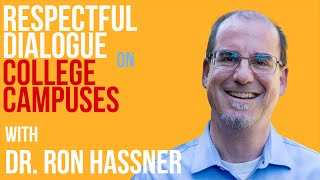
Ron Hassner, a Berkeley professor, discusses how to protect free speech and foster respectful debate on campuses during polarized times. He shares specific campus incidents, explains why identity politics has limits in the classroom, and offers practical techniques for teaching critical thinking and evidence-based discussion.
Chapters
Hi, I'm Manisha, and this is Teach your kids. And today I am honored to have Dr. Ron Hassner from Berkeley. He's a professor of Israel Studies. And I invited Dr. Hassner to speak today because he is issued a joint statement with another professor at Berkeley who he vehemently disagrees with in response to some of the conflict and violence that has been going on on his campus and also other campuses across the country. Welcome, Dr. Hassner. It's really great to have you here.
I'm delighted.
And if it's all right, I would love to read the statement because I thought it was so eloquent and really brought a lot of solace to me personally. So the statement is to our students. We are two professors on this campus who disagree vehemently, but we have always treated one another with respect and dignity. We love this campus with its diverse communities and all of our students, and are heartbroken to hear of incidents of near violence between students in recent days. We will not tolerate our students harming one another. Disagreement and differing points of view are an essential part of campus life. And we expect that you treat one another with the same respect and dignity that we are modeling here. Thank you. I have been on social media like many others, and when I saw that statement, I just thought this must have taken an incredible degree of courage. Even doing so much as posting a picture of an Israeli and a Palestinian child holding hands has angered and upset many people in my community. And I just, you know, there's such a heated time. People are traumatized all around the world, in the US and especially in the region. And I just really admire you for having the courage to do that. So thank you.
Thank you. You know, it didn't take that much courage. Mostly I think there was simply no precedent. There was. There was nothing I could model this statement after. And I was horrified by what I had seen on campus. And I can tell you more about that if you like.
Yes, I would love to hear a little bit more about that.
So, you know, tensions are. Are often high on the Berkeley campus when there's violence in the Middle East. I should say specifically when there's Israeli Palestinian violence. Other violence in the Middle east is of absolutely no interest to Berkeley students. Civil war in Syria, civil war in Yemen, Moroccans versus Saharis, Kurds versus Turks. Not interesting. But somehow the Israeli Palestinian conflict is the most important conflict in the world to Berkeley students. And in past times when there's been sort of ratcheting up of violence, ratcheting down of violence, students of Berkeley have spoken out loudly. I think this case is very different. I think everybody in the United States feels that something's broken here, that something went off the tracks, that this wasn't just regular terrorism. This was brutality of unprecedented scale and nature. I've studied terrorism for 20, 30 years. I've never seen this level of sadism, sexual deviance, just carnage. It's sort of a festival of violence. And I think that's had two effects. On the one hand, students who support Israel, maybe because they're Jewish, Israeli, maybe because they're as horrified as you and I are by these events, felt very strongly, and felt, I think, a little scared and very angry at the same time. I think students who have traditionally supported the Palestinian side of the conflict felt that they either had to defend these actions by going all in, or they had to distance themselves from these actions. And I think that's in part because a lot of students on campus don't understand the subtleties of the conflict. They understood the subtleties of the conflict. They would say, this was done by Hamas. We reject this. We nonetheless support the Palestinian call for freedom and independence. We support the Palestinian Authority. We support this movement, but not that movement. Sadly, many students opted for option A. They went all in. They were like, oh, this entirely justified. This is anti colonialism. This is anti apartheid or other such bullshit. But pardon my French. Sorry. There you go.
I think that's Spanish.
Yes, it is. Very good. I like that. I'm going to use that. So I think tensions have been higher on campus than ever before. And then there was one crystallizing incident, I think, three days. It was a Tuesday. The massacres started on Saturday, So it was three days later. It was a candlelight vigil. The Jewish students were lighting candles and reading out the names of people who had died. Not just Israelis, by the way, tourists, visitors, foreign workers, and Andy. Israeli students were sort of mocking them and making fun of them and doing Nazi salutes. And that's when students kind of lost it. And had the campus rabbi not been there to actually physically block them, it would have come to blows. And I found that deeply unsettling. And that's when I decided to reach out to my colleague, Dr. Bazian.
And I'm curious to know. I mean, I went to Brandeis. I graduated almost over 20 years ago when the second uprising was happening in the west bank. And I actually spent some time living in the west bank and working for a Palestinian organization. Like many college students, I had no idea what was going on in the conflict. And My best friend was an Israeli peace activist. And since then I have pretty much tried to stay out of the Israeli Palestinian conflict because I didn't see it as my territory. But nonetheless, I am really kind of horrified by what is going on on college campuses. I mean, I do see in politics how divided we are. And you know, I know, I mean, at Harvard it's gotten pretty out of control with doxing and people issuing these very kind of blanketed, unnuanced statements. And I wonder, you know, is this something new that you're seeing in college campuses? Is it an issue with intellectualism, education? Why are students responding in this way?
I think it's a real test. And since we're talking about college campuses, in this case, the test is the test for the American left. It's not unlike, now that I think about it, the test that January 6th posed to the American right. Here's a line in the sand. I understand you're a Trump supporter, I understand you're a Republican, but do you support this? You support this thing. And many Republicans said, actually, no, I don't. This has gone too far. And others, in other words, there's a clear line. And for the first time, people who would rather stay out of the conflict or came up with these trite statements, there are good people on both sides, there are bad people on both sides. I abhor all violence. Here was a red line that said this thing. Do you support this thing? And I think that was really hard, especially as I said, for people who aren't well educated on the topic, don't understand the nuances, don't understand that you can say no to Hamas and to the many hundreds of thousands of Palestinians who support Hamas, but yes to Palestinian freedom, to a two state solution, to an independent Palestine next to an independent Israel. If you don't understand these nuances, then just like an uneducated Republican, you feel that you got to go all in or not. And so you see at places like George Washington University's, George Washington University, you've seen maybe pictures of students projecting slogans onto the wall of the university. We stand by our martyrs. They mean the rapists. That's who they're talking about. They stand by them.
Or.
Some people putting up posters calling for these 200 hostages to be returned and other people are tearing them down. That's sort of, it's almost like it's an extreme test. So I've got to respond to it extremely plus, and I think this is implied in your very good question. Social media is playing a very Divisive role. It's telling one half of the story. I've talked to some very smart students, very well informed students about, for example, this rocket incident. I don't know if you've followed that. This alleged Israeli rocket that allegedly hit a hospital, killing allegedly 500 people. None of those three things turn out to be true.
Right. And the New York Times rushed to report. That is the New York Times.
New York Times, the BBC, your Instagram friends, your Facebook friends, they all jumped in to scream high heaven. What? You know, as a Brandeis student, you might know the term blood libel, right? Sort of. You know, the Jews are killing non Jews. And then later, of course, it turns out it's not an Israeli rocket. It didn't hit a hospital, it wasn't 500 people. Is there an apology? Is there a retraction? Is there an attempt by somebody to say, whoops, you know, we went a little too far? No. And in fact, if you stick to just your friends, not your friends, Manisha, but one's friends, and you only read their Instagram posts and their Facebook page, you can continue blissfully believing the lies from a week ago. There will never be a correction. There will never be. Someone said, I think I might have been a little rash in posting this.
Certainly to come back to this question of education, without pushing the point, I was a teacher for 20 years and now I work in tech and I'm trying to build solutions to help give greater access to education. And I feel that I know that a very fundamental part of education is the ability to think critically. And it seems to me that our schools are not producing critical thinkers, that the first impulse of a student who hears about the Israeli Hamas, Israeli, Palestine, whatever you want to call this conflict, is not to say, okay, let me look at the research. Let me examine the source. Dr. Hassner is a professor of Israel studies. He probably has this bias. Let's see what his untested assumptions are. Okay, let's look at what Dr. Bazian has to say, what his untested assumptions are. Let me take a look at the history of the conflict and make an informed opinion. It's much more reactionary. And I know that this is a human response. We respond to emotions and stories rather than logic. But it's concerning to me to see this in our students who are entering college. And is this something that seems to be getting worse? Has it always been this way?
It is definitely getting worse. And part of the worst is built into your question. You are assuming, and I understand why you're Assuming that because I'm a professor of Israel studies, I am biased in favor of Israel. And of course you're assuming that because we are assumption. Right. We have been in. And you're assuming the opposite about Dr. Bazian. We have been, in part, brainwashed by identity politics to assume that a person from a particular background or sitting in a particular chair must be representing that background in that chair. Oh, you're a woman. You must be a feminist. Oh, you're African American. You must be a defender and a supporter of critical race theory. So, first of all, that lie has to be. Has to be eluded because, like you and I appreciate that about you and your podcast, we are first and foremost professionals. And the fact that you went to Brandeis and I went to Columbia University, I also went to some other local university whose name I can't mention because I'm now at Berkeley should not shape how we teach necessarily. We have a job to teach our students a complex reality that is nuanced. And we have to remind them that they, like us in the classroom, are not there just in their capacity as men. White people, Americans, capitalists, they are first and foremost there as students. But identity politics has, to some extent poisoned that well, and in fact, it's encouraged students to start every essay by saying, as a person of this background, I will argue as if your parentage or the place where you happen to be born is somehow a valid argument in favor of.
I have the right to say this.
Because I have a right to say this or I'm not allowed to speak on this issue. What kind of world would this be in, in which only Jews could teach the Holocaust? That would be terrible. And as a non Jew, do I not get to have an opinion? Do I not get to talk about numbers, about dates, about processes? Because, of course, that just makes the academic universe I live in smaller and smaller and smaller and smaller. Only women can talk about feminism, and in fact, only African American women can talk about black feminism, and only American. African American women can talk about black feminism in the United States. And it gets smaller and smaller and smaller, and eventually everybody's only studying themselves.
Right? So that's great to point that out, too, is that. That's the first assumption, right? Dr. Hassner, professor of Israel, made a statement with Palestinians. He's kind of in this camp instead of actually digging deeper and looking at how someone frames their arguments and what their research is based on and that. But I do want to really take it to this question of education, because do you think that it's the schools that are failing our kids and that they are not even stopping for a second to make an informed decision, are just reacting to what's happening on social media.
I don't think it's the schools. The schools are trying really hard and their primary job is to hire good people, conscientious teachers, and allow freedom of expression. That's all the school needs to do. Or at least that's my belief, right? Just because I am truly a believer in liberal ideas, like the best argument will win, like truth comes out of conversation and discussion, like we all have more in common than what separates us. Because I believe that all I ask of university is to just create a space, a safe space for dialogue where lots of ideas can flourish. I think the people who have failed us are some theorists who argue, for example, that there's more that divides us than what unites us, that ideas I don't like should not be aired, should not be listened to, are in fact dangerous. You should shield yourself, you should cover your ears when somebody says something you don't like to hear. And they further, and this is, we're really seeing this now on campuses, even from some, what I would have thought were eminent scholars, that the university is a place for activism. Everybody who's ever seen Sproul Plaza or studied Berkeley's in Berkeley in the 60s knows I'm at a university that is an activist university. But there's activism in the public sphere and there's learning in the classroom. And those are two separate issues. A professor should not be standing with you in the public sphere, preaching to you or mobilizing you. And in the classroom. Absolutely it's happening. Absolutely it's happening. We now have, not just on our campus, we now have graduate students today mobilizing their students to join in pro Palestinian protests. Now, you can imagine what that's like in a classroom for a student who either wants nothing to do with this or feels that these protests betray their political identity and their political cause. And the person responsible for their grade is telling them, I expect you to walk out of the classroom with me right now and join me in this particular protest. Like, what's next? I'm going to follow you into the voting booth to make sure that you vote for the presidential candidate that I approve of. Otherwise you're getting a B minus in class. So it's not that I think universities should stop being a place for activism. Not that university activism has ever achieved anything, but never mind. Let's do university activism. Fine. Let's pretend that Everybody in Israel and the Palestinian territories is watching Brandeis to decide what's going to happen next.
Right. The effectiveness of protest is a whole other topic.
But even if you do that in the public sphere, in the classroom is a sacred space where professors owe a professional obligation to their students to teach detail and nuance. I don't mean by that that a professor should say, oh, it's really complicated, let's not get into it. Both sides are right. They're bad people on both. What was the Trump line? They're bad people on both sides.
A professor can have an opinion.
Certainly professor can have an opinion. I don't think the professor should voice that opinion. I don't think it's a student's business who the professor voted for. Whether the professor is a Republican or a Democrat. What the professor thinks should be happening in the Middle east, the professor needs to foster and provide the students with tool to create their own opinions. The more opinionated the professor is, the less likely that is to happen. Right, because that's just preaching. That's a top down order. Here's how you should think. And I think a good professor encourages students and provides them tool with how they themselves think. And I have some tools that I developed over the years and if you.
Want to, I can, I would love to hear them. How do you foster, how do you teach critical thinking to your students?
The first and the hardest is what we've talked about so far. Students know I'm Jewish. Students know that I have family in Israel. Students know that I hold a chair in Israel studies. But I have demonstrated to the students in 101 different ways that I am first and foremost a professor whose job it is to teach theory, history, practice, whole range of issues that have nothing to do with my identity and that I know how to keep those two things apart. In other words, I am like the Egyptian surgeon who when they're brought the body of a suffering combatant, doesn't say, who is this combatant? I need to know before I operate whether this person is Jewish or Muslim or Christian. No, no. You've sworn a Hippocratic oath. You're a surgeon and your job is to heal regardless of who's sitting on the table in front of you. So I think that's a sacred duty. And just saying that I think matters to students. Many of my colleagues disagree with me on this. Many think that your job as a professor is to stand up there and preach. That's not my attitude and my students know it. The second is that you foster throughout the class an atmosphere of dialectic. So, for example, right now, in my war class, we spent the last three weeks talking about theories of war. And every day I teach a different theory and I highlight the fact that these theories are not compatible. You cannot both argue that war is this and also argue that war is that One of these guys is off. This can't both be true. So let's start talking about the strengths and weaknesses of each theory. I'm obviously not teaching you any bad theories. They're all good, but they're incompatible. So how do we deal with that? Tell me why this is a good theory. Tell me why it's a bad theory. Now, let's talk about this one, and then let's assess the one compared to the other. And could it be that we should use this theory in this case and that theory in that? Could it be that it's our duty to report to our boss in the State Department, in the CIA, at the embassy, at the White House after we graduate that there are multiple points of view here and your point of view biases the recommendation you're going to make? I think that's really important for future leaders and policymakers. So teaching dialectics, just straightforward thesis antithesis synthesis. And lastly, there are some really ingenious readings, assignments, movies that I assign to students that are designed to open their eyes to a complicated adult world. The world of American politics today is infantile. It's a world of good versus evil. It's a world of absolutes. Everybody who doesn't agree with me is a monster and is harming me with their words. That's how children think. Adults understand that the last of your problems is words and that we should worry about is actions. That words are harmless, that it is good and important to hear words from people who disagree with you, because then you can learn, prepare, persuade. So I'll give you one example, and if you want to, I can share some others. In my class on war in the Middle east, which you can imagine is a rather contentious class, and that's the title, War in the Middle East. We read a book called Arabs and Israelis that is authored by three authors. An Egyptian, an Israeli, a Palestinian. The three authors are in strong disagreement with one another. The book is written chapter by chapter, sort of moving through history. And every chapter has three parts. The Israeli narrative, the Palestinian narrative, the Egyptian narrative. And the three narratives cannot be reconciled. They are constantly intentional with each other. It's not just that they disagree on what is right and wrong. They disagree on whether this even happened. They disagree on what to call it. They disagree on how many people suffered, how many people were involved. Was this intentional? Was it not? They disagree about everything. And it drives my students bananas because it takes them from the infantile world into the real adult world of people disagree and disagree strongly. And you can't just split the difference and say, oh, well, I guess the truth is somewhere in between, because the truth might be nowhere to be found. They might all be lying. They might all be speaking their own truth. You actually have to grapple with each page and say, wait a minute, doesn't that author contradict what he himself wrote three pages ago? Or, I see bias coming through here. But on this issue, these two authors seem to agree, so maybe there's more merit to that. Let me do some research. I've talked enough about that. If you want to, I can give other examples.
No, it's fascinating. I guess one item I am curious about is just in terms of building a framework for free speech, you use the words, I believe, respect and dignity. How do you address. I mean, if you are confronted with someone, I'm trying to imagine the worst thing that they could say to you, such as, Palestinians have been traumatized by the Israelis for hundreds of years. They took their land. It's natural that under a state of trauma, they would take the only power available to them, which is the savage brutality. War is just as brutal. Children are being killed. And you know, that's how. That's my truth. Is that bridging the framework of free speech, something that.
That's awesome when that happens in class. And it happened in class exactly eight days ago. So last Tuesday, 170 students and a student said exactly what you were saying. I mean, you pretty much captured what he said. He spoke for about five minutes, so he went into some detail. So the first thing I did was to sit down. I didn't want to loom over the class, and I wanted, to some extent, to cede the podium. I wanted him to understand that now it's his turn. It's his turn to present an argument. And so I sat down. I sat among the other students and listened carefully, and I signaled with my body language that I was listening. By the way, somewhere deep inside me, an Israeli Jew was dying a thousand deaths, right? But I have a job to do, and it matters more than any of this other stuff. And, boy, I wish people who have lost their soul to identity politics would remember that we are first and foremost humans and parents and presidents and prime ministers and podcast hosts, and we have a job to do, otherwise the world is going to come to a halt. And we can't just throw that job aside because people who have the same skin color as us are making some sort of claim that we're supposed to automatically support. So I sat down, I listened, and I listened carefully because there were things he said and you just said that are true. They're true and they're important. Suffering of the Palestinian people, the reality of the occupation, the failure to create a viable two state solution, all of these are true. And then there are all sorts of things that I empirically disagree with. Not as an Israeli, but as a scholar of war. I have studied terrorism and I can talk about the forms of terrorism that are successful and not. And I can certainly talk about the forms of insurgency that are successful and not. About five minutes into his speech, he ran out of the sort of, I think, prepared comments that he had come with because he didn't expect that I would let him speak for so long.
It jarred him that you were listening with your full body and giving him.
And so he started improvising. And at that point a rather dark side came out, and that was not so cool. And so at that point I had to say, let's try to focus on the important things you said. I mean, there was Holocaust denial, there was denial of the Jewish connection to the Jewish homeland, which is Israel. There was all sorts of unnecessary and unconstructive. I didn't cut him off, I just said, look, you've been talking for five minutes. I have a lot to respond to. Let's just stop you right there. Because I didn't want to get into he said, she said, sort of nitty gritty.
Yes. When it gets into kind of who's right, who's wrong, can I just ask for context? Is this somebody who had lived in the region or had family in the region?
I don't want to say anything more about that because students privacy is also protected in all sorts of ways. And then I did, of course, I had to improvise because I have to say, in 20 years of teaching, this had never happened. And I was so glad that it happened. I don't want to be like some of my colleagues who I disagree with the sort of looming presence in the classroom that no student dares speak up to.
You're aware of your own power and you created a safe space for that power and responsibility.
Yes. So I did two things. I improvised. The first thing I did, and I think I did okay. People later told me they thought I Did okay. Was to make the statement that I made to you 20 minutes ago about my professional responsibility and how I am in the room there now as a war professor, period. That's the only reason I'm here. Don't look at my skin color. Don't look at my religion. Don't look at my ethnicity. Don't look at my passport. It's none of your business. We are all here as scholars and we're having a scholarly debate. So let's have a scholarly debate. What is terrorism? What purposes does it serve? How does it achieve its goals? Terrorism is a very aggressive and illegal, but nonetheless rational form of negotiation. It's an effort to exert pressure and get concessions in return. This is not a negotiation. This is chaos. This is bedlam. This is anarchy. This merely signals to the other side I have lost my mind. And I am on a spree of death and destruction and nothing can stop me, which is counterproductive. Then I talked about Che Guevara. Here's a freedom fighter and not a wimpy one. He has killed many, many people, including people in his own organization who he thought were disloyal. He has killed civilians, but he has never done these things. Why has he never done these things? And I think it ended up being a productive conversation. I made one mistake and I think I should learn from my mistakes. And maybe your listeners can learn from my mistakes. It was very important for me to put the student at ease. It was very important for me to signal to the class that I was at ease. I did not sufficiently care that everybody else in class was at ease. Because again, I'd forgotten that all this is happening in front of a generation that is afraid of conversations, that is afraid of disagreement, that sees every effort to push back against what someone else says as insulting and hurtful and unsafe. And I feel attacked. I feel targeted. I don't think anybody in class was scared. They know that my classroom is a cool, fun place where we play games and we do simulations and we watch movies. They understood. They could also see in my demeanor and the students demeanor that this was not going to escalate. But I still, I feel in retrospect I should have said, perhaps humorously, to the rest of the class, guys, unclench your fists, relax your shoulders. We're just talking. We're just talking. This is good, this is healthy. This is how things should be. I thank the student for their comments and I encouraged other students to speak up in situations like these.
And you modeled that possibility for them as well by seeing it's possible to be confronted with a viewpoint. And this is, I mean, they're not children, but that is how children learn.
Yeah, I think that's right. Although still disappointedly, when later students came to office hours, I mean, this was like a week and a half ago, a week and a day ago, students came to office hours and said, how was that experience? The way they described it, you can tell that they were very tense, they were very worried. I had the good fortune last semester in my class on war in the Middle East. I had a teaching assistant who was always in class with me when I lectured, who disagreed with me about many things. He wasn't an extremist. Dr. Bazian and I, he who co signed the statement with me, we are on quite extreme places on the continuum. My teaching assistant wasn't at all an extremist. We were both sort of, I think, pretty closely aligned, but disagree about many things. And we had planned early in the semester to disagree in public and to model to the students how disagreements look like in a classroom. And the key word here is, and this does not happen in the public sphere. Evidence. Show me, show me why you think this happened. Like you said, Palestinians claim that Israelis took their land. Show me that it was their land, which is going to be hard, by the way. Let's look at some maps together, right? Let's look at what was here before and who quote unquote, owns the land. And then it turns out that this is a rather complicated issue, right? If you're claiming, you know, Israel are innocent, Israelis are innocent victims here, show me that Israelis made concessions at each and every opportunity because they didn't, right? So evidence, it's evidence based and it's not emotional and it's certainly not personal. The malaise hiding behind this is the confusion between the personal, emotional, which has its place in the public sphere, and the logical evidence based, argumentative, which is the only thing that has place in the classroom. I'm not saying that one should study war without emotion. I'm just saying that that emotion can't be allowed to bias important realities.
Well, absolutely. And what's important, I think, is that people have so lost their ability to talk to each other about difficult issues to allow for the complexity and the nuance. I was interviewing Dr. Gordon Neufeld, who's a developmental psychologist, and he was saying what separates the mature from the immature is complexity is being conflicted, in fact. And so, I mean, I guess my response is, though I do think that by listening with your full body, you were Addressing that student's trauma first before you stepped in to have the logical argument. And the way I'm kind of trying to navigate this. I have a very dear friend from Israel. She lives in the States now, but she has family there. And I also have a very dear friend who lives in the West Bank. And I just have. I just don't even feel like it has any purpose right now to try to talk to them, but just to hear them and to hold them and to soothe them. Because when you're in that state of trauma, it's very difficult. You can't really reason at all. So it creates a kind of softness when you have that ability to listen with your body. And it's not even just having family there. I mean, these students, they might have someone in their family who was raped. They might have had some other traumatic thing that this is eliciting in them. We're all afraid of going to war. I mean, unfortunately, it's not just this distant thing over there very much impacts all of us. It impacts all of us. When our children are fighting on college campuses.
We're saying two things that are contradictory, but I think they're both.
Yeah, I would love to dig in.
That people who are directly affected and are in a very intense state of mind for reasons that we all completely empathize with. That's not the right time to talk. It's just not the right time. That's the time to hug, right? It's the time to extend a hand and say, I'm so sorry. Which is how my conversation with Dr. Basyan started. I just reached out and said. I just reached out and said, hatem, I know you have family in the Middle east, in the Palestinian territories. Are they okay? How are they doing? I never proposed for a second to resolve issues with him to come up with a statement that says anything about the Middle East. You'll notice in our statement that you read, it doesn't say Middle east, it doesn't say Israel, it doesn't say Palestine, doesn't say terrorism, doesn't say any of those things. We did not touch that with the stick. Now is not the time. Multiple media sources have reached out to us and said they want to talk to both of us about the situation in the Middle East. And we've reached back and said time and time again, this is not a time when the two of us want to sit next to each other in a studio. We don't like one another that much. This is why our statement matters.
Exactly.
Because we are in disagreement. So I think that's true. At the same time, the word trauma is being thrown around a lot now as an excuse to not listen to the other side. And so I got to tell you, 99.9% of the students in my class are not traumatized. They're not. They don't, in fact, even know what happened. They have an Instagram impression of what happened, but they are miles and miles away from it. And to some extent, there's some. There's kind of a nasty form of privilege in a student coming up to me, and it's happened often enough and saying, you know, Ron, you talked about the war in Afghanistan yesterday in class, and it was terribly triggering to me.
You triggered me.
And I say often to the students, you realize that in class with us, sit five Afghanistan war veterans, it triggered you. Why don't you go talk to them about their coping mechanism? Because they are actually traumatized in the original meaning of the word, right? Maybe they can teach you some coping mechanisms. I think that word is used very, very quickly. I think students need to relearn that. Exchanging words is not traumatizing. I can look at a map and I can argue about history, and I can even look at a few pictures if they're not too gory. There's nothing really traumatizing about this, and it's super important. It's super important to do. I wanted to say something else about students being children. I did a survey a couple of years ago that people can just Google online, in which I asked students two things. I asked them how much they cared about different conflicts around the world, and the answer is, they don't. Unless Jews are involved, in which case, whoa. Most important conflict in the world. It's like that one. Pakistan, India over Kashmir, not interesting. China, Taiwan, not interesting. Tibet has long since disappeared from their radar. Israeli Palestine conflict. What could be more important? And then in the second half of the survey, I asked them some informational question about Israel and the Palestinian territories. Like, where are they? Can you find them on a map? Do you know when this conflict started? And I found, you won't be surprised by this, that the most extreme students knew the least about the conflict. To put it differently, students that are well informed and know the details and have followed the history of, cannot hold the view that only one side is to blame and the other side is perfect. That is just impossible. It can't be done. You who now? You just said you have a Palestinian friend, you have an Israeli friend. I bet you know a lot about this conflict.
I mean, my experience is that I was 20. I didn't know anything. I knew that I knew nothing. I went to the west bank, and I also went to Israel. And my biggest takeaway is that there aren't two sides. There are a million different points of view. View. And that. And perhaps you'll disagree vehemently with me on this, but I often spoke to people, and it resonated with me that if it was just left up to the Israeli and Palestinians to resolve, instead of the entire world being involved, it might have been resolved a lot Sooner.
I agree 100%. So, for example, the role of other Arab countries or the Soviet Union, now Russia, in scuttling every attempt of Israelis and Palestinians to find agreement. Right. Right now we're watching Israel and its neighbors sort of coming together. Israel's cooperating with the Palestinian Authority, and Iran is just diving in from 30,000ft just to try to annihilate that. So I agree 100%. The point I'm trying to make is once you leave the Brandeis campus or my students leave the Berkeley campus, and you travel to the region and you talk to people and you study the history and you come face to face with reality, you cannot possibly hold that extremist of. You can't. Reality kind of resists that. This is excellent news for you and me, specifically Manisha and Ron, because it means that what you and I are doing is powerful and influential. We teach people, and if we can teach them, then they, by definition, become less radical. And I think that's true about everything. We've known for years that Americans who have friends that are members of religious minorities, members of ethnic minorities, members of gender minorities, or sexual identity minorities have more moderate views than people who have never met a Muslim, a Jew, an LGBT member, an African American. I can show in survey after survey after survey that students who've read through that one book, Arabs and Israelis, and get to the end can no longer hold the view that only one side is to blame for the conflict. They might still hold the view. And it's legitimate to say, I think this side is to be blamed more than that side, or I think this side is the one that ought to make the concessions. This is the side that ought to disarm. This is a side that's been less reasonable. The answer is not always in the middle, Nor is the answer to side with one of the three authors.
Nor is there one pure solution that fixes every problem.
Correct. I know what the answer is. So you arm students with facts and you arm them with insight. And you teach them history. The easiest example I'll give you is students that hold the notion that Israel is besieging Gaza. It takes 30 seconds to open a map of the world and zoom in on Gaza and show people that Gaza borders two countries. Israel cannot besiege Gaza alone. Israel can besiege Gaza, but it requires Egypt to also besiege Gaza. Well, now, that's interesting because the Egyptians are not Jewish, as best I know. So what's their notion here? Why are they not letting Palestinian refugees in or out? Why are they not providing food? Why have they not established relations with Hamas? Well, let's talk about how the Egyptians feel about Hamas and the Muslim Brotherhood, right? Suddenly the situation becomes more complex. You can only get away with Israel is besieging Gaza when you're facing a person who's never seen a map of the Middle East. And I'm telling you from surveying Berkeley seniors, 170 of them, that a quarter of those students think that the Palestinian territories are west of Lebanon.
Why is this. Is this Berkeley's fault?
It's not Berkeley's fault that they don't know the ins and outs of Middle east geography. And we should explain to your listeners who've not seen a map of the Middle east that west of Lebanon there's water. There's no country west of Lebanon. Right. I don't know the geography of Latin America inside out. You ask me where in relation to Brazil is Ecuador. I don't know if it's north, northeast, north, northwest, or west. It's north. I think our high schools have certainly on geography. No doubt about that. I have two high schoolers. Right. I don't question that their knowledge of geography is flimsy. I think colleges have failed us in not demanding that students be informed and cautious before they scream.
And how would you teach this? I mean, that's. I agree with you 100%. I think the missing piece. And also in high school, and I mean, is this critical thinking piece. To me, it's inconceivable. I mean, my mom is a teacher, but like that I would take a stand on an issue before fully researching it myself.
But on the other hand, we also don't want to stifle dialogue, so this is not so easy to do. The problem is we're stifling dialogue for the wrong reason. I should be modest and quiet because I haven't studied the topic yet. And by the way, you don't need to write a book about it. Just spend a couple of minutes on Wikipedia. That would be A good start. Maybe read a book instead. We're stifling speech because I'm worried about offending you. I'm worried that I'm going to be cancelled. So somehow I have to encourage you to put yourself out there. But I also want you to learn and think and say responsible things. So let's just agree that between not speaking because you think you're going to get canceled and screaming your head off because you think that the war in the Middle east is going to be won, in the classroom there is a continuum that it's good to be educated. Let's talk this through. We remind students again and again there are no bad questions. It's okay for you to say something that's wrong. I'll just correct it and then maybe you can disagree with my corrections and then I'll tell you why I think I'm right and you'll tell me why you think I'm wrong. Will do this sort of ping pong back and forth. There's no penalty for saying something stupid. There is a penalty for screaming something stupid. I think that's. I think that's fair. I think we have. I'm going to be outspoken here. I think we've placed much too high a bar. This is on the silent side in trying to stifle students with threats that they will be seen as racist, that they will be seen as privileged, that they may not speak on behalf of this community because they happen to be born with the wrong skin color. So you were not allowed an opinion on this. That because you're tall you can't talk about short things and because you're thin you can't talk about fat things. I think that's just nonsense. So please talk more. We will correct you and you can correct us. Please don't scream. No need to curse, no need to shout, no need to threaten. But you have to talk. There has to be dialogue in the classroom.
I agree completely. And I feel like it's something that I'm learning to do as an adult. And we won't go into the whole Black Lives Matter movement together because we're limited in time. But what I learned during that period is that my black friends wanted me to be doing more to teach people about racism instead of putting the ownership on them. And I started talking about it on social media with an awareness of what I don't know and what I know. And it was really scary. But then when I was corrected, it wasn't as bad as I thought. And then I was able to respond to the correction. So in a way, it was kind of. I just had to experience it and get myself out there. And even, you know, for the. This conflict, I. I haven't spoken about this conflict in years, but I could see that it was really distressing people in my community, and I was distressed. And so I did do an episode talking to children about war. And essentially what I said is that this is my own experience. I've facilitated dialogue. I lived in the region 20 years ago. I have friends who are experiencing this. This is how I cope, and this is how I would talk to children about it. And hopefully some people will get mad about some things I said, because that will help me learn and increase the dialogue. Otherwise, things just stay stagnant.
But that's an important point. I'll just amplify that last point. We all ought to be a little less afraid of what people are going to say about us. God knows I would not have chosen UC Berkeley as a place to teach both a class on war and a class on war in the Middle east and sit in a chair called the Chair in Israel Studies if I was constantly looking around and worrying about, will everybody like me? That's impossible. But I think by developing a reputation, which I've worked hard on, of being professional and fair and kind and enthusiastic about disagreements, I also signal to people that I'm a little less afraid of cancellation than most. So go ahead, cancel me. I'm like, okay, oh, my God, you're going to shut me up. I think I'll survive. Mostly canceling is the coward's response, right? Because you don't want to come and argue with me. So you're going to cancel me from afar. You're going to stick your fingers in your ear and go, la, la, la, la, la. I'm not listening to you. Come and argue. Let's sit down, have coffee and disagree about important things. Yeah, I think people are apologizing too much. I mean, this is not my very personal opinion. I'm sorry. I know I don't speak for everybody, but here's my opinion and here are my thoughts. And just, you know, we're talking human to human. You know, we're all born with these bodies. We all have blood coursing through our veins. We all have brains through which we look at the outside world. We all ought to respect one another as humans, as equals. We can opine on anything we like. And we have a right to an opinion, and you have a right to disagree. You also have a right to be hurt and stop talking to me, you know, that's your best response. Stop talking to me. It's fine. Completely. You stop talking to me for a day, you can stop talking to me for a week. Hopefully they don't come back and talk to me again. I think that's also completely legitimate. I do not have the right to silence you. You don't have the right to silence me. You do not have the right to tell me which words I may use. You do not have the right to force an opinion on me because I'm an adult. We're not children.
Right, Absolutely. And I think I just would also like to kind of reflect on something we were speaking about earlier in terms of a student saying they were triggered by what you said, and you had other students who had served in the war in Afghanistan who were truly traumatized.
And I would say that actually triggered the meaning of the word. Yeah, sure.
And I would say that. I wouldn't deny that that student has trauma or was triggered by something in their experience, but I would say that that's a positive, because when you are triggered, it shows you where to heal. If you say something that makes me angry and emotional, that is such a good indicator of what I need to sort through and to be a more productive member of society, to be a happier human being. And that, you know, if I sit through a class and I'm never triggered, I mean, what a boring class.
Especially when it's a class on war. So what's the alternative? That they teach war from 30,000ft as a series of theories? We are watching war movies together. We are talking to refugees and genocide survivors and soldiers. All of which, by the way, you knew before you signed up for the class. Right. It was on the syllabus. How can we study war without gore, without bloodshed, without violence? That seems like a terrible injustice.
Absolutely. And I mean, even here's an analogy, too. I mean, when you go to the gym, if you're never sore, you're never going to get stronger. And the same in an intellectual environment. It's these areas where we come up against our own discomfort and our own untested assumptions and that where we grow and we learn and we become more passionate intellectuals.
So just. We were talking earlier about tools. I wanted to mention one more because a student actually told me yesterday in office hours this movie made me really uncomfortable. And they meant it in the good sense of the word. This movie pushed me. And it's not a gory movie. It's called Eye in the Sky. Maybe you've seen it, Helen Mirren is in it. It's this whole star studded cast. I want to say it came out five years ago maybe. Yeah, about five years ago. It's fascinating because it's sort of a fictional scenario. It has to do with preventing terrorism. But inevitably the act of trying to prevent terrorism is going to cause innocent fatalities. But of course the terrorism is going to cause even more innocent fatalities. And so it's almost like a play about morality and ethics and deliberations and dilemmas. And what's awesome about the movie is that the point of view that the director seems to prefer is constantly switching. They're constantly making arguments for and then arguments against and then arguments for and then arguments against. And every time you thought that you found an easy way out, the director says, oh, but have you considered this? Oh damn, I didn't consider that. But if you do that, then this thing will happen. Oh, wait, I didn't think that through. So the movie is an adult movie. It shows you an adult world in which difficult decisions have to be made by helpless people in the face of insufficient evidence. And there is no good answer. There's a series of bad answers and you have to pick one of them.
And that's life too.
Yep.
I know you have to run, inspire, challenge and enlighten young minds. And I was hoping that before we sign off today, my community is primarily very intellectual. Homeschooling families and some ed tech entrepreneurs. I was wondering, wondering if there is any advice you might give to parents who want to nurture critical thinkers.
Information is your friend. Teaching is your friend. So I'll give just one advice. We mentioned some books, we mentioned some movies and it has to do with news consumption. If you're going to read the New York Times, which we now understand is no longer in the center of the distribution but has moved further and further and further left. You ought to read the Wall Street Journal. If you're listening to npr, which is even further to the left, you ought to watch Breitbart. You may not like it, but you should. And I'm saying the same now to the Breitbart community. For every Fox News you watch, you've got to watch something on the other side of the scale. If you're unwilling to do that, then you should stay away from politicized news sources and try to get your news as raw as possible. By which I mean news agencies, Reuters, Associated Press, they also have a slant, they also have a bias, but there's a lot less spin. And you've got to try to get the facts. And you need to do this for two reasons. You need to do this first of all because you need to burst that bubble around you and know that many other people in other parts of the world are seeing a different world. They are living a different reality. Right. You think Trump lost the elections. They think he won, and that motivates them and drives them. You will never be able to persuade them if you don't see the world through their eyes.
Absolutely. If you care more about making the world a better place than being right, you will take the time to understand where people are coming from so that you can potentially influence their viewpoints and change society or learn from them.
Right.
Exactly.
It goes both ways. It goes both ways. So that would be my concluding thought.
Amazing. Well, Dr. Hassner, thank you so much. Again, I am so grateful for the work you're doing and the love and the energy you bring to listening to your students and encouraging this intellectual dialogue on campus. And just really wishing the best for you and your family and your campus community as we find a way through these times.
And my best wishes to your family and to your friends, Palestinians and Israelis alike.
More from Manisha

Contributing to Florida Prepaid Plans (2026–2027) | Step-by-Step Guide for FES-UA Families

Contribuyendo a los Planes Florida Prepago (2026–2027) | Guía Paso a Paso para Familias FES-UA



Finding Providers & Services in the Marketplace (Families) | Step Up For Students (2026–2027)

Encontrando Proveedores & Servicios en el Mercado (Familias) | Step Up For Students (2026–2027)




