Samantha Snowden from Headspace: Meditating with Kids
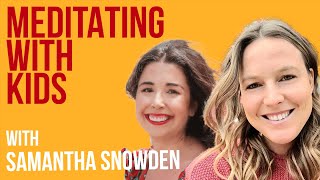
A Teach Your Kids podcast episode (Dec 13, 2023) featuring Manisha Snoyer interviewing Samantha Snowden (meditation teacher and Headspace content developer). They discuss why mindfulness and meditation benefit children's emotion regulation, attention, and learning; how Headspace developed child-specific content (member feedback, research, child-development expertise; Samantha began consulting in 2019); practical, age-appropriate practices (five-senses grounding, breath counting to 4, urge-surfing, body scan, progressive muscle relaxation, games like Red Light/Green Light, movement-based adaptations, marble-jar visual tracking); resources in the Headspace app including age-grouped kids content (up to ~age 12) and the Sesame Street partnership "Good Night World" sleep podcast; adaptations for ADHD and autism (more movement, storytelling, art, relationship-building, following child interests); and parenting recommendations (modeling, self-compassion, friendly wishes, using timers or short guided tracks).
Chapters
Welcome to Teach your Kids, a podcast about homeschooling, whole child development and the future of education. I'm Manisha. I've been a teacher for 20 years and I'm the founder of Teach youh Kids. And today we are talking about about meditation. With Samantha Snowden. You'll learn how meditation can support learning how Headspace developed meditation programs suited for children and how you can find time to meditate even as a busy parent, as well as meditation practices you can do with your child. Samantha Snowden is a meditation teacher and content developer at Headspace. She has extensive experience as a teacher and mentor working in schools, community centers, both in the US and around the world. Experience supporting families and communities with mindfulness tools. She holds a Master's degree in clinical and Educational Psychology from Columbia University and Emotion Science from mid Sweden. So she has a whole spectrum of experience, both academic and experiential and in tech, which I know you all love. Samantha, welcome to the show. It's so great to have you here.
Thanks, Manisha. I'm happy to be here and talk about all these wonderful tools to help and support kids.
It's just so great. And I think my community is very excited about the intersection of holistic child development and also new tech. And so I actually didn't mention to this, I didn't mention this to you, but I spent quite a bit of time with you during the Pandemic because we developed these online classes for kids and we integrated a lot of the digital apps and YouTube videos that already existed. And so during the pandemic, we would start this three hour online preschool or kindergarten class with a meditation from Headspace. And we would just start it and the kids would lie down or do whatever the exercise called for. And then we would dive into a cosmic kids yoga video with Jamie. And so it was really wonderful. We just did those every single day. And they were just such a great way to help the kids get centered and they just love that. So you. Headspace is really one of our favorite apps and I'm really excited to dive into it with you today.
Oh, that's so good to hear. I know that time was so difficult and I think we all got really creative, you know, and tried to figure out how to support kids mental health, especially little ones who, you know, need that socialization more than, more than ever. So that's, that's so good to hear.
Absolutely. Yeah. And you've really helped to create an environment where kids can move around and be centered even when they're taking online class, even when they're taking online classes. So you're a meditation teacher and a content developer with Headspace, which you. Which we just love. So how did you come to collaborate with Headspace? I'm just so curious about the story of how you connected with them and also just kind of behind the scenes of how they started developing content for children.
Yeah, so I, so I discovered Headspace when they first launched an app. So it was very different, but I was just, you know, I had already been teaching mindfulness. I trained with UCLA at their Mindful Awareness Research center. And at the time I was kind of tasked with creating courses and groups for kids and teaching sel mindfulness. And I. There wasn't a lot out there, so I, I did a lot of experimentation and I was pulling from every resource I could possibly find. And when I discovered Headspace and specifically the animations that elucidated these really kind of mysterious concepts around mindfulness that I think were always demystifying. But it did it in such, the app did it in such a friendly way. Such a, such a kid friendly way, actually. So I started sending all my friends who were educators. You know, I'm like, you got to check out these animations. They really help you to explain what mindfulness is to kids and to parents. And I guess a few years after that, I reached out and I said, hey, I'm a kids and family mindfulness teacher. And I did it and I explained my, my experience and I said, I noticed you didn't. You don't have kids content and it's really needed out in the world. And they actually wrote back to me saying, actually, we're, we're developing it right now, but we'll keep you in mind, you know, if we, if we need your help. And then I think about a year later, one person working on the kids content reached out to me and found me through ucla. And I actually don't think they made the connection between the email, but they ended up finding me anyway. And I started consulting in 2019 with the team on creating kids content and going into schools and helping educators, bridging that gap and helping them to come up with ways to use our content in their classroom.
That's really extraordinary. I mean, I would love to hear a little bit more about the process for building education technology for children, because it's actually a real challenge across the whole industry in that the people who are purchasing the product are not necessarily the same as the people using it. And as you pointed out, a lot of the content was somewhat kid friendly. To begin with. So I'm curious what kind of considerations went into developing child specific curriculum, I guess you could call curriculum or videos on headspace.
Yeah. So we're. Well, first, we're always taking feedback from our members. We're always in close communication with them. And we have different teams who are looking at demographics, looking at who's using the product, and what are they asking from us specifically so that we can meet their needs and not try to assume we know what's best best or what they need. And that's something I really respect and think is very important when you're designing anything for anybody. So that's a big part of it. And also I, when I was designing the, the kids content, I was pulling from my experience and my education. I've taken many courses and trainings in child development and, and then just through my experience, working one on one with kids or in groups, seeing what works and what doesn't, that really helped me to shape each piece of content that I created because I would, you know, use certain language or imagine just that I was in the room with another child and how I would speak to them and then try to transmit that as, as close to real life as possible.
That's so great. And I would love to dig in a little further to that. What works and what doesn't with children in terms of meditation, if you'd be willing to share some of your findings.
I think people are always intrigued by how do you like, when they imagine meditation? They imagine adults meditating and then they go, how do you get a child to sit still for 15 minutes? And I'm like, well, first of all, teaching to mindfulness and meditation are two separate things. So when I'm working with kids, I'm focusing on teaching mindfulness. And you know, when we talk about mindfulness, we have informal practices and we have formal practices. So meditation is a formal practice, and then the rest of life is an informal practice. Right. So how do we pay attention to all our five senses? That's something I use a lot with kids. For example, like, you know, what can you see, what can you smell, what can you taste, what can you hear? And using that specifically as an emotion regulation strategy. So when they're starting to feel dysregulated or they're starting to feel anxious before a test, you know, we, we go through, I help rehearse these tools that they can use in real time to help calm the anxiety or the worry that they're having. We do also with younger kids, we play a lot of Games. There are games like Red Light, Green Light, or Simon Says that help teach them that first help them with executive functioning and just learning how to control their bodies and how to manage their urges. We call. We do this exercise called urge surfing, where I have them watch urges arise and notice what it's like and get really curious about it, and then we talk about it after. And so they can start to recognize urges, you know, to whatever they are, whatever disruptive urges that they. They end up feeling bad about when they act upon, to help them recognize that and. And learn how to witness the urge instead of act on it.
How wonderful.
Those are just some examples. But, yeah, there's a lot of play. There's a lot. We use a lot of books, you know, books to help, again, elucidate these concepts around, like, zooming out when. And we talk about how when we have a big emotion that causes our focus to narrow and the story gets very small and very rigid, but when we zoom out, you know, by taking in our environment or taking a few breaths, we can see the bigger picture, and then we can access our wise mind instead of our, you know, what we call the guard dog of our mind, the part that's that fear center.
That'S looking out for threats that is just so fantastic. Yeah. And do you find that children are very receptive to this idea of regulating their emotions, that they recognize that, you know, they don't want to be having these tempter tantrums or extreme reactions and are eager to. To learn the practices that you have to teach?
Yeah, they're always eager to talk about feelings. And that's. That's where I start. I. Dan Siegel has a great line, which is. He says, name it to tame it. And that really speaks to the fact that, you know, as simple as it sounds, it can be very difficult for kids and adults to identify what exactly they're feeling. And all the research on emotion regulation shows that when we're identifying and getting very granular about the emotional experience we're having, we can name it. And then it activates our prefrontal cortex, which then helps calm the amygdala. It kind of turns on that network of communication, communication between these two very distinct centers of our brain. So, yeah, whenever I talk with kids, we kind of start there. We talk about. I ask them, what's a feeling that's really hard for you to have, and what's a feeling that you enjoy having? And then we talk about how every emotion is like a compass. Right. It's part of our Internal compass. And it lets us know what we're needing or if we, you know, if we have difficult emotions, it's, you know, indicative of our needs not being met in some way. But if we can open to them and get curious about them, then they can teach us and help us understand what we're needing. So that's. That's kind of where we start when we talk about emotion regulation.
It's just such beautiful work. And it makes me think of a child in my life who I love very much and who has been struggling enormously with emotional regulation. And this is also impacting her family. And I think especially her mother is becoming very stressed out and losing her temper when. And saying things that she would not prefer to say to her young child. And they're in the process of, you know, seeing different doctors and trying to diagnose this. I wonder, I mean, not knowing this young child in particular, when you talk about naming emotions, is this something that a parent would do in the moment or is it a practice that you kind of do outside the. That when they're feeling more calm and receptive?
I think a little bit of both.
So when we.
There's this great term that came across in the research literature called the emotion culture of your home. I loved it. I was like, I've never heard this before. And I started to dig deeper. So when you're thinking about the emotion culture of your home, you first think about how. How were you raised? How were emotions talked about or suppressed in your. In your family of origin? And then you look at how is that manifesting in your. How's that affecting the way you talk about feelings with your own kids or how you deal with and manage your own emotions? Are you curious and open or are there certain emotions that you kind of feel are not. Are like off limits to bring up? So starting there kind of, I would say with parents, just to take a wide view of what the emotion culture of your home is like and how you'd like to shift it can be really helpful. And then I encourage parents to talk about emotions, like to have and gamify it. It can be really fun. So you can have a jar when. When everyone's calm. This is something to not do when the heat is high. But if you have, you know, like a little bowl and you put. Everyone puts an emotion in motion word in the bowl and then just randomly you pick one out and you talk about a time you felt that way or what happens when you feel that way. How do you feel in your body? What Are the urges. And that way you're normalizing first, you're normalizing difficult emotions. You're talking about them as. As regularly as you're talking about enjoyable emotions. And it shows children that it's safe to tell you it's safe to talk about and it's, it's safe to experience it. It's manageable. So that's, that's one thing that you can do at any given time is just, you know, or even put a list of emotions on the fridge and you can circle one that you, you know, are feeling that day. But just to have that around and have that as part of the discussion at family dinners and during downtime.
Yeah, I mean, I just love this exercise so much because I think that one of the challenges of parents who are trying to raise their children in a more holistic positive reinforcement strategy is that, you know, we try to look for what's the need, right? What if my child is throwing a tantrum? What is their need right now? Are they hungry? You know, what, what's that? What's behind this? And it can be very difficult to identify whether they're testing the boundaries or they're tired or they're hungry, or if, you know, every time they see yellow, they get upset. You just don't know. But if you can take it kind of out of that context and give them the tools to identify their need when that reoccurs, then they can be the ones to tell you what the need is.
Exactly. And I think the, the tool of self compassion can be really helpful. And, and compassion. So when you're in the moment with a child, just to, you know, place a hand on your heart or your face and just go, gosh, it's really hard to be witnessing this right now. To be witnessing my child having a hard time, you know, really strengthening, developing and strengthening that internal, self compassionate voice that's there with you whenever you need it. It doesn't run out. We talk about empathy fatigue. People call it compassion fatigue, but it's really, we can get fatigued from having to empathize and enter the emotional state of the people we love. But the compassion is when empathy meets love. Right? And that is a resource that is way more abundant and, and you can tap into when you need it. And it does so much to help us feel more resourced and to kind of expand our bandwidth when, when those difficult moments happen with our child.
That's amazing. And we will definitely talk more about practices for parents, but I think that it's worthwhile pointing out that it's not even just a child having a tantrum. Sometimes they can hit us or attack, attack us or bite us or be really mean and it hurts our feelings and it hurts our bodies. I mean, I, I know, you know, a mom who's got her rib cracked by her three year old toddler. I mean it can be, a lot of stuff can happen. So it's, and, and that's really great. So you talked about meditation and mindfulness being two separate concepts. And I think it's so good to get clear on these terms because they're still vague for a lot of people. Perhaps. Could you give us a little insights into how you view these two terms?
Meditation to me is, is concentration. It's synonymous with that. Because when we're choosing to meditate, we're, we're usually closing our eyes, but we don't have to. We're, but we are kind of in putting our attention on one particular experience. And that experience could be really anything when it comes to mindfulness meditation. It's experiences happening in the present moment. But when you're meditating, you can, you know, look at a candle. You can bring to mind a phrase or a mantra that soothes you. You can think of people who are religious or have a faith that they follow, might think of a figure like, you know, Jesus or God and trying to connect with that, that feeling. So it really, concentration is, I mean, meditation is this big umbrella and there are different things you can do with it, different focus, objects of focus that you can choose. It's wide open. So that's that, it's that, it's that action. The meditation is the action. Mindfulness is a capacity we already have within us. It's our, it's our capacity to be present and curious and open and non judgmental. And so that takes practice to cultivate because it's not necessarily as we see in the world, it's not necessarily our instinct to act out of mindfulness most of the time. So to put it lightly, there's so many distractions. Yes, yes. And our minds are wired, our brains are wired for vigilance, especially if we have anxiety or clinical levels of anxiety. Like we're wired to look for threats, threats that are imaginary and threats that are real. So, so how do we cultivate mindfulness in the, in the midst of, you know, our brain wanting to, wanting to predict the future and wanting to ensure our safety. That's, that's the challenge. And so the mindfulness part, the, our ability or our, our, our nature to be Mindful takes some nurturing and takes some. Some practice. And that's where we spend more concentrated time in a meditation, where we're choosing an object of our focus, like our breath, body sensations, or sounds in our environment. And we're first just getting used to resting our attention on that object and then noticing all the ways our minds drift away. That's the first step, is just witnessing the nature of your mind, witnessing the activity of your mind and greeting it instead of trying to suppress it or push it away or say, you know, I shouldn't be thinking this. Instead we're saying, I'm. I welcome you. I want to. I want to see you. I want to get to know you. And we develop this relationship with ourselves that's friendly, you know, we listen to ourselves as we would listen to a good friend. And so that does take some practice and does take some, like, concentrated meditation time.
Yeah. So in a way, meditation is what helps us develop mindfulness.
Exactly. But again, there are all these other ways, these informal practices where that go hand in hand with meditation, but, you know, mindful eating, mindful listening, mindful walking, noticing our senses, being present with our children, you know. Yeah. So all these ways that we apply what we're. What we're learning or what we're developing through the meditation practice.
Wonderful. So back to the question of how children can meditate. And of course, I mean, there's a huge range from I don't know if a baby can meditate to a teenager. And, you know, as we know, I mean, these teens are just so anxious with testing and this tyranny of matrix, and it's really out of control social media. But then there's also younger children. And I. I myself, I lived at a Zen center, actually for seven months, where every morning we would get up and meditate for three hours. And then every three evenings a week, we would meditate for an hour. And people would say, you know, this practice is available to anyone. And I would say, as a teacher, you know, I said, no, it's really not. It's not. It doesn't seem even healthy to ask a child to sit still and stare at a wall. That's just not what their body naturally wants to do. And to me, it felt like a mature practice, an adult practice. And so what are some meditation practices? I mean, clearly you have them on the Headspace app, which is great, but maybe the children could do on a daily basis. And let's talk about children who are maybe ages 6 to 9.
Well, the first thing I do with kids is find out what they're really interested in. Like helping them to identify what they want to work on. Because a lot of times parents will contact me and then they have an agenda around what they want to fix or manage. But helping kids to make the connection between the practice we're doing and the outcome they want to achieve or the goal. Right. Kids are very goal oriented and they like, you know, they like the gold stars. We all do, I think, if we admit it to ourselves. But to, to help them, like create some kind of progress chart so that they can see, you know, I, I actually just ordered a hundred marbles. I'm going to start doing the marble, you know where as a teacher, you know this, right? Like you put one marble in the jar every time you meditate. I'm going to do it for myself because, you know, I've. I meditate. I usually meditate every day, but I've lately fallen off. So like, okay, I'm going back to the jar. But anyway, having something like that, a visual that they can see there that they're working on every day is really helpful. And I would say, you know, when you are meditating with your child, do it with your child if you can. You know, it's never fun to be watched or, you know, I see parents do this sometimes. They're just like, you know, let me watch you meditate. But to make it a family activity and, or an activity you do with them and with kids. I notice some kids really love to focus on their breath and they can just take four. We usually do a breath where we're counting up to four. So we breathe in for one, breathe out for one, breathe in for two, breathe out for two. And we do that up to four, and that's manageable. It's usually under a minute. And they feel some sense of calm or collectedness just from that exercise. But also, kids love to listen to sounds and actually worked with this one child, he was like 12, 11, 12. And he hated being bored. That was his, you know, this the worst emotion for him. And I said, I want you to. When you're at a grocery store, when you're in a new place, I want you to just look around and see how many different elements of that space you've never noticed before. You know, it could be as simple as like a little nick in the wall or a little. The lighting, but anywhere you are, you can do this. And he loved it. He got so excited in the next session. He's like, oh, my gosh, I feel like I mastered My boredom. I know how to, I know how to deal with it. So that is, that's something you can do with your child is wherever you are, just take a break to do or do do like a nature walk where you touch into your five senses. Like let's pause, let's take a breath in and notice any sense. Now let's look around at the trees. How many different trees do you notice? What color are they? And working those moments into your day can be really, really helpful.
I just, I love that and I feel like it solves a problem for a lot of parents which is feeling like they don't have time to meditate because if they invite their children into that experience with them, it creates time to do it because it's an activity you can do together. I would wonder, you know, maybe some people are thinking to themselves, I really should do this. You know, that's how parents often should on. I always say don't should on yourself. But what would be kind of an easy way to ease your family into this? Let's say I'm thinking, wow, I would really love to meditate with my 7 and my 5 year old every day. Where do I start in terms of inviting them into this practice? What could it look like if people, you know, maybe want a concrete takeaway of something to do today after they listen to this episode?
I would say, and this isn't a plug but just to use some kind of guidance at first can be helpful, can take the pressure off of you because if you're new to meditation, it might feel unnatural or yeah, it just might feel forced for you to lead it. And also sometimes it being the parent, you know, and having the dynamic you have with your child can make it hard to be the teacher. Right. So I would say use, you know, some, maybe try using a source that's helpful, maybe had space or if you, if you want another helpful tool to use is a timer. So you can say let's. I'm going to set a timer for one minute or even 30 seconds. Depends on how young your child is. But I'm going to set a timer and we're going to close our eyes and sit as still as we can. And I want you to count all the sounds you hear on your fingers so you see, you know, you can see them doing this as they're listening. And you can even do this if your house is very quiet, which I haven't. I've yet to enter a house like that. But if it happens to be just serenely quiet, maybe start with sound soundscapes that you can find on YouTube or we do have them in the app as well. But you can have your kids listen to the distinct sounds of a jungle. Rainforest and then ask them. The next step would be like, notice what you feel in your body as you're listening to the rain. How does it feel around your face and your heart and your belly? So starting, I would say, yeah. With sounds, just setting a timer, making it simple would be a great place to begin.
That sounds wonderful. And I think this would probably be a good segue into headspace. I mean, so now what are the options for parents getting started with the app in terms of meditations their children can do? What track would you recommend they get started with? And I know you've collaborated with Sesame street as well. So there's a lot of.
We did, yeah. So if you have little ones. Yeah, little like preschool age, we have a great. It's actually a podcast, podcast format. But it's there with the partnership with Sesame street is called. Oh my God, I'm forgetting the name of it. Oh, Good Night World. Good Night World. It's called Good Night World. And we do sleep stories. And you have a character from Sesame street telling a story. And then we're guiding them. One of the teachers are guiding them in relaxing their body. So we'll do like a body scan or squeezing and releasing the muscles, progressive muscle relaxation. And then it'll end with sound effects. So it's a pretty long kind of piece of content, but it's meant to help your children fall asleep and you can listen to it with them as you know when you're tucking them in. And then as far as the kids, general kids content. In the app we have, we have the content divided into three age groups. So for younger kids and then I think it goes up to 12. And you can, they're. They're labeled so that you can choose what you want to work on. So for example, you want your. To help your kid with attention and focus. So we have the content for every age for that specific task or goal. And it involves sound effects, actually listening to sounds fade in and fade out and having children select their attention. So choosing one of the sounds to focus on while the others are in the background and then switching. And that's a proven way comes from the, the research around attention and focus. So that can help them with that. And then we have so many pieces of content around acute need states. You know, if your child's having a meltdown or you know, you're feeling Overwhelmed or you know, they, they, they just need help calming their bodies because they're feeling really agitated. So yeah, the content is, is designed to help with kind of long term goals like just helping get better at naming emotions and regulating attention, but also these acute need states.
Wonderful. And I love that you talked about helping with focus. And one of the pieces of advice I often give to families who are homeschooling and trying to structure their day is to have one or two hours of highly focused, one on one learning. And with math and English language arts at a time when their child is really fresh and, and then a lot of the day devoted to self directed learning. And we find that that works really well and often they'll go through the entire K through 8th grade math curriculum in six months. So I think it seems that starting with a meditation, it's such a good way to begin this intense, more intensive learning. And perhaps could you expand a little bit about maybe some of the neuroscience and why meditation is helpful for people who want to learn why it's good for cognitive development?
Yeah, absolutely. Well, first, we know kids and adults can't learn optimally when there's, you know, there are big emotions present or when there's, you know, stress or anxiety that's interfering with their attention and focus. So the emotion regulation piece of mindfulness helps address some of those barriers or obstacles to learning that are happening all the time. You know, they're, we don't know what's going on with, with each child in the classroom, but we know if they have those tools they're able to use, recognize that they need to use one, use one, and then they can redirect their attention, focus back to the lesson so that they're actually absorbing the information and taking it in.
That's so fabulous. And I just want to put a bookmark in that because a mother reached out to me recently. She had withdrawn her six year old from kindergarten and her daughter is autistic and twice exceptional. And she has also been diagnosed with pathological demand avoidance. And her daughter used to love reading and is now just refusing to read. I think the experience in kindergarten was quite traumatic for her. And what I told the mother is just wait. If it takes a year for her to come back to reading, that's fine. But especially with children who are on the spectrum, they often really need these periods of downtime. And I think what you said really reinforces that is if you can start by regulating the emotions, then the learning will come organically. But that is the first step. I mean it's kind of like you can't really talk politics to someone who's in trauma. Right. They're not going to be open and receptive to new information.
Exactly, exactly. And we know that in the brain, the communication between, you know, the memory center and our, you know, our prefrontal cortex, which is regulating our attention, it's. It's severed, it's interfered, it. There's interference with when the fear is high or anxiety or worry. And so we need to reestablish that connection. And so all these tools are helping kids to, to literally, you know, get that connection going again in their brain so that they can, you know, take in and store what, what is being taught to them. And it's also the mindfulness, the basic mindfulness practice where we're putting our attention, our focus on a sound or breath or body sensations and then noticing when we get distracted and coming back. That helps kids to know and adults, this is for everybody. But it helps you to recognize those moments when your mind gets distracted. You know, even in a conversation, you become just a more aware of that moment instead of, I use the metaphor of a train, right? If you're meditating or you're focused, it's like sitting on the platform and you're watching trains go by. These are trains of thought. But at some point you'll jump on the train. You know, if it's a particularly enticing thought or scary thought, we tend to jump on the train before we realize it. And now we're being led down this road, this line of thinking, right? And then at some point, we'll realize we were on that path, but we don't know how long we were there. We don't know how much we missed because we've been led down that stream of thought. So that's the very thing that mindfulness meditation teaches us to recognize quickly. So we notice, of course, we're going to get on the train throughout our lives, but we notice the moment we do it. So we're not lost for 5, 10, 20 minutes.
We're.
We're actually catching ourselves so that we can come back to the object of focus.
That's so fantastic. And I mean, I myself have struggled quite a bit with obsessive thoughts and just, you know, I get something in my head like, and I just can't stop thinking about it and really plagued me for a long time. And I tried all different techniques and I've meditated for a while. But ultimately, what really did help me is this practice you were talking about is what do you see? What do you hear? What do you smell? And just. It can be a life savior if you jump on that train before you realize it and start sweeping you away. So I would love to talk a bit about ADHD if that's all right. And I think that a lot of, of course, meditation can really support adhd. I mean, it makes sense. It's an attention issue. And when you're learning to focus your attention, that can be really supportive. But on the other side, many people will say, I could never meditate because I have adhd and some practices for. And there's such a huge spectrum among people who have been diagnosed with adhd. But also often if a child, child has adhd, there's a strong possibility their parent might have adhd. So I'm curious, one, how you might adapt some of your practices to people who have adhd and also how meditation can support them and anything you'd like to share on that big topic?
Oh, yeah. I have a lot of friends, family members, clients, kids I've worked with who struggled with adhd. And I would say the, the way I adapt anything I teach them is I incorporate more movement. So we'll start with, you know, even I'll bring down a drum and we drum and I go really, really fast and then I say stop, right? And I stop drumming. And then I have them just notice for a moment what their body feels like. How's your breathing, you know, when you've moved that fast? Okay. And then I start again, but now I'm drumming slower. And they, I'm like, you have to move at the speed of the drum, so slow. If I'm going slow, you have to go slow. And then I say stop. And then I have them notice how, how does your mind feel when you're moving slower than compared to when you're moving fast? So doing things like that, getting them having these micro moments of awareness, we're building their, their awareness muscle so that they can modulate and regulate their bodies and, and, and notice when like their mind is really fast, they can slow down, they can take slower steps or they can even just like, I'll incorporate some movement where we're raising our hands up and then slowly bring our hands down so that they can start to feel the difference between, you know, moving fast and moving slow and how that affects their mental activity, their thoughts and their energy. So that's, that's something, that's. Yeah. One of the things I do, incorporating a lot more movement, more games, books, drawing. I think art is Just underappreciated as far as not creating art for the sake of, you know, how beautiful you think it is or how, how wonderful it is, but just as a way to process, to process feelings and to process energy. I had a client one time, this child who was on the spectrum and had adhd and we. He only was interested in writing stories. He just wanted to write stories and he didn't want to do any mindfulness or any. Anything else. So we started each session with a story, with storytelling. So I would ask him questions. He would start with a character and a general plot and I'd say, okay, what happens next? And how does he. How does he solve this problem in the story? And we'd spend maybe 40 minutes doing that, 30 minutes. And then at the end, and he had felt relieved enough to do one lesson with me, like one 10 minute lesson. And that was the flow and cadence of our, of our sessions. So it's really, you know, I, When I work with kids, I really let them. I let them lead and I let them lead with what they're really genuinely undoubtedly interested in. We start there and then I find ways of sneakily getting some, some tools in there.
Yeah, yeah. It's funny, part of me wants to say, is there a book with a list of all these exercises? But then on the other hand, I think that parents often underestimate how well they know their children. And what I'm hearing from you is that if you can identify that activity your child naturally gravitates towards, that calms them, either doing that as almost a way to ease them into meditation or as the meditation itself can be, be extremely helpful. And I know, you know, in periods of kind of. I went through a breakup a few years ago and it was really, really intense and you feel like it's the end of the world. And my mom's friend, who's a therapist, one day, I didn't know her that well, she just showed up and gave me some watercolors, just. And I ended up spending, you know, days just making watercolors. And I sent, I think about 30 watercolors to different members of my family because I think I feel like a lot of ease in giving as well. So it was. Ended up being such a helpful practice at a time where I just didn't really want to sit and pay attention to my horrible thoughts. Right. So I love, I love that coloring art and storytelling might be for one child. It's. And you can do that for yourself as well. It's, that's. And I yeah. And I just think it also kind of emphasizes how, especially for children, but also for adults, movement can be part of meditation. We don't. You know, often when people think of meditation, they think, well, I can't sit still. And then in a way, somehow meditation is. You're sitting still and you're not thinking about anything.
And that is the biggest hurdle to overcome with folks. Yeah. Is just reminding them that it's not about stopping thoughts. It's about relating to our internal activity differently, where it's a different relationship that we're trying to develop.
I mean, and I would say just in those seven months at the Zen center, and I've been on multiple retreats as well, it was like my mind was just running all the time. I mean, I would go three hours where I didn't even realize I was sitting in meditation, and it would be that one second where I just said, oh, I'm having a thought. And those moments were just golden. And I think it was that moment of, oh, I'm having a thought, which ended up informing the entire rest of my day. And my concentration was so strong, my ability to manifest was so strong. All these things from just here you are for three hours thinking about a million things. And then that one moment, right.
And that moment, you know, those moments increase, and then you realize, like, I mean, the. The amount of the storm. It feels like a storm sometimes when we sit down to meditate, a storm of thoughts. And like, you're just trying to give enough space to your mind to allow them to freely move. I think that is, you know, a radical act. And like you were saying, after three hours, sometimes you're like, there's an expectation, which is just another thought. Right. Where you go, wait, I should be feeling a certain way right now after this amount of time. But this to. To even greet that just thought, it's another thought. It's an. I don't have to engage it or believe it, but I can just let it be part of the. The milieu of. Of other thoughts happening.
Amazing. And so we talked about adhd, and then a lot of families in our community have children who are on the autism spectrum, which, like adhd, has just such a huge variety in the ways that it manifests in children. Do you have experience working with children on the spectrum and are the ways that you've adopted the meditations to help suit them?
Yeah. So also, you know, a lot of kids I've worked with have very specific interests, and so they're very eager to talk about, you know, whether it's cars or video games or Roblox or whatever it is. I again, give them that time to share their excitement with me because first of all, we're building trust. And you know what, what needs to be communicated to kids and to people, I think at all, as much as we can, is that you matter. Like what you're saying matters to me. Your presence matters to me. You as a person matter to me. And so when I allow them time to share what they're interested in instead of coming in with my own agenda, that is communicating that they matter, that's, that's what that's saying to them. And so that's an adaptation that I make specifically with kids who are on the spectrum. Just letting them tell me what they love, build spending more time building that relationship with each other and, and then yeah, just incorporating whatever modality is most they, most they gravitate to the easiest, whether it's drawing, talking, sometimes talking isn't, doesn't work so well. So we use sound or we lay down and use our breath and I've used stuffed animals or. Yeah, all kinds of different adaptations. But I would say I focus a lot more on the relationship and getting to know what, what makes them light up inside.
It's beautiful. And I feel like there's a recurring theme here or thread which is, you know, finding these moments of calm and focusing on what you love, what are your emotions and that children actually really enjoy talking about what they love and, and their emotions and that you can learn so much from that type of station.
Yeah. As you're saying that, I'm just thinking about video games.
Right.
How video games, it's probably the wrong term at this point.
We love computer games. Is. I was, I just had an expert on climate change who was talking, she studied video games for her PhD and was talking about how video games encourage systems thinking. And there's, there's a lot of positives.
Oh, I would love to listen to that one. Yeah, I'm, I'm going to go back and listen to that one.
Sure.
But yeah, I've, I've had a, many, many calls from parents asking like, my kid's addicted, please come help. And the first thing I do is I just sit next to them while they're playing on the compute. Like, who's that? I ask a bunch of questions. You know, I turn on my radical curiosity. Even if I'm not intrinsically interested. I just try to see it from their eyes and attune to the excitement and the, the, the, the, you know, It's. I mean, it's not that hard for me because I can remember being eight and loving Nintendo Super Nintendo and how I would look forward to it. You know, when all the adults were gathering and having their adult conversations, I would go to my room and just like, play video games and feel safe. So I try to attune to that, you know, like sitting next to a child and remembering that I was a child that I too loved. To be lost in a world of fantasy and. And feeling powerful and feeling accomplished as you're achieving these goals. So all that to say, like, get. Get into that state of mind once in a while as a parent, I think it's really helpful and it shows a child that you get it. Like, before you try to change anything. Just showing them that you understand on a personal level what it's like to get excited about something and to be really engaged. And. And then I ask a bunch of questions and then we start talking about, like, hey, does this ever get in the way? Like, does playing games this often ever get in the way of things that you want to do or. Or like your relationship with your parents or. And it's just like a casual conversation from there. And once they make that conn. Oh, yeah, it does kind of get in the way sometimes. Then we start talking about ways that they can transition because those transition times are really hard when you have to exit the game and go into something else, go to school or whatever it is, and making those transition times more peaceful so that they feel more, you know, they feel more agency in the way they feel.
And this is such a rich topic. I mean, we talk a lot about screen time on this show because there's a lot of parents in tech, and we kind of uphold engaged educational screen time as the zenith of screen time, where a parent is engaging with their child while they are playing an app, or they're engaging with other children or a teacher. And it's educational, obviously. And one other dimension of this, I have a meditation teacher I love named Adyashanti, and he says this so much better than I do, but he was pointing out that when you're watching TV or playing a video, it's very similar to meditation. In fact, it could be meditation in that you are focusing your mind and it's taking you away from these thoughts that are just driving you crazy, right? Or whatever. But the difference is that when you're meditating, you're the one who's developing control over your thoughts, whereas when you're watching tv, that the TV is Controlling your thoughts. So by extricating yourself, you are, you have more agency and self reliance in a regard. In a regard.
That's such a good way of putting it. Yes. And regaining that. That sense. I was listening to a podcast recently and I can't tell you what because I listened to so many and they all get jumbled in my mind. But they were saying that the like two ingredients, main ingredients of mental health are gratitude and agency. I really did you. Have you heard that? I don't know if you heard that, but.
Well, I'm just nodding because we had Nira on the show who wrot indistractable and he talks about how with screen time, you focusing on what you need to add in rather than take out. So often it's agency, right? Like you said. And then relation. And the third one, I don't remember the exact term, but it's about a sense of accomplishment. So screens bring those three things. So when, as you say, you sit with a child compassionately and notice what's exciting them, you can also so bring in some of those other things into their life.
When you notice and even say, gosh, it must feel so, hey, you just did this. It must feel so good that you accomplished that level. You got to the next level, you know? You know, just kind of being a cheerleader and really making that time. Like if you are a parent and you've given, let's say, an hour of this time and they know they have that hour, you know they have that hour, you've made peace with it to really make that hour good, you know, like get in there and say, hey, what did you, how was the game? What did you accomplish? Da da, da, da, da. And then they know that it's not something they have to feel ashamed about, right? It's not something they have to hide or, you know, they can make their game life part of their conversation with you. And I think that can be really.
Helpful 100% and maybe you'll learn something as well. I mean, there's this famous homeschooling movie called Class Dismissed. And this, I guess a homeschooling consultant advised her to do a period of deschooling where their children could do what they wanted. And she was so frustrated because her younger daughter was always upstairs on the screen all the time. And she was like, I'm gonna do what the consultant said. So like she restrained herself for weeks or months and finally she just like, couldn't take it anymore. Burst into the room, was like, what are you watching? And her daughter had taught herself sign language language on YouTube.
Oh my God, that's amazing.
Yeah, it's pretty amazing.
Isn't that amazing? And if she would have went in, like, that's another tool of mindfulness actually is to work with your thoughts. Specifically like when you have a thought or an assumption, just label it an assumption. Like this parent might have said, this is what she had, an assumption about what she was doing right in her room. But to say, well, I don't know if that's true. That could be true. It could be totally untrue. And we develop with mindfulness, we're developing this non dualistic thinking. We're not believing, you know, one thought over another, but we're opening to the possibility that we're maybe our initial thought was incorrect or, you know, and being flexible with that.
Yes. And I will say one really strong thought I hear a lot is I can't meditate or I don't have time to meditate. For some reason the word meditation, meditation kind of almost incites us. Like, no, I can't, I can't do it. And so I think this is a really good opportunity for people listening to just open yourself to the possibility that maybe you might have time to meditate or maybe you can meditate. Just not even you can but just allow the possibility that that assumption might not be true because it can really benefit your family.
And starting small, you know, we have so many meditations in the app too that are 1, 2, 3 minutes, press play and even if you're in the kitch, just see what happens. I've had so many moments where I'm like, God, I don't feel like meditating and I just press play on some, on a track that I know. Yeah, yeah. And then you just find yourself in the nearest chair, like closing your eyes because your soul needs it, you know?
It does, it does, it does. I mean I used to put Adia Shady on for like hours while I parted around and cleaned and that I was just like, oh, I'm so calm and lucid.
It's like osmosis. It's just working its way in. You know, you don't even sometimes have to be conscious of it because this, the tone of voice and teachers who are really embodying what they're teaching, their energy will be transmitted through the meditation. So you don't even sometimes have to be so attentive or listening to every single word. But you're getting, you're getting the transmission of energy that is being really felt in real time by the Person leading you. So yeah, starting there for sure.
Start there. I mean there's this suggestion, right? You're planting a suggestion in your mind by listening to these words. But also just even the voices are soothing. I mean there's been so much research on sound quality and you have a beautiful voice and obviously Andy has just this amazing voice. I, I listen to some of the Head Start based teachers every day. There's one on Self Love by this guy named Carlos. And I just. His voice just puts me in a happy spot. But. But yeah, and even my mom is a pre med advisor and she has her students listen to binaural beats while they study. And the sound headspace is a lot of great sounds and it's just incredible for their anxiety when they go and take the mcat. Just having had this experience of getting there. Your brain waves all balanced out.
Right. I know we. Sometimes I avoid music on purpose just because I don't want to be. I don't want to be emotionally stimulated because it can be so evocative music. But these beats that you're talking about and like certain. Sometimes I was listening to a Huberman episode about white noise and brown noise and how helpful it is for concentration. So sometimes just like putting it on and seeing, just experimenting and seeing what happens. How do you feel? How does it affect your, your focus? And there's so many options now. I mean you can experiment for lifetimes.
Yeah, for sure. For sure. My mom uses it so much she just has it on her car. And then all of a sudden you're just hearing these birds like oops, didn't need to turn that on. Oh my gosh.
This is just me all the time. Yeah.
I mean Samantha, this is so rich. And I just feel calm talking to you. Honestly, I, I am curious as, I mean as we wrap it up, is there anything that has. You've learned or that has surprised you? Moving from being a meditation teacher in the classroom to building something that can help everybody in the world meditate.
I mean I've learned how important it is when we're recording to think about a specific person. So when I'm. I actually took some voice acting classes which were really helpful. I was. I've always been aversive to this word acting because it sounds fake. Like you have to fake it.
Right.
But I learned that it's double edged.
Sword of acting, ultimate truth and ultimate pretension.
Yeah. So I had this coach teach me how to not just imagine a person I'm talking to, but actually use my body to imagine like so I'm doing this. You can't see it. But what I would imagine was my friend's 3 year old and me just like kind of holding her feet and kind of gently squeezing her feet as I was leading meditations for, for younger kids. And it really gets you into the. It gets you into that space of like, we're really here together and you can hear the difference in the recordings. It's. It's incredible when you're really, really fully embodied and not reading from a script, just embodying the practice as you're, as you're saying it and through the mic to the microphone. But I think that's also really helpful in, in meditation, you know, you imagine I. I started imagining different people or characters that I want to. That inspire me, that I want to like, feel the energy of in my own body. So I don't know if you've ever seen the show called the Midwife.
I have not.
Okay. It's a wonderful show. It's put out by the BBC and it's about midwives in England, a poorer part of England in the 1950s and 60s. And they're all. They work with nuns and there's just like a lot of camaraderie and love. There's one character, and I think of her, she's so wise and so loving. She always knows the right thing to say. And I've been thinking about her and I. I bring that energy, I bring her energy into my meditation and it transforms the way I see things sometimes. So I find that fascinating that we can borrow characters, people in real life, like people that inspire us. We can borrow their, their outlook and their energy and help it, help that inform the way we see the world when we're feeling stuck.
That's so beautiful. I mean, it's almost kind of like. Like the way some people relate to their mentors is imagining conversations they had with this person and you can take it to another level and bring this person into you. And we have all these archetypes and masks, but as long as we're conscious of them, it can be very truthful. Right?
Exactly. And it's not fake. It's very, it's very authentic. It's our version of that. But it's, you know, we can pull. We're very. I sometimes feel very limited in being Sam. Like, Sam has a certain way of doing things, but I can imagine how others see the world and, and it's one of the greatest parts of working with people. It's just from kids to adults, seeing how they see the world and getting. Getting a little, you know, entranced in it for a while and being with it so that you can join them there for a bit and then come back to and be enriched by the experience.
Yeah. So beautiful. I mean, it kind of makes me think almost of like wearing clothes in the morning. Like, I'm not less truthful because I'm not walking out naked. I'm just presenting myself in a different way and trying on different clothes can be good for your soul as well.
Yes, absolutely.
I love that. Is there anything that you wanted to talk about that I've left out today? That, that any message you want to share with parents or.
Yeah, I think we touched a little bit about on self compassion. But something I've realized working with kids lately is they. Because when I first started working with kids, I thought of self compassion as a very adult, sophisticated capacity that we don't have until we're adults. But I've started working or bringing it to my work with children. And it's incredible how, how much they're craving it. Like just a paradigm or a way to talk to themselves. I did some research on when self talk develops in children. It's around like 7, 8, where they can consciously start to, you know, change the, the way they speak to themselves. And. But doing that and helping them and talking about how they talk to themselves, is there an inner heckler? Is there an inner friend and helping them develop that inner voice? And I use this practice called friendly wishes. I've used it with a child recently who has separation anxiety. She worries about her mom when she's late or she can't go to sleep at night because she's worried about her mom's safety. And I asked her, what do you wish for your mom when, like, what. What does she look like? Or what, what is she like when she's happy? What makes her happy? And we kind of went step by step and talked about like friendly wishes and how to send them. And it's helping her sleep better, it's helping her manage her anxiety. And so just to, you know, again, I want to share all these practices and I know that like, you're like, how do you do this? But starting with just starting with talking about how you talk to yourself.
Yeah, I mean, just the awareness that they can talk to themselves. And I think that parents will resonate with the fact that children have such big imaginations. And so it might even be more accessible to them to change their beliefs about themselves. I mean, I had a child who suffered from a Lot of fear. And I just, you know, told him I'm, you know, always there with you and talking about what color I was and how I was surrounding him with beautiful golden light and that we always had this golden cord attached to each other whenever he needed help. And I think that that was really healing for him to have that imagery. And you have to be very in tune. Right? Because with the child. And that wouldn't be appropriate for every child or a child I had a different relationship with, like I'm always watching you. But. But it was, but it was helpful for him. And, and I think that also, you know, I even children to tell them, like just look in the mirror and say I love you. And those things can be really powerful for a child. And I mean I would even extend beyond imagination. I think that children have this connection to the magical and sacred realm, this ability to shift things, which is quite powerful.
I definitely as well, so many memories as you described that came to mind where I would imagine the cord with my mom since a little kid. And it's. The power of our imagination is not to be underestimated. It's really powerful. And the more we can help kids nurture that and help give them that sense of safety, those images and that feeling that they know that you are wishing them well no matter how far away you are in the world, that you're wishing for their peace and their well being. I think it's like, you know, in a way like secular prayer, when we talk about loving kindness, it's. It's a form of prayer and I think it's. Prayer is very, very powerful and we kind of all need it.
Prayer is very powerful. Yes, I think, yeah, that's a whole other conversation, but that is for sure. And you know, it is sensitive because again, it is really where you're helping your child's imagination grow is very related to them as a person. And I think that it's important to tune into that and also to start by asking your child what they need as opposed to saying you're surrounded by a golden ball, maybe that's not what they want. So always trying to have the child lead as much as possible and you can give them tools, but I would also say one of the most critical things parents can do is model. And so if you notice that your child has perfectionist tendencies, which a lot of gifted children struggle with, you probably want to start with your own perfectionist tendencies. And, and when you do those self love practices on yourself, it's just extraordinary to watch what can happen in your child.
Absolutely. And sharing your experience, like, oh, I, I felt this way too, like connecting back. I call it dipping your toes. In the past, some parents have said, well, I don't want to go, you know, take a deep dive into difficult experiences every time my child has a difficult experience. But by just touching your toes into that moment in your life, you're connecting back to what it's like. And you're also, you can also communicate that to the extent that it's appropriate and, you know, comfortable for you. But to go, you know, I, I used to struggle with this and wanting to do things right and wanting to feeling really, you know, sad or anxious if I feared that I, you know, missed a question and that was really hard. What is it like for you? You know, so just to normalize that by sharing your own experience can be really helpful.
Yeah, yeah, absolutely. I mean, I will say not everything is 100%, but almost 100% of the time that families tell me that their child is struggling with something, whether it's grit or growth, mindset or calm, the parent is almost always struggling with it as well. And there's a family I love who's very self aware and they were telling me they were concerned about their six year old's perfectionism. And so I really encouraged them to notice those times in their own lives where they were perfectionist and to try things that were outside of their comfort zone and celebrate their own failures. And I just have this memory, it was I think the girl's six year old birthday and her dad started dancing ballet and he's this like super nerdy AI engineer and it just, it was so, such a beautiful example of show modeling for his child. What it looks like to be at ease with not being perfect.
Yes. Yes. Oh, I love that. That's a great image.
So. Oh, wonderful. Oh my gosh, Sima, this has just been so beautiful. I've learned a lot. I have so many great practices to take away for myself and for parents in our community. And I hope anyone who is kind of struggling to get started will reach out and ask for support because I just, this is something I care a lot about, supporting people and doing and I think can be so transformative for a child's learning and education and just their life. So it's, we really want to support you in, in your own meditation practice and your child's meditation practice and headspace is such a great tool to get started with that as well. So anyway, so I like to finish every episode with a question about learning because I Love learning. I can tell you love learning, too. Is there something cool you learned recently or that you're studying that you want to share? And it doesn't have to do anything with meditation or it could be totally random.
Oh, my gosh. I have to tell you. So my husband and I are complete trivia nerds. We actually met at a trivia bar in Sweden, so we go to Trivia every week. But when we're in the car, he asks me trivia questions. He doesn't drive, so I drive. And so he's constantly asking me questions. And what's funny is it reminds me of being a kid. And I used to buy these packs of quiz cards called Brain Quest. I don't know if you remember these.
Oh, yes, we like Brain Quest. It's a great homeschooling tool. Yes.
It's so fun. So I. It's just, like, amazing that. To come full circle to see. I don't know if this. If you ever do this, but you think about the things you loved as a kid. Like, I love stickers, collecting stickers, and I still love stickers. You know, like, having those things in your life that bring you joy, that you've seen as a thread, bring you joy from the moment you were. You could remember. That's really fun. So I don't know if I've learned anything. Well, I learned new stuff all the time from. From these. These trivia questions because they're. They're about every kind of topic. But, yeah, in particular, I'm. I. Any. Anytime I'm interested in something, I just. Just go and read about it. And I think right now I keep coming back to this book. It's a really famous book. You might have heard of it called Guns, Germs and Steel. Have you heard of this book?
Yes, I think I have heard of that book. I haven't read it yet.
So I started reading it many years ago, and I want to come back to it because it's all about. The main thesis is like, how did certain civilizations develop faster or in more sophisticated tools than others? And it's written by a professor at ucla, and he takes you through, like, from the beginning of human history all the way to the present moment and gives you a lay of the land.
That sounds so great. I almost thought it was like a soap opera when you were such goods. Wow. I'm gonna have to check that out for sure. Oh, my goodness, Samantha, this has just been such a treat to have you on. And I know Your website is samanthasnowden.com Is there any other way that people should find you or any resources you wanted to share?
Well, I love connecting to people with people over Instagram. I really use it as a community to get, you know, sometimes I do live meditations or I just share what's going on. Offerings. I have a bunch of offerings coming up as far as like getting into meditation in the new year and having a daily practice and mindful parenting. So. So yeah, I also offer one on one sessions that sometimes we do one session, sometimes we do a year of sessions. It really just depends on the needs of of people. So yeah to and so my Instagram handle is anchored underscore Sam.
Anchored underscore Sam. Wonderful. And we'll definitely have that in the show notes. And I'm I think that there are a lot of people in our community could benefit both from one on one and from these sessions. So I will be following you for sure and tuning in and just thank you so much for being here.
Thanks for having me. This was such a pleasure.
More from Manisha

Contributing to Florida Prepaid Plans (2026–2027) | Step-by-Step Guide for FES-UA Families

Contribuyendo a los Planes Florida Prepago (2026–2027) | Guía Paso a Paso para Familias FES-UA



Finding Providers & Services in the Marketplace (Families) | Step Up For Students (2026–2027)

Encontrando Proveedores & Servicios en el Mercado (Familias) | Step Up For Students (2026–2027)




