Talking American Gun Laws and Issues with Megan Kang
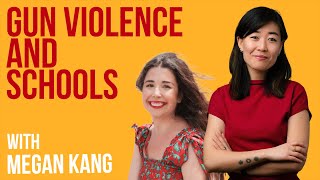
Podcast interview (Teach Your Kids) with sociologist Megan Kang discussing her research on U.S. gun violence and state-level gun policy (1991–2016), community violence interventions, and cognitive behavioral therapy (CBT) programs. Kang summarizes findings that cumulative restrictive state gun policies corresponded with substantial reductions in gun deaths (e.g., ~4,300 fewer gun deaths in 2016 attributable to policies), describes community-level programs in Chicago (Choose to Change, Ready Chicago) that combine outreach workers and group CBT, and outlines practical actions for parents and communities (safe storage, local/state advocacy, de‑politicized conversations about “gun safety”).
Chapters
Hi, everyone.
I'm Manisha and this is the Teach your Kids podcast where we talk about homeschooling, whole child development, and the future of education. And today we are going to be talking about gun violence, which is a topic that's very relevant to homeschooling families because many of you have chosen to take your children out of school because you feel afraid in school environments with all of the school shootings we're hearing about in the country. I'm so honored today to be joined by Megan Kang. I discovered her because she co authored a study with Patrick Sharkey called the Era of Progress on Gun State Gun Regulations and gun deaths from 1991 to 2016, which was featured in the New York Times piece A Drop in American Gun Violence. Megan is a sociology doctoral candidate at Princeton University and her research aims to make sense of gun violence and social policy through ethnography and mixed methods. Megan, thank you so much for being here today.
Thank you for having me.
Could you start off by sharing your background and expertise in the field of gun violence? And I'm also curious what led you to focus on this particular problem.
So I also started off as a teacher. My first job out of College was a 12th grade English teacher. I did the program Teach for America and was assigned to Detroit. And that was in 2014, so many years ago. And it became very apparent to me very quickly that in order to be able to be effective as a teacher, making sure that my students felt safe was the first priority. And oftentimes they didn't. Every single one of my students, I had about 100 students. Every single one of them, except for one, was African American. And every single one of them had had a family member who was incarcerated and had experienced the consequences of the carceral system. So their lives were both touched by the criminal justice system, but their lives were also equally touched by continuous threats of violence. Sometimes for them, coming to school was challenging. Just having to avoid different gangs and having to worry about potential attacks. And so I was teaching in this environment and I realized that thinking about criminal justice, thinking about violence was a first order problem. And that motivated me to go to graduate school to pursue, actually at first, a public policy degree. I thought I wanted to work on the forefront of criminal justice policy and that brought me to Chicago. My family is originally from where I started doing some research on community violence intervention programs that are trying to reduce gun violence through intervening alongside community organizations. I was doing that work and fell in love with research and, and so I decided to apply to graduate school. Again. And that's how I ended up at Princeton working with Patrick Sharkey, who's my advisor and have been really lucky to be able to now produce research about the effects of gun violence on communities, as well as what kind of policies can help reduce gun violence.
Wow. Well, it must feel really gratifying to have your work featured in such a major publication where it can really make such an impact.
I think, yeah, I think it was pretty surreal. But I think it was also really cool to see how the journalist was able to communicate the findings in a way that I think made people understand the gravity of it in a really accessible way. And sometimes research doesn't feel like that. And so it was both very flattering, but it's also, I feel like I learned from seeing the coverage myself.
Yeah, absolutely. And the gist of the article was that, in fact, there has been a drop in gun violence that is directly correlated with stricter controls around guns. Very clear findings. And perhaps it might be helpful, though, for those who maybe haven't seen the article to hear straight from you, your process and your findings as well.
Absolutely. So my co author, Patrick Sharkey and I were really interested in understanding this period between the early 1990s to about 2016, when there's a notable and very significant drop in gun violence that was happening across the United States. My co author, Pat, has written a book about this called Uneasy Peace, which is one of my favorite books, actually, and partly got me into sociology that's trying to make sense of this decline. But we were specifically interested in understanding the decline of gun deaths and the decline of gun ownership that both happened during this period. And we thought that this was an important, interesting question. Just because over the past couple of years, you as well, I'm sure, as your audience has seen the plethora of negative views about gun violence, about school shootings, about just how contentious gun politics have been over the past years, because gun violence has been quite bad. And we wanted to point out that in very recent years, actually there was quite a bit of progress that was happening and we wanted to be able to make sense of that. And so what we did was we specifically were interested in the role of policy on that reduction of gun violence between 1991 and 2016. And we were astonished by the results that we found. We found that a. That increasing restrictive, specifically restrictive gun policies across US States led to a reduction in overall gun deaths, which include gun suicides and gun homicides. From that period, 1991 to 2016, we measured a reduction of about 4,300 fewer gun deaths in 2016 alone because of the accumulation of those policies, which accounted for about 11% of the total gun deaths for 2016 that year. And if you multiply that over year and year, it can be tens of thousands to hundreds of thousands of reductions of gun deaths over that period. And we were really surprised by those findings because I think that there tends to be a belief that state level policies are not going to really make a difference because guns can just move across the state. And so oftentimes policymakers or activists as well as researchers think that the solution needs to be more of a federal national policy or law. But in the United States whole history, there's been about a dozen of the large national laws that have been passed. And so they're extremely hard to achieve and sometimes can feel untenable. And so what our study shows is that actually state level piecemeal interventions do make a really big difference on gun deaths across the states. And alongside that, an increase of permissive gun laws, which in our period, six states increased permissive gun laws, for example, making it easier to access guns or allowing permits for carrying guns in public to be more accessible. The states that enacted more permissive gun policy saw increases in their gun deaths relative to what they would not have seen if they had increased this permissive gun loss.
Wow. What were you expecting to find? I mean, you really do seem shocked by the outcome.
Yeah, I think that we. I think that we figured that we might see some, some effects for specific, maybe for specific types of gun laws, or we might see, we might see effects on cumulative gun laws, on certain types of gun violence, like maybe more suicide rather than gun homicide or. I don't know. I think we thought that it would be more specific and more equivocal. What we did not expect to see was like such clear effects of the cumul, specifically the accumulation of gun policies on all types of gun deaths. And I think once we found that, we realized we had a finding that needed to be written about. And it took us maybe some time to figure out was there something that was really that we were serious, that we were sure that was a serious effect. And we did several different tests using different databases of gun laws. And we also did several tests of looking at different types of gun violence. And once we had done several of those tests over and over and realized, no, this finding is very consistent depending on which data sources we use, we realized this is real. We need to publish this.
I would love to believe that research and evidence can make a huge impact on public policy. But as we know, there is a very strong gun lobby in the United States. And even in the face of the most horrifying tragic school shootings, there has been little progress in limiting guns. And so I'm kind of curious to know in the face of this evidence, what has been the reaction to your article? I'm curious to hear some of, perhaps even the, what are the counterarguments that people have brought up in the face of this research.
But one really positive reaction that I got was from a woman who works at a foundation that's been doing some great work on gun violence. And she told me that before she worked at the foundation, she spent decades as an attorney working on state gun policy. And she was specifically working during the decades that we were studying, the 1990s and the 2000s and the early 2000 teens. And she left her work believing that it didn't make a difference because over that period, even though crime was relatively rare going down, gun deaths were still going up overall, you know, and gun ownership was still going up overall, even though the rate was slowing down. And what was really cool was she said, after reading the New York Times piece and seeing your study, I realized that my work did make a difference. And I didn't notice that when I was there. And that's partly why I left. But now seeing your evidence, I realize like that there is, there is important consequence for continuing to work on gun policy. And I appreciate you guys contribution just for personally for me getting to see that my career mattered.
It's such a wonderful insight because also it's much easier to be impactful on a local level than it is on a national level. So it really gives people more hope in the way that they can be effective.
Yeah.
So I'm curious because you've worked with communities and maybe changing the way people think and feel about this issue. So I mean, I guess the argument that I hear most often is that restrictive gun laws infringe upon second amendment rights. And so how do you respond to concerns that your findings may compromise citizens constitutional rights to bear arms for self defense? And this I know is a really hard question, but I've learned, I like to try to go towards those people who disagree with me rather than run away. And I once attended this protest, counter protest when Charlton Heston was speaking at my university 20 years ago. And I went up to the people who were pro guns and started talking to them and I realized that they just, there's this sense of freedom, like a gun represented freedom to them. So Deeply. And you know, at the same time, I mean, I was at the south by Southwest and I saw this mother whose daughter was killed in Uvalde, who has gone out and tried to convince Republicans to, to just make it illegal for 18 year olds not to be able to use an AR. I don't know what it's called. You know, so how, how do you. Is it, how do you shape people's hearts and minds when they don't feel like they have enough freedom and this gun represents, it's such a key symbol for them in their own personal free.
I think the question of how you should prosobute is, as you said, it's a tough question. It's a really important question. And so as a researcher, I'm not entirely sure how to do that, but I can give you my best kind of answer based off of my understanding of these problems as a researcher. And I think that. So first of all, as a human being and as someone who does work in communities, I understand the desire to want to protect yourself and your family by having a gun. In a world in which we live in, in the United States where there are about 4 million guns for 330 million civilians, that means that there are more guns than there are Americans. And it's really, I think it's very scary to be living in this country as a parent or even as just someone who lives in a neighborhood where, like I do in Chicago where there's quite a bit of gun violence and it feels oftentimes like the best solution is to equip yourself with a gun just in case something happens. And many of the people who I work with in the neighborhoods of Chicago on the south and West Sides where there's the most gun violence, feel like they need to carry a gun even, even illegally, even if that means that they're going to risk the chance of getting stopped by police. And for them, that's. That is how they leave the house and go to their job and go to school is the feeling that I can protect myself. I need to. And I understand that. I also have good friends who feel like I need to have a gun in my home in case someone does something to my family. I want to be able to protect them. I think that that's a very human feel feeling and I think it's a very valid feeling. So I want to say, first of all, I completely understand that tendency and I sympathize with it. I think that, I think that what's kind of interesting about our country is not only that we have more guns than civilians, which is not true for any other country, but that gun guns have been such a contentious issue and such a politicized issue. So, for example, gun registration, having the state register that you have own a gun is what most other countries use just to track the number of guns that there are other countries but the United States. It's illegal for the United States government to track guns, and that was banned in a law passed under President Reagan in the 1980s. And gun registration, which is kind of a normal thing in other countries, is a very hotly contested issue in the United States because it's perceived as infringement on someone's right to have a private gun. And so I think, you know, that's just an indication that, like, there's something that's different in this country when it comes to our gun politics. It's like you said, it's a part of people's identity on one end and it's a part of people's feelings of safety. And it also has created a lot of loss in this country. And so that's all to say. Everything you're saying about how contentious and how difficult this is both makes sense on an individual level, but then on a country level is extraordinary and is not the same in other countries, I think.
So.
Nicholas Kristof has this had a nice article where he says that rather than thinking about gun control, we need to shift the conversation to be about gun safety. And I really like that point, especially for your audience who are parents and thinking about their children and their schools and their neighborhoods. I think that shifting our vocabulary and even the way that we conceptualize this conversation as one that is about the safety and well being of our communities and our families is really helpful for me and I think helpful for advocacy work in general. And I think that learning some of the basic facts to like, I don't know, I'm optimistic as a researcher that hopefully there are just some facts that don't need to be politicized that we can just put on the table and say, let's talk about this. And what we decide to do with this may differ depending on your political ideology, but at least we can say that these are the facts. And the facts that in this country, the United states has about 5% of the population globally, but we have 50% of the firearms globally. Globally. And so a world in which we decide that the answer to more guns is more guns, which by the way, I think parents are split about whether or not teachers should have not parents. American citizens are split 50, 50 about whether teachers in school should have guns in response to the shootings that have been happening. So it tells you like it's a tough issue. People see the gun violence, it's happening. They think maybe the answer is that we need to be equipping people, more guns. But that decision on an individual basis, which makes sense, I should have a gun, my teacher should have a gun for my student, multiplied across millions of people, will continue to lead to a situation in which this country has, I mean, I don't know how much more we will get to that point where we have more than we have already 50% of the global stockpile of guns. But it's not clear where that ends. And I think what I see from the evidence is that when people have guns in their homes or when people have guns, they're more like in public, they're more likely to use it, whether it be they're more likely to use it against themselves or they're more likely to use it against others. And so I think, I think it's just important to know what those basic facts are so that we can then decide, given that information, what should we be thinking about as a community for how to respond to gun violence. And I think that the answer based off of the research is not more guns. We need communities and we need states to interview and say, actually we need to. In order for having more safety, we need to restrict who can have a gun and when they can have a gun. And that will make the people who do want to have guns legally more safe and their families more safe.
Yes. I just think you described that so beautifully and I hadn't even thought about how for someone living in a danger, dangerous community, a gun can feel so critical to their own safety and well being. I will say it frustrates me on this particular issue because I feel like there are a couple powerful companies that are making a lot of money from selling guns and that many people don't even realize that some of the laws that are being blocked from getting patients getting past, you know, that are just very sensible. So I wonder how local communities can help inform people around them about gun safety, as you put it.
There are a lot of national organizations that are doing really important work in making just the information, like I said, the pure facts, the data more accessible. The Giffords center is an incredible organization that does both advocacy work and great data work. I think every town is another organization. Center for American Progress is doing important national work. And then at the community level, I think that there are I'm sure so many different organizations that are doing community level work. I'm in Chicago, so I'm most familiar with a set of actors that are working here. And there's a whole group of organizations at the neighborhood level that are working on trying to intervene in gun violence by leveraging credible messengers who are people who are living in the communities, who are people who have been affected by gun violence themselves and are trying to, I don't know, like, work alongside youth who feel like they need to carry guns and they need to, whether, like be in gangs or they need to carry guns in order to be safe. There are many organizations in Chicago that I think are doing incredible work that are trying to change that belief and show people, hey, I once believed that myself and then I went to prison for two decades and now I'm out. And I'm telling you that that's not the right answer. And so I'm most familiar with a set of organizations that take that approach.
Yeah, well, it seems like based on what you've said, that that could be quite effective. I mean, if these state laws are making such an impact, people focusing on educating those in their community and in really pulling the levers to get their senators and congressmen to change laws could be quite effective, actually.
Absolutely. I think that that's so important is having more people who are willing to share their stories, who are willing to talk to their neighbors. These are really hard discussions to have. They're really like we talked about, they're really contentious. But I think people being able to share, one, this is what I'm reading about, like, let's talk about this. And then two, this is what I'm seeing and feeling in my neighborhood. Let's talk about this. And to have those conversations across the table with people who might not agree, I think is always the first place to actually starting to change hearts and minds is just having conversations with your friends and family. Yeah. So I hope there can be more of that at the community level.
Yeah. Your article really covered some of the gun laws, like in California, for example, and show that there. Are there some states that have better gun policies in place than others?
Yeah, there are definitely states that are at the forefront of that. What's tough is oftentimes those states are also places where there's a lot of crime. And that's not necessarily like their gun laws are reducing the amount of crime that could happen, but oftentimes they're because they have a lot of crime, urban areas. So I'm thinking of Illinois, for example, And Illinois has some of the most stringent gun policies. Particularly Chicago has some of the most stringent gun policies. But what's really tough is that we're in the Midwest and surrounded by other states that don't have strict gun policies. And so it's very easy for individuals to get a gun by going to Indiana and then crossing over state borders. And so this is one of the tough kind of contradictions of our work, is that we find that these state laws really do make a difference, but at the end of the day, they're not the end all answer. Because we live in a country in which it's very easy to still acquire guns from other places and for them to cross borders. I don't think that there is a state that is the shining example. I think that New York and California are the states that have the most strict gun policies historically and today. I think the thing that's worrisome is that since the end of our study, the end of the study years 2016 to today, the past seven years, we've actually seen an unwinding a lot of the policy restrictions that we were studying in those earlier years. And so over the past seven years, states have actually been one, expiring some of their more restrictive gun policies or undoing them or not continuing them on. And that's compounded by the supreme court ruling in 2022 that made it harder for states to enact restrictive gun policies. And so it's.
That's tough.
Yeah. Our study has some optimistic findings, which is that policies can make a difference. But the unfortunate reality is that there's a caveat to that, and that's that there have been loosenings of gun laws over the past seven years and increase of gun deaths.
Oh, it's so, so hard to hear about when people are thinking about, should the teachers at my child's school be armed? Would it help prevent gun violence at my school? And perhaps this is an area where a conversation could be had at a school board meeting. Does that work? What is the research around teachers being armed at schools and preventing gun violence?
So I'll say that those parents are not alone. A survey that came out this year by Pew shows that I think one in three Americans fear that gun violence could happen at their school. It's a lot. That's a lot of people who are worried about their kids going to school and get. And, you know, being victim to gun violence or having exposure to gun violence. I'll also say, as I said earlier, that Americans are split, I think, 50, 50 on whether or not school administrators, staff and teachers should have guns. So the public is split. It's a tough question. I think that there's not great studies about the effect of having teachers or school staff having guns and what that does. But what I can say from the work about how having gun access affects children in general, I'll talk a little bit about that and that might be relevant to this question. My co author, Patrick Sharkey has a study that he looks at the effect of violence on children's cognition that came out in 2010. And he finds that when there was a shooting about a week before a standardized test that happened, and kids live within a few block radius of that shooting, then they're losing grade levels when they're testing on verbal and their verbal tests and their reading tests show that they are losing equivalent to grade levels because that shooting. And so that goes to say that the exposure to guns and gun violence has extremely real consequences on students abilities to focus in class, their ability to take tests, and their ability to absorb information and learn. Whether or not teachers having access to guns reduces the likelihood that they're going to be students are going to be exposed is unclear. But what the data shows about having guns at home suggests is that more often than not having guns at home actually will increase your family's risk that there will be an accidental shooting, more so than the probability that you will then use that gun to stop a perpetrator from coming into your house. So unfortunately, and this is not always the case, but this is why safe storage is really important. But oftentimes well intended solutions to arm yourself or to arm, maybe a teacher could end up in either suicidal ideation or a child accidentally accessing that firearm and then accidentally having a firearm injury themselves. There's no clear answer about what the effects of arming teachers are, but I think that the research shows that on average, gun availability tends to have negative repercussions for your loved ones. More so than it has the effect of reducing someone who's going to harm you. Yeah, it's a complicated issue, but that's generally what the evidence points to.
From my understanding, when there was a school shooting in Australia, they just immediately instituted extremely tight gun laws and then there were no more shootings. Whereas in the US we've had all of these tragic shootings and yet you are saying that now we have loosened gun laws even though our kids are getting shot, people are being attacked in places of worship, at concerts. I mean, why are Americans like this? Are we just mean people? What's what is. I mean, I know this is not really the topic of your research, but you've really lived in this world for a long time. Are there some principles of the way America was founded or our culture that make it particularly difficult to let go of this problem, which is clearly causing so much havoc in our country?
That is such a big question. I love it. It's so hard. So I'll talk a little bit about one part of your question, and then I'll try. I'll speculate about the other part. And so how do we get to this point? So some of my work that I've done with my. My friend and colleague Elizabeth, research shows that actually what got us to this point is not what you would assume got us to this point. So I think that there's oftentimes an assumption that Americans bought a lot of guns because of the crime situation, but we actually find that Americans acquired so many guns before crime got bad in the 70s and 80s, our increase in guns, that got us to the point that we are today, like modern American gun culture, in which people are buying guns predominantly for protection against other people, rather than using them for hunting or leisure or recreation or sport. That really started in the 50s, like the late 40s and early 50s, 50s, which is kind of surprising because that's a period in which there was very low crime all time, high trust in the government. And so when we found that, we were puzzled, why. Why did Americans, like gun purchases skyrocket in the mid 20th century? And what we found was actually what kind of got us to this exceptional gun culture that we are today is a remnant of the World War II plethora of old guns that came in and were imported in the United States. So cheap guns after the war were available. Most other states that had those guns had more strict regulations at that time, but the United States, because we've had historically pretty lax gun regulations, we were able to bring all those in at very cheap prices. And Americans started buying imported, formerly vintage war guns as collector's items, as sport or leisure firearms. But that really started in the 50s when unemployment was down, income was up. It was kind of an economic boom and this incredible moment in American history that allowed for what is now today very unique gun culture. And so that all goes to say that I don't think that Americans are fundamentally different than anyone. I think that, like, we're all people, but I think that there were some historic circumstances and policies that made way for the amount of guns that we have today. And then I think my My belief about like why are we so unwilling to give up our guns? Is partly like we do have a American tradition of guns that's been a part of not only our Constitution, that that's been a part of our history since the beginning. But I think that it's one thing to have a tradition of guns for sport and leisure, it's another thing to have a tradition of guns as self protection against other Americans. And that is a very modern phenomenon that really started in the 70s is when you start to see Americans shifting from buying guns for sport and leisure to buying guns for protection against each other. Like we were talking about earlier on an individual basis, when you fear for your own safety and your family safety, it makes sense for you to equip yourself with a gun. But then when you multiply that across millions of people, you get to a point where it's a self perpetuating arms race in which now everyone feels like they have to have a gun. And so we got to a point sometime in the 70s and 80s where personal safety meant or where safety meant I need to personally buy a gun rather than we need to think about the public safety of our community. And I think that guns have both been the answer to people's fears about that and the perpetuator of people's fears, unfortunately. But I don't think that we're like fundamentally different than anyone else in the world. I think it's kind of a weird concoction of historical events, policy and then individual fears that have led us here.
Yeah, for sure. I mean I'm a child of the 80s and I remember kind of in the 90s there started to become this almost movement of women who were carrying around a gun in their purse for self defense and kind of it's almost glorified in a way or women seem kind of cool and strong if they have a gun. And we, our country is so divided when it comes to Republicans and Democrats and there's so much polarization in different issues. I'm curious to know about some of your current research. In particular, I saw that you're working on a paper understand understanding the mechanisms behind cognitive behavioral therapy interventions on violence involvement. Could you tell us a little bit about that and perhaps maybe even the role of mental health in preventing gun violence.
I'll start off by saying I think that the role of mental health in preventing gun violence is a really, it's been a really popular talking point and I think that it's very important. I think that mental health and gun violence are certainly Connected. But I think that sometimes emphasizing mental health can be a distraction on the conversation, which I think really should be about gun availability. I think it becomes an easy scapegoat for like, let's focus on mental health of the person rather than the fact that the person was so easily able to get a gun. And so I think that it's kind of a catch time too. I think mental health is important and we should continue to invest in it. And I also think that it's not the answer to resolving our country's gun problem and our gun violence problem.
I mean, for sure. And may I just say as a teacher that the young people who went into their school and shot children were beyond, you know, one on one therapy sessions. These were deeply traumatized psychotic people who. So yeah, I agree with you.
So I'll talk about the new work that one of the new studies that I've been working on that I'm, I'm really excited and I think your listeners will be excited about as well. So we looked at two programs that are happening in Chicago. One's called choose to Change and one's called Ready Chicago. And they're both aimed at individuals who are living in neighborhoods that have extremely high rates of gun violence and they themselves have been identified for being at risk of being victims of gun violence. One of the programs is administered at schools, at alternative CPS schools, so for specifically for students for whom the normal CPS school hasn't worked for and need more supports. And then the other program that's choose to Change and the other program is administered for adults who are in between about ages 18 to usually like late 20s. And both. What both of these programs have in common is that they are trying to reduce individuals risk of being victim or perpetrator of violence by giving them a combination of two things. One is assigning them an advocate or an outreach worker who is there to support them and mentor them and help them whatever way possible. And very significantly, these, these supports come from the neighborhoods themselves and often lived lives very similar to the people that they're helping. And then the second component is cognitive behavioral therapy. And that is oftentimes in both of these programs, it's group administered cognitive behavioral therapy in which they're receiving lessons on how their thoughts and beliefs often lead to automatic responses that then trigger a set of behaviors that can be detrimental to themselves and others. The CBT we're finding, and what our study is doing is not saying what is the effect of these programs because that work has already been done for us. And the effect on educational outcomes, the effect on employment and the effect on violence are all astounding. These programs reduce violence involvement for years later. Three to five years later, they increase educational outcomes. So we're not looking at the effective programs. We're actually looking at how participants of these programs describe the effects in their own lives, in their networks, and how they kind of move forward after being a part of these programs. I'll focus on the students because that's, you know, I think that's the focus, the educational focus of your podcast. And when talking to the students who have been in choose to Change, which is a six month program where they receive group therapy once a week as well as assigned a mentor, I was blown away because I think, to be perfectly honest, I was a little bit skeptical. You know, could CBD really have that much of an effect on students future involvement in violence and crime and their educational outcomes when they're living in an environment that's not changing? So you're giving them some extra supports, but they're still kind of in the same school, they're still in the same neighborhood, they're still going to the same home. But what the students described was these programs transforming themselves. They don't see it as violence prevention program. They don't see it as educational support program. They see this as a program that is giving them the tools to be in better control of themselves, to be able to notice when they're what they call like things that mess you up mupps mess you up when their negative coping strategies are getting in the way of them doing the things that they want to do and succeeding in their goals or succeeding their relationship. And so they describe these programs as with a combination of the support is essentially giving them the tools to navigate the incredible obstacles that are happening in their neighborhood. And also another crucial outcome that we saw was it changed the way that they interacted with people around them. And so not only was there a sense that I have more efficacy over how I respond, but I can choose who I'm in relationship with and people who are being negative in my neighborhood, I actually don't need to be around them. And I'm better than that. And I'm going to go time with these other people. And so these programs, the outcomes that we measure that other researchers measured are crime, involvement, education, employment. But what we see from talking to the participants themselves is really a story of being able to relate to themselves and relate to other people differently.
That's wonderful. I mean, it is no fun to live in fear and Anger. And it takes me back to what you were saying about gun violence. It kind of brings up this almost ancient image in my mind of both. One person has to lay down their arms first. You know, it's kind of an iconic idea. And if you can heal your fear, then it can allow that type of letting go, which eventually heals everybody.
That's beautiful. I love that.
Yeah.
And. And I also, like, I'm glad that you asked me about this study, because I think that this type of work, the community violence intervention work that's supporting individuals who are living in neighborhoods, needs to be in conversation with the other work that we're talking about, which is the policy work. And I think that one I see as more of like, let's stop the bleeding. And the other one I see is, like, trying to address the situation and the environment. And so I think that we need to continue to provide these supports to students, to parents, to people who are. Are grappling with the effects of gun violence. And I think that we also really need to be thinking as a society about the availability of guns in general. And so I think that you need both.
I mean, and on this topic of violence, I mean, what is. What are your thoughts on why we're seeing cases in the news of very young children? I mean, killing each other? It's so upsetting and disturbing. And, you know, and I know I work with homeschoolers, so I know that people are leaving school because they've been bullied or because they have been the bul. And even very young children who are acting out violently. And I'm curious to know what we can do to help this problem, as well as what the roots might be.
Yeah, I mean, I think the first thing as parents is that I think parents can think about trying to, first of all, like, reduce the likelihood that their kid will have access to a gun. I think that we know that, like, for example, some of the strongest evidence that we find is waiting periods and safe storage have the biggest effects out of all the laws that we evaluate on reducing accidental gun injury or suicide. And so I think that if you do have a gun, making sure that you're safely storing it. If you don't have a gun and you're thinking about getting a gun, probably don't get one if you have kids at home, because even if you think you can safely store it, oftentimes it's too easy to get a hold of it. And we know that exposure or having access to gun increases suicidal ideation. So I think that's one thing that parents can think about. And I think, like, I don't know, my current work with youth is reminding me how emotional it is to be a teenager or to be a kid and how. I think that essentially what we find in our work is that guns are not the. The. The root of the problem is not the gun itself. The root of the problem, obviously, are other things that are happening in society. But you throw a gun into it, and it makes it a lot worse. It makes it much easier to do whatever harm to yourself or to others that you're thinking about doing. And so I think, first and foremost, parents need to really, like, focus on how do we get guns out of our communities, especially, you know, on kids. But I think that, why are kids killing each other? And I think that rather than thinking about it as, like, a problem of this new generation, I think we have to think about it as, like, our problem that we're responsible for, because these kids are inheriting the situation that they have been given and are now navigating a world in which gun violence is a very real fear of going to school or walking in your neighborhood. And that's not their problem. That's our problem. You know, why are kids killing kids? Like, I think it's because there's a. It's a situation that they've become normalized to. Like, I'm thinking of a. In Chicago, I. I was at dinner, and I. I was with a group of friends who all live in the west side of Chicago and work on the west side of Chicago, which is. Which are the neighborhoods that have been most impacted by. By gun violence in the city. And one of my friends was sharing a story where he was overhearing two kids that live next door to him. There had been. It was either like a firecracker or a gunshot. It was not clear, but one kid, like, was very startled and kind of screamed and reacted. The other kid made fun of him for, like, having what I think is a normal human reaction to a loud, threatening sound. And I think that just goes to show you that in many neighborhoods, kids are so immune to gun violence. Of course, mass shootings and school shootings are huge, but that's less than 1. Mass shootings are less than 1% of all shootings in the country. What's much more common as suicide is the most common type of gun death. And then second. Second. Second is homicide. But the.
How.
I think how immune kids are is a problem.
Yeah, absolutely. And I just want to kind of highlight one thing which you said quickly which is that having a gun in your house increases the risk of suicidal ideation. And social media is taking a huge toll on teenagers health. And we're going to have to find a way to navigate that as a society. But it's just so important for parents to remember, you know, when you're thinking, well, I like my guns, it's always been part something fun for me. It's just part of who I am. And, and you know, it's like you just have to remember that this will impact a child living in your house. And at a certain point, maybe take a deep breath and ask, is my hobby most important or is the safety of my child most important? And so many times we don't even know that children are suffering and having mental health problems, even if we're their parent. And also another dimension of modeling is how divided we are in politics and how hard it is to just take that step and listen with compassion to someone who doesn't share your point of view. Such as somebody who for me, you know, thinks that everybody should have guns. You know, I just don't like that person very much. It makes me really, really angry that, you know, my view is how could that person be so incredibly selfish as to value their hobby over the safety of a child? I can stretch myself to open my heart and listen with compassion, which opens the door for them to open their heart and listen to compassion to me. And we just really have to remember that we are our child's first teacher. They are watching us all the time. And so if they're exhibiting anger and aggression, maybe if we're not even overtly exhibiting anger and aggression, we're just getting mad about stuff on social media or whatnot that does impact our children so profoundly, 100%.
I think you said that beautifully and much better than I could have said it.
Well, I think you said it beautifully too. And I also bring up one more thing for me, which is that I used to be extremely reactive. And maybe you might not guess it from this conversation, but. And, or even when I was out and about, you know, 10 years ago, it's just I was building my first company and whenever someone said something negative to me, I just felt so angry and I just couldn't stop but react. From sending a reply to that email or acting out in some ways I felt like I had no self control and I ended up working with a therapist who did a lot of CBT techniques with me from, you know, certain mindfulness activities where you just stop and it's like, okay, five Things I see, four things I hear, three things I smell or another, and some dialectical behavioral therapy, like just freezing your body or putting your face in cold water. You should do these with a therapist, but they're incredibly effective. And through that work, I actually became not a reactive person anymore. And if someone was talking very long, sometimes I would get really frustrated, and then I would go to the mindfulness technique, and that would help me a lot. So. So these practices really do work, and it's a great place to start if you want to help impact the world.
I love. I love that story. That's really cool to hear that. How much of an effect CBT has had for you? Yeah, I think. I think it's. I also. I quit smoking from. From CBT as well. And I think that it's clear that CBT works in changing our behaviors. And I think that the same goes for acting violently. For kids whose immediate reaction is, if someone threatens me, I'm going to hit them back. Which is something that you're often taught in the neighborhoods where there's a lot of violence, that you are responsible for your own safety, and if you don't stand up for yourself, you're going to get bullied more. And so if you're taught that over and over from when you're a toddler, by the time you're age 16, your immediate instinct is to fight back, is to hit someone back or you. Sometimes it's to go grab your gun and to go, like, take care of the situation in more violent, lethal means. And so it's freeing to know, actually, that is just my automatic response. That's not necessarily the response that I need to or should or want to have to these situations. And how do you alter that? By becoming more aware of. That is exactly what these programs are, are doing and are having a really astounding effect.
So I imagine a lot of people who are listening to us are very concerned about gun violence if they've come to this part of the episode. And I have a deeply held belief, which I repeat on a lot of the shows, which is that if you are feeling anguished about something, the best thing you can do for your own mental health is to take not just any action, but strategic action that actually makes an impact. So I'm wondering, let's start with the teenager or the parent of a teenager who's very distressed hearing about school shootings in the news, or maybe there was even a school shooting at their school. Is there an action or maybe two or three simple actions you can suggest that would help move us forward in this problem, whether it's calling their senator or what would you recommend for someone who wants to play a role in ending gun violence in America?
So one of my mentors always says, like, work starts at home, and you have to take care of your family first in order to do anything beyond that. And I think that that's so true with regards to this problem, is that making sure that you and your family are having conversations, especially with your kids, about these problems and understanding where they're coming from, understanding what their fears are, understanding how they're dealing with those issues, I think is the first step is just. Just being comfortable talking about these issues and hopefully in a depleticized way where we can just actually talk about them again, as not gun control, but gun safety, whether it be with your kids, whether it be with your siblings, whether it be with extended family members. I think having those conversations at home is where it first starts. And then I think. I think that in any way that you can press your local and state politicians to be enacting more restrictive gun policies, I mean, that's the key. Key finding that we show in our paper is that these cumulative pieces of legislation make a difference whether they're local level, whether at the state level. It's not just national policies, it's the small ones that actually add up and make a huge difference. And so whether that mean calling them, writing them, organizing, I think that the best bet that we find in making a huge difference in this issue is passing laws that restrict gun availability. And at the end of the day, we need to have state intervention doing that. It's not enough just to have individuals having conversations with each other. There needs to be intervention in the state of affairs for the solution to really be widespread. I think that it starts at home, changing hearts and minds, like you said. But we need our political actors and representatives to pass laws. Right?
The effective activism happens in circles. You have to begin with yourself and then the family, and then local and state level. And you can even go to a town hall and pressure your local people to talk to the state people. I mean, that's how networking works, is really put those levers on the people who have contact with those in power, and you can make an impact that way. I think especially young people, often they're tied into big networks at their school or their homeschooling community or their place of worship, and they can get a lot of people to sign a heartfelt letter, and that can make a big impact. You can even Put it in the news now there's YouTube. You can make clips about it. And if more and more people are doing that, we're the voters and we can hopefully start impacting how people vote.
Yeah. I've been really encouraged by seeing students who have been survivors of school shooting and how they've organized. And I think that that has. And some of the most powerful examples of activism and organizing is seeing that they are saying, this is enough. And adults, why are you not seeing this? And so having more youth participate in these conversations and movements is also extremely powerful and changing the norms among their peers.
Yeah. And we can follow those people on social media and support them and get involved in their efforts. Fantastic. Megan, are there any important points that we've left out today or areas of research that you want to touch upon?
I think the one thing that I would say, like, I think that really shifting the way that we're thinking about this, these issues from not only gun control to gun safety, but from personal decisions to neighborhood level decisions, I think, or community level decisions, I think that that's what's most important is I think our natural instinct is to think about safety and think about how do I keep myself safe. But if we can really shift that conversation to how do we keep our kids and generations safe, I think that that would go a long way. And I say that because guns. The truth of the matter is that my decision to buy a gun is not only affecting me and my family, but that gun's going to be around. If it's taken care of for 100 years, it's not going anywhere. And that gun could also accidentally get to another place and be used in a crime. There are like tens of thousands of guns that are recovered in crime every year that were once legally purchased that just, it got lost or got stolen or something. And so I think that for parents to really try to shift their understanding and those around them of guns as an answer to my feeling of insecurity and safety, to thinking about how my decision of purchasing or owning a gun will affect my kids and future generations, I think that that's. That's one thing I would hope to leave your listeners with.
Yeah, for sure. And I mean, I've heard studies too, that if you have a weapon, it's most likely to be used against you as opposed to a way to help yourself. So. Well, Megan, this has just been wonderful and I am looking forward to continue to reading your research and seeing the huge impact I know it will make on public policy. And I see that you have so many beautiful images in your background paintings. And I like to ask every one of my guests if there's something interesting you're learning about that's completely unrelated to the topic at hand today.
Yeah, I need to surround myself with a lot of beauty because I think that when you study something like gun violence, it can be really hard. It's very intense. I'm learning dressage right now. I grew up around animals and riding horses and I love it. And I think just being in nature and being around animals, it's kind of like being around kids. Like you just can't take yourself when you're around horses or when you're on kids. And so I like to supplement my academic work with going to be with the horses at least once a week. And that I find really grounds me and keeps me sane and keeps me able to continue to do the work.
Awesome. Well, thank you so much again for joining us today. If people are interested in learning more about Megan's work, they can find you@megankang.com that's M E G A N K A N G.com and you're also on Twitter kangmagan. And yeah, just really thank you so much for being here and your work and just the heartfelt connection. It really means a lot to me that you are supporting families through evidence based research.
More from Manisha

Contributing to Florida Prepaid Plans (2026–2027) | Step-by-Step Guide for FES-UA Families

Contribuyendo a los Planes Florida Prepago (2026–2027) | Guía Paso a Paso para Familias FES-UA



Finding Providers & Services in the Marketplace (Families) | Step Up For Students (2026–2027)

Encontrando Proveedores & Servicios en el Mercado (Familias) | Step Up For Students (2026–2027)




