Talking to Kids about War: Listening, Speaking, and Constructive Action
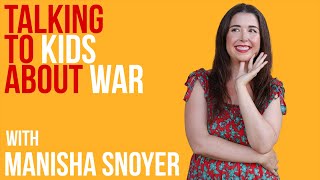
A YouTube talk by Manisha (Manisha Snoyer) from the Teach Your Kids channel about how parents can talk with children about war and peace. The speaker frames a four-step approach: (1) understand and regulate your own feelings, (2) listen attentively to children, (3) inquire together about causes and history, and (4) take constructive action. The video references the Israel–Palestine conflict and the emotional toll on families and activists, includes the speaker’s personal background (time living in the West Bank, Brandeis experiences), and emphasizes education and local service (e.g., teaching reading) as high-impact, constructive actions parents and children can take.
Chapters
Hi, everyone. I'm Anisha, and this is Teach youh Kids. And today we're going to talk about how to teach our kids about war, teach our kids about peace. We're going to talk today about how to teach kids to make peace, what we can do to create world peace, a world that's sustainable, a just world, and a world where we can all be happy and all thrive. Which, as a parent, I know you care about as few others do. And even if you think you don't care, if you feel numb, this may manifest in other ways for you, other anxieties, other pain. I'm going to talk about difficult subjects in this episode, and I think you will feel better and hopeful at the end. But if you can't handle that, I'm just going to summarize right now what we're going to discuss. And then at the end, we'll return to some concrete tips on how to talk to your children during these very challenging times. First, we seek to understand ourselves before we begin. We listen to our children with our whole body, our whole selves. We inquire together. We continue, and we continue to dig deeper. And fourth, we take action. I did not want to talk about this topic. I am bringing it up because of the conflict in Israel and Palestine. It's something that I don't like talking about. It's very fraught with emotion for me. I don't like to get into arguments about it, but we feel it deeply and it affects all of us. I want to start by acknowledging the pain that many of you are going through right now. My friend in Israel is posting pictures of children who have been kidnapped. And I spoke to a very dear old friend of mine, a Palestinian peace activist who does not want to talk about the conflict at all. He's been working his whole life for peace and he's terrified that there's going to be a genocide in Gaza. I see posts from my friends on LinkedIn talking about how they feel like no one is listening to them, no one is hearing the Israeli side of things, and conversely, that no one is listening to what's happening in Gaza. Everyone is in so much pain. And I want to say, we're here, we're safe in the us Nothing can happen to us. But I'm not going to lie to you, this could impact you and your children. There could be a war with Iran. All of these things are possible. I hope so much that it doesn't happen and we find a way to peace. But we can't ignore that these realities Exist. I will also say the media has a huge role in all of this. I mean, imagine if every single day you woke up, you went to your child's room, you woke them up and you told them the worst possible thing that is happening in the world. Imagine what their day would look like. And yet every day many of us wake up and check the news. And the news is designed to to rob us of our happiness, rob us of our time, and tell us that the world is a horrible place where we are not capable of changing anything. But that is a lie. The world is becoming more and more beautiful every single day. And there are things that we can do. This was a very difficult week for me, as I know for many of you. I lost a friend. This was particularly upsetting to me. I mean, I will be honest, I hadn't spoken to this friend in 20 years. And even at the time we knew each other, we were not necessarily buddy buddy in terms of hanging out and having a relationship, but we participated in a group together for three years that was designed for spiritual growth and emotional growth. The Israeli Palestinian crisis is something that I have not spoken about in 20 years. When I was 20, I went to Brandeis University, which some of you know is a Jewish sponsored university. I am not Jewish, but many members and my ancestors were killed in the Holocaust. And so I definitely have a connection there. But I wasn't raised Jewish. I didn't have much knowledge about the Israeli Palestinian conflict. But when I got to Brandeis, I was interested in peace. So I got involved in an Arab Jewish dialogue group and I became the facilitator. And Brandeis has a wonderful scholarship where they bring an Arab and a Jew together to try to build coexistence on campus. And I became friends with an amazing woman, Marina, who is a peace activist in Israel. And she suggested that since I was not Jewish, I could go and live in the west bank and volunteer for a Palestinian peace organization, which I did not really knowing at all what I was getting into. And I spent three months living in the west bank and connecting with children there and researching dialogue efforts. And so it was an incredibly eye opening experience for me. I went in thinking that there were two sides to this conflict, the Israeli side and the Palestinian side. And I discovered that there were not in fact two sides, but a million different perspectives. And that so much of the conflict was connected to people's inability to live their daily lives. Most of all, just in my three months living in the West Bank, I became completely traumatized and numb and I didn't know before I went there how the mental health of the people living in this region is damaged by the conflict that is happening there. I didn't realize how much questions of sustainability were linked to conflict, just inability fighting over water and land and resources. I thought it was much more about antisemitism and anti Arab sentiment. And that was not the case of what I saw. I just saw people trying to live their daily lives. I went home and I went back to Brandeis and I started fighting about the Israeli Palestinian conflict with everyone. And I was so upset and drained. And finally one day I just said, I am done. And I haven't spoken about it since. When this happened, this war, I didn't want to talk about it. But the more I saw people in our own country, in my own country, begin to be upset, and the more I started to feel upset, the more I realized that I had to speak about it to help us move forward in making the world a better place. So I'm grappling with the death of my friend and this Israeli Palestinian conflict, you know, other issues that are going on in my daily life. And you know, it's funny because I, you know, it's just so strange when you're grieving. I mean, I find that I can't even process what's happening with my friend or this conflict. But then I get just like really, really upset because there is a stain on the kitchen floor. And all of my energy and obsession goes around that stain on the kitchen floor. The way we process grief is so strange. What I realized is that I do have a way of coping with the darkest times, A way that I found for myself that works. And that is what I'm doing now here on this podcast, which is starting a conversation with you. Because what I have learned is that the only way I can get through dark times is by taking constructive action to make the world a better place. And this is something that you can do with your children as well. So how do you teach your child about something as difficult and painful as war? The most important thing, and I hope I say this on every podcast, is that you need to follow your own intuition about what your child needs. You have so much deep wisdom as a parent and if you can take that time to give yourself some self care and get clear, you know what's best. And so if you're unhappy with what they are teaching your child in school about the war or what they are teaching on the news, or if you're unhappy with your child looking at your iPad, if you're unhappy with anything that I say, trust yourself. Remind yourself that your intuitions are strong. So as you're listening to me, take the things that resonate with you and ignore the rest. So now that I've told you what you know, what you can do, I do want to tell you what I think you should not do. And the first thing I think you should not do when talking to your children about war is say that some people are bad or evil. And when we see some of the things that are happening in this war in our world, and you know what? These things are happening every day. The Israeli Palestinian crisis is getting much more attention than things that are happening in Africa and other places in the Middle East. But you can guarantee even in your own backyard there are horrible, horrible things happening. And what I will say is avoid saying that some people are bad and that's why they're doing what they're doing. And I even mean something as extreme as a school shooter. If you say that some people are bad, what kind of power does that give your child? This comes back to this basic principle of growth mindset. So if you say to a child, they did this thing because they're evil, your child can't do anything about that. They can't make that person less evil. But if you can dig deeper and inquire, what are some of the mental health reasons, what are some of the natural resource reasons that have led to these events? And you don't have to say these events are okay. These kinds of qualities are things that children have power over, that you have power over. And if you need a moment just to say they're bad and they're good, just to almost assuage yourself, that can give you the illusion of temporary control. And I don't want to take that away from you. But when you praise or condemn people's character, it gives the illusion of control, but no real power. The best kind of learning is inquiry and experiential learning. In any lesson, in order to teach any lesson well, we can begin in two ways. We can follow a child's natural curiosity. Maybe your child is asking you about the war, and you can follow that lead. Or we can think about our goal, what we want the child to learn and take away, and what tools we need to get there. And maybe it's not about teaching them about war. Maybe we simply want to receive them, to respond to their questions, their pain. If that's you, I applaud you. You're open enough to receive your child's pain without Trying to make it better and without imposing your own beliefs. But first, we need to deeply understand ourselves so we can be sure we are guiding learning, not imposing our own truth. And that doesn't mean that you don't have values that you want to share. I mean, if your family has a history of being, you know, experiencing any kind of racism or antisemitism, if you have religious values, you are going to bring your own bias to the table. Of course. And that's why I've shared my own bias with you. I mean, I lived among Palestinians for three months. I went to Brandeis. I have family that died in the Holocaust. I am not there. I don't want to talk about this conflict. These are all things that are impacting the way that I am communicating with you. My entire life, I've believed in peace. I think war is a bullshit. I don't think violence is a good way to solve our problems. Those are my values. I think that violence demonstrates a lack of courage. And to act in the way of peace takes much more courage and intelligence and is more effective. I will always teach children. I know about the way of peace. That's me. So just really be aware of who you are. Let's say that you've decided simply to receive them. That's what you are doing. They have questions about war or peace, and you want to be there for them. And so in this approach, the really important thing that you can do is start by listening to what they're asking and what they're feeling, and even ask them when they ask, why is there a war? Start with them. See if you can understand what have you heard is happening. How do you feel about that? What does it feel like in your body? Children often associate feelings with colors or shapes, so you can really dig deeply. Do you want to do something about it? These are all questions that are really great to follow. It's really important that you honor how your child is feeling and you give them that space to listen to them and to hold their pain. When we think about teaching our children about war, maybe it's as simple as that, that we're just listening. And maybe they don't have questions about war. Maybe they don't even need to know that an Israeli Palestinian crisis is going on at all. And you can shield that from them. That's totally fine, too. But you have to acknowledge you're also having feelings about this. And it's okay not to know. It's okay to say, I don't understand why this is going on. I don't understand why people are angry at each other. But I know that I want to make the world a better place. It's all right, as a parent, to acknowledge your own confusion. Maybe you have a reason that you want them to learn about war and about peace. It's really important to understand why are they asking, what questions are they asking, and to follow those questions. But also think, what do you want to learn about history? What is your goal? Do you just want them to be someone who can talk intelligently about war at a cocktail party? Or do you want them to learn about war so they can make the world a better place? What kind of outcomes do you want to have in this lesson? Because if you're just teaching for the sake of teaching, you might end up with a child is really not very happy and doesn't really know very much. So get really clear on what you want them to learn. Is it because they're asking? Is it because there's something to learn about your history? You know, maybe as a Jewish or a Palestinian person, or as an American, as a person of color, is there. Is there a takeaway you want them to have? And why do you want them to have that takeaway? We're going to return to this because I know it can might feel a little bit abstract, but always in teaching a lesson, it's so important to take that step back and figure out why. Why do I want them to learn this specific thing? Maybe the reason you're teaching them is because they're asking. And I want to acknowledge that children, and especially gifted children, may respond in a way that is extremely intense to war because war is really messed up and it conflicts with their reality. Why would someone do that to another person? Brain cannot compute. This is not my view of reality. This is illogical. This is unjust. You will see often with highly gifted children that unjust injustice is simply intolerable to them. It's so intense. And children have really big feelings, you know, and they're upset because war is horrible. And that's understandable when you're dealing with something that is just so conflicting with your view of reality, such as my friend's death, such as the Israeli Palestinian crisis. You know, there's different types of questions you can ask yourself and you can ask with your child. One type of question is, how is this possible? And that kind of how is this possible? Is closed. How is this possible? I deny the reality of this. Another reaction might be, of course this is possible. And that is also sort of a denial. You're Just saying, well, of course this happened. My worldview is that the world is terrible. So obviously it's unfolding in this horrible way. And that also has an end to it, full stop. But there's another way that you can ask, how is this possible? And it's. Oh, it's the way that I have always asked the question, how is this possible? With curiosity. And so when you are studying history with your child, I mean, history, it's. I think it's almost impossible to find a good, really unbiased source for history. We are mostly learning about history through current events, which really don't reflect the long history of events in the world. I mean, the media would just have you believe that the world is in the worst state it's ever been. And I believe that is simply not true. We have developed medicines to cure so many diseases and vaccines and new technologies, and there are many ways that the world is a better place. So back to this. How is this possible? So I think it is really great to follow this thread of inquiry with your child. And one simple thing you can start doing is googling with your child and looking for explanations of how things came to be. And I will give an example of how I did this in my own life. So I've always had that really strong sense of injustice and always a really strong desire to make the world a better place and to live in a world where there were no human rights violations, where there was no war, where there was no horror, to live in a world that was sustainable. I mean, I was just so horrified when I learned about climate change from a geologist in 10th grade. And I felt like I have to do something. And so when I was at university, I got really excited about the idea of staging protests because I thought that's the way that you change people's minds, is by staging an effective protest. And I remember I took a class at Brandeis and it was about war and peace. And the whole class was about cultivating inner peace. And it was with a teacher, his name is Gordy Feldman, and he's still my friend to this day and reads my newsletters and all of that good stuff. Amazing support. And I was so passionate about peace. And I was really annoyed that this class was not about how to stage an effective protest, that it was how. That it was about, you know, how to make inner peace. I also remember that there was a guest professor who came to my environmental studies class and told us that fear based marketing is not a good idea for climate change. And I remember having a really Strong reaction to that because I thought we have to, you know, we have to scare people about climate change because it's so urgent and we're all going to die and we have to tell people immediately. And her argument was that that kind of communication freezes people and they do nothing. And it took me a really long time to accept that principle, but it started getting me thinking more and more about how do we actually change people's minds and hearts if that's what's important to us, as opposed to just yelling at them from across the room as loud as possible. And so I graduated from Brandeis and I started pounding the pavement as trying to be an actress. I really wanted to make an impact in the world. And I had thought for myself that if I could become famous like Meryl Streep, I could joined the UN and changed the minds and hearts of politicians and people around the world. But what I found is that I was mostly auditioning at Walls and participating in a very strange, strange, unpaid, avant garde theater, and I was not having the kind of impact that I wanted to make in the world. And that is not to underestimate the extraordinary impact of the theater in healing trauma, in provoking important conversations. But for me, I just. It wasn't getting me where I needed to go. So I decided to just stop for two years and think really deeply about this problem of how to make peace, how to build a sustainable world, and really, instead of putting band aids on the problem, to really get at the root of what is causing this and what can I do to make an impact. And I'm sharing this because I want to model for you the process of inquiry that I went through that you can also go through with your child. And this process is almost endless questioning of your untested assumptions, because we are getting messages at us from the right and from the left. And I was getting a lot of my information from the Union for Concerned Scientists. And then I was also listening to a podcast called Freakonomics, and I was curious about how do we. What is my environmental footprint? So if I'm vegetarian and I wear reused clothing, like, is that going to make an impact? And I actually found it very difficult to find the information of how, just for myself, how I could have no environmental footprint. And I eventually discovered some very interesting things. But, you know, I. So I emailed a podcast producer because he had this whole episode about why he didn't think that climate change was a problem because we were building this new technology. And then the Union of Concerned Scientists, of course, felt differently. And this podcast produced, you know, he pointed out some real bias and holes in the Union of Concerned Scientists. And then I still felt like there were certain aspects of what he was saying that didn't really convince me. And so I just started digging deeper and deeper. And I would email organizations over and over again saying, well, if I recycle, is that better than this? And if I'm a vegetarian, and how do I actually calculate my environmental footprint and all of these things. And eventually I was led to this interesting project called Project Drawdown by a friend, which had absolutely measured the impact of every single action you could take to stop climate change. And what I discovered was that there was, I think, air coolants was the first on their list. So I stopped using air conditioners. That summer was pretty hot, but I got used to it. And then I saw that number six on their list was the education of women and girls. And I was kind of surprised to learn that women, this education of women and girls, and education in general had such a huge impact on sustainability and, of course, education of women, girls on human rights and so many other causes. And so that's what made me start to feel like education. I mean, I'd already been a teacher for quite some time, but access to education was a real key for me in my own work. And then the other thing that I started thinking about, along with this education of women and girls, was like, how do you actually change people? You know, we just go to these protests, we recycle, you know, but we don't. We talk to people, we get mad, but we really don't think a lot about how we can change people's minds, Minds to achieve the kind of world that we want to live in, if we want to live in a beautiful world, if we want to try and do everything in our power to make this world a better place for our children. And so I started reading about this question, and I picked up a book which I'm sure many of you know, called the Righteous Mind by Jonathan Haidt. It's about how people think and how they develop their values. And I already had a sense that, you know, I was somewhat biased. I grew up in a very liberal, progressive town, but my closest relatives live in Dallas and are much more conservative. So I already knew that there were good people who had different opinions. But in Jonathan Haidt's book, he talks about values as a spectrum. And certain people have much more of one value than another, More sanctity. Like, take your shoes before all, before you walk into this beautiful House prayer. Some people really value freedom. Some people just justice, right or wrong, is much more important to them. And I won't go into all of the values. You can read the book. But another aspect of this was hive mind and how people really tend to think like the people who are near them. That's just natural. And another element is that people respond better to emotion than to love logic. And that is why when we try to throw statistics at our uncle at the Thanksgiving dinner table, he does not respond so well. And he's probably going to throw a statistic right back at us. But if we can share a story that is much more likely to tug at people's hearts and perhaps incentivize them to change. So all of these things were coming together for me, what I learned from all my research and just going deeper and deeper and asking questions, who influences this organization? Is there any possibility that A factor or B factor might have impacted this? And like, really trying to go past my own bias to understand more and more and more deeply. So what I will say is, when your child asks why, and you start getting the books and the podcasts and the YouTube videos, really everything that comes up, especially the things that seem more most obvious to you, question those elements, go deeper, until you have arrived yourself at a constructive way to take action. Earlier in this episode, I said, when you're thinking about how to teach your children about war and how to teach your children about peace, start with your goals. And the goal for me, as I believe for many of you, is to make peace. Even if you have a really hard time believing that peace is possible in our world. If you're a parent, there's a part of you that wants the world to be a better place and is willing to try anything you can to make that happen for your child. And so what I will say, how to talk to your child about peace? How to talk to your child about war. The most important thing that you can do is take constructive action. A lot of going to protests is not constructive action. I am talking about the type of constructive action that is born out of deep, deep inquiry. Like the two years I did of research on the root of climate change and how people think and how education, access to education is at the root of so much of this. And that if you can give people access to education, it just impacts the world in such a positive way. They can make an income where their family has enough resources so they're not stressed, so they don't feel, fight with each other, so they're not living in trauma, it reduces the population through family planning. When we have access to education, people can become engineers and doctors. They can cure diseases. They can invent new technology that prevents people from doing menial jobs. For me, access to education is everything. And I will say that homeschooling is the best way to. To give every child access to quality education by empowering their family to teach them to fulfill the role they were meant to do. And all of that can be supported by adaptive learning apps and other technologies. So the world has so much suffering in it, but if you can take a simple action, like volunteering at your local library to teach someone how to read, that will do more for climate change, for human rights, for the war, than almost any other action that you can take. So before you start ranting on social media about how upset you are that no one is listening to you, before you start having protests about how your side is right and the other side is wrong, I just would encourage you to think deeply about what will actually change the world. Don't wallow in your grief. Don't start saying what a terrible place the world is and it will never change. That is cowardice. Allow yourself to feel the emotions and let them live in you and heal, but do something that actually works. Do you stop and think for a second if your protest is actually going to change things or not? Teaching a child to read in your community, volunteering at the local homeless shelter, and asking, how can you and your child help a family in need? Get access to education will do wonders for the world. And I say this because taking constructive action is so vital to our mental health when we live in such a confusing world. I will give an example, actually. The founders of Alcoholic Anonymous, I was in a relationship with an alcoholic for a year. It was very painful and stressful time. And near the end of it, I decided to take a very long walk around San Francisco and listen to the entire Big Book, which is their manual about alcoholism. And one of the things that happened when they were developing the 12 steps is that there was a missing piece. They were doing all these things, you know, serenity, prayer, you know, acknowledging their sins, asking for forgiveness from people they'd hurt. But they. They kept on falling back into alcoholism until they discovered the final piece. And I wonder if you're going to be able to guess what I'm going to say. They were never able to recover until they participated in service, until they helped another alcoholic. Even if you're taking an attitude of, I don't care, I'm not going to get involved in these world problems, but you're feeling anxiety in your life. What you might be lacking is the service. This is what I just say to so many parents is that volunteering is such a critical component of your child's education and of their mental health because it takes their focus off of themselves and helps them understand that they are not powerless, that they can have an impact in the world. And I guarantee that if you and your child go to a library together and teach someone how to read, and you see the impact that has on that person's life and their family knowing how to read, you are going to feel good about your place in the world, and you are going to feel good about the world. I don't mean to rag on protests so much, but I do think that there are ways that you can act more effectively than others. And educating, helping people learn so they have upward mobility, helping people learn so that they have enough resources, helping the world to become an educated, enlightened place. This makes change. When I listen to the news and I know that every single day I am helping helping families give their children access to education by sharing resources. I don't feel hopeless about the world when I know, despite everything that has happened, that there is something that I can do to make the world a better place. I feel good in my soul. My actions are, in fact, selfish. And George Floyd it was a similar feeling for me as this Israeli Palestinian crisis. I mean, Covid was just running rampant. I was in California, there were fires, and I just felt like the world was ending. And then I remembered that what I needed to do to heal myself was do something. And so I contacted three teachers I knew, and within two days we were hosting an online workshop about racism for kids that had thousands of participants. And I didn't feel happy, I didn't feel great, but I felt good in my soul. And that again, is why constructive action, not just any action, not just doing some kind of unrelated volunteer activity that has no connection to the problem you're going to solve. When you haven't really thought about how it's impacting it, not just ranting at people at the Thanksgiving dinner, not yelling at your friends. If you are not thinking about why you are doing the action you are doing with your child and sure that that is the most constructive action you can take to heal this problem, you are not going to feel satisfied. You're going to feel very disappointed. And I know many, many people who, when they were in college were really passionate about saving the world. They would participate in protests Call their congressmen, get so fired up, and oops, it didn't work. So then after college, they just gave up. That's really unfortunate. And I think it's because at that time, they didn't really think about what to do to make the world a better place. And so constructive action. But I will say, especially in any case, but especially if you're a wealthy family, it's so important for your child to understand what they have. And volunteering and participating and helping make your local community a better place, whether it's volunteering at a soup kitchen or helping teach another child to read, anything that's related to your local community is going to give your child a sense of grounding. I have seen so many families in Palo Alto, the richest families, families who are well educated, care deeply about their children. Children and their children fell into drugs and addiction. When I was an elite tutor in New York City, I just saw it all the time. So many wonderful kids, wonderful parents getting into drugs. But children who participated in service, who saw what they had and saw how their life mattered to those in their community, were children who stayed safe and strong. And again, we've talked so much about how such a key piece in healing addiction is service. Just to add to that, this doesn't mean you don't participate in politics. We are so lucky. It's only been 100 years that women have the right to vote, especially when it comes to climate change. We need to change public policy. And so your actions in politics can be as simple as attending local council meetings, emailing your mayor. That's probably going to have a bigger effect than writing a letter to the president. But, you know, it can be local politics, but it's also just showing up to vote because you have the right to vote, not because your vote is going to decide the election, but because you can. And that just sends such a good example to your child and thinking about the issues and just being grateful for that enormous privilege you have to participate. And if climate change is of concern to you, I mean, I can't imagine any parent who isn't concerned about it. If that's a concern, just join a listserv, join the Moms Cleaner Task force or another organization will put a list, Google what are the most cost effective, effective organizations and just sign up for their action alerts and send the email or give a dollar if you can when they need you. I just want to return again to the fact that I know that this is a very, very painful time for all of us. And we want to know how to support our children through this hard, hard time. So the first step is we look within and we heal ourselves and we get clear. We can do that through meditation, through taking a walk, through to talking to a friend, to just acknowledging that it's important that we look inward first. Second, we listen to our child, we acknowledge their feelings. And then if it feels good, we invite them to inquiry. We inquire about the roots of the problem. We look at history, we compare sources, we ask as many possible questions as we can and this nurtures critical, critical thinkers. And then we start looking at the roots of the problem. What is causing this? How can we act in a way that does make change? And then we start taking action. Maybe you start a new adaptive learning math app. It's direly needed. Maybe you begin a micro school in your area. Maybe you volunteer to teach a child how to read or an adult how to read. Anything that you can do that is constructive and that you know is moving the world forward in a positive way, that is your lifeline. I know that it's mine. If you have gotten this far in the episode, I know that you are someone who cares deeply and for what you're experiencing now. My heart is with you and it's my honor to invite you to participate in this belief that we can make our world better for our children in this spirit of inquiry where we continue to ask how and bring more love, more justice, more compassion into our ever changing world through the gift of education and knowledge. And if you need extra support, know that we have a community of families that is eager to share ideas and advice. If you're struggling right now, I am here for you. We are here for you. You can join the community. Go to teach your kidspod.com contact me any family who can't afford to join our community, just ask and we'll give you a full scholarship. But often moving the world forward is easier when we do it together. So I hope you'll join us and may peace be in your heart.
More from Manisha

Contributing to Florida Prepaid Plans (2026–2027) | Step-by-Step Guide for FES-UA Families

Contribuyendo a los Planes Florida Prepago (2026–2027) | Guía Paso a Paso para Familias FES-UA



Finding Providers & Services in the Marketplace (Families) | Step Up For Students (2026–2027)

Encontrando Proveedores & Servicios en el Mercado (Familias) | Step Up For Students (2026–2027)




