The Future of Educational Choice: Kerry McDonald Unpacks it All
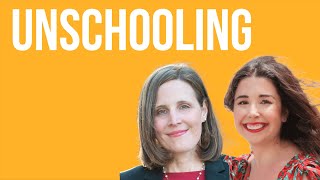
A recorded conversation between Manisha Snoyer and Kerry McDonald about the rise of school choice, homeschooling, microschools, and education entrepreneurship in the U.S. They discuss education savings accounts (ESAs)/vouchers, parental rights as a foundation for children's rights, decentralization of education, destigmatization and growth of homeschooling since COVID, and examples of rapid microschool growth in places like South Florida and Las Vegas. McDonald also describes her own unschooling experience, Sudbury schooling, and her research and podcast work.
Questions this video answers
McDonald cites roughly $700–800 billion pre-COVID and says we're closer to a trillion after COVID relief; host originally estimated ~$600 billion.
Eight states (McDonald: 'we're up to eight states' in 2023).
Around $7,000 on average; some programs provide roughly $10,000 per student.
West Virginia passed a near-universal ESA program in 2021; Arizona created the country's first universal ESA in 2022.
Florida was one of six states in 2023 to expand school choice programs to be fully universal.
Chapters
Hi, everyone.
I'm Manisha, and this is Teach youh Kids Today. I am so happy to have a friend, a collaborator, a scholar who I so admire. Kerry McDonald. Carrie McDonald is a senior fellow at the foundation for Economic Education and host of the Liberated Ed podcast. She's also the Valinda Johnson Family Education Fellow at the State Policy Network and an adjunct scholar at the Cato Institute. She has a master's degree in education Policy from Harvard University and is author of numerous articles about education that have appeared in the Wall Street Journal, the New York Post, n Newsweek, and in many other reputable publications. She is the author of Unschooled and A For Abundance. And I have just been so impacted by her research and her advocacy as well. And Kerry, you might not realize this, but one of the articles that you had the biggest impact on me was when you were talking about the distinction between public school and public education. I think that a lot of people don't realize when we're talking about more freedom and education, we're still talking about equity and giving children access to the best possible education. And Carrie and I have known each other for seven years. We originally spoke when I was creating Cottage Class, which was my marketplace for micro schools. And since then we've been collaborating and talking. And I'm just so happy to be able to have a conversation with you here today.
I'm so glad to be with you, Manisha. It's always so fun to talk with you. We finally had a chance to meet in person. Yeah. This spring, south by Southwest Edu in Austin. It's long time coming. You're right that we've been collaborating, communicating, connecting for years. And it was great to. To finally meet you in person.
So great. And I actually was on your podcast as well, which everyone should definitely check out, the Liberated Ed Podcast. And I agree, it was just so fun to see you in Austin. Carrie and I are both collaborating with the Vela Education Fund, which Carrie has gone on this incredible micro school tour all around the United States visiting different learning alternatives. And the Vela Fund gave me the grant which allowed me to produce this podcast. So it's been really wonderful getting to know each other better in that context as well. So, Carrie, I thought we would just dive right in into this big vision of a different education system than we have today. And I'm going to throw a kind of a wild question to start with, something I was thinking about in terms of parents rights and freedom, and I didn't prepare you for this, so we'll see what you Think. But right now I believe that the public education System is about $600 billion in the United States that goes to public school. And some states are starting experiment by giving vouchers to homeschoolers. So I'm thinking 600 billion divided by 55 million families. As someone who has done such extensive research on economic systems and also observed so many families in action and is a homeschooled mother, so what do you think would happen if, let's say tomorrow we just gave every family in the United States $10,000 to educate each of their children as they see fit? What would be the outcome?
Yeah, Manisha, I mean, I would just start by saying we're actually closer now to a trillion dollars of US taxpayer funding going to K to 12 public schooling, particularly in the wake of COVID and Covid relief funding. But even, even prior to that, really somewhere around 7 or 800 billion. And so a lot of money going into public schooling. And I think, you know, your, your thought experiment isn't so abstract because what we see now are eight states this year, we're up to eight states that now have universal K to 12 education choice, meaning that every student in these states has access to a portion of taxpayer funding allocated for education to use as they choose. In some states, quite freely being able to access funding that's right around 10,000, they sort of, I would say probably the average is more like $7,000 for an education savings account or a voucher program for families to use at a private school, a micro school for homeschooling resources, for learning pods, for educational therapies, for tutoring, for supplies and curriculum. So sort of a wide variety of education options. And we're seeing more and more families respond to that and take advantage of that in the states that are passing these universal, particularly universal education savings account programs. And I think what, you know, what I really focus on is that we know the demand is there from parents for a wider variety of education options than sort of the one size fits all assigned district school. We know that families want the personalization and education that joy in all other areas of their lives. What I'm really focused on is helping to sort of encourage and activate the supply side of education entrepreneurship by helping to remove entrepreneurial barriers and regulations that are in place in certain states that could make it more difficult for education entrepreneurs, these entrepreneurial parents and teachers, from launching new schools and learning pods and schooling alternatives that these families so, so, so desperately want and need.
Wow. And just taking it a bit further, I know that right now, the people who are choosing to homeschool are really making an intentional choice about their children's education. And we see that especially when there's a little bit of structure in the homeschooling. Homeschoolers perform much better than children in traditional school, even though it is definitely impacted by the fact that their families are making a conscious choice. And what one, some kind of pushback I've heard on just giving families a voucher is that some families wouldn't care, they wouldn't educate their kids, they wouldn't provide them with the learning that is so important. And I wonder, especially in terms of economic systems and other examples we've seen of giving people a lot of freedom and resources, what is your thought on that?
Well, I mean, I will say that not all states have their current universal ESA programs open to homeschoolers. There's sort of a variety of different ways in which these programs are structured. In some cases, you know, they grow. They work more like a voucher where you have to go to an accredited private school. But I think that there's hopefully movement in the right direction towards kind of removing some of those barriers as well in the years ahead. And then in other states, you know, homeschoolers are included. I think about Florida and Arizona and Utah, where homeschoolers could use those funds for various homeschooling supplies or micro schools or learning centers and that sort of thing, you know, and I think to kind of your broader question is that, you know, parents are the closest to their children. They're the ones who know their children best and know what their children want and need and are typically the best position to provide that. That doesn't mean that they as, as parents who choose homeschooling have to be the ones, you know, directing their education. And in fact, that's even less true today because of this abundance of schooling alternatives that surrounds us. Again, all of these different resources and tools and programs and learning centers that homeschoolers can take advantage of. So it's really parents making high level decisions about what they want their children's education to look like and then connecting them to these available resources that are becoming increasingly accessible to families due to school choice policies, for sure.
For example, when we look at a state like Arizona, where there's almost complete freedom in how you spend your voucher versus perhaps a state like Idaho that might have a few more constraints around what you're allowed to purchase, are we seeing any data at all about how children or how families are choosing to use this Spending and what kind of outcomes children are getting?
Yeah, I think it's too early to tell because these programs are so very new. I mean, West Virginia just passed a near universal education savings account program in 2021. Then Arizona beat them by creating the country's first universal education savings Account program in 2022. Now we have six more states in 2023. So it's, it's still a little bit early to tell. But I think what we're seeing in terms of both the demand from parents and the supply of are that there's a wide variety for families to choose from. Particularly again, like you said in states like Arizona, that provide for that kind of decentralized ecosystem of education options, recognizing that families and individuals have very different needs and preferences. You know, we all sort of look at education in different ways. We measure outcomes and quality in different ways. You know, some families, for example, would look at judging a program's quality by how much outside time children have or how much freedom they're given, how much autonomy, project based learning and self direction. Others might focus on standardized test scores or kind of more traditional academic metrics. And I think again, the more kind of wide open these, these education savings accounts programs are, the more we're allowed. We're allowing families to kind of have that broad definition of quality and impact and enabling them to make choices that are just right for their families.
Wonderful. And I'm really excited to see what kind of outcomes these children are going to be having. I think that we're going to see some really great results from giving parents resources to help their kids. And I tend to feel that parents do really care deeply about their children's education a lot more than people give them credit. I was just talking to Dr. Cheryl Field Smith, who does a lot of research on black homeschooling, and she was talking about how there's this prejudice and myth that black families don't care about their children's education, which is very largely untrue. I really hope that a cultural shift will start to happen where society as a whole will put greater confidence back in families and their real passion and desire to give their children a good education.
Yeah, I completely agree. I mean, I think that we're seeing that. We've certainly seen this kind of pendulum swing back toward parental empowerment. And I think that's why we're seeing this kind of sweeping education reform legislation in the form of school choice, because it's acknowledging that parents and families know best and giving them again, that kind of freedom and autonomy and personalization and education that again, we enjoy in other areas of our lives.
Yes. And so interesting that it's one of the few policy issues where both liberals and conservatives are collaborating and coming together to get legislation passed. I think that's really interesting, especially when our country is just so divided politically.
Yeah, it is interesting to see that and I'm hopeful that we'll see more of that because I think the more that parents who might not kind of be clued into education reform initiatives or kind of these various political discussions around school choice, the more that they learn about what this really means, that you have access as a parent to a portion typically of state funding allocated for education. Again, somewhere around seven or eight thousand dollars a year per student. Parents are typically all on board. They're like, wow, that's amazing. I'd be able to use that to again defray tuition at a private school or towards a microschool. Microschools are inherently low cost, often right in that sweet spot of an ESA amount that covers full tuition or near full tuition at these micro schools or again for curriculum and learning supplies and therapies and tutoring.
Absolutely. In your wonderful book Unschooled, which I hope every person listening will read, you talk a lot about giving children lots of space to direct their own learning. I think the book begins with this beautiful image of your children on the beach. And these are these starfish sparkling at their toes. And it's just lovely how you are able to watch give your children that space. And they each learned at different rates and different times. And really your children taught themselves to read. They really have gone so far with allowing that freedom. And so it brings me to a question that I myself as a teacher who has worked in a lot of classrooms and also in the homeschooling community, struggle a lot with which is that what do you do when so part. And I think that most families do get excited about self directed learning when they learn about it. But. But when we talk about choice and freedom in parenting, where do we draw the line between parents rights and children's rights? Do we want to give parents the freedom to raise children in a very oppressive environment or where does society come into that equation?
Yeah, that's such an interesting and important question. And I would argue that parents rights are children's rights. So that if we want to have kind of maximum freedom and autonomy for children, then we have to recognize the natural rights of parents to direct the upbringing of their children, including their education. And you know, John Holt writes a lot about this as well. I think that if we were to grant rights to children kind of legally and kind of a legal regime, what that means because they are minors, what it means is the kind of enforcement of those rights belongs to the state. And if instead we grant parent rights, which are the natural rights that parents have, and certainly what. What we currently embrace as a, as a, as a culture, as a society here in the US Then that enables parents again, to direct the upbringing and education of their children free from the state, except for, you know, particular instances, obviously around child abuse or other kinds of regulations. But yeah, I think that again, if we want to encourage children's freedom, autonomy, self direction, then we need to be really secure in establishing strong parental rights and then helping to persuade parents culturally that, that, that this is sort of the direction that we should go in. And I think that that's actually where we're going. You know, one of the interesting facts that I point out in the Unschooled book is sort of a generation ago, a lot of kids were spanked by their parents, a sort of culturally accepted form of discipline. And I think it was something like the. The figure in the book, which I think I quoted, the American Academy of pediatrics, was like 80% of children were spanked, you know, kind of when I was a kid, say in the 1970s and early 1980s, and today it's something like fewer than 20%. So in just a short period of time, without the heavy hand of government, but just kind of cultural changes and parenting changes and, and, you know, so more recognition about peaceful parenting measures and proper discipline, that those cultural trends have occurred, I would argue very positively. And so, so I think we don't need kind of, again, this heavy hand of government. We don't want children's rights to be secured by the state. We want them to be secured by parents and empower parents in meaningful ways through persuasion, through argument, and more and more through these policies that enable the kind of decentralization of education and provide that choice and freedom.
So maybe if we stop spanking parents, they'll stop spanking their children.
Well, and that's what's so amazing really about that statistic too, is if you think about shows that family, you know, the kid, the parents today who might have been spanked as a child are not necessarily, and probably largely not spanking their kids. And that's just a trend that's going to continue. So I think we're going to see more and more of that appreciation for childhood, the embrace of childhood freedom and peaceful parenting, nurturing parenting, Tactics.
I think what's so wonderful also is that in this information age, there's so much that parents can learn about effectiveness parenting techniques. Whereas before people might have thought, well, spanking is what you need to do to help your child behave, now there's all these wonderful podcasts, like, you know, unruffled about how positive parenting actually helps to shape behavior better than spanking mind and how to take care of yourself as a parent. So I think parents have really access to the latest research in how to help their children thrive.
Yeah, I think that's right. And that's where I'm hopeful that we'll see that same trend in education as well. That we don't need a kind of a heavy handed, top down, coercive educational model for children to help them learn and develop. In fact, like spanking, that could have an opposite effect and not be effective at all and be harmful and instead move toward, you know, a much more autonomous version of education, much more learner centered, self directed, curiosity driven. I think we're starting to see that and I suspect we'll see much more of that.
Yes. And also just to add to that, I think as we give more resources to parents, such as the school vouchers and hopefully have better systems for childcare, I think that parents also get a lot less stressed and they're able to support their children better as well. Just supporting parents and giving them freedom can have a really positive effect on the lives of children, for sure. I love that distinction. It also makes me think about parents rights and children's rights and the way we define abuse and neglect. As a teacher, as you might know, I was a teacher for 20 years. I taught in public and private school after school as a tutor. And people say, well, kids need to go to school so we can prevent child abuse and prevent neglect, but there's very little you can actually do as a teacher or a school administrator to prevent neglect and abuse. It's not an effective system. There are still children who are going to school starving, that are going home and getting abused and the teacher knows about it and no one can do anything about it or they go into an ineffective foster system. So it's not fair to say, well, school is protecting children in a way that homeschooling is not. It's just, it's really not working right now either. So we have to think about all these issues as we reinvent our education system.
Well, and we also can't forget the amount of abuse that's occurring in public schools by public school teachers and Administrators as well as, you know, rampant abuse, bullying, et cetera from peers. So. And in fact, research has been done to show that there's much less kind of abuse and neglect among homeschooling families on average than in public schools. And so, you know, I think that we, we can't remember, we can't forget that, you know, a public school is not necessarily a safe and nurturing environment for most children.
Yeah, not socially, not emotionally, not in terms of their learning. Yeah, absolutely. So, yeah, I love, I really want to highlight this focusing on parents rights to allow children's rights. It's a really beautiful idea. So it makes me curious. You and I are both working in this alternative learning space and homeschooling really gets a lot of criticism. I mean, it makes people so angry. Much more so than private school, I found. And it's interesting because there's a lot more required accountability in homeschooling than there is in private schools. I mean, usually in California, all I have to do is submit a form with 40 questions and then take attendance and you can teach kids whatever you want or nothing in your school. And New York is a little bit harder, but you still have complete leverage to do whatever you want in a private school. Whereas in homeschooling you have to send in quarterly reports, you have to take standardized tests. In some states you have to have a degree or show why you are qualified to teach your kid. Why do you think that people are so afraid of homeschooling and it makes them so angry and attack it so much?
Yeah, I mean, I guess I just also point out, I think this is very state specific. You know, I like, I look at a state like Nevada, which has some of the most restrictive private school regulations in the country, but it's also very, very easy to homeschool. So I think it varies dramatically state to state. I also, you know, I think that there, there is, there has certainly for, for, you know, decades, since kind of the birth of the modern homeschooling movement, been skepticism about homeschooling because it is non conformist. It's been sort of outside of the conventional schooling system. I think that that's really changing. And I think it was changing certainly in the two decades prior to the COVID 19 pandemic. And I wrote about a lot of those changes in unschooled kind of the growth and diversification of homeschooling, the greater acceptance of homeschooling culturally, the outcomes that we're seeing among homeschooling students. It's helping to change that public perception, and I think that that's now just been accelerated over the past three years. You know, Ed Choice, at the beginning of the pandemic, began surveying parents every month on a whole variety of kind of education issues, including their opinion on homeschooling. And they saw steadily each month, the kind of view of homeschooling and the public among parents. This rise, which is really extraordinary when you think about it, that anyone sort of dealing with school shutdowns and prolonged remote schooling might have had the opposite impact, right? Like, oh, you know, this is really hard to be home with my children. And that. Yet we saw this sort of opposite view of, like, no, homeschooling is really powerful, really positive, even in cases like that. During the pandemic, when we were sort of closed off from our larger communities, which, of course, is, as you know, is where homeschoolers spend most of their time kind of out of the home than in it. And yet we still saw that kind of increasing public perception around homeschooling. And now we have homeschooling well above pre pandemic levels. So continuing. Parents continuing to kind of take charge of their children's education through homeschooling. And so I'm really optimistic. I think that it's. That we really moved homeschooling from the margins to the mainstream. Again, that was happening pre2020, and it has surged since then. And I don't see it as sort of the. The ugly stepchild that it might have been. I see it much more as a preferred kind of educational approach. In fact, again, going back to some of the amazing surveying that Ed Choice does both monthly and annually, they just had their schooling in America. Annual survey results come out finding, again, kind of this, the annual trend that more parents would like to choose homeschooling if they could. They simply don't have either resources or, you know, access to these. To these, you know, vouchers and ESAs and programs that might enable that to happen more easily. But there's even more demands from parents and the kind of the general public around homeschooling and recognizing the benefits of it. So I think that it's really. We're just kind of beginning to see the possibilities with homeschooling and schooling alternatives more generally.
Fascinating. And so I guess what I'm kind of hearing from this is that one of the biggest obstacles people do see is just being able to afford homeschooling rather than feeling some kind of stigma around, I can't teach or my child won't be Socialized, but it's more about having the resources to do it.
Yeah. So the Ed Choice again annual Schooling in America survey kind of the past two years have shown the same trend that where, you know, we have typically more than 80% of students are attending an assigned district school. Fewer than 30% of their parents would prefer them to be there. So there's this enormous choice gap. And I think you're right, access to funds is a key part of that. I mean, there could be other factors too, of course. Right. You could have parents who might not see eye to eye on, you know, educational approaches. I mean, there could be sort of non financial issues as well, but for sure, kind of financial accessibility of schooling alternatives is a key factor.
So fantastic. And thank you for educating on that. I mean, I actually wasn't aware how much legislation there was around private schooling in Nevada or also the data on how homeschooling has become destigmatized. It's great to see as this movement grows that it's become more welcoming and more accessible to more parents because it can be so wonderful.
Yeah. And I think what you're seeing back to Nevada as sort of a cluster of education, entrepreneurship and innovation. It is, as I mentioned, is probably the most difficult state in the country to start a secular private school. There's occupational licensing requirements in Nevada that require any school founder who wants to open a secular non religious school, they have to be a state licensed teacher or administrator. This is unheard of in other states and of course prevents incredibly qualified, competent entrepreneurial educators from launching really wonderful programs. If you're a religious school, you're exempt from all of that. So there's sort of unfairness between kind of the different kinds of school types again in Nevada. But because their homeschooling laws are quite lenient and flexible, there's a really a strong growth in micro schooling and schooling alternatives in some cases that families could take advantage of up to five days a week as they, if they wanted to, as a low cost, full time schooling alternative. And according to Don and Ashley Slifer from the National Microschooling center, they find that within a kind of a 10 mile radius of the Las Vegas strip, there are more than 25 micro schools serving more than 300 students. And they expect that that number will double, more than double to over 600 students in the next year. So just amazing growth there. And that's something that we're seeing all across the country. All kinds of different states, different clusters of these kind of entrepreneurial parents and teachers and innovators it's so amazing, Carrie.
I mean, you have spent the last, I would say two years interviewing people all over the country on your podcast and also on your tour. Micro school leaders, families, other education entrepreneurs. Could you highlight one or two stories that really blew your mind?
Oh, there's so, there's so many incredible stories. I mean, I guess I'll go back to what I've been calling kind of the South Florida surge. I mean, if we think of this incredible growth in Las Vegas, Nevada, South Florida just tops it. I think about Shereen Ratigan, who's a former public school teacher and microschool founder who runs Colossal Academy, which is a very learner, centered, entrepreneurial, focused, project based micro school, typically for middle school. And just moving into the high school age 2, she launched that micro school kind of in the wake of COVID She had previously been working at a traditional Montessori private school. Then Covid hit some of her private school parents, asked her to create a Montessori pod. So she did that. And then this is a story that I hear over and over and over again. That pod then turned into an established, full fledged micro school. In her case, it's a, it's a recognized private school, but homeschoolers are also able to come part time if they choose. And she teamed up with Tony Floricciardi, who runs Surfskate Science, which is this incredible homeschool, weekly homeschool program that incorporates kind of STEM subjects, science and mathematics and engineering concepts, physics into skateboarding and surfing. And so the students who are homeschooled or micro schooled kind of in the South Florida area are able to take advantage of these kind of weekly high quality, active hands on programs that again incorporate science with action sports. And Tony serves more than 350 students, homeschooled students during the academic year with a very long wait list. So Tony and Sherene teamed up just a couple of years ago, kind of the early iteration of figuring out how they could create this grassroots movement. They saw more and more teachers and parents creating micro schools and more families choosing homeschooling in their area. So they teamed up to launch the Innovative Educators Network to sort of bring these entrepreneurial parents and teachers together. And now they estimate that in again, these sort of three large counties of South Florida, Palm Beach County, Miami Dade and Broward counties, there are roughly 125 micro schools serving more than 8,000 students annually. So just massive ordinary impact and growth. And now Florida. Florida, of course, for years has had robust school choices, policies. They've had low income tax credit scholarship programs that have really enabled further access to these programs. And in fact, many of the microschool founders that I've talked to have been serving families tuition free using these scholarship programs. And now Florida also became one of the six states in 2023 to expand their school choice programs to be fully universal. So now all K12 students in Florida have access to these funds. And so I think we're just going to continue to see skyrocketing growth in entrepreneurship and a whole variety of education choices for families.
It's so amazing. I also know Shereen. I interviewed her on this podcast as well. She is a force of nature and it's been incredible to see her efforts just blossom in these last couple years. And I think when a lot of people think about Florida, they think about books being banned and you know, people, you know, who are drag shows getting shut down. And you know, some of the flip side of this is this incredible innovation that's emerging. I mean, it's just, it's so inspiring and exciting to watch that happen. And you know, Sherene and Iman, who, we also have the show, they're, you know, going into the Capitol and talking to Jeb Bush about equity and social emotional learning and in the context of school choice. It's really incredible and inspiring. Yeah, amazing.
Yeah. I mean, I was just going to say too. I mean, I think this is where I often talk about this and write about this. I think that school choice policies, along with kind of this greater decentralization of education that's facilitated through school choice policies but, but isn't necessary for it. You know, we see this decentralization of education and entrepreneurship and innovation occurring in states without school choice policies at all. So this is happening everywhere, but certainly it's, it's growing in states that have school choice policies. And I think what, what the outcome of a truly decentralized education ecosystem is greater social harmony. Because when we think about it, public schools are political institutions. They're inherently political. They create a battle of wills among constituents with different diverse viewpoints and perspectives and values and preferences. And so this is why we see in school boards across the country, for example, school board meetings across the country, these battles with parents and, and school board members and, and, you know, various curriculum decisions being argued with and fought for. And inevitably one group wins and one group loses. And that's a sort of this tug of war in this political square. And so what happens when we, when we decentralize education? We avoid those political battles and, and Those battles of will. And we enable families to choose what they want, what's kind of focused on their preferences and values. And we allow education entrepreneurs to create learning environments that reflect their values as well, and that that will attract parents. And I'm seeing this all across the country in all kinds of different ways from educators, including some who were former public school teachers, leaving the system to create a very culturally relevant learning environment that they want to be able to, for example, provide an honest history of the black experience and feel maybe limited in doing that in certain states due to certain legislation. And so again, this kind of decentralization of education enables the temperature to go down a bit with these sort of political battles.
I love this concept of education as a unifier. And you've been talking about how stopping being this massive school where people are fighting for their kids to be taught in a certain way. One of the things that we also see is that in a decentralized education, the groups that are coming together, they are still collaborating, they still might have disagreements on what should be taught and how should be taught. But I have heard from parents who have founded these homeschool co ops or learning pods that it's been one of the most enriching experiences of their lives. And the communities are so strong who are collaborating on their children's education in this smaller way. And I think that's part of the power and magic of decentralized education. Parent curated learning that helps communities become stronger. I will just give another example of that side of it is I was reading the book the Righteous by Jonathan Haidt, and he talked about how it used to be that in Washington, D.C. all of the senators lived in D.C. and their children played on the same soccer team and they went to after school activities together and they went to school together. And then when everybody kind of moved to their separate states and were only flying in on the weekend, that's when a lot of the communication started breaking down. And so I love this thought of these parents who are coming together around their shared passion for learning is a really beautiful ideal. So, Carrie, you know, if there are parents here, let's say I live in Brooklyn, New York, or in another city. And I'm thinking, wow, I'd really like to get a $10,000 voucher and homeschool my kid. What can I do to try to get school choice passed in my area? What, what advice would you give to people?
Well, sadly, New York does not have school choice to speak of. Certainly no private school choice. There are charter schools which still are subject to charter school caps and so forth. So there's some public school choice, but certainly not as much as there could be. And I would argue that there should be. I'm in Massachusetts, another state that does not have school choice choice, private school choice policies. So I think, you know, for families who are interested in school choice policies, it's, it's starting to realize what other states are doing, become more involved in the grassroots level as a parent advocate to bring in more of these, these policies into, into states that have historically not had them. That said, though, I mean, you bring up Brooklyn, New York City is another hub of education innovation and entrepreneurship. Another state where it's difficult to run a private school specifically. A lot of regulations around that. But families are homeschooling families and entrepreneurial educators are creating kind of homeschool micro schools and pods and learning collaboratives to bring families together. I highlighted several of them in my recent case study that came out@fee.org Liberated back in May, where I looked at five cities, 35 education entrepreneurs across the country in states without robust school choice policies, including New York. And there's several of these programs in New York City specifically and in Brooklyn specifically. I think about, for example, Noah Mayers, who I know, you know, well, who was sort of the og, you know.
One of the original, the grandfather of micro schooling in Franklin. Sure.
One of the original, yeah. Micro school founders who was also a former educator and created Brooklyn Apple Academy. I believe it was, back in 2010 that he launched that as a resource center for local homeschooling families and that continues to flourish and attract more families. So, you know, there are these incredible programs available for families who are looking for alternatives to conventional schooling.
Yes. And I guess I would think, you know, some people might not have been involved in local politics before or, but might be passionate about this issue. I mean, just on a very nuts and bolts practical level, should I go to a, should I talk to my city council person or write to my senator? Are there any, you know, concrete actions that I can take to try to see some of these policies be implemented in my area?
I think there's some of that. I think it's, it's. You could kind of Google who are your school choice advocates in your state or in your local areas? There's national organizations that have really carried the torch for school choice advocates expansion. Those would be Ed Choice, the American Federation for Children. Yes, every kid. There's just wonderful organizations that are trying to enable education funding to follow students instead of going to school systems.
So, okay, so that's great. So if you're listening and you're interested in this, just looking, starting by seeing who's advocating school choice in your state, maybe contact them and ask how you can get involved would be a good place to start.
You would say, yeah, I think that that would be, you know, a great place to begin.
Wonderful. And I'll also add that if you are a parent who is looking for some more resources to support your child's homeschooling, I mean, I wrote a blog about how to afford homeschooling. It's a lot less expensive than you might think. And then if you do band together with another group of parents and create a homeschool co op, there are more micro grants that would be available to you, such as the Vela Education Fund. And that can be another good way to start accessing some funding if you don't have the type of resources that other families might have in other states. So just putting that out there. Carrie, I would love to shift gears a little bit and talk about your own experience as a homeschool mother of four. And now I think I'm not sure of all your children, but at least some of them go to the Sudbury school. Could you share a little bit about what made you decide to homeschool, what your homeschool, what a typical day looked like, your method, and now what school or learning is like for your children at Sudbury?
Yeah. So I first became interested in homeschooling when I was an undergrad in college as an economics major and I was taking an education class and became increasingly interested in, at the time, kind of the late 1990s, the lack of choices that families had in education compared to other areas of our lives. And so I discovered this whole idea of homeschooling, which was completely new to me. I had attended K to 12 public schools, never knew a homeschooler, didn't know much at all about homeschooling. But I had a chance, kind of my senior year in college to do an independent research project on alternative education models and had a chance to, to shadow a local homeschooling families and a family. And I was just completely captivated by what I saw. Just this kind of authentic learning outside of a conventional classroom, this curiosity driven educational experience. A child that was articulate and interesting and interested and at ease with adults and kind of genuinely socialized in the people, places and things of her community. Not sort of this age segregated, artificial socialization that we see so often in conventional schools. And that same semester I was Doing a teaching practicum in a local public elementary school with this kind of same age students as this homeschool child, and just having that experience side by side. Of course, I again had been to public schools, but hadn't really been able to see this contrast so clearly until then. And then it just convinced me that kind of alternatives to conventional schooling was the way to go. And so that was always in the back of my mind, you know, first obviously as a student and a researcher, and then kind of throughout my years of being involved in education work and education policy work. And then fast forward, you know, a decade later with my family and our own education choices, realizing that that homeschooling would be the path for us, and then moving more and more towards unschooling or self directed education, which is very student led. And that really emerged organically from watching just how much my children were learning as toddlers and preschoolers without a formal curriculum, without the sort of imposition of what they should know, when, in what way. And so then I discovered this whole idea of unschooling and self directed learning and self directed education. So that's the path that we moved into. And my kids have always been alternatively schooled, but always been unschooled. I wrote in my 2019 book, Unschooled about kind of the different ways in which unschooling and self directed education can look, including the Sudbury model of schooling. So I have a whole chapter about the Sudbury Valley School, kind of the original Sudbury model school that was launched in Massachusetts in 1968 and has subsequently inspired the growth of dozens of Sudbury model schools around the world. I wrote about self directed learning centers and micro schools that my kids had been attending ever since they were, you know, kind of school age, going to these micro schools that valued unschooling and self directed education in the city I live in in Cambridge, Massachusetts. And so then, yeah, as the kids got older, we kind of followed their needs and interests. And then of course covet hit and that kind of changed things up. And the micro school was closed for a while. And all that kind of education disruption that so many families discovered during the COVID response. And so my three younger ones ended up enrolling at Sudbury Valley School, which is a bit of a hike for us outside of the city. We're driving 45 minutes each way. But it is amazing, so well worth it and has just really been such a gift. I'm so grateful that, that this is the shift that we made. And I think again, like other families without that kind of disruption or that nudge caused by Covid. I don't think we would have ever sort of considered driving the 45 minutes. Of course, I always loved Sudbury Valley and wrote about it extensively and was inspired by it, but didn't think that we would kind of make that shift. And I'm so glad we did. I know. I mean, in hindsight it was absolutely the right move. My oldest daughter is seeing 16. She is, has always been homeschooled, unschooled. She is again legally recognized as a homeschooler, but she's learns full time in an online virtual school called ASU Prep Digital, Arizona State University Prep Digital, which she absolutely loves.
Incredible. I think a lot of people might be wondering, I mean, Kara, you are, you publish a lot of work, you're a scholar. I mean, how did you manage to homeschool four children and produce the quantity of work and research that you have at the same time?
Yeah, well, I mean, I didn't when they were tiny, you know, I mean, I do believe that kind of maximum, you can have it all, but not at the same time. And I think that that was certainly true. I loved, you know, with being with them when they were little and kind of immersed in life with, with life with littles, that's extremely intense. And then as they get bigger and they do get bigger, you know, they're more autonomous and their needs are different, but much less intense than they are in early childhood. And again, we had micro schools and now of course they're in a, in Sudbury Valley, which is A K to 12 recognized private school. So, you know, I think that it's just sort of following the children's lead and then recognizing that, you know, we can kind of adapt our work schedule accordingly based on their needs and demands at their certain times. And I'm also just incredibly blessed to have an incredible husband who has just been so instrumental in being able to, you know, co parent 100% and just be very supportive. And then we have, you know, wonderful family too.
And also you mentioned in the book that at least two of your children taught themselves how to read. Could you share a little bit how that process unfolded with them?
Well, they all taught themselves how to read. And that was maybe when I wrote the book, maybe the other two hadn't at the time, but. But yeah, they all taught themselves how to read. I think that that was really one of the key moments for me in discovering or beginning to discover this whole world of self directed education. When my oldest, again, who's now 16, was getting ready for what I would have thought of her kindergarten year. And at the time we were thinking, okay, you know, now you're, you're almost five, we're heading into kindergarten. All of this kind of playful learning and self direction that you've enjoyed in these preschool years, that's great. But now that you're heading to kindergarten age, we're going to have to get serious. And I still knew that we would be homeschooling, but I thought we would have a curriculum. I thought that's what you did and certainly you did that starting in kindergarten. So I was diligently researching various curriculum options and trying to find something that would be very learner centered and fun and engaging, but that would have clear expectations of what a child would know at a certain, certain time and certain assignments and requirements and assessment to determine learning. And as I'm, as I was kind of narrowing down my curriculum choices, out of nowhere she taught herself how to read. And I said, that's interesting. And then I was realizing, well, she's teaching herself a lot of other things that this curriculum couldn't possibly capture. So that's what kind of led me into this world of is there such a thing as non curriculum driven homeschooling? That's probably what I googled at the time and then discovered this whole world of unschooling and self directed education.
Yeah, I mean, just quickly, I'm just so curious about this process. I mean, were you reading a lot to her and she was kind of making the connection between the sounds and the words or how did that process kind of unfold?
Yeah, I have a whole chapter in Unschooled about natural literacy and children learning how to read on their own. But it does require being in a literacy rich environment, surrounding children, with books, reading to them a lot, encouraging them to read. And you know, with her, I mean, all my kids kind of learned to read in different ways for different reasons. My son loved music and so I would print out the lyrics to some of his favorite songs and then he would read through those lyrics and that was ultimately what led him to learn to read. For my daughter, she just loved reading These, some of your listeners may know these fairy books, the Rainbow Fairies by Daisy Meadows, there's like hundreds of them and she just loved them. And so we would be reading and reading and reading and then she started reading on her own and then that, that led to other books from there. So I think it's just figuring out what your kids interests are, what they enjoy reading, and then connecting them to that reading, you know, when we think about kind of packaging curriculum or how kids traditionally learn to read, often the subject matter is just not appealing to them. And so it's just not interesting to read. There's no sort of motivation there for a lot of kids. And so if we can find what they really love and what, what they gravitate to, they'll become passionate readers and will retain that love of reading for years to come.
That is such so helpful, Carrie. And definitely check out the chapter on natural literacy in Carrie's book. And I think that the way that you've curated an environment to support self directed learning is a key piece of this. So as we wrap up today, I would love to ask you a question that I ask every guest. It's, you know, we've talked a lot about education, about self directed learning, but I think ultimately my show is about a passion for education and learning, which you have in spades. So is there anything interesting you're learning right now that could be completely unrelated to any, anything we talked about today? So, you know, what, what's something fun that you've learned recently or you're studying?
Oh, something fun. You know, I am just so immersed in the world of education entrepreneurship. I think what you're doing, Manisha, is amazing. So I am really focused around researching and writing about these everyday entrepreneurs who are building these alternatives to conventional schooling and really transforming US education from the bottom up. But I guess within that, I do love reading about entrepreneurship more generally. I love a lot of the resources that have been put out by the Clayton Christensen Institute around disruptive innovation and some of the ways in which that can be applied to education and to what's happening today. So I think that's really what I'm focused on is just sort of general entrepreneurship theory and how these everyday entrepreneurs today are applying that in their own ways.
Wonderful. Well, this has just been so interesting. Every time I talk to you, I learn something, I'm stimulated, I get more questions and I just appreciate how articulate you are and the wealth of information that you have accumulated over many years of studying this topic. Where can people find you if they want to follow your work or learn more and support what you're doing?
Yeah, so they can listen to my twice weekly podcast, the Liberated Podcast, and Visit me@liberated podcast.com and there's, there's links to my articles and ways to get in touch with me. So I'd love to hear from your viewers and listeners, Manisha.
Oh yes, I highly recommend Carrie's podcast and all of her writing there. I think we could continue on this conversation for about three weeks. I have so many more questions. Is there anything important that we have left out today that you want to highlight as we wrap up?
No, I think we covered it all, Reisha. And again, I'm just so thrilled with what you're building with Modulo and just being able to empower parents, particularly homeschooling parents, to take charge of their children's education and recognize the vast amount of resources that are now available to them to make it much easier, much more rewarding, much more personalized. So just, just kudos to you for your incredible work.
Thank you so much. And I just so appreciate your mentorship and your research and your support from me. I feel like, especially seven to 10 years ago, it really felt lonely being in this space and having you as a friend and supporter has been invaluable to me. So thank you so much for coming on the show today and for being my friend.
Thanks, Manisha. It's always a pleasure talking with you.
More from Manisha

Contributing to Florida Prepaid Plans (2026–2027) | Step-by-Step Guide for FES-UA Families

Contribuyendo a los Planes Florida Prepago (2026–2027) | Guía Paso a Paso para Familias FES-UA



Finding Providers & Services in the Marketplace (Families) | Step Up For Students (2026–2027)

Encontrando Proveedores & Servicios en el Mercado (Familias) | Step Up For Students (2026–2027)




