The Future of Online & Unschooling Education | Manisha Snoyer & Mickey Revenaugh
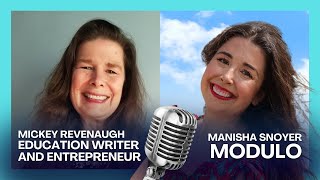
Conversation between Manisha Snoyer (founder of Modulo) and Mickey Revenaugh (co-founder of Connections Academy) about the evolution and practice of online schooling and unschooling. Mickey recounts Connections Academy origins (drawing on her prior work on the E‑Rate in the mid‑1990s and assembling a founding group in early fall 2001), early technical constraints (dial‑up, no YouTube), child‑centered design choices (teacher-as-partner, parent-teacher collaboration, lesson ratings, regional meetups), and contracting with school districts/charters. They discuss practical steps for founders aiming to create public virtual or unschool offerings (finding families, lobbying, state legislative work), tradeoffs between synchronous/asynchronous instruction, socialization and community-building strategies (clubs, field trips, microschool networks), parental wellbeing and scaling challenges, and Mickey’s book project (manuscript due end of May 2025; Johns Hopkins University Press publication planned for 2026).
Questions this video answers
March 11, 2025.
End of May 2025.
Johns Hopkins University Press; 2026.
Early fall of 2001.
The E‑Rate program (mid‑1990s).
Chapters
Hi, everyone. I'm Manisha, the founder of Modulo, and I am so happy to introduce you to you today. Mickey Revinaw. Mickey is the co founder of Connections Academy, which was one of the first really innovative online public schools. She is writing an incredible book about all the diversity of education that is existing today, from micro schools to schooling in your camper to, you name it. And recently she's become a really key mentor to me and also an investor in Modulo. Welcome.
Thank you so much.
So happy to have you here, Mickey. It's an honor, a treat and really just thrilled to share you with all our friends.
Well, I'm very excited to be here and this is fun. We carry on our conversations from coffee shops to podcasts.
Yes, indeed. Little bookshop. That nice little copy in. Yes. So I thought we could just kind of start out with your story. I mean, I feel like when we think of online schooling, we think about a kid glued to a screen. And in a lot of cases, that is actually what it is. It's a company that has put school online and kids just are forced to be in it for six hours a day because they have to. But you really, I mean, based on what I've read from my homeschooling groups, you really built a model that's been able to engage kids. So let's just start from day one. What were you doing when you were asked to become a co founder of Connections?
Well, it was one of those things. I mean, I like to joke that if you ask a woman about their career, it'll be, well, I did this and then this thing happened over here. And then I kind of went here and went here. If you ask a guy, it'll always be, well, I had a 10 year plan and I went one point in front of the other. So I had no 10 year plan. My background is actually in journalism and educational publishing. And I also helped start the E Rate program, which wired every school and library in America to the Internet back in the mid-1990s. It was a big program financed by every single one of us that has a telephone because there's a small surcharge on your phone bill that goes to pay for Internet connections and wifi and so on in schools and libraries across the country. So that's what I was doing in the late 90s when the group that would ultimately be the founders of Connections Academy were coming together. So I was working first one little education startup that then morphed into another education startup that then morphed into one that wasn't going to stay started. And the folks who were running that knew that there was a project underway to launch an online school. And so this was in, like, 2001, basically. So really early on, dial up Internet was what most people had. And. The idea of schooling kids online seemed really radical. I mean, there had been etv, there had been radio programs. If you talk to people in Australia, they were doing this via radio way back in the day. But this. This was kind of a new idea. And we were, I will confess, fast followers, as opposed to the people who really created this. To start out with, we were following along behind a company called. That's now called Stride, was back then called K12. But we thought we could do it better. And so we assembled a little what I call a cabal of consultants in, like, the early fall of 2001, and to start to try to put together a model that might work that would, first of all, put teachers front and center, because we really felt like teachers were a critical part of education, no matter what form that it took and no matter who those people were. And that also addressed, really, the needs of the whole child. So it wasn't just the academics. It was everything. The really sort of pivot point for me was honestly 9 11. So I live in New York, and I remember talking with one of our consultants on the phone. We were putting together our very first charter application for this thing that didn't quite exist yet. And it was right after 9 11, and I was walking through lower Manhattan. You might remember this. There was, you know, just all traffic was headed downtown towards ground zero. There were those leaflets up on all the walls for missing people. It was just this sense of, like, trauma, but also like, this was a turning point for the world. We needed to do something different. And that's actually when the name connections kind of occurred to me, because it's like, we need to find a new form of education that connects people together despite their being separated by distance. So that's so extraordinary.
And I just, you know, I interviewed Rebecca Winthrop on my podcast. She's a scholar at the Brookings Institution, and she talks about how crises often are fertile ground for new education initiatives, because you do have to start from the ground up.
Right? Right. And, you know, this was the early days of charter schools. It was the early days of technology and education. I'd done my work in the E rate to try to get schools wired to the Internet. So it was sort of like throw all those things together in a pot, stir it, and see what happens. So that's really how we got started.
That's so cool. And just to clarify, if I remember correctly, was. Was Pearson the driving force behind Connections or who was. Who were the people who were kind of funding you and asked you to get started?
Yeah. So Pearson didn't come until about a decade later, actually. It was what I call the Sylvan Cowboy. So Sylvan learning systems, you remember the learning centers, the tutoring centers and so on. Back in the early 2000s, everybody thought they ought to have a little venture fund to fund new education technology things. And so Sylvan had a venture fund and they were the ones that funded the early days of Connections Academy.
So, I mean, it's really. I think I wanted to highlight that because I just, as a startup entrepreneur myself, there's so many different ways to get started. And I had an angel investor who approached me about starting Modulo and then, you know, other people, I mean, I know this is a weird analogy, but Bumble. The Bumble app actually was super funded by some Europe app, some European dating app, when Whitney Wolfheard was kind of fired from Tinder, because in a sexist kind of way. So it's interesting that you kind of already. You also got started with some backing.
To begin a little bit of backing. And we really invested that in creating a technology platform because everything that was available now is like blackboard. And that wasn't going to work for kindergartner. Just wasn't right. Yeah. And then we had to figure out curriculum, and there wasn't a lot of online curriculum at the time. So we, you know, modified and transformed a bunch of print curriculum that had been used in a homeschooling or distributed schooling setting. And you know, you know, startups. Right. We did everything by the seat of the pants. I was the marketing person, the school development person. I did all the stuff that wasn't build the platform or write the curriculum. But right away we started trying to create virtual charter schools in states that allowed them, which back then you could kind of count it on one hand. So yeah, absolutely.
And so when I. During the pandemic, we ran a lot of classes for preschoolers. And the process I went through was that basically I got up at five in the morning every day and I would do two sessions until I felt like we had created a structure that was going to be super engaging for these preschoolers every single second, down to when they did movement breaks, when they went and ran and gave their mama a hug. You know what? We showed some video content from YouTube. And so we tested out different channels. And then when I as a teacher felt confident we had a structure, then I brought in an assistant to watch me give the class and then we created a whole outline and then we tested a lot of different types of teachers. It ended up that child life specialists were kind of the best fit for us. And sometimes actors and actresses, but not teachers. They were not a good fit. And so I'm wondering, like, how did you. Because the only reason connections could be what it is is because of a child centered approach. And I'm wondering what that kind of child centric user testing looked like in the early days.
So these were the days before YouTube. So there was no real online video. It was really any workable synchronous interaction. I mean, Skype was really just basically coming to be so. I know, may it rest in peace. So what we had to do is figure out how to leverage the environment that kids were going to be in, which was at home really mostly with their families, and use the teachers in ways that teachers weren't used to being used, which was to be partners to parents and supporters of the kids instruction in that way, as opposed to being, you know, the sage on the stage. Right. You know, and the sage on the stage is the sage on the stage, whether that's through a video camera or in a classroom. And that's not what was going to work for this at all. So we built curriculum that was really intended for the littlest kids, for the parents and the kids to be together at one time, like, you know, lapware almost more than anything else. And then as the kids were able to read the content would be, the kids would interact with it directly and their parents would kind of chime in structure, work with the teacher to figure out how to modify things for each student. As we finally were started able to do video and then synchronous instruction and then live lesson classes and then clubs and activities and all those other things we could build in a much richer environment. But to start out with, we had to leverage and build on kids working at home mostly with their parents, sometimes with their grandparents. So.
Wow. So just so people understand kind of the difference between synchronous and asynchronous learning.
Right.
Please correct me if I get this wrong. For synchronous learning, you might think of something like a zoom room where there's a live teacher and live kids and a lesson is happening. And asynchronous would be more like kids have certain homework assignments they need to do every day. Parents work with them on the Projects and there might be an outside teacher who grades their work and make sure they've checked in every day.
Yeah, and that's exactly right. And so the Synchronous piece has more and more come to mean live video conferences like the one we're on right now. And we were really intentional about a not making that the main medium of instruction because we wanted to avoid kids sitting and watching a teacher talk. That was the whole reason so many of our families were exiting from traditional public school, because that didn't work for their kids. You know, they had the jumpy little seven year old boy who couldn't sit still and really needed to get up and walk around after every chunk of learning. In our school they could do that no problem. In a regular school they'd be in the principal's office all day long. Right. You know, so we tried to use what we called live lessons as small groups of kids coming together with a teacher digging into areas where the kids were either had misconceptions or were confused or were really excited to go deeper than the regular curriculum would let them do.
I love that it's such a good approach just to have. I feel it's almost like the group settings are a little more free. It's kind of like a study hall where you're collaborating and working together and.
Oh, and the kids are all going on text chat over on the side, by the way there. That's, that's the way they interact with each other. And the teachers don't police that very much at all. They kind of let them talk, basically.
Amazing. So back to this idea of like child centric user testing. How did you go about gathering feedback from your children's experience?
So through a combination of things. I mean, we started out small, right. So we maybe had. In our first school year we had two virtual charter schools, a total of maybe 200 kids K through 8. We didn't have high school in the early years at all. And we spent a lot of time with those families, both on the telephone, in some cases visiting their homes, getting a lot of survey feedback, but also real time. Like that lesson sucked. It was really boring and we knew we needed to do better. We actually built into the platform a rating system on every single lesson that allowed students and their parents to rate every single lesson. So we got a ton of feedback and tried to modify going along. We also very early on realized we needed to intentionally create opportunities for families to come together face to face. And so each of these schools served a state and some of the states Were like big states like California or Pennsylvania, where the distance was pretty great. So one of the things that our teachers would do is organize field trips and activities sort of regionally so that families could come together and have a picnic or go to the museum or go to a bowling night or something like that. And they would have their ears wide open for how people were feeling about the experience. And also how the kids came together as a learning community. They were bonded with each other deeply through the online piece. And then when they got to meet each other face to face, it was as if they were related to each other. And they're long lost cousins jumping up and down with joy.
I love that. It's so good. We've had a couple of students at Modulo visit, like, we just had a family visit another family from San Francisco to Australia.
Oh, wow.
Kids have known each other for five years and they're just meeting, right?
Exactly, exactly. And they know each other really intimately. I mean, one thing about a traditional classroom is kids. It's all teacher focused, Right. So the student and the teacher may get to know each other pretty well. And the teacher, if they're good, knows a lot about that kid. As a learner, the kids don't know that much about other kids as learners. Right. And in this virtual environment, we work really hard for kids to collaborate with each other, to do group projects and so on, even if they are hundreds of miles apart and really different from each other. And that's where they really get to know each other as friends. Oh, and the clubs, too. Art club, chess club, music club, debate, you name it, the kids do it. And they become fast friends. And when they actually meet each other, it's as if they'd known each other their whole lives.
So good. I love it. So how did you get your first public school contract? When first district that said, yes, we want you to be our official public virtual provider.
So it's very interesting. So the earliest districts that did this, honestly, their ambitions were a little broader than that. They weren't just looking to serve their own kids. They were really looking to serve, like, the entire state. And in most of the states that our first schools were established, that was the case. There would be one school district that was brave enough to say, we'll host a virtual school for anybody who wants to come. So we would find a visionary superintendent, a school board that was really excited about doing something different. In some cases, families would come together and say, we want this. And their school district would respond. And then the school district would see, oh, we could actually bring kids in from all over. There was a little bit of a financial incentive, frankly, for districts to do this. You know, they would be able to count those students as part of their enrollment, and then they would contract with Connections Academy to provide the curriculum, the instruction, and everything else. We, the district would have the charter and would grant the charter to a nonprofit board that would be created to be between the school district and Connections as a business. And that school board mostly volunteers, a lot of parents, usually business people in the community, often educators, as well as would be the governing board for the school like it would be for brick and mortar charter schools in the U.S. these were just virtual charter schools and did a little bit differently.
Wow. So how long is a sales cycle for that and how did you identify who the super innovative superintendents were before LinkedIn and everything?
Before LinkedIn and before everything, it was. It was not easy. There was, you know, people who knew people who knew people. And so most of the folks that were in the founding team at Connections had been involved with education in some form or another. And so they kind of had their networks of people that they knew were interested in education technology to start out with. And then it was cold calling school districts, seeing who were doing brick and mortar charter schools, because this was at least five or six years into the brick and mortar charter school era. So you saw a school district that had a couple of really innovative charter schools, brick and mortar. You'd think, huh, maybe we should talk to that superintendent or that director of curriculum about a virtual charter school as well. I was involved with a lot of school development, which, you know, is kind of a nice word for sales. And it was both talking to people at the district level and then also working at the state level in each state, because some states had very willing partners, but a legislative framework that wouldn't allow virtual schools. So we had to get the legislation changed. And that's a very bonding experience, as you might imagine, with people who work on that and do it successfully. They're gung ho then to actually make this happen in their state.
Absolutely. Yeah. That's really amazing. We're looking into that now for our AI Learning concierge because there's these big ESA programs and we just literally last week published this legislation in Texas that's giving billions of dollars to ESA in education navigation. And so I'm thinking, how do we get in on that? I don't know what he said it is. Where do I start?
It's you hire a really good lobbyist in the state who's interested in who has done school choice and education reform kinds of things. And that was a really interesting. Because I had no, believe me, I knew nothing about this. Nothing about this. And so a startup is like, go figure it out. And so there are folks in every state house, often former educators, often former school district people, who really would like to see new things happening in their state. And those are the folks who will help lead the charge.
I love it. Okay, question check noted. Right now, live on a modular podcast. Okay, so, all right, so there's a problem that perhaps might strike a chord with you, which is that we're talking, you've just mentioned a lot of different stakeholders that you need to answer to. The school district, the legislation, the board of your online school, the parent, the teachers who we know are very hard to retain when they're good, and the people who we really want to serve, which are the children. And you know, modulo has a lot of free rein in what we do. And we have a really strong core philosophy of self directed learning. So we attract parents who want their kids really to love learning and are willing to put trust in us that we're guiding their learning to the right place. But I still run into problems where what the parent wants conflicts with what the child wants and what the teacher thinks is best for the child. Sometimes it's the other way around. It's what the parent and the child want, but the teacher doesn't want it. And so how did you, you know, how did you stay child centered? And did you, I know it was a long time ago, but did you ever run into a conflict like that where you knew that, you know, what the child needed was different than what the parent or the board were asking for?
It's a really great question. And I'd say that there are a couple of things that were constraints that we were working within that didn't make that easier necessarily, but also really kind of corralled the answers to that. So most of the schools that connections work with are public schools. And so within a state has to comply with state standards. The teachers have to be certified by that state in order to work in the school. The families are voluntarily signing up to have a public school experience, even though it's at home. Right. And so they have to do the vaccinations and they have to go take the state tests and they have to do those other things. Maybe not anymore on the vaccination, but on the state test. Yeah, exactly. And so first of all, families, you know, if they didn't want any of that, they would typically be much more of an independent homeschooler and not go down that path at all. So we, we had sort of a subset of a subset, but still we were finding, for example, one of the things that we ran into a lot is that parents didn't necessarily trust their kids to do, to be self directed in the way that our program allowed them to be, which is self directed within some constraints about being on pace and following like the assigned lessons that you needed to complete. So some parents were sure that if they took their eyes off their kids for a minute, those kids would be playing video games and wasting time and not doing anything. And we had to really kind of gently reassure the families that the structure that we provided their kids would work at the pace that was right for them and get to the goal that they had for them. And that took reciprocal trust, right? You know, like them being able to have complete transparency and visibility into what their kids were doing because they could track every lesson completion and how the kids did on every quiz and so on. For the teachers, the hard thing with the teachers was helping them let go of control and treat parents and kids as real partners as opposed to just giving lip service to that. So again, if you were going to come teach in a virtual school like this, you weren't a teacher that had to have like absolute command and control in a physical classroom. You were willing to rock and roll with parents and kids almost on a one on one basis. But having the skills to do that is a whole different thing. So teacher training is a really big deal and it's all about communication and collaboration. And then where we really ran into challenges that we had to figure our way through was more on the state regulatory level, where state regulators, if they don't see butts in seats, they're really uncomfortable that education is actually happening. And so reverse engineering into tracking attendance, which we did by time on task, by the way you were in school, if you were learning, we didn't care that you just logged on because that's the same as like showing up and sleeping in the back of the classroom. That doesn't count in our world. But over time, finding techniques that would gradually build trust in this environment and then having results that people felt comfortable with, it wasn't easy, especially because people thought this was a pretty weird and radical thing to be doing with taxpayer dollars, by the way. So, you know, that's the other thing. As you start going down the ESA path, you're going to find similar kinds.
Of.
Battles is probably put in a little, a little harshly, but, you know, negotiations that you're going to have.
I mean, it sounds like you did a really amazing job communicating with parents, which is something that is quite lacking in our current public school system. And that is a really core part of any type of education initiative like that. I love that, Mickey. So great. So I'm curious, you know, first when you started out, you were one of the only ones Stride was around, but as you grew, you started to get competitors. And, you know, I know sometimes school can have multiple providers and sometimes they only have one. How. How did you compete?
So we actually established about 2010 or 11, a whole division that really focuses on providing virtual school services to traditional school districts. So mostly we were setting up charter schools, which, if you ask a regular school district, they're stealing our kids. Right. And so we tried to leverage that a little bit and say, well, you don't have to give up your kids if your district had its own virtual school, and we can help make that happen for you. And so partly. And that's where you would find a school district that might have three or four different virtual programs with different providers. We always felt like the more the merrier. You know, it's like the, the more people look at online learning as a legitimate way of schooling, the better it is for us over the long haul. We're also pretty comfortable with being the nice number two as opposed to the land grabbing number one. So, you know, you're number 12. Yeah, well, we actually collaborated really closely with K12, especially in the early days, because we had, you know, legislative agendas in common and we needed to join forces to make things happen. And we also competed on every front that we could. And sometimes our platform was better, and sometimes their curriculum was better, and sometimes they had better activities, and sometimes we have better individual classes. But it's all been really kind of making both of us better as we went along. And then there have been sort of other virtual school management organizations that have come up and disappeared over the past 25 years. And some of them have been really, really innovative. And some of them have been a little bit more like lowest common denominator. And we tried to be high quality, high quality, regulatorily clean. Right. You know, not breaking any big bad rules. And then also most importantly, satisfying parents and kids. So you always get like 95% plus satisfaction rates and that, that's what makes the sun rise for us.
This is so incredible. I mean, it almost makes me think, you know, just thinking about new ideas. Why Couldn't a public school district have a homeschool provider? You know, for everybody who wanted to homeschool?
I mean, I think that's going to be happening. And some districts have done that from the beginning because they recognize, like, these are our kids, this is our community. And whether these kids are coming to our schools or going someplace else, they're still a part of our community. And A, we have an obligation to serve them, and B, it's in our best interest to make sure that they stay connected. I personally think that the whole micro schools and ESA movement is going to come back around to be something that smart school districts are going to want as part of their portfolio. So exciting. And we're starting to see that happen in little bits and bobs. But it really is the same pattern that we saw with virtual schools. It's like, you can fight this if you want to, or if you're really smart, you can figure out how to make yours and make it better.
Yeah. And I think I'm really glad that we come to this point point, because it's so good for people to understand the difference between an official online public school provider versus a charter school and that your online school is keeping the money for the school district in, in a different way. I mean, of course, there's all these different frameworks for charter schools, and that's, that's so significant. So. Okay, so let's, let's play around a little bit with a hypothetical. You know, as you know, I'm part of the VILLA Education Fund, and there's so incredible education entrepreneurs. A lot of them are solo founders. A lot of them are bootstrapping with no venture to speak of. A lot of them have a lot of difficulty raising funds because they don't look the part or they don't have the kind of.
Because most of them are women, first of all.
Right. Most of them are women. A lot of them are African American women who are responding to the horrible quality of public schooling for black and Latino children. Some of them are immigrants and they're innovators, they're quirky, they're weird. A lot of them are neurodiverse. Because when you're neurodiverse, you care a lot about education because you weren't able to learn well. So it's just, you know, and a lot of raising venture is about following a very linear path, having a really clear story, talking about KPIs and metrics, and a lot of us just weren't trained that way.
Right.
So with all that said, let's let's imagine this hypothetical scenario of me or my friend, you know, okay, this is an idea I've played with, probably not going to happen, but I've kind of toyed with this idea of what if I started like an online unschool and I wanted to become the official provider for the Austin City School district, where as, as a solo founder, where would I start? Like, what would be the first, when we talked about lobbyists, but like what would be my, my first action to kind of get in on that, that game?
Well, I think one of the things that was true for us over and over again is that no matter what else happened, if you didn't have families that really wanted what you were providing, no one was going to care. And so I think the first thing is to say, kind of map out, where are the families that are drawn to unschooling, first of all, and comfort with technology secondly. Right. And the comfort with technology you almost might assume is a given at this point, because even if the parents aren't, the kids are. Right. You know, and so. But the whole unschooling thing, it's been so fascinating to learn more about that world, right? Because that was if you think about like homeschooling as being a barbell, where on one side you have like the tree hugger unschooler types and the other end you have the Christian sort of super structured types, the unschooling self directed education I think is growing really rapidly because every parent alive today in America anyway recognizes that their kid learns differently, their kid has passions and interests that get squelched early on in traditional schooling. And if you can find a way to have that siren song of self directed education and unschooling, but in a safe environment that ensures that the kids can go back and forth into a traditional school if they want to, and that they'll go to college and have a family supporting career at the end. That's the secret. That's the secret.
I would even take it a step further that ultimately most parents don't even care if their kids go to college. They care that they don't fail their kids. They don't want to be in a situation where their kid says, hey, I wanted to go to college but you homeschooled me. And so I. So interesting. So I mean, it sounds like it's similar to what I tell people who want to start a micro school or a co op, but your first step is have a meeting, go and post your groups, your online groups and say, hey, you Know, I'm thinking about starting this. I want to become an official public school provider so that we can get money to homeschooling families or people who care about diversity. And I'm trying to create a task force. Can you come to my potluck on Tuesday?
100%.
Start building from there.
Well, and if you find a cluster of folks like that in or near a school district that has a reputation for doing some innovative things, even if they haven't done anything remotely like this before, then there's that. Here's a bunch of families in your community. If you're not providing them with what it is that they really want, they will exit. And when they exit your school system, they take their dollars with them. That's a loss for you as a school system. You could include them by working with me to put together a structured, unstructured program that would ensure that the kids are meeting state learning standards, but in a really different way. And that when they graduate, they will have learned what we would expect kids to learn in our community. And whether that looks exactly like what they would get in the public schools or not doesn't really matter. And that's where that, like you opened doors for me, you didn't put barriers in my way for a parent. Same thing for the school district is did we open doors for families and allow them to give their kids the kind of education they felt passionate about, or did we get in their way and make it hard for them? So I think there's a lot of there there. Honestly, I love the online unschooling thing because, well, you know, it's like people who are doing unschooling on their own I think live with a lot of anxiety that in the end something might be missing. Right. You know, and you hear about the unschooled grown unschoolers going to college and they, they almost always do great. But there's that month or so where they're filling holes. Right. They're filling holes that they things that they didn't learn because they didn't need or want to at that point. And your, your program could help with that for sure.
My hypothetical imagining.
Your hypothetical program.
Yeah, I would just say that actually. So. So there's a great episode we did which I'm referring people to now. We'll put in the show notes and it's interviewing four homeschoolers who went to colle very different approaches ranging from radical unschooling to super structured literature based curriculum. And none of them felt lacking in subject matter. The Only thing they felt lacking in was practice testing and like meeting group deadlines. So I think that was pretty cool. I mean, and of course, there's a huge range. And, you know, some people ask me if there's studies on homeschooling. And I was like, I wouldn't believe a study on homeschooling. Because first of all, these are parents who've made a conscious decision to take their kid out of school. So they're already way above the norm in terms of parent involvement. And there are so many different styles of homeschooling. So of course I like seeing studies that homeschoolers do better, but they, as someone who values sound research, doesn't mean anything to me. Yeah, what is better, what's. What's documented is better, is learning at your own pace, one on one, mastery learning, and number one, parent involvement in education. That's where you can see really strong research about outcomes.
Anyway, I'm going out and learning how to learn, right?
So I think that's exactly.
That's been the, you know, the kind of the watchword I'm old enough to remember when we talked about 21st century learning as if it were something that was going to happen a long time in the future. And it was all about the content that we teach our kids today is almost by its very nature going to be outdated and outmoded by the time they need it. But learning how to learn is what's really critical. And anybody who's doing homeschooling, but particularly unschooling, that's the main thing that they're learning, is to learn how to learn, get excited about something, go find out about it. And that serves kids really, really well in college. And then obviously beyond that, I love this.
It's so exciting getting into really the. I'm vegetarian, so I'll say like the vegetables, the rich vegetables of this topic, because sometimes there's so much to do that it's rare that I get to have these kind of conversations about all the nuances. And I feel like. So with the unschoolers, I just want to think. I think that the main value of a public unschool is money. I mean, everyone I talk to, it's not like it's easy to track your child's progress. You can take mobimax or Map Growth test, and then you're. Then you feel okay. But people need money to educate their kids, and that's what public education can give them. So they have the freedom to pursue their interests and just survive well as a Family and you know, and so I think that's really important. Really, really critical. And then back to the self directed learning topic. I was kind of surprised when I started my newsletter. The two most popular newsletters of all time are about self directed learning and critical thinking. Diversity, that's, that's the number one. But, but I think that people are obviously people know intuitively to, to survive in life you need to be a self directed learner. Learning is more fun when you're self directed. Children are born with this huge insatiable biological curiosity and desire to learn that gets crunched and compressed by the system. And so I always say teachers job is not to inspire. Their job is to unlock the blocks to this we all have within us to learn and to know what's important. And so I think that I get what point I was making with all of this is that I don't really know. I just think about it. Oh yeah. So I think what's funny is that the self directed learning is something where you feel like, okay, I want my child to love learning. I want them to be self directed. That's obvious. But also it's more efficient when you have a self directed learner. If you're a parent who works remotely and wants to have a life, you want your child to be self directed. You want them to be able to find activities they like and kind of leave you alone for a few hours. And so that's also, I mean that's why, that's a big reason that people want to nurture self directed learning. And that's totally okay.
Yeah, well, and you see it happen in a little bit more in regular classrooms now too. Right. Because teachers feel the same way. It's like I literally can't attend to every one of these 30 kids in front of me. It's much more efficient and fun to kind of have them following their own path, whether individually or in small groups and then let me kind of come around, facilitate, get rid of barriers, allow them to figure out like where to go next on what it is that they're learning. The other thing you mentioned was critical thinking and it's really, really important. And I think we had a long period there where critical thinking was sort of seen as a subject. You know, it's like we teach critical thinking and we know that that's not actually how you learn to think critically. You weren't think critically by doing science projects and you know, doing critical essays and digging into topics that you don't know anything about and seeing how many different viewpoints and sources of information there are about things. And that's a much more organic way and lifelong way of building that critical thinking capacity that I think we all believe that citizens need in this world, you know, and again, not just for success post secondary, but in life.
Absolutely. I mean, I'm spending less and less time on social media, but occasionally I do go on X or Facebook. And I have to admit, I'm kind of losing hope about teaching adults critical thinking skills. I mean, I feel I was so lucky because a couple different factors. First of all, I went to a Montessori school and the reason that we were able to afford it, my mom was single mom, is that she actually got a job at the school so that I could attend. And they had a private education and we had, starting in fourth grade, we wrote two research papers a year and we had to, you know, get our little note cards, get a list of sources and we got to choose our own topic. So I, mine was, I did a comparison of Japanese and western musical theater. I did on reincarnation. I was really interested in the like the French Revolution in Quebec. And I did a paper. Yeah. So I got to history of costumes and I got to really go deep into topics that interested me. And I, I learned about how to check sources and that you should see who funded a research paper and lift different questions to ask to test assumptions that the author had. You know, and that's just part of my upbringing. And I think the other thing that really had a big impact on me was that I was raised in Ithaca, New York, which is a very liberal town, but my aunt and uncle live in Dallas, Texas and they are Republicans and Catholic. And I went and visited them and love them. And I would go and I would like lecture my cousins about climate change.
Oh, I bet you were a popular house guest, huh?
Who's gonna, you know, argue with an 8 year old? So my whole family is on board with climate change. So that' good. But yeah, so I, so yeah, so I just have that it's in my blood and I, and I'm very conscious about, you know, we're human. So an anecdote and an emotional story is going to sway us more than a statistic. And the other thing is that we're so tribal. Right. And so I am really passionate about school choice. But a lot of people who are in my tribe see that as a right wing issue. And so that can be kind of painful, you know, when someone sends me an email that my ideas are outrageous, all kinds of names and so I just, I have that. And, and I guess when I look at social media today and I see someone post something like totally untrue, you know, for example, about the meeting with President Zelensky, which just doesn't seem to be rooted in any type of critical thinking except blind following of a certain leader. I'm, like, very in support of President Zelensky, just in case there's any disagreement. And so I'm just wondering, kind of, how do you teach adults that, like, maybe you can't teach them something if they're not open to it, but should I just give up on grownups altogether and just focus on kids? I mean, what's, what's the. Can you. I. Critical thinking, you know?
Well, I do think. I do think that the kids, the kids will lead, honestly. And I want to go just for one second back to the tribal thing, because I think it's also really important. I mean, one of the big hits against homeschooling, unschooling, virtual schooling, and all forms of school choice is that it has a resegregating effect so that you are really only among your own tribe. And I think it takes a really strong intentional effort by folks who are providers as well as families who are involved to make sure that their tribe is broad enough or that their tribes intersect with other tribes. So their kids really are having that Ithaca to Dallas effect, which, you know, is no easier to do in a brick and mortar school. I mean, if you walked in a brick and mortar public school in any community in America these days, you will see that every single kid in there looks like every other single kid in there, whether that's majority minority or majority white, poor, whatever it might be. So we're not solving that problem in public schools. It takes more than that, but I think technology, that's true.
Like two blocks within a two block range.
Two block range, yeah.
All black white schools.
Yeah, yeah, yeah, yeah. Despite having like district wide choice and everything is like, that's kind of what it is. But I do believe that technology helps with that. I do believe that our young people are using technology to find, to find their, their tribes, but that their tribes are more globally defined than ours were growing up. So if you're an LGBTQ kid in Dallas, you may not find other people who understand where you're coming from in your immediate physical community or even your family, but online you absolutely can. And so that kind of reaching for belonging and community and diversity, I think is something that's a little bit of a hallmark of Gen Z and Gen Alpha and whatever we call the one that's after that. And I do think that that can have a positive impact on their parents. I mean, just like you convinced your aunt and uncle to care about climate change. I remember when I was in junior high, there was a big anti smoking crusade and my mom was like a Marlboro chain smoker and I would bring home these little smoke, choke, croak posters that we made in school and put them up all around the house. And she ended up quitting smoking because her kids were sort of shaming her into it, you know, and so I think children have a much bigger impact on their parents than we necessarily think they do. Even if their parents feel like they're pretty tightly controlling their education environment. Kids are sponges and they find stuff all over the place. They find stuff in the library that their parents never intended them to know.
It's so true. And I think that bond of love is so powerful because ultimately, if some person on the street says, stop smoking, you might be really annoyed and never talk to that person again. But if your kid, who you love is just annoying you about it every day, it's just a different. And we know as teachers, it's all about positive reinforcement. I mean, you just keep telling people over and over. And, you know, I have a funny. The issue of smoking is kind of interesting. My mom quit smoking because she was pregnant and she kept throwing up when she smoked. But I have a couple friends who smoke and I've just, I've decided that I'm going to be. I'm gonna bug them about it. And so I was talking to a friend who's like, he's a boyfriend of one of my friends and he says, like, you keep telling me to stop smoking. But like, this guy says, like, he understands that I don't smoke. It's cultural. And I said, that's because he doesn't love you. I love you.
Pulling out the heavy artillery, you know, whatever.
Of course, someone doesn't care as much about your health if they don't care if you're around or not. But. Yeah, but I think also, yeah, so that love is a part of it. But I think also every person needs to play their part. And you know, for example, when we started a lot of homeschooling, families say, okay, well, we had a play date, but the kids didn't click. What is this, Tinder for kids? I mean, no, like, you can't have, like, with the school, the kids are seeing each other every single day over a month. And so it's not best friendships don't form on day one. It's through exposure. And then on the other side, and I have so much empathy for this, you have a parent who says, okay, I am gay and I'm in the Bible belt, and the only groups around are Christian homeschoolers. And there's a certain point where I know that's just untenable, you know, if a group is exclusive or discriminatory. But in a lot of situations, it might be that you might make friends in a Christian homeschooling group and that those people are interested and open and kind, or that you can. That's an opportunity to say, hey, like, we're human. Can we get along here? And with modulo, you know, we have a group of kids who are just the best friends in the world. And memories are short because for about two months it was me teaching a class and nobody really talking to each other or interested each other at all. And those connections grew over time. So I think, like, if you're in an environment where you feel like the people are different from you or you don't click with the kids immediately, just try to give it a little bit of time, and maybe something really beautiful can emerge from that.
Well, and I've seen this happen. So I've gotten pretty close to some black homeschool families in the south, and they're doing two things simultaneously. On the one hand, finding their own groups, putting together where, like, the idea of having, like, literature by African American authors is not a dirty word. It's actually something really beneficial for kids and at the same time, staying as plugged in as they can in the more general homeschooling groups, which, you know, still skewing a little bit, you know, conservative, both culturally and every other way. And you need to fill your soul with people who see you and care about you and think that you have value. But that also then fuels your ability to go out and cross bridges and go over boundaries that allow you to connect with people who might not be like you at all. And it's a lot of work. It's a lot of work. People who send their kids to regular public school, a lot of that happens out of their view. They don't know what's going on. They may or may not like it, but their kids are interacting with all kinds of people, good, bad, and ugly. If you're doing this in any distributed way or any unconventional way is the term I've been using, then you very intentionally have to make sure that you're hitting Both sides of that equation for yourself and also for your kids.
Yeah, I have a magic a phrase that comes to mind. So when I'm in environments where people are expressing points of view that are very different than my own and I'm not in the mood to argue because I just want to have a good time or whatever, I just say thank you for your point of view or that's an interesting point of view. Or sometimes if it gets really annoying, I'll say, I'll say to them, thank you for your feedback. And to me, I'll say f you for your feedback.
Yeah, exactly.
Careful. If I ever say that, I'll be watching for that. I would never say you're such a good. But I think another thing is that, you know, I even had a lady the other day, I said thank you for your advice. And she said it's not advice. Like it was, it was advice. But she. That word.
She didn't see it that way.
She didn't see it that way because that is a. Not a nice thing to do for people. And I feel like when you say thank you for your point of view, you're not, you're not killing your own point of view. You're not going back on your own values. You're just gently reminding the other person that what they have is a point of view.
Right.
And things can germinate from there. And so I just feel like it's really important for parents to know they are not obligated to defend themselves. When someone asks why they homeschool or how their kids make friends or why they are Christian or Jewish or a sun worshiper, it's not. They. You don't have to defend yourself. You can just say, I don't want to talk about this right now. I appreciate your curiosity, but I don't want to go into this. And then the other thing I would say is like try to have these like do something around an activity rather than in always environments where people have to talk about stuff like board game night, park day, knitting class. Just something where you can do stuff together physically as opposed to just talk about things.
Right, Right.
But yeah, it's, it's. But I think also everybody would benefit from non violent listening. Like sometimes I do it. Even I use chachi bt. If someone sends me an annoying email, I'll say, please use nonviolent communication to respond. I love that. I love that. That's great. That's great. It's so good, you know, because that's what I want to say. I want to Respond non violently. But I'm just too reactive in that moment.
Too mad. Way too mad.
Somebody is so great. So I use that on Facebook all.
And yeah, that's good. That's really good. Well, and it's interesting. Just one last thing about sort of activities to do together. I actually just came back from a game schooling conference which is mostly homeschoolers and unschoolers, but some other people too, that use games, board games, video games, role playing games, Dungeons and Dragons, the whole larp, the whole bit, as part of their educational experience. And it is that engagement around something that's not you, but is you that allows people to sort of build bridges with each other and also helps kids imagine things beyond their environment and learn from them. Critical thinking was a really big topic there and it's sort of like you can learn so much from a really good game of Clue that you would never learn in any subject that you're. That you're trying to pursue, but that will serve you well no matter what you do.
Absolutely. I just love board games. And when we're starting to roll out modulo local and I'm going to set up a bunch of board game meetups. Okay. This is a great segue into your book. You have met so many interesting people over the last two years. Can you tell us about this journey, why you decided to start the book and some of the amazing people you've met so far?
So I retired from my corporate day job at the end of 2022 and I had gone back and gotten an MFA in creative writing. At some point along the way, I wanted to get back to my writing and my roots are in journalism, so I'm just always very like nosy, curious about people and what they're doing. So what I was observing out in the world, and this is what you're very much part of, is that there was this flourishing and flowering of families and others being really interested in lots and lots and lots of different forms of unconventional education. So virtual school? Sure. Public and private? Absolutely. Homeschooling in all the ways that it's evolving. But unschooling micro schools have become like a big new phenomenon that people are paying attention to. Road schooling. There are people who do all of this stuff in their RVs going back and forth across the country all year long. You name it, families are doing it. And so I wanted to try to capture what that experience was, what motivates families and parents in particular to step off that conventional path, and then what that experience is like for the family for the kids, for the educators there involved with it. So I've been going down this journey for. It has been about two years between writing the book proposal, getting an agent, finding a publisher. So it'll be published by Johns Hopkins University Press in 2026. It's now March 2025. My manuscript is due at the end of May 2025. And I've been trying to knock off a chapter a month because otherwise I'll procrastinate and try to do the whole thing in April and that won't work. So. Yeah, so I've had the opportunity to like go to a really niche unschooling conference that happens every year in New England that is like families that have been doing this now for about 20 years. The young kids are now grown unschoolers and they're the ones that are organizing the conference. And then there's new families that are kind of coming into it from lots of different backgrounds. You know, went to a couple of big homeschooling conferences where my expectations about who the people were coming in the door were really blown away. Even though these were Christian unschool conferences, the people look like the people you would meet in your Brooklyn coffee shop. Like, you know, the dads with the man buns and the moms with the lululemon, you know, yoga togs, and their. Their kids doing all kinds of different curricular things, not just one thing that they bought off the shelf and sat down and did. Got to know a bunch of people in private virtual schools that are serving students globally and put a big emphasis on bringing kids together in places like Las Vegas to do circus arts courses during break so that everybody has a chance to work together. Went to a meetup of road schooling families in Northern Florida at a RV water park and just got to see how again, families who are doing this have a whole different set of dynamics. A lot of them think they're going to do more linear traditional homeschooling. And then they realize that they're in a different beautiful place every single day and let that natural environment in the national park really drive what it is that they're doing. So, and the game schooling thing was just the most recent.
Wow, that's incredible. So, okay, if you were to have a child today, what would you choose? What do you think you'd be most. What type of.
That is such an interesting question. I don't have children. I have a lot of nieces and nephews. I have had very strong opinions about their education, by the way, which I'm Sure, Their. Their parents, and they were. Were really interested in hearing. And in fact, I'll choose the example of my nephew, who is like a brilliant learner and actually was growing up in the Berkshires in Massachusetts, like a lovely area of the world with really good public schools. But he got to ninth grade and came back from his first week as a freshman and told his mom, mom, if you don't pull me out and homeschool me, I'm going to drop out of school because I can't stand sitting in these classrooms doing all this busy work where the teachers more concerned about keeping us quiet than necessarily learning anything. And my poor sister was like, what am I going to do? So he enrolled in our virtual private school because we didn't have a public school in Massachusetts at the time, and ended up doing virtual private school studying in the library of his brick and mortar school because he was like the kid they wanted as the lead in all the plays and playing his guitar in the band. So he created that hybrid of, like, homeschooling, virtual schooling, and public schooling on his own. So I would be looking for something like that. Like, who is this kid? What is it that they want? What lights them up as a learner? And how do we put that together, knowing that there's no one thing that will do at all, that as a parent, you kind of have to find your way and hopefully work together with a good navigator or something like that to find the multiple solutions that'll knit together to be something that works for your kid that year might not work for your kid next year. You need to constantly be ready to pivot and find the thing that works for them each year as they go through.
So good. Yeah, for me, it's world schooling in public libraries. I feel like I kind of want to do that regardless of how much my kid likes to travel. Like, that's the good.
There is a little bit of, like, you will love this because I love this. Right? You know, and then it's at some point, like around when they're about 9 or 10 years old, they start to have really strong opinions about things. And, you know, they're sick of traveling and why sick of traveling. They want to have a group of friends that they can see face to face on a regular basis. And, you know, there's actually one of the things that I've discovered recently is what I've been calling homeschool fomo, which is this magic moment that happens where as a kid who's been in either virtual school or whatever, it might Be unconventional education. You've watched those John Hughes movies. You've seen those shows on tv. You want a locker, you want a bus route, you want a group of friends that you hang out with. And so smart parents who are doing unconventional education say, fine, let's go audit that. Or give you, like, you could go enroll in that school and see what you like about it. And I honestly hear that, like, nine times out of 10, the kids are back in their unconventional mode within a year, if not sooner, because those things don't turn out to be quite as fun as they thought, and they're really missing learning that's tailored to them instead of having to fit into a system.
Yeah, I mean, I've seen it go both ways. Way is I know a lot of homeschoolers who just never had an interest in that. But I think. I do think it's important for parents to not just say, oh, you want to go to school? Go enjoy. You know, say. But actually say, okay, like, let's talk about this. Here's and cons. This is how it looks differently than on tv. And, you know, if you want, you're welcome to go visit. I mean, I really wanted. I would. My Montessori classroom had three girls. That was the entire sixth grade. And I just really wanted to date. Like, I just wanted to date boys so much. And then I. I went to middle school, where I was from 6th grade through 12th grade, Mercily teased and never went on a single date until I was probably 24. So. But, I mean, I didn't ever think I would homeschool. But, yeah, I mean, I think that we can have a bit very different image of things, and it is part of a parent's responsibility to help children navigate. But if you just say no outright, that's not gonna be pretty good.
Oh, no. That's like building up a burning desire to do the opposite of what you're doing. So. So it is a conversation, right. And it's sort of like, what is it that you're yearning for? Is there a way that we can structure that for you and what we're doing now? Or would you like to go shadow your friend from down the street who goes to XYZ Public High School for a few months and see how you like it? And if you like it a lot, then by all means, we'll figure out a way to let that happen for you.
Absolutely. And I think there is kind of a difference. I find that when children start to be around 12, 11 or 12, they can start craving Bigger groups and especially at micro schools, I see that a lot where, you know, it's just wonderful until they're 11 and they feel like they want a bigger group of friends, especially girls. Varies, but from what I've I witnessed and, and that's why being in a place like New York City or San Francisco or LA is really great because you have these incredible communities of teens where people are running around to different classes and you know, that can be also really good. And I hope as the homeschooling movement grows, there's going to be more of that type of.
Well, the other thing that is really starting to answer that is networks of microschools and other kinds of unconventional learning situations. So homeschoolers have always done that with co ops and stuff like that. But you're starting to see in South Florida, around Atlanta, there's something called the Black Microschool network, which is 15 as of December, 17 as of January, micro schools that are serving mostly black kids doing culturally resonant curriculum and instruction, but ganging together for Quiz bowl or outings at the museum or whatever it might be so that kids have an opportunity to see they're part of a larger community, even if their immediate learning environment is pretty intimate.
Wonderful. I'd be so curious to see, are there any kind of threads you've noticed in terms of challenges? I mean, for example, for me there's these myths around learning and socialization and stuff like that. But I feel like the biggest challenge for parents is actually just remembering to take some time for themselves, like to eat like three or four hours a week where they go off to the library or work on their book project. And you did kind of touch upon the bigger social seen. I wonder if there's any other kind of challenges you've observed and things that help people overcome those challenges.
Well, it's interesting that you mentioned parents. Right. Because one area of research I'm kind of getting interested in, not necessarily for this book, but for the future, is what does it mean, especially for a mom to choose unconventional education and what does that mean in terms of her development, her mental health and sort of thinking about being a whole person on her own. So, you know, a lot of people give up one income to do unconventional education because somebody has to be at home with the kids. If you're a mom that decides that you're going to do something like traditional homeschooling, an awful lot of the burden falls on you. And that can be incredibly rewarding. But also it's like parenting on steroids Right. It's like way more than any human being can sustain day after day after day after day. And I think parents are starting to talk with each other about that in a somewhat joking way, which is how these things get started. It's like, how do you have a timeout for mom? How do you think beyond your kids schooling? Because that's part of what makes people rigidly invested in whatever model they're doing is because they've already invested so much of their time and their soul in it. And if their kid one day says, you know, I don't want to do this anymore, that's a really hard thing for a parent to hear. And to be able to be responsive and pivot from that and do something else requires some emotional reserves that I think we don't allow parents to have in general and especially parents that are trying to do this kind of education on top of it. So I think it's a really intriguing thing to start looking at and hopefully a new generation of parents come into it with the ability to know that their own mental health and well being is the, you know, puts an oxygen mask on yourself first idea. You know, you really have to be in a good place in order for your kids to have a good experience.
Absolutely. And I'll just say that if you think that sending your kids to public school is going to solve that problem for you, just a heads up, because then you're going to start having six in the morning to drop them off, make their lunch, pick them up at three, then you're probably going to have to work during the day because you're not the stay at home parent. So it's not necessarily the best solution. But then also there's kind of this spectrum of introvertedness to extrovertedness.
Yes and yes.
So I mean some people are high functioning introverts, meaning that they're very social. I would kind of put myself on that category a little bit. I love this. And then there are people who just want to be alone as much as possible. And if you're that parent who really needs a lot of alone time, it's great to build that into your homeschooling. And then maybe some of you might need less and so figure out how much who you are and then sign your kid up for a co op, do a babysitting exchange, figure out some way that you can get in those hours you need for yourself.
Yep, yep, yep. No, that's brilliant. That's brilliant. Because understanding who you are from that point of view makes you Much more aware of who your kid is and being able to recognize that your kid is not you. It's a huge thing every parent has to do. Right. You know, and recognize that you're three kids are all really different from each other, and they may need different things. That's really hard. But it starts with understanding who you are and what you need. And if you don't, if you skip that step, then you're not going to be able to be as responsive as your heart desires you to be for what it is that your kids need in terms of their learning.
Absolutely. And, you know, it's funny because I think that sometimes the inclination can be, oh, my gosh, I'm so overwhelmed. I just need to stop this altogether or take a year off. And sometimes all you need is a day off. Really? Like, I mean, I love running modulo. It is so fun. But there are some times where I feel like I am so sick of this. I don't like it anymore. I want to stop. And actually all I need is two days off, and then I feel excited again. And so it's just like, take those small breaks. Don't let it build up so much. Yep. Wonderful. Oh, my gosh, Mickey, what have we not talked about so far? What's really on your. In your heart and mind that you want to dive into?
So I think the one thing, I mean, you mentioned earlier about sort of the political aspects of this and how you have some friends who know you as a climate activist, liberal, Montessori girl, shocked that you're a believer in school choice, for example, or the reverse. Or the reverse. And there is some real polarization within this world of unconventional education that I. I'm a cockeyed optimist. So I like to believe that it's actually. This is actually the new big tent. This is the one topic of interest that can bring people together that otherwise do not agree on a single thing. There was a brief moment in the charter school movement, like in the early 2000s, where that existed as well, where hardcore Democrats and hardcore Republicans could come together and say, we need to create new kinds of schools for kids. And that has kind of dissipated a little bit. But I really do believe that this unconventional education, amorphous blob thing that we're experiencing right now has the potential to really be that thing that brings people together around, the thing that everybody cares the very most about, which is their kids.
Yes, absolutely. It's so connecting back to Connections Academy and everything about how the. I feel like also I was going to say around 9 11, I feel like the whole vibe in New York City changed. Where it was, people in New Yorkers were kind of mean and then they became really nice and welcoming. Yeah. And so I think that so, so there's this study by Daniel McFarland, he's a researcher at Stanford, and it's. He talks about the network ecology of schools and how larger schools that are united around shared values of team sport, they're have higher rates of addiction and suicide and mental health problems than smaller communities that are united around a shared value of education. And that's why I feel like homeschooling communities are so strong, because all these people have come together because they value education so much. And that is just a really strong anchor for a community when you're inevitably going to have disagreements and things that you don't like about other people and that person's not vaccinated. That person has a trans kid, that person is a Trump supporter. But then you remember all of you love your children and want them to have the best possible education and then that gives you the core from which you can kind of talk about these other issues or just brush them off because you're not going to put them to the side.
Yeah.
You're not going to sacrifice your child's education, which you know, needs to happen in a community in order to be successful because you like Trump or Biden or someone else or Jill Stein, you know, so, so I think that's like, that's so key to all of this is that is this idea of like what brings community together. And I totally agree with you. I mean, like that it's so interesting. I think. So on the other side of being like the liberal Montessorian, I think a lot of people assume that I am like a big parents rights activist and that I would be kind of anti DEI and LGBTQ and the like, you.
Know, like those obscene books in the library that.
Absolutely. So I have really strong opinions about making sure that people learn about the whole diversity of the US as it's reflected by statistics and, you know, teaching. And I think I also, because I come from a child centered background, I really care about the protection of trans children and that, you know, because of that people are calling me like a homophobic woke Marxist and those names hurt Vicki. But I think that we can all come together because we love children and.
Right.
And that's so, it's so powerful. So powerful.
Good. Well, we can change the world.
We know we can change the world. You know, and I know that as People are listening to this. Wow, you're amazing. If you've gotten this far, like, don't hate me. Start a dialogue. I'm so excited about having dialogue about these issues, you know, especially trans children. That. That is so charged. It is so personal. You know, I mean, there's so many people, when they try to make legislation, they compromise other things. There's issues about, you know, do you ever take a child away from their family because they want surgery? Do you do it all the time? Do you not do it in certain circumstances? Does a parent always know best? You know, and I believe that, too. And there's just so much around that. And, you know, and I have a cousin who teaches in public schools, and she also has concerns about, you know, because we are now becoming more accepting of different people. But also there's a pushback where, you know, people who are, you know, kind of questioning more than they need to anyway, without. All I want to say is, like, if you have an issue with anything we're talking about. Mickey and I love talking. We love having dialogue. We support. We want to have a space for everybody to express themselves.
Right? A hundred percent. One hundred percent. And that's. That's what makes it fun too, right?
It's so fun. It's so fun. Okay, Mickey, so tell us, when can we start pre ordering your book?
Well, it will probably be sometime in 2026. So the lovely and interesting thing about being published by a university press like Johns Hopkins is that there's a faculty review of your manuscript and there's lots of feedback and revisions and so on. But if all goes well, it'll go into production in the first part of 2026 and then be available for people to buy in the fall of 2026. So if we're all still alive and the world is still turning, that's when you'll be able to pre order.
I'm so excited. Well, if you need an early reader, I'm very happy to.
I'm writing this down. You will not be able to escape.
I don't. I'm not escaping. I do not offer this to a lot of people. I'm the person who doesn't want to answer a single email. But I'm really excited to read your book and be part of it. And I just. I mean, you are. I'm just so happy that we have connected and become closer in this last year, and you're just such a treasure and joy, and I've just really enjoyed this conversation and thank you for listening to all my rants.
It's been fantastic. I've really enjoyed it and I. And I have the highest of hopes for Modulo and for you. I know you're going to accomplish amazing things and your timing is perfect.
Oh, it's so good. Well, partly because I've been working on this for 10 years, you know, so.
Oh, yeah, it's the overnight six success that. That has been 10 years in the making.
Things are gonna happen. So what's the best way for people to find you, Mickey?
Probably the. My website was just mickeyrevanagh.com and then I'm on all the socials still, except X, which I just left two weeks ago. But, you know, I need to leave. I know.
I.
It hurt. It hurt to do that, but. But, you know, Facebook, Instagram, LinkedIn. Blue sky. Very loving. Blue Sky. Ickyrevenal. I'm pretty much all those things. It's nice having a name that, like, you have that nobody else has.
Right?
Yes.
We're both Ems. I love it. Wonderful. Well, just thank you so much again, and I really appreciate you. I hope people enjoyed this conversation as much as I did, and I can't wait to talk to you again soon and do another one when your book comes out.
I will be on your trail. Don't you worry. All right. Thank you so much. Have a brilliant day.
You too.
Take care.
Bye.
Bye.
Yay.
More from Manisha

Contributing to Florida Prepaid Plans (2026–2027) | Step-by-Step Guide for FES-UA Families

Contribuyendo a los Planes Florida Prepago (2026–2027) | Guía Paso a Paso para Familias FES-UA



Finding Providers & Services in the Marketplace (Families) | Step Up For Students (2026–2027)

Encontrando Proveedores & Servicios en el Mercado (Familias) | Step Up For Students (2026–2027)




