The Rise of Black Homeschooling: A Conversation with Education Expert Dr. Cheryl Fields-Smith
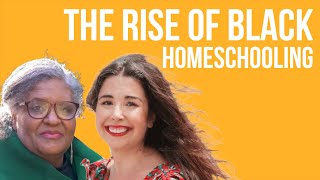
A hosted interview (podcast-style YouTube video, Sept 8, 2023) in which Manisha Snoyer interviews Dr. Cheryl Fields-Smith (professor of education, University of Georgia) about the rapid rise of Black homeschooling. Key points: Black homeschooling grew sharply around the pandemic (host/guest cite 'five times' growth and '16% of Black families' homeschooling), Black families' long history of educational innovation (including enslaved people risking punishment to learn and educational practices observed in Ghana), reasons families homeschool (poor fit, testing/scripted instruction, desire to instill positive cultural identity), profiles of families (single mothers making financial sacrifices; one Spencer-funded study of 46 families in metropolitan Atlanta, 2006–2008), policy tensions around school choice and regulation, and practical supports (co-ops, hybrid enrollment, donate/time/skills, blackfamilyhomeschool.com). The piece emphasizes equity, culturally affirming curricula, and fluid partnerships between public schools and home educators.
Questions this video answers
September 8, 2023.
16%.
Five times.
University of Georgia.
A Spencer Foundation small grant (two years) to study Black homeschooling; 46 families (metropolitan Atlanta, 2006–2008).
Chapters
Hello everyone. This is Teacher Kids and I'm Manisha. We have a podcast about how to optimize your child's learning by tailoring it to their individual needs. Since before the pandemic, the Black homeschooling population has grown five times. With a full 16% of Black families homeschooling today, I believe that black families are paving the way for the rest of the country and the world in developing innovative models of education that can truly serve our kids. With me today, I have someone I admire so much who is Dr. Cheryl Field Smith. She is a professor of education at the University of Georgia. She has a PhD in urban education. She's a former elementary school teacher who taught at schools that use the bank street model of education, which if you've listened to the show, we are very fond of here. It's experiential, project based, very holistic. Cheryl's focus is on family engagement and homeschooling among Black families. She is the author of Exploring Single Black Mothers Resistant Through Homeschooling and co author of Homeschooling Black children in the U.S. she's also the co founder of an amazing organization, Black Family Homeschool Educators and Scholars, which has a wealth of resources for anyone interested in this topic. And she hosts the podcast Contemporary Perspectives on Black Homeschooling, which you should definitely check out now. Also, I will have to say I tend to be very skeptical about any research on homeschooling, and I am just so impressed by the methodology that Sheryl has used and how she writes about this issue. Also, as someone who was raised by a single mother who made a lot of sacrifices for my education, I really connect to her writing around single mothers and homeschooling. Before we dive in with all my questions, I do want to acknowledge something which I feel is important. I am a white woman and I'm interviewing a Black woman about Black homeschooling, and I am not the first to interview Cheryl. There are also amazing podcasts by Black Americans who are running podcasts. I really want to recommend her interview on Race Through Education and the Kickback podcast. You'll definitely learn things there that you don't learn here. And I know I'm going to bring some of my own bias to this conversation. I'm always trying to learn and do better, but I thought that was important to mention. So you should definitely check out those other podcasts as well. And if you look in Apple Podcasts, there's a ton of Great podcasts with Dr. Cheryl Field Smith because she's been all over the news, and everyone wants to talk to her. So, Cheryl, welcome to the show.
Check that out myself.
Yeah, you should. You're a sensation. Thank you so much for being here today and taking the time to talk.
Thank you.
So perhaps we could start off with your story. Can you tell us a little bit about how, as an elementary school teacher and a scholar, you first got interested in the black homeschooling movement?
It's two separate things. I'm from Connecticut and I taught in Bridgeport Public Schools. And if you know anything about Bridgeport, it's inner city public schools where my children were black and brown. I think I had one white child. And then I went to Stanford public schools where there was more diversity, and not just racial diversity, but economic diversity. Then from there I went to my hometown and taught in Nawak, Connecticut. All three of those school districts, they're all really close. Connecticut is not. But so big. They're separate school districts, but they are very different. And I wondered why education was so. What was allowing Brown vs Board of Ed to continue. Why all of a sudden it seemed to me that it did matter where you live, mattered about the quality of your education. And I didn't think that that should be. If you're teaching and it's a profession, and it shouldn't matter whether I'm in the inner city or a suburb, that quality of instruction should be the same. I found in each of those experiences, it was different. Not necessarily because of the teachers, but because of the lack of resources. For example, those disparities between urban and suburban education got me thinking, I've got to do something beyond teaching. I want to understand this so that maybe I can make a change. That's what made me pursue my PhD. I found the program at Emory University and luckily got accepted there and did my dissertation on black home school. Black, sorry, black family engagement. Because there was. So when you are a PhD student, a doctoral student, and you're getting an assistantship, you end up, you know, being a teaching assistant and sitting in on classes and learning how to teach at the college level and helping the professor. And so I was doing that for a MAT program. So it was master's level students trying to become teachers. And they were reading about black families, the perception of black families as being not interested in their education. And I've never met a black person who wasn't interested in their child's education. Regardless of social class, regardless of their own education, everybody's interested in their children's education. Where are these ideas coming from? And it made Me want to dive into what does the family engagement literature say about black families more deeply. And at that time, this was in the late 1990s that I was working on my doctorate. There wasn't too much positive. There were a lot of comparisons between low income black families and middle class white families. And I thought, well, why is this considered good research? Why would I expect low income families to have the same level of family engagement as a middle to upper income white family? That just doesn't make any sense. I knew I had to do my dissertation on black family engagement. Trying to understand from a black perspective what is our engagement. That's what my dissertation did. I had mostly middle income and upper income African American families in that dissertation study. Then it came time to look for a job. I thought I was going back to my classroom, but I fell in love with research. I could not wait to re redo my dissertation in the same five school setting. I took a position here at UGA. I've been here for like 20 years, going on 20 years. Along the way in trying to replicate my study, I found that the older middle income black families who were mostly serving on the PTO boards helping to support their schools did not know the younger parents in the same building. They didn't travel in the same circles. Some of them were old enough to be the parents of the young parents that were going to, you know, sending their children to the school. So there was no natural way to get them to connect. But somebody referred me to a black woman who was 32 years old and homeschooling her three daughters. And I thought, I didn't know we homeschooled. I had to talk to her. That was a four hour interview. I will never forget that interview.
Amazing.
I was blown away not only by the fact that she was homeschooling, but the creativity. She was not a teacher, she was not an educator, but she had the professional knowledge necessary. She was talking about learning style, she was talking about differentiating instruction, all the stuff that we go to school to learn how to do as teachers, which I thought was amazing. She had taken the time to learn it for herself so that she could do the best by her children by taking classes and things like that to learn how to do those things. From there. I asked her if she knew any more black people who homeschooled and she said oh yes. I was awarded the Spencer foundation small grant for two years to study black homeschooling. It was mostly in the metropolitan Atlanta area. I had 46 families in that study and it Just, it set me down this path of that was from 2006 to 2008. And I was just amazed by what I learned and what I could see black families doing. And I love this work because it is a huge counter narrative to this negative perception that we're not interested in our children's education. Not only are we interested, but if you don't do right by our children, we will pull them out of the schools. And we've looked to those schools for uplift for years, generations. It's our legacy to look to the public education for uplift. And the fact that we're turning away and creating our own more and more is just fascinating to me. And it's inspiring.
It is inspiring. And in fact, contrary to this insane myth that black families don't care about their education, Black Americans actually have a long, incredible history of dedication to bringing high quality, tailored educational experiences to their children. And this is, you know, started way before slavery or even, you know, in America. Could you tell us about this history of innovation and education in the black community? And also, I think you wrote a bit about Ghana in your book. I just love to hear more about that story. It's really fascinating.
I had the opportunity, thanks to Dr. Cynthia Dillard and her study abroad program and her writing retreat, I had a chance to go to Ghana three times in a two year period. And it really opened my mind to a lot and it sort of helped me come full circle in a way to be able to go to those schools in Ghana and see joy, to see children being able to express themselves, to hear the teachers. So it was study abroad. It's usually people who are interested in education went on that trip with us. And one of the questions that came up all the time was, do you have special education? How do you handle special education? And the Ghanaian educational response to that, to the schools that we went to, were, was all children are special, right? We tap into their strengths, build on those strengths, nurture the areas of opportunity for growth. But we let them. They get to explore. When we visited, I had the opportunity to visit one classroom in particular. This was 2016. Donald Trump had become president, and we were there that December. So after the election, these fourth graders, the teachers just said, whatever questions you have, let's have a conversation. The first thing on their mind was, how do you all call yourselves a democracy in America when the majority of the vote wasn't for Mr. Trump, yet he became president? Help us understand what you mean by democracy. Fourth grade. Whoa.
Yeah, yeah.
What an interesting conversation.
Sure. Why not.
So. They are critical thinkers. They build things, they construct things. They. They use what they have to learn they don't need. They make use of what they have. Right. That is the best way I could put it. And they are allowed to reach their highest potential. To borrow from. My advisor is Vanessa Siddle Walker. Dr. Vanessa Siddle Walker. One of her books is called Their Highest Potential. And that is a theme that runs through what I see in black homeschooling as well as the history. Like you said, we have always found ways, very creative ways, under the risk of our lives to learn to read from the pit. Schools, going out in the woods to dig pits underground, and then learning. And then somebody would be on, you know, as a lookout to make sure nobody was coming. And it's just I can't imagine that duress, not being allowed to learn to read or to learn to do numbers and all the ways that our ancestors took on that desire not only for themselves individually, but also collectively, which is key. So it was like the each one reach one motto, right? If I learn to read, I'm not the only one. I'm going to make sure that the people around me, at the risk of my life, I'm going to make sure that everyone is still able to read. And. And it wasn't until I got to Emory, you know, I was in Dr. Vanessa Siddle Walker's African American educational history class when I first got to hear the slave narratives. And you could hear the recorded voice of someone who was a formerly enslaved African who was blinded because took the risk to learn to read. And he was asked, would you risk it again? He answered, yes. And he explained why reading is freedom. And so, yes, I was blinded in the process, but I'd still do it. I just wondered, why am I not hearing about this? I went to Hampton University. Maybe I took the wrong classes. I mean, I don't know. But I just think that as African Americans, we should be able to hear those voices of enslaved Africans telling us what it was like so we don't repeat it. If we're not careful, we'll find ourselves back in slavery again.
It just gives me the chills thinking about someone digging a hole to go hide and learn how to read, and even to the point of blindness. And how frustrating it must be for parents today to see that the public education system is still not teaching children how to read. And I just agree with you, you so strongly. Reading is freedom. Math is freedom. These tools are so powerful and so important, and it's just infuriating. That children are not learning what they need in school. And so exciting that families are deciding to take ownership over that and educate their children. That makes me super happy. Well, along those lines, could you. I mean, I really want to check out those narratives. We'll have to provide a link in the show notes, but I would love to hear just kind of. I mean, so there's this history of innovation and homeschooling, but since the pandemic, the homeschooling population has grown five times and 16%. I mean, that's a huge percentage of families who are homeschooling. What do you think contributed to to this surge and what does it look like today? Who are the people who are choosing this path?
That's an interesting question. I think there's so many reasons that the pandemic led to a surge in homeschooling overall and black homeschooling in general specifically. I think one of the things is when everything had to quickly shift to being online, it gave parents that inside view of what was happening in the school. To be fair, a lot of schools weren't ready. A lot of teachers weren't ready. The quality of instruction, of online instruction, that was not something that we were practicing. And so it wasn't as good as it could be. I also saw a report during that time period where surprisingly, children who were not thriving in face to face school all of a sudden were doing well online. One of the speculations for that is their bodies were no longer being policed. So if they wanted to lay down and do their work, they could. If they wanted to dance as they did their work, they could. Nobody was telling them to sit still and be quiet. They were able to learn in a way, in an environment that they could, that they were able to make for themselves. They had an independence to their work because they weren't online online all day. They were given assignments and then able to go off on their own and do those assignments and then come back and they thrived. Surprisingly, they didn't need all the surveillance and, you know, monitoring of their bodies. They were doing well. We sometimes don't. In public schools, especially today, the focus has been so co opted to only be on tests and standards. I'm writing a book now and I'm talking about there's going to be a chapter focused on the many black teachers I've met who have left their classrooms to homeschool their own and homeschool other people's children, mostly because they're not allowed to teach in the way they know to teach. They can't do the things that they know need to be done for their children, their students, because their classrooms are so restrictive in telling them what to teach, when to teach, and how to teach it to the point where there's scripted lessons. We don't go to school to be able to read a script. We are professionals. And when it is, when our professionalism is taken away from us, children suffer. Because you read about in, you know, black teachers, if you read about us dreamkeepers, if you read about Marva Collins, we go above and beyond for our students, but we're not allowed to in some environments today because we are given the script. And if we don't read the script, we're not teaching.
Yeah. There's a fundamental lack of trust of teachers, I think, to that example of the school in Ghana where of course, we're catering learning to the children's needs. Why would anyone do that? I mean, it just seems so natural. Yet in our school system, it the opposite. It's become the opposite of that. And I suppose then as families started homeschooling more, they started seeing the results and formed communities and decided to continue in this path.
Yeah. And the infrastructure is being built. There isn't much infrastructure, but we're beginning to see it. There's networks growing. And like I said, teachers are leaving the classroom. They're not leaving the profession, they're leaving the classroom. They're hanging out a shingle and teaching other people's children, or they're teaching courses for everybody around the world. Literally.
Literally, yeah.
And creating curriculum. I mean, there's so many things that you can do in this homeschool setting that will boost your financial situation while you also, you know, teach your children and help them reach their full potential. So.
So, you know, I so resonate with. It is amazing. And I really resonate with what you're saying. I mean, when there were all those. That big New York Times article, and McKinsey did this study on decades of loss in math and reading, and it's mostly black and Latino families. And I really took issue with that because I felt like, first of all of all, what are you measuring in terms of math and reading? And we weren't doing very well before. And, you know, and secondly, I mean, it's just. I mean, it's such an overarching kind of statement to say, you know, math and reading, like, what are you actually measuring? We're measuring what we measure on standardized tests. We're not actually measuring what kind of real learning is going on. And we're not looking at what models worked better than others. You know, I mean, for example, when we were, I hosted some online classes in the pandemic and we had a, we used a camera where kids could just like run around their room and bounce and the camera would follow them and they were super comfortable. And we used YouTube videos because we figured as long as they're having an online teacher choose the best one, why not like, you know, and that, that worked great. And then I launched a free math tutoring project where we combined adaptive learning apps with college student volunteers and gave them a few basic tips on communicating with kids. And a lot of our kids just jumped two or three grade levels through having a one on one tutor. And it was totally cheap. People are just volunteering their time and the kids loved it. So I think we really need to take a deeper look at how we're measuring scores and give both the teachers and the parents more credit for what they're doing to help their children. So kind of on the happy side of things. Can you tell maybe one or two stories about some of the families that have had great success homeschooling? I'd love to hear maybe two stories that really stood out for you at this point.
I've interviewed 70 different families, but there's only one husband and wife together.
Interesting.
Both of them went to public schools, right? So they, they had a propensity towards public education. When it came time to take their daughter, their oldest child, to kindergarten, they did what any other normal kindergarten parent would do. Right. You go to school with your child on the first day and you kind of linger because you want to make sure your child's going to be okay. When they did that, they were met with now, now parents. She's going to be okay. Don't worry.
Right, right.
And so they, they finally left. But when they picked their child up that, that afternoon, she was not happy. First day of school and you're not happy. All they did was testing. Long story short, the child went to kindergarten for about two, two and a half days. That's it. They took her home and they homeschooled. That child is now in college, entering college. Her little brother is coming right behind. They have left one state and they've moved to another state where the laws are even more lenient, where your children get to the point where they come to something like chemistry and that is not your forte. It really helps when the laws say, oh, that's okay, you can take a chemistry class in high school and you can move fluidly between Public education and home education, whatever you need, just let us know what you need to enroll. So they now are in a state that's like that and that's how they were able to get through the high school process, get them ready for college. And to be so successful, so self aware and so with their. With a positive cultural identity intact and for an African American in America, that's huge. I'm just now getting a positive cultural identity. That's not true, but I mean, it feels that way sometimes. Right. I'm just now getting my voice. But to see a child that, that went through homeschooling where such that their culture was a positive thing. Blackness is a positive thing and racism is. It's. It's not because of you. Right, Right.
There's a yes. And you didn't cause it.
Right. You didn't cause it. Don't internalize it because it's other people's problems. It's not yours. That is such a powerful thing to do for a black child. And I believe public schools can do that. I'm writing about that in my book. We can do that. But it's a choice. It is a choice and we're not headed down that path right now. When you look at the laws that are coming up in Florida and Georgia too, you're not trying to do the best by black children or anybody's children when you're trying to snuff out and tell an untruth about our history. There's nothing positive about what happened during slavery to black people. I'm sorry. Particularly here in America where the worst brutality happened compared to slavery around the world. We don't want to educate black children when we're passing laws like that. I'm sorry. Yeah, that's a theme over and over again. To have these children coming of age and they feel good about themselves, they feel good about their race, they know who they are. From a strength based perspective. Yes. That's huge. You can do that. I didn't homeschool my kids. My kids have that. I hope. But there's a way to do that. And I think that as black parents need to do that. But I think the school can help us in that mission. But it's a choice.
Yeah, it absolutely is. It's so unfortunate that just even the way we teach history, any element of black history, even in New York that's pretty much progressive, is all focused on slavery and you know, all the bad things that happened and every single thing is taught in the context of activism around race. Not necessarily Celebrating black. Black authors and black history. And I love how you talk about, you know, starting black history in Africa as opposed to starting with slavery. And I think that it's just so critical. I know that you're a researcher and not, you know, I mean, homeschool consultant, but is there any preps curriculum that you might recommend to families who are interested in helping reinforce that positive cultural identity and also just learn more about this important part of all our history?
I wouldn't say one particular curriculum because nothing's coming to my head particularly, but I think a common theme in my research is that parents were learning their own African American history as they were teaching it to their children, being open to it. If you went through public education Pre K to 12th grade, you probably have a limited understanding of your own black history. Unless somebody intervened. For me, it was my mom. She made sure I knew a lot of the firsts that I saw my history as positive. Thank you, Mom. I think just being willing to dive into the many firsts. Black people who invented things. Things that we use every single day.
Yes, exactly.
To understand that. When I was teaching fourth grade, there used to be this poem that circulated on the Internet. Where would we be if there were no black people? And the little boy asked this question and it was a poem. I turned it into a play and I had my students act it out. And every time one of the inventions was going to be used, we had a special sound and it would disappear and eventually it ends with we would be in the dark, because I think his name was Lewis Lattimore, invented the filament for the light bulb that enabled it to be. You know, things like that is very. It's very empowering. Even the way that we teach slavery that, you know, and maybe not maybe, definitely going to Ghana helped solidify this for me. But the fact that I'm here and any of us African Americans are still here is because our ancestors survived all of that atrocity. So it's a position of strength. Just that simple reframing, say, simple, but reframing how we present it to our children. Yes, it was brutal. Yes, it was rough, but we survived. That's a position of strength. And then my mother used to add our family history. She made sure I knew that in the 1950s and 60s, her mother was running a black newspaper in the middle of Jim Crow. And if my grandmother was doing that under that pressure, you don't have that much pressure today. Like that. It's different, it's subtle. What are you going to do, Cheryl? What do you think you want to do? And that is. It's a huge pressure, but I'm grateful for the question.
Yes. It's so important to remember the people who have come before you to give you the freedom that you have today as just a source of energy in the work you do. I mean, I, as a woman didn't have the right to vote. People worked so hard for that. And so it's my responsibility to take that right and use it wisely and continue to fight for more freedoms. It's. Yeah, I love that. So let's talk a little bit about what are. I mean, you write about single mothers, you share stories. I mean, it's just amazing. Amazing what sacrifices people are making for their children's education. I know my mom, who is single mom, we didn't have a lot of money. She actually, she was working five jobs and she wanted to send me to the Montessori school. And so she actually became a teacher at that school so I could be go there for free tuition. And she, I think she was paid an abysmally low amount of money. She didn't have health insurance. But it was just so important to her to provide me with a learning environment that I loved. And I would just like to learn a little bit more about, you know, about some challenges that black homeschoolers face. And the reason I'm asking this is because I also want to know about what we can do to help and what are policy changes or things that we can do in the community to make this experience of tailoring your child's education easier and more accessible for the single parents.
I chose those particular four women because not only were they single, but they also made the conscious decision not to work full time, which drastically challenged them financially. But again, they were creative, right? Some of them. One of them in particular, she was living in Atlanta, married, homeschooling her children. She has a master's degree. Her field has something to do, it's connected to construction. She finds herself, she's going through a divorce. She can no longer afford to live in Atlanta. She has to move a little over an hour outside of Atlanta to a rural community. She's living in the projects as well, low income housing, because that's all she can afford. Some of the dilemmas from interviewing her that I realized if she had been able to find work, her work would have been in that Atlanta area. She would have had an hour or more one way commute each way. She would have been that mother who wouldn't be in the school. During the day, might not be able to make it to your PTO meeting or your parent teacher conference, but she cared about her children's education. Either she homeschooled to the point where she's sacrificing a decent income as a person with a master's degree, or she would be labeled that absentee mother because she's not showing up, because she physically can't, because she's probably on the road from commuting.
And she probably understands, I mean, as you were saying earlier, she probably understands the importance of family engagement and education in a deep level.
That was one of her main things. She had this very realistic perspective of motherhood as being somewhat temporary. Your ability to influence your children while they're living under your roof as a mother is temporary. My child, I have a 33 year old and a 30 year old. I still can influence them, but not as much as I could when they were under my roof. She was right, it's temporary. And she wanted to maximize her ability, to instill her faith and still the way of life, being a good citizen, all of those ideas into her children's minds. She also wanted to make sure that they knew how to earn money because for her she had been laid off and unable. It was during the. There was the 2008 and we weren't building houses anymore and the industry just kind of declined and so it was really hard for her to find work. So she bartered. Can you imagine? She bartered with local electricians, local carpentry people, local plumbers, whoever, to make sure her three boys had some sort of a skill with their hands so that they would always be able to work.
Amazing. Such ingenuity. I just incredible.
And it made me think about when I was growing up in the middle grades, we took vocational training, we took classes in metalwork and graphic printing, home economics. We had all these hands on experiences and if you wanted to pursue that, you had that option. In high school we had like a. What do you call it? We had an actual mechanic, like a. What do you call it? A garage. People would roll their cars up and get their cars fixed because there was a track of learning that when you, you left, you were ready to become a man. Like a mechanic.
It's a useful skill to make money if you need it, right?
Those people make more money than I do, I'm sure.
And I for sure there's no shame in that work. Come on now.
Oh no, not at all.
I mean, I will say I went out on a date with an electrician once. And that guy had like hundreds. He was just right. Sorry if that's inappropriate. But yeah, I mean, and it's just. It's so important to have something like that to fall back on. And even I think about the way that our world is changing and climate change. I mean, having practical skills is more important than ever. And just, I mean, it helps executive functioning and motor skills, all kinds of things. So, I mean, I love that. I love how she just pieced together this eclectic education.
Yeah, it was a fascinating curriculum. So you see, she's not relying on one particular curriculum. She's looking at what they need, need, and then doing what she has to to make it happen for them. I think another theme is this idea of school choice.
Oh, yes. I really want to dig into this with you.
I learned through the lens of black home educators, school choice is not really equitable for everybody. Not everybody has choices. And the people who we have to overlay this with school districts, many of them are resegregated. You have a black and brown section of a school district, and then you'll have a more white section of a school district. And the people who are living in the mostly black and brown section, they don't have all the choices. It's your locally assigned school, a private school, or homeschool. The majority of my parents, out of the 70, only about 14 of them chose to homeschool from birth. The rest of those families put their children in public or private schools first, but those schools didn't work for their kids. And so they had to homeschool as.
A second choice or third choice. Right. I mean, I guess so school choice is just such an infuriating issue because on one hand, you know, I see Arizona and they're giving out a voucher, same amount of money to every single family to educate their children as they see fit. And so I feel that this is wonderful, right, that they would give families this level of freedom. And on the other hand, I mean, school choices vary sneaky because it's being pushed by conservatives. They're using it to take even more resources out of schools that are primarily black and Latino and making our education system even more unequal. And then also another big problem, I think, is that I do see education as the foundation of our democracy and anti racism as a fundamental ideal in our democracy, even though it is not at all effectively being, how do you say, done in schools. It is not being implemented, but it is a fundamental ideal that I think a huge majority of Americans would agree would be an ideal, even though it's not being put in practice. And so I want to give black families resources to educate their children in this wonderful way. But on the other hand, I see that. I don't know, I'm not sure if it was Ohio or Idaho where there was this Nazi homeschooling call where people were indoctrinating their children into white supremacy. And I think, should there be some federal accountability for that? And so I end up feeling very confused about how I express my voice as a citizen in school choice.
I've had people push back with me, with the people that are homeschooling to indoctrinate their children into white supremacy. And do they have a right to do that? Everybody can make their own decisions. It's not for me. I don't think that's the right thing to do. When we look at black homeschooling, we are not raising our children to say that being black is the best, better than everybody else necessarily. What we're saying to them is it's a positive thing. The world doesn't see it that way. But here's the truth about being black. Here are the strengths of our people, of our history. Doesn't mean we're trying to take over the world. We're not wishing any harm to anyone who is not black. But when you look at how this world is set up, the darker your skin, the harder life is for you. That's around the world, right? That's what white supremacy has given us. And so how do you raise black children that can love themselves or children of any color, any color skin in an environment that is not seemingly welcome to them? You've got to instill something. If my mother didn't do what she did, I wouldn't do be here because I wouldn't have the self efficacy to think that I could be a professor at a research one institution. That was my mom and my dad. I should give him credit too, right? Both of them instilling in me what is possible for an African American in this world. That you don't listen to, what you hear on tv, what you see in the news, what you blah like all the negative things that you might that I would encounter. But having those positive messages enables me as a human being to be able to succeed here, you know, in this. In this world that is not friendly always. It's really not friendly to us. You know, I was 12 years old when I first had my first encounter with racism. Perfectly innocent newspaper girl delivering newspapers. And back then we had to collect the money on Fridays and it Was a summer day. Somebody had their. They had their front door open, and I could hear a white mother teaching her little children who could barely walk to hate the black people on tv. And here I am, a little black girl coming to the door, and I'm like, what took away my innocence in terms of assuming good of all people? At 12, I could no longer assume good of all human beings because I know there are some bad ones out there, and I know it happens younger for children, too. But, you know, it rocked my world. It is my hope that as homeschooling in general, homeschooling among black people continues to rise, that the powers that be in public schools will take a listen and will try to reach back and find ways to partner. Because we see it in Canada and other places around the world where public schools and home educators are beginning to partner with. And like I said, there are one or two states here in America. They get it. Because the thing is, if I'm a home educator and I send my child to your high school for physics and all the stuff I don't think I can teach, well, guess what happens? That's a body in your school, and you get money for that. So it'll benefit you to let me be more fluid in making my choices, because there are some good things happening in public schools that I can't do as a home educator or maybe I can't do as easily. And there are some benefits to allowing my child to fluidly go in into these public settings we want them. If I were homeschooling, I would want my children to be around a diverse set of other children, which, by the way, is one of the problems. Because if my locally assigned school is mostly black and brown, is that diversity not really. By homeschooling, we're free to go during the day in places where there's all kinds of people and we get the diversity that we seek through sports or taking classes in other places and things like that. The resegregation is a problem. Resegregation of public schools is a problem. School choice is a problem. Or the. I should say the inequities of school choice is an issue that we need to work on. And as these parents continue to push, they're voting with their feet to do it themselves.
Yeah, I love that. And I think for any school principal or superintendent that might be listening to this podcast, just trying to find a room to give homeschoolers the opportunity to do an independent study where they take a few. A few classes at your school, I mean, that kind of hybrid learning is so effective. I know in some parts of California it's possible. And I think it's a really great way for schools to start innovating their model because 9 to 3 schooling doesn't really make sense in a modern day world. And so we have to kind of start experimenting to make school more valuable for the people who are supposed to be serving, which is parents and children. I really love that. And I do want to go back on this theme of diversity and bring up a point and please, you know, call me out if you disagree with my idea. But one thing I've witnessed a lot is, you know, I mean, for example, I go to this zen meditation center that's mostly white, or you know, I attend a homeschooling group that's mostly white. And I hear these like progressive white people complaining that there aren't enough black people in their meditation center or their, you know, homeschooling group. And I would just say, you know, like, stop expecting black people to come and join your group. Like, go and join their group. And there are some amazing, amazing black homeschooling groups. I mean, like, I know the founders. There's like, you know, incredible black churches. And I'm sure you will be welcomed. And if you're craving more diversity, you're going to be uncomfortable being the only white person there. But don't expect people to come to you. Go to them and experiencing what they're.
Offering for every black person or every black home educator. Personally, I like that idea because how many times are we as black people, the only ones at a conference are the only ones in a co. Op. I mean, and I heard that a lot as I interviewed people. You know, it's especially people that live in rural communities. Black people in rural. I have an article that with Dr. Timberly Baker. Hopefully it'll come out before the end of the year. But we looked at rural black homeschooling because there's nothing on it. And I just kind of surveyed, like just did a little survey. I mean, not survey, a little pilot study to get started in thinking about it. But one of the themes is how isolated they are and that they feel, you know, one mom, she drove almost two hours in one direction once a week just to make sure her children could get to a co op and participate in a co op with all black people or black and brown people. It is important that we have affinity with our own groups. As homeschooling is rising, so is the diversity of home. It used to be mostly religious people that is not true. People that are Christian home educators, if you want to keep with the program, you better make room for secular folks, too. We need secular curriculum because there's a lot of people that are homeschooling now that are not Christian and they're not looking for that type of material. But it's hard from interviewing those people, it's hard for them to find a space that's not associated with the church, to find curriculum that's not based on a religious background or context. And so those are barriers. Right? We've got to tear down the barriers. And I could. I'm a minister too, so I could really get. I won't do that.
Please bring it on.
I'm just going to say this. If we really look at how Jesus functioned, if we read our Bible, when he came across someone who was not Christian or who was doing things that God didn't want them to do, the majority of the time, he relaxed with them. If you do the study, look at the Greek original language, he relaxed with them, he ate with them, he talked with them, he met them where they are. He didn't beat them over the head with theology. He met them where they are. That's the kind of teacher he is. And so that's our model, right? We should be open to everyone. Everyone is God's children, child. We shouldn't be putting up barriers just because they do this, they do that. What do you do behind closed doors that isn't so well seen?
It's so true. I mean, I just did an interview with Iman Elaine, who runs a micro school in Florida, and she. And she's won all kinds of awards this year and is expanding all over the place. And she's an African American woman who started a school for a child who wasn't being served well in the Florida schools. And so she attended this event by one of her funders and saw Jeb Bush there, and she's thinking, can I talk to Jeb Bush? Can I tell Jeb Bush my real opinion? And then she kind of took a moment and said, of course I can. This is the moment. This is the opportunity you've been waiting for. And. And she has made real headway in talking about equity in school choice because she continues to be invited to these events. And she's bringing up social, emotional, learning and all these things that people hadn't considered before. So it's really incredible, you know, if you can have the kind of courage she does to really open that dialog. I'm a big believer in that, oh, my gosh, this is just so rich. I mean, I guess, you know, as we kind of finish up today, I really do want to know more, though. I mean, I think a lot of people are going to be leaving with the question is, how can I help build more equity in education or support people who are homeschooling who might have fewer resources? Can you give our audience a few ideas on how to help? Whether it's donating to your organization or what are the main actions that we can take if this is an issue that we care about?
The first thing I think of with that question is paying attention to the laws and the bills that are being proposed. I know a couple of years ago, I GUESS it was 2020, there was a law professor out of Harvard who wrote an article calling for a presumptive ban on homeschooling, which my first thought was, that would be so damaging to the many black children who are succeeding right now in spite of the public schools they are in. Homeschooling, and it's being a nurturing place. We don't have any place else to go. Sometimes. Sometimes the assigned public school does so much damage that mom and dad have to pull the child out. The damage is in the labels and how we do special education. It's so antiquated. So antiquated. And once a child gets a label, it's so hard to undo the label. And it could be even a label of troublemaker. Even as a teacher. I remember when I taught fourth grade, my first year, the third grade teachers coming to look at my list. Oh, he this, she that, he this. I don't want to hear all of that. This is a clean slate. Let me have my relationship with my. This child. You know, so we even do it within the school that, you know, oh, he spent his entire third grade in the principal's office. Don't. Don't tell me that I'm losing respect for you, too, because why would you allow that to happen? You know? But thank you for the information. And so I worked. You know, I had to work really hard from day one to undo that and to let this child know you're going to have a different kind of school year. And I remember the mother coming in. The mother came in after a couple of weeks. We haven't heard any bad news like, what's going on. There's no bad news. Nothing but good news. Your child is that and the other. Let me tell you how wonderful he is, you know? Yeah, this is a different year. We're changing all of this, you know, But I mean, I have to make a decision to do that, right?
Yeah, you totally do. And I mean also I just want to kind of zone in on, take responsibility as the teacher and the school. Like if you're, if a child is in the principal's office all year, why is that the child's fault? That's the school's fault. You're doing something wrong.
Sending your child to the principal's office, sometimes that turns out to be like field day for them. That is not the most beneficial place for them. No, let them see them. Let them see the joy they're missing out on. Teach in a way that they want to be in your class and don't be hypocritical.
Right. Like, you know, nurture their love of learning experience. You teach them that, you know, society is about democracy, don't be authoritarian, for example.
Be what you want. That's one thing I missed about being in my classroom. I could set up this somewhat utopian world where everybody's voice is special and everybody is a member of this classroom and has something to offer, you know, regardless of where you come from, regardless of this, that the other. And it's so important. Kids need, need that today. You know, I've heard, you know, through my, my students, I hear stories about kids whose parents are one, you know, they're incarcerated or strung out on drugs and they have to go to grandma. And grandma is verbally saying, I don't want him, I don't want to, I don't want him. And so then when the child gets to school and acts up, is it any wonder how can like a five year old, they don't, they don't, like mom and dad are gone. This woman that is my grandma doesn't love me, doesn't want me. And then we want to slap a emotionally behaviorally disturbed label on this child. No, they're not emotionally behaviorally disturbed. They're going through some stuff that you can't understand. But you need to understand, you need to try to understand. Because how do you teach someone like, you know, not knowing? I mean, you've got to do something different for that child. And isn't that what a professional does? Right. I don't want a doctor to treat me the same way they treat everybody else for the same ailments because my body is different.
Right. It's actually problem in medicine as well. But you know, we won't go there today.
Yeah, you gotta find the right person to understand. You're not quite like this. And so let's you know, anyway. Yeah, it is. You just be a professional. It's.
I don't know, it sounds like you do know quite a lot. I mean, yeah, I mean what I'm hearing is really, I mean, if you want to help, first of all, if you are a school principal, you know, try to see ways that people can have hybrid learning through your school. If you're a voting member of society, take a look at your laws. If your state is having conversation about school choice, go talk about equity. And then I think another thread I'm pulling out of here is just this bank street approach. If you're a teacher, tutor, start with understanding the child. That is where it all begins. And I will just throw in there also mentorship. If you, you have an opportunity to take someone on and teach them electronics or maybe you run a makerspace and you want to, you know, help kid come in there. I mean, there's a lot of opportunities where you can help be a mentor and reinforce someone's identity. I mean, goodness knows, if you go on Google, there's so many great programs for internships and you know, you will have a learning curve yourself, especially if you're, you know, I mean, I worked, I took, I haven't done in a while, but I used to take interns from All Star Code, which is an awesome organization that they black high school men that you take into your tech company and they do a lot of great work for you for free or for an internship. And you know, and some of that was just kind of teaching students about showing up to work on time, getting, you know, being realistic about deadlines and what could be accomplished and follow through and you know, I mean, instead of being frustrated, just taking the responsibility of teaching those skills and all of my interns have become incredibly successful. So they're already working at top tech companies now. Yeah, they were much bigger help to me than I was to them, I'm sure. But yeah, I think you, I think.
You'Ve summarized it right. Like whatever resources you have, it doesn't have to be financial. It could be a skill. It could be like anything. But if you find a community to share that with, these homeschool co ops are growing every leaps and bounds everywhere.
Yeah, but I will also say money does matter. And if there's an organization in your area, give them money. I mean, give money to Cheryl's organization. Give money to black homeschoolers Conference, just like. And vote for laws that make education funding equitable. That's, that can't be overlooked. So. Oh, My gosh. I think this is one of my favorite conversations I've ever had on the podcast. You're so inspiring and you have so many wonderful stories like can't wait to start checking out some more of the resources that you shared. I like to end each episode with a question. So I feel like a lot of what my podcast is about is a passion for learning. So I was wondering if there's something, something interesting you're learning now. It can be should be totally unrelated to anything we talked about today. I had an education reporter the other day who said she Learned about this 10,000 year old ringworm that was on ice and came alive. Is there anything fun that you're studying right now or just fact that you've learned that you might want to share with us?
There's lots of things I this past weekend I went to my first rodeo. It was a black rodeo. Oh my gosh.
That sounds so cool.
It's the Bill Pickett Invitational Rodeo. It's traveling around the country now. And I did not know they had children as young as 2 years old participating. And I did not know like that they represented fifth generation cowboys and cowgirls.
Extraordinary.
We have a lineage history in the black in Black rodeo. I had no idea.
Oh my gosh. This is definitely going on my bucket list.
How cool.
How cool. Oh my gosh.
I have never been to one before, but I went with family members and we all had a blast and we said we're going to do it every year because this particular rodeo comes every year to our area. So I will be going every year. I'm going to be looking for other rodeos to go to. And you know, it's really funny because there's such a joke about like black people don't do horror films. That's changing. Part of the last event in the rodeo was the bull riding and black men getting on the bull and actually riding wild do that too.
Wow.
Oh my gosh.
We can do anything. Oh my goodness. Wow.
Exactly.
We can do anything. Well, thank you so much again. And I guess, I mean, where can people find you if they want to learn more?
So if you Google Sheryl Field Smith, all kinds of stuff I know pops up. And I'm at cfieldsga, Edu or email. I don't post a whole lot in social media. In fact, it's mostly personal. Like my rodeo videos are there. I've got one foot in old school and one foot in new school. I'm just barely there in the new school stuff. But I welcome emails. And if I can help, I'll help.
Yes. And I would also definitely direct people to blackfamilyhomeschool.com the organization that you founded. There's so many great resources there. Well, thank you so much again. It's been an absolute delight. And please let us know when your new research paper comes out. I'd love to read it and just have a wonderful day.
You too. Thank you so much.
More from Manisha

Contributing to Florida Prepaid Plans (2026–2027) | Step-by-Step Guide for FES-UA Families

Contribuyendo a los Planes Florida Prepago (2026–2027) | Guía Paso a Paso para Familias FES-UA



Finding Providers & Services in the Marketplace (Families) | Step Up For Students (2026–2027)

Encontrando Proveedores & Servicios en el Mercado (Familias) | Step Up For Students (2026–2027)




