Transforming Education through Technology: A Chat with Manisha Snoyer
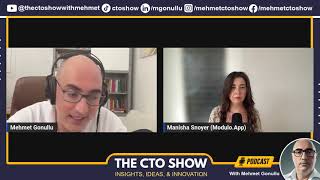
Manisha Snoyer, who taught for 20 years, built Modulo to break up traditional schooling into modular pieces. The startup matches students with tutors and curriculum, tracks progress, and handles compliance. She argues homeschooling and micro-schools work better when you treat learning like a product.
Chapters
From the heart of Dubai, where tomorrow is being built today, to the world. Welcome to the CTO show with me. Here we redefine technology and reimagine possibilities with Memet, delve into the riveting realms of AI, cybersecurity and digital technology, experience the thrilling highs and lows of startups, immerse yourself in the spirit of entrepreneurship, and witnessed the future of business innovation being written in real time. Now, without further ado, let's tune in and explore the future.
Welcome back to a new episode of the CTO show with Mehmet. And today I'm very pleased to have with me someone, for the first time on the show, we get someone who is expert in education. Manisha, thank you very much for being with me today. Can you please introduce yourself and what you do?
Thank you so much for having me, Mehmet. It's an honor to be here. I run a company called Modulo. We are building a decentralized education system with the goal of replacing public school with a more modular, customized learning experience for children. I've been a teacher for 20 years. I've taught in public school, private school all over the world, in Paris, New York, San Francisco, probably over 2,000 children in three countries. And I witnessed an education system that felt broken at every level and the opposite of what it should be. And at the same time that I was having these realizations, Airbnb and Uber were just getting started, and I was actually an Airbnb host. And I started getting very interested in technology and how marketplaces and AI and data and design thinking could be used to help build this kind of curated education that I imagined. And through this process of thinking, I discovered this movement of homeschooling families, mostly secular homeschooling families who are very different than the traditional archetype of homeschoolers that you might think of, either at home with their parents all day long, or alternately working with a lot of tutors in a very rich household, but people of all income levels and walks of life who are building a very nuanced, creative education for their children, drawing on classes and tutors and world travel. So I got more and more interested in this, and now I'm building the system that can help everyone pursue this kind of learning.
Fascinating. Now, let's start from one place. You mentioned that there is. Okay, anytime when we talk about a startup, I talk with a founder. So of course you spot a problem and you try to come up with a solution. Now, I know it might look like a very broad question, but what's wrong with the current education system?
That's a very broad question. As a startup founder, I think a lot about this problem. So I will start with the education system. It's kind of a two pronged problem. I'll get there. So first there's the education system. And, and my. I think the biggest problem with the education system is that it's homogenous and inflexible. So in the US and I believe other countries, we have an education system that's designed to be perfect for every student. And what it doesn't recognize is that there's so many differences between individual students. And the system that we've created is very bulky and very hard to change. And what we see with inflexible systems is that they snap. And that's exactly what happened during the COVID 19 crisis, is that our education system was incapable of changing. And as a cto, you know how important it is to build systems that can scale, that can evolve, that can be constantly iterating based on user feedback. In school, there is no user feedback. We never hear from kids or parents on how to improve. You know, for a great example of this is so people have been talking for 20 years about coding being an important skill for kids to learn. And just now we're kind of starting to talk about putting coding in public schools. And in fact this is not even necessarily the skill that kids will need when they graduate from school anymore. I mean, we are just beginning to integrate information about climate change and critical thinking. And that's so far past the point that it's important. And so what I observed in the homeschooling community is that people are doing a lot of one on one learning. So what I call mastery based learning, where you have a parent and a student, or a tutor and a student, or just a student, an adaptive learning app or a curriculum. And the student is learning at their own pace. They're using a curriculum that works for them in their community at a given time. So I think the biggest problem with education is the inflexibility of the system. And it's also the problem I see with a lot of solutions. Whereas companies are trying to build the perfect school, the perfect app, you know, the perfect math app, the perfect thing for all students, and not recognizing that students have so many diverse needs and, and the world is changing so fast and we need to build systems that can evolve. So second part of the problem is actually exciting, which is that because our education system has hit rock bottom, I think a lot of parents can relate to that without me needing. Needing me to explain it. People are saying, I'm done. I'm going to homeschool my kids. So the homeschooling population is surging. It's grown three times since what it was before the pandemic. And we see niche groups like black homeschoolers, and that's grown five times since the pandemic. So I believe that there is a huge latent market of these secular homeschooling families or modular learners who, even more than who are homeschooling now, who would be homeschooling if there were tools and resources available. And it's just start. We're just starting to build tools to support them, but there's really not a lot out there. So those are the two problems that I'm focused on in my company.
That's amazing. And so you mentioned something that, you know, the other day I had.
My.
Guest, Girish, who, you know, we discussed also about, you know, like, how they trained us, you know, in school in universities, about this system that, yeah, you need to memorize, and then it's like, very rigid. Right. So had you touched base on something? Really, I like it. You mentioned about the coding, and now we have ChatGPT, who can actually do coding for us. So now let's focus on technology first, and then I will maybe delve more in some other things.
And I think what you're hinting at is that school is very focused on memorizing procedures rather than conceptual understanding, which is kind of more of a skill that we need in this day and age.
Like when you mentioned, like, we need to make it more flexible. Right. So, but who can I deliver that? Because, you know, we have the relationship between teachers and students. Now. The biggest challenge for me is it's not the teacher as a person, but it's the material they provided for him. So maybe he's teaching a programming language that it's going to probably not be in use when these students will graduate. And I'm talking whether it's like a, as you call it in the US, K12, or whether it's like college, which is schools and universities. So in all cases, you know, this kid, he passed by this, and then when he graduated, he went out to war, or maybe he wanted to start his own or her own company, and they figured out, hey, guess what? What I learned, it went to trash. Exactly how you tackle this.
Well, I think that there's way too much focus on memorizing information, and there needs to be much more focus on knowing how to learn. Because the one thing that we know for sure is that we may change careers many times in our lifetime, that the world will look very different in 10 years, in five years and two years than it does today. And we need adaptive, flexible thinkers. And so I've been inspired by this organic, grassroots model of learning that's evolved from the homeschooling from people, community from people. And what they do is, first thing they do is choose curriculum for their children. And there's so many options available and so many new options emerging. They might choose a nature based curriculum, they might choose an adaptive learning app, they might choose a workbook. And we see that different students resonate with different types of materials. And in general, what they'll do is they'll focus on an hour of language arts and an hour of math. These are kind of core foundational subjects that you need in order to be able to explore other resources. And a lot of time, even in math, homeschoolers won't pick just the kind of math that helps you do well on a test, which is what you're learning for standardized tests and whether it's the SAT or the baccalaureate or whatever test you're taking. And so if, if we have a system where parents are saying, what is the best curriculum for my child? Get the math, get the language arts, and then let them explore, let them do a lot of self directed learning with books and other resources. I mean, children, you know, their minds need that time to explore. I mean, cognitively, we know that the young mind is developing so quickly and it's those periods of curiosity, following their curiosity, making mistakes, discovering what they're interested in is how they learn critical thinking. Play is how we learn critical thinking. So there's lots of time for that kind of thing in homeschooling. And I believe that we don't need to have a teacher and 30 students and teach them these very narrow set of skills to do well on standardized tests. We can customize learning for each child and parents can take the lead in that.
How can we leverage technology to do this?
Well, I mean, I think it's already happening. It used to be that there was no Khan Academy where you could sign on and learn any subject you wanted to. There was no YouTube. There were not a million adaptive learning apps. And so see, a lot of parents, when they think about homeschooling, they think, well, I'm not qualified to teach. But in fact, now every parent is qualified to teach because all they have to do is guide their child's learning through all These incredible resources that exist. So it really levels the playing field and makes this kind of curated education available to all students. And I'll just say that it used to be that teachers really did have to memorize a lot of information before the Internet came about. They would have to just know all this stuff in books, and they were the people who passed on the information to future generations. But now you just go on Google, you go on ChatGPT. Finding information is not hard, but processing that information and finding the insight is what's exciting about learning. And so what technology has done is it's opened the pathway for so many more people to do this kind of curated learning.
Now, I agree with you here 100%, but someone might come and tell us now, you know, I'm playing the devil.
Advocate, let's say, please, go ahead, bring it on.
It's not me, but he might tell. Yeah, you know, you guys, like you, you're saying this like it's something easy. Yeah, of course. Information is everywhere. But at the end of the day, you know, when my child will, you know, have to, you know, breach an age where he or she, they have to find jobs, and guess what companies are asking them. You know, show me your SAT score. Show me your. What's the other one? I forget it. The, The GMAT score. Show me your. What was the one for the mba? I forget it now.
Yes, yes, yes. I see what you're driving at. And there's no reason that accountability can't be built within homeschooling. First of all, a lot of kids in school are doing very poorly on these tests. But another thing that homeschooling has, or technology rather, has opened up the possibility for is micro credentialing. And there are more and more companies who are coming into this space where rather than just getting, okay, 98 percentile in math, you're getting, you know, you are certified as a Python engineer from Google. You don't need. You can skip college altogether because Google knows that you have that site Python certification that they've offered. And so. And then I'll also say that being at school standards is kind of the bare minimum. But what we've seen is that even homeschoolers have the tiniest bit of structure in their curriculum. Maybe they're studying math for an hour every day. They're going to be two or three grade levels above their peers, no problem. And a lot of these adaptive learning apps also have tools built in so they can see at what rate children are progressing and what skills they need. To develop. So the parent does not need to be keeping track of that. The app or the curriculum is actually helping make sure that they're moving forward at the pace they need to achieve whatever they want in their life, career wise or college wise.
So what I understood from you, Malaysia, like the technology, you know, whether it's an app or maybe a website, it would take the role also of doing the assessment. And when I say assessment, it's not like in the traditional way of just, you know, giving a quiz, but rather than maybe testing the knowledge that they have reached and you know, like, okay, you're now ready to go for level two. For example, you started learning Python level one, which is just if and where and you know the basic stuff and then now you are ready to go to the next level where you start to deal maybe with data structure and you know, this kind of thing. Now the reason I'm asking this, like, don't you see? But still there, because when we talk, for example, in AI, we always talk like, also there should be a human who's supervising the learning to make sure, like for example, that the AI is, is doing its job as it's supposed to do. So now is there a way in the edtech technology today that can kind of, I would say, calibrate, you know, the learning experience? In other sense, maybe, you know, there should be a human interaction not every day, maybe maybe on a monthly basis, quarterly basis, to just make sure that the system is doing what it's supposed to do or doing maybe a few fine tuning here and there.
Absolutely. And we're not talking about sending children off into a room with a closed door and having them learn in front of a computer. That is the opposite of what modular learning looks like. First of all, either a parent or a caregiver is usually spending an hour or two every day observing the child learning. So if, you know, you think about school where you have one teacher, 30 kids, and maybe every two or three months or once a year you get a sense of how a child is doing and maybe can target that by leaving them behind a grade. It's such a minimal and this is how children get more and more behind. But for example, I launched a non profit that did math tutoring with underserved youth during the pandemic. And all we did is we had a tutor and the student would sign onto Zoom and play an adaptive learning app with the tutor. The tutor would watch them play and if they have a question or got stuck, they would help coach them and guide them. So when you have a parent who's observing their child and watching them learn at their own pace. Just a very different situation, getting tested once a year. And I will say, of course parents are concerned. Maybe they're not education experts. Maybe they're worried their children are on track. First of all, I'll say a lot of parents at school are not sure if their children are on track, if they're learning the skills they need for the future world, not at all. But if we just talk in a homeschooling environment, there are so many tools that you can draw upon to see if your child is at the right track and how they're developing. And some of that is built into the curriculum. Like, you can't move on to the next level until you've mastered the skill before it. Some of it is assessment. And one of the things that we want to do at modulo is actually build a really comprehensive system that is measuring how a child is doing academically, but also holistically and being able to change those goals as we learn new things in the world. I mean, let's say somebody starts saying, okay, wow, in 10 years, we're going to need a lot of people working in machine learning. You know, maybe immediately you can start tracking how your child is doing on machine learning and if that's a skill that is helpful for them, rather than just kind of being in a void and not knowing what's important. I mean, maybe if your child is feeling sad or their work is slowing down, you can get pointers on how to help them develop a growth mindset and grit and lift their mood. There's so many more intricate ways that we could be getting feedback about how our children are doing and taking actionable results. And I think, you know, if we look at a tech startup, that's what we're doing all the time. We're seeing how quickly can we get user feedback and adjust what we're doing. And so the modular approach is very similar in that regard.
Right now, again, taking not the devil advocate this time, but someone might think, and this is why, you know, maybe it will be a competition for you in a sense. But someone might say, still, but my kids need to go to school just for the sake of, you know, socializing. Right. So do you think that, you know, schools should reinvent themselves to not be, I would say, education centric rather than maybe and maybe leveraging a technology as well to make the kids, like, more social and they can involve them in activities that are not really related to math and English and chemistry. Biology, what is your, you know, and maybe what are you expecting to happen to schools in the future?
So there are a lot of different questions there. So maybe we'll start with socialization. First of all, the idea that homeschooling is not social is one of the biggest myths about homeschooling. It's just not true. And if you actually go into a homeschooling community, you'll see that there are many meetups happening of diverse ages. Most homeschooling parents tell me that their children are over scheduled. The groups are very diverse, they're inclusive, People are swapping childcare, they're swapped their skills, skillshare swapping. You know, a CTO might be teaching kids coding. It's a very social environment. Like any community. There might be people who are more lonely or more have trouble making friends than others, but certainly not more so than school. These communities are incredibly vibrant socially. And as the homeschooling population continues to grow, more and more people join the movement and the communities grow. Take a look at socialization at school and think about how vital play is to a child's development. You can go on Harvard and see studies from Project Zero. Children absolutely need to play in order to develop cognitively critical thinking, et cetera. It's, if you want to be an amazing math genius, you need to play. It's so important. And at school, kids are sitting in desks with children the same age and they get maybe 30 minutes of recess where they're running around like insane people. No one there to guide their socialization, to set a role model. These homeschoolers are learning from older children, they're learning from parents. Sometimes someone can step in and help resolve a conflict. It's, it's, I think it's a much better social environment.
It's like real life.
It is like real life. And you could choose your friends, which is cool. If you don't like someone, you don't have to hang out with them, right? I think that's okay. And you know, if a child is very advanced, for example, in math, maybe they can connect with other children who are at that same level and who they can relate to. So that was the first part of socialization. In terms of the second part of school, I do think that it is possible to build a public education that functions similarly to modular learning. And what's needed is these hubs of people who are connecting not just around one experience at one time, but through classes and extracurriculars and social sports and tutoring and skill shares. So In a way, it almost looks a little bit more like college in some sense. But I absolutely think that there can be a system that can help connect people on a social level.
Yeah. Now again, one thing while you were talking, because I asked you the question and I was thinking in my head, what could be the answer? So here's a theory that I want to throw.
Let's hear it.
I don't know if educators will hate it or like it, I'm not sure. But what I believe a good, I would say balance. Because of course these guys then they even, they are nonprofit, you know, of course, but they have to pay salaries, they have to arrange all these things. One view I can think about it is maybe convert schools into kind of an accelerator or incubator where these kids of course, after certain age, like not maybe, maybe even at earlier ages, but I think, you know, once they reach 12, 13 years old, maybe as they call it, the British system, they, I think KS2 or KS3 in the US I think it's like mid school. So where these kids, they go there and they start to explore ideas to build them. Right. And when I say ideas, not only tech, maybe people will think, yeah, you are a techie guy. You know, you think about only programming. And no, it can be trying a business model, trying to come out with ideas, trying a new style of drawing. I don't know, like, I wish to see something like this. I'm not sure if it's.
Yes, I think it's excellent. I think it's very innovative. I went through techstars and it was an incredible learning experience for me to be part of an accelerator like that. What I would just say is that while that model can work well for a lot of children, it doesn't necessarily work well for every child. Some child might not thrive. And so what I think what we really need is to give space, space for all of these innovative models to arise. And I would, I would also use a word, project based learning, which a lot of people like to say is how can you have children choose a project they're passionate about and get support around developing it and seeing it to fruition? I think that is incredibly exciting. And I think absolutely, that would be an amazing module to be part of their modular learning where they have an accelerator they participate in. Maybe they have a French tutor. That's a different kind of learning experience, experience. Maybe they have a forest day where they just play in the forest with other kids. And so I think that if we can give more room to breathe, I think A lot of teachers would love leading an experience like that because that's part of the problem too is that teachers are leading the profession in droves. They're not aspired, they're not excited. So maybe a teacher or someone like you could say hey, maybe we should start an accelerator for kids and then children in that community can join and, and get a ton of learning out of that experience.
Right. Or maybe kind of cohort style as well. Because myself yeah. And people with people were surprised, like what are you doing? Like all the participants usually like they are young people. So I was on a cohort, it's an online one. And thanks to technology for providing this where you know. Yeah, I participated for like four weeks. Cohort was about no code basically, of course, although I know, but just I was curious to see and the learning experience was amazing because it's exactly the same thing that you mentioned where you have bite sized, you know, lessons. It's not like something super duper hard. It's like, you know, even the assignments are like fun things that you, you are, you enjoy kind of a mini capstone projects, I would say. And then you have like kind of a graduation project. Like of course between brackets when I say graduation, you need to build something before you leave the cohort. So. And then they will give you the certificate. So yeah, really technology advanced and allows us to do such things. And I'm pleased you mentioned, you know, Khan Academy and you mentioned a lot and guys there are plenty of similar. Some of them, they are free, some of them. And YouTube is the biggest, you know, I would say is the biggest library out there.
Absolutely. I think it's one of the most important innovations in education in the last 20 years for sure.
Now I ask you a question. It people might be surprised why you are asking this on a CTO show again. But again, I love startups, I love entrepreneur now part of the homeschooling. Don't you think that kids should know? And I know there are a lot of celebrities and famous people out there, they say the education system is broken because they don't teach people about like how to start a business, how to make money, how to do savings. Do you think that also this should be part of, you know, this revolution? I would say in education using tech.
Oh 100%. I mean there are some really vital skills that are not taught in school. Financial literacy, you know the other one, a very hot debate. But sex ed, it's not taught very well and that's something that's important for children to learn. Coding, I mean, the list goes on and on. There's. I have a blog I wrote about. Oops, they didn't teach you this in school with about 20, I would say, core critical subjects that children don't learn. So having that freedom to really learn the skills that are important is a huge part of this. And also back to your point about the accelerator, there is a type of school called a democratic school. They take many different forms, but a big part of it is doing, like you said, capstone projects and working in a cohort to fulfill a project that you chose. And they're a very effective model. And you know, unfortunately due to legislation and other issues, it can be very hard to create a school like this. But there's also in the US a growing movement of micro schools that are very much based around these project based learnings. A lot of times when kids arrive at school and they'll say, they just will write down what do they want to learn that day. Another really good example to look at if families are interested in this is Acton Academy. And the, there's a, there's a lot of some really interesting learning centers and the agile learning centers are very, they even have a Kanban board that the children use. It's, it's really nice.
Nice. You mentioned something about cottage class which were part of techstars. Can you share some experience from, from that time and how it has. Yeah, because I love to hear about this experience.
Experiences, yes. That was a wild ride. So I went from being a teacher and an Airbnb host to saying, oh, hey, it would be cool if I started a marketplace for my teacher, founded micro schools. That was my idea. And the thing took on a life of its own, really. I didn't, I hadn't raised any funding, but I generated a million dollars in revenue. I was using Squarespace to take enrollments. We created all these homeschool co ops in Brooklyn. So I finally found myself in techstars and the, one of the co founders of Airbnb and one of the first teammates invested in my company. So it was a really crazy experience because there were eight of us and I had zero experience in tech and everyone else had either come from a tech company, was a really talented engineer building a new coding language. And I think what they liked about me is that I had deep industry expertise and a lot of revenue, you know, traction and expertise otherwise. And it was, it was incredible crash course. I mean, first of all, it was so great to be around these other really high performing creative thinkers who are passionate about they were doing. I learned so much from the other founders, and we grew so close together, and having these weekly meetings where we could share ideas and get feedback, I think was amazing for me. I felt in some ways like a fish out of water, because in some ways I feel like I was expected to know things about tech that I did not know at all. So I really had to teach myself things. And I would come and say, well, I don't understand how you manage customer service. I'll just read a book or, you know, like, how do you build a financial model? And. And I. And I really just didn't have any idea. And. And that was very frustrating because I would have liked someone to sit down with me and explain these things. And I, I feel like it's a big mistake. Stake in a lot of accelerators where they get very excited about these industry experts, but they don't realize what a huge cultural shift it is from being like a teacher in New York City to suddenly being among all these people who are leading executives at tech companies, and that there really is a steep learning curve. So now I actually have a mentor who is very helpful and sensitive to that and is able to kind of play to my strengths and fill in my weaknesses. But I just, I mean, techstars was such an incredible learning experience for me. I got so much support, and ultimately cottage class did fail, but we created a lot of new homeschool environments for children and hundreds of children who were really suffering in public school got an education, and I learned a ton about myself as a founder, and that I think has really helped to build my new company. So if you've never done an accelerator like techstars or Y Combinator, I just recommend it so highly as an opportunity to get a crash course and what you need to learn and also have a lot of fun being around cool people.
Yeah, that's great. And actually, you know, from. I'm new to this, by the way. Like, I just started, you know, my. I'm calling it a boutique startup studio, and people ask me, like, you look like very, like, knowledgeable about that. I'm saying, guys, it's a learning curve for me as well. I work for startups, but I never had my own startup. But I have the passion for this. And now, you know, I'm learning tons and, you know, a lot of things and, you know, I have to learn the dragons of. Of startups. Of course, I knew them before from books and you know, because talking to. To managers before and the senior executives in these startups, so you need to learn the language. But more than this, exactly what you mentioned. So about, you know, from basic ideation to later on putting a business model or you know, making validation and all this stuff. So it's a nice journey, I would say. And this is why part of the mission of the podcast is I bring people like yourself, Manisha, who can share their experiences and, you know, people they can benefit. Hopefully someone will listen to this or watch this. And they said, aha. Okay, I didn't validate my problem properly, for example, or I didn't, I didn't think to go to an accelerator. Now what I want to ask you, like maybe we touched base but because now you are inside the industry, like other than the homeschooling and you know, I will ask you later about, you know, your venture, but I mean, where are you seeing, you know, education tech in general heading, what are the major trends you're seeing?
Yeah, so I mean first of all, we're seeing, as I've said many times, more and more homeschoolers. There has been a huge increase in educational spending. So families are spending a lot more on private tutors all around the world, on extracurricular activities, on any kind of experience to supplement their children's learning. So kind of the major market sentiments are online classes. We saw that outschool just exploded during the pandemic. I think they raised $180 million. Then we're also, we're seeing a lot of online learning, a lot of one on one tutoring and that, I mean, is just so effective. And now with online learning, there's so many different ways to connect with incredible tutors around the world. There's free tutoring platforms in the US We've given billions of dollars to do high dosage tutoring in school and out school with intervention models and then just tons of curriculum being developed. I think that we are really not there yet with adaptive learning apps. I mean a lot of people are building literacy apps and math apps, but we're not quite there yet. The apps have a very limited ability to adapt to individual users. But I'm very confident that we will get there.
Yeah, I'm happy. I'm speaking to a couple of founders mainly in Europe and here in Dubai, which they are thinking to start to take the education tech outside just from the marketplace kind, you know, like similar to Udemy or these things and putting into more like maybe niche approach, for example music.
Exactly.
Or art or I'm happy to hear like founders. And actually just yesterday, I mean at the time of the recording. It will be one week or maybe 10 days before. Yeah, but I've shared like a, you know, from all my discussions I had recently. You know, these are, I'm calling, I'm talking about at least the area I like to talk about, which is Middle East, Turkey and Africa. Education tech is one of the sports guys. Like if you, you have the passion for helping people to learn in a better way, I think, you know, there's a huge potential, huge potential.
And what is this idea that only a teacher can teach a kid or only a parent can be with kids? What if everybody in the world did some teaching? Like, isn't our responsibility to raise the next generation? Why do we biologically have to have a child or adopt or be trained as a teacher to be involved in the life of children in our community?
100 and also there is a new trend I'm starting to see also which is not education for, for kids, like, but again it fits under maybe education tech, which is more about like, you know, mentorship slash consultancy kind of, or mainly mentorship, I would say, or coaching. I'm seeing this area also hot, at least here in, in Dubai. Yeah, I interviewed someone in the same space couple of days back as well. And yeah, it seems that it's a booming. Yeah, you say something.
Yes. I mean, and also I didn't even say artificial intelligence, which is a huge part of all of this. I mean chat. So chatgpt kids were so excited to start using it and playing with it and for their writing. And I think that a lot of companies, I mean like Khan Academy just launched a ChatGPT tutor. We've seen Chegg, which is one of the biggest US companies, has had a lot of trouble because the ChatGPT has cut down a lot on how people use their tutors. So they're trying to use ChatGPT. And what I would say is I think that people are kind of leaning a little bit too much into ChatGPT. Instead of seeing all the possibilities of what you can create with AI, like create your new thing. Don't just slap on a chat bot. Right. So I think that. And I would also say you made me think of something else to change topics, is that if you're an investor or if you're a startup founder and you're trying to think about how do I impact K through 12th grade education? Think about the way you enjoy learning. Like if you want to learn a new skill, what do you do? What kind of resources appeal to you? Because you'll see. And what kind of resources do your friends use and they might be different than yours. Like for example, I would never go to a language class if I wanted to learn a foreign language. If I wanted to learn foreign language. I mean, I just go to that country, period, and I immerse myself in the language. Or I would hire a private tutor because I just don't learn well in a classroom environment. Or maybe you would go online and take a course. And so we have this expectation that children learn very well lecture style, but that's not how the way we learn. So if you want to see how children are going to be learning in the future, take a look at how you yourself are enjoying learning and the skills that you feel like you need to acquire as an adult.
100%. And you know, you reminded me also as well, like I used to hate because you know, at some stage I needed to go have some, how you call them, trainings. Right. For specific products or technologies. Yeah. And I remember like, usually they were five days, you know, you know, four days and half long. And you know, by Friday I forget everything I learned. Of course the the best for me personally, my preferred method is learn by doing like the best things I learned is when I, I did it. Whether it's for example, programming, you know, I give myself a, like a project or like of course, fictionary project and say, let me try to do this. And then you know, I start to search on Google before ChatGPT, of course. And then sure. So yeah, like I learned a lot. And speaking of AI, of course, like AI is not only ChatGPT but because it's like now the mainstream. By the way, if you use the right prompts, it can be a great teacher.
Yes. And learning how to use the right prompts is part of the learning process.
100%.
100%. I agree.
So maybe this is the question that every founder like yourself, Marisha, you know, like or don't like it, but what are your plans with modulo what's next?
So, you know, we have this big vision to build a decentralized education system. A lot of times when you're building a startup, you're encouraged to have a very neat problem and a very neat solution and follow one version vertical. And that's not what we're doing. We're trying to build an interactive suite of products and no one has really in my space had the courage to do something like this. But you can see that there are companies that have been very successful with a big plan like this. So the next, right now we've really been gathering information about what people need. So we have the ability to find curriculum, we have the ability to connect with tutors, we have the ability to get live free tutoring. But a lot of this is being done manually. So the next step is to bring all of these features together into a seamless platform. So a family, let's say you have a seven year old and you've decided to pull him out of public school and homeschooling them. You can go on modulo, you can register for homeschooling in your state. We I know I've talked a lot about the US education system and I apologize for that. But you have families in Australia and India, all over the world. So you can go on, make sure you're compliant with all state laws and then you can find a curriculum that suits your child's learning. So if you have a child who has ADHD and loves playing in nature, we could recommend a nature based curriculum that's worked well with children ADHD or if you're a parent who's like I need an open and go curriculum, I have very little time to be involved. My kid loves video games. We can set you up with some fantastic adaptive learning apps or if you have a child who's profoundly gifted in math, we can help connect you with a tutorial who can suit their learning style. So we're working on that matching and then having a very sophisticated tracking system where we can see how children are doing and make recommendations. So at any given time, at any moment of the day, a parent can just log in, see how their child is doing, pull in different recommendations to enhance their learning and then also see a calendar of all their activities and classes and then get reports which they can use to apply to college career change schools. So really just a comprehensive system. And then of course the final piece is socialization. So connecting with like minded families in your area for friendship classes and childcare. So this is the, the big play and we haven't raised any capital yet. And in September we're going to go out for a seed round to, to build a team that can get started on the MVP of this seamless education system.
Very nice, very beautiful. Now before we I end up with my famous question.
Oh.
You know like this is inspiring because you, you little bit mentioned but maybe you can give it a nice way of advice. So you were a teacher and then you shifted to an entrepreneur, right? And you, you, you it's like a huge move. So in a sense of encouragement for anyone who's in Any field, maybe in education, like yourself, or in any other, you know, area. What you tell them, if they have, you know, this idea, this passion, what you advise them to do.
Well, I do believe it's unique for every person and I don't recommend just taking your credit card and hiring some developers to build your idea. I think that it's very unique to each individual. For me, I have a huge aversion to working for other people. And so me becoming an entrepreneur is more about just, I just cannot stand having a boss than about having this really excited idea to build something. I mean, that's part of it too. So that is very. Works for me. And then I would say it's really, really important that you're clear on your mission. I spent many, many years doing deep thought and research about what is wrong with our world. Why are there all these human rights violations? Why is our education system so bad? Why don't girls have access to education all around the world? I studied a lot of books about climate change and every issue. And I really narrowed down on this idea that I thought could make a huge impact in the world every single day and in the future. And I know that my mission is to empower every child to have a chance to thrive. And I personally am someone who just loves children so much and gets so much energy from them. So when I'm working with someone and they quit, or when a customer is mad at me, or when there's a new law passed, or when there's like a competitor who crops up in my field, these frustrating moments, I just come back to my mission and I said, you know what, I have a plan and I have a mission and I'm going to stay the course. So that is really important to me. I'd say the second thing is that I don't know if it's because I'm a woman in tech or, you know, I came from this non technical background, but I was told a lot in the beginning that I did not have enough confidence when I was pitching investors. And a lot of people were telling me that I should just fake it and pretend that I had confidence even if I didn't. And this was years of this and it really did not work for me. I just couldn't pretend that I was confident. And so finally I had a mentor who told me what confidence is. Manisha is. It's about integrity. You thought about the problem, you feel that you have expertise relative to other people in solving this problem. You have your course and you say, you know what? I Might be wrong, but this is my plan and this is my course, and you can take it or leave it. And if someone says, I don't like it, you're doing this wrong, you could say, I respect your opinion, and this is the path that I've chosen. It doesn't mean you don't take feedback, but you're kind of aligned with yourself in the direction that you're going to take. And that has helped me enormously through, you know, as a founder, you're gonna have so many questions where people just don't like your personality, they don't understand your idea, and other conversations where someone instantly loves you and wants to work with you. You're going to have other conversations where you just talk too much and you just botch the whole thing, and that just is part of the process. But if you can have a plan and stay the course, then it really will help move you forward and have that confidence. I believe.
I think you nailed it. It's like authenticity. It's integrity, and it's the mission. Or some people, they call it the gut. Whatever you want to call it. Right. So, and. And I seen, you know, the people, they succeed, maybe not immediately, you know, you need to. I don't like the word fail. I prefer if they removed from the right. You know, you need to do mistakes. Let's put it in this sense. Maybe one time, two times, five times, ten times, who never know. And then you will find, yeah, if the mission is strong, actually, you're gonna keep trying. If the mission is wrong, you need to go and change your mission. Like, this is the way I see it for sure.
And it's all about knowing yourself as well. Because, you know, for some people, they might just be naturally confident, but they might not have enough humility. And that's something they need to cultivate. For some people, like, money might be a huge motivator, whereas other people are more motivated by the work they're doing in the world. So you really do have to have an honest assessment, like you say, authenticity, about what you're good at and what you're not good at and what you can develop and what's worth your time developing, and maybe what you'll always be bad at. Right. You know, like, so a hundred percent.
And, you know, I like when you mentioned, like, about, you know, the going and trying to pitch and so on, because I've seen a lot of people, you know, do this mistake, and this is, you know, kind of an advice from my side. You might think you have the best Idea you might think that, you know, like you, because you mentioned about getting the credit card and doing, you know, like paying for building an app, you need to be humble. And because I did this mistake myself before as well, I thought I have the best idea in the world, let me go and do it. And then I figured out that no one wanted, right? But I was lucky enough that I didn't, I didn't, I didn't pay for building it, but I was talking about it everywhere, everywhere, you know, and no, they are wrong. I am, I am right. And then I figured out no, like if, if it's not valid, it's not valid. I don't need to. And I can shift. And shifting in especially entrepreneurship and startups is part of the game, right? So yeah. Now coming to my final famous question. Is there any question that you wished I asked you and how you, you would answer it?
Oh, that is a really good one. I will say. I think we touched upon this, but the first thing that I thought of was how is homeschoolers, how is homeschooling similar to building a product? It's something that I like to talk about a lot because we see that a lot of software engineers and people in tech are starting to homeschool their kid. And so when you think about building a product, you say, okay, I have a problem, I need a solution. And in order to build a good solution for this user, very specific user, I need to try a lot of different things and experiment and my startup is never going to be set in stone. Hopefully, you know, it's never, that's not a good startup. You just build a product and then never change it. Right? We can agree on that. And so in this, similarly in homeschooling, you don't really need to worry so much about these standardized tests. Like would you have your startup take a standardized test like if your startup is good and you answer all these questions correctly, your startup will succeed? No. So you're taking this child who is not a product. By the way, don't treat your child like a product. But you have a user, right? And they're very specific and they have individual needs. And then you can start thinking about what different features do I need to pull in to optimize my child's learning. And whoa, my users needs have changed, they've grown up, the world has changed around them. How do I modify the resources that I'm using to support them and give them a joyful education? And you know, what are my KPIs? What does success mean to me. Well, I know that I want them to be happy. I know they, I want them to have the career they want, but I might not know what they need. Well, if you don't know what they need, why don't you research that? Right? Don't just say, oh, I don't know. And so in, in question all your assumptions like, oh, well, I can't do that because of socialization. Have you actually explored whether homeschooling is social? I can't do that because I'm not qualified to teach. Well, do you know what skills teachers have or do you know that most of what it is is behavioral management? Do you need that skill when you're teaching one child who's your own child? So we don't ask a lot of the same questions that we would when we were building a company. So that is something that I do want to leave you with because I'm sure that a lot of parents on this show work in tech and can understand that analogy. And then I do want to also throw in there that this space is very new and very confusing. And if anyone in your community needs help or resources or support, they can absolutely email me. And I'm really happy to advise anyone on their child's education anytime.
That's great. Like actually, very good point. We need, as you know, humans in general, I would say advanced societies and all that to get rid of, you know, the habit of refusing new ideas just for the sake of refusing. Because the neighbor told me it's not good. Because I don't know, my cousin told me it's not good. Like, go read about it, go. I, I'm very big fan of exploring things. Right, of course. Like if there's 1,000 people saying, no, don't do it, like don't, don't jump from the hill. Right, of course I'm not going to jump from the hill. You know, like it's common sense. But when it comes to education, and I think, you know, I, I believe that because by the way, the place where I got my education, my, my higher education, I mean the school education at that time, the system was because of the test, some children used to repeat the same grade. I'm thinking about it now. My God, you wasted someone's one year life because of a rigid something coming from the 19th century at that time, maybe education system. Because he doesn't like this, because you are teaching him something he doesn't find or she doesn't find him herself in. And you know, coming to your point about homeschooling I think there's no harsh in going and trying it because at the end of the day, like, they are still kids, right? So, so they can, they can catch up quickly later on if you want to change your mind or you feel you're. Which I didn't like it, but which I, I, I, I doubt that they will not like it.
100 yeah. And you can also just try it for the summer when they're done school, see what happens. Right?
100 and for me now, you know, like, because before, and this is a kind of a growth mindset, I would say, because, you know, for me also, like, and this is like, again, back to the, our points that we discussed before about, you know, how we have this misconception about things. Because for me, yeah, this is the way, the way I grew up. I have to go to school and then I have to go to university and then I have to go to get the job. And then I figure out that, oh my God, I wasted this amount of time on things that I'm not using it any, any anymore. You know, now I'm fighting with, you know, I'm fighting with school sometimes here, you know, Although, like, they are better than many other place in the world because they still, for example, they say, hey, calculators are not allowed in the, in the class. Give me a break. Why it's not allowed. Like, you know, and we're not talking about, like, small kids. Are we talking about like almost high school?
It's a tool that's a tool that's available to everybody, you know, why prevent somebody from using.
Oh, okay. So, you know, one time I, it's funny. And that will end sometimes. One time, one guy was like, kind of arguing with me and he said, yeah, calculators should be banned in classrooms. I said, you know what? I think then even pen should be banned in the classroom. And said, why? I said, yeah, they should do everything in their mind. Right? Because this is kind of a tool, same as the calculator. Right. They should do only mental calculation tools, threaten people. Right.
The pen is mightier than the sword.
Right.
Giving children power to direct their own learning and create is threatening.
So 100%. So, Marisha, where can you know, the audience find more about you and about your company?
Wonderful. So there's a couple places that you can visit. There's Obviously our website, www.modulo.app that's M O D U L O like a module or modular.
And I will put it in the description. Don't worry.
Yes, I'm On Twitter at Manisha Roses and also on LinkedIn @manisha snoyer please. As I said, email me if you have questions. It's Manisha M A N I S H a modulo app. But really the best place to start is our website, all of the social media links, our substack is there. And just thank you so much for taking the time to listen and to talk to me. It's really been such a pleasure. I've loved hearing all your questions.
It was my pleasure. Thank you very much Manisha. I will make sure that all the links and handles that you mentioned, they will be in the episode description. So if you are listening to this on your favorite podcasting platform, you find them in the episode summary or description part. And if you are watching this, you will find them in the description also as well. And as usual, if you have any questions, any feedback about this episode, don't hesitate. Tell me what you like, tell me, you know, what you wished. I asked Manisha something else also as well. I would love to hear your feedback about that. Of course. And if you are interested in becoming a guest on the show, same as Manisha was today, don't be shy. Reach out to me. I'm very active on LinkedIn. Actually you can find my email on, you know, the podcast website. You can reach out to me directly. LinkedIn. I'm more active there if you want to drop me a message and we can discuss. Don't think about time zones like my guests are in the us. In some of them I are newsland. So I cover all the 24 hours time zones. I can accommodate any time zone for you. No worries. And I hope you enjoyed the discussion today about, you know, education and the future of education and homeschooling and leveraging tech in this. Thank you very much for tuning in and thank you. We will catch up very soon. Thank you.
Sounds good. Have a wonderful day. Hit that subscribe button. Share the show with your tech savvy friends and fellow entrepreneurs and leave us a review on your favorite podcast app. Your support means the world to us.
More from Manisha

Contributing to Florida Prepaid Plans (2026–2027) | Step-by-Step Guide for FES-UA Families

Contribuyendo a los Planes Florida Prepago (2026–2027) | Guía Paso a Paso para Familias FES-UA



Finding Providers & Services in the Marketplace (Families) | Step Up For Students (2026–2027)

Encontrando Proveedores & Servicios en el Mercado (Familias) | Step Up For Students (2026–2027)




