Unlocking Homeschool Success: Julie Bogart on Teaching Writing at Home
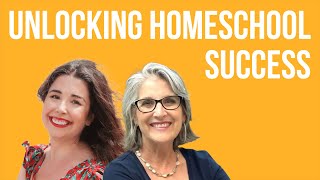
A YouTube interview (published Sep 1, 2023) in which host Manisha Snoyer interviews Julie Bogart about homeschooling, teaching writing, and the Brave Writer program. Bogart recounts her homeschooling origin (mid-1980s), defends homeschooling while acknowledging child-protection concerns, and emphasizes ‘‘harnessing the properties of home’’ (use comfort, snacks, eye-level interaction) rather than importing school-style instruction. She reframes writing as valuing a child’s ideas first (transcription and mechanics taught separately), recommends methods like dictation, freewriting, catch-and-transcribe moments, and short writing sprints, and outlines Brave Writer’s offerings: short 3–6 week asynchronous online classes (parent-enrolled Brave Writer 101), downloadable manuals (Growing Brave Writers spine), age-tiered literature/mechanics products (Quill, Dart, Arrow, Boomerang, Slingshot), and writing-project bundles. She also describes Brave Writer’s origins (first book/online class ~2000), scope (tens of thousands of students; long-term reach to 100,000+ families over 25 years), and her recent book Raising Critical Thinkers.
Questions this video answers
September 1, 2023.
Outstanding Contribution to Society from Xavier University, 2017.
Brave Writer enrolls over 30,000 students in a year and has reached well over 100,000 families over its 25-year history.
Chapters
Foreign. Hi everyone, this is Manisha from Teach your Kids. And I am so incredibly excited today to have Julie Bogart on our podcast. Julie Bogart is the author of Brave Learner Raising Critical Thinkers. She has also created my favorite writing curriculum, Brave Writer, which has over 30,000 students in 191 countries around the world. She hosts one of the best podcasts on learning and education. The Brave Writer podcast also is a homeschooling mom of five. I don't know how she did it. She won the outstanding Contribution to Society in 2017 from Xavier University. And I think, Julie, what most impacts me is just following you on social media and seeing the humanity of your posts. You have so much compassion for parents and children and this learning journey and being a human being. It's so inspiring. So thank you so much for taking time out of your day to talk to all of us. We really appreciate it.
It's wonderful to be here. Thank you for inviting me. I love being on other people's podcasts. It's great.
Fantastic. So I thought maybe we could just dive in and if you could tell us a little bit about your own homeschooling journey. You are the first guest I've had who I've never met before, and I would love to hear what led you as a parent to start homeschooling.
Yeah, I'm happy to share about that. So when I was not even engaged yet, the friend of the man I would marry came to me and asked me, are you planning to homeschool your children? This was in 1984. And I said to him, home school. What's that? Because in 1984 people didn't know much about homeschooling. And he proceeded to launch into a, you know, don't let the government control your children tirade. But the part that really landed with me while he was speaking was this idea of tailor made education. And so even though I had not gotten married, was not pregnant, had never had children, I said at the end of our conversation, well, that sounds like a neat idea. And he turned to what would become my husband and he said, she's all right, John. And so that was my introduction. Interestingly, my husband's sister was a home educator, so I heard some about it from her. I was living abroad at the time and many of the families who lived in Morocco with us were homeschoolers. So I got to watch them homeschool. And when I returned to the States and my son was kindergarten age by then, I had read many books and it all sounded so Natural. It lined up with my breastfeeding philosophy and my parenting style. And the idea of filling paperwork for a school system just sounded horrible.
I thought, well, if we can just.
Keep doing what we're doing, why wouldn't we? And that's really how I started.
Amazing. And did you have a teaching background at the time?
No, no, no. No interest in teaching. Honestly, I've never, never wanted to be a teacher, never wanted to work with children. Honestly, I hated babysitting. And yet I went ahead and had five children. I think what really held my enthrall and the reason that I loved the idea of homeschooling is that I'm sort of a lifelong student. As a temperament, I love reading, research, thinking, growing my mind and watching my kids have all these incredible firsts like rolling over and speaking and walking. I thought, I don't want someone else to watch my child learn to read. I want to watch it. I don't want someone else to teach my kids the times tables. I want to do it. And I started hanging out with people who homeschooled and we just have the best time. We threw all these learning parties and we went on field trips and I don't know, with young children. To me, homeschooling was pretty magical. I'm not saying it was always problem free. I'm just saying that the overarching experience of doing this educational life with my children just felt like such a joy to me. It was such an honor to get to do it.
Wow. And I love what you say about the joy of watching your child learn something. I think any parent can relate to that. I mean, just it's so incredible to see them pull themselves up for the first time or take a step or make a silly noise that sounds like a monster. And to be able to do it all the time is such a gift. And. Yeah. So I'm so curious if you, when you started this journey without a teaching background, were you already very confident? Do you have any doubts? And the reason I ask this is because I feel like there's a movement of people now who are intrigued by homeschooling who feel like a tailor made education is a better choice for their kids who might even think it would be fun but don't have the confidence to take the leap. And I was wondering if there was anything that helped you give yourself permission to do that or even advice you give to other parents who might lack that confidence to take the first step.
I am so glad you asked this question. I was just talking about this with A friend of mine yesterday who homeschooled when I did, and I said, one of the things I see in today's homeschooler is a level of anxiety and worry that I did not experience and that my peers didn't experience. And I think it's because of social media. We started homeschooling before the Internet was even born. When I took Noah to his pediatric appointment at age five, his doctor said, hey, you're lucky you got out of school today. You got out of kindergarten today. And Noah said, what's kindergarten? And the doctor looked at me and was like, what? I said, oh, he doesn't know about kindergarten. He's homeschooled. And then the pediatrician said, what's homeschool? So when we started, there were no concepts of what homeschooling is. The general public had not decided homeschooling was terrible and dangerous. The world that we lived in didn't have illustrations of parents in these gorgeous little nature environments with pretty furniture and happy children learning to read in photo streams every day. I was just like living in my own world. And my own world was my children. And my tiny condo in Southern California with no backyard and drought resistant plants.
Like that was, wow.
My house had Ikea furniture and used furniture and it was not attractive. But I loved the experience of discovery with my kids. And so what I would say to a new homeschooler today is, you do not need to be a teacher. You don't need a beautiful home. You don't need a nature preserve in your backyard. What you need is a spirit of discovery and trust.
I couldn't agree more. That's a beautiful way to put it, as a spirit of discovery and trust. Because I also believe that if you're somebody who loves learning, you can certainly teach your child. It's really about engaging and learning with them and modeling learning. You don't have to know all these special facts or techniques.
No. And you have 18 years.
True.
18 years is a long time. I mean, it's not going to take 18 years to learn to read, but it might take five. It might. It's not going to take 18 years to master fractions, but it might take three. Like you have time. I don't know. This is a secret that was shared with me at a conference years ago. The guy who shared it I have lost track of. So I can't give you his name. But there is in the educational space and understanding that a certain brain maturity has to take place for high school level learning and then again for College level. So did you know that junior high is just a holding pattern? Like everything your kids learn between kindergarten and fifth grade or sixth grade can be taught in a year when they're 12. So you have from five to 11 to cover everything. You could just cover when they're 12 because their brain is ready for it. So what you're doing is you're killing time, learning as much as you can. And when I say killing, I mean you're filling their days with activity and events and things to learn and explore. But this pressure that there's something to hit at every level and if you miss it, you won't ever get it, is false. And home educators know this.
Absolutely. And I think I see so much pressure that parents put on themselves where they're afraid of failing their child if they don't learn this narrow skill set before second grade or third grade. And I was actually not aware that there was a time when there wasn't opposition to homeschooling. I wonder if it's because the secular homeschooling movement has started growing and people are feeling reactive to it now. But certainly I think parents just feel so, so judged about every aspect of their child's education and this huge pressure to perform.
I would say that all parents feel judged no matter what educational choice they make.
Very true.
I used to run with five women who were all public school moms, and I was the only homeschooler. And we were training for a marathon, so our runs were very long, sometimes two hours long. So there's a lot of time to talk. And one of the things I learned very quickly is that parents of public school kids feel very powerless. They strategize endlessly how to get in with the teacher, how to move that grade point average by just a half step. Like, well, if I go to the teacher conference, my child's more likely to get a B plus than a B or an A minus instead of a B plus. How they talk about the endless homework that they don't know how to help them with. And so what tutor knows this program that they can hire. And they feel judged all the time. They're judging each other. They're comparing their children. They're trying to strategize how to get the classes that their kids need. Meanwhile, I'm just jogging along going, oh, thank goodness. I don't have to think about any of that. I'm over here tailor making the education to my child, and I have all the power of decision making. I can hire a tutor. I can join a Co op. I can change curriculum mid year. I can ask my child what they need to thrive. We can go to a coffee shop to do math if they're bored of doing it at home and they happen to be a high schooler, literally, I have the power as a home educator. The judgment that we experience in homeschooling is partially academic, but it's actually more cultural. And that is because there is some very legitimate concern over child abuse that can be undetected in the home education space. And I am one of the few leaders. Or I hate to use that word, but a person prominent in homeschooling. Yeah. Who acknowledges that it's a genuine and real concern and something that we should care about. There's abuse in all kinds of educational formats and parenting, but homeschooling creates a unique opportunity to mask and hide it. And that's something we do need to acknowledge. And wider culture has a right to criticize homeschooling for that.
I agree with you. When I was a public school teacher, I did see abuse, and I was a mandated reporter. And even in that context, I felt it was very difficult to make any change. It often went, not ignored. But I think that doesn't mean we have to go either or. And it's funny to me that people see homeschooling as well. Either we can have zero accountability, or we can have this incredibly structured, rigid system that doesn't even really protect kids that well. I mean, we all know there are kids who are going to school with not enough to eat, who are being abused at home, who are being abused at school by teachers and other students. And I think if we can start rethinking it and saying, wow, there's a lot of amazing things happening when parents are guiding their children's education. And right now, if you homeschool, there's a lot of liberty to do whatever you want. Is there some way that we can do a better job protecting the children in our community, have some accountability within this system, rather than either it's all or nothing? And I think that would be a good thing for people to start looking at.
Yes. I think partly what's going on right now is there is a moment in time where religious abuse and religious trauma is being identified. And that is the sort of category where it's happening the most inside the homeschooling space. And I say that as someone who is a practicing Christian, while I was homeschooling my young children and was a part of a church, I think we have to own that some of the teachings that we have adopted are damaging and some families take those to an extreme. I have called child protective services on a fellow homeschooling family that was harming a child. So I say this with some experience firsthand, but I would also just touch, take us back to the goal of this conversation. Say that the vast, vast majority of homeschooling families do not abuse their children. They are garden variety parents who have regrets and resentments and mistakes and errors and the wonderfulness of full attention and inside jokes and love and nurturing and support and caring. So most homeschool parents are parents first, just like most public school parents are parents first. And the educational method that they choose is whatever they choose, their kids don't have a choice. They receive the education the parent picks for them. And there will be conversations about that when your kids are adults. I'll just tell you that now for sure.
And I think one of the wonderful things about homeschooling are the types of communities that have been built. They tend to be smaller communities. They're at least what I've seen in secular homeschooling. They're more diverse. There's a lot of collaboration, childcare sharing, skill sharing, even. Julie, when you said earlier you could hire a tutor to help, even if you don't have a lot of resources, you can find people to help in the community for free or low price. I think that this, as opposed to a large school where a lot of abuse is ignored, there are certainly some advantages. I know. I think it is actually a little bit interesting, maybe just to dig in a little deeper. There's a lot of conversations about school choice, a lot of conversations about should parents be given absolute freedom? Right now homeschoolers in some states do have that absolute freedom. For instance, where the secretary of education and a magic wand. Do you think that there is a way that we can help better protect some of the children in homeschooling communities, that small minority who might be abused.
I do believe in some accountability for home educating. I love the state that I'm in. I live in Ohio and I love their. For me, they have the perfect balance at this point. Although that could always change. Ohio is a crazy state right now. But I will say this. I like the idea of having to notify, letting your school district know that you are going to stay home and offering, even if it's a skeletal plan, a plan for that child's education. I think parents crave accountability as much as they say they resist it. And then I love the end of the Year sort of acknowledgement either through state testing or some kind of written narrative that you do with a certified teacher. I always chose the written narrative. I don't like state tests personally, but I understand why some parents choose that. For me, the narrative was wonderful because I could gather everything that I considered evidence of my child's progress through the year and have kind of a show and tell session where I got to be patted on the back for doing a great job. And I could also ask questions of this trained teacher. I could say things like, you know, we worked on reading all year and my 7 year old is still struggling. Do you have any recommendations? What do you hear from other parents who are homeschooling like me and get the support that I needed? I think in these states where there's no end of the year accountability, you're really leaving parents to their own design. And there can be a feeling of being at sea. It might sound like freedom, but really a lot of times I know because I talk to parents every day, it can feel a little bit ominous, like I don't know if what I'm doing is enough. I don't know if what I'm doing is heading in the right direction. And I think that's legitimate. I wasn't trained as a teacher. I don't have in my imagination what we cover. In third grade, I had to go to the library and see what they typically teach in third grade and then try and figure out a way to incorporate it. And those things matter. They help parents feel successful. It's good to have a skeletal framework and to not just be left on your own. Even unschoolers are constantly. The good ones are constantly reading and discovering things to share with their children, to model, to encourage, to implement. Right. So I think we want to be careful about what is freedom. Freedom is the right to make that choice. But then I think a little bit of accountability creates a sense of progress that aids you and keeps you from becoming a depressed homeschooler for sure.
I for a while practiced Zen Buddhism. And they have very strict forms in terms of how you sit and how you walk. And I found that within those simple structures kind of creates a vessel in which you're able to find almost absolute freedom. And sometimes just having too many choices, you fall into the structure of your environment or you kind of. There's always something controlling you if there's nothing, some lines to help you move around in the world. I agree that the structure is important. And having these conversations about what that structure might look like for different children. Because I think that there are some families who do very pure unschooling and their children are so self directed. The family is very self directed and it works really well. In other cases. There's a lot more accountability and support that's needed. If anyone's listening and they feel they're having a strong reaction to any of these ideas, we really recommend you write a comment. Let's start our discussion about it because it's so important that we're really digging in as opposed to just saying all structure, no structure, school, homeschooling, and very black and white way of looking at things. This is so rich. I do want to circle back on this question of how to teach your kids. Of course, there's this subset of parents who feels like I'm not qualified, I'm not good at math, or I don't have a college degree. I really agree with what you said is if you love learning, you can support your child with all the resources available and learn with them. Another thing that I hear come up a lot though is parents. Many of them are teachers and their experiences. Whenever I try to help my child learn, it leads to a fight. I mean, homeschooling is great for other people, but it would never work in our family. This was actually something I experienced with my own mother who is a teacher, and she would try to help correct my writing or math. And she's very loving, positive person. And we just had the most screaming fights. I wonder if you have any thoughts on that.
I think no one wants education done to them. A lot of times what happens is in the classroom. The established authority structure that suits the classroom is well understood by everyone there. We dress up, we come. There's a bell schedule. We have an assigned seat. There's a teacher in the front of the room. That teacher determines what happens during that hour. Even if you're fully engrossed and you love it, when the bell rings, you're done. You have to go to recess even if you don't want to. You have to come in from recess even when you don't want to. There's a structure that sort of supports the activity of instruction that school leans on. When you get home, you are in an environment that's completely different than that. Any kind of schedule feels artificial because it is. You want to kick off your shoes, you want to wear comfortable clothes. You want to eat a snack or use the bathroom whenever you feel like it. And so along comes a parent who tries to bring the properties of school into the home. In the name of learning. And the child is like, no, I already did that at school, or no, I live in a house, I don't live in a school. And the parent thinks, well, if I just adopt the pose of a teacher, the child will respond as if they are in school. And that's absolutely false. So what I suggest is leaning into the properties of home whenever you're educating your child at home, whether it's homework for a school class or it's home education. And what that looks like is not standing above your child and directing what to do, but sitting next to them, like at the same level, eye level, having a snack on the table that they can eat while they're doing math. In fact, studies show that when you engage your mouth while you are doing work, schoolwork, you are actually more likely to absorb and retain what you're learning. So snacks and gum at home are wonderful tools for learning, and they are completely anathema at school. Another thing you can do is shift where that learning takes place. Put the information, let's say it's a worksheet or a sheet of paper on a clipboard. Tuck that child into the corner of the sectional, cozy up with a blanket, give them the cat to pet. Now do your homework. We can actually harness the benefits and joy of learning at home for our children when we're giving them instruction. But so often what we try to do is import the strictures of school and we call that learning when really what we're saying is this is what a student at school looks like and that's how I'll know you're learning. And it's not accurate. We learn in tons of ways. So harness the properties of home.
Harness the properties of home. I love that. And I think that's a really good idea to let marinate in you. If the concept of teaching your child is so foreign, how can can I make learning at home, learning at home, harness these properties of home as opposed to make it like school? Because we're just so used to the way things are done at school, it might even take some time to adjust 100%.
In fact, I think the biggest struggle for new home educators is that they played school as a child. I even find this from second gen homeschoolers, people who are homeschooled as kids and are homeschooling their kids. Now there is still some kind of shadow. I call it the ghost of public school past who lives on your left shoulder and she's like whispering in your ear. She has glasses down her nose in a Bun, you know, and she's saying, but, you know, second graders are writing essays, and your child's only writing one sentence. I know. I'll sit my child at the table and tell them they don't get lunch till they write a paragraph. Right? It's this whispering of expectations. But the flip side, and what I want home educators at home to realize, is that if you listen to that voice, your joy in the learning journey will be extinguished. And then your kids will feel like they're producing an unhappy parent. And no child wants to be responsible for making you miserable. So they start to see, oh, my mom or my dad. But usually mom is getting upset with me. I'll just resist harder so she'll stop being upset. That's the psychology of a child. They do not want to cooperate with the thing that won't make them happy. And then they see the thing you're asking them to do make you unhappy. All they see is unhappiness for days. So they start giggling, tickling, getting up to play with the dog to relieve.
The stress, of course. Of course. So where do you even start with that?
Right?
So.
So you have to begin. I love that you brought up Zen Buddhism. You have to begin with your ego not riding on how well your kids look like school students, if your ego is tied to them doing work at the table quietly, without direction. What people call independent learning, I call it learning alone. It's not independent learning. It's learning alone. If that's your fantasy of what home education looks like, your children will be miserable, and that will make you feel like a failure. But if we start with the child in mind the same way we did from zero to five, they wake up in the morning, we feed them yummy foods, we tickle them, we play with toys, we read them a book, we have nap time. This all is a part of the way we raise them 0 to 5, and then they hit 6, and we're suddenly like, now you should sit at a table three hours a day doing schoolwork, and it should look like you're happy to do it, or I'll feel like a failure for sure.
So in my own work with families and children, I've noticed a certain, certain group. And please call me on this if I'm, you know, stereotyping in some way. But it seems to be boys around six or seven who have an extreme reluctance to use handwriting essentially, or doing any kind of creative writing in general. And of course, you know, I see the typical pushback from parents that they. They should know how to write at age 6 or 7. But actually, is it okay if they can type or whatnot? Sometimes these families will call on me and say, can you talk to my kid? Persuade them. Which makes me feel really uncomfortable. Just try to persuade a kid to learn how to write. I've seen different scenarios. I know for some children who might be on the spectrum or have sensory processing issues, handwriting can be physically painful or they might not have developed find motor skills. I was wondering if this archetype resonates with you and maybe we can even. I'm thinking of the parent here who's trying to take this all in and thinking about where to begin in terms of encouraging their child's writing. Maybe can help if you could respond to that.
Oh, no. This is my bailiwave, ma'.
Am.
It's what I know the best. Yeah, piece of cake for me.
Okay, super. You're gonna help a lot of people today.
Here's the thing about writing. Writing is an abstract act of transcription in the minds of most people. They think writing is the actual movement of the pencil on a page or the typing of a keyboard. They think writing is spelling and punctuation and grammar. They think writing is something that you do with your hand. Is it, though? I have a friend who has dyslexia. And when he was getting his PhD, he had struggled his whole life with spelling, with handwriting, with typing. Even when he got to the point of writing his dissertation, do you know what he did? He dictated the whole thing into what we used to call a Dictaphone, a little tape recorder. And then he gave it to a secretary he paid who typed that dissertation. And he turned it in. And to all of our shock, he got a PhD. Weirdly, they did not give the PhD to the secretary. They did not say to themselves, you know what? Accurately typed, perfectly spelled, well punctuated. He must not have written it. We're going to give the PhD to the Secretary now. I just want you to think about how bizarre the way we are is. The content of the writing is the writing. All that secretary did is transcribe the content. Transcription skills are not writing. They are a form of getting the thoughts, the writing that lives in your brain into a visible written format. So when we talk about writing, we tend to conflate these two skill sets, the thoughts, which we don't actually call writing. And then, because parents don't think of it that way, and then the transcription skills. And I have seen many teachers give A's for what I would call is bad writing just because it was Accurately handwritten and punctuated and give poor grades to brilliant creativity, range of vocabulary, clever ideas just because of spelling errors, poor punctuation, missed indentations. So here's where brave writer lands writing lives in a person. When I had my oldest child, he was, you know, 12 months old, 11 months old. He was sitting in a chair, high chair, while I was washing dishes. And all of a sudden he said the word nana. And I wheeled around and I said, oh my gosh, Noah, your first word, but I think that what you meant was banana. So I'm gonna need you.
Generous of you. I don't know if I would. I would have been in denial myself.
So I went. So I said to him, you know, because you're trying to ask me for a banana, I need you to apply this oral format that we call etiquette. And so I'm gonna need you to say, I would like a banana. And because you're using that format, you need to add the word please. So before I can give you a banana, I need you to say, I would like a nana. Mama, please. Did I say this to a 12 month old? Do you think that that's what I said to my 12 month old when he said nana? Of course, of course I did not. Here's what I did. I immediately called his father, who came downstairs. We placed an international call to my mother to tell her he said his first word. We fed him six bananas and tried to get him to do it again. And then that night at bedtime, I wrote in his baby book the date and the word nana. And then I described it by saying this was Noah's first word. In that moment, Noah became a writer. Why? Because it was so compelling, I felt the need to put it in writing so future generations would know that Noah spoke his first thought, his first word. From the moment you enter a word in a baby book, you have chosen to believe that your child's thoughts should outlast oral language. And so, as your child goes from zero to five, we do this. We write down their funny sentences and text them to the grandma, this is what your grandchild said today. Because we think they are worthy of writing. Here's what happens in school. They start to learn how to handwrite and read. And we suddenly say, your thoughts don't deserve the page. Until you can do that accur and suddenly your child has a disconnect from their writing voice. They stop believing that what they have to say is valuable. And so now they live in this weird world where they have to hunt and peck through the air, guessing what you hope will be on that page for you to deem it worthy of a good grade or an approval rating.
I love it. I just. Yeah, I just. I. What I'm witnessing is almost an entire paradigm shift from focusing on what they don't know how to do to embracing the writing that they're already doing. And as you give more value to the writing that your child is doing, whether it's oral or voice, to text or typed or however they express themselves, as you show how much that matters to you, it incentivizes them to perhaps follow in the same way that you are and transcribe what their thoughts are 100%.
So by the time your child is 5 or 6 or 7 or 16 and hates writing, here's the task I set before you. What you want to do as the parent is wait for a moment of spontaneous self expression. What I call catching your child in the middle of a thought, in the middle of an idea. So you'll be stir frying dinner. Your little 8 year old's going to run in the door. Mom, Mom, Rocky is chasing a squirrel. He's going to tell you this little story about this, your family dog chasing a squirrel. I want you to turn off the stove, grab a scratch sheet of paper, the back of an envelope, whatever's handy, and a pen, and pay full attention and start writing the exact words your child is saying in this spontaneous expression. You cannot ask for it. Do not say, tell me a story that immediately puts them in. Oh, I have to perform. They are going to be spontaneously expressing with a teenager. Wait for them to tell you an opinion about something you don't agree with. That's the moment they're like, but this is why I should be on the computer for eight hours. Good, get out that pen, start writing it down.
It's so great. And I just, I feel like in some ways what you're doing is an act of faith. You're trusting that your child is learning by taking down that pen and transcribing and detaching yourself from the outcome. And that, I think, is in some ways the hardest part.
Yes. Because what's going on now is your child is actually in the white heat of passionate expression, which is what all writing wants to be. And you are transcribing it, showing them that you value it. Now, many kids will say, you know, mom, what are you doing? And in that moment you can say back, this is so good, I don't want to forget it. So I'm writing it down that's your script. This is so good. I don't want to forget it, so I'm writing it down. Later that night at dinner, I want you to pull out that piece of writing and say to the family, you know, Scott was telling me about Rocky chasing this squirrel, and I was afraid I was going to forget it, so I wrote it down. Can I read you what story he told me what he told me about Rocky or If it's your 16 year old. You know what? Scott and I were having an argument about how much time he should have on the computer, and he was making some pretty compelling arguments. So I wrote them down. Can I read them? And then we can just talk about it. The goal isn't to call it writing, it's to value the thought, because that's the only writing anyone cares about reading. We don't read for accurate punctuation. You don't finish a book and say, masterful use of commas. That's, that's not our. That's not what we care about. We can teach the mechanics of writing. They matter, but we teach them using someone else's writing. We use transcription practices that are common in the continent of Europe. Copy work, dictation, editing someone else's writing. And we focus our energy on accuracy separate from this original thought expression. We start with this, jot it down, practice, and then eventually we move into something that is called free writing. And, you know, I want to point back to your comment about rules. What's interesting about free writing is that the only rule is to set a timer for a predetermined amount of time and to keep your pencil moving the whole time. These are the kinds of rules that create freedom. It's not, write accurately, don't misspell a word, organize your thoughts. It's, let's find out if we can hook up the ticker tape of your mind with your hand. And we're going to do it for six minutes. And the only rule is you don't stop, you don't correct anything, and if you get stuck, you can even write things like, I'm stuck. I'm stuck. This is stupid. Why am I doing this? Why does my mother hate me? You can write anything, but you're moving the pencil and learning to coordinate your hand with your thoughts. So if we start from birth, where we're valuing the mind life, we're transcribing it. When it shows up effortlessly and with passion, we're sharing it with an interested audience. And then we're teaching handwriting separately using a handwriting book and copy work of their favorite book passages. Eventually they will bring those together and can start free writing. And then from there we talk about the revision process. We don't start revising until they experience that sort of automaticity of writing down their own mind, no matter how they spell it.
I love that so much. And just creating, starting by creating a foundation, no matter if your child is 1 years old or a baby, or if they're 13 and 14 and have a real strong distaste for writing, having that trust and giving that time to value their ideas and trusting that once they get excited about sharing their ideas with others, they'll naturally be motivated to improve their handwriting, their grammar, their editing. I myself, I love writing. I do it all the time. It gives me so much joy. And I had a huge breakthrough in high school when my English teacher, and he was a great. He had won awards for English all around the United States. Really great on grammar. But I just, I would spend hours writing the first paragraph of my essay, and my work was not really that great. And he just said, manisha, it's not. It's about editing. It's not about writing. Just write your essay. Write whatever comes to your mind. And. And then you're just going to spend 0.01% of the time writing that essay. And then you're going to spend 99.9 time editing. And it just freed up my writing in such a huge way. And I'll always be grateful to him for that lesson. So we've talked kind of around your program, but we haven't really dug into the incredible Brave Writer program, which I found in the C homeschoolers group. And we're going to, yeah, we're going to have Blair on the show next week. And it's just incredible, incredible community that's grown to, I think, 80,000 secular homeschooling families of all different belief systems and approaches to homeschooling. And I've just been doing research on what are the writing programs that people tend to like. And just reading through hundreds of comments from people over the last three or four years. And that's how I discovered Brave Writer, because so many families were showing enthusiasm for the program in just talking about how their child had ADHD or autism or was gifted and really disliked writing and then started loving writing through Brave Writer. And it's incredible the work you've done. So maybe you could. Maybe not everyone listening knows Brave Writer yet. And I was thinking perhaps you could also share with us how you came to start the program. Because I know that there are some homeschooling parents who might be interested in being entrepreneurs. So how did this come to be?
So I grew up in a home with a mother who is a published author. She's written 72 books in her life. Yes. And so I was around the sort of write from scratch and be published life for most of my life. She started getting published in when I was in junior high. But she was always a writer, did a lot of writing even before that. And one of the things that was really wonderful about that experience is that my mother and even my grandmother and my aunt, they all are writers, they value that self expression more than anything. So they were constantly supportive and gave me diaries and gave me this kind of passion for writing. So by the time I was an adult, I started trying to get published. I had a little column at one point in the Wet Set Gazette and I wrote for La Leche League and I did our church newsletter back when I was was a practicing Christian and all of that stuff was helping me grow. And in my mid-30s, I actually started getting paid. I edited people's doctoral dissertations, I wrote for a publishing, I was an editor for an industry publication. I worked in magazine editing, book editing, that kind of thing during the 90s. And one day a friend of mine said, you know, I'm really struggling to teach writing to my kids.
Kids.
How can I help them? I know that you are a ghostwriter and an editor. And so I asked her to bring me the curriculum she was using because I didn't use any curricula with my kids. I just went to my adult professional writing manuals and did the things I had done to grow as a writer with my children. So I looked at this manual and I read the descriptive paragraph that was the model and then the instructions for how to write a descriptive paragraph. And I said to this mother, did you read this sample paragraph? She said, yes. I said, well, did you like it? She said, what do you mean? And I said, well, when you read the sample paragraph, did you think, man, I wish there was a second paragraph? She goes, no, I can't remember what the sample was. And I just took the notebook and I closed it and I said, why would you want your child to learn to write based on a paragraph so unmemorable you can't even remember your reaction to it? Why? How is that a good model of writing? And she was like, lights went off. And then she said, could you teach a class about how you think about writing? And so we did. I gathered A group of families there was by. It started with 15, it ended with 40. And this was in like 1997 or 98. And I just started explaining how professional writers teach writing. Everything I taught, everything I taught worked. But here's what's funny. I never thought to start a company because I thought these ideas were out there. I thought everyone knew this. I thought everyone knew that what happens in school doesn't work to teach writing, and that what you had to do is listen to how professionals teach writing. So by the time 2000 came along, I was in enough Internet homeschool spaces to see that the way I thought about writing was completely different. And we've been building it ever since.
Wonderful. And at the time, did you have other work or were you full time homeschooling?
I was definitely full time homeschooling. I was ghost writing actively. And I was also doing magazine editing. So that was kind of my world. And in the year of 2000, I released the Writer's Jungle, which is now retired. It's now called Growing Brave Writers. But I released my core manual. And to write that manual, I had gathered a group of 40 families online who gave me feedback, and then I would teach their kids to write. I had done that in 1999. It was so effective, I thought, well, maybe I need to do online classes. So I launched my first online writing class at the same time as I launched this book. And that was January of 2000. And we've just. And you know, actually in the introduction, you said that we teach 30,000 students. That's in a year we've had.
Oh, my goodness.
Yeah, we've had. Well, well over 100,000 families use our programs over the 25 years. But in the last several years, it's really ramped up, especially post Pandemic.
It's so extraordinary. And so if there are other people listening who might be homeschooling or thinking of homeschooling and don't feel like they have a job that's conducive to it. I'm curious to know what were some of the real challenges of building a company while you were homeschooling your kids?
Yeah, I mean, the biggest challenge is time, right? So you're always managing your time. But from the beginning, I used to take Monday nights when my kids were really young, and I'd go to the library alone and my husband would watch the kids. And that's where I worked on my writing career. Or I cried or I slept. Those were the three things that I did in that room because sometimes I was super stressed, sometimes I was super tired, but that's where I worked on my writing career. Then there was a point where I needed time during the week when I was the most alert. I couldn't just squeeze it around at night or in the morning. And I had a homeschool helper, a 12 year old girl who would play with my kids downstairs, downstairs on a Wednesday afternoon while I worked. Eventually we moved to Ohio. I lost the helper, but my kids were starting to get a little bit older. My husband worked at home for a while, so he was able to kind of pitch in. And honestly, I built Brave Writer in the margins of my life. I also did not go on the speaking circuit. Now this is a debatable position. Was that a good decision at the time for me it was. I wanted to go to soccer games, ballet rehearsals, hang out with my family on the weekends. I did not want to be out of town. So Brave Writer stayed relatively small until around 2010. At that time, unfortunately, I went through a divorce and Brave Writer really had to ramp up. And so that's when I took it from being. I mean, it was making money. I was absolutely. There was a moment where I started making more money than my husband and I was like, whoa, now I really have to do this job because it's paying the mortgage. Like before it was just a hobby. Now it's like a real thing. And then we divorced and then it had to be a real, real thing. And so that's when I really started traveling and speaking and growing it.
Such an amazing story. And just going through all of the things that happen in life through marriage and divorce and income, being prosperous, not having as much, all of the tension between men and women on who is earning more. And I just, I wanted to pull out two nuggets I think people should really pay attention to. One is that that Monday evening you took for yourself? Because when I hear people talk about cons of homeschooling, I often hear, oh, socialization or I can't teach my kids. But one of the things I have found people struggle with is that sometimes one parent doesn't ever get a break or time for themselves. And that can really throw off the whole equation. So if you're able to just even take one Monday evening where you have that time to work on a project or cry or laugh or do whatever can make a big difference. And the other thing that you said was having a helper and it's great to remember you don't have to go on Full on babysitter or nanny or even school. Just having so much someone else around, even if it's a teen or an eight year old, helping engage your children while you have a little time to yourself or to do some work around the house is great. So I love those. And now today, I mean, I just, every time I look at Brave Writer, you've added something really cool and new. And I've heard just rave reviews of the online classes and the teachers you've had especially. I think sometimes people feel intimidated and like, where do I start? There's so many options and what do I do with this newfound creativity? And I know that some people have really loved that container of the online classes. So could you walk us a little bit through the different programs that you have now?
Yeah, I would love to. So I use a very different model than is commonly out there for online classes. Our classes are short. They're three to six weeks because we believe in writing breaks. So you devote yourself for a short burst of time and then your kids should have a month off, you know, or a couple of weeks off. Because writing needs incubation time. You can't just always produce. It is a creative endeavor. Even if you're writing an essay, it's a creative endeavor. Creativity does not mean fiction. It means original. It means coming from the source inside of you. So our classes are short. They're communal. We have other children and families in the classes. And why do we do that? Because it's really awesome to read other people's writing, not just your own. And we allow you to read the instructor feedback on everyone's writing. So we create almost a writer's workshop environment where feedback is normal, everybody gets feedback, and the feedback is optimistic, it's supportive, and it gives you the right to say yes or no. It is not grading, it is not criticism. It is not telling you these little tiny phrases like vague improve, right? No, these are conversations our writing coaches read through, what I call a reader's response model. So when they're reading the writing of the student, they are typing their response as they read. So they'll say, wow, that opening sentence hooked me from the beginning. They read a little further, Oh, I see that. We're talking about a mystery. This language piece you used right here really heightened the feeling of mystery for me. A little bit further. You've introduced another person. I'm not sure I know who that is. Could you clear that up for me? Otherwise, wow, I am right with you. It's that kind of response because that's how human beings behave. We're human beings reading a piece of writing, giving our honest response, and we're giving embedded support to growing and improving that writing. But it's through this loving, caring foundation. And here's what's great. Sometimes you're reading someone else's writing and the instructor's comments on that writing, and you now get an idea of something you can do in your own work. So there's this feeling. It's almost like being on the soccer field with a soccer coach. And while he's giving tips to Elisa for how to kick that goal up into the corner, you're listening, too, and he's talking to Elisa. But now you're going to try those ideas, right? And there's a feeling of camaraderie, and we're all rooting for each other, and we're growing together. We do not use video. Writing grows best through reading. So all of our material is delivered asynchronously inside of a custom design platform that we call the classroom. You read it 400 to 800 words, and then you go. And when you have the energy and the mindset and a snack, you work on your writing and you type it in and deliver it to the classroom room where it gets responses.
Wow. So do the children ever meet each other or. Everything is done asynchronously.
Everything is done asynchronously. We do not do any meetings. So here's what's interesting. I have gone, you know, because of being an entrepreneur, I've gone around and attended some of these classes that other programs offer with video. There is often a chat happening simultaneously. So the teacher's talking. The chat isn't even related to what the teacher's saying. Then the teacher is disciplining the kids. Kids for chatting. And there is this feeling of no one monitoring the interaction. So sometimes the interaction is a little hostile or it's a little bit. It's off topic. But that's not our space at all. Our space actually is patient. It encourages deep thinking and deep reading. It encourages reflection. The teacher is real. It's a live class in the sense that everybody's participating. But you're going to hear from kids who are being raised in Singapore and in, you know, Thailand and in Belgium, who happen to speak English. Right. They might be military, they might be missionaries, they might be State Department, they might even be people who speak English as a second language. But you're going to have this broad group of people, Australia, California, Canada, Mexico, all contributing to this rich experience of being invested in Rights. Our core class is called Brave Writer 101 and that one we enroll the parent. And my goal, very subversive, is to create a parent who is a wonderful writing coach so that the editor writer relationship between parent and child is beautiful and supportive and nurturing and effective. And that class. Yes. So that class has the parent and you bring your child in. The parent does the interacting, the child does the writing and everybody grows.
Is. And I've heard it's so cool and I've. And it's so rare that parents actually get that support around their children's learning that it's such a radical idea. I love. I think you said maybe on one podcast that you're empowering parents to be writing coaches for their kids. And how cool to get that support. I immediately felt like I wanted to sign up and take this class.
I mean, you should.
I should. I should. It. It's so, you know, one thing I took from it is just this idea that we need breaks from our writing. I hadn't even really thought about that before. I write a blog, you know, in October, I wrote this 200 page guide to homeschooling in about two weeks. It was amazing. It kind of just everything flew out of me. I had all my thoughts.
Love that.
Hundreds of citations and it's like, wow, I'm such in a role. And then in March I got Covid and I was trying to write a blog about literacy and it just was so painful. I mean, each word just felt like I was squeezing out from this, you know, dry tank. And, and it's such a useful reminder that these periods of intensity and I don't know, we would say relaxation or space are, are just really helpful.
And real learning needs to be meaningful, right? And something isn't meaningful if it isn't going to be used. So when we're teaching, we want our kids to feel that what they're doing actually has immediate application, not just preparation for college 10 years from now. I mean, what 8 year old can envision 10 years? They haven't even lived a decade. So what we want to imagine is, all right, if my child is going to write, why would writing be meaningful to them? One of the tips that I give to parents about reluctant writers, for instance, is, is when your child goes to bed at night, let's say they go to bed at 8 and they're asleep by 9. I want you to go get a stack of post it notes and a marker and I want you to write a whole bunch of different post it notes that you're going to stick to their bedroom door. So things like little factoids they might be interested in. Let's say they love animals. So you put a bunch of different animal facts. Some love notes, things that you admire or think are interesting about them, some questions about things they're expert in. Like how do you beat level three of halo? Like, just fill up their door with post it notes of writing. And then at the bottom of the door, outside of that post it Notes, just leave a stack of post it notes in a pen and say nothing. Do not announce it. Don't ask them if they read it. Don't ask them to use the post it notes. For kids who are truly damaged writers, they might see that as manipulation. So ignore it, just do it and then let it be. But for most children, that feels surprising. It's a little mysterious. And they see the invitation of the post it notes and the pen. Some kids are going to run downstairs and say, am I allowed to do this? And you're going to say yes. Other kids are just going to fill up your door and you won't even have instructed it. There are so few invitations to writing in children's lives. It is all seen as duty. It has no meaningful application to anything they do. And we treat it like they owe it to us to perform it. When really writing is supposed to bring communication between a reader and a writer. And a writer only offers it if the reader gets value.
I love that idea of an invitation. And so many of us don't even take the time to explain. Well, this might even help you get into college. Not that that's the best technique, but to give our children any reason at all why they're learning what they're learning or think about it themselves. So just starting with giving children meaning and realizing if the impact can be immediate, of course that's going to be more empowering, just as it is for us. And so, okay, so let's make sure we cover all the aspects of the program. So the online classes and darts, I believe. And best from you, we've got two.
Sort of tracks in Brave Writer. We have online classes and then we have digital downloadable manuals. And those manuals are in three different categories. So the spine of the program is called Growing Brave Writers. And that's for everyone, even parents of high schoolers, if they're high school students, are reluctant writers, or have never been taught to write. Well, I would start with Growing Brave Writers. You want your kid to be about 8 or 9 usually when you start that, but it does have some material for younger than that. It's just that then there will be a pause, right? So you'll do the younger material until they're fluent readers and handwriters. Growing Brave Writers is completely different than any writing program you've ever seen. It is process driven. It is oriented towards the child and the experience of writing and revising and editing. Not just getting through accuracy or doing a bunch of formats. That is, it's a how to write, not a what to write program. And it gives you coaching material and the activity and then a way to evaluate it in every single chapter. So that's the spine. The second part of our program focuses on literature and mechanics. And these would be products like the quill for 5 to 7 year olds, the dart for 8 to 10 year olds, the arrow for 11 and 12 year olds, the boomerang for 13 and 14 year olds, and the slingshot 15 to 18. You don't have to remember that. It's all on our website. The goal of these products is to use living literature to teach the fundamentals of writing. Things like spelling, handwriting, punctuation, literary devices, reading comprehension. We even throw in grammar and writing prompts. All of that is taught in this very hands on practical way with activities. A lot of times activities that use your body because kids love that. And then we include at the end of each of those programs, party ideas so that you can celebrate reading the book with your child with a big themed party. You can do it as a family or invite other families in to do it with you. Those products teach the mechanics of writing.
Writing.
So Growing Brave Writers deals with the original thoughts in your brain. These products deal with the transcription skills for those thoughts. And then the third, and then the third category of our program is the writing formats, what we call writing projects. And these are things like jot it down, partnership, writing, building confidence and help for high school. And these programs are the what to write Write. So once you have some transcription skills and you know how to write, let's write a letter, let's write a report, let's write an essay, let's write a lap book, let's write a secret code, let's write a fairy tale. So these are the things you usually think of when you think of a writing program. But we want you to have these other skills developed so that what you write is actually from the heart, from inside out, not just following a set of rules. And those programs are all described on my website, brave writer.com when you click on the age range of your child, there are bundles that bring those three products together and give you a really strong sense of what a year of writing with Brave Writer would look like.
I have a few quick questions I ask every guest, but before I do that, I wanted to ask is there anything we haven't talked about today that you feel like is important? Important to share something I've left.
I do have something actually. Yes. So this book, Raising Critical Thinkers, is my book that's been out for about a year. I am so proud of this book and I feel like your audience is the right audience for it. I've alluded to my past relationship with religious faith and the Internet changed my life. I spent so much time deconstructing and rethinking my thoughts. I feel like I've been interested in critical thinking my whole life. I've always leaned towards history as my major and philosophy and been very interested. But in the 2000s I went through a period where I went to grad school and I did so much studying on why we think the way we do. When I got online I was stunned to discover that even in a homogeneous group of homeschoolers we could fight about everything. Whether or not we should use cloth diapers or paper diapers, bottle versus breast VBACs versus home birthing, and then add theology and politics and suddenly the gloves were off and it was like a bloodbath out there. I have been curious about why we believe we're right from the beginning. And interestingly, because I've been in extreme religion and also extreme secular spaces, what I've noticed is there are habits of thought in both that are equally harmful to ourselves and our children. So my book Raising Critical Thinkers really aims to understand why we're so devoted to our own thinking and how to expand to include additional points of view and how to model for our children and engage them in actual critical thinking. Thinking. Well, what I would call self aware thinking. Not just criticizing the other guy, but turning that lens on ourselves so that we can examine and understand how we hold our beliefs and how to expand to create solutions that include more people, not just our groups.
Wonderful. So definitely go and pick up a copy of Raising Critical Thinkers.
That's what I'm all about right now.
I appreciate you saying that our community is interested in that topic and I really believe they are. You know, I think most people are realizing we're at a time, especially in the US where we're so divided by politics and we either think one way or the other way. And I see secular homeschooling groups who won't even ice skate with the religious homeschooling groups. And if we're going to evolve and build a more compassionate society, build a sustainable future for our kids, human rights, we're going to need to learn how to talk to each other and reflect on which of our ideas are we kind of blindsided and almost treating that idea like a religion and which of our ideas have room to grow. And so I'm really happy that you have this book. I think it's one of the most important skills we can have. And sadly, a lot of education is not about teaching people how to analyze all the information that's coming at us and arrive at their own decisions. And that doesn't mean that we can't incorporate spirituality and mythology, but it's about developing an awareness of where we're hard and where we can bring a little more softness and compassion and empathy and listening to our lives and really review the facts in an intelligent way. It seems awesome. I guess this is a question I ask every guest from now on. Is that very quickly, can you tell me, is there something interesting or new that you're learning or a new skill that you're building? It could be a foreign language. It could be something to do with marketing for your company. Are you studying anything?
That's such a great question, actually. And ironically, I am spending a lot of time in the research around writing right now because I have a project I'm working on, so. That sounds so boring after this long.
No, not at all.
Yeah, so I'm speaking. Spending a lot of time there. But one of the. One of the joys. I guess I could bring this up. One of the joys I am experiencing right now is my adult daughters are really smart readers, and they have been recommending many books for me to read, and then we discuss them together. So the book I'm currently reading is called Trick Mirror by Gia Tolentino. And it is her reflection sort of on feminism and social media and reality tv. And that book has been mind blowing. She's a phenomenal writer. It's a collection of essays. So that one is happening right now in real time, and I'm really enjoying it.
Wonderful. And then just to close us all out, I asked Julie ahead of time if she would be willing to share a writing prompt with the community.
So I thought this would be a fun prompt for you guys. If you could be a character in a fairy tale, which story would you want to be in and why?
How fun. That definitely makes me want to sit down and write. So I hopefully it will inspire others as well. Well, Julie, as I said before, I'm so deeply honored that you would take the time to talk to our community and just really happy that a program like Brave Writer exists. We have so many problems with the way writing is taught in schools and it's so wonderful for families to know whether they're homeschooling or attending school that there's an outlet where their children can learn to love writing and also write exceptionally well so that they can communicate their ideas and with the world and be heard and valued. I mean, definitely what I'm taking away from this is that invitation to write, to start transcribing what your child is learning and to really trust their natural learning process. So thank you so much for being here and I hope this is just the beginning of the our conversation because it's been so great to get to know you today.
It's a wonderful interview. Thank you so much. Manisha.
More from Manisha

Contributing to Florida Prepaid Plans (2026–2027) | Step-by-Step Guide for FES-UA Families

Contribuyendo a los Planes Florida Prepago (2026–2027) | Guía Paso a Paso para Familias FES-UA



Finding Providers & Services in the Marketplace (Families) | Step Up For Students (2026–2027)

Encontrando Proveedores & Servicios en el Mercado (Familias) | Step Up For Students (2026–2027)




