Unschooling with Zen Habits Featuring Leo Babauta
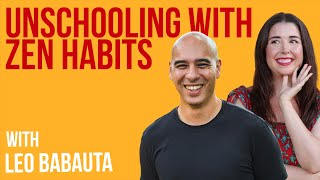
This content was created by Manisha Snoyer. This content was uploaded by Manisha Snoyer. This is a YouTube video titled "Unschooling with Zen Habits Featuring Leo Babauta" created on January 31, 2024. It features a conversation between Manisha Snoyer and Leo Babauta discussing unschooling, Zen habits, and the balance between structure and freedom in education. They explore topics such as the role of community, the unknown in learning, and the importance of parental attachment.
Chapters
Hi everyone, I'm Manisha and this is Teach your Kids, a podcast and online homeschooling community. And I am so, so very happy and honored today to have Leo Babauta, who is the creator of Zen Habits blog about implementing Zen habits in daily life and also the father of six children, I think. And unschooling has happened with at least some of them. And yeah, and he, his blog has million, I think a million, two million readers and he's been named twice one of the top 25 blogs by Time magazine. And he lives in Northern California with his wife and two teenage kids who haven't grown up yet and does one on one coaching, runs Fearless Mastery small group coaching program and is also the author of six amazing books which you should go out and get. The Fearless Purpose training package, the Habit Guide ebook Zen's Habits Most Effective Habit Methods and Solutions, Essential Zen Habits, the Art of Mastering Change briefly Zen Habits Beginner's Guide to Mindfulness, Ultra Light, the Zen Habits Guide to Traveling Light and Living Light and Zen to done. And it's just, it's really wonderful to have you here, Leo. In addition to being a teacher for 20 years and working a lot with unschooling community, I also have been a practitioner of Zen Buddhism myself and lived in the Zen center in Austin for seven months a few years ago. And it's just been really beautiful for me to be able to have that practice as part of my life. And also I think a big part in how I came to just have almost kind of an awakening about our education system in thinking about how it could be done so much better and more simply than it is today. So thank you so much for joining me on the show.
Yeah, thanks for having me. That was an amazing introduction, by the way. Thank you for that. And yeah, it's an honor to be here. It's cool to talk with someone who like really gets unschooling, but also Zen. So that's so cool.
Yeah. And I, Charlie, should have mentioned that you also have a blog about unschooling, which is why I got the idea to invite you on the show. So I'm really just curious to kind of know a little bit about the background. You know, have you, did you unschool all of your children and how did you discover that approach and decide that that's how. What you wanted their education to look like?
Yeah, well, I should start by saying, like, I really want to make sure that the majority of the credit for unschooling goes to my wife so that she, she Was really like the primary person, like working with the kids. You know, I've also been involved, so I'm helping out with all of that. But like, if I were to like just talk about myself, I think I would be really doing some injustice. But yeah, we unschooled four of our kids out of six. So we have like a blended family kind of Brady bunch style. Two of my kids from my previous marriage decided to continue with school. We gave them the choice. And we had two kids who were in school, elementary school at the time, and we gave them the choice as well. Like, we talked to them about it and they decided, yeah, let's do it. So they, they had schooling into elementary school and then switched to unschooling. And then we had two kids who were, you know, toddlers when we made the switch, who have never, they never went to school, with the exception of our youngest daughter who actually decided to go to high school for a semester and then opted out of it after that. So. But other than that, the two youngest were pretty much all unschooled the entire time. And actually you mentioned the two teenagers as of now, the second to youngest boy or second to youngest. He's a boy. He is 19 now, so he's actually an adult. And the youngest, the daughter, she's 17 turning an adult. So we're almost actually done with our non adult kids. Wow.
And so, I mean, when I talk to parents about unschooling, there's just such a range in what that looks like. So I'm curious how you, you and your partner define the term unschooling, what that means for you and for your family.
Yeah, that's a great question because you're right. It really could mean anything. When we first started, it was just traditional homeschooling, which was like taking school, bring it to the home. And we had a curriculum that we had gotten from somewhere else and some materials. And so it's basically like they were just doing school, but not in the classroom, but in our house, which was actually really cool. But my sister actually inspired us to look into unschooling. She was doing it with her kids. And so we started reading about it. And what we started to decide was that we wanted to first of all, let the kids lead their own education. So instead of us telling them, top down, here's what you need to learn, here's the curriculum, they get to start to lead themselves. Which, first of all, that means that they are taking greater leadership of their lives. This is something that a lot of students don't get. They are led. They are taught based on what other people think they should be interested in or what they're going to need when they grow up, as opposed to choosing what they want to learn about. And as adults, we all know we lead ourselves and what we want to learn about. If I'm like, I'm like, super want to like, dive deep into running, like learning about running, that's what I'm doing right now. It's not that someone has told me you need to learn about running. And, and what you see when you lead yourself is that you are more motivated. You know, like, if I'm doing a deep dive, I'm watching a bunch of YouTube videos, I'm reading books, you know, I'm reading websites, listening to podcasts like this. And so when we learned about unschooling, it was exactly that. We were reading John Holt and like, all these, like, revolutionary, like, radical people. And it was because it wasn't because someone told us that's what we needed to learn. That's because we wanted to. So that was the approach to unschooling is they get to lead themselves. And in the beginning, you know, maybe we, we help more with that because they're, you know, three years old or four years old, but. But more and more they start to take leadership and responsibility in their lives, which is an amazing kind of skill to learn at a young age. And it's not easy, it's challenging, but it's an amazing thing. So what that has looked like in practice has been like, they will often choose projects to work on. Sometimes there's nothing. Like maybe they're not interested in anything and they're playing video games, or we go out and explore together, go to museums together or whatever it is. And then sometimes, or we're just reading together because we like to read together. But then sometimes they get super interested in something they want to learn about the stars or whatever it is, and they decide to dive deep into that. And our job then is to really be their support. How do we help encourage that? How do we help them find resources? And what you find is more, more they start to know how to do that themselves and less and less like we need to do that. And so it actually becomes easier and easier in some ways as parents. And so we just are more hands off and just trust them more and more because they trust themselves more and more. That's kind of the idealized form. Like, in practice, it's a lot messier than that, as you probably know. But anyway, you Asked me what our approach is, and that's, I think, generally how we've been approaching it.
Fascinating. And I'm trying to frame this in a way where it's not a leading question, so maybe you can help me out with that. But one of the things that I've taken from the Zen practice is that especially I practice Soto Zen, there's very strict forms. And the idea is that within these forms, we find freedom. And it occurs to me one of the challenges with unschooling is that we're coercing our children in so many subtle ways that we might not even be aware of. And so I'm curious, you know, how did you. How do you navigate that? You know, like, when the. Becoming more conscious about the ways in which you're controlling your children and giving them freedom and at the same time, you know, trying to balance the structure with the freedom. I guess there's a lot packed into that question.
Yeah, there is a lot in that. It's a great topic. I will have to say. This is something that. It's an ongoing exploration, so it's not like we have a simple, pat answer to that. But, yeah, the kind of finding. Being in the. This is actually one thing that you explicitly learn in unschooling that actually all parents have to deal with, which is being in the tension between structure and control versus freedom and kind of like autonomy. So. Yeah, and there's not, like, an easy answer to that, and I don't think that's true. Even if you go to, like, school and, like, we have structure and there's control, and you follow what we say. I don't think that's an easy answer either. I think there's still stuff you have to explore there. But in unschooling, it's much more like you. It's all in your hands to, like, figure that out. So, yeah, we've gone. We. We've. One of the interesting things just kind of sitting in that question is, like, how much structure and control do we want to have? And how much do we want to leave it to the kid? And so we've. You know, sometimes it's, like, all leaving it to the kids, like, you know, for months at a time. It's just kind of. They just do whatever they feel like, and there's no structure. And what they discover along with us is that's not always helpful to them. Like, you know, sometimes they're just feeling, like, not motivated to do anything. I'm not actually doing anything, and I feel like it's Boring. And, like, you know, I really want to do more. But they discover that through having the lack of structure. One of the things you mentioned was in Zen, there's forms, but the forms are chosen by the practitioner. Like, we choose into it. Like, of course they're given to us. But in school, like a regular school, the forms are forced on you. In Zen, you decide, like, I want to become a practitioner. I want to actually work with these forms. You work with a teacher. You choose to. And so with unschooling, there is structure, but the kids can choose into that. Now, I'm not saying that we've always done it that way. Sometimes we start to impose structure on them. And so, like you said, there's we. In sometimes subtle or less subtle ways, we actually do coercion. And it's hard to avoid that completely. So what I found really interesting is just noticing when we're doing that, like, oh, we're really trying to impose something on them, and what would happen if we didn't have that power? What if we had to. What if we really thought this was going to help them, but we had to convince them and kind of get them on board with it so that they can see why this is important to them and then actually choose into it themselves or not? Maybe they decide, I've heard your arguments, and I don't care about that, and I choose not to do that. So we've been exploring that sometimes we actually do some coercion. I'm not saying that we're, like, perfect with this, but I think it's a really interesting question.
I do try to find my own balance. I think that some level of. And I almost. I mean, the word boundaries seems a little bit cliche, but I think that can be very comforting for children to have a structure within, to operate and to be told no and yes in a calm, loving way. And so I'd love to know, you know, if you have a framework for navigating that or even some examples of when you've chosen to impose more structure for, you know, things that times you felt it was helpful and maybe times that you wish you hadn't.
Well, like, you know, again, we've. We've explored, like, complete lack of structure. Like, let the kids do whatever they want to do. And we've found that's not always that helpful to them. They also find the same thing. At first they think it's great, and then they start to get into this kind of, I don't know, a funk or a malaise or some kind of like, this is just not. This is not how I want it to be. And so then we get to like, okay, let's have a conversation about that. But other times we're like, no, you need to be going to bed by this time and waking up by this time and actually be doing some kind of thing in the morning and some kind of outdoor activity in the afternoon. And so it's more imposing on them. And I think sometimes that's helpful. We have to actually, as parents, take some of that responsibility because kids aren't always going to choose what's best for them. But other times I think it's less helpful and we just do it because that's what we know to do. It's like kind of as parents, it's kind of automatic. It's like, okay, I'm going to tell you when to go to bed. And so, yeah, that's an example. Like, bedtime and when they wake up is something that we have kind of grappled with. Eventually, as they got older, it was more and more just like, let them kind of decide for themselves what they wanted, what their schedule is. But we get into a conversation with them about that so that they could actually make the decisions. And if there's something that we really think is bad for them, we would have that conversation with them. So, yeah, I don't have an easy answer for you there. Those are just some examples.
I think that's a great. I mean, I guess a theme that I'm seeing and what you're talking about is safety. You know, getting enough sleep is about being safe. Going outdoors is about health and nutrition and keeping your body and your mind safe. And while a child is young, that kind of intervention is really important because you have more knowledge about how children grow and develop than a young child has.
Yeah, that's what I said in the beginning. I think there's a little bit more. We have to take that responsibility, and then we more and more work with them to be able to take that responsibility. When a kid is really little, you don't just let them play with fire. They can burn the house down and burn themselves as well. That's the degree where you have to, like you said, keep them safe. It's like, oh, I'm going to be controlling the fire here, not you. But at some point, you teach them how to actually deal responsibly with those things that might not keep them safe. And so you give them some chances to try it and fail within a safe zone boundary. And then more and more, once they start to trust themselves. And you can trust them. You can relinquish that control and really trust them to be safe. And I think the teenage years for me are really. It's really important to have them take that over more and more. You know, they're not toddlers anymore. They can actually deal with some of their own stuff. And so I don't mean that they have 100%. You know, by the time they're 13, they have to have 100% responsibility over their own safety. But, you know, like, you know, for example, we started to teach them to, like, navigate through city streets when they were around middle school age. And so, like, they could actually do that, but we did it with them. We didn't just, like, throw them out into the streets and, like, hope they didn't get hit or get lost. You know, like, we actually taught that to them so that they could navigate, find their way around, and learn how to, like, ride buses and cross streets safely and all that kind of stuff. And eventually they didn't need us to do that, you know, but that would be an example of, like, relinquishing control. But you can do that in school with health stuff, bedtime, and outdoor stuff more and more as they start to show that they can trust themselves.
Yeah, absolutely. And I'm curious to know if your children also practice Zen Buddhism and do meditation.
They don't.
They do not. Okay.
Yeah. What I've done with all of them is talk to them about it. And then I've meditated with all of them at different times in different ways just to really let them have that experience so that they can always choose into that at some point. But it isn't something where they're like, oh, I really want to be meditating with you every day, or on my own every day. Or like, oh, that Zen stuff sounds so amazing. I want to do a deep dive. And so I share with them things that I'm interested in. And sometimes they're like, yes, let's do that together. And other times they're like, oh, that was really cool, but that's not what I'm choosing into. And so at this point, Zen isn't something that they've chosen into, but I think it's something that they've been exposed to, which I'm really happy about. And I do think that some of the ideas have kind of like, you know, soaked into to them so that they. They have those as, like, an outlook without really having gone deeper into it or practiced with it too much.
Wonderful. And so Just in terms of the way your unschooling works, have you. Are there other practitioners that have come into your children's life? Do they use outside tutors and classes? What's their community like?
It's hard because we've had different. We've lived in different places, and it's always been different. So, like, we were. We're from Guam, and we have lots of family there. And so when we were there, that's where we started unschooling. We had lots of family. So, for example, my stepfather is a forester. And so, like, we would have them go out with him and he would, like, show them around. And so they would learn a lot of science stuff from him and this other marine biologist who is an uncle of mine, that kind of stuff. So there's a lot of family where they would learn from just their natural expertise because they like to hang out with them and learn from them. And so one of the things that we really believe in is learning from the elders in our community back in Guam. So that's something that I believe in personally, is like, they all have this wisdom and knowledge that they can pass down to me. And so we taught them that, and I think our kids really believe in that. When we moved to California, first in San Francisco and then elsewhere, we didn't have that built in, so we had to kind of find that. And so we made a lot of use of museums and parks and all kinds of educational resources that were out there. And then another thing that we did is we made a lot of friends, and they had all kinds of expertise outside of what we had. And so they would come in and hang out with the kids and do. One time we had a friend come in and do a thing called Hacker school, where he taught them things about programming, but also like lock picking and poker. And anyway, it was, like, a lot of fun. So that would be an example. But there's other. I have friends who are into Zen, but also tea, and so they've learned from all that kind of stuff. So a lot of friends. And then my daughter right now, for example, is with a group of teens in this thing called Forest School, where they go out periodically into nature and do kind of things like learning how to build fires and, you know, playing games and things like that. So we've made use of different things like that in the community, but it's been different each time. So it's really like a kind of figuring out what they need at that time. And so there's never been, like, one answer that we have to that like, what's their community like? You know, have we brought in outside mentors often? There's a lot of online resources as well that we've used. So it's been a real combination of finding how to meet their needs at that time. Right? Yeah.
What are some of the online resources that you all have enjoyed using?
Probably all the ones you've known. Khan Academy being a really big one. We were in Khan Academy since the really early days when it was just him making some really homemade videos. So Khan Academy, the best of times. Yeah, YouTube obviously is a big one. A couple of our kids got into programming and so there was. What was that one called? Scratch was an online programming tool that they really got into. They learned through Minecraft, like how to like make. To mod it and make different kinds of things there. Actually, I'm drawing a blank now, so I would say that's all I can remember at the moment.
Yeah, I mean, kind of taking it out into a larger context. You have been writing about unschooling and I'm curious to know how people in your community have responded to that. Both positive and negative and curious. What kind of reactions have you seen?
Yeah, I haven't been writing about it a lot lately. It was something that I wrote about on the main blog, Zen Habits a few times and I got a lot of responses there. And then I started an unschooling blog that was just for a little while. And what I realized is there weren't a ton of people at that time talking about it. I'm not saying there weren't any. I wasn't the first one, but it was a really small number of voices. And then it's grown since then. Not because of me, just because it's just grown. But at the time I decided I would like to add a voice to that because people who are reading me might be interested in exploring it further. And so I wrote a bunch of posts on it in an unschoolery, I think is what it was called. And it got a lot of reactions. So my intention there, before I get to the reactions, was just to introduce people to some concepts so that they could start to grapple with that in their heads and decide if they wanted to go deeper into that. Because there's way better resources than my blog posts. And so I gave them some places to go. And what I really learned is if you talk to people about it, when they have kids who aren't school age yet, they're much more receptive. And if they are Already of certain kind of mindset. Entrepreneurs are big ones because entrepreneurs like to figure stuff out for themselves and they take a lot of responsibility for creating their own path. Creators are another people like that, just people who tend to choose for themselves as opposed to following a preset path. So people who are working at a regular, you know, went through regular college and are doing a regular job are a little bit more of the mindset of like there's a kind of preset path to follow. But people who have had to kind of figure stuff out, either people who are maybe adventurers or explorers or self educators and entrepreneurs, these are people who are already of that mindset. And then when they have kids, they're much more open to the unschooling mindset, because that's exactly what it is. It's actually kind of an entrepreneurial or adventurous kind of mindset, a creative kind of mindset that you start to embrace. And so if they have kids who are like one year old or four years old, they are much more open to it. But if they're already five years, if their kids are in fifth grade, they're much less likely to be open to it. And so when I've had people who read it who are kids, they already have kids in the school system, they tend to get really defensive about this. So they're like, ah, but school is so important because of this, this and this. And I'm like, yeah, those are important points to like, look at. And school does do some good things. And like, I'm not saying school is evil, you know, it's always wrong. But there are ways to like, you know, engage with those questions and there's other possibilities. And so I've had some really strong reactions from people who already have kids in the school system who just feel, it feels like a personal attack on them of what they're doing as parents. Because it's like their identity is, I'm a parent and I'm doing my best and I'm doing what's right for my kids. And so when you show them this other thing and you show them how there's other possibilities other than what they're doing, they feel some, it shakes them, it pulls the rug out from under them. And that's not necessarily a bad thing, but it can cause some really strong reactions. But if you don't already have an identity of my kid is in school and I'm doing the right thing for them, then you have a two year old kid, you're like, oh, this is a possibility to consider. And so I've had some really good reactions there. Yeah. And I've had people who sometimes will react strongly in the beginning, but later they're like, oh, I'm so glad I reacted badly in the beginning. But I'm so glad that I read your stuff because it led me to thinking about it later when a certain change came in our lives and we decided this was really important, like, maybe there was their kid got diagnosed with something and they realized school wasn't the kind of cookie cutter approach to school, wasn't the right fit for their kid. They wanted to try something different. So at certain points, people are more willing to consider changes. And so that's, to me, really interesting. It's like, how do you reach them at that point? And sometimes it's better to reach them before that point because they've been exposed to it and then they remember it at that point, they're like, oh, wait, there's this thing that, you know, someone talked about. Is that what you found as well? I'm kind of curious.
Well, you know, I mean, it's just so interesting because this. This parental fear of failing your child is so deep and so intense. And so when you meet something, like, you have this feeling inside of yourself that school is not. There's something wrong here. Like, when we encounter a big truth, there can often be that feeling of collision. So I think, I mean, you know, the first step is exposing, is inviting them to enter into that idea and allowing the. The strong feelings to come along with it and then, you know, let things unfold. Right?
Yeah. Yeah, that's what you're doing. Right. This is. That's what this podcast is all about, exposing them to that, and it's will evoke something in them. This is not a real vanilla kind of topic. We're talking about parenting and kids education and the future of our kids and rethinking everything.
Absolutely. And what do we know, right? I mean, children are going to encounter so much along their path. And I went to a very kind of free for all school when I was in middle school. I got very depressed. Then I went to a very intense, challenging performing arts school, and I thrived there academically, but not socially, emotionally, you know, and so it's pretty intense advancing this idea of a totally new education system. And you can see the results in students and know intuitively that it works. But ultimately, you know, you have to have the humility to also accept that you could be wrong. Right?
Yeah, that's so. That's so important. Like, this is. You Know, in Zen they talk about beginner's mind. And like when we. I think there's a model in schooling where it's just like, I'm going to fill the kids with knowledge so that they could have like the knowledge they need to like make, make it through life or do well. But it's like it's removing the beginner's mind from them. And one thing I love about unschooling is that it actually, I think, encourages more of the beginner's mind. It's like, I don't know answers and I like to learn more about it but see it from a real place of discovery and curiosity rather than I need to fill my head with stuff. And the interesting thing about that is if we want our kids to have that kind of beginner's mind, then as parents, that would be great too. It's like, I don't know all the answers and I want to just kind of sit in that not knowing with them. It's like, okay, maybe school can be the thing and sometimes it's actually a really helpful thing. But maybe there's other things that if I could just let go of my preconceived notions that I had from growing up, I could actually be much more open minded and just kind of let go and just be in that beginner's mind. I know it's not exactly like what it means in Zen, but it's a similar. I think it's a useful concept in education for sure.
And I mean this idea that parents have the capability to raise their own children is, is quite simple. It's a kind of obvious simple idea. And we often, when we're calm and focused is often when we see simple ideas best. But there's so much conditioning disempowering parents and telling parents they need to outsource their children's education. So we've gotten really far away from something which is a beginner idea. Like you're a parent. Billions of years of evolution have prepared you to raise your own kid, you know, so I'd be curious to kind of explore because I feel like you touch upon this in your blog and it's also relevant to homeschooling and unschooling, which is that I encounter a type of parent who really wants to optimize their children's education. And you know, it's. It's like they have this war within themselves where they want their child to be free and love learning, but they also want, you know, like, how much math can they learn? How Much literature, How much? Right. How perfect can their writing get? How can I set up this system to be perfect? And so, so I mean, you write about this topic for entrepreneurs and there's this whole culture of optimization and, and biohacking and maybe could you kind of touch upon how that relates to homeschooling?
Well, what I'll say is optimization, like you said, is it's huge right now I'm not saying every single human on earth is into optimization, but a lot of people are. And this is, this is why people follow people on the Internet, from blogs to podcasts to YouTube channels, is they're trying to figure out how to optimize their lives. And I fall victim to that all the time.
So I'm just gonna say it's a very appealing idea. Like I would love to be able to do X XYZ and have everything be the best that it could possibly be. It's just very. Sounds so nice.
Grips onto that is like, how do I optimize when I put on travel, it's like my packing system and you know, all of the. Exactly. All the gear that I have. If I'm going to go out hiking or whatever. It is like my health needs to be optimal. Like my health is great, but I'm like, how do I get to that extra 2%? So it's so tempting. And this is why people follow my blog as well. It's like they're looking for the little tips that are going to make their lives more optimized. How do I get more efficient, how to get more productive, how do I get healthier, how do I live my life so that I'm actually making the most of it? Which is a great sentiment. So I would say like I have nothing against any of that. I fall to that temptation all the time. The problem with it is that we become too focused on it and it becomes, it's a never ending game. So you can never finish optimizing. Like you, like I said, I'm really healthy and I'm like, oh, but there's always a little bit more that I can do to get even better, you know, and that's just with health. But you know, productivity is that way as well and everything so that our lives become like, how do I, you know, how do I make my marriage the most amazing thing? So I need to optimize conflicts, optimize our adventures together, optimize the bedroom, you know what I mean? So it's like every single facet of our lives are optimized. And so that's what that means is that there's no, it's a control mechanism. There's no real room for exploration, for not knowing, for doing things in a messy way. If you have to optimize everything, you can't actually be creative. You have to do things the optimal way. If you learned the exact steps to do it, you have to like just follow that. That's a, that's a freaking boring life. For example, for, for one thing and another is that it precludes any new discovery. Like, how do I, what if I wanted to like, you know, explore, you know, a whole new kind of way to be outdoors? I'm like, I'm not gonna do that if I already know exactly the steps that I need to do to get optimized. So that's a problem with it in our regular lives. But as parents, it's the same thing, you know, and this is actually why people might send their kids to school is because this is the perfect way to do it. And then you have to figure out how do you do that perfectly? And then how do you like find the extra ways to squeeze the perfect education out of the kids? And the thing about that is it presumes that we know what we're aiming for. How do you optimize education and our kids future? It means that we have to know where we want the kid to end up. And it's like, okay, well they're going to end up being a doctor or a lawyer or an architect or whatever it is. And so in order to make them to do that, then we would have to optimize everything. But what if the kid wants to be like, I don't know, a ship captain or like if you optimize for doctor. A poet? Yeah, like something completely outside of the usual kind of path. If we optimize for doctor, poetry is completely out. Like they'll never find their way to that because we've told them exactly how to live their lives, how to educate themselves. And so it really like narrows the range of things for like where we want to go. And I think that the humility comes in when we realize we actually don't know what our kids need to be when they grow up, how they need to turn out what their perfect set of education like things are. And we're hoping that the experts know, but they're always wrong. Like the experts did not predict what 2024 is going to be like 20 years ago. They didn't know the AI coming out and all of the stuff that's coming out we could not have known this. And so optimizing for a future that we don't know is broken, we have to be willing to. What we really want to do is prepare the kids to be able to deal with an unknown future. And that's what unschooling is really good at.
Yeah, absolutely. So beautifully put. And just kind of return to a way a lot of schools are structured, is finite. You know, this kind of closed system where you're learning hard skills and you're becoming very competent. But when you think about the really great scientists and entrepreneurs and even politicians, they were defined by their ability to step into the unknown. I mean, even when thinking about Obama and how he ran this incredible organic social media campaign to become the first African American president, and, you know, for many people such as myself, brought a lot of hope and inspiration and goodness into the world. And also I thought about Anton Chekhov, who, I don't know if you're familiar with his plays, but he was considered the greatest writer in Russia. But also he was the greatest doctor in Russia.
Oh, really? I didn't know that. Yeah.
And he wrote his plays, you know, while he was waiting for patients. And so there's. There's that ability to step into the unknown and that open curiosity which is. Which defines greatness, I think, in a way. And it's scary, of course. I mean, the unknown is terrifying.
It is. That's so. I love that point. It is. It's the scariest thing. It's actually why we have procrastination and avoidance and resistance. It's because of the unknown. It's why we want to optimize. It's why we want to, like, have the perfect set of habits. It's why we want to have the perfect productivity system. All the tools are all so that we don't have to be dealing with the unknown. And yet, like, all of real learning is in the unknown. Like real discovery, real growth, real love and depth is all in the unknown. And so when we avoid the unknown, we are actually avoiding the richest parts of life. Poetry, like you said, is in the unknown. And so what we're trying to do is keep ourselves out of the unknown and then keep our kids out of the unknown, because that's unsafe. And so if we are doing that, what we're teaching the kids is unknown is bad. The known, the safe, the stable, the routine, the optimized is all good. And that's really like shutting down our kids possibility and also the possibility of joy and adventure. It's actually kind of sad. That as a society, we tend to do that. One of the things that I do in my work, this is where I bring Zen into the exploration of entrepreneurship and habits and productivity is. Is actually a willingness to turn towards the unknown, uncertainty, and our fears and our resistance and actually be willing to sit with that and work with it and bring love to it. And openness. Like, how do you find openness in the unknown? It is terrifying. And I'm not trying to, like, downplay that, but actually there's so much more there. Our most meaningful work is in the unknown. And so, yeah, absolutely. I love that you're looking in that place. And that's. That's what we get to play. That's where we get to play with our kids. In unschooling, it's inherently stepping into the unknown.
When you're doing unschooling for sure, and being, you know, part of a Zen community and practicing meditation and being encouraged by, you know, teachers like Adi Ashanti, who's inspired me a lot. And also even going to Catholic mass at it's. It's allowed me to, like, step into the unknown. It's given me a vessel. And when you can have that support to just inhabit that terrifying unknown, it's the most amazing gift. I mean, because you get opened up to just the extraordinary magic of the present moment in just a way that you couldn't without just letting yourself go into that space.
Yeah, that's such an important point, is the support that's required to be able to do that. You know, if you ask someone who is, you know, their lives are already completely unstable, and they're like, I don't know if I can actually. If I'm gonna have a house, you know, next month, like, or food on my table. Like, asking them to, like, turn towards the unknown is kind of ridiculous because they don't have any stability in their lives. And they don't have the support needed to actually be, like, falling in love with the unknown. They're like, I just need to survive. And that's, you know, to different degrees, our lives are, like, really unstable. And turning towards the unknown is just not a. Not a thing that feels possible to a lot of people. It's not helpful necessarily. But if you can create a degree of. I feel some support, some tether to stability. And that's what a Zen community does. And like you said, a Catholic community does exactly that. That's what religion really is. I mean, it's turned into something else in a lot of ways. But it's originally, yeah, It's a way to be able to have support and community in the midst of the unknown. We don't know if we're going to be struck down by lightning, so let's hold hands and pray together.
For sure, for sure. And it can rear its head in so many different ways. It can be, it can manifest as anxiety, as boredom. I'm just so extremely bored, I can't take it right now. It can, it can manifest as like, how dare you suggest that I take my kid out of school. There's so many ways that we can encounter the unknown and sometimes we just surrender to it an instant without any help or practice. And other times we need, you know, therapist to help us work through some of our fear. And, you know, and always I come back to this in every episode is community, community, community support and love of people around us.
Yeah, a lot of the work that I do. You mentioned a couple of my programs like Fearless Mastery and Fearless Living Academy. What they really are is community and support and ways for people to be stepping into the unknown. Like Fearless Mastery. I have, you know, 15 to 20 people who are diving deep into uncertainty, but with coaching support, with structure, with community, so that they can actually go into their meaningful work, which is inherently in the unknown. You can't do meaningful work without being willing to work in the unknown. Like, you know, what you're doing here. And so like, we need that kind of thing. And I really love that you're like highlighting community and support.
Yeah, absolutely, of course. And I do want to talk a little bit about attachment because, you know, he's practicing non attachment, but, you know, a secure, loving attachment between a parent and a child is foundational, I think, to education and, and raising kids. And I, I'd love to know, you know, what ways you nurture that attachment with your own children and in your.
Life at this point. Sometimes that's just a thing we take for granted. It's like, okay, we have this really secure attachment with our kids. We've developed it over the years and they know we'll be there for them, we love them, they can trust us to a pretty good degree. I'm not saying we're perfect parents, but to a pretty good degree compared to, like I said, people who have a lot more instability in their lives and maybe their parents aren't around, that kind of thing. So compared to that, we've done a really good job there and we take that for granted. But it's been a journey for us. And so we were raised with a real, where we Grew up was real traditional kind of upbringing with discipline being discipline of the hand and the belt. That's what discipline was for parenting. And so that was kind of our instinct. Even though we completely love our kids, we had that kind of really harsh discipline when we first started parenting. And what I realized, it was like, that was our. That was not only default, but that was how we dealt with our own insecurities as parents. It's like, oh, I'm like, afraid of my kid is not going to grow up to behave really well. And so I need to teach them how to behave. And the way you do that is through discipline. And it could be yelling as well, and all real coercive methods. And so it actually does inform the best of attachments doing it that way. Right. And we realized that, but it was, like, hard to get out of that mindset. You know, the kids learn to do things because they're forcing you to, but you're forcing them to. But what they're really learning is to fear you and do things out of fear. And there isn't that strong kind of attachment of, I can trust them and I feel unconditionally loved by them. That kind of. That's the thing that the kids really need, is trust and unconditional love. Like, they know you're there for them in their emotional needs. And what we were doing, the way we were raised, you know, my mom wasn't like this, but my dad was, and then, you know, like this. This is just kind of the culture that we grew up in. So what we were doing was kind of doing things the way that we discipline, the way we knew to do it. What we had to do is be willing to let go of that, which meant that we had to sit with our own fears and insecurities and anger and frustration when the kids didn't behave the way we thought they should. And when we discovered through it, it was a journey, right? So what we discovered is like learning to be with our own emotions when that stuff came up and attend to those emotions. What we discovered is when they are behaving a certain way, it's because they have their own emotions that are coming up just like we do. And instead of being there emotionally for them, what we're doing is doing the opposite of what they need and teaching them that those emotional needs are not important, that the most important thing is do what you're supposed to do. And that was a really hard thing for us to face. We had to be really honest with ourselves and be willing to let go of lot of conditioning and then. And we're still not perfect with it. We're not perfect parents. But I think we've come on a really good journey there. And to the degree that I think to this point, our kids can really trust us. They feel loved by us, and there's that thing that we can just take for granted. I don't have to think as much about that anymore.
So incredible. I mean, never in a million years talking to you now. You're so calming and peaceful. What I imagined you as a. As a strict disciplinarian to your kids. So it's a thank you for sharing that. And it's really a testament to how far a person can grow. I mean, do you attribute, you know, when you talk about, like, sitting with your feelings, is that, you know, your meditation practice, that's really supported you.
It's been a combination of things. So there's meditation practice and definitely Zen. But I've, you know, I've been influenced by a lot of other meditation teachers, current and past. But unschooling, I think, is a part of it as well. Because unschooling, once we started getting on that journey of it, it really forces you to confront how you're using coercion and so obviously spanking and timeouts and you're grounded and no TV anymore, and all that kind of stuff is coercion. And it's the only way we know how to deal with stuff when we are feeling flustered and angry. And so when you say, well, what would it be like if I didn't coerce them? What you realize is, like, well, I have all this anger at what they're doing, and they're being total jerks right now, and I need to not let them be that way. And so what you realize is that it leaves you in the place of insecurity. And so I think unschooling actually has helped me to, like, face some of that stuff. And coupled with the Zen and meditation practice of really learning to, like, just sit with the feelings that are coming up for me and how to, like, be with all of it. Like, be with anger is, like, an incredibly challenging thing. We're not taught, or at least I wasn't taught, and the culture that I came from wasn't. You're not taught to, like, be with anger. You're taught to, like, take anger and then do something about it. Like, I need to, like, yell at someone or hit someone or whatever it is that I would do. And so it's a real challenging thing. But I Believe that the meditation practice that. That I've been practicing has really, like, supported that. You know, still an ongoing journey. So I'm still working with a lot of emotions that come up and learning to. To be with more and more of that. But I think I've really grown in that area. I think, you know, I would. I don't want to speak for my wife either, because all this stuff that I've been talking about applies to both of us and our kids. And so I really believe we've been on a real strong journey in that area.
Yeah. And I do want to highlight for people listening that family time together does contribute to that because it gives time to develop that relationship and get your biorhythms in sync and grow together in a way that's more difficult when a child is going to a different environment several hours a day and coming back home. Yeah, I want to. As we wrap it up, I would like to talk, just touch on freedom as a parent. I know, you know, for me and others, a lot of us are drawn. A lot of us have been drawn to Zen because of the. This thirst for freedom. And I think many people who aren't parents fear that becoming parents would take away their freedom. And people who are parents might have difficulty finding freedom when there's also so much responsibility for these children. And I wonder how you find your freedom as a parent and what words you might offer to parents who are trying to find theirs.
Well, first of all, I think it's really just good to acknowledge, yeah, there are some freedoms you lose when you take on any responsibility. If I take on financial responsibility, I'm going to lose some freedom in some ways. I'll expand on that later. But there is something you gain for giving up those freedoms. Society is just like that in general. We've given up a lot of freedoms. I can't just go and punch someone in the face, but I generally am free from not being punched in the face because of giving up that freedom. There's a lot of stuff like that just in general, but definitely with kids. And unschooling would be two really good examples of that. You do lose some freedoms if you decide to become a parent and take that on. But what you gain, I think, is, well, multitudes more than what you lose. So that's the first point that I want to say is, of course I gave up some freedoms with my kids, and I would happily give those up again and again and again. And I do. I continue to choose into giving those up because of what I'VE gotten out of it is so much richer. So I think that's the problem is like, people get so attached to freedom, which is actually a lack of freedom. Like, you don't get to choose into parenthood or whatever it is that you're not choosing into because you like, I need to have all of this freedom. I need to go out and party and all that kind of stuff, which is a real attachment to that kind of thing that you don't want to give up. It's like, well, I actually choose to give up on those things and so, so that I could have so much more. And I think they're making the same choice. They're, they're giving up some freedoms in order to like be, be able to go out and party or travel or whatever it is that they think they need to be doing. Other than kids, there isn't anything wrong with that. Like, you want to choose into those freedoms and give up these other freedoms, that's, that's fine. But we're, it's just important to note that we're all making those choices. And so I, I love the freedoms that I get from parenting. Like, there's so much there. So that's the other last point that I want to make is that while you could see it in one way as giving up freedoms in order to get something amazing, I actually don't feel constrained. I think feeling constrained is a choice that you make in your mindset. It's like, ah, I can't go and do these things with these other parents, I mean, these other adults, because I'm here with my kids all the time. That's one way to put it. But the other way is like, if you decide to let go of this idea of I am constrained, that's a choice that we're making. We have the freedom to let go of that mindset. And it's like, okay, actually, what is the life that I want to create? I want to create a life with these kids. I want to have also a time where I get to be on my own. I want to have time with my spouse. I want to have time with friends where we go on adventures together without the kids. And so I get to. The freedom that I have is really to like create my life as opposed to, I am at the whim of having kids. I'm at the effect of everything around me. So I actually am choosing into a new life moment by moment, day by day. And that's actually the freedom that I really choose into is like, I, I'm Creating the life I want. I go out all the time on my own, so does my wife. And we find ways to make that work. And of course, it's much easier that our youngest is now 17 and very.
Autonomous from all the unschooling.
Exactly. But like, even when they were younger, like, we found freedoms with and without them. And like, I don't think we ever felt, or it wasn't very often that we felt like really constrained by all that because we, we found how to make the life that we wanted to.
Yeah. And I don't want to put words in your, in your mouth, but one way of framing this is that if you believe that freedom is created by external circumstances, you're never truly going to be free. But if you believe that freedom is internal, you see the freedom that you're choosing at every moment. And it's easier for you to create windows. Like, you know, oh, I can for three hours today I could ask my wife to watch the kids or my neighbor and I can go out into the forest and tomorrow I can choose to spend time with my children and enjoy it or be present to my frustration.
Yeah, that's such an important point. Thanks. Thanks for bringing that. Like, the lack of freedom is. It's all internal. And freedom itself is also all internal. We create that. It's like there's unlimited freedom available to us internally. It takes practice. Right. Like we have conditioned ways of thinking of ourselves as constrained or burdened or, you know, like life is happening to us. But yeah, we can actually choose something completely different.
Yeah. I mean, we can even bring that full circle back to the conversation about how much structure we put around our children and that they actually are completely free and we use our love or our strong words as a way to influence them. But I think that if we really do see them as free beings and actually not capable of coercion, it really changes the dynamic that we have with them.
Yeah, that's such an incredible point. This is one thing I learned is when we were using coercive methods to try and make them behave the way we wanted to, it wasn't really working. It was an illusion that I could actually control my kids and optimize them and have them be these perfectly shaped clay shaped models that I've like, this is the perfect adult. It didn't work that way. Some kids that we coerced, they didn't behave the way we wanted to, even despite many attempts at coercion, and others would do it externally so we could see them behaving the way we wanted them to, but when we weren't around, they would find. They would find their freedom. So they found, all of them, found ways to their freedom. And the coercion was completely an illusion. It did not work. It still doesn't, even though we try sometimes. And that's true of ourselves, too. This is actually one thing that, as I work with people who are trying to improve their lives or change their habits, for example, is like, we are. Our hope is that we can coerce ourselves into being the optimized, perfect human beings. It never works.
Not for me. I don't know.
No, no one. Like, there are times when it feels like it's working, like I'm making myself do what I want myself to do. I've coerced myself to do the perfect routine morning, noon and night. But, like, you will just, if you can, like, force yourself into that. It's an external. Kind of like, I'm showing you what I wanted, what you want to do, but internally, I have my own freedom. I will always have that freedom. And I'm just creating the illusion of control. And then at some point, that illusion just completely collapses and you're not doing any of the things that you said you would. Usually you can't even get that illusion of control. You're, like, trying and you're struggling, and you're like, your body and mind are going to react how it wants to, and you can't control it, not to that degree. So it's such a crazy illusion to try and pursue, and it never works. So that's actually one of the great discoveries as I've been on this journey of self improvement and habits and helping others with that is like, keep trying to coerce yourself, but it's not going to ever work.
I love, in a way, kind of we ourselves are our own child. And we had Dr. Gordon Neufeld on the show and he was talking about how parents have this secret power, which is that their children are completely and absolutely in love with them. So the more you can nurture that, the more influence you're gonna have over what they do.
That's right. And if we're, you know, if we're modeling that for them by, like, giving ourselves that same kind of love, like, what is it that I want to nurture? Like, what do I want to, you know, like, why do I want to be nourished and to flourish? Like, that's, that's a choice that we can make. From moment to moment is like putting our love where we want to put our love. And it doesn't mean that we get to control and coerce, but, like, actually, things do bloom if you bring love to it.
Beautiful. I think that is a perfect note for us to wrap up today, unless there's anything else you want to add.
No, I think this has been a really beautiful discussion. I love that you come from not only the unschooling, but from the Zen side as well. So you really get all of that and brought some beautiful points of discussion.
Well, it's been a real treat for me to talk to someone who is in that lineage and that practice about education. I mean, because also Zen has been that, for me, is an education and an opportunity to grow and learn and come back in that space of curiosity which I had as a child. So it's been delicious to have this. This talk with you and I.
It is a.
Can't wait to.
Yeah.
I want to continue to follow your work and feel really nice after speaking with you today.
Really beautiful. Thanks for having me.
Yeah, absolutely. Thank you.
More from Manisha

Contributing to Florida Prepaid Plans (2026–2027) | Step-by-Step Guide for FES-UA Families

Contribuyendo a los Planes Florida Prepago (2026–2027) | Guía Paso a Paso para Familias FES-UA



Finding Providers & Services in the Marketplace (Families) | Step Up For Students (2026–2027)

Encontrando Proveedores & Servicios en el Mercado (Familias) | Step Up For Students (2026–2027)




