What is Homeschooling? - Intro to Homeschooling in 2024 with Manisha Snoyer
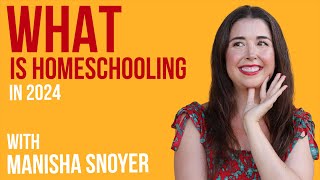
A 2024 podcast-style YouTube talk by Manisha Snoyer introducing homeschooling and modular learning. Snoyer defines technical/legal meanings of homeschooling, contrasts traditional and pandemic homeschooling, identifies five homeschooling styles, and advocates for modular learning — a customized, mastery-focused mosaic of curriculum, social experiences, childcare, and accountability. She cites growth statistics (post‑pandemic homeschooling rise), cost comparisons, mastery-learning research (Bloom's two-sigma), and the enabling role of edtech and decentralized systems. The piece closes with practical pointers and links to further resources (checklists, posts, community).
Chapters
Hi everyone, I'm Manisha and this is Teach youh Kids, a podcast about homeschooling, whole child development, and the future of education. For a while, we've been hearing that homeschooling is the future of school. The US Homeschooling population has tripled since pre pandemic levels. This movement is beginning to be less populated by outliers and more populated by innovators who are attracted to the flexibility, mastery based learning, personalization, and even opportunity for world travel that homeschooling affords. A whole host of tech startups have emerged to support this growing industry. Nir Eyal, Rachel Thomas, Jeremy Haller, Naval Ravikant, Katerina Fake, Stuart Butterfield, David Perel, Albert Wenger, Eric Ries, Marc Andreessen are among the many trailblazers in tech who've publicly discussed their decision to homeschool their kids. Even if you don't consider yourself a homeschooler, you may be teaching your child to read, helping them with homework, finding them a math tutor, tinkering together at a makerspace, enrolling them in an after school dance class or an online history program, exploring adaptive learning apps, or sharing your expertise in some way, such as running a robot robotics club for your child and friends. If so, you are practicing modular learning. Despite this growing trend, many families find the idea of homeschooling and modular learning completely overwhelming. They feel they don't have the time, money or the expertise to do this well. They may be afraid that their kids won't have friends if they homeschool, or that getting more involved in their child's education will lead to a constant battle of wills. I disagree. I don't think children need to learn in the same place at the same time in the same way to learn effectively and make friends with a large, diverse group of children. And families don't have to quit their day job either because there are more flexible, more cost effective childcare options than an 8am to 3pm school. What's more, as the key stakeholders in their children's education, parents and caregivers are ideally suited for this role of educational guide, especially with the thousands and thousands of new educational resources that have emerged to support them. I have over 20 years of experience in teaching pre K through 12th grade kids in seven different countries. I founded the first platform for MicroSchool seven years ago and the largest organization helping families impacted by school closures, where we answered questions from over 100,000 families. Over the last 10 years, I've interviewed hundreds of homeschooling families done in depth studies of trends Based on over 100,000 comments in online homeschooling groups and tested hundreds of educational resources with the kids in my own program. From there, I've amassed a lot of experience about best practices for homeschooling and modular learning, from choosing curriculum to making friends to being accountable. And I've also seen what can go wrong. Like it or not, families are going to continue to play a more prominent role in their children's education. And that's why I created Teacher Kids to make it easy for parents to help their child and the whole family flourish, not only academically but socially and emotionally as well. If you're already convinced to do modular learning and you don't need to know more, I have a quick checklist for getting started on the website. That's the way to begin. Otherwise, keep listening so what's Homeschooling? Technically, the word homeschooling refers to the situation when a parent or caregiver chooses to withdraw their child from traditional private or public school and educate them themselves. They are the person responsible for their education, taking, attendance, planning, curriculum, and in some states, doing the teacher. It has to be the parent or guardian. Generally, if a child is over six and the family chooses not to enroll in private or public school, they have to register as a homeschooler following the guidelines from their state and city's department of Education. This is the technical definition. However, many families who attend online schools, umbrella charter schools, or micro schools also identify as homeschoolers and participate in homeschool activities. For example, in California, it's very easy for families to set up a small private school of one. It's called a PSA in their house, which gives them a lot more freedom over how they homeschool. In some states, families can also enroll in public school and do an independent study at home. And as I've pointed out before, even some public school families consider themselves homeschoolers, incorporating classes, homeschooling meetups, tutors, and parent led instruction into their school. In the United States and other countries, families have a legal right to pull their children out of school and educate them as they see fit. In some countries, homeschooling is illegal. However, even if homeschooling is illegal in your country, you can still take a modular approach to your child's education. Each US State has different requirements as to how much standardized testing children need to do and what types of materials parents have to teach. While some states require that the child's parent or caregiver is the main educator, many homeschooling families hire homeschool teachers or tutors, send their children to homeschool classes or homeschool co ops, which may be led by a hired teacher or through a working exchange with several families. And if you're interested, you should consult the Department of Education website in your state and city to see the up to date homeschool laws and you can contact the official homeschool coordinator to clarify any questions. When most families think of homeschooling, they think of traditional homeschooling or pandemic homeschooling. When families think of traditional homeschooling, they often envision a woman at a house in a homemade skirt, perhaps on the prairie, sitting at a kitchen table giving Bible lessons to her six children on a chalkboard for seven or eight hours a day. And then perhaps she makes homemade bread and cleans the house. Pandemic schooling conjures up images of exhausted parents in between conference calls, bribing, coercing, pleading with kids with cabin fever to sit through seven hours of zoom school and then assist them with several hours of extra homework based around a very specific and often complex method of teaching aligned with Common Core, which they might not have learned themselves. And then they attempt to work from 9pm to 1am or 5am till 9am during the COVID 19 pandemic, we helped 100,000 families through school closures via the nonprofit hotline and information platform School Closures and saw firsthand how unpleasant pandemic schooling can be. Veteran homeschoolers are quick to point out that pandemic homeschooling is not homeschooling. Katerina Fake, who is a famous startup founder built Flickr, says, if you think this is what homeschooling is like, it isn't like this at all. Generally, if you're doing it right, kids spend 50 to 75% of their time away from home and with other kids. In reality, modern day homeschoolers live in urban, rural and suburban environments. They're teachers, technologists, entrepreneurs, artists, healthcare workers, and the other most innovative people in society. And they're not at home. They're out in the world. Let's talk about the five styles of homeschooling. These are the five main styles of homeschooling and what they describe. Within this, there are numerous subcategories world schooling, forest school, Montessori waldorf, car schooling, YouTube schooling, documentary schooling, and even game schooling. While some families lean more heavily around one or two styles of homeschooling, most are applying modular learning to some degree. Traditional homeschooling School at home is where most of the homeschooling is led by a parent at home using a curriculum aligned with school standards. Traditional homeschooling follows a very similar schedule to school and historically traditional homeschoolers have used a standardized curriculum, though sometimes they create their own curriculum too. Online schooling can be thought of as school on the computer. This is where most of the schooling is done online via a live teacher or asynchronous via recorded classes with assessments, homework, and quizzes. If families enroll in an accredited online school, they don't have to register as a homeschooler. Online schooling often follows the same curriculum as traditional school, though some newer online schools have adaptive educational software and live tutors, which is pretty cool. Unschooling no school in unschooling learning is largely self directed with children driving their own learning with no structure or schedule imposed by parents. The word unschooling homeschooling is often used synonymously with modular learning or really any type of secular homeschooling. However, there really is more emphasis on self directed learning and free play, just leading your life and learning as opportunities to learn arise. Unschooling groups, by the way, tend to be great places to meet other homeschoolers who are secular if that's your situation as well. Hybrid Schooling Half school, half Homeschool Hybrid schooling includes some combination of traditional homeschool school at home, online school, school on the Internet, or unschooling with a homeschool co op, hybrid school, learning pod, or micro school. These hybrid schools can help support families with social and childcare needs. So in this case you would go to a learning pod one or two days a week and then you would do online school, traditional homeschooling unschooling during other days. Modular Learning Modular learning is customized education, social, Child care and accountability. In modular learning, families draw from a mosaic of styles and activities to optimize social education and child care outcomes for their children. These modules frequently include a combination of mastery based curriculum, social gatherings, adaptive technology, nature based learning, parent led instruction, and extracurriculars. A few key differences between Modular learning and other homeschooling styles there's much more structure and accountability than pure unschooling, but much more room for personalization and time for self directed learning than traditional homeschooling or online schooling, as well as built in accountability mechanisms as opposed to these periodic tests. Modular learning puts strong emphasis on one on one mastery based instruction, allowing children to learn at their own pace and evolving teaching methods. It's a constantly evolving method with lots of one on one instruction with really high quality curriculum. Lots of self directed learning. In contrast to traditional school, hybrid school and online school, modular learners don't recreate school at home. They customize academic, social and childcare experiences to ideally suit not just their child but their whole family. Social and childcare experiences are not seen as supplemental but integral to a well balanced education. They also customize their goals and their accountability framework. Due to the focus on one on one mastery learning, students really only need one to two hours of formal study per day and this is typically in math and English language arts. Modular learners have much more time to socialize, direct their own learning and pursue extracurricular activities. And parents and caregivers have time to work at home and take breaks and build a learning plan that works for everyone that's fluid and personalized. Unlike online school and traditional homeschooling, modular learning is highly personalized. The curriculum is flexible and diverse and always changing to better suit the child's needs at any given point in time. One reason I like it a lot as an approach to homeschooling is because it echoes the best practices in user design and product development. Online schools vary widely in their degree of personalization and adaptive educational software is very tricky to build and we're really far from being there with a perfect adaptive learning app. Here are some additional factors to consider. Modular learning can and usually does incorporate some unschooling traditional homeschooling, hybrid school and online school which is educational software and online classes. Adaptive educational software and one on one tutors can make online school much more adaptive. There's a huge spectrum ranging from literally you're learning online in the way you would at school to really cool personalization features. One on one parent led instruction can make traditional homeschooling more personalized even with a homogenous curriculum as teachers naturally adapt their teaching style to suit the child. It's instinctive. Even with a standardized curriculum, pure 100% unschooling is quite rare and varies widely depending on the child's ability to self direct their own learning and their family's level of engagement with their learning. Even unschoolers are always influencing their child's learning through their environment, through the tools, through how they are as parents. Hybrid schools are more personalized due to the small class sizes. Since students enroll in hybrid school, they attend one to three days a week and use another approach the rest of the week. We think of this approach as half private school, half unschooling, modular learning, online schooling, or traditional school school. My description of modular learning is based on patterns I have identified from direct observation, interviews, participation in homeschool groups, and reviewing conversations of over 100,000 homeschoolers, many of whom are former teachers all over the world, who are successfully educating their children way above grade level. Modular learning describes the most common patterns I've observed in how they approach their child's academic learning, social, and childcare experiences. These methods have been developed and refined through years of testing, iteration, and exchange of ideas within homeschooling communities. In traditional education, all students have the same schedule, the same curriculum, the same assessments and the same amount of playtime the same amount of collaborative learning with children the same age. Schools provide the same amount of childcare to each family in accordance with a typical national work schedule in the late 19th century. For public schools, the standardized approach is designed to ensure that on a national and a state level, or on a school level for private school, the maximum number of children are learning and socializing adequately for a particular time period in history, according to the federal and state standards for that particular time in history. For private schools, standardization helps ensure the school is performing at levels that will reassure parents and donors that the school is performing better than the public alternatives and for the most competitive private schools, that their tuition dollars are resulting in higher levels of acceptance at elite colleges and universities. So mostly private schools are serving status. Here's the problem. While standardization may help schools, it might not provide the optimal learning quality and quantity of social interaction. Modular learners think about their child's education as a constantly evolving mosaic of educational resources and that come together to optimize each individual child's whole child development and support the entire family's well being. Schools can be a module or not, but it's not the only module or necessarily the most important one. In traditional school, the family relegates responsibility for a child's education to the state or private school. In modular learning, the person who takes responsibility for the child's education is the family. The family sets goals and iterates based on academic and social outcomes. And what's sometimes a little more scary but equally exciting is that the parent or guardian is not absconding responsibility but answering directly to the child and the future adult, ensuring that they are engaged right now while simultaneously preparing them to lead a happy, successful life, hopefully one that makes a positive contribution to their community and and to the world as a whole. Not surprisingly, many families who homeschool or start micro schools recreate aspects of school that are remnants of a system designed to standardize education even if it's not the best fit for their child or family, such as an 8am to 3pm schedule, or they use a curriculum aligned with state standards as opposed to one aligned with their own goals based on academic readiness, their child's interests and strengths, the science of learning, or evidence based developmental and cognitive milestones. School is designed to serve a large number of students adequately in a classroom setting. Modular learning is designed to serve one child and one family optimally. I discourage families from assuming that the way things are done at school must have an underlying reason that they can't identify. As engineers, product developers, artists and entrepreneurs know, it's crucial to identify untested assumptions, especially if you care deeply about the outcome. It might seem scary to start from scratch, but by describing some of the best practices of modular learners, I hope to support you in creating a homeschool experience that best fits the needs of your whole family. As an approach to nurturing whole child development for each family, modular learning is focused on optimizing whole child development through a combination of activities that that address the following core family needs. 1. Cognitive development and Academic Readiness Modular learning helps children learn effectively and efficiently at the right level of challenge by choosing the best mix of curriculum and teachers to support their unique way of learning and adapting along the way. While being behind in school or lagging on standardized tests is not necessarily reflective of intelligence or future success, modular learning resources can also help with academic readiness, assuring the door stays open if kids want to go back to school at any stage. 2. Social Emotional Development Modular learning incorporates the right amount of play and collaborative learning with a diverse social group to nurture healthy development. Modular learning also focuses on building community for families and plugging them into networks to to help raise and educate their children because we all need community. 3. Childcare depending on their work, families will need different types of childcare. Modular learning is focused on finding the ideal childcare to support every family's unique schedule, budget, type of work, whether it's remote or in an office, and their need for alone time too. It should be noted that childcare is not just something families can use to help them earn income. Childcare can also contribute to the health and happiness of a family by giving parents time to themselves or with each other so partners can spend time to develop their relationship. 4. Accountability and support Modular learning focuses on finding the right tools to ensure children are on track intellectually, socially and emotionally. Drawing on developmental milestones, assessments, learning support specialists, and even social services to make sure they're fulfilling their own true potential socially emotionally and academically. So what does the typical day look like? Modular learning is fully curated homeschooling, custom education, custom socialization, custom childcare with custom accountability and support. Nearly every style of homeschooling incorporates some level of modular learning, but this is what I've observed full on modular learning most typically looks like in practice. This approach has emerged from decades of mostly secular homeschooling families collaborating, iterating and improving upon homeschooling methods within secular homeschooling communities, and there are very clear patterns that have emerged. Generally, families will spend one to two hours a day on math and English language arts and three to four hours a day on self directed learning. There's lots of time for extracurriculars, maybe one day at a homeschool co op, but this is typically what a day might look like. And if you're more interested in a modular learning schedule, you can check out our post what's a Typical Day look like? A 2021 poll by McKinsey revealed that 33% of parents felt an alternative model hybrid homeschooling, remote learning homeschooling would be a more ideal fit for their child five days a week in a traditional brick and mortar school in decentralized systems, the key stakeholders can make quick decisions, adapt, and scale quickly to optimize outcomes. Following the general trend towards decentralization in travel, work and transportation, families are also recognizing the benefits of customizing their children's education and having the freedom to choose the best learning resources, the best technology, and the best teachers to support their child's learning. Here are some of the main reasons that families are choosing modular learning Mastery based learning leads to better learning outcomes, especially one on one mastery learning. Mastery based learning is an instructional strategy and philosophy coined by Benjamin Bloom in 1968. When students learn from mastery, they learn at their own pace. Mastering each concept before moving on to the next. One on one instruction is the ideal mode of delivery for mastery learning. In 1968, Bloom's two sigma problem demonstrated that students learning through one on one instruction learn 90% better than those who learn in a group setting. That's two standard deviations above the norm. It's no surprise that children learn better through one on one instruction, but it's extremely difficult to deliver one on one mastery learning in a school at an affordable cost due to the nature of schools and classrooms themselves. But it's easy to do in homeschooling. The explosion of mastery based edtech tools and physical curriculum in recent years has made it significantly easier for families and caregivers to guide mastery learning. While some subjects are still taught better in a group setting such as theater or foreign language, families can see how mastery learning helps students learn subjects like math and writing much more quickly and efficiently than in a group setting. That's why you really need only an hour of math and an hour of English language arts a day when you're homeschooling to be way ahead of your peers. Homeschooling is on the rise. After schools reopened in 2020, experts expected families to return to school. Instead, the opposite happened. According to the U.S. census data, the global population tripled, growing from 3.3% pre pandemic to 11.1% at the start of the 2021-20 2022 school year. The most significant jump was in Massachusetts, where homeschooling grew from 1.2% in May 2020 pre pandemic to a staggering 12.1% in September of 2020. As more families homeschool their children, more educational resources emerge to support them, social groups grow and the stigma around homeschooling lessons, paving the way for for more families to join the movement and for it to grow exponentially. Homeschooling is actually more cost effective than traditional school. It's no secret that private school is exorbitantly expensive, costing upwards of $40,000 a year in major cities. However, public school also comes with its cost between after school, summer camp, back to school supplies, and education technology. Even going to a free public school can get expensive. Data from Capital One, compiled by Annley Skates and Connie Chan at Andreessen Horowitz, revealed that 20% of parents expected to spend over $2,000 on after school activities and school supplies alone in the 20222023 school year. In contrast, the average homeschooling family spends $500 a year on their child's education. Homeschoolers have a lot more options about how they can distribute their education spending, and there are also a lot of free resources available in addition to funding in states like Arizona. Over decades of evolution, the homeschooling community has developed creative solutions for reducing or eliminating the cost of childcare and education that have become ingrained in homeschooling culture. It's less typical to outsource education or childcare, and more typical to just do it yourself or share it with friends for free. If you're curious to learn more about the cost benefits of homeschooling, you can see my post on how to afford homeschooling, which I'll put in the show Notes Families are also increasing spending on their children's mental health, which leads us to another big reason that families are choosing to homeschool Families want to leave hostile social environments. Since 2018, there have been 121 school shootings in the United States, leading Peter Cunningham and former Secretary of Education Arne Duncan to suggest that every family boycott school until gun control laws are passed. According to the nces, one out of every five students reports being bullied, and only half of those students tell an adult. Despite the research on the critical importance of unstructured play for healthy cognitive and social development, According to the CDC, the average kindergartner still only has 26 minutes a day for recess at school. It isn't enough. The black homeschooling population has grown more than any other group, with many citing whitewashed history as a primary reason. Standardized testing also doesn't help individual kids the opt out movement caught nationwide attention when, in 2015, 20% of New York public school families opted out of standardized tests in protest. This movement is largely driven by opposition to evaluating teachers, in part by their students test scores, a belief that standardized tests force teachers to narrow the curriculum to only the subjects covered on tests, and opposition to the growing role of corporations and schools. Families are deeply concerned about how these tests shape their children's education and the private interests they benefit, leading many to not only opt out of standardized tests, but to opt out of standardized school altogether. Teacher attrition is causing a national education crisis. 48% of teachers report that they're considering leaving the profession. In addition to helping parents and caregivers learn to teach, homeschooling offers students the opportunity to connect with the best teachers selected by their families for their passion, expertise and rapport with their kids. Homeschooling offers entrepreneurial opportunities that make it possible for the best teachers to thrive through tutoring, teaching online classes, leading homeschool co ops or development, developing curriculum Decentralized Systems are the Future New technology has enabled many systems to become decentralized travel, transportation, making them more affordable and personalized to the individual experience, but still holding users accountable through systems like ratings and reviews, Tyler Cohen from Bloomberg said. As technology evolves, the most profound and destabilizing change is likely to likely to be the transition from centralized Internet services to decentralized ones. Decentralized education makes more sense for K through 12th grade education too. In both private and public systems, the decision makers are several steps removed from the key stakeholder the child. In a decentralized school system, those who care the most, parents and teachers and local communities can quickly adapt to suit the needs of the individual child and their family based on the context of their local environment, the time in history, and their own lives and future aspirations. So let's talk a little more about how technology is paving the way for a decentralized school system. Over the last 20 years, tens of thousands of online resources have emerged to support K12th grade education. 51% of K through 12th grade parents report spending more on online classes, virtual tutors and other elearning resources than ever before. Mark Andreessen recently said the pandemic has been a catalyst for parent driven technology enabled educational change that will have a large and lasting impact on the education sector. This explosion of ed tech resources is significant in more ways than one. First of all, the access to teachers Kids have direct access to the best teachers in the world through online tutoring classes and free media platforms PODC, YouTube, etc. The show. Second, there's a less need for subject experts. Parents and caregivers don't have to be subject matter experts to help kids learn. This is particularly important for kids whose parents didn't receive a formal education or can't speak the language in the country. In some cases, well designed educational software has the same impact as one on one tutoring. What about adaptive learning apps? Educational software can help track children's progress as they go, reducing the need for periodic standardized testing and zoning in on areas of challenge. And if you have really great tutors and really great adaptive learning technology, the effect size can be huge. All of the research supports this technology also connects people in person. Technology can help connect people even in rural communities, creating more social opportunities for homeschoolers. Educational software is extremely complex to build and we have a long, long way to go before we build the perfect AI adaptive technology to personalize learning for the infinite variety of every child in the entire world. Many families still lack Internet and home devices, but if you are interested in finding a well designed curriculum and learning app to support your child's learning, check out our guide to Homeschooling curriculum and the Free Curriculum Planner at I've built based on 200 child archetypes. More and more parents are taking back power over their child's education. Far from sheltering weird and antisocial kids, modern homeschoolers are building a mosaic of one on one mastery learning with personalized curriculum, highly enriching social experiences, self directed learning, flexible learning, extracurriculars to optimize learning and whole child development for their individual kids. This flexible personalized approach has many advantages over homogenous one size fits all school. On this show we are talking about the future of education. The future of education is personalized, it is customized and it is available to all. If you are curious about building a better education system, remember you can start with your own child and we are here to support you to help you curate every aspect of their education, their socialization and their childcare to meet your unique family's needs. It's an opportunity for a better life, a more easy life, a more joyful life and a more educational, rich life. If you want to learn more or you need support or you have questions, feel free to comment on our blog posts, send me an email. Join our Community. I'm here to support you in every way in taking the next step for a better education for your child and a better future for your whole family. Just visit teachyourkidspod.com join the community and you can ask your questions there. Thank you so much for being here and have a beautiful day.
More from Manisha

Contributing to Florida Prepaid Plans (2026–2027) | Step-by-Step Guide for FES-UA Families

Contribuyendo a los Planes Florida Prepago (2026–2027) | Guía Paso a Paso para Familias FES-UA



Finding Providers & Services in the Marketplace (Families) | Step Up For Students (2026–2027)

Encontrando Proveedores & Servicios en el Mercado (Familias) | Step Up For Students (2026–2027)




