3 Core Strategies for an Emotionally Balanced and Happy Workplace
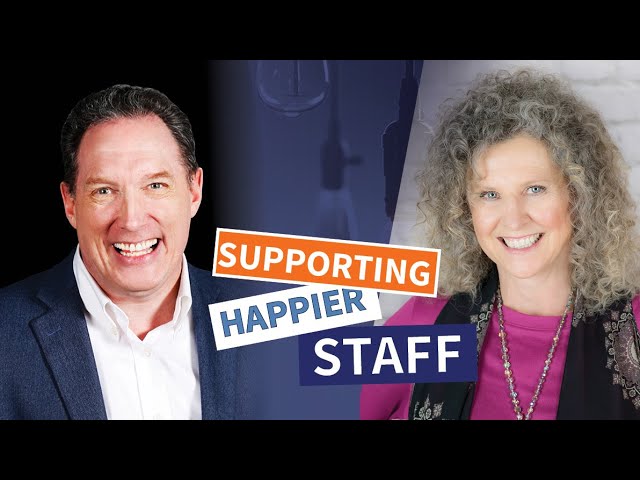
Vivian Cobb argues that emotional intelligence is a superpower for modern workplaces. The Great Resignation and pandemic grief exposed how KPI-focused leadership ignores employees' feelings, tanking productivity and engagement. She outlines practical fixes: gratitude journaling, coaching, and structured exercises to build cultures where both positive and necessary negative emotions are welcome.
Chapters
I get it. If I say as a leader, you need empathy, resilience, kindness, and patience, you might look at me and say, oh, you're one of those kinds of managers. You know, the woo-woo kinds of managers. But this is what we're going to be talking about today on Marc Haine Live. Welcome to this episode. This is where small business owners and entrepreneurs pick up core skill sets to help them work on their business, not just in their business. I am your host, Service Expert and Master of Experiences Marc Haine. Thank you so much for joining us for this episode. My guest for this episode is the Emotions Advocate, Vivian Cobb. Thank you, Marc. We will be talking about emotions and the role it plays in our organizations and on our teams. But we'll get to that in just a second. In the meantime, go ahead and be part of this conversation. You can subscribe to this program. And if you go ahead and ring the bell, you will get notified whenever we bring you a brand new episode. And while you're at it, feel free to share this podcast with people you know could benefit from the content. Let's face it. As a manager, you are looking at KPIs, productivity reports, sales and expense reports. Driving our soft skill competencies, the unmeasurable metrics can really take a back seat to the immediacy of our team's performance. So, this brings us to our Question of the Day. So, how do you know that your team members are okay? How do you know? Go ahead and share this episode and respond to this question. Go ahead, put it in the chat box wherever you're sharing this content and make sure that you hashtag it #ExperienceLeadership because I'd really love this to be a really Good conversation. My guest today is entrepreneur and, or I should say, serial entrepreneur. My goodness, she's had so many different kinds of businesses from film and movie productions to real estate to now her own consulting firm. She is an emotions advocate, Vivian Cobb. Vivian is a dynamic storyteller. She's woven the fabric of her trials and tribulations into an upcoming TED Talk.
Yes.
And now works with speakers to help them get on TEDx stages as well. But deeper than that, Vivian understands how important it is to embrace emotions rather than kind of shoveling them down deep inside and hiding away from them. Vivian, welcome to the show! It's so nice to have you.
Thank you so much! It's so wonderful to be here, Marc.
I love having you here. Thank you so much for doing this. Again, I appreciate you taking time out to bring your expertise to forefront for our audience. Before we get into today's topic, could you dig a little bit deeper into what you actually do for your clients?
What I do for my clients is I help them realize the importance of emotions and how we as humans are very emotional beings. In fact, our emotions are our superpower. And we need to be able to embrace them, all of them, not just the ones we think are good, all the other ones that we call negative, which are actually necessary. So I help develop that new mindset around emotions, and then I give them strategies to deal with and elevate their knowledge in that regard.
Nice, nice. When it comes down to this idea of emotions in the workplace, why is this topic important today? Why is it so relevant to how businesses are operating?
Oh my goodness! Well, as we all have heard, we're in the middle of the greatest of the Great Resignation. People are leaving their jobs in droves. And because a lot of that has to do with Just our environment in our world right now is so uncertain, and we're having to deal with grief on a global basis. And grief not just about loss of people, but grief and loss of our lifestyles and the way we have grown up in the world to date, right? And so we're having to deal with all of this emotion. And a lot of people don't know how to do that in a constructive, productive way. And we need to be able to do that in order to survive what's going on right now.
Yeah, so it's interesting because we do hear a lot right now of like mindset and mental health is a big thing. In Alberta where I am, they actually made mental health issues a WCB component that people can actually claim workman's compensation for having mental challenges, which I think is nice. It's great that the government has already now turned around and said, okay, well, there are things outside the scope of what we control. It's not a physical impediment. But we know now that this is something that's really, really big.
It's huge.
Yeah, so How in sync, like we're expecting leaders now to really pick up some more skill sets. It used to be, oh, you have to have really great business acumen and you really have to be able to read financial reports. How has leadership changed now over the years, especially when it comes down to the people skills?
Yeah, we are definitely in a transition there as well. And I think Great leaders are not only in touch with their own emotions and feelings, but are able to now be a little bit more conscious, if you will, of their team members' emotions and how— what the things that they are facing. Because that's how we relate to each other as humans. And the more we can be in this together, the better it's going to be for all of us and the more comfortable we are going to be around each other for sure.
Are you finding that with this kind of new domain of focusing on soft skills and on this emotional quotient or emotional intelligence, are you finding that there's a generational gap between some of the managers as far as how they handle some of this stuff?
Yeah, there definitely is. The old guard, the people who have been around for a long time And like you said, it's all been about reading the reports correctly and getting everybody on the same page as far as what the company vision or values are, as opposed to really looking at each individual and how they are managing within the structure of the organization stress-wise, emotional-wise. And so, yes, there is definitely a disconnect, a bridge that needs to be gapped. And that's where I come in.
Nice, nice. Because like you, I've run into these people who are a little bit older than I am. So, I am the last of the baby boomers. I like to say that when I was born, they said, okay, enough. But we know that That the older, like you mentioned, the older guard, the people who've been maybe they're in their 70s now and still running their small businesses and such. And it seems like there is a disconnect where people are like, oh, come on! What's so stressful about that? If you don't know what stress is, try running this business and see how stressful you— right? And it's like, you just gotta stop.
Yeah.
How can, as we get through today's today's episode. I would really like to be able for these people to kind of filter themselves out and go, oh yeah, they're talking to me. As well as the people who are like, I know there's something wrong in my workplace. I just don't know what it is. So, that's our big challenge for this episode. If we're successful, people will walk away with some really good skills to take out and be able to apply to their business. I mean, as far as consequences of not being aware, not having this emotional intelligence within your team, what are the consequences that you're seeing for organizations that haven't gotten onto this bandwagon?
Well, what's happening is they are not nearly as productive. I mean, come on. When you are down and not feeling up to snuff, You have a hard time performing not only in your personal life but at work. And I mean, we carry this stuff with us, and it is almost impossible, especially with so much going on in our world right now, to just kind of check it at the door. That that's been the the way it's it's the inspection the in um.
Expectation.
Thank you. The expectation has been in the past, it's like leave all your personal stuff at the door. Come in. Do your job. And that has fostered some very unhappy and unfulfilled employees and workers. And that's why they're leaving. They want to be in a more nurturing environment where they can express, hey, you know what? I'm really I'm kind of really scared about what's going on out there and I'm preoccupied with that. And if we can just get it out on the table and talk about it, then there's a lot more productivity that's going to happen. You're going to have happier employees and in turn, you're going to have happier customers. And because that filters, you know, it's a ripple effect. It's going to filter through. And how many For example, how many people have you dealt with that you know right away the minute they open their mouths that they're really unhappy, miserable people, and you want to— and you just say to yourself, go get a job you like, you know? And guess what? That's what they're doing. That's why there's like 40% or whatever the incredible number is of people quitting their jobs. They're like, you know what, life might be shorter than I thought, so I am going to go. find a job I like. So, if we can foster an environment where people are comfortable about speaking about how they feel, that is going to have a ripple effect through the entire organization.
You mentioned being happy at work. And I get a sense though that to be happy at work, it's not just about— it's not working in a place devoid of conflict. But there, I think there's other aspects to it. It's not like, oh, every day I'm going to come in. Nobody argues. Nobody fights. Nobody has bad days. Everybody's just happy and la la la la. When you define what this idea of happiness in the workplace looks like, what comes to mind?
Like I said, it's about being comfortable. It's about being in an environment where you feel like you can go to your leader And say, I'm having issues today and I need a little grace. Or the flip side of that is your leader is so in tuned that they can tell that you're off a little bit that day and come to you and say, you know, do you, do you need an extra half hour at lunch? Or is there anything you want to talk to me about? I mean, can you imagine going into a workplace that Has always been kind of shut off from all of that nonsense. And all of a sudden, you now feel, you feel safe to say, you know, I'm having a really hard time. I think that's, that's the difference. You're right, it's not going to be all la-la and butterflies and rainbows. And there is going to be conflict. But you're in a safe environment where you can say, you know what? Susie over there is really having a stinking bad day and it's affecting all of us because she's snapping at us. Can we deal with this? Can we help her in some way? You know, instead of sitting there keeping it all bottled up and festering and everybody else gets pissed off as well.
Mm-hmm.
So it's, it's a huge shift and, and a very significant one.
I know that there are a lot of managers who would hear this and their reaction would be, they're grown-ups. Just leave them alone. They'll get over it. How bad is it for managers to ignore emotional outbursts within their teams?
I think it's really not serving them very well and their organization is going to suffer greatly for it. I mean, that's, that's what I do. I go in and I help teams clear the air, speak from their hearts so that they can be so much better humans just in general. And, and you know what, Marc, sometimes it's not going to work. The person might absolutely have the, the best skills and be doing their job, but if they don't have The right attitude and they're toxic, you know, you might have to be brave enough to say, you know, this, this isn't working here for you. And, and I think that is happening more and more. People, or, you know, people are self-selecting. They're, they're, they're like, I, I don't want to work here. I don't feel comfortable here. I can't be crotchety. People are calling me out. I'm out of here. So. It's about mental health, which your government has recognized is a huge piece of the puzzle. And there's all kinds of strategies to uplevel in that area in an organization. All kinds.
Yeah, it's so amazing that because I really do see the passion that you have on this. Something that you mentioned that I thought was really interesting is that you come in. You come into organizations to help them do this. It's clear to me that in organizations that have the disease, the leaders themselves might not have enough capacity or enough trust with their teams to be able to deal with that on their own. How does somebody recognize that maybe they need the help?
That's a great question. And it is, it is hard. You know, there's nothing easy about this because we have grown up in a culture, a society where we are taught to not embrace our emotions, to, like you said, suck it up or whatever that language has been through the decades. And we are, as the younger generation is coming in and realizing how important it is to be more in touch with that parts of ourselves. I think an organization will notice that they're having difficulties when that chasm just starts to really, you've got all the younger people coming in saying, you know, we want it different. We don't like this. And like we said, the older guard is going, okay, how do we make these new workers, these essential workers who are doing our tech and doing all these things that we really need, how do we facilitate a new environment so that we can get along? And I mean, it shows up. If you're an observant leader, you're going to notice Those kinds of situations that are coming up and, and that need to be dealt with. And, and again, it's not easy. It takes a lot of courage to try something new. But as we're finding out in our environment right now, our global environment, it's all about flexibility and adaptability right now. If we don't adapt, you are going to get left behind.
There, it's just So true, so true. I'd love to dig a little bit deeper into how maybe embracing emotions within the team can really help with our employee engagement. We'll get to that right after this.
When the spotlight shines on your business, are customers applauding or yawning? In other words, how is your business performing? Make your business a star with a new book, Lights! Camera! Action! Business operational excellence through the lens of live theatre by Marc Haine. Marc uses his business and acting experience to help you see your business like a live show so you can create a performance your customers will never forget. Buy Lights! Camera! Action! today at your favourite online retailer or directly at marchaine.com.
Welcome back. I am speaking with the fabulous Vivian Cobb. About emotions in the workplace. I remember my first few jobs in the late '70s and the early '80s where we were told to keep exactly what you mentioned before. Keep your personal problems at the door, right? Whatever happens in your personal life doesn't come through and affect your performance. So, what do you think? I mean, obviously, we've gone through now kind of an evolution in the workplace. What's really changed?
What's really changed?
Yeah, because it used to be that that was the way we used to manage was keep your stuff at the door. But now, we're saying we have to be more open. Why is things changing now?
Well, I think like I said, it's a new generation coming in. I am also one of the younger boomers. I'm on the tail end. And the way we grew up, right? Uh, the way we grew up is, is so different. I mean, for— and, and one of the things I do as a speaker is I talk a lot about my personal experiences and my personal stories. And one of the things I talk about is how we were secret keepers. You didn't, you didn't say anything, especially if you had dysfunction in your family. Or any— or trauma in your life, you, you did not say anything there. And really, there wasn't any safe place to say anything. Um, you didn't know who you could trust as far as adults. Uh, that, that is so different now. You know, there are so many organizations and, and associations and, and people out there who have opened the door to start talking. About— I mean, just think about when we were growing up, you didn't know any of your classmates were gay. That was just— you did not know, you know, that was a big huge secret, right? And so we have opened up as a society, and because we now are much more open about who we are and our preferences and everything else, We're now feeling like, hey, I get to, I get to say what I want and I get to say what I feel. And, and I think our society just in general, I mean, we're not there yet, but that's why I'm an advocate is because I would like to see us go forward even more. So, and I would love to see in schools, in grade school, teaching little humans how to deal with their emotions. And having a class on that and knowing that our negative, I call them necessary emotions, like anger and fear and anxiety, all those emotions are necessary to help us feel the positive ones, the joy and the happiness. It's a complete ball, if you will, of emotions. We need all of them, and we've been taught to suppress. And and what happens? We drink. We do other things. We become addicted because we're not dealing with what is naturally part of us. And so that whole mindset of keep, you know, keep it at the door is so unrealistic. And people are really realizing that. And it does filter into our lives, in our work lives and how we function and perform. I mean, it doesn't even make sense if you look at it the old way, does it? I mean, it's insane in my opinion. So it's just all changing and that's exciting. That's actually really exciting. It's what we need as humanity because once we can relate to each other on our emotional level, hopefully some of the other stuff will go, you know, what our color is and what our gender is and all that stuff goes away because we are emotional beings and we connect to each other on an emotional level.
Yeah, and like you said, you know, being the last of the baby boomers, I grew up with we had to be seen and not heard. We had to respect our elders, which meant that it was always, yes sir, yes sir, yes sir when we got into the workforce. And now, things are changing a little bit because also the workforce wants a voice as well. They want to be participant in the business, not just the hands in the business.
Exactly!
COVID now has created its own set of challenges though. Like even for those progressive leaders who are out there with a high level of emotional People who had a real good feel for their teams. I can imagine that right now with remote workplaces and hybrid workplaces that they might be a little challenged.
Absolutely! Everything is different. And that's the grief I was telling you about earlier that we are having to grieve the loss of the way things we used to know. Did things, the way we— even the way we used to have a meal and gather. We have lost so much. There's been so much loss. And the way we work, of course. We are having to adapt and be flexible. And as leaders, it is so challenging. And again, like I said— Those leaders need to be really in touch with how they are feeling about everything because they don't want to transfer all their stress and all their angst onto their team members because they don't know what to do. And that is where this openness that we're encouraging and hoping that our— that your listeners are going to hear this message of being open and adaptable because that's what it's going to take right now.
Fantastic! Vivian, this is really great information. I can imagine that people watching this would go, oh my goodness, this is so good. How do I get started? How can people get a hold of you if they need your advice and what they can do with their teams?
Well, they can contact me on my website. It's viviancobbsspeaking.com. And there's a way to contact. I've got all kinds of contact me information. I'm on LinkedIn. I'm on Facebook. I have a YouTube channel. And I'm a co-host of a radio show. So, I'm out there. They can find me.
If they're looking for you, they can find you. And everything is in the show notes as well. You will have to give me the link to your radio show so I can also put that in the link as well.
Oh, okay.
Yeah, that'll be pretty cool. I get a sense now that the old adage, let sleeping dogs lie, is not a great management philosophy anymore. But I mean, that's the way it used to be. It's like, oh, okay, Donna's having a day. Just leave her be. And so, people getting involved now need certain skills Where can they find these skills to be able to create that level of intervention that's required for somebody who cares about another human being?
Well, you're right. They do need skills and they can hire me.
There you go. There you go.
And I can help them with that. But there's also so much information now, new information coming out daily. About this. And, and all kinds of— like I said, I've, I've accumulated lots of strategies, lots of practices. They're, you know, self-awareness so that you can be in touch with your own feelings and listen to your own intuition. And like you said, it sounds woo-woo, but it is amazing how well it works. And even something I will leave right now, something as easy as just being grateful and having a gratitude journal. And we hear a lot about this, but again, it is incredibly effective in changing the mindset of going from, oh no, this is happening to me, and oh, why, why, as to a different mindset of, I am so grateful That I have a roof over my head, that I have a job, that I have a car that gets me to my job. Even those little tiny things that we take for granted, if we just step back and express gratitude for what we have, that changes the neural pathways in our brain from being negative to a more positive outlook. And it sounds really Simple but it's hugely effective.
And again, there's a generational difference because do you remember the old conversations we used to have? I don't know why you're so upset. We used to have to go to school in our bare feet in the middle of winter uphill both ways. And we had to walk the dog which lost a leg.
Right.
And now, we're saying it's okay to feel like even though you had that, you don't have that comparison. You have that right to feel the way you feel about stuff. And it was interesting because a couple of weeks ago, I had a lady on, Tilde Véron, who was talking about the fact that when people see other people in angst, somebody who's got a child who's challenged and people stand back and go, I don't know how you can deal with it. But then, the person who's got the challenged child will look at somebody who's maybe a cancer patient and go, oh my God! You have cancer. I don't know how you do it. We all have our strengths and our superpowers. But somewhere along the way, We look at other people and then we just kind of go, well, I don't think I could do it.
And we can.
And we can.
That's the— we can. Those, those challenges is what builds us into who we are and gives us strengths and resilience. And you're right, and part of that is because we are not dealing with our own fear, and therefore we are looking at other people. And when I lost my husband and I lost my house and I lost everything 10 years ago, I had people, you know, leave my life because they could not handle their emotions around what was happening to me. And that happens all the time. And that's why it's so important, and that's where I learned to embrace all my emotions going through all that complex grief. It is so important to be in touch with how we feel so that we can be there and be supportive of the people going through what they're feeling. And it's, it, it's really an interesting thing to observe when people can't, like you said, can't deal with somebody else's stuff. It— that really translates to they're not really dealing with their stuff.
Nice.
And that's such an— you just created such clarity right there. And for anybody watching this, I hope you go back And listen to what Vivian just said because I think that's really, really important. Vivian, I am married and I have been a leader. And when I go up to my wife or I go up to an employee and I say, hey, is anything wrong?
I'm fine.
Now, with my wife, that means take a step back. Don't prod. Don't prod. But when it comes down to the employees, how proactive do leaders have to get? I mean, obviously sometimes people just need a little time for themselves. to be able to process what's happening before they're willing to talk about it. But this idea of somebody going, hey Vivian, are you okay? Yeah, I'm fine. Okay, great, and walk away. That can be a challenge.
It is a challenge. It absolutely is. And again, it's about creating an environment where that person feels safe. But you're right. There's sometimes we just We don't want to talk about it right now. And as a leader, you know that that person is off. You know there's something wrong. You know they're not fine. And maybe you just offer something up like, okay, that's great, but if you need to talk to me, I just want you to know I'm here for you. Or if you need a little extra time— Or, you know, like I said before, at lunchtime, or you want to go take a walk. I just want you to know it's okay, and I support you. And you're right, you can't fix everything, and you can't fix everybody, but you can create a space, a comfortable space for somebody to feel their feelings. And that person might go away, you know, and do their— and at the end of the day come back and say, you know, Thanks a lot. Thanks for just letting me take a breath. And sometimes, that's all it is that they just need to be understood that they're not having their best day today. So yeah.
Love it. You mentioned earlier about this idea of culture of openness. And so, I'd like to pick your brain as to what leaders can look for to help them design their own culture of openness. And we'll get to that right after this.
When you're delivering an important speech to a huge audience, it's easy to lose your place or go way over time. Give yourself an advantage with the Pro Speaker Presentation Speech Timer app. No more checking your watch or calling for time. The Pro Speaker Presentation Speech Timer app keeps you on track with easy-to-see timers, even changing color for visual prompts during your speech. And you can set audio cues to practice or set it to vibrate so you don't even have to look. Be the pro you know you are. Download the app at speakerpresentationtimer.com.
So, Vivian, the idea here of that we have a culture of openness. For the people watching, they go, oh, it's fine to say it. But how do I like, what checklist do I need? How do I test whether or not I have an open culture or is my culture closed and subdued? Little question. It's just a little question.
Thank you, Marc. Thanks for recognizing that that is a big question in your way. Yeah, I think that if a company is in crisis mode, They need to bring in outside help, outside consultant, and there are all kinds of team— I don't want to say games, but strategies where— and they are kind of games. They're playful and get people to open up. And that's where I come in. I come in, I speak first, and then we do exercises. That's probably a better word. But we do exercises to get people to start voicing, airing, clearing the air in a safe, controlled manner. And that's for, like I said, organizations that possibly are in crisis. You know, things are just going south and people are very unhappy and there's a lot of tension. And the thing about our feelings. We are very intuitive beings. And just like if somebody is really angry, they don't have to say a word. You can look at them and know that they are really angry and that they're possibly about to explode. It's about being observant. It's about being empathetic. But if an organization, again, wants to create an open culture, it's about starting the conversation, quite frankly, and getting people to talk and open up. And that's the key. And then from there, you put into place strategies to keep it open. Because, you know, you, you can have all this touchy-feely stuff going on for one afternoon or one day or a couple of days seminar or whatever, but then it just goes right back to the way it was. And you don't want that. You want to— it's a conscious, a conscious effort. Like I said, it's, it's like any other system that you're Creating a new system you're creating in your organization. It's something that has to be ongoing and kept up. Like if you put in a whole brand new phone system, you're gonna have to have support with that, right? So it's the same thing. If you want to have your culture be more open and honest and authentic, you're gonna have to find support in that. Whether it's the leader is doing their own research, I don't— I think that's a great thing to do. But again, they've got a lead. They've got an organization to run. They don't have all the time in the world to sit there and say, okay, how do I keep my culture open? That's where you bring in experts. That's where you create events that help get that ball rolling. And that's what I do. I mean, I come in. But I also have a program that, you know, I stay on board for a couple of 3 months to make sure everybody stays in that. And, and, and we're humans. Once we get the habit down, and it takes a, it takes a few weeks, but once we're in a new habit, we're pretty good about sticking to it. So yeah.
It's almost like we need to set a strategic plan just for this mental health bit of being able to bring somebody like yourself in to work with the team, to work with the leaders. But then, the leaders also have to look at, do I need a coach? Do I need somebody to keep me on track? Because it's easy to get derailed as you mentioned. Yeah, it's— and we've learned now that just because I say so doesn't make it true, right? Just you walk into your company and you say, okay, everybody's gonna be happy. Okay, fine, and slam the door.
Just a sport. And to your point, you're absolutely right. It's got to come from the top. The leader has to feel that way about being open. And like I said earlier, it has to be in alignment with him or herself, uh, and that will ripple through. And I am a huge advocate of coaching and coaches, and, uh, they, they are very helpful on Helping people keep on track like you said, whether it's a business coach, a life coach. I mean, there's all different ways you can approach that. But yes, I think that helps. And then, once the leader is kind of where they needed to be, then yes, it's going to be so much easier to have that just filtrate through the organization.
Well, and bottom line is leaders weren't trained for this. Ultimately, a lot of what we do on this show is bring forward information that people have never been trained into. People became incidental leaders. They got promoted into leadership and so on. So, they get these skills built up over years so that when they need something brand new, you cannot expect that you're going to have the capacity and the competency to be able to do this on your own if you have not been trained. And so, what a great way to get the training is to have a coach, somebody who can help guide you, somebody who can answer your questions, and somebody who can help move you forward that you trust, whose ear you have when you need it. Being able to hire somebody like Vivian or like any of our coaches would be amazing.
Yeah, absolutely. And you're absolutely right. Leadership is rarely taught. It's just this ability that people step up and they're now the leader. And it's like, oh boy!
And then, they wonder why they're not good at this and they're not good at that. But I used to be so good at what I used to do. Anyway, I worry about the people who kind of look at this, what we're talking about today and say, you're right. I have to do something. And so, they go out and they create kind of the policy of the week, or the theme of the month, or What kind of cautionaries do you have for anybody wanting to embark on this?
Oh goodness! Yeah, I mean, you do. Well, we talked about how we need to make sure that once we get something in place, that we have the support to keep it up going. You don't want to just have the thing du jour. I'm gonna be this Cool, hip leader today and then just, you know, leave it behind and go on to the next thing. I mean, you really have to have the heart for this. You really have to want your culture and your employees to be comfortable and feel safe and be productive in a way that you never probably realized that they could be. And again, this goes back to why People are leaving their jobs because they want this, and it is something you have to commit to. You can't— and so that's my cautionary advice. Don't do this unless you're going to really jump in all in and really want to make this work because it's a huge culture shift. If you don't have an open culture right now, it's a shift and it's going to take work. It's going to take support. And it's going to take knowledge, and you're going to probably lose some people along the way. One of the first things I say is, are you willing to lose some people? Because you might. You absolutely might. This might not be for everyone. But I think, I really believe, obviously, that at the end of the day, this is the most healthy, incredibly productive way to run a business.
And sustainable, which is the other—
And sustainable.
Right? You make these decisions. You make these changes. And some people go, oh my God, I should have done this years ago. And I toy with that adage about the best time to plant a tree was 20 years ago. The next best time is right now. So, don't invest in what you need to happen 5 years from now and we'll be really squared away. Vivian, this has just been a really amazing topic. I've thoroughly enjoyed our conversation. Do you have any last thoughts about what we're talking about today?
My last thought is just remember the importance of embracing all of your emotions. Don't run from them. Don't numb them. That's what we've been taught. We need to get that out of our minds and we need to realize how important it is To be complete, to be complete at home, to be complete at work, to, to just be the best humans and operate at our highest capacity, we have to embrace everything about ourselves— the, the ugly, the good, the sad, the happy, all of it— because that's where we find our true meaning in life and our true joy.
Love it! And I can absolutely see the value in somebody working with you. Could you just remind everybody one more time how they can get a hold of you?
Yes, please go to my website, viviancobb-speaking.com. And there's a Contact Me page there. And just send— drop me a note and I will be in touch.
Vivian, thank you. I thoroughly enjoyed it. I cannot tell you how Honored I am that you were here today to share your passion, share your energy with us, and to share obviously what you want to see change in the world. So, thank you so much for joining us today.
Thank you, Marc. It's been a pleasure.
Why don't you let me know if this was of value to you? Go ahead and post a review wherever you're watching this. I'd love to hear what your thoughts are. As always, my offer stands. If you would like 30 minutes of my time to brainstorm your business with you, feel free to book yourself on my online calendar. The link is down below in the show notes. I can give you 30 minutes. I mean, it's nothing but you time to help you brainstorm, to help give you resources, to help you move the needle to where you want to go. As always, I am at your service. And if you haven't done so yet, go ahead and subscribe to this feed. That'll give you first dibs whenever I bring you the new content each and every week. We have— this is episode number 84. We have tons and tons of experts and tons and tons of value. My name is Marc Haine. I hope you stay safe, stay healthy, and dare to be the exception.
Thank you, Marc.









