5 Steps to Impactful Leadership in a Fast-Paced and Remote World
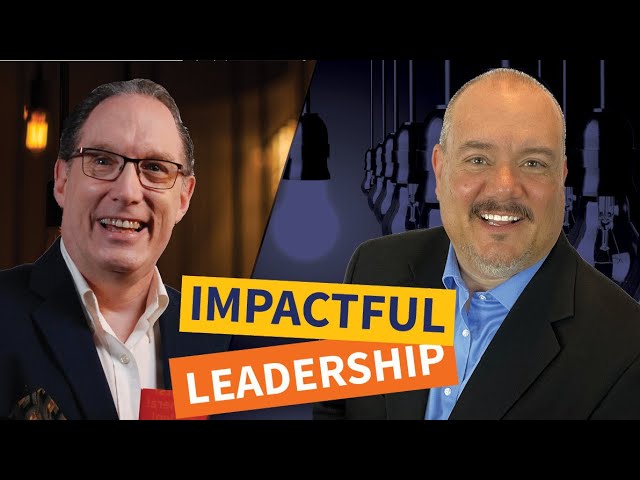
Chris Moore shares a five-step framework for remote leadership: identify who you can influence, stay alert to moments that need attention, react proactively, allow time for reflection, and reinforce learning. Employees now prioritize relationships and career development over traditional benefits, making coaching-oriented leadership more effective than task-focused management.
Chapters
Expectations have changed. Everything we hear about in the media and in our workplaces prove that we as leaders need to think differently and do differently if we want to have an engaged and motivated workforce. But between the constant pull on our time, the conflicting priorities we all have, and the demands from our staff, how the heck can we be impactful leaders? And that's what we're talking about today on Marc Haine Live. Welcome to today's show! This is where small business owners and entrepreneurs pick up core skill sets to help them create the jaw-dropping, show-stopping experience that their customers and their employees deserve. I am your host, Service Expert and Master of Experiences Marc Haine. And I am so grateful that you are here to join us for this episode. My guest for this episode is Leadership Expert Chris Moore. And today, we will be talking about how business operators and managers can become more impactful in their leadership roles. So, stay with us and we will uncover the 5 steps that you need to take to build the culture you require to increase performance and drive your teams when everything is running at tick-tock speeds. My one ask is that if you know someone who could use this information, please share the link to this episode wherever you're consuming it. Make sure that they get the link to this because knowledge is power. But heck, It's only power if you share it. In a previous episode, I mentioned that a 2021 State of the Global Workplace Gallup report found that the majority of full-time workers in the world are either watching the clock or actively opposing their employer. 71% of North American respondents to that particular survey indicated that now is the best time to be looking for a new job. So that brings us to our Question of the Day. What is the most frustrating part of being in a leadership role today for you? We've had lots of changes throughout the last 2 years since the beginning of COVID It shook up our status quo. It shook up our comfort zones. What do you think has been one of the biggest challenges right now that you're trying to overcome? I'd love for you to be part of this conversation. So, wherever you're consuming this information, go ahead and put your feedback in the comment box below, or even share this episode on social media. And don't forget to use the hashtag #ExperienceLeadership. That way, we can all be part of this conversation. With over 25 years of business ownership, management, and consulting experience, my guest today, Chris Moore, is a leadership expert who is passionate about re-energizing people to find their purpose and reach their goals. Audiences love his practical strategies that they can apply personally and professionally. It is absolutely a gift to me to have Chris on the show today. Chris, welcome to Hey Marc!
I am so excited to be here. I've been looking forward to this for a few weeks after we had a quick conversation. Really enjoying this time with you and with your audience.
Thank you so much. And again, to your point, I've been so excited from the time that we talked about it. It's like, oh, I get a little giddy when I have experts like yourself coming on board. But before we get into today's topic, could you just let everybody know a little bit about how you serve So really, what I do is I help people transform from being a boss to an impactful leader.
When we move away, especially as early in managers where you're first learning to manage a group of people, it's really you're on the front line. You're there every single day. As your career grows and there gets to be more and more levels, you get further away from where things are happening. And we don't always learn how to manage through other people and see the results that we're looking for. And it's one of the things that so many business owners struggle with. They want to jump in and do everything because that's what they did when they started their business. And so, as you get separated, how can you have the same influence and impact on your business that you had when you did everything yourself? It's such a big change.
It really is. And it's probably one of the One reason I think why a lot of small businesses fail within the first 5 years is you have a business owner who comes in. And I think it was the author of E-Myth Revisited who talked about when you start a business, you start that business as a technician. And so, because you're good at what you do and that's the passion behind what you're doing it. But then, as you scale up and get bigger, now you have to trust other people to do that. Why do you think now like, not only the startup aspect of it. But through COVID, leaders have had to change. Why do you think this idea of being an impactful leader is so important and timely today?
Well, we have grown into such a remote workforce. We don't see really the people that we used to see. And the time that we spend with them is so different. So, there was recently a report that came out from the Boston Consulting Group. They did a worldwide survey, over 200,000 people, 190 countries. They repeat this actually about every 3 or 4 years. They put out a really very in-depth report. And what they saw was in 2018 and right before the pandemic started, about 30% of the workforce was hybrid in some way or another. And even now, as we're on the ending kind of of that pandemic stay-at-home in most countries, over 50% of people Or work from home. What was interesting in their survey was that 89% of people want to work in some type of hybrid environment. So, we're all being further and further apart. And what's interesting in my own surveys and my own conversations with people working in businesses that have now moved remote, that are remote regional managers away from their corporate offices now, is they are meeting more than ever. Same way that we're talking right here through a digital device. Yet, they feel more and more disconnected from what is happening, from relationships, and even from sometimes what are they supposed to be doing. We think those messages are going through but they're not really being heard. They're not being understood. So, how can we act in this type of environment? We're all going to have to learn whether you're a small business just starting or whether you're a large corporation. We all have some of those same issues. How can we impact our workforce? Yeah.
It's interesting because you wouldn't have thought that going from face-to-face in person, going to a digital face-to-face because I mean, the alternative before the whole Zoom thing or Skype thing was to pick up the phone and actually talk to people on a telephone. You would have thought that the fact that we had this technology that we would be more connected and more in tune with people that we're looking at face-to-face through a camera. But To your point, that doesn't seem to be the case.
It doesn't. When you think about what really drives relationships, it's not when we come into a conference room and meet. It's not when we have one of those stand-up meetings in the morning. If you're in a restaurant, you're pulling all your staff together and you have that quick meeting before the lunch rush. That's not where we really have the greatest influence and where we really build those connections. It's the water cooler talk. It's stopping by somebody's office and saying hi. It's eating lunch with one another. And while we're Meeting more. Our meetings are full of agendas. They're packed. So, we have a topic. We've got to get it done by this time because I have another meeting in 5 minutes that I need to jump to. And so, we're not really seeing the relationships being built, especially between different layers of employees and then between different divisions even in a corporation. Your office staff and your production staff. They may not interact as much as what they did in the past because there's more and more of our knowledge base workers that are now working from home. Our call centers are not in big buildings anymore. They're at a dining room table all over the city. And things have just changed so much. We're going to have to change how we operate as well.
Yes, there is definitely a downside to not having those areas within the work environment that you can have those creative collisions. of people. And obviously, oh Chris, I'm so glad I bumped into you because I was thinking about— right? These aren't things that we would talk about necessarily. And likewise, and to your point, when we start a Zoom call, we're not talking about, so Chris, hey, I heard that your son had a football game last weekend. How the heck did that go? We're not getting into those conversations, right?
We're not.
Yeah. I mean, obviously, you've seen a need to speak up to change people's ineffective habits. I mean, this is what you're doing now as a keynote speaker is that you're going around talking about this. What are some of the bad practices that you're seeing out there that need to be addressed?
Well, bad practices that I've done myself. That's really where a lot of this started from was my own frustration. I had really a meltdown one day. And I think so many of us that have been managers, general managers, business owners, we've gotten to the point where we're just so frustrated with how things are going. We're ready to fire everybody. Or we're ready to quit. One of the two. And so, what I realized I was doing was I was really telling people what to do, not showing them what to do. But I also wasn't building that relationship. They were as frustrated as I was. And it really began with me. It was my fault. I wasn't providing the support. I wasn't providing the information. And I wasn't giving my team what they needed to be a success. And since they weren't being a success, I wasn't either. So, one of the big things that I see is in those interactions that I was having, I was more or less giving, here are things to do. And the next time we got back together, here are the things you did not do that you should have gotten done. You need to go do them. And here's 3 more things that I need to add to your list. Not really getting into why things didn't happen. What were the expectations? People were unsure of what the priority was.
Yeah.
You give somebody 5 things to do and there's only one that is really the priority. And I wasn't telling them the one thing. So, there was so much that we do that we don't have the correct communication. We think we're communicating and we're not really communicating. And now, even more so, we're not getting the feedback to even see that somebody is sitting at their desk and overwhelmed, or they're constantly, constantly, constantly working and answering the phone or being interrupted. We don't see that anymore. We either walk right past it because our buildings are empty, or they're not even in the building. They're at home somewhere and we never see that level of frustration.
It's interesting. As you were saying all that, I was imagining these dynamics where it's absolutely true. We have expectations. Do you think that the role of being a leader has changed?
I think it has. In the same survey with Boston Consulting Group, it was interesting to see back in 2014 the things that more or less what was employee satisfaction. What was the leading top 5 things? It really had to do with, can I develop my skills here? What is career development that is here? What is offered? We got into this time period of benefits. Everybody's looking for benefits. But in this last study, The most important things had to do with relationships with your colleagues, relationship with your superiors. That was the 2 big things. And what do we see most of right now? We have fewer and fewer relationships. We're hiring people that we may meet them and then, we're only talking to them through a screen or on a phone. And what's interesting was after we get through these relationship things, what now has come back in is pay. And what was interesting to me in looking back at the old studies was 2014 and 2018, pay wasn't a consideration. What was my income? And the 5th thing really was, is this company stable? But one of the things that leads to, do you think this company is stable, is again those relationships. Knowing what is going on in the company and with everybody else that's in the company is Those are the top 5 things. And it's so interesting that we have changed to say what we're most interested in is in those relationships. And then, you go on down in this study and we're all hearing everything about this diversity, inclusion, equity, all this sort of thing. And you read in there as well and people are wanting to be heard. They're wanting to be understood. And again, we're getting right back to Relationship. Do I feel like I have a relationship with this company, with the people that are in it, with my other team members, with my bosses, superiors, the leadership? Am I getting from them what I need? And if not, they're ready to make that change. And just like you were talking about earlier, people are quietly just no longer engaging. And I think part of that really is because we're not engaging with them in the way that we need to. If we cannot increase our impact and influence on our teams, on our colleagues, even with our family and communities, we're going to see those relationships begin to fall apart and people are just going to move away from us, move away from our businesses.
It really does feel like when you look at the evolution of employee-employers or the evolution of work that we have now gone from It was very much the industrial age mentality of you go to work, you put grommets on a piece of fabric, and you move it along so other people can do the work. And you were there because people wanted your hands. They wanted your hands. And then, we got to a knowledge worker age where it was not only our hands but now our minds. And so, we've now gone from transactional to relational workplaces to your point. But I see that as we're coming now, I've said in the past that I really feel that COVID really escalated a lot of the conditions that were about to happen. Things, statistics that said where our workplace would be in 2030 actually has happened post-pandemic or almost post-pandemic. As leaders teeter into this new era, are there any myths that you think need to be busted for the leadership out there that might not be aware of what they're currently facing?
I think one of the myths is really is that time with someone is equal to building that relationship with someone. We talk about having these meetings. We have group meetings. But they're about what are we supposed to do. They're about our company's goals. They're about performance, whether it's good performance or bad performance. We're not really getting to those things that make relationships. To your point earlier about my son's football game or something going on with my family, we don't even know why those things are going on in someone's life. And because we don't recognize that through that short communication, we just think, hey, I've heard it so many times. Let's communicate something. We're going to do it 10 times, 10 ways. But until we have relationship built into that, It's not going to work. It's really just not going to be heard.
Yeah, it's so interesting that the tipping point again is this idea that we became more human or we understood that our employees were more human because all of a sudden, we saw their backdrops. We saw that they had a dog walking past or a child come up onto people's laps. And all of a sudden, during COVID we were thinking, oh my goodness! My employees are human beings. And it's like, oh, what's your daughter's name? Or what's your dog's name? And We started that impact of being able to talk relationally because of personal interest because we had this understanding. But then, it seems like that's now been pushed to the wayside. So, it's really interesting that now as we're getting back to this idea where some people want to be back in the office, some people want to be fully remote, some people want some sort of a hybrid model, that we have all these different leadership challenges. I'd really like to talk a little bit about how we can impact our teams in a more meaningful way. And I'd like to do that right after this.
When the spotlight shines on your business, are customers applauding or yawning? In other words, how is your business performing? Make your business a star with a new book, Lights! Camera! Action!, Business Operational Excellence Through the Lens of Live Marc uses his business and acting experience to help you see your business like a live show so you can create a performance your customers will never forget. Buy Lights! Camera! Action! today at your favorite online retailer or directly at marchaine.com.
Welcome back! I am speaking with leadership expert Chris Moore. And we have about 8 or 9 people who are watching this live. So, if anybody does have a question for Chris, please feel free to put it in the chat window and we'll make sure that Chris answers your questions as well. Chris, can we talk a little bit about how we need to lead differently today? We talked about going from transaction to relationship. What are some key points that you think we need to be able to check off in order to figure out are we being effective?
So really, it is about intention. For me, when I had my meltdown, I thought I was doing the right things. And I really dove more into what I should be doing as a leader. I was so frustrated. I just thought there's got to be some secret, some checklist, something. So, I bought the books. I attended conferences, watched DVDs, all those sorts of things that I did. And I really wasn't finding what was going on. I was getting more and more depressed really. The frustration and anger really that I had to start with just kind of turned into depression for me. It's like, why have I ended up this way? I'd gone back to school. I got my MBA. I've got all the letters. I've read all the right books. I think I'm doing all the right things and things are falling apart. And this memory came back to me. And it was actually from high school. It's funny you mentioned football earlier.
Yeah.
It was my second day of playing full-contact football. Never played football before until I was a sophomore in high school. I grew up in an area where basketball was king. My dad was a great basketball player. He played semi-pro for a bunch of different states, in a bunch of different states. Basketball is what I grew up with. So, here I am with football. I don't understand the rules. I don't understand anything. And on our team is a guy who literally was Mr. Football for the state of Tennessee where I grew up. 3 years, he was Mr. Football. If you think about an NFL Running back, Eddie George, Barry Smith, somebody like that. That's the way he was built. And so, comes time and I think I'm going to tackle him and that's not what happened. My head spun to the right and that was the last thing I remember. And I felt myself being rolled over and make a long story short, I see my football coach's face just kind of comes in. He was an older man right before retirement. And I see these 2 fingers that he holds up. And I think he's going to ask me, how many fingers am I holding up? And that's not what it is. He grabbed me by the front of my jersey and pulled me up. And he said, you've got 2 questions to answer. Number one, are you going to get up? And number two, what are you going to do different so that you don't end up back down here again? And then, he let me go and I fell back to the ground. And he turned around and went back to practice. That was it. And I thought about how many times I had really taken that advice. Was I going to get up? And it made my mindset as I was looking at it kind of turn in that I had always been looking for what I was going to do, what I was going to do. And it wasn't about what I was going to do. It was about who I was going to be. And I wanted to be him. How did he step into that situation, say a few words, and step away? And 30 years later, I still remember it. And I had remembered that lesson I think multiple times throughout my life that when I got knocked down, it wasn't about that self-pity, feeling bad about where I was at. It was about how could I come back and do something different? Was there something that I needed to do looking inward? And I was doing that. But then, it's so much changed. How do I become that person? And I think for a lot of us as leaders, We're looking for a how-to. If there's one thing from the years of consulting I've done is people are really looking for tactics. Give me that checklist. Tell me what software I need to buy. Do I need to do this? Do I need to buy that? And it really is about how do I change myself so I can become that person? And as I've spent really the last 10 or 12 years studying different CEOs and business leaders, what I found is that their number one job is the development of people, of the people that are closest to them as well. Elon Musk is in the tech space one of those leaders that people are really aspiring to be. And yet, if you're in his organization and you're working on the line on his battery factory, he really can't have a personal impact on that person. Steve Jobs, the same way at Apple. He can't impact the person who is putting together a phone or selling a phone that's there. Yes, he has to do with the culture. Yes, he's developed that overall process that he's helped oversee the development of. But the people that he can impact are those that are closest to him. And so, that's what I really started trying to become intentional about. How was I going to impact those people? And so, there are 2 sides of that. There's one recognizing that there are people I need to really have an impact on. My son is one of those. And so, I plan things that are, we're going to go out. We're going to do something. I'm going to let him have some experience in a certain area. We may drive through a part of town and get out and see a different way that maybe somebody lives. We may go and experience a different culture together. And then, we had that opportunity to talk about it. Okay, I can have that impact on his life. But also know that there's unknowns that are going to happen. Something that is probably going to happen to my son. Can I think about when this comes up, how am I going to handle that? We talk about being blindsided. I don't want to be blindsided when it comes to how I need to help someone in that situation. So, because of that, I've studied what has happened. I've put into practice what I think works and really have taken what I learned from my football coach and turned that experience for me into being able to give that same experience to other people. And hopefully, other people can learn from it.
I can imagine that some people might be watching this thinking, but Chris, that kind of approach with your staff about the 2 questions seems to be lacking empathy. And I've also heard from people that, especially older leaders, about this idea that you expect me to coddle my staff. Right? There seems to be 2 distinct kinds of philosophies around this idea of being a leader, being a coach, being a mentor all within the same package.
And we do. When we look now a lot, we have so much data that's available. I mean, you can buy a simple piece of software for $10 a month and it will give you all sorts of data about what is going on with that. If it's websites and visitors, if it's conversion rates, if it's who's buying what when they come into your store, who's searching for what. We have all this information and we turn it into these performance metrics. And then, we start driving the metrics. Well, there's 2 different ways to drive the metrics. You can do it with, here's what the bar is and you're right here and you need to figure out a way how to get here. Or we can turn that around and take what is usually seen as a negative experience from our team and we can turn that into a positive Mentoring type of environment. A few years ago, I was out with a with with a friend who who owned several restaurants, owned about eight or nine different locations of a franchise restaurant. We had met; he'd asked me to spend the day with him and ride around as he visited some of the different areas. And he goes to one of the restaurants, and it's a mess. You know, there's trash outside on the floor, on the ground, in the parking lot. There there. Dumpster area is actually open versus being closed. Things just really haven't been cleaned. Stuff hasn't been taken care of. Windows are dirty. All those things. And he goes in and he just explodes, throws a fit. He's pulling the manager out. He's calling the assistant managers that aren't even on staff or aren't on location at the time. And he is just driving, you've got to fix this. You've got to. Can you not see whatever? And so, I see the look on his employees' faces who are, yes, they are going to go do this. This is going to work. But they're not really learning and they're not growing. And some of them are picking up bad habits that I see then that they learn, okay, this is what it means to be successful. This is what it means to be a leader. I'm going to turn around and use this same drill sergeant mentality with these 16- and 17-year-old kids that are running the front frontline registers. So, when we go to the next location, we see the same thing. And so, I said, before you go anything, let me go in. Just introduce me. And so, I took the manager outside. I was like, tell me what you see. At first, he's like, well, I see name of the restaurant. And he was reading the advertising signs and all that. I'm like, no, look through your customer's eyes. Your customer comes in and looks at your restaurant. What does your customer see? And pointing out a few things. And so, you turn something that would have been this negative sort of experience that we had at the last location into what I think is more of a positive mentoring type of aspect. And so, it was a short conversation. 5 minutes, we're done. It's over. He doesn't leave upset. I'm not angry. My friend who actually owned the restaurant is kind of happy with how this interaction went. But again, he had never been mentored by somebody who had seen a different approach to leadership or management. And so, for me, when I see the leaders that lead in that way where they take that more mentoring approach, you see that next level of leadership. Takes the mentoring down. And then, I told him as a follow-up, this manager needs to do the same thing with his assistant managers. And then, go into each different area inside of that restaurant and ask them, what do they see this restaurant? How can we do things better? What does the customers on the other side of the drive-through looking through the window, what is their experience as they come through? And it changes the mindset. And I'm sure we could all name some different restaurants that we've been to that have 2 different mindsets as you go through. And you see the level of success of those restaurants. And you see the difference in mindset of the staff that is there. And of the 2 locations that we went to with my friend, I know which one I would probably be happy working in or my son working in and trying to learn versus the other one, which I would say, you probably don't need to work here. This is not going to help you. as you grow throughout your life. And so, we can do certain things and how we do it. But then, of course, deciding what approach we're going to take in this is just so important.
It really is. To your point, I mean, I grew up in hospitality. And so, I've been privy to a lot of these conversations. In fact, my very first job at the big arches, the golden arches was that kind of leadership style. It was that constant knock them down, knock them down, knock them down because that's That's the way that you're going to instill this fear of leadership in people. This is the way, if I do it publicly, then everybody will know that it's unacceptable. And everybody then walks on eggshells. And I remember growing up and I remember thinking to myself, if I ever become a manager, I know who I will not become, thanks to this one particular individual. This is absolutely fascinating. It's almost like we need a little bit of psychology mixed in with our leadership abilities.
Yeah.
I imagine that there's some people watching this who's saying, you know, this Chris Moore guy, I really should talk to him about a situation I have. How can people get in touch with you if they want to check in with you?
So, the best way to find me is on my website, chrismoorelive.com. I'm pretty much everywhere on social, also @chrismoorelive. So, feel free to shoot me an email. You can do that through my website or DM me on any of the social platforms. I'd be happy to talk with you.
Fantastic! Thank you so much for that. And I do encourage people to do that. A phone conversation or a quick Zoom call is not going to cost you anything. But it's amazing what you can find out when you tap into the brilliance of people like Chris. What do you think sets these people aside? Like, we've talked a lot about the different issues that we've had with the different leadership. You've mentioned This idea we talked a little bit about the empathy piece. This little idea about becoming more of a coach rather than a push. We've also talked a lot of innuendos that you've brought forward are really about values. What do you think at the end of the day will set this new era leader apart from everybody else?
I think it really is a viewpoint. So, someone that takes this approach to leading and managing and trying to define what that impact will be. They are seen differently. So, you mentioned your experience in the restaurant environment, the being knocked down. I don't know about you, but I don't respect leaders who knock me down. I might respect them for what they've accomplished or what they have reached. But if they have gotten there in that manner, I'm probably not going to follow what they've done for me. And so, in doing this, I really developed this 5-step type of process to go through, which we've kind of hinted around to what those steps and things are. But the first is, who can you impact? And who do you really need to impact? Because there are people. My son, I have an only child. He's definitely somebody I know I need to impact. But I also have some people in in my businesses in the past, people that I work with, colleagues that I definitely know I need to impact because of what is going on in their lives and what I've experienced before. So, I can share that experience with them. The next thing really as a leader is really to learn to recognize when those events happen. How many kids playing football get knocked down at practice?
A lot.
And I didn't see this interaction happen all the time. And so, he stepped in and he recognized what the— that I just had this experience. And I've had to do this with other people as well. Stepped in, said a few words. So, he reacted. He didn't walk past the action. He made a conscious decision that I am going to do something in this situation. And he did it proactively. I've seen people react. Again, we've talked about whether it's from a negative standpoint or whether it's from a mentoring-type concept. We need to react really more as how would we want to mentor somebody in this situation. And then, he stepped out of it. In the same way with this manager at the restaurant, we had a short conversation. I stepped back. We actually left him standing outside. He had time to internalize. Say, here's this process. Here's something they've shared. For something to be really impactful, we can't stay in that moment with them. We need to step away from that moment and let it be internalized. And so, there's this moment of reflection at that standpoint. And then, the last step really is while they're reflecting on what just happened, we're reflecting on how can we reinforce this. So, how can we go back to that person later and even say something like, hey, you did a good job. We had that conversation. I've actually heard you have gone and spoken to your assistant managers, which we didn't ask him to do. But he had that same conversation with each one of them. So, that follow-up of, hey, we really appreciate what you're doing. If we can really learn to be proactive in that manner, which is not just proactive about here's my 10 things I'm going to do this week, but know that we're going to have to react to some certain situations and decide in our own minds, I'm not going to get upset about this. I'm going to take this as an opportunity to grow that person, to grow my influence, but really to impact them in a positive way. And my goal hopefully is that I will have during my time impacted someone so that 30 years later, just like Coach Redmond did with me, I'm still having that impact in their lives. And 2, Now, through this message and through the things that I've shared, Coach Redmond, who passed away several years ago, is still impacting people with his short message to me out to others. And I think there's nothing more powerful, more of a legacy to leave than it is that level of impact.
We get so overwhelmed by the crisis of the moment as leaders. that we often forget that we do have impact on people. And one of the things earlier in my leadership career, because I had all these negative experiences, I remember saying to a junior supervisor that the day-to-day doesn't really matter. Yes, we have to get through and obviously, no margin, no mission. But at the end of it though, I said that every day we have the ability to impact our team members on an individual level. And to me, that is the true definition of success of any leader. To your point, shaking— how does one shake themselves out of this? We got to do this. We got to do this. We got to do this to be able to stop, slow down, and remember that it's really about the people that we are delegating to that matter the most.
So, for me, it really is I make a list beginning of every week. I look at my calendar. I see who do I have the opportunity this week. Is there somebody there that I already know of a situation that is going on? Again, I've built that relationship so that I know what is happening with them. But I'm also attentive to realize that, hey, when I go into this meeting, it's more than just about what are the numbers on the page. Or what do we need to accomplish? It is about the faces around the room. Can I see who is really engaged and who is not? And why is that? And versus taking the opinion of like, it's everybody else's problem. It's not. If I'm the leader and this is my team, or these are my colleagues, or this is my family, or my friends, or a community group that I'm involved with, it is up to me. To try and discover a way that if there's a way I can help, that I become that help. We can't walk past it anymore. And as we talked about at the beginning, in this remote world, those opportunities are fewer and fewer. What we're seeing in the surveys and the metrics are that a lot of leaders now are only meeting with their immediate subordinates. So, the people that report to them Once every 2 weeks. And they're doing it usually for a defined one-on-one. This is, here's the 5 things we're going to talk about. We're going to review these metrics. Great. We're done. See you in 2 weeks. And we're becoming less personal. We're becoming less interpersonal.
Yeah, the big takeaway for me that I'm really getting from that is that as leaders now in this almost post-COVID era is that we have to have to be more intentional. We have to be dealing with people with an intentionality. And I like your idea of being able to sit down. Like, I've for the last 5 to 10 years, I've been saying that we should get away from this idea of annual evaluations. We grew up as baby boomers. I grew up with the annual evaluations being the be-all end-all. It defined our raises. It defined who we were as people and so on. And only to learn that You have a manager, I never give 5s for anything. And it's like, then what's the purpose of the evaluation? But now that my big thing is I think personally, I think managers have too many to-dos on their lists and that they're not people-focused enough. And I talk specifically to you baby boomers out there who are performance-based. That we're so gung-ho on getting all this work done that we ourselves are taking up a role that should be delegated. And we should be taking on more of this coaching and mentoring role and get away from this, oh, I'll meet you next year. Here's your self-evaluation. Please make sure you turn it in on time. And then, we'll sit down and discuss it all. And it's like, what? There's got to be more to dealing with people than that.
You mentioned an important point. And that is one of the to-dos that we have to have on our list. And we need to put on our manager's list is that development of the people that are, that they really control a lot of their lives, their happiness at work. Work-life balance is another one of those big topics that everyone talks about. And we need to make sure that they know those things. So, in my one-on-ones with people that I've managed in the past, one of my questions is to ask, Hey, what's going on with the 4 or 5 people that they manage? And see if everything that they say is just about the metrics that's on the page. Because if it's not, I know they're not really developing those people. Those that are really focused on managing those people or developing those people will actually tell me something about them. Hey, he's struggling with time management. Not that he's not meeting goals or he's not meeting timeframes or missing deadlines. They'll start telling me about the attributes of the person or what's going on in their lives. We're giving him some slack right now. I had one person in my organization whose wife unexpectedly was diagnosed with cancer. And so, he said, hey, I know his metrics are down. We're just letting him slide right now. We're actually giving him a lot of time off. That letting him be away from work so that he can spend time with his wife. We're not sure what's going to happen. Now, to me, that fit our culture. That was exactly what I wanted to know. The next question is, okay, how are we going to pick up the slack that he's leaving because he's not here? But it's great that he's not here. He's where he needs to be. We take that approach. I think we build strong organizations. We build strong culture. And we build a very successful group of teammates that really love to work with each other.
Yeah, I agree 100%. And as long as the defining part in that is that strategy of giving him the time off and whatnot happened with him. Too many times I've seen leaders go, well, this thing happened. So, I'm just going to give him a bunch of time off. And then, they go up and say, hey John, we're going to give you time off so you can deal with this. And without even sitting down and actually doing a strategic plan for that person because that might be something they might not want. And so, we have to understand. And again, it goes to your point earlier that we're no longer in transactions. We're in relationships.
Exactly.
Yeah, it's amazing how this is all switched over and how quickly this change has happened over the last couple of years. I would like to get into some cautionaries. I'm sure people are going about this going, yeah, I should do this. I should do this. I should do this. But I'd like to get into some cautionaries about leading in this new era to be more impactful. And we'll get to that right after this.
Easy-to-see timers, even changing color for visual prompts during your speech. And you can set audio cues to practice or set it to vibrate so you don't even have to look. Be the pro you know you are. Download the app at speakerpresentationtimer.com.
Welcome back! As you can tell, Chris and I are passionate about helping entrepreneurs and business managers just like you. You know, one of the big things that we're talking about today is this idea that we have to switch how we manage. And this idea of becoming a coach, or a manager, or a mentor might be a little bit of a challenge. It's like you might want to go ahead and schedule the one-on-one with your employees. But it's like, gosh darn it! What am I going to talk to them about? Well, if you need some help, please feel free to reach out to Chris or myself to help you along the way. Because again, these are learned skills. You can read lots of books and you can kind of do it the way that Chris talked about how he was developing himself. But at some point, you might need a little bit of help. And if that's the case, feel free to reach out. And if you belong to an industry association or an organization that's planning maybe a conference or a leadership retreat and you feel we could be of service, feel free to drop us a line and do a connection request. All our details are in the show notes and we are both here to serve. So, feel free to reach out. Chris, this is fascinating. As you could tell, I love this conversation. about this new way of kind of looking at the people side of our leadership abilities. When it comes to people who are looking at this going, yeah, I know I have to change. And we've talked a little bit. First of all, could we summarize the 5 steps just in case people missed it as we went through it because we did very conversationally? Could we just list the 5 steps to becoming more impactful?
Yeah, so the first thing is really defining who it is that you can impact. There are only certain individuals that you're really going to be able to impact. I cannot impact the entire world. I'm not going to impact my city. It's certainly not this week. But there are 3 to 5 people in the next 4 or 5 days that I'm going to have an opportunity to provide some type of impact for them. So, that's really the first thing is to decide who you can impact. The second is really to keep your eyes open. Recognize when that event happens. And maybe it's not a surprise event. Sometimes, we create those events just like I mentioned with my son where we may go experience another culture so that we can generate a conversation about how do we live, how do we work with other cultures. So, there's that recognize the event. But not just recognize it. But then, the third step is to react proactively. So, we always react. We may ignore it. We may walk past it. We may wait 3 or 4 weeks and follow up with somebody and say, hey, I saw that took place. No, we need to react and be proactive in our reaction. So, the next thing really is to then step out of that, is to give time for reflection. Reflection for that individual. And reflection for you as well. Did I handle that well? Did I handle my opportunity that I just had? Was there a way I could have done it better? And then also, for you as the person who's trying to implement this process to say, how do I reinforce this and when? And that's really that 5th step is that I need to go back and reinforce it. I give an example of if I see someone that is on the side of the street right now around the U.S., there's a huge homelessness problem. For all sorts of reasons and we won't get into that. But if there's somebody that's on the side of the road, I can stop and I can give them some money. I can take them and buy them a meal. But if I never go back and try and truly help this person, they're still in that situation. They've got a little bit of hope. They've got a little bit of relief. But they're still going to be struggling with the same thing. And we do that so much in so many different situations. We forget as leaders that it's not just that one point in time of mentoring. It's the process of going back and checking in on that person again. And that's really the 5 steps. And if we are intentional about this and think about how we're going to respond in certain situations or situations that we need to make sure take place with individuals, especially if we're in that leadership position, I think for me, I find joy in seeing that change in individuals when it's a positive, great change. That's what really gets my endorphins going and why I do what I do.
Yeah, and that's the huge definition right there of being a servant leader is that you're doing it for the purpose of other people, not necessarily for what's going on in your world. As people want to get into this, cautionaries. What should they be focused on? I know that off the get-go, I know that some leaders will turn around and go, well, all that's nice. But you know what? I don't know anything about this. I don't want to screw things up. So, there's this whole big fear of failure of dealing with people. And I always tell people, hey, It's okay to mess up and then apologize as long as your intention is positive, right? What other things would you say would be cautionaries as people want to change kind of the focus of their leadership direction or their impact that they're having as leaders?
So really, it is about mentoring. And if you know anything about mentoring, if you read any of the things about it or you've had one, it's a 2-way process. So just like what you mentioned, You may attempt to do something and it's not going to work. That's okay. The importance for you is that you tried to attempt it. But part of being the mentor versus the mentee is that as a mentor, you're trying to do things in a positive way. So, we are tempted to react. But we react out of anger, out of frustration, out of that I just have a short time. I need to get this done. We need to change our mindset and make sure that our reaction is positive. Can we accomplish what we're trying to do by taking a positive look at it, by taking positive actions versus taking a negative action? If we do that, we'll help develop that mentor-mentee type of relationship. The next thing really is not to overdo it. We can get preachy. And so, as I've looked at this, a lot of these things happen. It really is a moment. So, I'm a bit of a math nerd, which drives my wife and my son crazy because neither one of them like math that much. But depending on which higher-order level of math you look at, a moment is actually 90 seconds. And so, these events really need to happen in this 30-second type thing. Usually, it's about 30 seconds that something happens and people that are experienced at it realize, Oh no, this is it. You've got about 30 seconds to respond. And then, you need 30 seconds to walk away where nothing happens so that you can integrate what just— that minute of time, both the event and what the response was, and then have time to reflect and to internalize what that is. If I stay there, even if I'm positive, then I can become preachy. And so, somebody can take what's what should have been a positive experience and turn it in, well, you're just trying to control my life. And my son's about to be a teenager. So, I'm struggling with the concept of trying not to control his life or come across that I am trying to control his life. But we've all, I think, experienced that where it was actually a good positive message. But because of how it was delivered and how it was over-delivered, that it became that way. So, that's really 2 2 of the biggest things. But then, there's also we have to focus on the individual. So, not just the problem, not just the gap in performance, but on the person themselves. So again, in this situation, don't think about entire organization. We have a lot of things as a leader that we need to affect the culture of an entire organization. But when I'm dealing with a person, I need to focus on that person. You read anything about everyone who is considered a great leader, even political leaders that either side of the fence here in the U.S. that you're in. Most of those people throughout history that you go to, and I have met a few of those leaders in my life. When you're with them, it seems like for those few seconds, You are the only person in the world. There's this— they are focused on you. And our teams need to feel like when we have that opportunity, that we are as focused on them and we are concerned about them as we can be. We don't have time to do that for everybody throughout the day. But again, those opportunities that come up, We need to be right there with that individual. And again, with the individual, not with the problem, not with the gap, but with the person.
Love it! It's almost like this idea of take the customer service skills. And I again did an episode based on this philosophy. If you take the customer service skills that are ingrained in you that you do in your business and apply them to your employees and make sure that you're fulfilling those needs as well. Chris, this has been a phenomenal conversation. I think we could go on for hours about this, really digging deeper into each one of your 5 steps and really hammering those home. Unfortunately, we don't have all that time. So, do you have any last thoughts about what we've been talking about today?
Yes. So, I think it is something that all of us can do, whether you're an entry-level employee or whether you're the CEO of a company. There are always people around you that need you, that need your experience, that need your knowledge. They may just need a hug or somebody to sit and cry with them sometimes. And we need to be able to recognize those things and step into those events. There really is a lot that you can think about with this and really with the intention. And so actually, I put together something for those that are watching or listening that really goes through each one of the 5 steps and what each one of those means. And really, some worksheets on exactly how to do this to help people get started. So, I'd like to give that to anybody that's listening. They can go to chrismoorelive.com/mhl for Marc Haine Live. And there, they'll find it. Just enter your email address and I'll send you right there. And you'll also get a kind of a video that will kind of walk you through the workbook that will explain some of the concepts and put you in the right frame of mind. So, Really, you can go and starting tomorrow, you can start seeing how to make that impact in people that are around you.
Love it! We're going to put the link in the show notes. And don't start tomorrow. Start today. Download the worksheets. Thank you so much for that generous offer, Chris. I think that's going to be so valuable. And Chris, I can't thank you enough for your expertise that you shared with us today. Could you just remind everybody one more time how they can get a hold of you?
So, you can find me at chrismoorelive.com or pretty much on any of the social also at Chris Moore Live.
Love it! Chris, thank you so much. This has been brilliant. I really can't thank you enough for taking time today.
I greatly enjoyed it, Marc. Look forward to when we get to speak again.
Love it! Why don't you let me know if this was of value to you? As always, my offer stands as well. If you would like 30 minutes of my time to brainstorm your business with you and your team, feel free to book yourself on my online calendar. The link The link is in the show notes. It's the one that's marked meetwith.marchaine.com. It would be my absolute honor for me to be of service. And while you're at it, why don't you go ahead and leave a comment about this episode? I'd love to get your feedback. Was this of value to you? Plus, if you have any topic that you think you would like to see covered on this show, please do reach out. You can email me at marc@marchaine.com.
Marc@marchaine.com.
And just say, hey, you know, love your show. Please make sure you say you love my show. Please, please.
Love your show.
Could you please get somebody to cover this particular topic? I'm having a challenge with this. So, that would be super helpful. And I want to thank Anna for your comment. This is so wonderful, Anna, that you stuck with us throughout the show. And I appreciate your comments coming up. I really appreciate because ultimately, this is my passion point. I love Doing this for people to be able to learn something new. And I can't thank our experts enough. This is episode 115. So, that means we've had 115 really great topics and really great people who came out. So, my name is Marc Haine. I hope that you stay safe, stay healthy, and I hope you dare to be the exception. Thanks for joining us today.









