Aligning Your Business: Vision, Strategy, and Customer Engagement
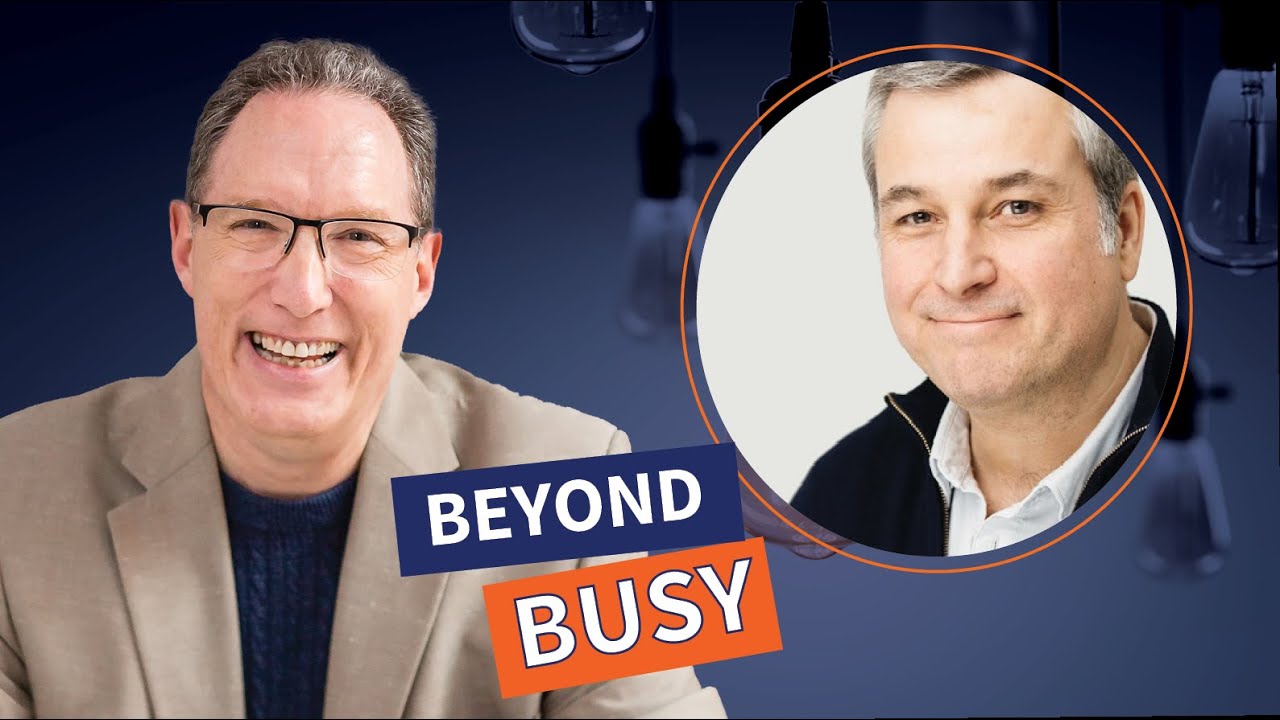
Marc Haine talks with strategic advisor Jim Stevenson about why companies get stuck on the hamster wheel, busy but unproductive. They cover misalignment between vision and daily work, silos that kill communication, and why promoting technical staff into management often fails. Stevenson walks through how to redesign around customers and actually empower people to do the work.
Chapters
There is a scenario that plagues countless organizations. We are in the daily grind of creating a paradox of being super busy, yet somehow, we are not as productive as we should be. And unfortunately, your customers are the ones who are lost in the shuffle. And that's what we're talking about today on Marc Haine Live. Welcome to this episode! This is where small business owners and entrepreneurs develop the new skills that they need to help them create the jaw-dropping and show-stopping experience that their customers and their employees deserve. I am your host, Customer and Employee Experience Strategist Marc Haine. I am so Grateful that you are tuning in today. My guest for this episode is Strategic Advisor Jim Stevenson. And today, we are talking about a widespread expensive problem that kills a lot of businesses. The paradox of being busy but not productive. So, my one ask for you is if you know somebody who could use this information is as you're going through this, if you're thinking to yourself, my goodness, somebody I know could use this information, please go ahead and share a link to this episode. And please don't forget to make sure that you're subscribed to this podcast. When I had my restaurant in Montreal, it was called Oktoberfest. We were located in Central Station. We had grand plans when we got into the location of turning it into a franchise. We set up shop and then we fell into the daily grind of day-to-day operations. We fell into what I like to call the hustle hamster wheel. That's when we're caught up in a relentless cycle of activity where we tick off the daily task list. We push through projects and yet, the needle on our businesses barely move an inch. So that brings us to our Question of the Day. So, have you ever stopped to wonder if the endless cycle of tasks and projects in your business is actually moving you closer to your goals? Or is it merely an facade of productivity costing you more than just the time and resources? I'd love for you to share your thoughts. Are you on this hamster wheel? Are you just busy, busy, busy but you come in at the end of the year going, I don't know why my business is not growing? Share your thoughts. I'd love you to maybe post this episode on your favorite social media platform. Hashtag it #ExperienceLeadership and put down your comments and even your your questions. I think other people can learn from our experiences as well. So, go ahead and do that. Today, our guide through this maze of motion without movement is none other than Jim Stevenson, a maestro of strategic alignment whose illustrious career has been marked by one success story after another. From the rugged construction sites of Scotland to the sleek digital corridors of global giants, Jim's journey is nothing short of a masterclass in business transformation. With a keen eye for the crux of commercial success and a passion for technology that serves a meaningful purpose, Jim has redefined what it means to be productive in this digital age. So, whether it was pioneering the digital presence of the Bank of Scotland, navigating Picardy's digital voyage from Washington to London, or catapulting The Guardian newspaper into the U.S., Jim's strategic prowess has left an indelible mark across many different industries. Jim, it is such a pleasure to have you on the show.
Hi Marc! It's lovely to be here. Thanks for having me.
Yeah, before we get too deep into today's topic, I would love for you to tell us a little bit about how you serve your clients.
How I serve the clients is very easy. Although, when you get into the depths of it, it is obviously very complex. I help clients to find and to deliver growth. And that means helping them understand the strategy, helping them to transform to be what they need to be. Occasionally, it's just finding and removing the blockers to them being successful, or it's fundraising and M&A to expand and to grow. So, a huge broad range of things, but the thing that always brings it back is I help companies to grow, is the simple truth of it.
Yeah. Jim, can you share your insights on why so many organizations find themselves in this, what I call the hamster wheel, busy with activities yet not progressing towards their goals? We all have mission vision statements. We all have strategic plans and so on. Why are some businesses struggling to get themselves to move forward?
Yeah, I mean, there's several things I've experienced that would cause that to happen. And I like your hamster wheel analogy. Warren Buffett calls it busy work where everyone is being really, really productive, but actually none of the dials are moving. You're not progressing your business. And for me, the reasons around about that, there's lots of them, but it always comes back to the teams aren't all working in the same direction. The business isn't aligned behind your vision, your strategy. You're not moving towards the goals that you were hoping to have. So people are doing the day-to-day, But it's not actually impacting the organization because there isn't that alignment. There isn't teams working together. There isn't that joined-up thinking and that joined-up processing which actually moves the organization forward at all. So everyone is really busy, but all going in slightly different directions, maybe not drastic different directions, but slight different directions. But that's enough to stop you actually making progress.
And yet, when I've had the opportunity to speak to different entrepreneurs in different businesses, I find that there's kind of almost like a blinder where people say, oh no, our people don't work in silos. Oh no, we have great interdepartmental communications. Look, there are 35 emails just today between departments. They're communicating. Are there any common misconceptions or myths that business leaders have about productivity and business growth?
Communication is a great one, actually. The problem with communication is that what you say isn't always what someone else hears. So, the fact that a business leader feels that they're explaining the vision, they're being very clear in the objectives that they're setting, doesn't always mean that people are actually understanding. So, the communication aspect of that is huge to make sure that you're actually explaining the objectives that you've got, the outcomes that you're trying to achieve, and how you move forward. Otherwise, people hear what they want to hear. They take it in the context of what they want to hear. And that isn't always what's driving your business forward.
And again, interestingly enough, the majority of businesses I speak to who kind of have this misalignment will absolutely swear that everybody knows. Everybody knows what our mission is. Everybody knows what our vision is. Everybody knows what— we are connected and everybody knows this. And yet, when you go to talk to the different people, stakeholders within the business, people are shrugging their shoulders and just guessing. So, is this just communication?
It's not just communication. But I think communication is one of the key parts to it. The missteps along company alignment, how companies are structured, the way they organize themselves. But the communication part, and I'll come back to the other parts in a second, the communication part Whenever I go into a new organization, I always do a bit of discovery to understand how the organization works, what's happening, where they are. And I always insist on not just talking to the leadership team, because if you talk to the leadership team, the company's great. Most of the time I don't understand why I'm there or what I'm being asked to fix. But as soon as you go down a level or two, then suddenly you're getting entirely different conversations, entirely different perspectives. People don't know how their day-to-day work is aligning to the company mission or even worse how the customers are valuing what they are doing. So, they're doing what they think they're being asked to do, but that isn't always actually what's needed. The other part of it is actually company organization structures. Company organization structures are very much created by functions. So, you have your marketing function and you have your sales function, you have your operations function and your customer and all the other functions. But very often, your customer doesn't care. Genuinely, your customer doesn't care. They're engaging your company. They're buying a product or service. Whether it goes from your sales team to your operations team, that's not a concern your customer has or should have. But those little silos that you've created because it looks good on your organization chart, it helps you manage, it helps you do things, none of that impacts your customer at all. In fact, Very often, it negatively impacts on your customer. We've all been in the position where you've had a bad service, you've emailed your bank or whoever, your telecoms provider, making a complaint, something didn't happen the way you wanted it to. And 2 weeks later, nothing. You have to then go back and you go back and you eventually get someone on the call or you've emailed them. And the response you get is, oh, I'm waiting on feedback from the other team before I can give you feedback. And that's a classic example of those silos getting in the way of customer service. Those silos should not be there. So organizing your company so that actually it's focused towards your customer, focused towards the customer needs, the products and services that you're delivering is vital if you're going to give your customers a world-class service. And let's be honest, today, if you're not giving your customers a world-class service, you're one of the bottom 90% because everyone else is the same. You've got to give that service. Otherwise, you're just another company. And that doesn't make you stand out.
Yeah, I just posted on Instagram and on LinkedIn yesterday, I believe, the thing about losing our customers that we're Losing our customers and it's completely unnecessary. If we were to increase our communication and tear down some of those communication issues between the silos and be all on the same page, we'd be faring much better. But I guess what we're really talking about here is really a misalignment of mission, vision, and the day-to-day. What purpose we're missing? A misunderstanding on purpose?
It is. Yeah, I'm not sure that I would say missing. I think it is a misalignment, a misunderstanding of it. Because I think if you ask the CEO and the board, they're very clear on what the company is trying to do. At least you would hope so. The leadership team, reasonably clear on what you're trying to do. Then, when you get below those levels, it becomes muddy. We've all kind of gone into the company and you see on the wall the company values and this is our mission. And Every one of the employees walks past it every day and ignores it because it's just there. It's something that just happens. So, that misalignment, that misunderstanding, I think, is just fundamental to the entire problem. If you're not all pulling in the same direction, then by definition, you're not going as quickly and as well as you can. And it is that vision or purpose, as Simon Sinek says, that's what brings everything together. If you're in a big corporation, it is really, really important because you want all of your employees, whether it's 100, 500, 1,000, 10,000, you want all of them to be very clear on what it is they're doing. If you're in a smaller organization, it's vital so that you are actually all pulling in the same direction. You are kind of moving towards the same goals. And hopefully you're also getting your customers the service that you and products that you want them to do. But I think it goes beyond that. In that a lot of what organizations miss is how do you empower your staff? How do you get your staff to actually work together, to collaborate well, to understand where they're going? And if they don't understand that, the whole decision-making process then becomes flawed. I'm making a decision that is best for this company to move the company forward, but I'm moving it in the wrong direction. So, the clarity of purpose, the clarity of your vision and your objectives going forward doesn't just impact on the structures that you've got within your company. It also impacts on the decision-making that you're taking, how your staff and your employees are working together, and how the entirety of the organization is moving towards the goals and the purpose and the vision that you have.
Yeah, as you and I were talking just before we went live, as a consultant, I find that people cannot see the forest for the trees. They are so deep into their businesses that they don't know that they are in this hustle hamster wheel. For them, this is just normal.
Yeah.
What are the signs that— because we talked about this idea. If people can't see it, if they don't know that they have a problem, they just figured this is normal. This is what my business is It sucks but I have to live with it. What are the signs that indicate that people are in this situation?
I find there's 2 or 3 signs. A very good question to ask when you first go into an organization is, what is it you're doing and how does that impact on your customer? And if someone can't tell you how it impacts on the customer, then there is a misalignment in there. Other questions to ask in that same vein is, When you're talking about your brand, what do you stand for? What is your purpose? So, understanding those types of questions across the entirety of the organization is a really good way of understanding whether you've communicated why the company is here and what it's trying to achieve. Other subtle things though, and they're more proxies for that challenge, but they're just as important, is the culture within the organization. Are your employees doing what they're told, or are your employees being given an objective to work towards? Generally, the proxy is if I have to tell you what to do, then you're following what I say and you're relying on me understanding the vision that the company has and what needs to happen to make that vision come true. If I'm telling you the objectives, by definition, I need to be confident that you know the vision that we have and where we're going so that you can help work towards those objectives. So culture is a big part of this. Communication is a big part of this. People knowing and being aligned are big parts of this. But it's a general thing that it goes through the entirety of the organization. So there's lots of little signs in there that are just proxies for a bigger problem. And my experience is that bigger problem very often is down to the misalignment, the hamster wheel that you're talking about. It's then a question of how far up the tree does that go? Do the board understand where you're going? Does the CEO have clarity from the board? Do the operations team understand where they're going? Is it— where is that miscommunicating happening? Where is that lack of culture and objective setting and vision? Where is it breaking down?
Yes, yes. I'd love to dig a little bit deeper into the steps that we can take to get off this wheel. And we'll get to that. Right after this.
When the spotlight shines on your business, are customers applauding or yawning? In other words, how is your business performing? Make your business a star with a new book, Lights! Camera! Action!, Business Operational Excellence Through the Lens of Live Theater by Marc Haine. Marc uses his business and acting experience to help you see your business like a live show so you can create a performance your customers will never forget. Buy Lights! Camera! Action! today at your favorite online retailer or directly at marchaine.com.
Welcome back! I am speaking with Strategic Advisor Jim Stevenson. Jim, it's interesting. You were talking about this, about how all this kind of willows down into different departments and different levels and different leadership components. At the same token, before we went live, we were talking about the the incessant habit of promoting really great performers without giving them the tools to effectively do their jobs. Regardless of what you want to build, if you don't teach the guy how to use the hammer.
Yeah.
Can we talk a little bit about that? About this idea that we're promoting really good performers but then, we're actually handicapping them from living the mission of the business, living what we're trying to do with customer service because we're not giving them the tools to succeed.
Completely. It's one of the biggest flaws I see in companies, to be honest. You have a really good performer. They've got to the top of the pay scale where you can actually pay them. You can't really justify paying them more in that job. So, the natural reaction is, well, we'll promote you so we can pay you more. Ultimately, the belief is that I'll have a more engaged employee, someone who's passionate about what they do. They know what the job is, so they'll be able to train their team and make their team work. But the reality is very often the opposite. What you're doing is you're taking someone who is very good at their job. You're putting them into a role that they're unhappy with. They don't understand. They've never been trained in. Their job is no longer to do the job. It's to manage people doing the job. And management whether you're a fan of it or not, it's a necessary function within companies. And people need to be trained. You need to understand that it's not that you can do the job, it's that you need to be now setting an environment, setting a culture, setting a way in which 10 people can do the job as well as you used to do it. And that's a very, very different skill. But we don't train people in that skill. We throw them into it, we give them a bit higher salary, and we expect them just to be able to manage with it. And it very rarely does it work well. What my personal experience, I'm sure it's yours, Marc, is what you find is that someone gets thrown into that management role and then they leave after 12 months thinking that they're a bit of a failure. The whole Einstein quote, I love Einstein quotes. If you judge a fish by its ability to climb a tree, it will always be a failure. And what we're doing is we're taking a fish that's really good at swimming. We're taking it out of the water and asking it to climb a tree and become this manager of other fish. And it's always going to be a failure. It doesn't understand it. And for me personally, my experience has been it takes managers 1 or 2 roles of failing and learning and failing and learning and getting there before they actually understand what the job is that they've been promoted into, before they actually become effective. That means essentially you've lost one of your best performers in the role. You've taken someone who's a really good employee and probably a really good person. You've made them feel like they're incapable, they're inadequate, they're not good at their job anymore. You've given them a set of metrics to measure them against that they're probably going to fail significantly against. And rather than supporting them through all of that, what's going to happen is they're going to leave your company and go somewhere else and take all the knowledge and expertise that they had and give it to one of your competitors or another company? But the answer is very simple. Before you promote someone, have a succession plan. Have someone coming up through the ranks. Have someone trained. Give them the skills. Explain to them that they're being promoted because they're amazing and you want them to do more. Give them the toolkit that they need to manage. Give them the support when they're taking over the job. Help them. One of my personal challenges when I first moved from being an employee to being a manager, I was working in a software consultancy firm. I was managing the team that I had previously been in. So last week, all of these people were my friends and I was going out with them and having lunch and chatting. And now suddenly I had to be their boss. And that never works, especially if you've got challenges within the team and you need to be quite strong. It never works. How do you tell your friends on a Friday that you're, you're all great and you're having fun, and then on a Monday you're disciplining them? That's insane. It's insane behavior. But we do it all the time. So give people the toolkit before they get the job and then give them the support after they get the job. Help them explain that you're no longer their friend. You can still be their friend outside of work, but it's a challenging dynamic to have. And help them manage it. There was a concept more at a leadership level, which I did like, which was your first team and your second team. And if I go to the chief marketing officer of a company and say, what is your team? Instantly, what they'll tell me is, I lead the marketing team. The marketing is my team. It's like, no, that's your second team. Your first team is your leadership team. So, your first team is the leaders that you work with, your peers. So, your team to make the company successful isn't the marketing team. That's the team you lead. Your peers and your team are the Chief Technology Officer, the Chief Operating Officer, the Chief Strategy, the customer services people. That leadership team is your first team because that's the team you're a part of that's growing the business. And then, you're the leader of your functional area. That's not your team. That's the team you lead. And there's a subtle difference in there. But it's very important.
Yeah, it's interesting. As you were saying that, I was flashing back to different areas of my 30 years in hospitality. And time and time again, we are always referring to— we're turning around and making people accountable for their team. But with different expectations. So, at the boardroom table, everybody's got their set of expectations. A perfect example of this was when I was working at a casino and they told me, Marc, we want to see you on the floor more. You're the leader of the department. We want to see you out there. We want to see you as the face of the department. So, it's like, fine. So then, I changed what I was doing and how I did things. And I was out there being the face. I was networking with the with the clients and making sure that my staff doing the actual hands-on until the next month when they said, Marc, we want all these reports. You're missing all these reports and this and this and this haven't been done. And it's like, oh, so you want me to constantly— Yeah, that's essential. So then, I go back into that. And then, next thing you know what, they're coming back to me saying, but Marc, you have no presence on the floor.
Right?
So, it's constantly juggling.
Yeah, one of the things I love to kind of resolve those types of issues is I'm sure you've heard of it before is the the RASCI chart, which is when you take all the tasks that you have, and you decide who's responsible, who's accountable, who's informed, and who's consulted. And I think that's a brilliant, very simplistic tool, so that everyone in a team, in a department, in a project, is very aware of what their role is, and how it interacts with everyone else's role. And that can be incredibly, incredibly useful. But yeah, we do it all the time. A lot of what I do and have done before was working in technology and product teams and technology and product companies. And it used to be very, very common that you take a really wonderful technical person and they would be saying, I can get paid more somewhere else. So the only way to take them, to promote them and keep them was that promotion.
Okay.
We'll make you a manager. And it's like, is a technical person. They're never going to be a manager. I love them dearly. They're amazing. And some of them are great. But the great managers are normally the poor technical people. The great technical people are normally the worst managers. But it's purely that we don't have a structure to allow people to grow within the structure. So we're going to move things around. I remember at The Guardian, we actually spent a lot of time ensuring that we try to avoid that problem. So we dual-tracked the promotion system. So that a technical person moving up the technical line of the business could actually get paid the same as a manager. And because they were contributing the same, their value to the organization was the same, if not, some would argue a bit more. So why not? Why not allow that dual track to happen as opposed to forcing everyone to go into this management route when it's not their skill set?
Yes.
Let's not have any more fish climbing trees.
And to your point, I mean, when they hired the person as a technician, let's say a software technician, they screened through a bunch of people who had capacity and some people who didn't have capacity. And they hired the people that had the capacity. They picked their best bet on who would fit this role based on what we're learning about them, based on their experiences and so on. We're saying, hey, this is the perfect person to bring in as a software technician. But then, when it becomes the leadership role, it's like, well, John's a really great guy. I think he'd be good as a leader because he's the top of his food chain. And you know what? If we can make him the leader, he could teach other people to be just like him. Yeah, exactly.
Yeah. And technical people generally, you accept the fact that their technical ability will change. Standards change how you do things, new languages. The technology is constantly evolving. So chances are 18 months, the skill set that you hired is no longer the perfect skill set. So you need to give people the chance to update their skill set.
Yeah.
And yet within management, we never do that. I remember being quite frustrated in one organization where they promoted someone to a manager because they were well organized and could get things delivered. And it's like, that's kind of like 2 out of the 100 skill set that you need. Of all the skills that I need to manage things and get things delivered, it's, yeah, being well organized is kind of, it's important, don't get me wrong. It's kind of down there. Kind of managing stakeholders, managing the team, motivating the team, challenges within team dynamics, organizing the budgets and managing. It's kind of like, yeah. Being organized is kind of down there. And yet, for some people, that was the, yeah, you're organized. We'll make you—
And that's probably because they had somebody in the position who wasn't very organized and created chaos. And so, that became— this became the capacity that we need above everything else.
Yeah, exactly. The knee-jerk reaction. Yeah, yeah. We're not organized. We need to be organized.
Peter Drucker coined the phrase, culture eats strategy for breakfast. How does this apply to what we're talking about today?
Oh, this is fundamental. I love that quote. It is fantastic. Essentially, what it's saying is if you have the right culture, you will be successful or you've got a greater chance of being successful. If you have the right strategy, then you've got a chance of being successful. But really, it's not the only thing. And so, the way I describe it best is I can give a company the best strategy in the world. But if they have the wrong culture, they will struggle to be successful. I can give a company a mediocre strategy, but with the best culture in the world, they will be successful anyway. The culture will allow the team, the team dynamics, the interplay, the fact that everyone knows what the objectives are of the company, of their team. What the KPIs are that they are trying to deliver against. Everyone knows that. So, they will work around a mediocre strategy and make it successful. Whereas just the strategy without the culture, yeah, people will still be mediocre. Your results will still be mediocre.
It becomes a task list, doesn't it?
It just becomes a task list.
Exactly. Yeah.
And that goes back to the hamster wheel. I'm doing all my tasks on the list and actually, the company's not moved forward. Yeah, I was really busy because I did all my tasks. I'm going to go home early today because I've done all my tasks.
And so, it really is that industrial mindset, right? I'm hired to put this little thing on this piece of cloth. And then, I go to the next one and then the next one. And when it's all done, I get the clock out. We're all done. And so, we're— but we're in a completely different age. We see so many businesses hang their vision and mission statements on their boardroom walls. How can an organization test to make sure that the rest of the business is in alignment?
Testing it. I've never thought about testing it, to be honest. That's a great question. I would probably— my initial gut reaction is if you have to test it, it's wrong. You already know it's wrong if you have to test it. For me, the entirety of how organizations should be working is the empowerment. Are you empowering your people? Do the people know what the objectives are that they're working to? And do they know how those are aligned? And not just know, but is there a structure that puts in place how what they're doing is aligned to the company's vision?
Mm-hmm.
Once you've got that culture in place, once you've got that mechanism in place and your organization structure is designed not to allow customers to fall down those little silos between the teams and things like that, the best way of determining whether you've got a problem is Did you meet the result? Did you achieve something? And if you achieved it, then you probably have problems in your organization, but they're probably not big ones that you need to worry about. If you fail to meet your results, then you've probably got problems in your organization that you do want to jump into. You do want to figure out where the problem is. Is it your teams aren't working? Isn't it— is it that people don't know what the objective is that they were working towards? Is it that someone doesn't have the skill set they need? Is it that you've promoted a really good operator into being a manager and everything went wrong at that point? So, for me, the ultimate goal is, did you achieve the result? So, I'm a huge one. I don't like to get caught up in OKRs because everyone thinks, oh, it's just OKRs. It's OKRs. OKRs, for me though, they're a really good way of achieving what I'm talking about. And what I'm talking about is that alignment in that culture, in that way of working, in that way of thinking. OKRs is just a mechanism that does it. But OKRs is a really good way of making sure that everyone has an objective and everyone has the key result that they're going for. But even then, OKRs, I've seen OKRs delivered so badly sometimes that actually it's a small team within an organization. Could you talk about that? Sure. For me, OKRs is an incredibly simplistic concept. I like simple things, so I keep things very simple for me. OKRs is all about an organization defining its objective, the O, And then what the key result is. So, how do I know that I've achieved my objective? And the objective may be to grow your profitability. So, you need more revenue coming in so that you can actually have more profit. It may be that you want to grow your profitability. So, you want to reduce your overhead costs. It may be that you want to say, down with profitability. We want 10,000 more customers this quarter. and I'm willing to allow my overheads to be increased to accommodate that because I know I can be profitable in quarters 3 and 4. So, set that objective and then have the key result that goes along with it. So, the key result is what's there. I've seen organizations do that incredibly badly where it's one department or one team doing it and there is nothing. So, for me, objectives and key results only really work when it comes from the top down. Because then the objective that the marketing and the sales team have can be similar or the same with different key results. Objective, grow your sales, your customers. Marketing may have a key result that says get 10,000 more people into your funnel. Sales key result might be convert 100 of them by the end of the quarter. It's the same objective, but it's a different aspect to the journey and a different aspect to how you deliver on it. And that's when Objectives and Key Results actually starts to work for me, is when it comes from the top down, multiple different departments and teams have the same or similar Objectives that all roll up into one, but they have their own Key Result because, you know, that's the Key Result that will get you there. The other thing that I've noticed with OKRs is very often at the end of your quarter, month, whatever your kind of time period is for these things, You get the, we didn't achieve 100% of our OKRs. And I find that bizarre because at least in my simplistic world, you shouldn't make 100% of your OKRs. If you're hitting all of your OKRs, you're not ambitious enough. Where's your ambition? If I know I can achieve it, I'm really not stretching the organization. So, if I'm hitting 100%, then that's on me. I set the wrong objective. We need to have a bigger objective to be more ambitious. So, for me, I think I saw something and it was like Google, how Google implemented OKRs. You should only ever be hitting 70% of your key results. You should be failing 30% of the time. Otherwise, you're just not ambitious enough. And that failure isn't really failure because I'll guarantee that what you'll learn in those 30% that you failed They're what's going to go into next quarter's OKRs. And you're going to develop on them and you're going to move them forward. And those 30% become the 70% that you were successful with.
Yes.
And that for me is not just driving alignment across the organization, across teams and departments and the entirety of your company and moving it forward. It's also bringing in a level of ambition and a level of understanding. And then add on to that, the other thing that I love is And it's very pertinent for the podcast. And the other thing I love is the Jeff Bezos letter from, was it 1998 or something like that? And there was one line in his letter to his shareholders. He does it every year, or he used to do it every year. But there was one line that said, we're going to relentlessly focus on our customer. And I love that line. I absolutely love that line. So, but now what you're doing is you're combining culture within your organization, best strategy, just because I'm a strategy guy. You're aligning your objectives across the entirety of the organization. You're relentlessly focusing on your customer, having the silos in there and removing those. And I've got a good story about that as well. But suddenly, when you bring all of those things together, it's suddenly difficult to kind of figure out why you would fail. Failure's suddenly becoming, I don't know where the failure block is. Because actually, my culture is right. My strategy is right. We all know where we're going. We're all working in the same way. You've just increased your chance of success by 100 times.
Yeah, I'd love to go into some cautionaries for the people who this is really resonating with. As people want to start looking at their internal engine of their operation, I'd like to think about some some cautionaries and some maybe pitfalls people might be looking into. And we'll get to that right after this.
When you're delivering an important speech to a huge audience, it's easy to lose your place or go way over time. Give yourself an advantage with the Pro Speaker Presentation Speech Timer app. No more checking your watch or calling for time. The Pro Speaker Presentation Speech Timer app keeps you on track with easy-to-see timers, even changing color for Visual prompts during your speech. And you can set audio cues to practice or set it to vibrate so you don't even have to look. Be the pro you know you are. Download the app at speakerpresentationtimer.com.
As you can tell, this is such a great conversation and I hope you're getting tons of value from it. As you know, Jim and I are really determined that we are here to provide value to you. So, if you are planning a leadership retreat, a conference, or if you're face-to-face with an issue that you don't know how to resolve and you need some help, feel free to reach out to us. Our contact information is in the show notes. Feel free to reach out. I have a quote to what you were talking about. I have a quote that says, if you aren't serving a customer, you'd better darn well be serving somebody who is. The phrase is really twofold in that it highlights the importance of of us being in the business of customer service. But second, that our culture must support those who are providing service. How does that fit into what we're talking about today based on your perception and your experience?
Absolutely, 100%. I use slightly different language. So, very often I talk about profit or revenue and those kind of financial numbers. But the reality of what it comes back to is I much prefer value. So, I recall working with a client in Switzerland and I quoted Jerry Maguire of all things, but show me the money. I've since moved show me the money to show me the value. Because if you're not adding value, then what are you doing? But value is more than just getting money. It's more than just revenue. It's more than just profit. Very often value can be giving your customer something for free because it adds value to their life. It's relatively nothing for you, but your customer will remember that. So that kindness, that gratitude to your customer will come back to you one day. Giving value in an understanding, a consultation, a whatever it is, a sample product, which helps your customer and has very little impact on you, even if it has a huge impact on you, actually giving value to your customer is just always the right thing to do. And my experience is more often than not, that value will come back to you tenfold. You will get value from it, you will get profit from it. And I've been very, very lucky that I tend to try— this is going to sound very commercial. I don't mean this to be commercial. And if you're a previous customer of mine, please, please don't take this the wrong way. But very often I like to overservice my clients. I like to make sure that what I leave them is something that they are happy with, that is long-lasting. It is a fundamental change to how they are, how they operate, how they are successful, both as a company and as individuals within that company. And what that's meant for me is the last probably 18 years, The vast majority of new customers have come from a recommendation from an old one. I'm just doing what I do.
That's the natural spinoff. When people are thrilled with what you do, people will talk about you.
Exactly. But if I went in looking at, oh, this is a client and I'm going to get X amount of revenue from them, completely different mindset, completely different approach, completely different results. And it's just not how I operate. I much prefer thinking of value. Because it's the value that actually makes a difference.
So, are there any things you would suggest to the people tuning into this podcast as far as cautionaries about trying to get back on track? Any pitfalls they should be aware of as they see the wheels moving and they realize there is a disconnect, there is a misalignment? Anything that they should be cautious about as they start exploring how to get back into alignment?
Sure. The first thing is to recognize that they're not in alignment. And I'm going to say, and this is a bold statement, but the vast majority of them won't be. There might be 90%, there might be 99%, there might be 70%, but there will be an element that is missing there. So, go and look for it because once you fix that problem, it will be there. But from a more practical, personal manager leader's point of view, The pitfalls from that point of view are I very often found that people try and become the hero. It's all on me. I'm the leader. I have to fix this. I have to get this done. It's down to my experience. The operator who's the employee who's becoming a manager, I know how to do the job. My team don't. I'll jump in and I'll do it all for them. And suddenly you find that actually your workday becomes the workday of 10 people. You're stressed, you're overburdened, you're not achieving it, you're getting to burnout. Even if you could do the work of 2 people, it's still not 10. And you can only do that for a few weeks, few months at most. And then you need downtime. You need personal time to recover and it's not good. So, don't try and be the hero. Use your team, leveraging the power of your team to help you do that. don't just wait until you've come up with the answer. Ask your team what the problem is. What do you think the problem is? How can you see a way of doing it? Going back to the very first point of when I go in and do discovery, I always talk to the employees as well as the leadership. The leadership can do that just as well. Ask the employees, give them a safe space. Tell me what's wrong. Open up. And then you can collaborate and you work better. You're more empowering your team. And you'll find that the results you get are significantly better, significantly, not just one or two times, significantly better. But you'll also find that you get to go home at night and have a private life with your family, your kids, whatever it is that you do. And you can actually enjoy your life rather than having so much stress because it's all on your shoulders. And the other one that I've noticed that people go for is they don't like changing things unless they think it's Yes. Things are seldom perfect. Good enough is a step towards getting to where you want to be to. So, go for good enough. Go for that kind of, we're stepping in the right direction. We're not perfect today. Do you know what? You're never going to be perfect. You're always going to be looking for something more and something better tomorrow. But as a team, you can do that as opposed to the individual, the hero point. But don't expect perfection. None of us are perfect. No organization is perfect.
It is interesting because for some reason in business, we have this expectation that we should be perfect at everything we do. We're hiring. We're being hired as the expert. We're being hired because we have subject matter expertise. Everything we should do should be perfect. But just the components of nature itself, it's all about evolution. And so, to your point, Being able to start. And I think this is where lean production knocks it out of the park or the easy kind of startup kind of models where it's like, let's just start and then we'll evolve as we go. This is how nature works. So, why wouldn't it work within the organization?
Completely. And it's one of those things that going back to the customer, your customer is actually quite happy with that. Your customer are happy that I had a good service today but you're going to get better tomorrow. That's amazing. That actually encourages your customer to come back. They feel almost like they're part of the journey with you. And that can be hugely, hugely successful. I remember once when I bought my first Apple computer back in South Beach, Miami. I was in the store and this elderly woman came in. She was looking for a pair of black headphones or black earphones with a cable and things. And she asked the sales representative there, Did they have it in black? And he said, oh, I'm sorry. We don't do black. We only do white. And this customer having so much ownership of a company that she was giving her money to, I will always remember these words. She said, I hope we are not resting on our laurels. And I loved that. She was a customer. She wasn't an employee. She wasn't a shareholder. She was just a customer buying things from the company. But it was we. They didn't have what she wanted. And she, we are in this together and you're not selling. And I love that. I love that concept. It's like customers will come with you if you get everything else right. They will be part of your fan base and they will grow with you.
And they identify and they're part of you. Jim, this has been such a fabulous discussion. Do you have any last thoughts about what we've talked about today?
Yeah. Probably lots. When you're looking at your business, I always think that you went into business, you went into your company for a reason, and it's very easy to lose track of what that purpose was, what that vision was, what you wanted to achieve. And then you get back on that hamster wheel. So takeaway would be for me, take a step back, take a weekend, just sit down, don't do anything. Just think about what it was that you got into the business for. Is that still relevant? It might not be relevant. The world might have moved on. You might have moved on. Your circumstances may be different, and that's fine. But just go back to figuring out what your purpose is, what you got into this for, and is it achieving that for you? And if it's not, then you need to make some changes and validate it and go back. But the power of that then is once you're clear on what your purpose is, what your company's purpose is, you can say no to everything that isn't moving you towards that goal, towards that vision. And that is a very powerful thing. So, there's lots in there. We've spoken about lots of different things around about culture and strategic alignment and organizing your company and empowering your staff and things. But for me, the one thing it all starts with is be very clear on what it is that you're trying to achieve, what your vision, what your purpose is, either as a company or as an individual within the company. And then make sure that everything that you do is moving you towards that goal.
I love that. I love that. Could you let everybody know how they can get a hold of you if they'd like to work with you?
Absolutely. My website is Bletchley Group. I'm hoping you'll put it on the notes so that I don't have to spell it. But the easiest way to get in touch with me is actually via LinkedIn. So, on LinkedIn, I'm Jim Stevenson. So, you can find me there.
And do reach out. Jim is like so full of great wisdom and experiences. I know that he can help you in whatever you're ailing.
So, I'm happy to help. I'm happy to chat. So yes, reach out if I can help in any way.
Thank you so much, Jim, for being on the show today. This has been a wonderful conversation. I've loved every moment of it.
Likewise. Thank you, Marc, for having me. It's been great.
Why don't you let me know if this was of value to you? As always, my offer stands. If you would like 30 minutes of my time to brainstorm your business with you and your team, feel free to book yourself on my online calendar. The link is in the show notes. It's the one that's marked meetwith.marchaine.com. It would be my absolute honor for me to be of service to you. And while you're at it, why don't you go ahead and leave a comment or review about this episode? I'd love to get your feedback on this. Was this of value to you? Did you get any real takeaways? If so, what was it? And while you're at it, please make sure that you subscribe to this podcast. That way, you get notified whenever I bring you fresh new content each and every week. It has been so great being here with you and hanging out with you today. My name is Marc Haine. I hope you stay safe, stay healthy, and I hope you dare to be the exception.









